
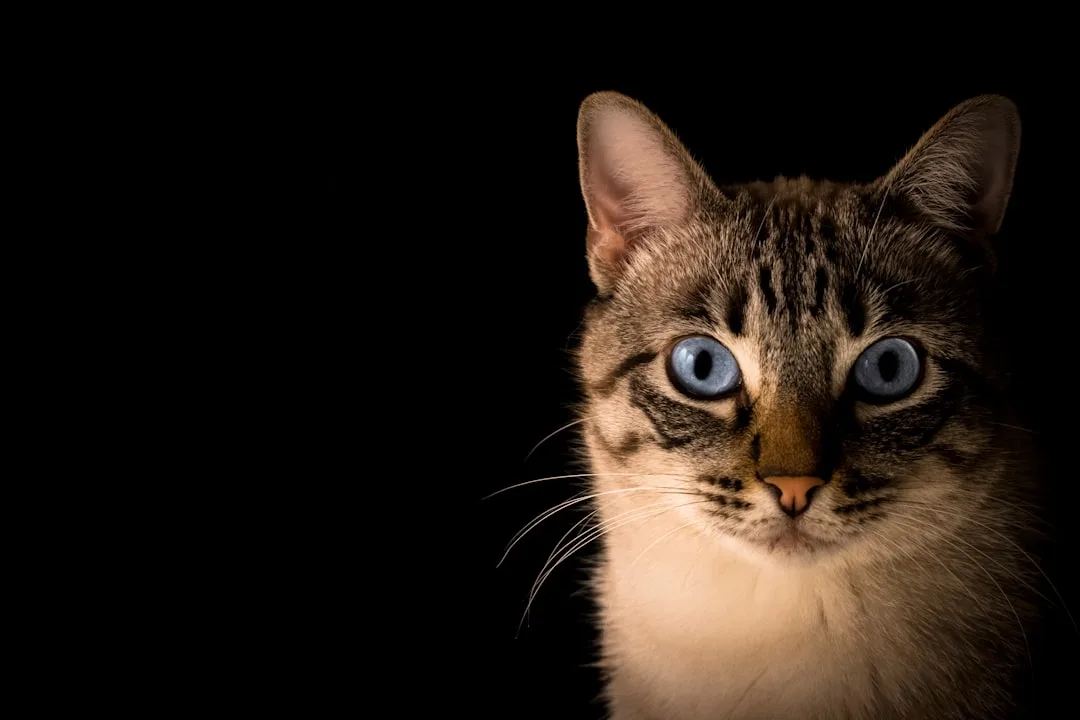
Cats are not nocturnal; they are crepuscular, meaning their peak activity periods occur at dawn and dusk rather than through the night or the day. This distinction matters both for understanding cat behaviour and for managing the common owner complaint of cats being disruptive during sleeping hours.
The crepuscular pattern is an evolutionary adaptation tied to the hunting behaviour of their prey, the avoidance of larger predators, and thermoregulatory efficiency in arid environments. Domestic cats retain this pattern while also showing remarkable flexibility in adjusting activity timing to match the routines of their human households.
Crepuscular, Not Nocturnal: The Critical Distinction
The terms nocturnal, diurnal, and crepuscular describe three distinct activity timing strategies in animals.
- Nocturnal animals are primarily active during the hours of complete darkness and rest during daylight (examples: owls, many rodents, hedgehogs).
- Diurnal animals are primarily active during daylight and rest at night (examples: humans, most birds, squirrels).
- Crepuscular animals are primarily active at twilight, dawn and dusk, and may rest during both the middle of the day and the darkest hours of night (examples: domestic cats, rabbits, deer, many deer mice).
Studies using accelerometers and GPS tracking on both feral and domestic cats consistently confirm the crepuscular pattern. Research by Quintino and Mira (2011) studying feral cat activity in Portugal found two clear peaks: one approximately one hour after sunrise and one approximately one hour before sunset. The deepest rest periods were in the middle of the night and the middle of the day.
"Domestic and feral cats show a bimodal activity pattern with peaks at dawn and dusk. This pattern is consistent with the activity times of their primary small-mammal prey species, which are themselves crepuscular, and with the thermoregulatory advantage of avoiding both midday heat and deepest cold." Quintino, E. P., & Mira, A., Wildlife Research, 2011
Why Did Cats Evolve a Crepuscular Pattern?
Three interacting evolutionary pressures shaped the crepuscular activity pattern in the ancestor of the domestic cat, the African wildcat.
Prey Availability
The small mammals, birds, reptiles, and insects that constitute the primary prey of wildcats and domestic cats are themselves most active at dawn and dusk. Hunting at these times maximises encounter rates with prey. A predator that is active when prey is active has a fundamental efficiency advantage.
Predator Avoidance
The African wildcat shares its range with larger predators including lions, leopards, hyenas, and large birds of prey. At midday and in full darkness, predator detection ability is reduced, in bright sunlight, visual overload reduces the ability to spot distant movement; in full darkness, hearing-based predators have an advantage over a visually oriented mid-sized cat.
Twilight conditions, when ambient light is sufficient for the wildcat's highly adapted visual system but insufficient for many larger threat-predators, represent a relatively safe activity window.
Thermoregulation in Arid Environments
The ancestral range of Felis lybica includes extremely hot, arid environments. Midday temperatures in North African desert and semi-arid regions regularly exceed 40 degrees Celsius, at which hunting activity would impose severe heat stress and dehydration risk. Resting during the hottest hours and hunting during the cooler dawn and dusk reduces thermoregulatory burden substantially.
How Domestic Cats Adjust to Human Schedules
One of the more remarkable features of domestic cat behaviour is the degree to which cats shift their activity timing to align with their owner's schedule. Research by Piccione and colleagues (2013), studying cats in households with regular human routines, found that domestic cats show significant phase shifts in activity peaks toward the times when owners are awake and interactive.
This flexibility is evidence that domestication has selected for social attachment to humans substantial enough to override ancestral timing patterns. A cat that adjusts its most active periods to evening hours when its owner is home from work is expressing genuine social preference; it prefers to be active when its social partner is available.
The adjustment is not unlimited. A cat asked to be most active at 2 a.m. or to remain completely inactive from dusk to dawn would be working against a deep biological clock. But the one to three hour phase shift that matches a 9-to-5 human schedule is well within the adaptive range cats demonstrate.
"Domestic cats living with humans show significant modification of their ancestral crepuscular pattern, with activity peaks shifting toward the owner's waking hours. This represents a learned social adjustment rather than a change in underlying circadian biology." Piccione, G., Giannetto, C., Scollo, A., & Pasquale, A., Journal of Veterinary Behaviour, 2013
Why Do Some Cats Seem Nocturnal?
Owners who are disturbed at night by their cats often conclude the animals are nocturnal. Several factors can produce night-time activity that feels nocturnal even in cats whose underlying pattern is crepuscular.
Indoor Cats Without Daytime Stimulation
A cat that has insufficient stimulation during the day may displace activity into early morning or late night hours, the nearest crepuscular windows to the owner's sleep schedule. An under-stimulated cat whose owners are present only in evenings may show a pattern that resembles nocturnal activity because the only crepuscular window that overlaps with the owner's routine is late evening.
Hunger-Driven Activity
Cats fed on a single daily meal, particularly if it is given in the evening, may wake early (at the dawn crepuscular peak) because they are hungry. The dawn activity peak is biologically real; if hunger coincides with it, the cat is highly motivated to wake the owner and solicit food.
Kittens
Kittens have less consolidated sleep than adult cats and shorter activity-rest cycles. Young kittens in their first six months may seem to be active at all hours because their cycles are shorter and more distributed throughout the 24-hour period. This tends to consolidate into the adult crepuscular pattern between six and twelve months of age.
Cognitive Dysfunction in Senior Cats
Senior cats with cognitive dysfunction syndrome (CDS), analogous to dementia in humans, frequently show reversal of normal sleep-wake patterns, becoming most active at night and sleeping through the day. This is a recognised clinical sign warranting veterinary assessment. Other signs of CDS include vocalisation at night, apparent disorientation, and reduced interaction with owners.
Daily Activity Pattern: Domestic Cat vs. Nocturnal and Diurnal Species
| Time of Day | Domestic Cat Activity Level | Typical Nocturnal Animal | Typical Diurnal Animal |
|---|---|---|---|
| Dawn (5-8 am) | High (primary peak) | Returning to rest | Beginning to stir |
| Morning (8 am-12 pm) | Moderate to low | Resting | Active |
| Midday (12-2 pm) | Low (rest period) | Resting | Active or resting |
| Afternoon (2-5 pm) | Low to moderate | Resting | Active, decreasing |
| Dusk (5-8 pm) | High (primary peak) | Waking, becoming active | Settling to rest |
| Evening (8-11 pm) | Moderate, decreasing | Active | Resting |
| Night (11 pm-5 am) | Low to moderate | Peak activity | Resting |
Managing Night-time Disruption from Cats
Veterinary behaviourists and the International Society of Feline Medicine recommend several approaches for managing night-time disturbance from cats with health-appropriate crepuscular activity.
Interactive Play Before Bedtime
A structured play session using a wand or feather toy immediately before the owner's bedtime allows the cat to complete a predatory sequence (stalk, chase, catch) at a time that partially aligns with the dusk activity peak. Following the play session with a small food reward mimics the natural hunt-eat-groom-sleep sequence and encourages the cat to settle for the night.
Puzzle Feeders and Timed Feeders
Automatic feeders set to dispense a small portion at the cat's typical dawn waking time reduce the hunger component of early-morning activity. Puzzle feeders used during the day reduce daytime boredom and make the cat's activity budget more evenly distributed, reducing the displacement of activity into night hours.
Excluding Cats from the Bedroom
Keeping cats out of the bedroom overnight with a consistent routine is effective but must be established as a long-term pattern, not introduced after a disturbance event. Attempting to exclude a cat that previously had bedroom access typically produces escalating vocalisation before the cat accepts the new arrangement.
Ruling Out Medical Causes
Increased night-time activity in a cat that was previously quiet, particularly in a cat over eight years old, warrants veterinary assessment. Hyperthyroidism, cognitive dysfunction syndrome, pain, and early kidney disease can all increase nocturnal restlessness and vocalisation.
Light and the Feline Visual System's Role in Activity Timing
Cat eyes are adapted for low-light conditions rather than for full darkness. The tapetum lucidum, the reflective layer behind the retina that causes the characteristic eye-shine in photographs, amplifies available light, giving cats a significant visual advantage over humans in dim conditions. A domestic cat can see effectively in approximately one-sixth of the light intensity a human requires.
Critically, cats cannot see in complete darkness any more than humans can. Their advantage is in the dim twilight conditions of dawn and dusk, exactly when the crepuscular activity pattern places them. The eye adaptation is matched precisely to the activity timing strategy, reinforcing that the crepuscular pattern is deeply integrated with feline physiology rather than being a superficial behavioural preference.
For more on how cats see in low light, see How Do Cats See in the Dark?. For information on sleep duration and what is normal, see Why Do Cats Sleep So Much?. For signs of health problems that can alter sleep and activity patterns, see Signs of a Healthy Cat and How Long Do Cats Live?.
References
Quintino, E. P., & Mira, A. (2011). Assessing the impact of roads on the activity patterns of a nocturnal carnivore. Wildlife Research, 38(7), 589-598. https://doi.org/10.1071/WR10229
Piccione, G., Giannetto, C., Scollo, A., & Pasquale, A. (2013). Daily activity patterns of domestic cats maintained in two different housing conditions. Journal of Veterinary Behaviour: Clinical Applications and Research, 8(4), 189-194. https://doi.org/10.1016/j.jveb.2012.10.005
Gunn-Moore, D. A. (2011). Cognitive dysfunction in cats: Clinical assessment and management. Topics in Companion Animal Medicine, 26(1), 17-24. https://doi.org/10.1053/j.tcam.2011.01.005
Bradshaw, J. W. S. (2013). Cat Sense: How the New Feline Science Can Make You a Better Friend to Your Pet. Basic Books. ISBN 978-0465031016.
Konecny, M. J. (1987). Food habits and energetics of feral house cats in the Galapagos Islands. Oikos, 50(1), 24-32. https://doi.org/10.2307/3565405
Rochlitz, I. (2005). The welfare of cats. In I. Rochlitz (Ed.), The Welfare of Cats (pp. 1-45). Springer. https://doi.org/10.1007/978-1-4020-3227-1_1
International Society of Feline Medicine. (2020). ISFM and AAFP feline environmental needs guidelines. Journal of Feline Medicine and Surgery, 22(6), 505-510. https://doi.org/10.1177/1098612X20925593
Frequently Asked Questions
Are cats nocturnal or crepuscular?
Cats are crepuscular, meaning their peak activity periods are at dawn and dusk. They are not primarily nocturnal. Studies using accelerometers on domestic and feral cats confirm this bimodal pattern.
Why is my cat so active at night?
If your cat is active in the early hours, it is most likely responding to the dawn crepuscular peak, which can begin as early as 4 to 5 a.m. Hunger, under-stimulation during the day, or a medical condition such as hyperthyroidism or cognitive dysfunction can all amplify this early activity.
Can cats adjust to sleeping at night with their owners?
Yes. Domestic cats show significant flexibility in shifting their activity peaks toward owner schedules. A structured play and feeding routine before bedtime helps align the cat’s activity with the owner’s sleep hours.
Why do cats have better night vision than humans?
Cats have a tapetum lucidum, a reflective layer behind the retina, that amplifies low-level light. They also have a higher proportion of rod photoreceptors. These adaptations give cats effective vision in about one-sixth the light intensity a human requires, though cats cannot see in complete darkness.
Why did cats evolve to be active at dawn and dusk?
Three factors drove the crepuscular pattern: their prey (small mammals and birds) is most active at twilight; larger predators are less effective hunters in twilight conditions, reducing predation risk; and in arid ancestral habitats, midday heat made hunting thermally costly.
My older cat is active and vocal at night, should I be concerned?
Yes, this warrants veterinary attention. Nighttime activity reversal and vocalisation in senior cats are recognised signs of cognitive dysfunction syndrome (analogous to dementia) and hyperthyroidism, both of which are treatable or manageable with early intervention.