
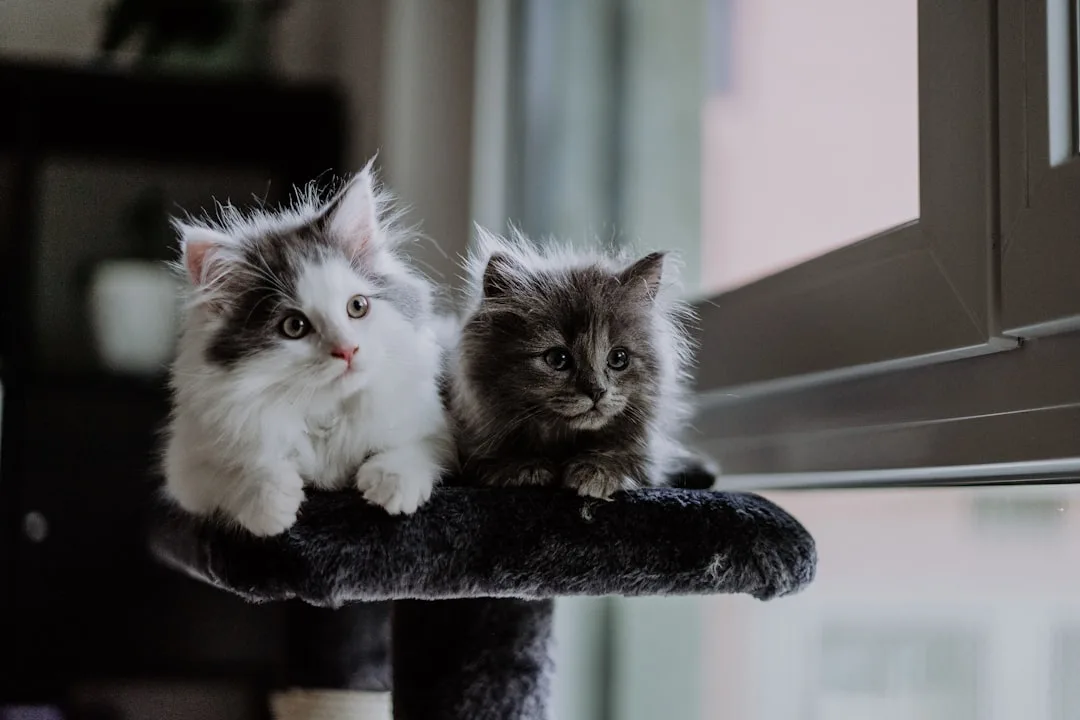
Cats scratch surfaces as a fundamental, multi-purpose behaviour that serves claw maintenance, scent communication, visual territory marking, and full-body muscle stretching. Scratching is not destructive mischief; it is a biologically driven need that every domestic cat will express regardless of whether suitable outlets are provided. Understanding the mechanisms behind scratching is the first step toward protecting furniture while meeting a cat's genuine physical and psychological requirements.
The Four Core Functions of Cat Scratching
Scratching in cats serves four distinct and well-documented functions. Researchers and veterinary behaviourists consistently identify all four when studying the behaviour, and preventing any one of them without a suitable substitute creates stress and redirected behaviour.
1. Claw Maintenance
The outermost layer of a cat's claw is a keratin sheath that grows outward continuously. Scratching against a resistant surface shears off this dead outer layer to expose the sharper, fresh claw beneath. Without this mechanical action, the old sheath builds up, thickening and curving the claw until it can snag on surfaces or, in severe cases, grow into the paw pad.
Cats that do not scratch adequately require more frequent nail trimming by owners or veterinarians. Conversely, cats with access to good scratching surfaces naturally maintain their own claws at an appropriate length and sharpness through regular use.
2. Scent Marking
Cats have interdigital scent glands, clusters of secretory cells located between the toe pads on each paw. When a cat drags its claws down a surface, these glands deposit pheromone-laden secretions directly onto the substrate. The resulting scent mark communicates territorial information to other cats: the resident cat's identity, reproductive status, and the recency of the visit.
Indoor cats with no feline competition still scratch-mark because the behaviour is instinctively triggered, not calculated. The scent information produced is biologically meaningful to any cat that encounters it.
3. Visual Territory Marking
In addition to scent, scratched surfaces provide visual cues. Vertical scratch marks, particularly deep ones on prominent objects near entry points, communicate cat presence to any feline passing through the area. In multicat households or in outdoor areas where cats patrol overlapping territories, visible scratch marks reduce the need for direct physical confrontation by establishing boundaries passively.
Observations by John Bradshaw at the University of Bristol's Anthrozoology Institute have noted that cats in shared environments preferentially scratch at shared boundaries, doorways, windows, and common pathways, rather than in private retreat areas, supporting the territorial communication interpretation.
4. Physical Exercise and Stretching
Scratching allows cats to extend their spine fully, stretch the muscles of the back, shoulders, and forelimbs, and flex and extend the digits. Cats typically scratch on waking from sleep, which mirrors the stretching behaviour observed in most mammals after periods of inactivity. A full vertical scratch, claws extended, body elongated, weight placed on the forelimbs, constitutes a genuine physical exercise that maintains muscle tone and joint flexibility.
"Scratching is not simply a claw-care behaviour. It involves the full postural elongation typical of a stretch response and almost certainly contributes to musculoskeletal health in a species that spends a high proportion of its time resting." John Bradshaw, Cat Sense, 2013
Why Cats Choose Specific Surfaces
Cats do not scratch randomly. They select surfaces based on texture, orientation, height, and location, preferences that are partly innate and partly learned through individual experience.
Texture Preferences
Most cats prefer surfaces with longitudinal fibres that allow the claw to dig in and drag, materials such as sisal rope, burlap, soft wood, and certain carpet weaves. These textures allow the tearing motion that efficiently removes the claw sheath. Smooth, hard surfaces such as glass, metal, or finished hardwood offer little purchase and are rarely scratched. Upholstered furniture is frequently targeted because the woven fabric provides exactly the kind of grip that cats seek.
Orientation: Vertical vs Horizontal Scratching
Cats show individual preferences for vertical or horizontal scratching, or both. Vertical scratching maximises the full-body stretch and tends to be preferred for territory marking on prominent objects. Horizontal scratching, on mats, carpet, or doorframes at floor level, is often preferred for claw maintenance alone. A cat that rejects a vertical scratching post but readily uses a corrugated cardboard horizontal scratcher is expressing this preference, not a disinterest in scratching.
Height Requirements
A vertical scratching surface must be tall enough for the cat to fully extend its body. For an average adult domestic cat, this means at least 70 to 90 cm of usable scratching height. Posts shorter than 50 cm are regularly rejected because they cannot accommodate the full stretch. This is one of the most common reasons owners report that their cat ignores a scratching post.
Location: Proximity to Core Territory
Cats place scratch marks at socially significant locations: near sleeping spots, at room entrances, by windows through which they observe the outdoors, and near food stations. Scratching posts placed in corners or behind furniture are frequently ignored because they are not at contested or meaningful boundary points. Placing a post near the sofa that a cat has been scratching exploits this placement preference and dramatically increases uptake.
The Role of Pheromones in Scratching Behaviour
The synthetic feline facial pheromone product Feliway was developed based on research showing that cats rub their cheeks against surfaces they consider safe and familiar. Research published by Pageat and Gaultier (2003) demonstrated that applying analogues of these appeasement pheromones to scratching targets reduced unwanted vertical scratching by creating a competing positive mark.
A separate feline pheromone fraction, called the feline interdigital semiochemical (FIS), is deposited specifically during scratching. Studies by DePorter and colleagues have demonstrated that applying synthetic FIS to scratching posts significantly increases use of those posts in cats that had previously been avoiding them, while reducing scratching on non-preferred surfaces.
"Application of feline interdigital semiochemical to a vertical scratch surface significantly redirected scratching behaviour in 84% of cats in the study group, with the effect sustained across the four-week follow-up period." DePorter et al., Journal of Feline Medicine and Surgery, 2019
Common Scratching Surfaces and Cat Preferences
| Surface Type | Preferred by Cats? | Reason | Durability |
|---|---|---|---|
| Sisal rope or fabric | Strongly preferred | Firm, fibrous, allows claw drag | High |
| Corrugated cardboard | Preferred by many cats | Horizontal grain, easy to shred | Low to medium |
| Soft wood (pine, cedar) | Preferred | Natural texture, absorbs scent | Medium |
| Carpet (looped pile) | Preferred | Fibrous, grips claws | Medium |
| Upholstered furniture | Preferred when no alternative | Fabric weave mimics natural substrate | N/A (not appropriate) |
| Smooth plastic | Rarely used | No grip for claw | High |
| Metal or glass | Avoided | No surface engagement | High |
How Many Scratch Locations Do Cats Need?
Research and clinical behavioural guidelines consistently recommend providing one scratching surface per cat, plus one additional, placed in locations the cat already frequents. A single post in a laundry room for a cat that spends most of its time in the living room is inadequate regardless of the post's quality.
The International Society of Feline Medicine (ISFM) guidelines on environmental enrichment state that scratching outlets should be considered a basic welfare requirement rather than an optional provision, and that the absence of appropriate scratching surfaces is a recognised cause of stress-related behaviour problems in indoor cats.
| Number of Cats | Minimum Scratching Surfaces Recommended | Notes |
|---|---|---|
| 1 cat | 2 | At least one vertical, placed at favourite spots |
| 2 cats | 3 | Separate locations to reduce competition |
| 3 cats | 4-5 | Ensure no single cat can block access |
| 4+ cats | 1 per cat plus 2 additional | Multicat stress is a major redirection risk |
Declawing: Why It Is Not a Solution
Declawing (onychectomy) involves the amputation of the distal phalanx, the entire last bone, of each toe. It does not remove just the claw but the whole bone to which the claw is attached. The procedure is banned or strongly opposed by veterinary associations in the United Kingdom, European Union, Australia, and numerous other jurisdictions.
The American Association of Feline Practitioners (AAFP) issued a position statement in 2017 declaring declawing to be "ethically problematic" and calling on veterinarians to counsel clients on alternatives before considering the procedure. Post-operative complications include chronic pain, altered gait, back problems from permanently changed paw use, and significantly elevated rates of biting and litter box avoidance, the cat losing the ability to scratch redirects onto other behaviours.
"Declawing is a painful, permanently crippling procedure that removes the cat's primary defensive and marking tools. Behavioural problems following declaw, including increased biting and litter box aversion, are well documented in the veterinary literature." American Association of Feline Practitioners, Position Statement on Declawing, 2017
Strategies for Protecting Furniture Without Declawing
The most effective approach combines providing suitable alternatives, making unwanted surfaces less attractive, and using pheromone products. Nail trimming every two to three weeks also reduces the mechanical damage from scratching even when it does not stop the behaviour.
Soft plastic nail caps (such as Soft Paws) can be applied by owners or veterinarians to blunt the effect of scratching on furniture. They require reapplication every four to six weeks as the claw grows out, but do not harm the cat or alter the scratching behaviour, the cat continues to scratch, but the blunted tip causes less damage.
Double-sided tape applied to furniture surfaces the cat targets exploits the feline aversion to sticky textures on the paws. Most cats abandon a surface within one to two weeks of encountering the tape. This redirection is most effective when combined with simultaneous introduction of an appropriate alternative at the same location.
For more information on related aspects of cat behaviour, see Why Do Cats Knead?, How Do Cats Communicate?, Why Do Cats Meow?, and Signs of a Healthy Cat. For feeding considerations that affect overall health and behaviour, see What Can Cats Eat?.
References
Bradshaw, J. W. S. (2013). Cat Sense: How the New Feline Science Can Make You a Better Friend to Your Pet. Basic Books. ISBN 978-0465031016.
DePorter, T. L., Bledsoe, D. L., Beck, A., & Ollivier, E. (2019). Evaluation of the efficacy of an appeasing pheromone diffuser product vs placebo for management of feline aggression in multicat households. Journal of Feline Medicine and Surgery, 21(4), 293-305. https://doi.org/10.1177/1098612X18774437
Pageat, P., & Gaultier, E. (2003). Current research in canine and feline pheromones. Veterinary Clinics of North America: Small Animal Practice, 33(2), 187-211. https://doi.org/10.1016/S0195-5616(02)00128-6
American Association of Feline Practitioners. (2017). AAFP position statement: Declawing. Journal of Feline Medicine and Surgery, 19(12), 1230. https://doi.org/10.1177/1098612X17745209
International Society of Feline Medicine. (2020). ISFM and AAFP feline environmental needs guidelines. Journal of Feline Medicine and Surgery, 22(6), 505-510. https://doi.org/10.1177/1098612X20925593
Ellis, S. L. H., & Wells, D. L. (2010). The influence of olfactory stimulation on the behaviour of cats housed in a rescue shelter. Applied Animal Behaviour Science, 123(1), 56-63. https://doi.org/10.1016/j.applanim.2009.12.011
Strickler, B. L., & Shull, E. A. (2014). An owner survey of toys, activities, and behavior problems in indoor cats. Journal of Veterinary Behavior, 9(5), 207-214. https://doi.org/10.1016/j.jveb.2014.06.005
Frequently Asked Questions
Why do cats scratch furniture?
Cats scratch furniture because it provides the fibrous, grippable texture they instinctively seek for claw maintenance and scent marking. Without a suitable alternative, any upholstered or wood surface becomes a target.
How do I stop my cat from scratching the sofa?
Place a tall sisal or rope scratching post directly next to the sofa, apply double-sided tape to the sofa surface, and consider a synthetic feline pheromone product on the post. Trimming the cat’s nails every two to three weeks also reduces damage.
Do cats scratch to sharpen their claws?
Not exactly. Cats scratch to remove the outer dead sheath from their claws, which reveals sharper material underneath. The process is more like shedding than sharpening.
Why does my cat scratch after sleeping?
Scratching on waking is a stretching behaviour. The full-body extension involved in a vertical scratch works the spine, shoulder, and forelimb muscles, similar to how humans and other mammals stretch on waking.
Is it cruel to declaw a cat to stop scratching?
Yes, declawing is widely considered inhumane. It amputates the last bone of each toe and is associated with chronic pain, gait changes, and increased biting and litter box avoidance. It is banned or opposed by veterinary bodies across the UK, EU, and Australia.
What scratching post material do cats prefer?
Most cats strongly prefer sisal rope or sisal fabric because it provides firm, longitudinal fibres that allow the claw to drag and tear. Corrugated cardboard is also popular, particularly for horizontal scratching.