
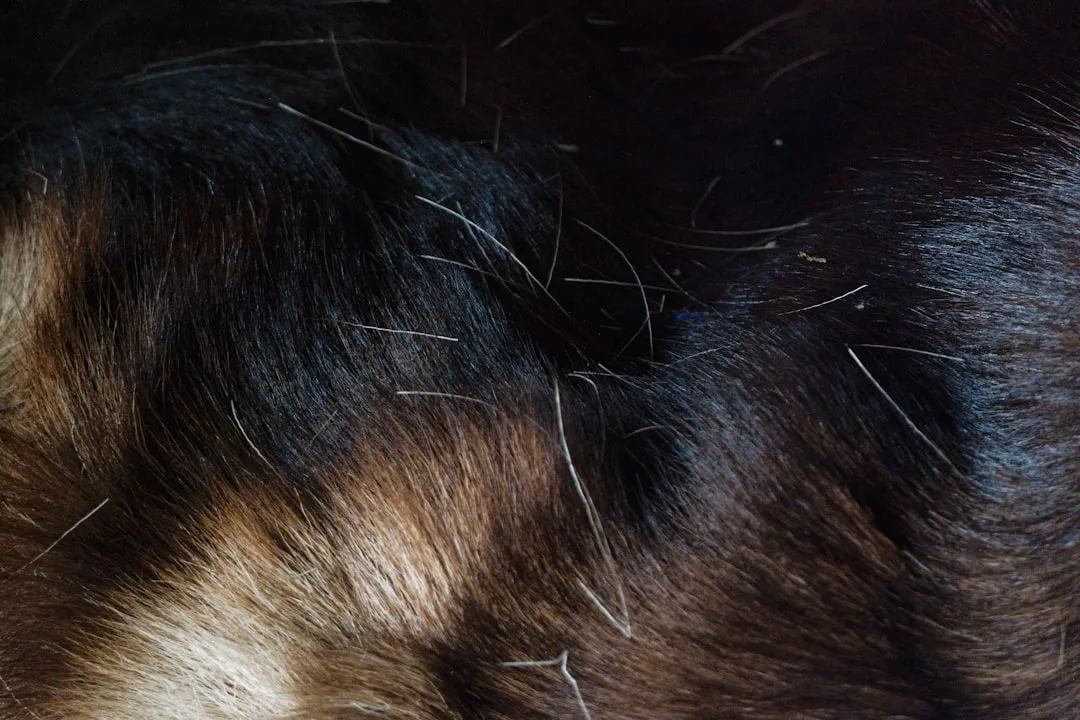
Fleas and ticks are the most common external parasites affecting dogs and are not merely a nuisance, both carry significant disease risk. Fleas transmit tapeworms and cause flea allergy dermatitis, while ticks transmit Lyme disease, Rocky Mountain spotted fever, ehrlichiosis, and anaplasmosis. Early detection and prompt removal reduce disease transmission risk substantially.
Knowing how to examine a dog systematically and what to look for allows owners to catch infestations before they become severe.
How to Check Your Dog for Fleas
Fleas are very small (1 to 3 mm), dark brown, and extremely fast-moving. They are difficult to see in motion but can be detected through systematic inspection methods.
The comb method: Use a fine-toothed flea comb on the dog's coat, focusing on the areas where fleas concentrate, the base of the tail, the abdomen, groin, armpits, neck, and behind the ears. Fleas and flea eggs can be collected in the comb's teeth.
Flea dirt detection: Flea dirt is flea feces, partially digested blood, and appears as small black or dark brown specks that resemble ground pepper. The definitive test: place the specks on a damp white paper towel. If they leave a reddish-brown smear when wet, they are flea dirt (blood-containing feces), not regular dirt.
The white towel method: Have the dog stand on or walk across a white or light-colored towel. Any flea dirt or fleas falling from the coat will be visible against the light surface.
What to look for at the skin level: Part the coat to examine the skin directly, particularly at the tail base and abdomen. Flea infestation produces: small red bite marks, flea dirt deposits at the skin level, hair loss (from scratching or flea allergy), and in severe infestations, anemia signs (pale gums) particularly in puppies or small dogs.
"Flea allergy dermatitis is the most common skin disease in dogs in the United States. A single flea bite can trigger a week-long allergic reaction in a sensitized dog. The flea does not have to be present when the dog is examined, the reaction from prior bites persists." American College of Veterinary Dermatology
Signs of a flea infestation beyond the dog:
- Humans in the household experiencing bites (typically around ankles)
- Small jumping insects visible in carpet, bedding, or furniture
- Flea dirt in the dog's bedding
How to Check Your Dog for Ticks
Ticks range from poppy seed-sized (unfed nymphs) to grape-sized (engorged adults). They do not move quickly; they attach and feed. This makes them easier to find than fleas but easier to miss in thick coats.
Systematic physical examination: After any outdoor activity in tick habitat (wooded areas, grassland, brush), run fingers through the dog's coat against the direction of hair growth, pressing lightly on the skin to feel for bumps. Ticks feel like small, firm bumps.
Tick predilection sites: Ticks prefer specific locations on dogs:
- Inside and around the ears
- Around the eyes
- Under the collar
- Between the toes and paw pads
- Groin and inguinal area
- Axillae (armpits)
- Under the tail and around the anal area
- Neck and head region
These areas should be examined with extra care after outdoor exposure.
| Location | Flea Preference | Tick Preference |
|---|---|---|
| Base of tail | Very high | Moderate |
| Groin and abdomen | Very high | High |
| Armpits | High | High |
| Around ears | High | Very high |
| Between toes | Moderate | Very high |
| Under collar | Moderate | High |
| Neck/head | Moderate | High |
| Back and flanks | Low (fleas prefer underbelly) | Moderate |
Tick Identification: Not All Ticks Are the Same
Different tick species carry different diseases. Identification helps assess disease transmission risk.
Deer tick (Blacklegged tick, Ixodes scapularis): Very small, dark reddish-brown to black. Transmits Lyme disease, anaplasmosis, and babesiosis. Common in the Northeast, upper Midwest, and Pacific Coast US.
American dog tick (Dermacentor variabilis): Larger, brown with white/silver markings on the scutum (back plate). Transmits Rocky Mountain spotted fever and tularemia. Widely distributed east of the Rocky Mountains.
Brown dog tick (Rhipicephalus sanguineus): Reddish-brown, narrow. Can complete entire life cycle indoors. Transmits Rocky Mountain spotted fever and ehrlichiosis. More adapted to household environments than other tick species.
Lone star tick (Amblyomma americanum): Brown with a distinctive white spot on females' back. Transmits ehrlichiosis and STARI. Southeast and South-Central US.
Gulf Coast tick (Amblyomma maculatum): Transmits Hepatozoon americanum (can cause severe disease in dogs). Gulf Coast states.
How to Remove a Tick Safely
Correct tick removal is critical. Incorrect removal can increase the risk of disease transmission (by squeezing pathogen-containing fluids into the bite site) and can leave the mouthparts embedded.
Correct method:
- Use fine-tipped tweezers or a commercially designed tick removal tool (Tick Twister, O'Tom, etc.)
- Grasp the tick as close to the skin's surface as possible, grab the head/mouthparts, not the body
- Pull upward with steady, even pressure. Do not jerk or twist
- After removal, clean the bite area with rubbing alcohol or soap and water
- Place the tick in a sealed container with a small amount of alcohol for identification if disease exposure is a concern
Do not: Use petroleum jelly, nail polish remover, heat, or other substances to "encourage" the tick to detach. These cause the tick to regurgitate its stomach contents into the bite, dramatically increasing disease transmission risk.
After removal: Monitor the bite site and the dog for signs of tick-borne illness for 4 to 6 weeks: fever, lethargy, joint swelling or lameness, lymph node enlargement, reduced appetite. Lyme disease produces a characteristic circular ("bullseye") rash in humans but this rash is rare or absent in dogs. Veterinary evaluation and tick-borne disease panel testing is appropriate if any signs develop.
Tick Disease Transmission Window
Not all tick attachment leads to disease transmission. Transmission timing varies by pathogen:
- Lyme disease (Borrelia burgdorferi): Deer tick must be attached for at least 24 to 36 hours for transmission
- Rocky Mountain spotted fever (Rickettsia): Can transmit within 2 to 20 hours of attachment
- Ehrlichiosis: Typically several hours of attachment required
- Anaplasmosis: 12 to 24 hours minimum
This is why prompt tick removal after each outdoor exposure is so important, removing ticks within 24 hours substantially reduces Lyme disease transmission risk.
Prevention: Year-Round Parasite Control
Flea and tick prevention is far more effective than treatment after infestation or exposure. Modern preventives are highly effective and safe.
Oral flea and tick preventives: Isoxazoline-class drugs (afoxolaner/NexGard, fluralaner/Bravecto, sarolaner/Simparica, lotilaner/Credelio) are highly effective oral treatments administered monthly or quarterly. They work by killing fleas and ticks after they bite, before disease transmission occurs in most cases. Prescription required.
Topical spot-on treatments: Applied to the skin between the shoulder blades monthly. Various active ingredients (fipronil, selamectin, permethrin-based). Generally effective but with slightly more variable performance than modern orals.
Tick collars: Seresto collar (imidacloprid + flumethrin) provides up to 8 months of protection. Effective for both fleas and ticks.
Environmental treatment: Indoor flea infestation requires treating the environment (not just the dog), approximately 95% of a flea population (eggs, larvae, pupae) is in the environment, not on the host. Vacuuming, washing bedding, and environmental insect growth regulators are all necessary for complete elimination.
| Prevention Type | Duration | Protects Against | Prescription? |
|---|---|---|---|
| Oral isoxazoline (NexGard, Bravecto, etc.) | Monthly or quarterly | Fleas + ticks | Yes |
| Topical spot-on (Frontline, Revolution, etc.) | Monthly | Varies by product | Some yes, some no |
| Seresto collar | Up to 8 months | Fleas + ticks | No |
| Permethrin spray/topical | Short duration | Ticks primarily | No |
For more on dog health and preventive care, see Signs of a Healthy Dog, When to See a Vet for Your Dog, Dog Vaccination Schedule Explained, Common Dog Illnesses Explained, and How Long Do Dogs Live?.
References
Centers for Disease Control and Prevention (CDC). (2024). Ticks: Geographic Distribution. Retrieved from https://www.cdc.gov/ticks/geographic_distribution.html
American College of Veterinary Dermatology. (2024). Flea Allergy Dermatitis. Retrieved from https://www.acvd.org/
Little, S. E. (2010). Ehrlichiosis and anaplasmosis in dogs and cats. Veterinary Clinics of North America: Small Animal Practice, 40(6), 1121-1140. https://doi.org/10.1016/j.cvsm.2010.07.004
Dantas-Torres, F. (2010). The brown dog tick, Rhipicephalus sanguineus (Latreille, 1806) (Acari: Ixodidae): From taxonomy to control. Veterinary Parasitology, 152(3-4), 173-185. https://doi.org/10.1016/j.vetpar.2007.12.030
American Veterinary Medical Association (AVMA). (2024). Flea and tick prevention. Retrieved from https://www.avma.org/resources-tools/pet-owners/petcare/fleas-and-ticks
Dryden, M. W., Payne, P. A., Lowe, A., & Herr, C. (2013). Efficacy of a topically applied spot-on formulation of metaflumizone plus amitraz against fleas and selected tick species on dogs. Veterinary Therapeutics, 7(4), 239-253.
Frequently Asked Questions
How do I know if my dog has fleas?
Use a fine-toothed flea comb, particularly at the tail base and abdomen. Look for flea dirt (tiny dark specks) and test by placing them on a damp white paper towel, reddish smear confirms flea feces. Also check for excessive scratching, hair loss, and small red bite marks.
Where do I check my dog for ticks?
Ticks prefer: inside and around the ears, under the collar, between toes, groin and armpits, under the tail, and around the eyes. Run fingers against the fur growth, pressing lightly to feel for firm bumps. Check after every outdoor exposure in tick habitat.
How do I safely remove a tick from my dog?
Use fine-tipped tweezers or a tick removal tool. Grasp as close to the skin as possible, pull straight up with steady pressure without twisting. Clean the area with alcohol. Never use petroleum jelly, nail polish, or heat, these cause the tick to regurgitate disease-carrying fluids.
How long does a tick need to be attached to transmit Lyme disease?
The deer tick (which transmits Lyme disease) typically needs to be attached for at least 24 to 36 hours for Borrelia transmission. This makes prompt tick removal after outdoor exposure an effective prevention strategy.
What is the best flea and tick prevention for dogs?
Oral isoxazoline-class medications (NexGard, Bravecto, Simparica, Credelio) are currently the most effective option, providing monthly or quarterly systemic protection against both fleas and ticks. Topical spot-ons and the Seresto collar are also effective options.
Do I need to treat my house for fleas?
Yes. Approximately 95% of a flea population (eggs, larvae, pupae) lives in the environment, not on the dog. Treating only the dog leaves the household infestation largely intact. Vacuum thoroughly, wash all bedding, and use an environmental insecticide or insect growth regulator spray.