
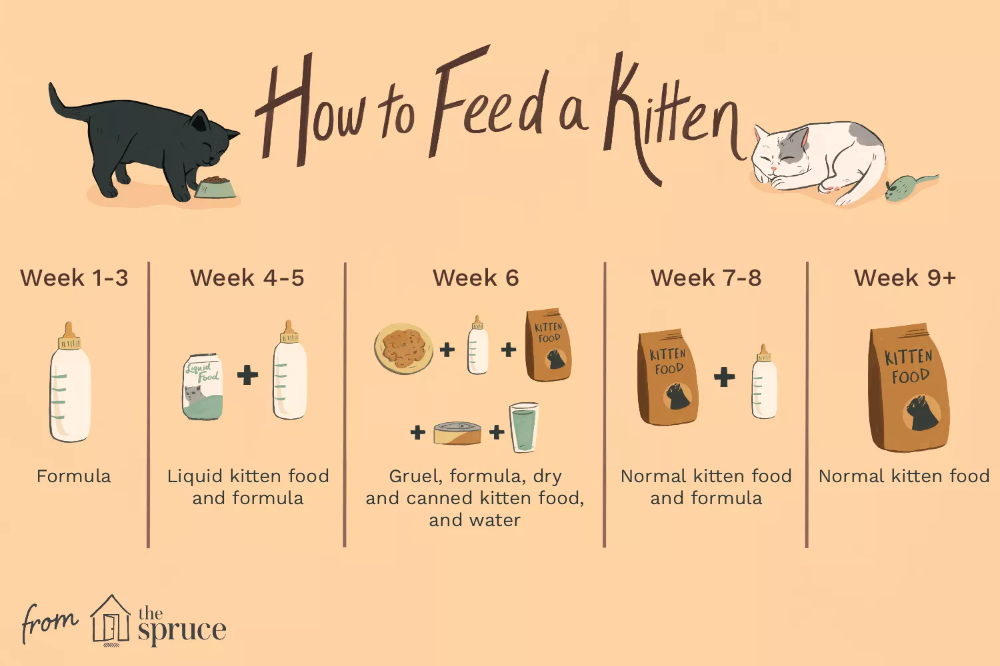
Kittens are born completely dependent on their mother and grow into self-sufficient predators capable of eating whole prey within weeks. This rapid developmental arc places enormous nutritional demands on the young cat's body. A kitten needs approximately twice the calories per kilogram of body weight as an adult cat. It also has specific requirements for taurine, arachidonic acid, and vitamin A that cannot be met by improvised feeding or by adult cat food alone.
Getting kitten nutrition right matters far beyond the first year. Skeletal density, muscle development, immune competence, and even behavioural characteristics are shaped during kittenhood. This guide covers every phase of kitten feeding, from the nursing period through the transition to adult food, with breed-size adjustments, portion guidance, and the practical information new kitten owners most need.
Newborn to 3 Weeks: Nursing and Colostrum
Newborn kittens are altricial, helpless at birth, with eyes closed, limited thermoregulatory capacity, and total dependence on their mother for warmth, stimulation, and nutrition. A newborn kitten nurses on demand, typically every 2-3 hours, including through the night.
Colostrum, the first milk secreted by the queen in the days immediately after birth, is critical. It contains high concentrations of maternal immunoglobulins (antibodies) that provide the kitten's initial immune protection, as the placenta is relatively impermeable to antibodies in cats. Kittens must receive colostrum within the first 12-16 hours of birth to achieve passive immunity. After this window, intestinal permeability to large immunoglobulin molecules decreases.
Healthy kittens gain weight rapidly during the first weeks. A normal newborn kitten weighs approximately 85-115 grams. Weight gain of 7-13 grams per day is typical and expected. Any kitten that is not gaining weight, is crying persistently, or feels cold and limp requires immediate veterinary attention.
Orphaned or Supplemental Feeding: Milk Replacer
If the queen is absent, unable to nurse, or does not produce enough milk, kittens must be hand-fed with commercial kitten milk replacer.
Important: Never feed kittens cow's milk or goat's milk. These are not appropriate substitutes for feline milk. Cow's milk contains lactose at concentrations that exceed what kitten lactase can process, causing osmotic diarrhoea that rapidly leads to dehydration, a life-threatening condition in neonatal kittens. The fat and protein composition of cow's milk is also mismatched for feline nutrition.
Commercial kitten milk replacers (KMR by Pet-Ag, Royal Canin Babycat Milk) are formulated to match the composition of queen's milk. Feed using a small syringe or specifically designed kitten nursing bottle, never a human baby bottle, which delivers fluid too quickly and risks aspiration.
Feeding volumes for orphaned kittens:
- Week 1: approximately 2-4 mL per feeding, every 2 hours
- Week 2: approximately 5-7 mL per feeding, every 2-3 hours
- Week 3: approximately 8-12 mL per feeding, every 3-4 hours
Always feed kittens in a horizontal position, not on their backs (aspiration risk). After feeding, stimulate the genital area gently with a warm, damp cloth to encourage urination and defaecation, kittens cannot eliminate without stimulation before 3 weeks of age.
3-4 Weeks: Introduction of Solid Food
Weaning begins naturally around 3-4 weeks of age, coinciding with the eruption of deciduous teeth and the queen's gradual reduction in nursing availability.
The first solid food should be a gruel: high-quality kitten wet food (or moistened kitten kibble) blended with kitten milk replacer or warm water to a thin, soupy consistency. The milk replacer ratio starts very high and decreases over the following 2 weeks as the kitten's acceptance of solid food grows.
Place the gruel in a shallow dish, a jar lid or small plate is ideal. Kittens will initially walk through the food, lick it off their paws, and gradually begin eating from the dish intentionally. Expect significant mess and minimal nutritional consumption in the first several days.
During this phase, allow the queen to continue nursing as available. The solid food supplements rather than replaces milk.
4-6 Weeks: Transition to Solid Food
By 4-6 weeks, kittens can typically manage thicker food with less liquid dilution. The gruel consistency gradually transitions to softened wet food or kibble soaked in water.
Feed 4-6 times per day during this transition phase. Kittens at this age have very small stomach capacity, a 500g kitten eating 25g of food per day (approximately 5% body weight) should receive this in 4-6 small portions rather than 2 large ones.
Continue offering kitten milk replacer as a supplement if the kitten still seeks nursing. Full weaning is typically complete by 6-8 weeks.
6-12 Weeks: Fully Weaned, Kitten Food
By 6-8 weeks, kittens should be eating solid kitten food independently without supplementation. This is typically the earliest age at which kittens leave their mothers and littermates (8-12 weeks is recommended for optimal social development).
Feeding frequency at this age: 3-4 meals per day.
Kittens at 6-12 weeks are in an extraordinarily active growth phase. Body weight may double or triple between 8 and 16 weeks. Caloric needs per kilogram of body weight are at their peak during this window.
Food selection: Always choose food specifically formulated for kittens and carrying an AAFCO nutritional adequacy statement for "growth" or "all life stages." Kitten foods differ from adult cat foods in three critical ways:
- Higher protein content to support lean mass development
- Higher fat content to support energy needs and fat-soluble vitamin absorption
- Higher taurine supplementation, taurine is essential for cardiac function and retinal health in cats
Adult cat food does not meet the nutritional demands of growing kittens.
3-6 Months: Three Meals Per Day
Between 3 and 6 months, most kittens can transition to 3 meals per day. Stomach capacity has increased, and blood glucose regulation has matured enough that slightly longer between-meal intervals are safe.
This remains a period of rapid growth. Kittens typically reach approximately 50% of their adult body weight by 4-5 months of age. Caloric needs remain high, roughly 180-220 kcal per kilogram of body weight per day.
Spaying and neutering: Most kittens are spayed or neutered between 4 and 6 months of age. Gonadectomy reduces metabolic rate and caloric requirements by approximately 20-25%. After surgery, monitor body condition closely and reduce food intake if the kitten begins to show early signs of weight gain. Switching to a post-neuter or light formulation at this stage is reasonable.
6-12 Months: Two Meals Per Day
Between 6 and 12 months, most kittens can move to 2 meals per day, the adult feeding schedule most cats maintain throughout life.
Growth rate slows significantly after 6 months, and caloric requirements begin decreasing toward adult maintenance levels. An owner who continues feeding kitten food in kitten-age quantities past 6 months will likely have an overweight cat by 12 months.
When to transition to adult cat food: Most cats should transition to adult food at 12 months. Some large domestic breeds (Maine Coon, Siberian, Norwegian Forest Cat, Ragdoll) continue growing until 18-24 months and can benefit from kitten food slightly longer. If in doubt, consult a veterinarian.
Kitten Feeding Schedule Summary
| Age | Food Type | Meals Per Day | Notes |
|---|---|---|---|
| 0-3 weeks | Mother's milk / KMR | On demand (every 2-3 hours) | Colostrum essential in first 12-16 hours |
| 3-4 weeks | Thin gruel + nursing | 4-6x daily | Mix KMR with wet kitten food |
| 4-6 weeks | Thicker gruel / soft food | 4-6x daily | Gradually reduce liquid content |
| 6-8 weeks | Wet or softened dry kitten food | 3-4x daily | Can leave for mother if available |
| 8-12 weeks | Kitten food (wet preferred) | 3-4x daily | New home arrival stage |
| 3-6 months | Kitten food | 3x daily | Watch for weight gain post-neuter |
| 6-12 months | Kitten food | 2x daily | Reduce quantity as growth slows |
| 12 months | Transition to adult food | 2x daily | Gradually switch over 7-10 days |
| 18-24 months (large breeds) | Transition to adult food | 2x daily | Maine Coon, Ragdoll, etc. |
Caloric Needs by Weight and Age
| Kitten Weight | Age (Approximate) | Daily Caloric Requirement | Notes |
|---|---|---|---|
| 300-500g | 4-6 weeks | 70-100 kcal/day | Transitioning from milk |
| 500g-1 kg | 6-10 weeks | 100-150 kcal/day | Fully weaned |
| 1-1.5 kg | 10-14 weeks | 150-200 kcal/day | Peak growth rate |
| 2-3 kg | 4-6 months | 200-280 kcal/day | Rapid growth continuing |
| 3-4 kg | 6-9 months | 260-330 kcal/day | Growth slowing |
| 4-5 kg | 9-12 months | 250-320 kcal/day | Near adult weight |
| Adult (4-5 kg) | 12+ months | 180-250 kcal/day | Adult maintenance |
These figures are approximate. Individual variation, activity level, and spay/neuter status all affect requirements.
Wet Food vs Dry Food for Kittens
Wet food is strongly preferred for kittens. Cats evolved obtaining most of their water from prey tissue and have a low thirst drive compared to dogs. A kitten that subsists on dry kibble is at chronic risk of mild dehydration. The long-term consequences of low water intake in cats include urinary tract disease, urinary crystal formation, and feline idiopathic cystitis, conditions that begin developing during early adulthood but are influenced by lifetime hydration patterns.
Wet kitten food also tends to have higher protein content and lower carbohydrate content than dry kibble, better matching feline nutritional needs.
If dry food is used for convenience, ensure fresh water is always available. Consider adding water to kibble to increase moisture intake. Many cats prefer running water to still water in a bowl, pet water fountains significantly increase voluntary water intake in many cats.
Dry food can be used as part of a mixed feeding approach (some wet, some dry) or as a free-choice supplement, though free-choice dry feeding tends to contribute to obesity in cats predisposed to overeating.
Monitoring Growth and Body Condition
A kitten's body condition should be assessed regularly. Unlike puppies, where visible ribs are a concern, kittens in active growth phases may have minimal subcutaneous fat. The key assessment points are:
- Ribs: Should be palpable with light pressure. In healthy growing kittens, ribs may be slightly more prominent than in adults.
- Abdomen: Should be slightly rounded but not pot-bellied. A very round, distended belly in a kitten may indicate parasite burden rather than overfeeding.
- Spine and hip bones: Should not be visibly prominent.
Weigh kittens weekly during the first 3 months. Consistent weight gain (approximately 100g per week in typical domestic cats) is a reliable indicator of adequate nutrition. Weight loss or failure to gain is a veterinary concern.
Foods Kittens Should Never Eat
- Cow's milk or goat's milk (lactose intolerance, diarrhoea, dehydration)
- Onions, garlic, leeks, chives (Heinz body anaemia)
- Grapes and raisins (toxicity mechanism unclear; documented renal damage)
- Chocolate and caffeine (methylxanthine toxicity)
- Xylitol (hypoglycaemia, hepatotoxicity)
- Raw fish in large quantities (thiaminase destroys vitamin B1)
- Dog food as a primary diet (lacks adequate taurine for cats)
- Baby food containing onion powder (toxic)
- Alcohol (any amount)
- Cooked bones
Cross-Links and Related Articles
- Raw Diet for Cats: Pros and Cons
- What Can Cats Eat: Safe and Unsafe Foods
- Foods Toxic to Cats Complete List
- Senior Cat Nutrition Guide
- Wet vs Dry Cat Food: Which Is Better
References
National Research Council. Nutrient Requirements of Dogs and Cats. Washington, DC: National Academies Press; 2006. doi:10.17226/10668
Zoran DL. "The carnivore connection to nutrition in cats." Journal of the American Veterinary Medical Association. 2002;221(11):1559-1567. doi:10.2460/javma.2002.221.1559
Buffington CAT, et al. "Clinical evaluation of cats with nonobstructive urinary tract diseases." Journal of the American Veterinary Medical Association. 1997;210(1):46-50. PMID:8999921
Pion PD, et al. "Myocardial failure in cats associated with low plasma taurine: a reversible cardiomyopathy." Science. 1987;237(4816):764-768. doi:10.1126/science.3616607
Verbrugghe A, Bakovic M. "Peculiarities of one-carbon metabolism in the strict carnivorous cat and the role in feline hepatic lipidosis." Nutrients. 2013;5(7):2811-2835. doi:10.3390/nu5072811
AAFCO. "Association of American Feed Control Officials Official Publication 2023." Oxford, IN: AAFCO; 2023.
Frequently Asked Questions
How often should I feed my kitten?
Feeding frequency depends on age. From 6-12 weeks, feed 3-4 meals per day. From 3-6 months, 3 meals per day. From 6-12 months, 2 meals per day. Kittens have small stomachs and high metabolic rates and cannot thrive on infrequent feeding, especially during the rapid growth phases under 4 months.
Can kittens drink cow's milk?
No. Cow’s milk should never be given to kittens. It contains lactose at concentrations that exceed kitten lactase capacity, causing osmotic diarrhoea and potentially life-threatening dehydration, especially in small neonates. If the queen cannot nurse, use commercial kitten milk replacer (KMR) formulated to match queen’s milk composition.
When should I switch my kitten to adult cat food?
Most kittens should transition to adult cat food at 12 months of age. Large domestic breeds (Maine Coon, Ragdoll, Norwegian Forest Cat, Siberian) continue growing until 18-24 months and may benefit from kitten food longer. Kitten foods have higher protein, fat, and taurine than adult formulations, continuing these past maturity can contribute to excess caloric intake.
What is kitten milk replacer and when is it needed?
Kitten milk replacer (KMR) is a commercial formula designed to match the nutritional composition of queen’s milk. It is used when the queen is absent, ill, or cannot produce enough milk. Commercial products like Pet-Ag KMR and Royal Canin Babycat Milk are appropriate options. Feed with a small syringe or kitten nursing bottle, never a human baby bottle. Always feed in horizontal position to prevent aspiration.
Is wet or dry food better for kittens?
Wet food is strongly preferred for kittens. Cats have a low innate thirst drive and obtain most hydration from food in their natural state. Kittens fed exclusively on dry kibble are at risk of chronic mild dehydration, which contributes to urinary tract problems over time. Wet kitten food also tends to have higher protein and lower carbohydrate content, better matching feline nutritional needs.
How do I wean a kitten onto solid food?
Begin offering solid food at 3-4 weeks by making a thin gruel from wet kitten food or soaked kitten kibble mixed with kitten milk replacer. Place in a shallow dish. Initially kittens will walk through it and lick it off their paws. Gradually reduce the liquid proportion over 2-3 weeks until the kitten is eating moistened solid food. By 6-8 weeks most kittens are fully weaned and eating independently.