
How do sea turtles navigate across entire oceans to return to the same beach where they were born?
Sea turtles use Earth's magnetic field as an internal compass and map. They imprint on the unique magnetic signature of their natal beach as hatchlings, and decades later, adult females use this geomagnetic information to navigate thousands of kilometers back to that same stretch of coastline to lay their own eggs.
Few creatures on Earth carry the weight of deep time quite so literally as turtles and tortoises. Encased in living armor that has persisted through mass extinctions, ice ages, and the rise and fall of entire dynasties of life, these shelled reptiles represent one of the most successful body plans nature has ever devised.
Their lineage stretches back more than 220 million years, making them older than dinosaurs, older than mammals, and far older than the flowering plants that now dominate the planet.
Today, roughly 360 species of turtles and tortoises inhabit every continent except Antarctica. They range from the palm-sized speckled padloper tortoise of South Africa, weighing barely 100 grams, to the 900-kilogram leatherback sea turtle that plunges to crushing depths in the open ocean. Their diversity is extraordinary, but so is the urgency of their situation: more than half of all turtle and tortoise species are now classified as threatened or endangered.
This article traces the evolutionary journey of these remarkable animals, examines the engineering marvel of the turtle shell, profiles the most extraordinary species alive today, and confronts the mounting threats pushing them toward extinction.
An Evolutionary Lineage Older Than Dinosaurs
The fossil record places the earliest known turtle ancestors in the Triassic period, approximately 220 to 230 million years ago. The oldest widely recognized proto-turtle, Odontochelys semitestacea, was discovered in 2008 in 220-million-year-old marine sediments in Guizhou Province, China. This animal possessed a fully formed plastron (belly shell) but only a partial carapace (top shell), providing paleontologists with a critical snapshot of shell evolution in progress.
An even older candidate, Pappochelys rosinae, discovered in 2015 in 240-million-year-old deposits in Germany, showed broadened ribs beginning to fuse, representing what many researchers consider the earliest stage of shell development. These discoveries upended older theories that the shell appeared suddenly, demonstrating instead a gradual evolutionary process spanning tens of millions of years.
To place this in context, the earliest dinosaurs appeared roughly 230 to 240 million years ago, meaning turtles were evolving alongside them from the very beginning. Turtles survived the catastrophic end-Permian extinction that wiped out roughly 90% of marine species and 70% of terrestrial vertebrate species.
They then survived the end-Triassic extinction, thrived through the entire Mesozoic era alongside dinosaurs, and survived the asteroid impact 66 million years ago that ended the Cretaceous period and eliminated all non-avian dinosaurs.
"Turtles are the most persecuted group of animals on the planet, and they are among the most endangered. Yet they have survived every mass extinction event in the last quarter of a billion years. It would be a tragedy of incomprehensible proportions if they were finally done in by us." - Dr. Anders Rhodin, founding director of the Turtle Conservation Coalition
The evolutionary success of turtles is attributable in part to their generalist feeding strategies, their ability to exploit both aquatic and terrestrial habitats, and, of course, their remarkable shell.
Shell Anatomy: A Fortress Fused to the Skeleton
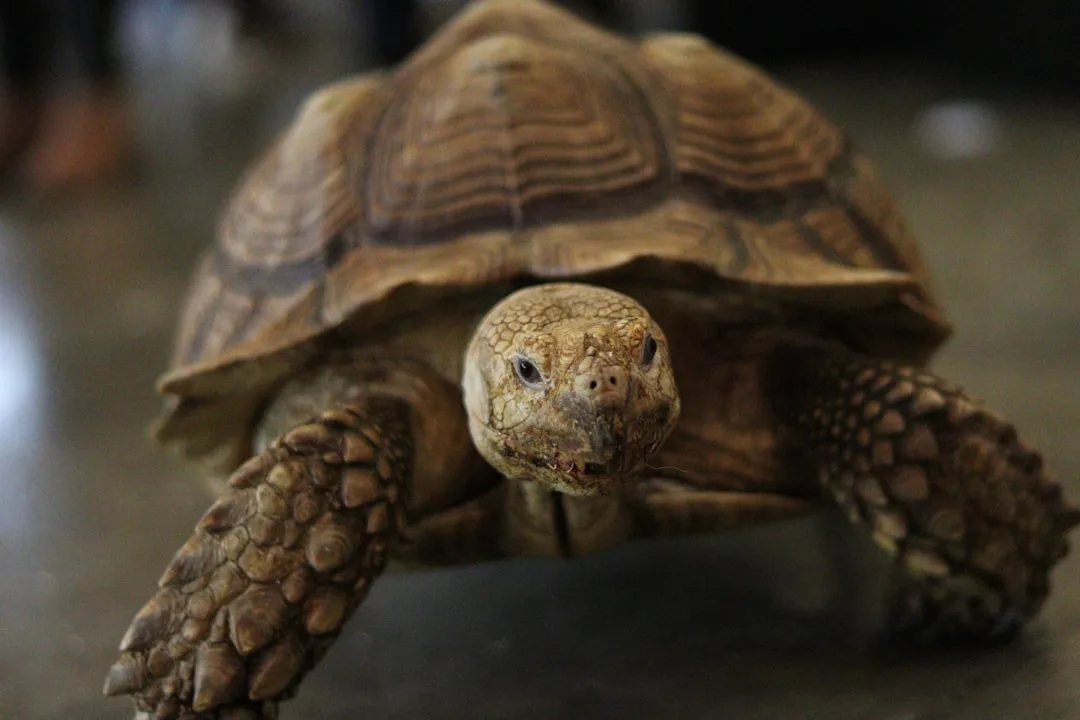
One of the most persistent misconceptions about turtles is that their shell is a separate structure, like a hermit crab's borrowed housing. In reality, the turtle shell is an integrated part of the animal's skeleton. It cannot be removed any more than a human ribcage could be extracted from a living person.
The Carapace and Plastron
The shell consists of two main components. The carapace, or dorsal (upper) shell, is formed from approximately 50 bones. These include roughly eight pleurae (expanded and flattened ribs), the neural bones (modified thoracic vertebrae), and peripheral bones along the edges. The plastron, or ventral (lower) shell, is derived from the clavicles (collarbones), interclavicle, and gastralia (abdominal ribs that are present in many reptiles but lost in mammals).
These two halves are connected by a bony bridge on each side of the body. Covering the bone is a layer of keratinous plates called scutes, made of the same protein as human fingernails. In most species, scutes grow incrementally, and their growth rings can sometimes be used to estimate age, though this method becomes unreliable in very old individuals.
Variations Across Species
Shell morphology varies dramatically among species. Box turtles possess a hinged plastron that allows them to seal themselves entirely within their shell. Softshell turtles have replaced bony scutes with leathery skin, trading protection for speed and flexibility. The pancake tortoise of East Africa has an unusually flat, flexible shell that allows it to wedge into rock crevices.
The leatherback sea turtle has largely replaced the bony carapace with a matrix of small osteoderms embedded in thick, rubbery skin, an adaptation that aids thermoregulation and deep-sea diving.
Comparison of Shell Types Across Major Groups
| Feature | Hard-Shelled Turtles | Softshell Turtles | Leatherback Sea Turtle | Box Turtles |
|---|---|---|---|---|
| Carapace material | Fused bone + keratin scutes | Reduced bone + leathery skin | Osteoderms in rubbery matrix | Fused bone + keratin scutes |
| Plastron | Rigid, bony | Reduced, flexible | Reduced, cartilaginous | Hinged, can seal shut |
| Primary defense | Full retraction into shell | Speed, burial in substrate | Size, deep diving | Complete shell closure |
| Typical habitat | Freshwater, terrestrial | Freshwater, rivers | Open ocean, pelagic | Forests, grasslands |
| Shell weight relative to body | 30-40% | 15-20% | ~10% | 30-40% |
Sea Turtles: Magnetic Navigators of the World's Oceans
Of the approximately 360 living turtle species, only seven are sea turtles: the green, loggerhead, hawksbill, Kemp's ridley, olive ridley, flatback, and leatherback. All seven are listed as vulnerable, endangered, or critically endangered under international conservation assessments.
Magnetic Navigation and Nesting Fidelity
Sea turtles are among the most accomplished navigators in the animal kingdom. Research led by Dr. Kenneth Lohmann at the University of North Carolina has demonstrated that loggerhead sea turtles detect both the intensity and the inclination angle of Earth's magnetic field, effectively using the planet's geomagnetic properties as both a compass and a map.
Hatchlings imprint on the unique magnetic signature of their natal beach within hours of emerging from the egg. Decades later, after traversing thousands of kilometers of open ocean, adult females return to within a few kilometers of that same beach to lay their own eggs.
This phenomenon, known as natal homing or nesting fidelity, means that a loggerhead born on a beach in Florida may spend 20 to 30 years circling the Atlantic Ocean before returning to nest within a remarkably short distance of her birthplace.
Green sea turtles nesting on Ascension Island in the mid-Atlantic provide one of the most dramatic examples. These turtles feed along the coast of Brazil, roughly 2,300 kilometers away, yet navigate across open ocean with no visual landmarks to reach a tiny volcanic island just 91 square kilometers in size.
The Leatherback: Deepest Diving Reptile on Earth
The leatherback sea turtle (Dermochelys coriacea) is the largest living turtle, with adults regularly exceeding 2 meters in length and weighing 250 to 700 kilograms, with the largest recorded individual reaching 916 kilograms. It is also the deepest diving reptile ever documented.
Leatherbacks routinely dive to depths of 300 to 600 meters in pursuit of jellyfish, their primary prey. The maximum recorded dive depth is approximately 1,280 meters (4,200 feet), recorded by a satellite-tagged individual. At such depths, the animal endures pressures exceeding 125 atmospheres, a force that would crush a rigid shell. The leatherback's flexible, osteoderm-embedded carapace compresses under pressure and re-expands on ascent, a critical adaptation for deep-sea foraging.
Leatherbacks also maintain a body temperature significantly above ambient water temperature through a combination of large body mass, countercurrent heat exchangers in their flippers, and a thick insulating layer of oil-saturated connective tissue. This ability, known as gigantothermy, allows leatherbacks to forage in subarctic waters as cold as 0.4 degrees Celsius, far beyond the thermal tolerance of any other reptile.
Giant Tortoises: The World's Longest-Lived Land Animals
While sea turtles dominate the oceans, giant tortoises reign over remote islands where their extraordinary longevity has made them living monuments to the passage of time.
Galapagos Giant Tortoises and the Story of Lonesome George
The Galapagos archipelago is home to several species and subspecies of giant tortoise (Chelonoidis spp.), with adults weighing up to 417 kilograms and living well beyond 100 years. These tortoises played a pivotal role in shaping Charles Darwin's theory of evolution by natural selection.
The distinct shell shapes of tortoises on different islands - dome-shaped on lush, low-elevation islands and saddleback-shaped on arid, cactus-dominated islands - provided evidence that species adapt to local environmental conditions over time.
No individual Galapagos tortoise captured the world's attention more than Lonesome George. George was the last known surviving member of the Pinta Island tortoise subspecies (Chelonoidis abingdonii). Discovered in 1971 by biologist Joseph Vagvolgyi on Pinta Island, George was brought to the Charles Darwin Research Station on Santa Cruz Island, where he became the most famous conservation icon in the Galapagos.
For decades, researchers attempted to breed George with females from closely related subspecies, but no viable offspring were produced. On June 24, 2012, Lonesome George was found dead by his caretaker, Fausto Llerena. He was estimated to be approximately 100 years old. His death marked the confirmed extinction of the Pinta Island tortoise and became a powerful symbol of the irreversible consequences of habitat destruction and species exploitation.
"Whatever happens to this single animal, let him always remind us that the fate of all living things on Earth is in human hands." - Inscription at the Charles Darwin Research Station, Santa Cruz Island, Galapagos
George's preserved body was exhibited at the American Museum of Natural History in New York before being returned to the Galapagos in 2017, where it is now displayed at a dedicated exhibit on Santa Cruz Island.
Jonathan: The Oldest Living Land Animal
On the remote South Atlantic island of Saint Helena, a Seychelles giant tortoise (sometimes classified as Aldabra giant, Aldabrachelys gigantea) named Jonathan has been alive since approximately 1832. Photographic evidence from 1886 shows Jonathan as a fully mature adult on the grounds of Plantation House, the governor's residence, where he still lives today.
As of 2025, Jonathan is estimated to be approximately 193 years old, making him the oldest verified living land animal. He has lived through the entirety of the Victorian era, two world wars, the invention of the telephone, the automobile, powered flight, the space age, and the digital revolution. He was alive when slavery was still legal in the British Empire and when Darwin had not yet published On the Origin of Species.
Jonathan is now blind from cataracts and has lost his sense of smell, but he still grazes on the lawns of Plantation House, responds to the voice of his veterinary caretaker Joe Hollins, and mates regularly with his companions. His longevity has made him a national treasure for Saint Helena; his image appears on the island's five-pence coin.
Snapping Turtles: Ambush Predators of Freshwater Systems
Not all turtles are gentle herbivores. The common snapping turtle (Chelydra serpentina) and the alligator snapping turtle (Macrochelys temminckii) are formidable freshwater predators found across North America.
The alligator snapping turtle is the largest freshwater turtle in North America, with males reaching weights of 80 to 100 kilograms, though historical records suggest individuals exceeding 113 kilograms. Its bite force has been measured at approximately 670 newtons (roughly 150 pounds of force), powerful enough to sever fingers or shatter bone.
The alligator snapper employs a remarkable hunting technique. It lies motionless on the river bottom with its mouth agape, wiggling a pink, worm-shaped appendage on its tongue. Fish, drawn to this lure, swim directly into the turtle's jaws and are seized with explosive speed. This strategy, known as lingual luring, is one of the very few examples of aggressive mimicry in vertebrates.
Common snapping turtles, while smaller, are more widespread and equally aggressive when encountered on land. In the water, however, they are generally shy and prefer to avoid confrontation, a behavioral contrast that surprises many people who know them only from terrestrial encounters.
Freshwater Turtles: The Overlooked Majority
While sea turtles and giant tortoises attract the most public attention, the vast majority of turtle diversity is found in freshwater habitats. Rivers, lakes, swamps, and ephemeral wetlands support hundreds of species, from the tiny bog turtle of the eastern United States (one of North America's smallest turtles at roughly 10 centimeters) to the enormous Asian giant softshell turtle (Pelochelys cantorii), which can exceed 100 centimeters in shell length.
Freshwater turtles perform critical ecological functions. Many species are important seed dispersers, consuming fruit and depositing seeds in nutrient-rich fecal matter far from the parent plant. Others are scavengers that remove carrion from waterways, contributing to nutrient cycling and water quality. Painted turtles and map turtles help control aquatic invertebrate and vegetation populations.
The Yangtze giant softshell turtle (Rafetus swinhoei) is considered the most critically endangered turtle on Earth. As of 2024, only a single confirmed individual is known to exist, a wild specimen detected in Dong Mo Lake in Vietnam. A second individual died at a Chinese zoo in 2019. The species faces a situation grimly reminiscent of Lonesome George, with functionally no viable breeding population remaining.
Threats: A Convergence of Human-Caused Dangers
Turtles and tortoises are disappearing at an alarming rate. According to the IUCN, more than 61% of the world's turtle and tortoise species are threatened or already extinct. The drivers of this crisis are numerous, interconnected, and overwhelmingly anthropogenic.
Light Pollution and Hatchling Disorientation
Sea turtle hatchlings have evolved to orient toward the brightest horizon upon emerging from the nest, which under natural conditions is the ocean surface reflecting moonlight and starlight. Coastal development has introduced artificial lighting that disrupts this orientation response. Hatchlings exposed to beachfront lighting frequently crawl inland instead of seaward, where they face dehydration, predation, and vehicle strikes.
Studies along the Florida coastline, one of the most important sea turtle nesting areas in the Western Hemisphere, have documented that light pollution causes disorientation in tens of thousands of hatchlings every nesting season. Some estimates suggest that up to 10% of hatchlings on heavily lit beaches fail to reach the ocean.
Mitigation strategies include amber-spectrum lighting (less disruptive to sea turtles than white light), light shielding, and seasonal lighting ordinances during nesting months.
Plastic Pollution
Sea turtles are particularly vulnerable to plastic pollution because many species mistake plastic debris for prey. Leatherback turtles, which feed primarily on jellyfish, frequently ingest floating plastic bags that closely resemble their prey. A 2018 study published in Scientific Reports found that 100% of examined sea turtles from all seven species had microplastics in their gastrointestinal tracts.
Plastic ingestion causes intestinal blockages, reduced nutrient absorption, internal lacerations, and the leaching of toxic chemicals including phthalates and bisphenol A. Ghost nets, abandoned fishing gear drifting in the ocean, entangle and drown thousands of sea turtles annually. The Great Pacific Garbage Patch and similar oceanic accumulation zones concentrate plastic debris in areas that overlap with major sea turtle foraging corridors.
Temperature-Dependent Sex Determination and Climate Change
Unlike mammals, whose sex is determined by chromosomes at conception, most turtle and tortoise species exhibit temperature-dependent sex determination (TSD). The temperature of the nest during a critical period of embryonic development, typically the middle third of incubation, determines the sex of the hatchlings. In most sea turtles, temperatures above approximately 29.5 degrees Celsius produce predominantly female hatchlings, while cooler temperatures produce males.
Rising global temperatures are skewing sex ratios dramatically. A landmark 2018 study published in Current Biology examined green sea turtles at Raine Island in the northern Great Barrier Reef, one of the largest green turtle rookeries in the world. Researchers found that 99.1% of juvenile and subadult turtles were female, and 99.8% of juveniles specifically were female.
The northern Great Barrier Reef population, which nests on warmer beaches, had been producing almost exclusively females for at least two decades.
The implications are severe. While a moderately female-biased sex ratio can sustain a population because a single male can mate with multiple females, extreme feminization threatens long-term reproductive viability. If warming trends continue, some populations may produce no males at all within a few decades, leading to reproductive collapse even if total population numbers appear stable.
This threat is compounded by the fact that nest site fidelity, the tendency of females to return to the same beach to nest, limits the ability of populations to shift to cooler nesting sites. Evolutionary adaptation of the TSD pivotal temperature is possible but likely occurs over thousands of generations, far too slowly to keep pace with current rates of climate change.
Conservation: What Is Being Done
Despite the severity of these threats, conservation efforts have produced meaningful successes. The Kemp's ridley sea turtle, once reduced to fewer than 250 nesting females in the 1980s, has recovered to several thousand nesting females annually through aggressive nest protection programs in Mexico and the United States.
Head-starting programs, where hatchlings are raised in captivity for their first year before release, have been employed for critically endangered species including the Burmese star tortoise, which has been brought back from the brink of extinction in Myanmar.
International trade in turtle products is regulated under the Convention on International Trade in Endangered Species (CITES), though enforcement remains inconsistent, particularly in Southeast Asia, where demand for turtles as food, traditional medicine, and pets drives extensive illegal harvesting and trafficking.
Community-based conservation programs, in which local communities receive economic benefits from protecting nesting beaches and tortoise habitats, have shown particular promise in countries including Costa Rica, Indonesia, and Madagascar.
Conclusion
Turtles and tortoises carry 220 million years of evolutionary heritage within their shells. They have outlasted the dinosaurs, survived asteroid impacts and ice ages, and adapted to virtually every habitat the planet offers, from abyssal ocean depths to arid island highlands. Jonathan the tortoise, chewing grass on Saint Helena, is a living connection to a world that existed before photography, before electric light, before the internal combustion engine.
Yet these ancient survivors now face a convergence of threats, climate disruption, habitat loss, pollution, poaching, and the insidious feminization of entire populations, that may prove more dangerous than anything in their long evolutionary history. The extinction of Lonesome George was not merely the loss of one tortoise; it was the severing of a lineage that stretched back millions of years.
The science is clear, the threats are documented, and the solutions, from beach lighting ordinances to plastic reduction to emissions control, are known. What remains to be seen is whether the species that poses the greatest danger to turtles will act decisively enough to ensure that these ancient survivors endure for another 220 million years.
References
Li, C., Wu, X., Rieppel, O., Wang, L., & Zhao, L. (2008). An ancestral turtle from the Late Triassic of southwestern China. Nature, 456(7221), 497-501.
Lohmann, K. J., Lohmann, C. M. F., & Putman, N. F. (2007). Magnetic maps in animals: nature's GPS. Journal of Experimental Biology, 210(21), 3697-3705.
Jensen, M. P., Allen, C. D., Eguchi, T., Bell, I. P., LaCasella, E. L., Hilton, W. A., Hof, C. A. M., & Dutton, P. H. (2018). Environmental warming and feminization of one of the largest sea turtle populations in the world. Current Biology, 28(1), 154-159.
Stanford, C. B., Rhodin, A. G. J., van Dijk, P. P., Horne, B. D., Blanck, T., Goode, E. V., Hudson, R., Mittermeier, R. A., & Currylow, A. (2020). Turtles and Tortoises Are in Trouble. Current Biology, 30(12), R721-R735.
Schuyler, Q. A., Wilcox, C., Townsend, K. A., Hardesty, B. D., & Marshall, N. J. (2014). Mistaken identity? Visual similarities of marine debris to natural prey items of sea turtles. BMC Ecology, 14, 14.
Dodd, C. K. (2001). North American Box Turtles: A Natural History. University of Oklahoma Press.
Rhodin, A. G. J., et al. (2018). Global Conservation Status of Turtles and Tortoises (Order Testudines). Chelonian Conservation and Biology, 17(2), 135-161.
Frequently Asked Questions
How do sea turtles navigate across entire oceans to return to the same beach where they were born?
Sea turtles use Earth’s magnetic field as an internal compass and map. They imprint on the unique magnetic signature of their natal beach as hatchlings, and decades later, adult females use this geomagnetic information to navigate thousands of kilometers back to that same stretch of coastline to lay their own eggs.
Research published in Current Biology has confirmed that loggerhead sea turtles can detect both magnetic field intensity and inclination angle, giving them a remarkably precise biological GPS system.
What are the verified records for tortoise lifespan, and how long can they actually live?
The oldest verified living land animal is Jonathan, an Aldabra giant tortoise residing on Saint Helena island, born around 1832 and over 190 years old as of 2025. Among Galapagos giant tortoises, verified lifespans regularly exceed 100 years, with some individuals confirmed to have lived past 170 years.
Adwaita, an Aldabra giant tortoise that lived at the Alipore Zoological Gardens in Kolkata, India, was estimated to be approximately 255 years old at the time of death in 2006, though this figure is debated. Scientists believe the theoretical maximum lifespan for giant tortoises may be over 200 years.
Is a turtle's shell a separate structure, or is it actually part of the turtle's skeleton?
A turtle’s shell is not a separate covering but an integral part of the skeleton. The carapace (top shell) is formed from approximately 50 fused bones, including modified vertebrae from the spine and expanded, flattened ribs. The plastron (bottom shell) is derived from the clavicles and gastralia (abdominal ribs). These bones are covered by keratinous plates called scutes.
A turtle cannot be removed from its shell any more than a human could be separated from their ribcage, as the shell is living bone fused directly to the animal’s internal skeleton.