
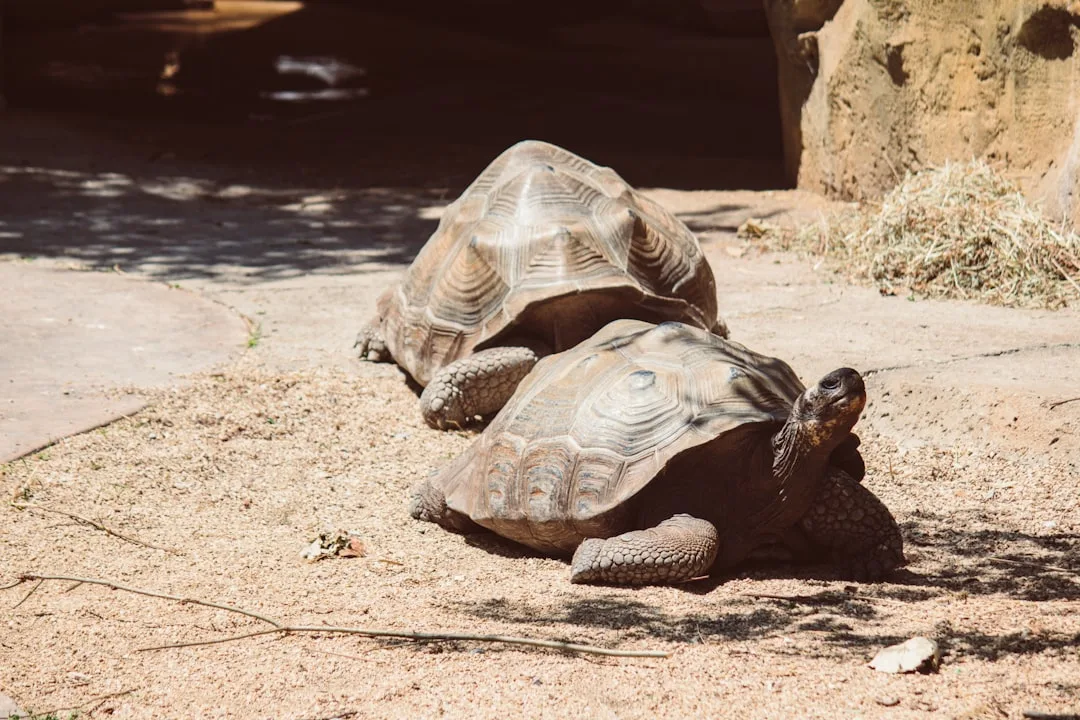
The Galapagos tortoise is the largest living tortoise species on Earth, the heaviest terrestrial reptile outside the crocodilians, and one of the longest-lived animals ever documented.
Chelonoidis niger is not a single species but a complex of closely related forms - originally 15 recognised species or subspecies, of which 10 to 12 survive today - each confined to a specific island or volcano within the Galapagos archipelago off the coast of Ecuador.
Variation between these island populations helped Charles Darwin formulate his theory of natural selection, and the tortoises remain central to evolutionary biology, conservation science, and the public imagination nearly two centuries later.
This guide covers every significant aspect of Galapagos tortoise biology and ecology: taxonomy, shell shape and function, size, diet, reproduction, lifespan, the history of human exploitation, the extinction of Lonesome George, the astonishing recovery programmes on Espanola and Pinzon, and the conservation outlook. It is a reference entry, not a summary - expect specifics: kilograms, centimetres, dates, and documented records.
Etymology and Classification
The genus name Chelonoidis derives from the Greek chelone meaning 'tortoise' combined with the suffix -oides meaning 'resembling'. The species epithet niger, Latin for 'black', refers to the dark colour of the adult shell. The name was formally applied by the French naturalist Jean-Baptiste de Lamarck, but the taxonomy has been rearranged many times. For decades the group was placed in the genus Geochelone.
Modern molecular work has settled the Galapagos tortoises firmly within Chelonoidis, a genus that also contains the South American red-footed and yellow-footed tortoises.
The single-species traditional view treated all Galapagos tortoises as Chelonoidis nigra with multiple subspecies. Genetic and morphological work since 2010 has split the complex into a series of full species in many reference lists, though the International Commission on Zoological Nomenclature has not fully resolved the matter.
Fifteen populations have historically been recognised, spread across ten islands and several separate volcanoes on Isabela Island. Each has its own evolutionary history, its own shell shape, and in some cases its own extinction story.
In Spanish the animals are called galapagos, an old word for saddle - the same root as the archipelago's own name. Early Spanish sailors noticed the saddleback shell shape and named the islands after their most conspicuous inhabitant. In English the common name 'giant tortoise' is often applied loosely to both the Galapagos and Aldabra species, which are not closely related but look superficially similar through convergent evolution.
Size and Physical Description
Galapagos tortoises are the largest tortoises alive today. Size differences between islands are extreme, larger than differences between many distinct species elsewhere. Sexual dimorphism is also pronounced, with males roughly twice the mass of females.
Males (large-island populations):
- Carapace length: 1.2-1.8 metres
- Weight: typically 250-400 kg, maximum recorded 417 kg
- Shell height: 60-85 cm at the dome
Females:
- Carapace length: 0.9-1.2 metres
- Weight: typically 100-200 kg
- Smaller head, shorter neck, flatter shell
Hatchlings at emergence:
- Carapace length: 7-10 cm
- Weight: approximately 50 grams - about the mass of a chicken egg
The carapace, or upper shell, is fused to the spine and ribs and cannot be removed without killing the animal. It is covered in keratin plates called scutes, which grow from the edges throughout life and carry faint concentric rings that loosely indicate growth seasons. The plastron, or lower shell, is likewise fused to the pectoral and pelvic girdles.
Both surfaces are thick, often more than two centimetres in adults, and absorb calcium from the diet throughout life. The limbs are heavy, column-like, and covered in hard keratinised scales that protect against the lava rock and cactus spines that dominate Galapagos terrain.
Galapagos tortoises are slow. The top sustained walking speed recorded for a large adult is roughly 0.3 kilometres per hour - about 0.08 metres per second. Individual tortoises nonetheless cover substantial distances during seasonal migrations, moving from humid highlands to arid lowlands and back over weeks or months. Old animals develop deep, smooth trails through lava fields from generations of repeated passage.
The Two Shell Shapes
The most famous feature of Galapagos tortoise biology is the division of the species complex into two principal shell morphologies, each matched to a different island environment. A third intermediate form exists on some islands with mixed conditions.
Domed shells (humid, high-elevation islands):
- Rounded, helmet-like profile
- Short neck, limited vertical reach
- Occur on Santa Cruz, Alcedo volcano, Santiago, San Cristobal
- Tortoises feed on low-growing grasses and herbs
- Typically larger body size than saddlebacks
Saddleback shells (arid, low-elevation islands):
- Raised, flared front opening above the neck
- Long neck and long legs
- Occur on Espanola, Pinzon, Pinta, Fernandina
- Tortoises feed on cactus pads well above ground level
- Smaller body size, more mobile
The saddleback form is a textbook example of adaptation. On arid islands where little grows at ground level during long dry seasons, the dominant food plant is Opuntia echios, a tree-like prickly pear cactus that can grow to several metres tall. Saddleback tortoises evolved both a modified shell that allows vertical neck extension and longer limbs that extend the reach further. A fully extended saddleback can feed from pads more than one metre above the ground.
When Charles Darwin visited the Galapagos in September and October 1835 he did not at first grasp the significance of island-specific tortoise variation. The vice-governor of the archipelago, Nicholas Lawson, told him that experienced locals could identify any tortoise's island of origin at a glance from the shell.
Darwin later wrote that this observation stayed with him and contributed to his insight that isolated populations can diverge into distinct forms through cumulative adaptation - the foundation of his theory of natural selection published in On the Origin of Species in 1859.
Habitat and Range
Galapagos tortoises are endemic to the Galapagos Islands, a volcanic archipelago roughly 1,000 kilometres west of mainland Ecuador. They are found nowhere else on Earth in the wild. Different species occupy different islands, and on the large island of Isabela several species occupy separate volcanoes that are reproductively isolated by barren lava fields.
Primary island distribution:
| Island / volcano | Species / form | Shell type | Status today |
|---|---|---|---|
| Santa Cruz | C. porteri, C. donfaustoi | Domed | Vulnerable / Endangered |
| Espanola | C. hoodensis | Saddleback | Critically Endangered |
| Pinzon | C. duncanensis | Saddleback | Vulnerable |
| San Cristobal | C. chathamensis | Intermediate | Endangered |
| Santiago | C. darwini | Intermediate | Endangered |
| Isabela (Alcedo) | C. vandenburghi | Domed | Vulnerable |
| Isabela (Wolf) | C. becki | Saddleback | Vulnerable |
| Isabela (Darwin) | C. microphyes | Intermediate | Critically Endangered |
| Isabela (Sierra Negra) | C. guentheri | Intermediate | Critically Endangered |
| Isabela (Cerro Azul) | C. vicina | Domed | Critically Endangered |
| Pinta | C. abingdoni | Saddleback | Extinct (2012) |
| Floreana | C. niger niger | Saddleback | Extinct (1850s) |
| Fernandina | C. phantasticus | Saddleback | Critically Endangered (1) |
| Santa Fe | (unnamed) | Saddleback | Extinct (19th century) |
Within an island, individual tortoises move seasonally between the humid highlands - where mist, cloud forest, and pampa grasslands provide grazing during the dry season - and the arid lowlands, where Opuntia and other drought-adapted plants remain available. Well-worn tortoise trails carved over centuries connect these zones, often following the gentlest gradients through volcanic terrain.
Diet and Water Strategy
Galapagos tortoises are strict herbivores. The diet varies by island, season, and the tortoise's individual size but consistently includes more than 50 plant species.
Typical food plants:
- Grasses and sedges in highland pampa
- Opuntia cactus pads (a staple on arid islands)
- Leaves of Scalesia, Miconia, Zanthoxylum
- Fruits of guava, passion flower, and manzanillo (poisonous to many animals)
- Mosses, lichens, ferns
- Occasional carrion or rodent carcasses opportunistically
Adults in rich conditions consume 30 to 40 kilograms of vegetation per day. The animals are inefficient digesters; food takes up to three weeks to pass through the gut, giving symbiotic bacteria ample time to break down cellulose. Opuntia cactus is particularly important on arid islands because its pads contain large amounts of water as well as carbohydrates. Tortoises ingest spines apparently without discomfort - the spines soften during the long gut transit and are passed with the faeces.
The most famous feature of Galapagos tortoise physiology is the capacity to survive long fasts. A healthy adult can go up to one year without food or fresh drinking water and recover fully when conditions improve. Body fat is metabolised to generate energy, and one of the by-products of fat catabolism is water - so-called metabolic water.
A large Galapagos tortoise carries enough stored fat to produce several litres of metabolic water over the course of a year. This adaptation evolved for survival of volcanic-island droughts, and it had a devastating side-effect: it made the tortoises an extraordinary food resource for pre-refrigeration sailors, who exploited the trait for more than a century.
Life Cycle and Reproduction
Galapagos tortoise reproduction is slow, extended, and temperature-dependent. Both sexes reach sexual maturity late, between 20 and 40 years of age depending on food availability and latitude, and females continue laying eggs into their second century.
Mating takes place during the warm, wet season from January to May, varying by island. Males grow much larger than females and compete for mating access by neck-stretching contests: the two males face off, stretch their necks vertically, and the one that can hold its head higher wins. The loser retreats. This ritual is one reason saddleback males evolved such extreme vertical reach - dominance displays as well as feeding.
Copulation is a loud, prolonged affair; the male's rhythmic bellowing during mating is the only meaningful vocalisation Galapagos tortoises produce. Females are receptive for a narrow seasonal window and store sperm for many months, so a single mating can fertilise clutches laid long afterward.
Nesting cycle:
- Female migrates to arid lowland nesting area (June-December)
- Excavates a flask-shaped nest cavity 30 cm deep with her hind feet
- Lays 2-16 spherical eggs, each 5-7 cm across and 80-150 grams
- Seals the nest with a plug of mud and urine that hardens into a crust
- Abandons the nest; no parental care
Sex of the hatchlings is determined entirely by incubation temperature, a system known as temperature-dependent sex determination. Nests incubated above roughly 29.5 degrees Celsius produce predominantly females; cooler nests produce predominantly males. This makes climate change a subtle but significant long-term threat - sustained warming could skew sex ratios across entire populations.
Incubation takes 110 to 175 days depending on temperature and nest depth. Hatchlings emerge during the wet season and dig their way to the surface over several days. They weigh about 50 grams and measure 7 to 10 centimetres. Mortality in the first few years is brutal: introduced rats, pigs, fire ants, and feral cats attack hatchlings, and even without invasives the native Galapagos hawk takes a significant share.
A Galapagos tortoise that reaches 25 cm carapace length is effectively safe from non-human predators for the rest of its life.
Lifespan
Galapagos tortoises are among the longest-lived animals ever studied. Wild individuals routinely exceed 100 years; 150 is not unusual. Precise ages are difficult to verify because the first decades of a wild tortoise's life are rarely documented, but several captive individuals have clear provenance.
Documented long-lived individuals:
- Harriet (Galapagos tortoise, Australia Zoo): believed collected as a juvenile by HMS Beagle in 1835 and died 23 June 2006 at approximately 175 years.
- Jonathan (Aldabra giant tortoise, Saint Helena): hatched around 1832, still alive in 2024 at approximately 192 years - the oldest known living land animal.
- Diego (Espanola tortoise, Galapagos): approximately 100 years old when retired from the breeding programme in 2020.
- Lonesome George (Pinta Island tortoise): estimated 100+ at death in 2012.
Causes of eventual death in captivity include cardiovascular disease, kidney failure, and gradual organ decline. Wild tortoises can die from volcanic eruption, drought, landslide, parasitic infestation, or predation on hatchlings, but healthy adults have no significant natural predators and most appear to die of senescence.
Human Exploitation and Population Collapse
The Galapagos archipelago was officially discovered in 1535 by the bishop of Panama, Fray Tomas de Berlanga, whose ship was blown off course while sailing to Peru. Through the next two centuries the islands were used as hideouts by English and Dutch pirates, and from the late 1700s by whalers and sealers from the United States and Britain.
Galapagos tortoises became the perfect long-voyage food. A single adult weighed hundreds of kilograms, could be kept alive in a ship's hold for up to a year without food or water thanks to its fat reserves, provided an enormous quantity of fresh meat when slaughtered, and rendered a valuable fine oil from its body fat.
Whaling logs from the late 18th and early 19th centuries record the taking of 100,000 to 200,000 tortoises between roughly 1780 and 1860. Archaeologists excavating known pirate and whaler camps on several Galapagos islands regularly find dense deposits of tortoise shell fragments and butchered bones - a direct record of the slaughter.
Human exploitation extinguished the Floreana population outright by the 1850s, drove the Santa Fe population to extinction in the 19th century, and reduced most other populations to small fractions of their original numbers. A parallel process of habitat destruction and introduced species arrived with the first permanent human settlements in the 1800s. Goats, pigs, donkeys, rats, cats, and fire ants spread from settled areas and attacked eggs, hatchlings, and adult food supplies.
By the mid-20th century several species were down to a few dozen surviving individuals each. The Espanola population was reduced to 14 adults - 12 females and 2 males - scattered across a 60-square-kilometre island. The Pinzon population had not successfully reproduced for more than a century because introduced black rats consumed every hatchling that emerged from the nest.
Conservation Recovery
Galapagos tortoise conservation since the 1960s has produced some of the most dramatic recovery stories in modern wildlife management.
Espanola programme:
In 1965 the Galapagos National Park and the Charles Darwin Foundation began collecting the 14 surviving Espanola tortoises for a captive breeding programme at the Fausto Llerena Tortoise Center on Santa Cruz. A single male, known as Diego, was repatriated from the San Diego Zoo in 1976 after decades in the United States.
Diego proved exceptionally vigorous and is estimated to have fathered around 800 of the 2,000-plus Espanola tortoises produced by the programme over the following four decades. He was retired back to Espanola in 2020 along with the remaining breeding adults, after the wild population was judged to be self-sustaining again.
Pinzon programme:
The Pinzon population had collapsed because black rats ate every hatchling. From 1965, National Park rangers collected eggs and hatchlings, reared them to a 'rat-proof' carapace size of roughly 25 centimetres, and released them back to the island. In 2012 an aerial rodenticide operation eradicated rats from Pinzon entirely. In 2014 conservationists confirmed that wild-born hatchlings were surviving on Pinzon for the first time in over a century.
Other programmes:
Similar captive breeding and repatriation programmes have been run for Santiago, San Cristobal, several Isabela volcano populations, and Floreana (using mixed-ancestry tortoises descended from Floreana animals taken by whalers and later interbred with other species in captivity).
Invasive species eradication continues, with large-scale goat removal from Pinta, Santiago, and northern Isabela completed by 2006. Native vegetation, and with it natural tortoise reproduction, has rebounded dramatically on these islands.
Fernandina rediscovery:
The Fernandina tortoise (Chelonoidis phantasticus) was known from a single male specimen collected in 1906 and was presumed extinct for more than a century. In February 2019 a team of scientists searching the volcanic lowlands of Fernandina found a single adult female, an elderly animal estimated to be over 100 years old. Genetic testing confirmed she belonged to the lost species.
She was transferred to the Santa Cruz breeding centre, and ongoing expeditions are searching for any remaining males to restart the lineage.
Conservation Status and Remaining Threats
The IUCN Red List classifies the various Galapagos tortoise species across several categories from Vulnerable to Critically Endangered. All are protected under Ecuadorian law and the Galapagos National Park regulations, and all are listed on CITES Appendix I, banning international commercial trade.
Primary current threats:
- Invasive species. Rats, pigs, fire ants, cats, and dogs remain active threats to eggs and hatchlings on several islands. Eradication is expensive and must be near-perfect to be effective.
- Climate change. Warming threatens to skew hatchling sex ratios toward females and alters rainfall patterns that determine Opuntia productivity. The 1997-98 El Nino caused documented adult mortality on several islands.
- Habitat alteration. Agricultural expansion in the humid highlands of Santa Cruz, San Cristobal, and Floreana has reduced the area of native forest and pampa available to tortoises.
- Road mortality. Tourism and population growth on Santa Cruz have produced a network of paved roads that now cross key seasonal migration routes. Tortoises killed by vehicles are a measurable loss from the population.
- Wildlife trafficking. Illegal collection of hatchlings for private collections persists despite enforcement. A 2021 seizure recovered 185 Galapagos tortoise hatchlings packed in a single suitcase at Baltra airport.
Current global population across all surviving species is estimated at roughly 60,000 - recovered substantially from the 3,000 or so tortoises thought to have survived in 1974, but still a small fraction of the pre-exploitation total of 200,000 to 300,000.
Relationship with Humans
Beyond exploitation and conservation, Galapagos tortoises have an outsized cultural and scientific presence. They gave their name to the entire archipelago, inspired the most influential biological theory of the modern era, and remain the single most recognisable symbol of the Galapagos National Park. The image of a solitary giant tortoise silhouetted against a lava field is the default visual shorthand for the islands in travel writing, nature documentaries, and scientific publishing.
Researchers use the tortoises as flagship species to draw international attention and funding to the Galapagos conservation effort as a whole. Ecotourism generates substantial income for both the Galapagos National Park and the Ecuadorian government, and regulated tortoise viewing tours in the Santa Cruz highlands and at the Fausto Llerena Tortoise Center are among the most popular activities for visiting travellers.
Careful management of visitor numbers, paths, and seasonal access protects the animals while making the species one of the most closely observed wild reptiles in the world.
Galapagos tortoises also feature in ongoing research on longevity, ageing, and cancer resistance. Like other large, long-lived animals, they show remarkably low rates of tumours for their body size, and researchers are beginning to investigate the genetic mechanisms responsible.
Related Reading
- Giant Tortoises of the World: Evolution, Ecology, and Conservation
- Lonesome George and the Extinction of the Pinta Island Tortoise
- Darwin's Galapagos: How Island Wildlife Inspired Evolution
- Tortoise vs Turtle: How to Tell the Difference
References
Relevant peer-reviewed and governmental sources consulted for this entry include IUCN Tortoise and Freshwater Turtle Specialist Group status assessments (2017-2023), Galapagos National Park Directorate annual reports, the Charles Darwin Foundation scientific database, and published research in PLOS ONE, Molecular Ecology, Conservation Genetics, and Heredity.
Population figures reflect the most recent consolidated estimates available through 2024. Historical exploitation numbers draw on Townsend's whaling log analyses and subsequent archaeological work on Galapagos pirate and whaler camps.
Frequently Asked Questions
How big do Galapagos tortoises get?
Galapagos tortoises (Chelonoidis niger) are the largest living tortoise species on Earth. Adult males reach carapace lengths of 1.2 to 1.8 metres and weigh 250 to 400 kilograms, with the heaviest reliably recorded individuals exceeding 417 kg. Females are substantially smaller, typically 0.9 to 1.2 metres in carapace length and 100 to 200 kg.
Hatchlings emerge from the egg at just 7 to 10 centimetres long and weigh about 50 grams - roughly the mass of a chicken egg. Growth is slow and continuous for decades; a wild tortoise may need forty years to approach full adult size.
Why do Galapagos tortoises have different shell shapes?
Galapagos tortoises exhibit two main shell morphologies that correspond to island environment. Tortoises from wet, high-elevation islands like Santa Cruz developed rounded ‘domed’ shells and feed on low-growing vegetation. Tortoises from arid low islands like Espanola and Pinzon evolved ‘saddleback’ shells with a raised front opening that allows the neck to extend high and reach cactus pads, which become the main food source in drought.
A third ‘intermediate’ form occurs on some islands with mixed habitats. Darwin noted these differences in 1835 and the vice-governor of the Galapagos told him he could identify any tortoise’s island of origin by its shell - a remark Darwin later cited as helping crystallise his thinking about adaptation and natural selection.
What do Galapagos tortoises eat?
Galapagos tortoises are strict herbivores. Their diet consists of more than fifty plant species including grasses, vines, cactus pads (Opuntia), leaves, flowers, fruits, lichens, and occasionally carrion when encountered. Cactus is particularly important on arid islands because it provides both food and water. Tortoises can eat the sharp spines without apparent discomfort - the spines soften during digestion.
Adults consume 30 to 40 kilograms of vegetation per day when food is abundant. During dry seasons they can fast for months. Experimental studies confirm that a healthy adult can survive up to one year without food or fresh water by metabolising fat stores, which release water as a chemical by-product of fat breakdown.
How long do Galapagos tortoises live?
Galapagos tortoises are among the longest-lived vertebrates on Earth. Wild individuals typically live 100 to 150 years. Captive tortoises with veterinary care and consistent nutrition routinely exceed these figures. Harriet, a Galapagos tortoise held at Australia Zoo and thought to have been collected as a juvenile by Charles Darwin’s Beagle voyage, died in 2006 at an estimated 175 years of age.
Jonathan, a related Aldabra giant tortoise living on Saint Helena, was hatched around 1832 and remains alive in 2024, making him the oldest known living land animal at approximately 192 years. Sexual maturity is reached at 20 to 40 years, and females continue laying eggs into their hundreds.
Are Galapagos tortoises endangered?
Yes. All surviving Galapagos tortoise species are listed by the IUCN as Vulnerable, Endangered, or Critically Endangered. Historically there were 15 recognised species or subspecies within the Chelonoidis niger complex.
Three are extinct: the Floreana tortoise (C. niger niger) was lost by the mid-1800s; the Santa Fe tortoise vanished in the 19th century; and the Pinta Island tortoise (C. abingdoni) went extinct on 24 June 2012 when Lonesome George died at the Charles Darwin Research Station. The Fernandina tortoise was presumed extinct for over a century until a single female was rediscovered in 2019.
Current global population across all surviving species is roughly 60,000, down from an estimated 200,000 to 300,000 before human arrival.
Who was Lonesome George?
Lonesome George was the last known individual of the Pinta Island tortoise (Chelonoidis abingdoni). He was discovered alone on Pinta Island in 1971 after the subspecies had been thought extinct. Conservationists transferred him to the Charles Darwin Research Station on Santa Cruz Island where they searched for a mate for over forty years, offering rewards and genetic screening.
No female Pinta tortoise was ever found, and attempts to breed George with closely related females produced either infertile eggs or eggs that failed to hatch. He died on 24 June 2012 of natural causes, estimated to be over 100 years old. His preserved body is displayed at the Galapagos National Park, and his extinction is considered one of the most publicly mourned species losses of the modern era.
What threats do Galapagos tortoises face today?
The dominant historical threat was direct exploitation. Between roughly 1780 and 1860, pirates, whalers, and sealers removed an estimated 100,000 to 200,000 tortoises to eat during long voyages, because the animals could survive many months in ship holds without food or water. Modern threats are different but serious: invasive species including rats, pigs, goats, donkeys, dogs, and fire ants attack eggs, hatchlings, and nesting sites.
Goats and donkeys compete for vegetation and destroy habitat. Climate change is altering rainfall patterns on several islands, affecting the availability of Opuntia cactus. Illegal wildlife trade occasionally targets hatchlings for exotic pet markets. Road mortality on Santa Cruz has become a measurable threat as tourism infrastructure expands.
How successful has Galapagos tortoise conservation been?
Galapagos tortoise conservation includes some of the most celebrated recovery stories in modern wildlife management. The Espanola population was reduced to just 14 surviving adults by 1960. Beginning in 1965, the Galapagos National Park and the Charles Darwin Foundation collected those animals for a captive breeding programme that has since produced more than 2,000 repatriated tortoises.
One male known as ‘Diego’, returned to the Galapagos from the San Diego Zoo in 1976, fathered an estimated 800 offspring and is credited with reviving the subspecies on his own. Similar programmes on Pinzon, Santiago, and other islands have brought populations back from critical levels. Invasive species eradication - particularly the removal of goats from Pinta and Santiago - has restored native vegetation and allowed natural reproduction to resume.