
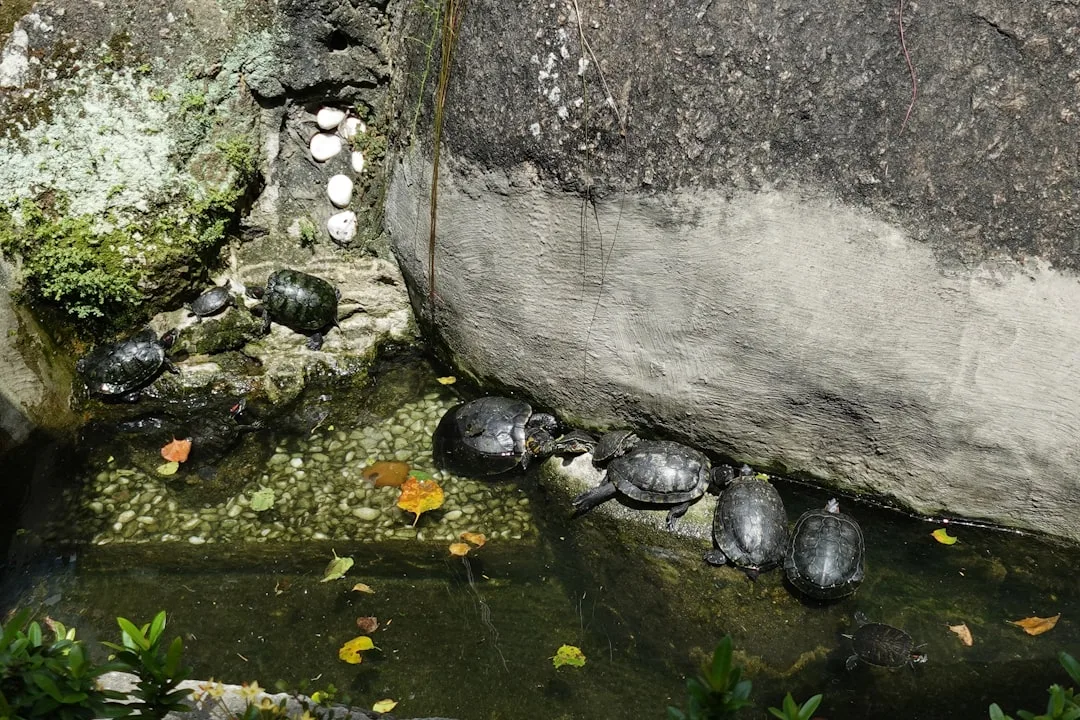
The green sea turtle is one of seven living sea turtle species and the only one whose adults are strictly herbivorous. Unlike loggerheads that crush crabs or leatherbacks that hunt jellyfish across oceanic deserts, Chelonia mydas spends most of its long adult life grazing on underwater meadows of seagrass and algae.
That diet is the origin of the species' common name: the turtle's shell is not green, but the fat beneath it takes on a distinct greenish hue from a lifetime of plant pigments. The green sea turtle is also one of the most-traveled reptiles on Earth, one of the longest-lived, and one of the most vulnerable to a changing climate.
This guide covers every major aspect of green sea turtle biology and ecology: size and anatomy, diet and grazing behaviour, migration and navigation, nesting and reproduction, threats and conservation status, and the strange facts that set Chelonia mydas apart from every other reptile in the sea. It is a reference entry, not a summary - expect specifics: kilograms, kilometres, temperatures, dates, and verified records.
Etymology and Classification
The scientific name Chelonia mydas was published by Carl Linnaeus in 1758 in the tenth edition of Systema Naturae, making the green sea turtle one of the first marine reptiles formally described under modern taxonomy.
Chelonia derives from the Greek chelone, meaning tortoise, and mydas is a Latinised form of a Greek word meaning wet or damp - appropriate for a reptile that spends essentially all of its life in the sea.
In English the species has been called the green turtle, the edible turtle, and historically the soup turtle, a reference to the commercial slaughter that nearly eliminated several populations in the 18th and 19th centuries.
The green sea turtle sits inside the family Cheloniidae, which contains six of the seven living sea turtle species. The seventh, the leatherback, is placed in its own family (Dermochelyidae) because of its radically different shell structure. Cheloniid sea turtles all share a fused bony carapace covered in keratin scutes, powerful front flippers used for propulsion, and specialised salt glands near the eyes that excrete excess salt.
Taxonomic placement:
- Kingdom: Animalia
- Phylum: Chordata
- Class: Reptilia
- Order: Testudines
- Family: Cheloniidae
- Genus: Chelonia
- Species: C. mydas
The sea turtle lineage is ancient. Fossils very similar to modern sea turtles appear in Cretaceous rocks roughly 110 million years old. The direct ancestors of Chelonia mydas swam past dinosaurs, survived the asteroid impact that ended the Cretaceous, and have occupied warm oceans essentially unchanged in basic body plan for tens of millions of years.
Genetic data support two major evolutionary lineages within the species - an Atlantic-Mediterranean group and an Indo-Pacific group - with some authorities recognising the eastern Pacific black turtle as a subspecies or even separate species (C. agassizii).
Size and Physical Description
Green sea turtles are large reptiles, second in mass among living sea turtles only to the leatherback. Adult size varies by population, with Indo-Pacific individuals typically heavier than Atlantic ones.
Adults:
- Carapace length (straight): 1.0-1.2 metres
- Weight: typically 110-200 kilograms
- Record weight: 395 kilograms (the heaviest hard-shelled sea turtle ever reliably recorded)
- Flipper span: roughly equal to carapace length
Hatchlings:
- Carapace length: approximately 5 centimetres
- Weight: 20-30 grams
- Dark grey or black dorsally, white ventrally for ocean camouflage
The carapace is heart-shaped when viewed from above, relatively flat compared with the more domed shells of freshwater turtles, and covered in four lateral scutes per side that do not overlap. Colour ranges from olive-brown to grey, black, or yellow with marbled, streaked, or radiating patterns. Unlike the loggerhead, the green turtle has a single pair of prefrontal scales between its eyes - a reliable field identification feature.
The beak is finely serrated along the lower jaw edges and functions like a lawn mower blade, slicing through seagrass and algae. Front flippers are long and paddle-like, providing nearly all forward propulsion during swimming. Rear flippers are smaller and used mostly for steering at sea and for digging nest chambers on land. Each front flipper typically has a single claw in juveniles, often lost in adults.
Adult males differ from females by having a much longer, prehensile tail that extends well beyond the edge of the shell and is used to grip the female during mating.
Habitat and Distribution
Green sea turtles occupy tropical and subtropical oceans worldwide, generally between 30 degrees north and 30 degrees south latitude. They are found in all three major ocean basins - Atlantic, Pacific, and Indian - as well as in the Mediterranean, Caribbean, Red Sea, and Persian Gulf. Their lives are split across several distinct habitat types.
Life-stage habitats:
- Nesting beaches: warm, open sand beaches on tropical and subtropical coasts and oceanic islands
- Pelagic juvenile phase: open-ocean gyres and floating sargassum mats, where hatchlings drift for 3 to 5 years
- Adult feeding grounds: shallow coastal waters with extensive seagrass meadows and algae-covered reefs
- Migratory corridors: open ocean routes connecting feeding and nesting sites
Globally important adult feeding aggregations include the Caribbean seagrass meadows (Bahamas, Nicaragua, Cuba), the Gulf of California, the Coral Triangle (Indonesia, Philippines, Papua New Guinea), the Great Barrier Reef, the Red Sea, and the broader Indian Ocean. Major rookeries - the concentrated nesting beaches where most global reproduction happens - are a much smaller set of very specific sites, discussed below.
The species prefers water temperatures above roughly 20 degrees Celsius. Cold stuns, where turtles become immobilised and float helplessly when sudden cold fronts drop water temperatures below about 10 degrees Celsius, are a routine hazard in places like the Texas Gulf Coast and the central Atlantic coast of Florida each winter.
Diet and Grazing Behaviour
Adult green sea turtles are the only strictly herbivorous sea turtles. The dietary shift from omnivory to herbivory occurs when juveniles recruit from the open ocean into coastal foraging habitat, somewhere between three and eight years of age.
Adult diet:
- Seagrasses, especially turtle grass (Thalassia testudinum), manatee grass (Syringodium filiforme), and tropical eelgrasses
- Marine algae - red, green, and brown seaweeds
- Mangrove leaves and fruits where available
- Small amounts of sponges, jellyfish, and invertebrates consumed incidentally
Juvenile diet (pelagic phase):
- Jellyfish and siphonophores
- Small crustaceans
- Fish eggs
- Tunicates and pelagic snails
- Floating plant and algal material
A foraging adult can crop a patch of seagrass down to a short, lawn-like turf. This grazing pressure is ecologically important: seagrass meadows grazed consistently by turtles produce more nutritious young shoots, resist certain diseases better, and support a different community of associated species than ungrazed meadows.
Entire Caribbean seagrass ecosystems appear to have co-evolved with turtle grazing over millions of years, and the near-extirpation of turtles from many regions since colonisation has measurably changed those meadows.
The green pigment that gives the species its name concentrates in body fat from chlorophyll and carotenoids absorbed through years of plant consumption. It is one of the few cases in which a vertebrate's common name refers to an internal colour rather than external appearance.
A dangerous consequence of the juvenile phase is that hatchlings and young turtles still eat jellyfish-shaped prey. Floating plastic bags, film plastic, and balloons closely resemble jellyfish in the water column, and ingestion is a major cause of juvenile mortality worldwide. Necropsied dead juveniles often contain dozens of plastic fragments.
Migration and Navigation
Green sea turtles undertake some of the longest migrations of any reptile. Adults typically maintain a feeding ground in coastal waters and a nesting beach separated by hundreds to thousands of kilometres, and they shuttle between the two on multi-year cycles.
Migration data:
| Metric | Value |
|---|---|
| Typical feeding-to-nesting distance | 2,500 km |
| Longest documented migration | 4,000+ km (Ascension Island to Brazilian coast) |
| Cruising swim speed | 2.5-3 km/h |
| Burst speed (short sprints) | up to 35 km/h |
| Migration duration | typically 30-60 days one-way |
| Nesting-interval return cycle | every 2-5 years |
The Ascension Island population is one of the most-studied migratory systems in vertebrate biology. Females feed along the Brazilian coast, then swim roughly 2,300 kilometres east across the open Atlantic to nest on a volcanic island only about 12 kilometres across. After laying multiple clutches over several months, they swim back. How a 150-kilogram reptile relocates a tiny island in the middle of the Atlantic with no visual landmarks has been one of the central puzzles of animal navigation.
Experimental and observational work points to a multi-sensor navigation system. Green turtles can detect both the inclination (angle) and intensity (strength) of the Earth's magnetic field. These two values together form a unique magnetic signature for any point on the globe, and the turtles appear to read them like a biological coordinate system. Ocean current cues, celestial information, wave direction, and - near land - chemical recognition of home-beach scent fill in the rest of the picture.
The most striking consequence of this navigation system is natal homing: adult females return to nest on the same beach where they themselves hatched, often decades earlier. Genetic studies at long-monitored rookeries such as Tortuguero show that natal homing is precise to within a few kilometres of coastline in most cases.
Males show much weaker natal fidelity and interbreed among regional populations, which is why mitochondrial DNA (inherited only through females) often shows sharp population structure while nuclear DNA does not.
Reproduction and Nesting Arks
Green sea turtle reproduction is dramatic, synchronised, and concentrated in space. A small number of nesting beaches worldwide - ark sites - host most of the global population's reproduction each year.
Major rookeries:
- Tortuguero, Costa Rica: the largest Atlantic rookery, with 25,000 to 50,000 females nesting per season along a 35-kilometre beach
- Raine Island, Australia: the largest Pacific rookery, hosting up to 64,000 females in a single peak night
- Ascension Island, South Atlantic: an isolated mid-ocean rookery supporting a distinct population
- Ras al Hadd, Oman: the largest Indian Ocean rookery
- Aves Island, Venezuela / Tortuga Bay, Galapagos / Europa Island, Mozambique Channel - additional globally significant sites
Nesting process:
- Females arrive offshore of the nesting beach in mating aggregations weeks before laying.
- Mating takes place in shallow water; females can store sperm from multiple males to fertilise successive clutches.
- A female hauls herself up the beach at night, digs a body pit with all four flippers, then excavates a flask-shaped egg chamber about 50 centimetres deep using only her rear flippers.
- She lays 100-200 leathery white eggs, each roughly the size of a ping-pong ball.
- She covers the nest, camouflages the surface by flinging sand with her front flippers, and returns to the sea.
- The entire process takes 1-3 hours. Females nest 3 to 5 times per season at 10-14 day intervals, then skip 2 to 5 years before the next nesting cycle.
Incubation lasts 45 to 75 days and is entirely driven by sand temperature. The green turtle, like most reptiles, uses temperature-dependent sex determination. At roughly 29 degrees Celsius (the pivotal temperature for most populations), clutches produce a mix of males and females. Cooler nests produce mostly males; warmer nests produce mostly females. This makes sex ratio a climate-sensitive variable - and the trend is already visible.
Hatchlings emerge together, usually at night, scramble across the beach toward the brightest horizon (historically the ocean, increasingly confused by artificial coastal lighting), and enter the surf. Survival is brutal. Predation from ghost crabs, raccoons, birds, monitor lizards, and nearshore fish kills most hatchlings within hours or days. Only about one hatchling in a thousand survives to reproductive age.
The species persists only because females produce 100-200 eggs per clutch, nest multiple times per season, and live long enough to breed over many decades.
Mass Aggregations at Raine Island
Raine Island, a small coral cay on the outer Great Barrier Reef, hosts the largest green sea turtle rookery on the planet. In peak years, aerial surveys have recorded more than 60,000 females nesting on a single night - possibly the largest synchronised reptile reproductive event in the world.
Females arrive in such density that nesting turtles frequently dig into each other's egg chambers, and erosion at the high-tide line can strand hundreds of turtles above their capacity to return to the sea.
Conservation work at Raine Island has included large-scale mechanical reshaping of the beach to reduce egg flooding, fencing to prevent adult strandings, and long-term monitoring of nest success and sex ratios. The island remains a demographic anchor for the entire northern Great Barrier Reef population.
Climate Change and Feminisation
Temperature-dependent sex determination is the primary mechanism linking green sea turtle populations to climate change. The pivotal temperature for this species hovers near 29 degrees Celsius, and the tropical sands where green turtles nest are already close to that threshold.
Recent studies of the northern Great Barrier Reef population - fed by Raine Island hatchlings - found that the population is now more than 99 per cent female. Similar skews have been reported or projected at rookeries across the Caribbean, Cape Verde, and parts of the Indian Ocean.
Short-term effects of feminisation are minor because a handful of males can fertilise many females. Long-term effects are severe. If rookeries produce essentially no male hatchlings for multiple decades, the ageing out of adult males over the species' 70-80 year lifespan will eventually leave populations without reproductive partners.
Conservation responses under active study include beach shading, artificial irrigation to cool sand, and the relocation of nests to cooler microhabitats - all stopgap measures rather than real solutions.
Other climate-linked threats include sea level rise flooding low-lying nesting beaches, storm-driven erosion destroying clutches mid-incubation, and range shifts among seagrass species altering adult foraging grounds.
Population Status and Conservation
The IUCN Red List classifies the green sea turtle as Endangered globally, with a decreasing long-term population trend. Some regional populations are classified independently as Critically Endangered (Mediterranean, parts of Southeast Asia) while others show encouraging recovery trends (Hawaiian, Ascension, Tortuguero) following decades of beach protection.
Primary threats:
- Direct harvest. Hunting of adults for meat and shell, and egg collection from nesting beaches, historically devastated populations and remains significant in parts of Southeast Asia, the Caribbean, and West Africa.
- Fisheries bycatch. Trawl nets, longlines, and gillnets drown tens of thousands of sea turtles each year. Turtle excluder devices in shrimp trawls have reduced mortality but coverage remains partial.
- Plastic pollution. Juvenile turtles mistake plastic bags and film for jellyfish. Ingested plastic can block the gut and cause fatal starvation.
- Coastal development. Beach armouring, seawalls, artificial lighting, and resort construction eliminate or degrade nesting habitat.
- Boat strikes. Fast recreational and commercial vessels routinely injure or kill turtles in shallow feeding grounds.
- Fibropapillomatosis. A tumour-causing disease associated with a herpesvirus affects green turtles at disproportionate rates, especially in nutrient-polluted coastal waters.
- Climate change. Temperature-driven feminisation, sea level rise, and extreme weather affect both nesting and foraging habitat.
Conservation measures that have produced measurable recoveries include long-term beach protection (Tortuguero since 1970, Ascension since the 1970s, Hawaiian rookeries since the 1970s), bycatch reduction gear, legal bans on commercial trade, protected marine areas around seagrass meadows, and hatchery programs that move endangered nests to safer beaches. Progress exists, but the global trajectory still tilts downward.
Predators and Natural Mortality
At every life stage green sea turtles face different predator communities.
Egg and hatchling predators:
- Ghost crabs, raccoons, monitor lizards, pigs, mongooses, foxes
- Frigatebirds, gulls, herons, vultures
- Nearshore fish once hatchlings reach the surf
Juvenile and sub-adult predators:
- Large sharks, especially tiger sharks
- Killer whales in some regions
- Large fish such as groupers and snappers
Adult predators:
- Tiger sharks are the dominant predator of adult green turtles in most of the species' range
- Killer whales occasionally take adults in the eastern Pacific and Australia
- Saltwater crocodiles at some Indo-Pacific nesting beaches
Adult turtles are partly protected by their massive fused shell, but tiger sharks are more than capable of biting through it. In seagrass meadows around places like Shark Bay in Western Australia, predator pressure shapes where turtles graze and how long they remain in any one spot, producing measurable landscape-of-fear effects in the underwater meadow.
Green Sea Turtles and Humans
People and green sea turtles have a long, complicated history. For coastal cultures across the tropics, the species has been a source of food, material, and cultural meaning for thousands of years. Pre-industrial harvest was largely sustainable. Colonial-era commercial harvest was not.
Caribbean populations in particular were reduced by orders of magnitude through the 17th, 18th, and 19th centuries as ships stocked live turtles for long voyages and European markets consumed vast quantities of turtle soup.
Modern human impact takes different forms. Tourism at nesting beaches can be either a major conservation asset or a serious disturbance, depending on how it is managed. Well-run turtle tours at Tortuguero, Oman, and parts of Queensland provide economic incentives to protect beaches and employ former hunters as guides. Poorly managed operations drive females away, trample clutches, and disorient hatchlings with lights.
Indigenous subsistence harvest is still legal and regulated in several countries, typically under quota systems negotiated with local communities. Scientific programs increasingly incorporate traditional ecological knowledge of migration routes, feeding grounds, and historical population size.
Related Reading
- Sea Turtles of the World: An Ancient Lineage at a Crossroads
- Leatherback Sea Turtle: The Ocean's Deepest Diving Reptile
- How Reptiles Determine Sex by Temperature
- Coral Reefs: Marine Biodiversity Hotspots
References
Relevant peer-reviewed and governmental sources consulted for this entry include IUCN Marine Turtle Specialist Group status assessments, NOAA Fisheries green sea turtle recovery plans, the Australian Department of Climate Change, Energy, the Environment and Water Raine Island Recovery Project reports, and published research in Current Biology, Proceedings of the Royal Society B, Ecology Letters, and Biological Conservation.
Specific population and sex-ratio figures reflect the most recent consolidated estimates from the relevant regional management authorities.
Frequently Asked Questions
How big do green sea turtles get?
Adult green sea turtles (Chelonia mydas) typically measure 1 to 1.2 metres in straight carapace length and weigh between 110 and 200 kilograms. The largest reliably recorded individual weighed 395 kilograms, making green turtles the heaviest of the hard-shelled sea turtles - only the leatherback grows larger. Hatchlings emerge from the nest at roughly 5 centimetres long and weigh about 25 grams.
Growth is slow: green turtles take 20 to 40 years to reach sexual maturity, one of the longest maturation times of any reptile. Unlike many reptiles, females and males reach similar adult sizes, but mature males are recognisable by their long, prehensile tails.
What do green sea turtles eat?
Green sea turtles are unique among sea turtles in being strictly herbivorous as adults. They graze on seagrass meadows - especially turtle grass (Thalassia testudinum) and manatee grass (Syringodium filiforme) - and a range of marine algae including red, brown, and green seaweeds. Their finely serrated beak is shaped like a lawn mower blade and slices through tough seagrass blades.
A foraging adult can crop a one-square-metre patch of seagrass down to a lawn-like turf, and entire meadows have co-evolved with turtle grazing. Juveniles are not herbivorous - for their first few years in the open ocean they eat jellyfish, small crustaceans, fish eggs, and floating invertebrates, switching to plants only after they recruit into coastal foraging grounds.
The greenish colour of the body fat, which gives the species its common name, comes from pigments concentrated from this plant-based adult diet.
Where do green sea turtles live?
Green sea turtles inhabit tropical and subtropical oceans worldwide, broadly between 30 degrees north and 30 degrees south latitude, across the Atlantic, Pacific, and Indian Oceans. Adults prefer shallow coastal waters with seagrass meadows, coral reefs, and algae-covered rocky bottoms, while juveniles spend their first years drifting in open-ocean gyres and floating sargassum mats.
Major feeding aggregations occur in the Caribbean, the Gulf of Mexico, the Coral Triangle, the Red Sea, and off northern Australia. Nesting is restricted to warm, open sand beaches and is concentrated at a small number of globally important rookeries - Tortuguero in Costa Rica, Raine Island on the Great Barrier Reef, Ascension Island in the mid-Atlantic, and Oman’s Ras al Hadd among them.
These ark sites collectively account for most of the species’ global reproduction.
Are green sea turtles endangered?
The IUCN Red List classifies the green sea turtle as Endangered globally, with a decreasing long-term population trend. Some regional subpopulations are critically endangered while others are recovering, so the status varies sharply by ocean basin.
Primary threats include coastal development that destroys nesting beaches, direct harvest of eggs and adults for meat and trade, entanglement in fishing gear (especially shrimp trawls and longlines), ingestion of plastic debris (jellyfish-eating juveniles mistake plastic bags for prey), boat strikes, fibropapillomatosis tumours, and climate change.
Climate change is particularly dangerous because green turtles use temperature-dependent sex determination: warmer sands produce more females, and several monitored rookeries now hatch more than 99 per cent females, which can collapse future breeding populations. Conservation successes exist - beaches protected for decades at Tortuguero and Ascension have seen measurable recovery - but global recovery remains far from complete.
How long do green sea turtles live?
Green sea turtles are among the longest-lived reptiles. Wild individuals are estimated to live 70 to 80 years, with some skeletochronological studies suggesting even longer lifespans are possible. They also mature extremely slowly: sexual maturity is reached between 20 and 40 years of age depending on population, food availability, and water temperature. A female may therefore nest for only the last 30 to 50 years of her life.
Females typically breed every 2 to 5 years rather than annually because the energy cost of migration and egg production is so high. Hatchling and juvenile mortality is brutal - roughly one in a thousand hatchlings survives to reproductive age. The population structure is therefore dominated by a small number of very old adults, which makes the species extremely vulnerable to adult mortality from fishing gear and boat strikes.
How far do green sea turtles migrate?
Green sea turtles undertake some of the longest migrations of any reptile. Adults regularly travel more than 2,500 kilometres between coastal feeding grounds and nesting beaches, and some tracked individuals have covered more than 4,000 kilometres in a single round trip.
The Ascension Island population, for example, feeds off the Brazilian coast and swims roughly 2,300 kilometres across the open Atlantic to nest on a tiny volcanic island in the middle of the ocean. Turtles navigate these journeys using a combination of geomagnetic cues, ocean currents, celestial information, and - near the coast - chemical and visual recognition of familiar landmarks.
This magnetic navigation is precise enough that females return not just to the correct continent or beach but often to the specific stretch of sand where they themselves hatched, a phenomenon called natal homing.
How do green sea turtles reproduce?
Reproduction centres on the nesting beach. Mating occurs offshore in shallow water several weeks before nesting, and females can store viable sperm from multiple males to fertilise successive clutches. A nesting female hauls herself up the beach at night, digs a body pit and then a flask-shaped egg chamber about 50 centimetres deep, and lays 100 to 200 leathery white eggs roughly the size of ping-pong balls.
She covers the nest, camouflages the site, and returns to the sea, often without ever seeing her young. Each female nests 3 to 5 times per season at 10 to 14 day intervals, then skips 2 to 5 years before nesting again. Incubation takes 45 to 75 days. Nest temperature determines sex - cooler sands produce males, warmer sands produce females, with the pivotal temperature around 29 degrees Celsius.
Hatchlings emerge together at night, scramble to the surf guided by the brightest horizon, and begin a dangerous pelagic phase that typically lasts 3 to 5 years.
Why is the green sea turtle called 'green' if it isn't?
The common name refers to the colour of the turtle’s body fat and cartilage, not its shell or skin. The carapace of a green sea turtle is actually olive, brown, grey, or black, often with streaked or marbled patterns, and the skin is typically brown or olive. Internally, however, the fat takes on a distinct greenish hue.
That green colour comes from chlorophyll and other plant pigments accumulated from the seagrass and algae the turtles eat throughout their adult lives. European sailors and early whalers, who butchered green turtles for meat and soup during long ocean voyages, named the species after this striking internal colour. The name stuck even though anyone encountering a live turtle in the water would never describe it as green.