
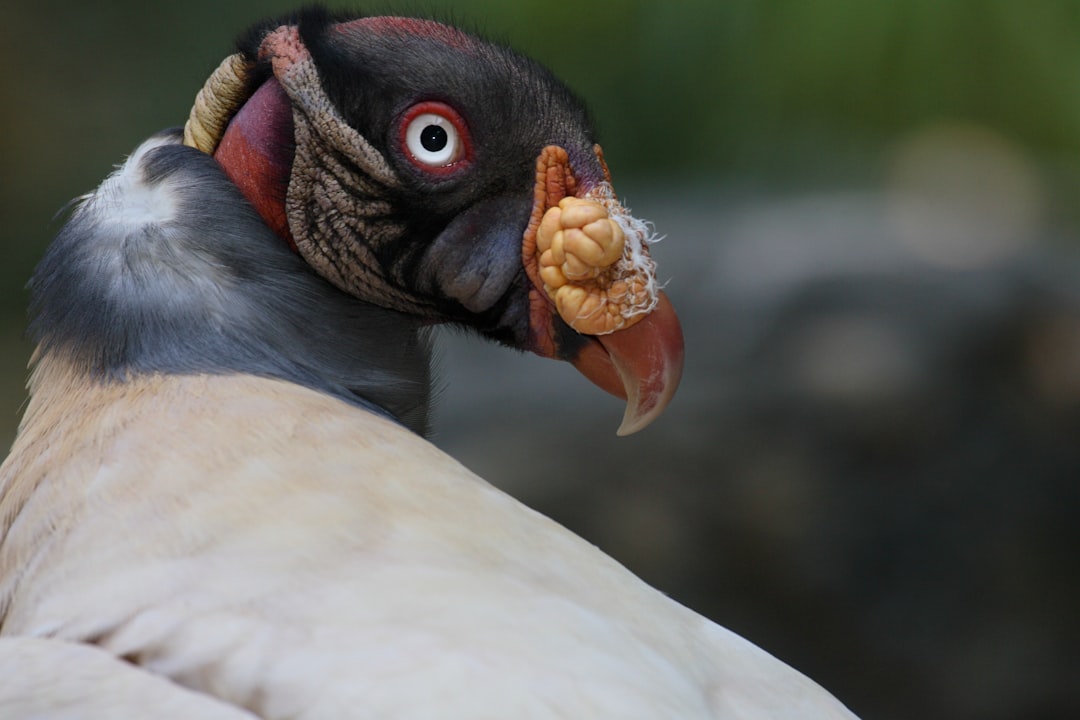
Vultures are often unfairly dismissed as ugly, grim scavengers, but the king vulture (Sarcoramphus papa) shatters that stereotype. With its striking coloration, commanding presence, and important ecological role, this bird of Central and South American forests is one of the most visually stunning scavengers in the world. Far from being a symbol of decay, the king vulture is a vital part of a healthy ecosystem and a remarkable example of how specialized a scavenging bird can become.
A Vulture Unlike Any Other
The king vulture is instantly recognizable. Its body is largely white or cream, contrasting with black flight feathers and tail. But it is the head and neck that truly set it apart. Bare of feathers and splashed with a vivid mix of orange, yellow, red, purple, and blue, the head looks almost painted. Above the beak sits a fleshy, wattle-like structure called a caruncle, which adds to the bird’s distinctive appearance.
The lack of feathers on the head is not just for show. Like other vultures, the king vulture feeds on carcasses, and a bare head is far easier to keep clean than a feathered one when the bird plunges into a carcass to feed. This is a practical adaptation shared across many scavenging birds.
The king vulture is a large bird with a broad wingspan, allowing it to soar for long periods with minimal effort. It rides thermals and air currents high above the forest, scanning the landscape below.
How the King Vulture Finds Food
Vultures are divided into two broad groups based on how they locate carrion. Some rely heavily on smell, while others depend mainly on keen eyesight. The king vulture is primarily a sight-based hunter, but it has a clever trick: it often relies on smaller New World vultures that locate carcasses by scent.
Some of the smaller vultures in its range have an excellent sense of smell and can detect a carcass hidden beneath the forest canopy. The king vulture watches for these birds descending and follows them to the food. Once it arrives, its larger size and powerful beak often allow it to dominate the carcass.
Its strong bill can tear through tough hide that smaller vultures struggle to open, and in doing so it may actually help the smaller birds gain access to the meal. This interplay makes the king vulture a keystone member of the scavenging community.
The Ecological Role of Scavengers
Scavengers like the king vulture perform an essential service. By consuming dead animals, they remove carcasses that would otherwise rot, spread disease, and attract pests. Vultures have remarkably robust digestive systems capable of neutralizing many dangerous bacteria and pathogens, which means they can safely consume material that would sicken other animals. In this way, they act as nature’s cleanup crew, keeping ecosystems healthier for everyone.
The decline of vultures in some parts of the world has demonstrated just how important they are. Where vulture populations have crashed, carcasses linger longer, other scavengers such as feral dogs increase, and the risk of disease can rise. The king vulture’s role in the forests of the Americas is a reminder that even animals associated with death are crucial to life.
King Vulture Compared to Other Vultures
The king vulture stands out among vultures in several ways. The table below highlights some general contrasts.
| Trait | King Vulture | Turkey Vulture | Andean Condor |
|---|---|---|---|
| Region | Central and South America | Widespread in the Americas | Andes of South America |
| Head color | Multicolored, vivid | Red, bare | Dark with pale ruff |
| Size | Large | Medium | Very large |
| Finds food by | Mostly sight, follows others | Excellent smell | Sight |
| Role at carcass | Dominant, opens hide | Locator | Dominant |
The contrast with the turkey vulture is especially interesting. The turkey vulture excels at smelling out food but is smaller, while the king vulture uses its size and strength to take charge once the meal is found. Together they illustrate how different scavengers fill complementary roles.
Behavior and Reproduction
King vultures are generally solitary or found in small numbers, though several may gather at a large carcass. They are not particularly vocal, lacking the syrinx structure that produces complex sounds in songbirds, so they communicate mostly through body language and simple noises.
When it comes to nesting, king vultures do not build elaborate nests. Instead, a pair typically lays a single egg in a natural cavity, such as a hollow tree or a sheltered spot on the ground or rocks. Both parents share incubation duties and care for the chick after it hatches. The young bird grows slowly and depends on its parents for an extended period before it can fend for itself. This slow reproductive rate is common among large birds and means populations recover slowly from losses.
Conservation and Threats
The king vulture is not currently considered among the most threatened birds, but it is not immune to danger. Habitat loss from deforestation is a major concern, as clearing rainforest reduces both the bird’s living space and the availability of the carcasses it depends on. In some areas, hunting and poisoning also pose risks.
Because the king vulture reproduces slowly and depends on large tracts of intact forest, protecting its habitat is the most effective way to ensure its survival. Conserving the forests of Central and South America benefits not only the king vulture but the entire web of life that shares its home.
Built for Soaring
The king vulture’s body is shaped for a life spent aloft. Its broad wings allow it to soar effortlessly on rising columns of warm air called thermals. By riding these thermals, the vulture can stay airborne for long periods while expending very little energy, covering large distances as it scans the landscape for signs of food. This soaring flight is essential for a scavenger, which must search wide areas to find carcasses that appear unpredictably.
Once it spots feeding activity below, whether other vultures descending or the presence of a carcass, the king vulture can glide down to investigate. Its powerful build and strong beak then come into play at the meal. This combination of energy-efficient flight and physical strength at the carcass makes the king vulture superbly adapted to its scavenging way of life. It is a design refined for patience in the air and dominance on the ground.
A Bird Woven Into Culture
Beyond its biology, the king vulture has long held a place in human culture within its range. Its striking appearance made an impression on the peoples of Central and South America, and images resembling the bird appear in the art and iconography of some ancient civilizations of the region.
The vulture’s role as a consumer of the dead gave it symbolic weight, linking it to themes of transformation and the cycle of life. This cultural presence adds a further dimension to the king vulture’s significance, showing that its bold coloration and commanding presence have captured human imagination for a very long time.
A Scavenger Worth Celebrating
The king vulture challenges everything we assume about scavengers. It is beautiful, powerful, and ecologically indispensable. By recycling nutrients, limiting disease, and helping other scavengers access food, it plays a role that keeps its ecosystem functioning. The next time the word vulture brings to mind something grim, the king vulture offers a vivid reminder that these birds are among the most fascinating and valuable creatures in the natural world.
Frequently Asked Questions
Why is the king vulture so colorful?
The king vulture has a bare head and neck splashed with orange, yellow, red, purple, and blue, along with a fleshy caruncle above its beak. The bare skin makes it easier to stay clean while feeding on carcasses, and the bright colors may play a role in recognition and display among the birds. Unlike its dull body, the vivid head makes it one of the most striking vultures in the world. The coloration sets it apart from nearly all other scavenging birds.
How does the king vulture find food?
The king vulture relies mainly on eyesight rather than smell to locate carcasses. It often watches for smaller New World vultures that can detect food by scent beneath the forest canopy, then follows them to the meal. Once there, its larger size and strong beak let it dominate the carcass and tear open tough hide. By opening the carcass, it can even help the smaller vultures access the food.
Why are vultures important to the ecosystem?
Vultures like the king vulture act as nature’s cleanup crew by consuming dead animals. This removes carcasses that would otherwise rot, spread disease, and attract pests. Vultures have powerful digestive systems that can neutralize many dangerous bacteria and pathogens, letting them safely eat material that would sicken other animals. Where vulture populations decline, disease risk and other scavengers can increase, showing how vital they are.
Is the king vulture endangered?
The king vulture is not currently among the most threatened birds, but it faces real risks. Deforestation reduces both its habitat and the carcasses it depends on, and hunting or poisoning threatens it in some areas. Because it reproduces slowly, usually raising a single chick at a time, populations recover slowly from losses. Protecting intact rainforest is the best way to ensure the species survives.