
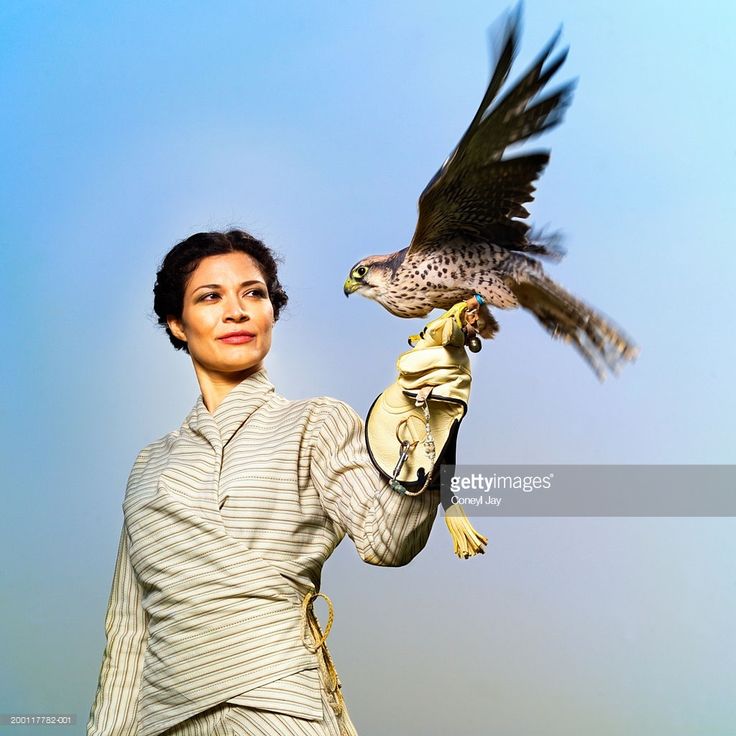
How fast does a peregrine falcon dive?
Peregrine falcons dive at speeds up to 390 km/h (242 mph) during their hunting dive called the 'stoop,' making them the fastest animals on Earth in any environment. The fastest verified peregrine dive was recorded at 389 km/h by researcher Ken Franklin in 2005, using a falcon equipped with a small data logger.
390 Kilometers Per Hour
A peregrine falcon, 1,500 meters above the forest floor, spots a pigeon flying over a clearing. It tucks its wings tight against its body, tilts downward, and begins to fall.
Within seconds, the falcon is moving at 390 km/h - 242 mph. This is faster than the top speed of most supercars, faster than any other animal has ever been measured moving under its own power. A peregrine in dive is, for those few seconds, the fastest animal on Earth.
The pigeon, flying at a leisurely 40 km/h, has no time to react. The falcon strikes with its talons, killing the pigeon instantly with an impact that would destroy nearly any other bird. Both falcon and dead pigeon fall toward the ground, but the falcon recovers its wings, catches the pigeon, and flies away with dinner.
This is the peregrine falcon hunting at the top of aerial speed - an animal that has pushed the physics of powered flight to its absolute limits.
The Speed
Peregrine falcon dive speed is the fastest self-generated motion in any animal.
Record and typical:
- Verified maximum: 389 km/h (242 mph), recorded by researcher Ken Franklin in 2005
- Typical diving speed: 300-320 km/h
- Horizontal flight speed: 65-90 km/h
- Wingspan: 95-115 cm
- Weight: 700-1,500 grams
The verified 389 km/h record came from a trained falcon equipped with a small data-logging device. Claims of higher speeds (over 400 km/h) exist but are not as reliably documented.
How they compare:
- Peregrine falcon dive: 390 km/h
- Golden eagle dive: 320 km/h
- Cheetah (fastest land animal): 110 km/h
- Sailfish (fastest fish): 110 km/h
- Gyrfalcon dive: 200+ km/h
The peregrine is in its own category. No other animal approaches the 390 km/h threshold.
The Stoop
The peregrine's hunting dive is called a "stoop" - a specific technical term in falconry and ornithology.
The sequence:
Climbing: The peregrine ascends to 900-1,500 meters above its intended prey. This altitude provides enough potential energy to reach extreme speeds.
Spotting: Using exceptional vision, the peregrine identifies prey moving in predictable patterns below.
Tucking: The peregrine folds its wings close to its body, creating the most aerodynamic profile possible. The feet tuck back against the belly.
Falling: Gravity accelerates the bird. Air resistance increases with speed, eventually balancing gravitational pull at terminal velocity - approximately 390 km/h for a peregrine's specific shape and mass.
Striking: At impact, the peregrine clenches its talons. The hind talon is the primary weapon - it slashes into the prey, often cutting through the spine or major arteries.
Recovery: The peregrine reopens its wings, decelerates rapidly, and either catches the falling prey in midair or retrieves it from the ground.
Surviving the Dive
Diving at 390 km/h in open air creates extreme physical challenges. Peregrine anatomy includes specific adaptations for high-speed dives.
Nostril tubercles:
Peregrine nostrils contain small cone-shaped bony structures (tubercles) that project into the airflow. At high speeds, air would otherwise rush into the lungs with enough force to damage respiratory tissue.
The tubercles deflect airflow, creating a protective vortex that slows air entry into the lungs. Engineers studying this design later incorporated similar structures into jet engine inlets, which face identical high-speed airflow problems.
Nictitating membrane:
A third eyelid - the nictitating membrane - sweeps across the eye during dives. It keeps the cornea moist, cleans debris, and protects against air impact, while remaining transparent enough for the peregrine to maintain vision.
Specialized eye focus:
High-speed diving requires rapid focus adjustments as prey distance changes quickly. Peregrine eye muscles can refocus far faster than most birds, maintaining sharp vision on prey throughout the dive.
Reinforced skeleton:
Prey impact at 300+ km/h generates forces that would shatter most bird skeletons. Peregrine breast bones, keels, and other impact-bearing structures are reinforced to absorb repeated high-speed collisions.
Large heart and lungs:
The explosive energy expenditure of climbing, diving, striking, and recovering requires abundant oxygen. Peregrine heart and lung capacity exceeds typical bird ratios, supporting sustained peak effort.
Prey Selection
Peregrines are specialists on birds.
Typical prey:
- Pigeons and doves: primary prey in many habitats, including urban environments
- Ducks: shoveler, teal, pintail, other medium-sized ducks
- Shorebirds: sandpipers, plovers, knots
- Songbirds: starlings, robins, blackbirds
- Smaller raptors: occasionally other falcon species
- Urban prey: feral pigeons, European starlings in city environments
Rare prey:
Peregrines rarely take mammals, reptiles, or insects. Their entire hunting strategy is built for catching birds in midair - other prey types are harder to catch and not worth the specialized effort.
Prey size:
Peregrines take prey roughly their own weight or slightly smaller. Very large prey (ducks, geese) are sometimes struck but rarely carried.
Urban Peregrines
The peregrine is one of the most successful urban predators in the modern world.
Why cities work:
Cities provide peregrines with three key resources:
Nesting sites. Skyscrapers function as artificial cliffs. Tall buildings offer ledges, rooftops, and architectural features perfect for falcon nesting. Bridges also provide nesting opportunities.
Abundant prey. Feral pigeons and European starlings thrive in cities. Millions of birds provide an inexhaustible peregrine food supply.
Minimal competition. Few other predators can exploit urban aerial bird populations. Peregrines essentially have the niche to themselves.
Famous urban populations:
- New York City: 20+ breeding pairs
- London: 30+ breeding pairs
- Tokyo: active population
- Chicago: well-established urban peregrines
- Cincinnati, Pittsburgh, Toronto, Paris: all have resident peregrines
Most urban peregrines nest on specific buildings that become famous among local bird watchers. Some buildings host multiple generations over decades.
Human interaction:
Urban peregrines tolerate human presence far more than wild-living falcons. They nest on windowsills, on balconies, and inside building architecture. Office workers often have peregrines visible from their windows.
Peregrine nests are monitored by webcams in many cities, allowing the public to watch eggs hatch and chicks develop.
The DDT Crash
The peregrine's current abundance obscures how nearly they were lost.
The crisis:
In the mid-20th century, DDT (dichlorodiphenyltrichloroethane) was used extensively as an agricultural pesticide. DDT accumulated in predators at the top of food chains, including peregrine falcons.
The mechanism:
DDT caused calcium metabolism problems in birds. Peregrines produced eggs with shells so thin they broke under the weight of incubating parents. Reproduction collapsed.
The decline:
Between 1950 and 1970, peregrine populations plunged:
- Eastern United States peregrines went completely extinct
- Western North American populations dropped 80-90 percent
- European populations suffered similar collapses
- Global population reached critical lows
The response:
- DDT was banned in the United States in 1972
- Similar bans followed in other countries
- Captive breeding programs began, led by organizations like The Peregrine Fund
- Reintroduction programs released thousands of falcons in suitable habitats
- Urban release sites (including New York City) proved highly successful
The recovery:
Peregrine populations rebounded dramatically. Species was removed from the US Endangered Species list in 1999. Global populations are now estimated at 400,000-1 million adult birds, likely higher than pre-DDT populations.
The lesson:
Peregrine recovery is one of the most successful conservation programs in history. It demonstrates that regulating environmental pollution and actively restoring damaged populations can bring species back from the brink.
Peregrines and Humans
Humans have worked with peregrine falcons for thousands of years.
Falconry:
Peregrine falcons have been used in falconry (hunting with trained birds) for over 3,000 years. Ancient cultures across the Middle East, Central Asia, Europe, and Japan developed sophisticated training and breeding programs.
Falconry continues today as a recognized cultural heritage, with major traditions in:
- United Arab Emirates (where falconry is a national passion)
- Saudi Arabia
- Mongolia
- Western Europe
- North America
Pest control:
Peregrines are sometimes used for wildlife management:
- Keeping pigeons away from airports (reducing bird strike risks)
- Scaring nuisance birds from agricultural facilities
- Managing pest birds at landfills and industrial sites
Research:
Peregrines are studied extensively as indicators of environmental health. Their sensitivity to pesticide accumulation made them warning signals for broader ecosystem contamination.
The Physics of Peak Speed
Peregrine dive speed represents an upper limit for biological aerial locomotion.
Flight speed depends on three factors: lift, drag, and energy source. A bird in powered flight is limited by muscle power output. A bird in dive can exceed powered flight speeds by converting gravitational potential energy into kinetic energy.
Terminal velocity - the speed at which drag equals gravitational pull - depends on the body shape, size, and mass of the falling object. A peregrine's aerodynamic profile during the stoop produces terminal velocity of approximately 400 km/h.
To exceed this speed, a peregrine would need to actively flap downward during the dive - adding muscle power to gravity. Some researchers believe peregrines do this occasionally, possibly reaching speeds marginally above 400 km/h, but no such speeds have been reliably verified.
The peregrine is, essentially, a bird evolved to approach the physical limit of what falling animals can achieve. Any faster would require different body proportions that would sacrifice maneuverability. Any slower would reduce hunting effectiveness. The current design is optimized for maximum speed consistent with being a functional hunting bird.
Nothing else on Earth moves faster through its environment under its own power. The peregrine falcon holds an unambiguous record in animal biology - one that cannot be exceeded without abandoning the basic flight and hunt design that makes peregrines what they are.
How Fast Is Really Fast: A Comparative Table
The peregrine's stoop speed is often reported alongside unrelated animal speeds, which produces misleading comparisons. A sailfish at 109 km/h and a cheetah at 113 km/h are land and water top speeds - horizontal velocities produced entirely by muscle power. A peregrine's 389 km/h is vertical, partially gravity-fueled, and sustained for only a few seconds. The Kalenux Team has assembled the verified records to allow a fair comparison.
| Animal | Verified Peak Speed | Movement Type | Notes |
|---|---|---|---|
| Peregrine falcon | 389 km/h | Stoop (vertical dive) | GPS-measured, 2005 |
| Golden eagle | 322 km/h | Hunting dive | Photogrammetry |
| Swift-bird (white-throated needletail) | 169 km/h | Level flight | Radar track |
| Frigatebird | 153 km/h | Sustained cruise | Tag data |
| Sailfish | 109 km/h | Water sprint | Laboratory and field |
| Cheetah | 113 km/h | Land sprint | Video analysis |
| Pronghorn | 90 km/h | Sustained land run | Distance-corrected |
| Sperm whale | 48 km/h | Deep dive | Strong gravity-assist component |
| Usain Bolt (human) | 44.7 km/h | Sprint | Peak over 40 meters |
"The peregrine is in a class by itself. The next closest vertebrate dive speed is the golden eagle at about 320 km/h, and that speed is achieved only in the largest stoops, rarely. For the peregrine, 300-plus km/h is operational, not exceptional." - Tom Cade, founder of The Peregrine Fund, The Peregrine Falcon (1988) [1]
Reproduction and Life History
Peregrines reach sexual maturity at two to three years, though some birds delay breeding until four. They are socially monogamous, maintaining pair bonds through the breeding season and, in many populations, year-round. Courtship is among the most dramatic in the bird world. Males perform aerial displays in which they dive past the perched female at near-stoop speed, climb, and dive again, often while calling loudly.
At the climax of the display, the male presents a fresh kill to the female in mid-air - the gift of prey being the central negotiation of pair formation.
Clutches typically contain three or four eggs, laid at two-day intervals on a bare scrape on a cliff ledge or high structure. Incubation lasts about 32 days, with both sexes sharing the duty though the female does most of the sitting. Chicks fledge at 42 to 46 days and remain dependent on their parents for an additional eight to ten weeks while learning to hunt.
Juvenile mortality is high - estimates from banding studies put first-year survival around 40 percent. Adult birds that survive their first year live an average of 7 to 10 years, with documented wild records exceeding 19 years.
| Life Stage | Duration | Key Behavior |
|---|---|---|
| Egg | 32 days | Incubation, parental turnover |
| Nestling | 42-46 days | Rapid feather growth |
| Post-fledge dependence | 8-10 weeks | Learn stoop, prey selection |
| Juvenile dispersal | Year 1 | Nomadic; high mortality |
| Subadult | Years 2-3 | Territory prospecting |
| Breeding adult | Years 3-19+ | Site fidelity; monogamy |
Urban Colonies and the Modern Falcon
The peregrine is now a characteristic bird of the modern city. In London, New York, Chicago, Tokyo, Sydney, Dubai, and more than 100 other metropolitan areas, peregrines nest on skyscrapers, bridges, and cathedrals. The vertical architecture of cities is essentially indistinguishable from natural sea cliffs from a peregrine's point of view. Rock doves (feral pigeons) provide abundant prey, and the elevated perches of urban structures offer excellent launching points for hunting stoops.
"Urban peregrines are a pre-existing species living in an environment that accidentally suits them perfectly. They did not adapt to the city; the city happens to meet their ancestral requirements." - Chris Sharpe, British Trust for Ornithology, Urban Birds: A Handbook [2]
The Kalenux Team reviewed recent urban peregrine data and found that several North American cities now host higher breeding densities than any natural habitat on the continent. Chicago has more than 20 active nests; New York City has a similar number distributed across bridges and buildings.
Urban peregrines tend to produce larger clutches and higher fledging success than rural pairs, in part because their prey base is more reliable year-round and in part because urban sites are generally free of nest predators like great horned owls.
The urban peregrine population is now self-sustaining and expanding without direct management intervention, a rare outcome for any large predator in human-dominated landscapes.
The urban phenomenon also changed how peregrines are monitored. Live webcams at nest sites like the one on 55 Water Street in Manhattan or the Derby Cathedral in England draw millions of viewers each breeding season. These webcams have transformed public perception of the species and provided continuous behavioral data that rural nests cannot match.
Researchers now routinely use footage from urban nests to study feeding rates, sibling dynamics, and adult turnover - information that in the pre-webcam era required hundreds of hours of intrusive field observation.
Are Falcons the Fastest Animals on Earth?
Yes, but only one falcon species holds the absolute record - the peregrine falcon (Falco peregrinus), which reaches 389 km/h (242 mph) in its hunting stoop, verified by researcher Ken Franklin in 2005 using a trained bird equipped with a data logger. Other falcons are fast but significantly slower: the gyrfalcon dives at 200+ km/h, and saker falcons reach around 200 km/h.
Non-falcon raptors like the golden eagle can stoop at 322 km/h. No falcon comes close to the peregrine in a tucked dive, and no land animal approaches these speeds - cheetahs top out at 113 km/h and sailfish at 109 km/h. The peregrine operates in a velocity regime all its own.
Are Peregrine Falcons the Fastest Animals on Earth?
Yes - the peregrine falcon is unambiguously the fastest animal on Earth, reaching a verified 389 km/h (242 mph) in its hunting dive or "stoop." Typical diving speeds range from 300 to 320 km/h, far exceeding horizontal flight at 65-90 km/h.
The dive begins from altitudes of 900 to 1,500 meters, where the falcon folds its 95-115 cm wings tight and lets gravity accelerate its 700-1,500 gram body to terminal velocity (~400 km/h).
Specialized adaptations make survival possible: bony nostril tubercles deflect high-velocity airflow from the lungs (an aerodynamic principle later copied in jet engine inlet design), a nictitating membrane keeps the cornea moist mid-dive, and reinforced breast and keel bones absorb prey-impact forces that would shatter ordinary bird skeletons.
What Are the Fastest Animals on Earth?
The peregrine falcon leads all animals at 389 km/h in its vertical stoop, followed by the golden eagle at 322 km/h and the gyrfalcon at 200+ km/h. In level flight, the white-throated needletail holds the record at 169 km/h, with the frigatebird's sustained cruise at 153 km/h close behind. On land, the cheetah reaches 113 km/h in short sprints and the pronghorn antelope sustains 90 km/h over longer distances.
In water, the sailfish clocks 109 km/h. For context, the fastest human ever measured - Usain Bolt - peaked at 44.7 km/h. These categories are not directly comparable: peregrine dive speed is gravity-assisted and sustained only for seconds, while pronghorn and cheetah speeds are purely muscle-powered horizontal locomotion.
References
- Cade, T. J., Enderson, J. H., Thelander, C. G., and White, C. M. (1988). Peregrine Falcon Populations: Their Management and Recovery. The Peregrine Fund.
- Sharpe, C. J. (2020). Urban Birds: A Handbook for Conservation and Management. British Trust for Ornithology.
- Ratcliffe, D. A. (1980). The Peregrine Falcon (2nd ed.). T & AD Poyser.
- Ponitz, B., Schmitz, A., Fischer, D., Bleckmann, H., and Bruecker, C. (2014). "Diving-flight aerodynamics of a peregrine falcon." PLOS ONE, 9(2), e86506.
- Tucker, V. A. (2000). "The deep fovea, sideways vision and spiral flight paths in raptors." Journal of Experimental Biology, 203(24), 3745-3754.
Related Articles
- Eagle Vision: 8 Times Better Than Humans
- Fastest Birds in the World
- Raptors: The Apex Predators of the Sky
Frequently Asked Questions
How fast does a peregrine falcon dive?
Peregrine falcons dive at speeds up to 390 km/h (242 mph) during their hunting dive called the ‘stoop,’ making them the fastest animals on Earth in any environment. The fastest verified peregrine dive was recorded at 389 km/h by researcher Ken Franklin in 2005, using a falcon equipped with a small data logger.
To achieve this speed, peregrines climb to altitudes of 900-1,500 meters above their prey, then tuck their wings close to their bodies and dive with gravity pulling them downward. Their aerodynamic profile during the dive is so efficient that they approach the theoretical maximum speed for a bird of their size and weight. No other animal approaches this speed. Cheetahs reach 100 km/h on land (fastest land animal).
Sailfish reach 110 km/h in water (fastest fish). The peregrine exceeds these by nearly 4x, partly because air offers less resistance than water and partly because gravity adds energy during the dive.
How do peregrine falcons survive such high speeds?
Peregrine falcons have evolved specific adaptations to survive their extreme diving speeds. Their nostrils contain small bony tubercles (cone-shaped structures) that deflect airflow and prevent their lungs from being overwhelmed by high-pressure air - engineers later copied this design for jet engine inlets. Their eyes have a third eyelid called a nictitating membrane that constantly moistens and cleans the eye during dives while still allowing vision.
Their eyes also have specialized focusing muscles that compensate for rapid pressure changes. Their skeleton is reinforced in specific areas that experience the highest impact forces during prey strikes - a peregrine that hits a pigeon at 300 km/h experiences forces that would kill most birds. Their heart and lungs are large relative to body size, providing the oxygen needed for the explosive energy expenditure of a dive and recovery.
All these adaptations work together to make the peregrine the only animal able to safely approach the physical limits of high-speed aerial hunting.
What do peregrine falcons eat?
Peregrine falcons eat almost exclusively other birds, catching them in mid-flight. Their primary prey includes pigeons, ducks, shorebirds, songbirds, and smaller raptors. They rarely eat rodents, reptiles, or insects - which would be unusual prey for such a speed-adapted hunter. A peregrine consumes approximately 70-100 grams of meat per day, roughly 15-20 percent of its body weight.
Their hunting technique begins with a high altitude climb where they scan for prey below. Once a target is spotted, they enter the stoop dive, accelerating to extreme speeds. At impact, they use their talons to strike the prey - often killing it with a single powerful blow from the hind talon piercing the neck. They then grab the falling prey in midair or retrieve it from the ground.
Peregrines are adaptable hunters and have successfully colonized cities where pigeons and rock doves provide abundant prey. Urban peregrines in New York City, London, and many other cities hunt primarily feral pigeons, contributing to natural population control.
Where do peregrine falcons live?
Peregrine falcons have the widest natural range of any bird - they live on every continent except Antarctica. They inhabit virtually every type of environment: Arctic tundra, temperate forests, deserts, coastal cliffs, mountain ranges, and urban cities. They are one of the most successful urban predators in history, with thriving populations in New York City, London, Tokyo, Paris, and hundreds of other cities worldwide.
Skyscrapers function as artificial cliffs providing perfect nesting sites. Cities also offer abundant pigeon and starling populations as prey. Peregrines originally nested only on natural cliffs and rock faces. In North America, populations were nearly eliminated by DDT pesticide use in the 1950s-1970s, which caused eggshell thinning and population collapse.
Reintroduction programs in the 1980s-1990s successfully restored populations, often using skyscrapers as release sites. The species was removed from the US Endangered Species list in 1999, one of the most successful wildlife recovery stories in history.
Why did peregrine falcon populations crash?
Peregrine falcon populations crashed between 1950 and 1970 due to widespread use of the pesticide DDT. DDT sprayed on agricultural crops traveled up the food chain as small animals consumed it, then larger predators ate those animals, accumulating DDT in their tissues. Peregrine falcons at the top of the food chain accumulated the highest DDT concentrations.
DDT caused eggshell thinning in peregrine eggs, making them break under the weight of incubating parents. Entire populations failed to reproduce. By 1970, peregrines had been extirpated from the eastern United States and reduced to critical levels elsewhere. After DDT was banned in 1972, populations slowly recovered through captive breeding and reintroduction programs led by organizations like The Peregrine Fund.
Bred captive birds were released in both wilderness and urban areas. By 1999, peregrines had recovered enough to be removed from the US Endangered Species list. The peregrine recovery is considered one of the most successful conservation programs in history and a landmark case for the importance of regulating environmental pollution.