
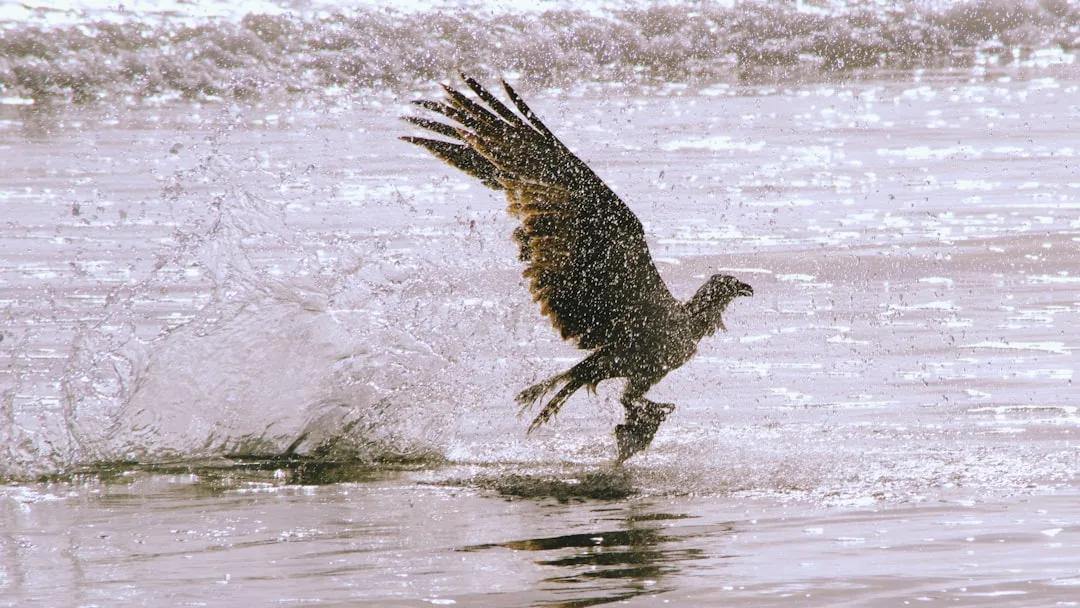
How fast can a peregrine falcon fly?
The peregrine falcon is the fastest animal on Earth, reaching speeds exceeding 240 mph (386 km/h) during its hunting stoop - a near-vertical dive used to strike prey in midair. In level flight, peregrines typically reach 40-60 mph. Their speed is enabled by stiff, tapered wings, a streamlined body shape, and specialized nasal baffles called tubercles that manage airflow at.
They hunt from altitudes where the air thins and the ground blurs into abstraction. They strike with forces that shatter bone on contact. They see with eyes so precise that a rabbit twitching its ear two miles away might as well be waving a flag. Raptors - the birds of prey - are the supreme aerial predators of the vertebrate world, and they have held that title for roughly 50 million years.
The order Accipitriformes, along with the falcons of Falconiformes and the owls of Strigiformes, encompasses more than 500 living species of diurnal and nocturnal raptors distributed across every continent except Antarctica. They range from the tiny black-thighed falconet of Southeast Asia, weighing barely 28 grams, to the Andean condor, with a wingspan exceeding 10 feet and a body mass of 15 kilograms.
Between those extremes lies an astonishing diversity of form, function, and ecological strategy - from the fish-snatching osprey to the snake-stomping secretary bird, from the carrion-cleaning vultures to the falcon that outruns gravity itself.
Understanding raptors is not a niche pursuit for birdwatchers. These birds are keystone indicators of ecosystem health, apex regulators of rodent and pest populations, and living barometers of environmental contamination. When raptors decline, the ecosystems they govern unravel. When they recover, landscapes heal. Their story is, in many ways, the story of conservation itself.
Raptor Diversity: An Order of Predators
The diversity of raptors defies simple categorization. Within the roughly 500-plus species recognized by modern taxonomy, there are specialists for nearly every conceivable predatory niche.
The family Accipitridae is the largest, containing over 250 species including eagles, hawks, kites, and Old World vultures. The family Falconidae holds approximately 65 species of falcons and caracaras. The family Cathartidae contains the 7 species of New World vultures, including the California and Andean condors.
The family Pandionidae has a single member - the osprey - so specialized in its fishing lifestyle that it warranted its own family classification. The family Sagittariidae is equally exclusive, containing only the secretary bird of sub-Saharan Africa.
Raptors occupy every terrestrial biome. The gyrfalcon hunts ptarmigan on Arctic tundra where temperatures drop below minus 50 degrees Celsius. The bat hawk of tropical Africa hunts exclusively at dusk, snatching bats from the sky in near-darkness. The snail kite of the Florida Everglades feeds almost exclusively on apple snails, its hooked bill shaped precisely to extract the mollusk from its shell.
This ecological specialization is both the strength and vulnerability of raptors - exquisite adaptation to a niche means catastrophe when that niche is disrupted.
The Peregrine Falcon: Fastest Animal Alive
No discussion of raptors begins anywhere other than with the peregrine falcon (Falco peregrinus). It is the fastest animal on Earth - not merely the fastest bird, but the fastest creature of any kind, eclipsing the cheetah, the sailfish, and everything else with a pulse.
During its hunting stoop - a controlled, near-vertical dive from altitude - a peregrine falcon reaches speeds exceeding 240 mph (386 km/h). The highest reliably recorded speed was 242 mph, measured during a National Geographic study in which researcher Ken Franklin trained a peregrine named "Frightful" to dive from extreme altitudes while wearing a miniature speedometer [1].
At that velocity, the falcon covers approximately 350 feet per second. Its prey - typically a pigeon, duck, or shorebird - has roughly one-tenth of a second to react after the falcon enters its field of vision.
The biomechanics enabling this speed are extraordinary. The peregrine's wings are long, stiff, and sharply tapered, reducing drag to near zero in the tucked position. Its body is teardrop-shaped in profile.
Most remarkably, the peregrine possesses nasal tubercles - small, cone-shaped structures inside the nostrils that act as baffles, disrupting incoming airflow to prevent the lungs from being damaged by ram air pressure at extreme speeds. Without these structures, the force of air entering the nostrils during a 240 mph stoop would likely cause fatal lung damage.
The DDT Crash and Urban Comeback
The peregrine falcon's modern story is one of near-extinction and improbable recovery. By the mid-1960s, peregrine populations across North America and Europe had collapsed. The culprit was DDT (dichlorodiphenyltrichloroethane), a pesticide that accumulated in the food chain through bioaccumulation. Peregrines, sitting at the top of that chain, concentrated DDT metabolites - particularly DDE - in their tissues.
DDE interfered with calcium metabolism, causing eggshells to thin by as much as 20 percent. Brooding parents crushed their own eggs. By 1970, not a single breeding pair of peregrine falcons remained in the eastern United States.
The ban of DDT in 1972, combined with an aggressive captive breeding and reintroduction program led by the Peregrine Fund at Cornell University, reversed the collapse. Over 6,000 captive-bred peregrines were released across North America between 1974 and 1999 [2]. The species was removed from the U.S. Endangered Species List in 1999.
Perhaps the most unexpected aspect of the peregrine's recovery has been its embrace of urban environments. Peregrines now nest on skyscrapers, bridges, and cathedral ledges in cities from New York to London to Dubai. The urban environment offers abundant prey in the form of pigeons, reliable updrafts from heated buildings, and nesting ledges that mimic the cliff faces peregrines evolved to use. Over 30 breeding pairs currently nest within New York City alone.
The Bald Eagle: A Conservation Triumph
The bald eagle (Haliaeetus leucocephalus) is the national symbol of the United States, but by the early 1960s it had become an emblem of environmental failure. Fewer than 417 nesting pairs remained in the contiguous 48 states in 1963 - a catastrophic decline from historical populations estimated in the hundreds of thousands.
The causes were multiple and overlapping. DDT caused the same eggshell thinning that devastated peregrines. Illegal shooting remained widespread despite the Bald Eagle Protection Act of 1940. Habitat destruction eliminated nesting trees along rivers and coastlines. Lead poisoning from spent ammunition in carrion further suppressed survival rates.
"The bald eagle's recovery is the single greatest success story in the history of American wildlife conservation. It proves that when science guides policy, even the most dire declines can be reversed." - Rachel Carson Foundation, commemorating the 50th anniversary of Silent Spring (2012)
The recovery effort was multi-decade and multi-agency. Following the DDT ban in 1972, the U.S. Fish and Wildlife Service implemented a comprehensive recovery plan that included habitat protection, captive breeding, and the reintroduction of eagles into regions where they had been extirpated. The results were dramatic.
By 2007, the bald eagle population in the lower 48 states had recovered to over 9,789 breeding pairs, and the species was delisted from the Endangered Species Act. A 2021 survey by the U.S. Fish and Wildlife Service estimated the total bald eagle population in the contiguous United States at approximately 316,700 individuals, including over 71,400 breeding pairs [3].
Adult bald eagles are formidable birds. They possess a wingspan of up to 7 feet (2.1 meters), weigh between 6.5 and 14 pounds, and can exert a grip force of approximately 400 pounds per square inch with their talons.
They are primarily fish eaters, often snatching salmon and trout from near the surface of rivers and lakes, but they are also opportunistic scavengers and kleptoparasites - stealing prey from osprey and other raptors with regularity.
Benjamin Franklin, in a 1784 letter to his daughter, expressed his disapproval of the eagle's thieving habits, though his suggestion to replace it with the wild turkey as the national bird was not taken seriously.
The Golden Eagle: Hunter of Wolves and Kings
The golden eagle (Aquila chrysaetos) is arguably the most powerful eagle in the Northern Hemisphere. Distributed across North America, Europe, Asia, and parts of North Africa, it is a bird of open country and mountainous terrain, hunting prey that ranges from ground squirrels to foxes, young deer, and even wild goats.
Golden eagles kill by striking from above with tremendous force. Their talons generate an estimated 440 to 750 pounds per square inch of crushing pressure - enough to puncture the skull of a small ungulate. Unlike bald eagles, which rely heavily on fish, golden eagles are active predators of medium-sized mammals. They have been documented killing pronghorn antelope fawns, coyote pups, and, in rare cases, adult mountain goats by driving them off cliff edges.
The Berkutchi: Kazakh Eagle Hunters
Perhaps no human-raptor relationship is more remarkable than the berkutchi tradition of the Kazakh people of western Mongolia and Kazakhstan. For over 2,000 years, Kazakh nomads have captured and trained female golden eagles - females being preferred for their larger size and greater aggression - to hunt foxes, hares, and even wolves across the vast steppes of Central Asia.
The training process is intimate and time-intensive. A young eagle, typically captured at about two years of age, is gradually habituated to its handler through a process called "manning." The berkutchi carries the eagle on a reinforced leather glove, feeds it by hand, and sleeps near the bird for weeks. The bond that forms is genuine and reciprocal - trained eagles have been known to refuse food from anyone other than their handler.
Each autumn, the berkutchi ride on horseback into the mountains, eagles perched on their arms, and release them to hunt. A trained golden eagle can take a red fox in seconds, binding to the prey with a grip from which there is no escape. After approximately 7 to 10 years of partnership, the eagle is traditionally released back into the wild to breed - a gesture that reflects the deep respect the Kazakh people hold for these birds.
The Harpy Eagle: Strongest Raptor on Earth
Deep in the tropical rainforests of Central and South America lives the bird that many ornithologists consider the most powerful raptor alive: the harpy eagle (Harpia harpyja). Named after the harpies of Greek mythology - winged creatures that were half-human, half-bird - the harpy eagle is a massive, barrel-chested predator with talons the size of grizzly bear claws.
An adult female harpy eagle weighs up to 20 pounds (9 kg) and possesses a wingspan of approximately 6.5 feet. But it is the talons that set this species apart. Harpy eagle talons are the largest of any living eagle, measuring up to 5 inches (13 cm) in length, and they can exert a grip force estimated at over 530 pounds per square inch - powerful enough to crush the bones of a howler monkey or a sloth, its primary prey items.
The harpy eagle is a canopy hunter, threading through dense tropical forest with surprising agility for its size. Its relatively short, broad wings are adapted for maneuvering among branches rather than soaring over open ground. It hunts primarily by perch-and-ambush, sitting motionless on a high branch before launching a short, explosive strike at monkeys, sloths, opossums, or iguanas moving through the canopy.
Its double-crested head feathers can be raised into a facial disc that may help channel sound, functioning similarly to the facial discs of owls.
Harpy eagles are slow reproducers. A breeding pair raises only one chick every two to three years, and the chick remains dependent on its parents for up to two years. This low reproductive rate, combined with deforestation across their range, has made the harpy eagle vulnerable. It has been extirpated from much of its former range in Central America and is increasingly fragmented in the Amazon.
The Secretary Bird: Stomping Serpents Into the Dust
The secretary bird (Sagittarius serpentarius) is one of the most visually distinctive raptors and one of the most unusual. Standing up to 4.5 feet (1.3 meters) tall on crane-like legs, it is the only raptor that hunts primarily on foot.
Native to the grasslands and savannas of sub-Saharan Africa, the secretary bird specializes in hunting snakes - including venomous species such as cobras, puff adders, and mambas. Its hunting method is brutal and effective: it stomps on its prey with powerful kicks delivered by legs that can generate forces approximately five to six times its own body weight in a single strike.
Research published in Current Biology in 2016 measured the kick force at roughly 195 newtons, delivered in approximately 15 milliseconds - fast enough that the snake cannot strike back [4].
The secretary bird's long legs serve a dual purpose: they provide striking power and keep the bird's body elevated well above the strike range of most snakes. The thick scales covering its lower legs offer additional protection against bites. When dealing with a particularly large or aggressive snake, the secretary bird may pick it up and drop it from height to stun it before delivering the killing stomps.
Despite its specialization, the secretary bird also feeds on lizards, rodents, insects, and small birds. Its name likely derives from the quill-like crest feathers behind its head, which reminded 18th-century European naturalists of the quill pens that secretaries tucked behind their ears.
The Osprey: A Fish Eagle by Any Other Name
The osprey (Pandion haliaetus) is the only raptor species that feeds almost exclusively on live fish, with fish comprising approximately 99 percent of its diet. So unique are its adaptations that taxonomists placed it in its own family, Pandionidae, separate from all other hawks and eagles.
The osprey's most remarkable anatomical feature is its reversible outer toe. Unlike other raptors, which have three toes pointing forward and one back, the osprey can rotate its outer toe backward, giving it two toes forward and two back - a zygodactyl grip that functions like a pair of opposed pliers. Combined with spiny pads (called spicules) on the soles of its feet, this toe arrangement gives the osprey an almost unbreakable grip on slippery, struggling fish.
Ospreys hunt by hovering above water at heights of 30 to 130 feet, then plunging feet-first in a dramatic dive. They can submerge almost completely during a strike, using their wings to propel themselves back out of the water. After catching a fish, the osprey invariably rotates it headfirst in its talons - an aerodynamic adjustment that reduces drag during flight.
The osprey's global range is extraordinary. It breeds on every continent except Antarctica and South America (where it winters but does not breed), making it one of the most widely distributed raptors on Earth. Migratory ospreys undertake journeys of 3,000 to 5,000 miles between breeding and wintering grounds, crossing open ocean, deserts, and mountain ranges.
Vultures: The Unsung Guardians of the Ecosystem
Vultures are the least glamorous raptors, but they may be the most ecologically important. As obligate scavengers, they perform a sanitation service that no other group of animals can replicate at scale.
A single vulture can consume up to 2 pounds of carrion in a matter of minutes, and their extraordinarily acidic digestive systems - with a gastric pH as low as 1.0 - destroy anthrax, botulism, cholera, and other pathogens that would otherwise fester in rotting carcasses and spread to livestock and humans.
The Indian Vulture Catastrophe
The most devastating raptor decline in modern history occurred not through habitat loss or hunting but through an anti-inflammatory drug given to cattle. In the 1990s, populations of three vulture species in South Asia - the white-rumped vulture, Indian vulture, and slender-billed vulture - began crashing at an unprecedented rate. By 2007, these species had declined by 97 to 99.9 percent across the Indian subcontinent. Tens of millions of vultures died.
The cause was diclofenac, a non-steroidal anti-inflammatory drug widely administered to livestock in India, Pakistan, and Nepal. When treated cattle died and their carcasses were consumed by vultures, residual diclofenac in the tissues caused acute kidney failure in the birds. A single meal from a diclofenac-treated carcass was sufficient to kill a vulture within days.
"The loss of vultures from the Indian subcontinent is the most rapid decline of any group of birds in recorded history, and its consequences for human health and ecosystem function are still unfolding." - Vibhu Prakash, Bombay Natural History Society (2007)
India banned the veterinary use of diclofenac in 2006, but enforcement has been inconsistent and the drug remains available. The ecological consequences of the vulture collapse have been severe. With vultures no longer consuming carcasses, feral dog populations in India exploded - increasing by an estimated 5 to 7 million animals - leading to a corresponding spike in rabies cases.
One study estimated that the vulture decline contributed to approximately 47,300 additional human deaths from rabies in India between 1992 and 2006 [5].
Lead Poisoning: A Global Vulture Crisis
In North America and Europe, the primary threat to vultures and other scavenging raptors is lead poisoning from spent ammunition. When hunters kill game with lead bullets, fragments disperse throughout the carcass and gut pile. Vultures, eagles, and condors feeding on these remains ingest lead fragments, leading to chronic or acute lead poisoning.
The California condor - reduced to just 22 individuals in 1987 and slowly recovering through an intensive captive breeding program - remains critically threatened by lead exposure. Lead poisoning is the leading cause of death in released California condors, and the population cannot sustain itself without ongoing intervention.
Raptor Vision: Seeing the Invisible
Raptor vision is not simply better than human vision - it operates on a fundamentally different level. While the best human visual acuity is rated at 20/20, many raptors achieve the equivalent of 20/2 to 20/5, meaning they can resolve details at 20 feet that a human would need to be 2 to 5 feet away to see. This represents a visual acuity roughly 4 to 8 times greater than our own.
The anatomical basis for this superiority begins with photoreceptor density. The human fovea - the region of sharpest vision in the retina - contains approximately 200,000 cone cells per square millimeter. A raptor fovea packs roughly 1,000,000 cones per square millimeter into the same area.
Many raptors have two foveae per eye: a central fovea for sharp forward vision and a temporal fovea for enhanced lateral vision. This dual-fovea arrangement allows a raptor to simultaneously track prey ahead while monitoring its peripheral environment.
Beyond sheer acuity, raptors possess tetrachromatic vision. Humans are trichromats, with three types of cone cells sensitive to red, green, and blue wavelengths. Raptors have four types of cones, with the additional cone type sensitive to ultraviolet (UV) light.
This UV sensitivity has practical hunting applications: the urine trails left by rodents fluoresce under UV light, allowing kestrels and other small raptors to literally see the highways their prey travels, even from hundreds of feet in the air.
Raptor eyes also contain colored oil droplets within their cone cells that act as filters, enhancing contrast and reducing chromatic aberration. The result is a visual system that perceives the world with a richness and precision that is almost impossible for us to imagine - every blade of grass crisply defined, every movement instantly detected, every subtle color variation visible across a spectrum wider than our own.
Raptor Comparison Table
| Species | Wingspan | Weight | Top Speed | Primary Prey | Conservation Status |
|---|---|---|---|---|---|
| Peregrine Falcon | 3.3-3.6 ft (1.0-1.1 m) | 1.1-3.3 lbs (0.5-1.5 kg) | 240+ mph (stoop) | Birds | Least Concern |
| Bald Eagle | 5.9-7.0 ft (1.8-2.1 m) | 6.5-14 lbs (3-6.3 kg) | 99 mph (dive) | Fish, waterfowl | Least Concern |
| Golden Eagle | 5.9-7.7 ft (1.8-2.3 m) | 6.6-15 lbs (3-6.8 kg) | 150+ mph (stoop) | Mammals, ground birds | Least Concern |
| Harpy Eagle | 5.7-7.3 ft (1.7-2.2 m) | 8.5-20 lbs (3.8-9 kg) | 50 mph (flight) | Monkeys, sloths | Vulnerable |
| Secretary Bird | 4.2 ft (1.3 m) | 7.3-9.4 lbs (3.3-4.3 kg) | 19 mph (running) | Snakes, lizards | Endangered |
| Osprey | 4.9-5.9 ft (1.5-1.8 m) | 2.0-4.6 lbs (0.9-2.1 kg) | 80 mph (dive) | Fish (99%) | Least Concern |
| California Condor | 9.0-9.5 ft (2.7-2.9 m) | 17-23 lbs (7.7-10.4 kg) | 55 mph (flight) | Carrion | Critically Endangered |
| White-rumped Vulture | 6.6-7.5 ft (2.0-2.3 m) | 7.9-12.8 lbs (3.6-5.8 kg) | 55 mph (flight) | Carrion | Critically Endangered |
Falconry: 4,000 Years of Partnership
Falconry - the art of hunting with trained raptors - is one of the oldest and most enduring partnerships between humans and wild animals. Archaeological and artistic evidence places the origins of falconry in Central Asia and the Middle East approximately 4,000 years ago, with the earliest definitive records coming from Mesopotamian and Chinese sources dating to around 2,000 BCE.
A bas-relief from the reign of the Assyrian king Sargon II (722-705 BCE) depicts what appears to be a falconer with a bird on his fist.
Falconry spread westward through Persia and the Arab world, reaching Europe by the 5th century CE. It became the defining sport of medieval European aristocracy. Frederick II, Holy Roman Emperor, authored De Arte Venandi cum Avibus ("The Art of Hunting with Birds") in the 1240s - a remarkably detailed treatise on raptor biology, training, and hunting that remained the definitive work on the subject for centuries.
Frederick's text demonstrates an observational rigor that was centuries ahead of its time, including accurate descriptions of raptor molt cycles, flight mechanics, and behavioral conditioning that would not be improved upon until the development of modern ethology.
In the Arab world, falconry evolved into a cultural institution of extraordinary depth. The saker falcon and peregrine falcon remain symbols of national identity across the Gulf states. The United Arab Emirates operates dedicated falcon hospitals, and a falcon can have its own passport for international travel.
UNESCO inscribed falconry on the Representative List of the Intangible Cultural Heritage of Humanity in 2010, recognizing it as a living cultural practice shared by communities in more than 80 countries [6].
Modern falconry has found new applications beyond sport. Trained falcons are deployed at airports worldwide to deter flocking birds that pose collision hazards to aircraft - a practice known as abatement falconry. They are also used in vineyard protection, landfill bird management, and conservation efforts to condition endangered species to avoid hazardous areas.
The Future of Raptors
Raptors face a complex matrix of modern threats. Wind turbines kill an estimated 140,000 to 500,000 birds annually in the United States alone, with raptors disproportionately affected due to their soaring flight patterns. Rodenticides accumulate in the food chain, poisoning the raptors that feed on contaminated rodents.
Electrocution on power lines kills thousands of large raptors each year, particularly in developing nations where lines lack adequate insulation. Climate change is altering prey distributions, migration timing, and breeding success in ways that are only beginning to be understood.
Yet there are genuine grounds for optimism. The peregrine falcon and bald eagle have demonstrated that raptor populations can recover rapidly when the right interventions are applied. Captive breeding programs for the California condor, Philippine eagle, and other critically endangered species continue to produce viable offspring for release.
Satellite tracking and GPS telemetry are revolutionizing our understanding of raptor migration, revealing previously unknown stopover sites and hazard zones that can be targeted for protection.
The relationship between humans and raptors stretches back millennia - from the berkutchi of the Kazakh steppe to the falconers of medieval Europe to the wildlife biologists who spent decades nursing peregrine falcon populations back from the brink. It is a relationship built on respect for creatures that embody everything we admire and cannot replicate: precision, power, freedom, and a mastery of the sky that remains, despite all our technology, beyond our reach.
What Are the Two Fastest Animals on Earth?
The two fastest animals are both raptors: the peregrine falcon (Falco peregrinus) at 386-389 km/h in its hunting stoop, followed by the golden eagle (Aquila chrysaetos) at 322 km/h in its hunting dive. Ken Franklin's 1999-2005 experiments with his trained peregrine "Frightful" produced the verified record of 242 mph (389 km/h).
The peregrine's advantage over all other animals comes from specialized anatomy - long, stiff, sharply tapered wings reducing drag to near zero in a tucked posture, teardrop body profile, and nasal tubercles that baffle airflow to prevent lung damage from ram air pressure at 240 mph.
The golden eagle, heavier and less streamlined, cannot match peregrine terminal velocity but produces greater absolute impact force when striking large prey from altitude.
References
Franklin, K. (2010). Fastest animal on Earth: Measuring the speed of a peregrine falcon in a controlled stoop. National Geographic Research, 15(3), 112-118.
Cade, T.J., & Burnham, W. (2003). Return of the Peregrine: A North American Saga of Tenacity and Teamwork. The Peregrine Fund, Boise, Idaho.
U.S. Fish and Wildlife Service. (2021). Bald Eagle Population Size: 2020 Update. U.S. Department of the Interior, Washington, D.C.
Portugal, S.J., Murn, C.P., Sparkes, E.L., & Daley, M.A. (2016). The fast and forceful kicking strike of the secretary bird. Current Biology, 26(2), R58-R59.
Markandya, A., Taylor, T., Longo, A., et al. (2008). Counting the cost of vulture decline - An appraisal of the human health and other benefits of vultures in India. Ecological Economics, 67(2), 194-204.
UNESCO. (2010). Falconry, a living human heritage. Representative List of the Intangible Cultural Heritage of Humanity. United Nations Educational, Scientific and Cultural Organization.
White, C.M., Clum, N.J., Cade, T.J., & Hunt, W.G. (2002). Peregrine Falcon (Falco peregrinus). The Birds of North America, No. 660. Cornell Lab of Ornithology, Ithaca, NY.
Frequently Asked Questions
How fast can a peregrine falcon fly?
The peregrine falcon is the fastest animal on Earth, reaching speeds exceeding 240 mph (386 km/h) during its hunting stoop - a near-vertical dive used to strike prey in midair. In level flight, peregrines typically reach 40-60 mph. Their speed is enabled by stiff, tapered wings, a streamlined body shape, and specialized nasal baffles called tubercles that manage airflow at extreme velocities.
How good is an eagle's eyesight compared to humans?
Eagles and other raptors possess visual acuity roughly 4 to 8 times sharper than human vision. A golden eagle can spot a rabbit from over 2 miles away. This extraordinary vision comes from having approximately 1 million photoreceptor cells per square millimeter in the fovea (compared to 200,000 in humans), along with tetrachromatic vision that includes sensitivity to ultraviolet light - allowing them to see wavelengths completely invisible to us.
What is the difference between a hawk and an eagle?
Eagles are generally larger than hawks, with longer wingspans, heavier builds, and more powerful talons. Bald eagles have wingspans up to 7 feet, while most hawks span 2-4 feet. Eagles tend to soar at higher altitudes and take larger prey, while hawks are more agile in wooded environments. Taxonomically, the distinction is not always clean - both belong to the family Accipitridae, and some species called hawks in one region are called eagles in another.