
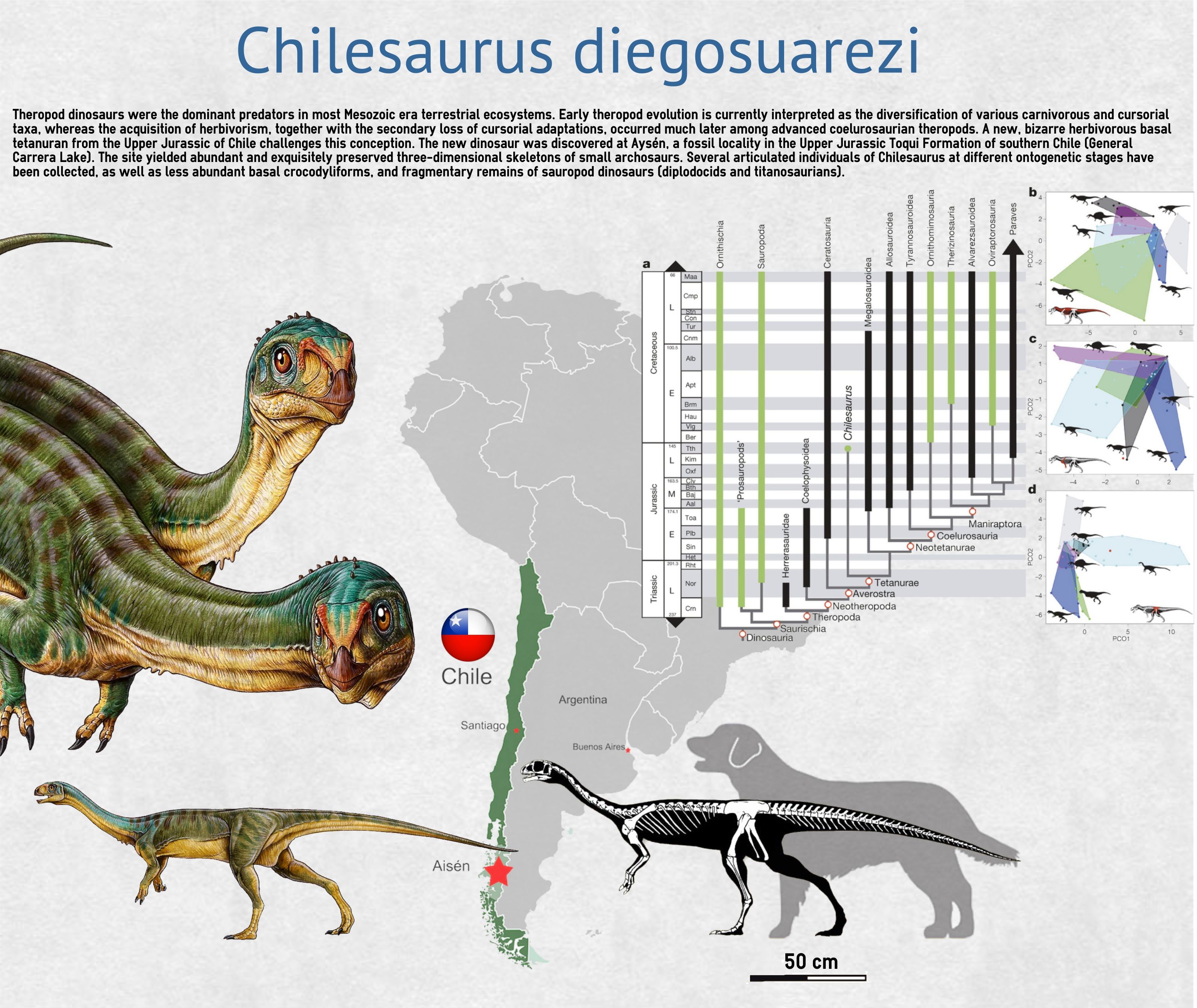
Quick Answer: Chilesaurus diegosuarezi is a highly unusual Jurassic dinosaur from Chile, often called the “platypus of dinosaurs” due to its puzzling mix of features from different dinosaur groups. Discovered in Patagonia, Chilesaurus displays a blend of traits seen in theropods, ornithischians, and sauropodomorphs, challenging traditional dinosaur classification. Its unique anatomy provides key insights into dinosaur evolution and highlights the complexity of early Jurassic ecosystems.
Chilesaurus diegosuarezi has captured the attention of paleontologists and dinosaur enthusiasts alike for its remarkable and confounding combination of anatomical traits. Found in the Toqui Formation of southern Chile, this dinosaur lived during the Late Jurassic period, about 145 million years ago.
Its discovery in 2015 by a seven-year-old boy, Diego Suárez, and the subsequent analysis by scientists, revealed a dinosaur so distinct that it has been compared to the modern platypus, a mammal known for its own evolutionary mosaic. The nickname “platypus dinosaur” is not merely whimsical; it reflects the animal’s blend of characteristics typically associated with very different dinosaur lineages.
Chilesaurus was a small to medium-sized dinosaur, with adults estimated to reach around three meters in length. What makes it particularly fascinating is the combination of a theropod-like skull and hands, a beaked jaw reminiscent of ornithischians, and a pelvis similar to that of sauropodomorphs.
This perplexing mixture has made Chilesaurus a focal point for debates about dinosaur evolution, dietary transitions, and the origins of herbivory among theropods. Its herbivorous adaptations, in particular, challenge the traditional view of theropods as strictly carnivorous.
The discovery of Chilesaurus has far-reaching implications for understanding dinosaur diversity and evolutionary pathways. By examining its anatomy, diet, and relationships to other dinosaurs, researchers are piecing together how such a unique animal could have evolved. The fossil record from Patagonia, where Chilesaurus was found, continues to yield surprises that reshape our understanding of the Jurassic world.
The following sections explore the anatomy, evolutionary significance, paleobiology, and ongoing scientific debates surrounding this enigmatic dinosaur.
Unraveling the Identity of Chilesaurus diegosuarezi
The discovery of Chilesaurus diegosuarezi in the Aysén Region of southern Chile has profoundly impacted paleontology. Chilesaurus diegosuarezi is a genus of herbivorous dinosaur from the Late Jurassic period, notable for its combination of anatomical features from multiple dinosaur clades. The fossil remains were first unearthed in 2004 by Diego Suárez, whose name the species honors, and described formally in 2015.
The Toqui Formation, where these fossils were found, has provided a wealth of information about the diversity of Jurassic life in South America.
Chilesaurus has often been described as a “platypus dinosaur” because, much like the modern platypus, it exhibits a mosaic of traits that do not fit neatly into established categories. Its skull and forelimbs resemble those of theropods, the group that includes iconic predators like Tyrannosaurus and Velociraptor.
However, its beaked jaws and leaf-shaped teeth are more similar to those of ornithischians, a group that includes Stegosaurus and Triceratops. The pelvis, meanwhile, shares similarities with sauropodomorphs, the long-necked herbivores such as Diplodocus.
This extraordinary blend of features has made Chilesaurus a focal point for debates about dinosaur classification. Some paleontologists initially placed it within Theropoda due to its hand structure and other skeletal elements. Others have argued for affinities with Ornithischia or even as a basal member of a new lineage altogether.
The ongoing debate reflects the complexity of dinosaur evolution and the limitations of traditional classification systems. Chilesaurus challenges the notion that major dinosaur groups evolved in complete isolation from one another.
Key Insight: Chilesaurus diegosuarezi demonstrates that evolutionary pathways among dinosaurs were more intertwined and experimental than previously recognized.
The anatomical mosaic of Chilesaurus has led to broader questions about how paleontologists define and categorize dinosaurs. Its existence suggests that convergent evolution, where unrelated groups independently evolve similar traits, was a significant force in the Mesozoic era. The case of Chilesaurus underscores the importance of fossil discoveries in reshaping scientific understanding and highlights the dynamic nature of evolutionary history.
Anatomy: A Mosaic of Dinosaur Features
The anatomy of Chilesaurus diegosuarezi is among the most puzzling and informative aspects of this dinosaur. Its skeleton presents a unique combination of traits from three major dinosaur lineages: theropods, ornithischians, and sauropodomorphs. This blend of features has earned Chilesaurus its reputation as the “platypus of dinosaurs.”
The skull of Chilesaurus is small and lightly built, with a beak-like structure at the front of the jaws. Unlike the sharp, serrated teeth typical of theropods, Chilesaurus possessed leaf-shaped teeth better suited for processing plant material. This dental arrangement is more commonly found in herbivorous dinosaurs, particularly ornithischians. The presence of a keratinous beak further supports the interpretation of Chilesaurus as a plant-eater, despite its theropod ancestry.
The forelimbs of Chilesaurus are short and robust, ending in hands with two functional fingers and a vestigial third. This hand structure is reminiscent of basal theropods, yet the overall limb proportions differ from those of most carnivorous theropods. The pelvis is perhaps the most surprising element: it is broad and backward-pointing, resembling the pelvic structure of sauropodomorphs. This adaptation may have supported a large gut necessary for digesting tough plant material.
A comparison of key anatomical features illustrates the unique blend found in Chilesaurus:
| Feature | Theropods | Ornithischians | Sauropodomorphs | Chilesaurus |
|---|---|---|---|---|
| Skull | Elongated, toothed | Beaked, robust | Small, elongated | Small, beaked |
| Teeth | Sharp, serrated | Leaf-shaped | Spoon-shaped | Leaf-shaped |
| Forelimbs | Grasping, clawed | Short, robust | Pillar-like | Short, robust |
| Pelvis | Narrow, forward | Broad, backward | Broad, backward | Broad, backward |
| Diet | Carnivorous | Herbivorous | Herbivorous | Herbivorous |
The vertebral column and hindlimbs of Chilesaurus also show a mix of primitive and derived features. Its tail was relatively long and flexible, while the hindlimbs were adapted for walking rather than running. The overall body plan suggests a bipedal posture, but with adaptations for a slower, more deliberate gait. These anatomical details provide crucial evidence for reconstructing the lifestyle and ecological niche of Chilesaurus.
The anatomical mosaic of Chilesaurus diegosuarezi has prompted paleontologists to reconsider the boundaries between major dinosaur groups and the processes that drove their evolution.
For a more detailed overview of Chilesaurus’s anatomy and its implications for dinosaur classification, see the Wikipedia page on Chilesaurus and the Britannica entry on dinosaur evolution.
Evolutionary Significance and Classification Challenges
Chilesaurus diegosuarezi has become a central figure in discussions about dinosaur evolution and classification. Its unique combination of features has challenged the traditional division of dinosaurs into three main groups: Theropoda, Sauropodomorpha, and Ornithischia. The case of Chilesaurus highlights the complexity of evolutionary relationships and the limitations of relying solely on a few diagnostic traits to define major clades.
When Chilesaurus was first described, it was tentatively placed within Theropoda, primarily due to aspects of its hand and vertebral structure. However, the presence of a beaked jaw, leaf-shaped teeth, and a backward-pointing pelvis suggested affinities with Ornithischia and Sauropodomorpha.
This combination of traits led some researchers to propose that Chilesaurus represents a transitional form, possibly illuminating the origins of herbivory within theropods or even the early evolution of ornithischians.
A major debate centers on whether Chilesaurus is a true theropod that independently evolved herbivorous adaptations, or whether it is more closely related to ornithischians. Some studies have suggested that Chilesaurus could represent a basal ornithischian, providing a missing link between theropods and the beaked, herbivorous dinosaurs that later dominated the Cretaceous.
Others maintain that its closest relatives are within the early-diverging theropods, making it an example of convergent evolution.
Chilesaurus diegosuarezi exemplifies how mosaic evolution can blur the lines between established dinosaur groups, complicating efforts to reconstruct the dinosaur family tree.
The classification of Chilesaurus remains contentious, with new phylogenetic analyses continuing to refine its placement. This ongoing debate underscores the importance of comprehensive fossil evidence and rigorous analytical methods in paleontology. For a broader discussion of dinosaur classification, refer to the Britannica article on dinosaur classification and the Natural History Museum’s overview of dinosaur evolution.
The Herbivorous Theropod: Diet and Feeding Adaptations
One of the most remarkable aspects of Chilesaurus diegosuarezi is its herbivorous diet, which is highly unusual for a dinosaur with theropod ancestry. Most theropods were obligate carnivores, equipped with sharp teeth and claws for hunting prey. Chilesaurus, by contrast, had a suite of adaptations that point to a plant-based diet, making it a key example of dietary experimentation among early dinosaurs.
The leaf-shaped teeth of Chilesaurus are well-suited for slicing and shredding vegetation, rather than tearing flesh. The presence of a keratinous beak at the tip of the jaws would have aided in cropping plants, similar to the function seen in ornithischians. The broad, backward-pointing pelvis likely accommodated a larger gut, necessary for fermenting and digesting fibrous plant material. These features collectively indicate a shift away from the predatory lifestyle typical of theropods.
Several lines of evidence support the interpretation of Chilesaurus as an herbivore:
- Tooth morphology: Leaf-shaped, unserrated teeth ideal for processing plants
- Jaw structure: Beaked snout for cropping vegetation
- Pelvic anatomy: Broad pelvis for supporting a voluminous digestive tract
- Limb proportions: Reduced forelimbs, less suited for grasping prey
The herbivorous adaptations of Chilesaurus diegosuarezi provide a rare glimpse into the evolutionary experimentation that occurred among early theropods.
The existence of a herbivorous theropod like Chilesaurus challenges the traditional view of theropods as exclusively carnivorous. It also raises questions about the origins of herbivory in dinosaurs and the ecological pressures that drove such transitions. For more information on dinosaur diets and feeding strategies, see the Wikipedia entry on dinosaur diet.
Discovery and Fossil Context in Patagonia
The fossils of Chilesaurus diegosuarezi were discovered in the Toqui Formation of southern Chile, a region known for its rich Jurassic fossil beds. The initial discovery was made by Diego Suárez, a young boy accompanying his geologist parents on a field expedition. The site yielded multiple partial skeletons, including both juvenile and adult specimens, allowing for a detailed reconstruction of the dinosaur’s anatomy and growth patterns.
The Toqui Formation dates to the Late Jurassic, approximately 145 million years ago. This sedimentary deposit consists of fluvial and lacustrine sediments, indicating a landscape of rivers, lakes, and floodplains. The presence of Chilesaurus alongside other dinosaurs, crocodilians, and ancient mammals suggests a diverse ecosystem with a variety of ecological niches.
The quality and completeness of the Chilesaurus fossils have enabled paleontologists to study not only its anatomy but also aspects of its development and behavior.
Fossil discoveries in Patagonia, such as Chilesaurus diegosuarezi, continue to reshape scientific understanding of Jurassic ecosystems and dinosaur diversity.
The context of the Chilesaurus fossils provides valuable information about the environment in which it lived. The abundance of plant material in the sediments supports the interpretation of Chilesaurus as a herbivore. Additionally, the presence of both juvenile and adult specimens indicates that the area may have served as a habitat for breeding and raising young. For more on the paleontological significance of Patagonia, see the Wikipedia page on Patagonia.
Implications for Dinosaur Evolution and Convergent Traits
The discovery of Chilesaurus diegosuarezi has significant implications for understanding dinosaur evolution, particularly the phenomenon of convergent evolution. Convergent evolution occurs when unrelated lineages independently evolve similar adaptations in response to comparable ecological pressures. Chilesaurus exemplifies this process by displaying features typically associated with multiple, distantly related dinosaur groups.
The presence of a beaked jaw and herbivorous teeth in a dinosaur with theropod ancestry suggests that similar ecological challenges, such as the need to exploit new food sources, can lead to the repeated evolution of comparable traits. This pattern is seen in other dinosaur groups as well, with multiple lineages independently developing beaks, specialized teeth, and changes in gut morphology to accommodate plant-based diets.
Chilesaurus diegosuarezi illustrates how convergent evolution can create animals that defy easy classification, blurring the boundaries between established taxonomic groups.
The case of Chilesaurus also highlights the importance of comprehensive fossil evidence in reconstructing evolutionary relationships. Fragmentary fossils can lead to misclassification, especially when animals exhibit a mosaic of traits. The detailed study of Chilesaurus has prompted paleontologists to re-examine other enigmatic fossils and consider the possibility of similar evolutionary experiments elsewhere in the dinosaur lineage.
For a deeper understanding of convergent evolution in dinosaurs and its broader implications, consult the Britannica article on convergent evolution and academic discussions in paleobiology journals.
The Jurassic Ecosystem of Southern Chile
The Late Jurassic ecosystem of southern Chile, as revealed by the Toqui Formation, was a vibrant and dynamic environment. Chilesaurus diegosuarezi lived alongside a variety of other dinosaurs, as well as early mammals, crocodilians, and diverse plant life. The region’s rivers and floodplains provided abundant resources and supported a complex food web.
Paleobotanical evidence from the Toqui Formation indicates the presence of ferns, cycads, and conifers, which would have formed the primary diet for herbivorous dinosaurs like Chilesaurus. The diversity of plant life suggests that the ecosystem could support a range of herbivores, each occupying different ecological niches. The coexistence of Chilesaurus with both carnivorous and herbivorous dinosaurs points to a community structured by resource partitioning and ecological specialization.
The Jurassic landscape of Patagonia fostered evolutionary innovation, as demonstrated by the unique adaptations of Chilesaurus diegosuarezi.
The study of the Toqui Formation and its fossil assemblages continues to provide insights into the dynamics of Jurassic ecosystems. The interplay between climate, vegetation, and animal life created opportunities for evolutionary experimentation, leading to the emergence of unusual forms like Chilesaurus. For more information on Jurassic ecosystems, see the Britannica overview of the Jurassic Period.
Ongoing Debates and Future Research Directions
Chilesaurus diegosuarezi remains at the center of ongoing scientific debates regarding its classification, evolutionary relationships, and ecological role. New fossil discoveries, improved analytical techniques, and advances in phylogenetic methods are continually refining our understanding of this enigmatic dinosaur.
Some researchers are focused on clarifying its position within the dinosaur family tree, while others are investigating the broader implications of its anatomy for the evolution of herbivory and convergent traits.
Future research on Chilesaurus is likely to address several key questions:
- What are the precise evolutionary relationships between Chilesaurus and other dinosaur groups?
- How did herbivory evolve independently in multiple dinosaur lineages?
- What can the growth patterns and ontogeny of Chilesaurus tell us about its life history?
- Are there undiscovered relatives of Chilesaurus that further blur the lines between major dinosaur groups?
The ongoing study of Chilesaurus diegosuarezi exemplifies the dynamic and ever-evolving nature of paleontological research.
As new fossils are discovered and analytical methods advance, the story of Chilesaurus will continue to evolve. Its unique combination of features ensures that it will remain a subject of fascination and inquiry for years to come.
Chilesaurus diegosuarezi and the Complexity of Dinosaur Evolution
Chilesaurus diegosuarezi stands as a testament to the complexity and unpredictability of dinosaur evolution. Its discovery has forced paleontologists to reconsider long-held assumptions about the distinctness of major dinosaur groups and the pathways by which key adaptations evolved. The case of Chilesaurus demonstrates that evolutionary innovation often occurs at the intersections of established categories, producing animals that challenge conventional classification.
The study of Chilesaurus has broader implications for understanding the evolutionary processes that shape biodiversity. By examining the anatomical, ecological, and evolutionary context of this remarkable dinosaur, scientists gain insights into the mechanisms of convergent evolution, the origins of herbivory, and the dynamics of Jurassic ecosystems.
Chilesaurus serves as a reminder that the fossil record is full of surprises, and that each new discovery has the potential to reshape our understanding of life’s history.
Chilesaurus diegosuarezi, the “platypus of dinosaurs,” embodies the creative potential of evolution and the enduring mysteries of the prehistoric world.
Frequently Asked Questions
Why is Chilesaurus called the platypus of dinosaurs?
Chilesaurus is called the platypus of dinosaurs because it displays a unique mix of features from several dinosaur groups, much like the platypus combines traits from different mammals.
Was Chilesaurus a carnivore or herbivore?
Chilesaurus was an herbivore, as shown by its beaked jaw, leaf-shaped teeth, and broad pelvis adapted for plant digestion.
How big was Chilesaurus diegosuarezi?
Adult Chilesaurus diegosuarezi individuals reached about three meters in length, making them small to medium-sized dinosaurs.
Where were Chilesaurus fossils discovered?
Chilesaurus fossils were discovered in the Toqui Formation of southern Chile, a region known for rich Jurassic fossil deposits.
What does Chilesaurus tell us about dinosaur evolution?
Chilesaurus reveals that dinosaur evolution involved complex pathways and convergent traits, challenging traditional classification systems.
Are there other dinosaurs like Chilesaurus?
No other dinosaur is known with the same unique blend of features, making Chilesaurus a singular example of evolutionary mosaicism.