
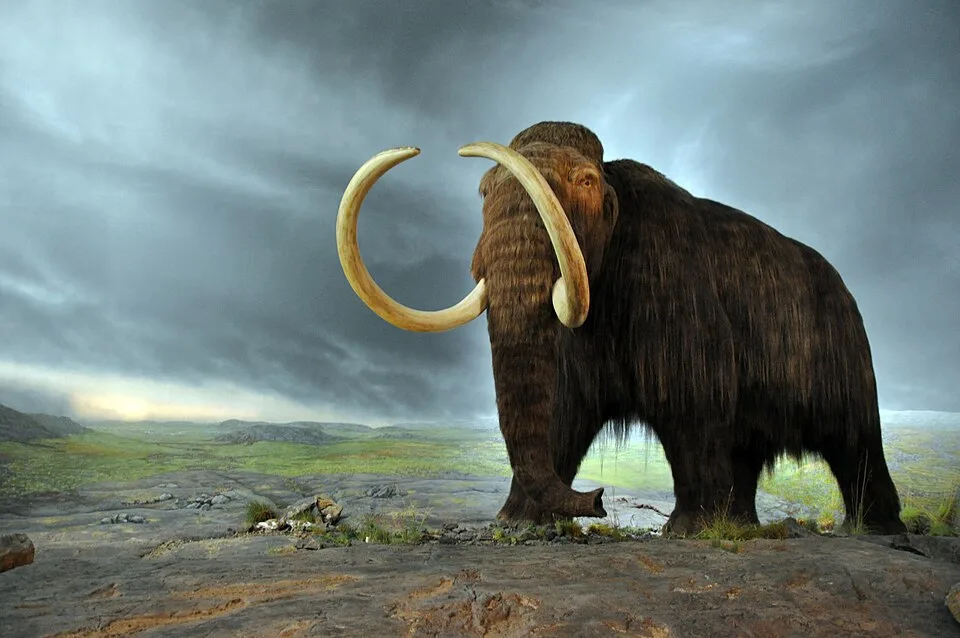
What killed the woolly mammoths?
The extinction of woolly mammoths and the rest of the Ice Age megafauna resulted from a combination of factors rather than a single cause. Rapid climate warming at the end of the last Ice Age around 11,700 years ago shrank their preferred grassland-steppe habitat, while human hunters applied additional pressure through targeted killing.
For roughly 2.6 million years, the Earth was locked in a cycle of glacial advances and retreats that transformed entire continents into frozen landscapes. This period - the Pleistocene epoch, spanning from 2.6 million to 11,700 years ago - was defined not only by its ice but by the extraordinary creatures that thrived in its shadow. Woolly mammoths weighing ten tons carved paths through Arctic steppe grasslands.
Saber-toothed cats with dagger-like canines ambushed prey twice their size. Giant ground sloths the height of modern giraffes stripped trees bare with clawed hands the size of dinner plates. These were the megafauna: animals exceeding 44 kilograms (roughly 100 pounds) in body mass, and many of them exceeded several tons.
Then, in a geological blink, most of them were gone. Within a few thousand years of the last glacial retreat, approximately 65 percent of all megafauna genera worldwide had vanished. North America lost over 70 percent. South America lost roughly 80 percent.
What caused this catastrophe - climate, human hunters, disease, or some lethal combination - remains one of the most contested questions in paleontology. The evidence is written in permafrost, tar pits, cave walls, and ancient DNA, and scientists are still reading it.
The Pleistocene World: A Planet of Ice and Grass
To understand Ice Age megafauna, one must first understand the world they inhabited. The Pleistocene was not a single, unbroken freeze. It consisted of at least 20 glacial-interglacial cycles, each lasting roughly 100,000 years, driven by variations in Earth's orbital parameters known as Milankovitch cycles. During glacial maxima, ice sheets up to 3 kilometers thick covered Canada, Scandinavia, and northern Russia.
Sea levels dropped by as much as 120 meters, exposing vast land bridges - most critically, Beringia, the 1,600-kilometer-wide connection between Siberia and Alaska that served as a migration corridor for both animals and humans.
The dominant habitat across much of the Northern Hemisphere was the mammoth steppe - a vast, dry grassland ecosystem stretching from western Europe to eastern Canada. This biome, sometimes called the "Serengeti of the Ice Age," supported a biomass density comparable to modern African savannas.
It was sustained by the megafauna themselves: their grazing, trampling, and nutrient cycling maintained the grassland against encroaching forest and tundra. When the megafauna vanished, so did the mammoth steppe, replaced by the mossy, waterlogged tundra and boreal forests we see today.
Woolly Mammoths: Icons of the Ice Age
No Ice Age animal is more iconic than the woolly mammoth (Mammuthus primigenius). Standing up to 3.4 meters at the shoulder and weighing between 4 and 8 metric tons, the woolly mammoth was roughly the same size as a modern African elephant but built for a fundamentally different world.
Adaptations to Extreme Cold
The woolly mammoth's body was an engineering masterpiece for sub-zero survival. Its adaptations included:
- A dense double-layered coat: an outer layer of coarse guard hairs up to 90 centimeters long, underlain by a thick wool undercoat for insulation
- Small, rounded ears approximately one-tenth the size of an African elephant's, minimizing heat loss
- A short tail of only 36 centimeters, reducing frostbite exposure
- A thick layer of subcutaneous fat up to 8 centimeters deep, providing both insulation and energy reserves
- Hemoglobin adapted to function at low temperatures, allowing efficient oxygen delivery to tissues even in extreme cold
- Sebaceous glands that secreted oils into the fur for waterproofing
Their tusks, which could exceed 4 meters in length and weigh over 90 kilograms each, curved dramatically and were used to sweep snow from vegetation, as territorial displays, and in combat between bulls. Growth rings in tusks - similar to tree rings - have allowed researchers to reconstruct individual mammoths' life histories with remarkable precision, including seasonal migration patterns, periods of nutritional stress, and even the age at which bulls were expelled from family groups.
Preserved Specimens and the Permafrost Record
What makes woolly mammoths uniquely valuable to science is the extraordinary state of their preservation. Siberian permafrost has yielded dozens of mammoth specimens with intact soft tissue, hair, muscle, and in some cases internal organs. These are not fossils in the traditional sense - they are actual biological remains, tens of thousands of years old, preserved by natural deep-freezing.
Lyuba, discovered in 2007 by a Nenets reindeer herder named Yuri Khudi on the banks of the Yuribei River in Russia's Yamal Peninsula, is the most complete mammoth specimen ever found.
This one-month-old female calf, who died approximately 41,800 years ago, was so perfectly preserved that scientists could identify her mother's milk in her stomach and trace the clay sediment that had filled her trunk and airways - likely the cause of death, a suffocation event after she fell into a muddy riverbank. Lyuba weighed 50 kilograms at the time of her death and stood just 85 centimeters tall.
CT scans revealed her internal organs in extraordinary detail, providing the first clear picture of mammoth neonatal anatomy [1].
Equally remarkable was Buttercup, an adult female mammoth excavated from Maly Lyakhovsky Island in 2013. When researchers cut into Buttercup's abdominal tissue, dark red liquid flowed out - what appeared to be preserved blood or intercellular fluid. This was the first time liquid biological material had been recovered from a mammoth specimen, and it generated immediate excitement in the de-extinction community.
Subsequent analysis confirmed the presence of hemoglobin and muscle tissue proteins, though intact cells capable of cloning were not found [2].
"When you see the dark-red liquid flowing from a specimen that has been frozen for 43,000 years, you cannot help but feel that you are crossing a boundary between paleontology and something altogether more unsettling." - Semyon Grigoriev, Head of the Mammoth Museum, North-Eastern Federal University, Yakutsk
De-Extinction: The Colossal Biosciences Project
The dream of resurrecting the woolly mammoth moved from science fiction toward plausible science in September 2021, when Colossal Biosciences, co-founded by Harvard geneticist George Church and entrepreneur Ben Lamm, announced a $15 million initial funding round (later expanded to over $225 million) to create a cold-adapted elephant-mammoth hybrid. The approach does not involve cloning.
Instead, it uses CRISPR-Cas9 gene editing to introduce specific woolly mammoth genes - identified from high-quality ancient DNA sequences - into the genome of the Asian elephant (Elephas maximus), the mammoth's closest living relative, which shares approximately 99.6 percent of its DNA.
Target genes include those responsible for:
- Dense underfur and extended guard hair growth
- Reduced ear size
- Increased subcutaneous fat deposition
- Cold-adapted hemoglobin variants
- Altered circadian rhythm genes for Arctic light conditions
The stated goal is to produce the first calves by the late 2020s and eventually establish herds in Siberian grasslands, where their grazing and trampling could theoretically help restore mammoth steppe ecology and - proponents argue - slow permafrost thaw by compacting insulating snow layers.
Critics raise significant ethical and practical objections, including the welfare of surrogate elephant mothers, the social complexity of elephant-like species, and whether a gene-edited hybrid truly qualifies as a "mammoth" in any meaningful sense.
Smilodon: The Saber-Toothed Cat
The saber-toothed cat - more precisely, Smilodon - is perhaps the most fearsome predator the Pleistocene produced. Three species are recognized: Smilodon gracilis, Smilodon fatalis, and the largest, Smilodon populator, which roamed South America and could weigh over 400 kilograms.
Anatomy of a Killing Machine
Smilodon's most distinctive feature was its elongated upper canine teeth, which in S. populator reached lengths of up to 28 centimeters (11 inches), including the root. These were not simple fangs. They were laterally compressed and finely serrated along their rear edges, functioning more as slashing blades than puncturing instruments. To accommodate these enormous teeth, Smilodon could open its jaws to an angle of approximately 120 degrees - nearly double the gape of a modern lion.
Paradoxically, Smilodon's bite force was relatively weak. Biomechanical modeling of the skull and jaw musculature suggests it generated roughly one-third the bite force of a similarly sized lion [3]. This indicates that the canines were used not in a crushing bite but in a precise, controlled downward thrust - most likely directed at the soft tissue of the throat after the prey animal had been immobilized.
| Feature | Smilodon fatalis | Modern Lion |
|---|---|---|
| Body weight | 160-280 kg | 150-250 kg |
| Upper canine length | 18-22 cm | 6-8 cm |
| Maximum jaw gape | ~120 degrees | ~65 degrees |
| Estimated bite force | ~500 N | ~1,500 N |
| Hunting strategy | Ambush, grapple, throat slash | Pursuit, suffocation bite |
| Forelimb robusticity | Extremely robust | Moderate |
Smilodon was built as an ambush predator. Its forelimbs were exceptionally powerful, with thick humeri and enlarged muscle attachment sites, suggesting it used raw upper-body strength to wrestle prey to the ground before delivering its fatal bite. Its relatively short legs and heavy build made it poorly suited for sustained pursuit - it relied on stealth and explosive power over short distances.
The La Brea Tar Pits
The richest source of Smilodon fossils is the La Brea Tar Pits in present-day Los Angeles, California. Over 166,000 Smilodon bones have been recovered from the asphalt seeps, representing more than 2,000 individual animals. This extraordinary concentration occurred because trapped herbivores - horses, bison, camels - drew in predators, which themselves became mired in the sticky asphalt.
The result is a uniquely detailed record of Pleistocene predator ecology in one location, spanning roughly 50,000 years.
Analysis of La Brea Smilodon specimens reveals frequent healed injuries, including broken canines, fractured limbs, and degenerative joint disease. Many individuals survived severe injuries that would have prevented hunting, suggesting that Smilodon may have engaged in some degree of social behavior or food-sharing - a hypothesis still debated among paleontologists.
Giant Ground Sloths: Megatherium and Its Kin
Modern sloths are small, arboreal, and almost comically slow. Their Pleistocene ancestors were none of these things. Megatherium americanum, the giant ground sloth, stood up to 6 meters tall when rearing on its hind legs and weighed approximately 4 metric tons - rivaling a modern elephant in mass. It was one of the largest terrestrial mammals ever to walk the Earth after the age of dinosaurs.
Megatherium's forelimbs ended in massive curved claws up to 30 centimeters long. While early reconstructions imagined these claws as weapons, current evidence suggests they were primarily tools for pulling down tree branches to feed. Megatherium was a herbivore with a prehensile lip and a long, muscular tongue adapted for stripping leaves. Isotopic analysis of Megatherium bones indicates a diet consisting almost entirely of C3 plants - trees, shrubs, and forbs rather than grasses [4].
Ground sloths were remarkably successful and diverse. In addition to Megatherium in South America, North America hosted Megalonyx (Thomas Jefferson's "great claw," which the third U.S. president initially misidentified as a giant lion), Eremotherium (nearly as large as Megatherium), and dozens of smaller species. Ground sloths were among the last megafauna to disappear, with some Caribbean island populations surviving until roughly 4,400 years ago.
"The ground sloth is the great paradox of Pleistocene paleontology - an animal so large it had no natural predators, so widespread it colonized two continents, and yet so thoroughly erased that not a single population endured into recorded history." - Ross MacPhee, Curator of Mammalogy, American Museum of Natural History
Cave Bears: Lords of the Underground
The cave bear (Ursus spelaeus) was one of the most abundant large mammals in Pleistocene Europe. Adults were approximately 30 percent larger than modern grizzly bears, with males weighing up to 600 kilograms and standing over 3.5 meters tall on their hind legs. Despite their enormous size and fearsome appearance, cave bears were predominantly herbivorous.
Dental wear patterns, stable isotope analysis, and nitrogen ratios in their bones consistently indicate a plant-based diet, with some populations showing isotopic signatures nearly identical to modern herbivores.
The name "cave bear" derives from the extraordinary accumulation of their remains in European limestone caves. The Drachenhohle (Dragon's Cave) in Austria alone has yielded an estimated 30,000 cave bear bones, representing centuries of hibernation deaths.
Bears returned to the same caves generation after generation, and the floors became layered with bones, claw marks, and polished "bear beds" where animals wore smooth hollows in the rock through repeated use. These hibernation sites, some containing bones radiocarbon-dated to over 30,000 years old, provide a remarkably detailed record of cave bear biology.
Cave bears went extinct approximately 24,000 years ago, well before the main pulse of megafauna extinction. Their disappearance coincided with the Last Glacial Maximum, when expanding ice sheets and severe cold reduced the forested habitats and plant foods they depended on. Competition with early modern humans for cave shelters may have added additional stress.
Dire Wolves: Not the Wolves You Think
The dire wolf (Aenocyon dirus) was one of the most common large predators in Pleistocene North America. Larger and more robust than the modern gray wolf (Canis lupus), with an estimated body weight of 60 to 68 kilograms and notably more powerful jaws adapted for bone-crushing, dire wolves ranged across North and South America from roughly 250,000 to 13,000 years ago.
Dire wolves became a cultural phenomenon through their depiction in the television series Game of Thrones, which boosted public interest in the real animals dramatically. However, a landmark 2021 DNA study published in Nature revealed something that stunned the paleontology community: despite their superficial resemblance to gray wolves, dire wolves were not true wolves at all.
They belonged to an entirely separate lineage that diverged from the common ancestor of wolves and coyotes approximately 5.7 million years ago. The genetic distance was so great that interbreeding between dire wolves and gray wolves was apparently impossible - no hybridization signals were detected in any of the five dire wolf genomes sequenced [5].
This finding led to the reclassification of the dire wolf from the genus Canis to the new genus Aenocyon, meaning "terrible wolf." The study also revealed that dire wolves were more closely related to African jackals than to gray wolves, representing an ancient New World canid lineage with no surviving descendants.
Like Smilodon, dire wolves are spectacularly represented at the La Brea Tar Pits, where over 4,000 individuals have been recovered - more than any other species at the site.
The Irish Elk: Antlers Beyond Reason
The Irish elk (Megaloceros giganteus) - which was neither exclusively Irish nor an elk - possessed the largest antlers of any animal that has ever lived. These structures spanned up to 3.7 meters (12 feet) from tip to tip and weighed as much as 40 kilograms. The animal itself was enormous, standing roughly 2.1 meters at the shoulder (comparable to a modern moose) and weighing approximately 600 to 700 kilograms.
The sheer extravagance of these antlers - grown, shed, and regrown annually at a metabolic cost of several kilograms of calcium and phosphorus per year - was a puzzle that fascinated Charles Darwin and has fueled evolutionary debates ever since.
The prevailing explanation invokes sexual selection: females preferentially mated with males carrying the largest antlers, driving an evolutionary arms race that pushed antler size far beyond any practical utility for combat or defense.
Stephen Jay Gould famously argued that the antlers were also constrained by allometric scaling - as body size increased through evolution, antler size increased disproportionately due to developmental growth relationships.
Irish elk ranged across Europe and into Asia, with particularly rich fossil deposits in the lake sediments of Ireland (hence the common name). The most recent remains date to approximately 7,700 years ago in western Siberia, making them one of the longer-surviving megafauna species.
The Extinction Debate: Overkill, Climate, or Both?
The disappearance of Pleistocene megafauna is one of the most intensely debated topics in Earth science. Two primary hypotheses dominate the discussion, with most researchers now favoring a combination of both.
The Overkill Hypothesis
Proposed by paleoecologist Paul Martin in 1967, the overkill hypothesis argues that human hunters were the primary driver of megafauna extinction. The evidence is compelling in its pattern: on every continent and major island, megafauna disappeared shortly after the first arrival of Homo sapiens. In Australia, megafauna vanished roughly 46,000 years ago - shortly after human colonization.
In the Americas, the extinctions clustered between 13,000 and 10,000 years ago, coinciding with the spread of Clovis and pre-Clovis peoples. In Madagascar, giant lemurs, elephant birds, and pygmy hippos survived until roughly 2,000 years ago - again disappearing soon after human arrival.
Martin called this pattern the "blitzkrieg model," arguing that naive megafauna - animals that had never encountered human hunters and therefore lacked appropriate fear responses - were rapidly driven to extinction by efficient hunting parties.
The Climate Change Hypothesis
The competing hypothesis emphasizes that the megafauna extinctions coincided with dramatic climate shifts at the end of the Pleistocene. The transition from glacial to interglacial conditions was neither gradual nor uniform. It involved rapid temperature swings, habitat fragmentation, the replacement of mammoth steppe with forest and tundra, and disrupted seasonal patterns. Many megafauna species were specialists adapted to specific Pleistocene biomes that simply ceased to exist.
Supporters of the climate hypothesis point out that megafauna had survived numerous previous glacial-interglacial transitions without mass extinction. What made the terminal Pleistocene transition different, they argue, was its unusual severity and the particular combination of warming patterns.
The Synthesis
Most contemporary researchers accept that both factors operated synergistically. Climate change fragmented populations and reduced habitat, making megafauna more vulnerable. Human hunting then delivered the final blow to already-stressed populations. A 2020 meta-analysis of global extinction chronologies found that neither climate nor humans alone could explain the pattern across all continents, but the combination of both variables predicted extinction timing with high accuracy.
Cave Art: Eyewitness Records in Stone
Some of the most powerful evidence for Pleistocene megafauna comes not from bones or DNA but from art. The painted caves of Europe represent the oldest known visual records of Ice Age animals, created by humans who lived alongside them.
The Chauvet Cave in southern France, dated to approximately 36,000 years ago, contains stunning depictions of cave lions, woolly rhinoceroses, mammoths, and cave bears rendered with a sophistication that astonished researchers when the cave was discovered in 1994. The artists captured details - the belly-line proportions of pregnant horses, the ear shapes of specific bison species, the mane patterns of cave lions - that demonstrate intimate observational knowledge of these animals.
Lascaux, also in France and dated to roughly 17,000 years ago, features the famous "Hall of the Bulls" with its parade of aurochs, horses, and deer. While Lascaux's megafauna are somewhat less exotic than Chauvet's (reflecting the ecological changes of the intervening 19,000 years), the cave provides critical evidence of which species were still present in western Europe during the late Pleistocene.
These paintings serve as irreplaceable primary sources. They confirm species ranges, depict behavioral details no fossil can preserve (such as herd structures and seasonal coat colors), and reveal the profound relationship between early humans and the megafauna they hunted, feared, and revered.
A World Diminished
The loss of Pleistocene megafauna was not merely a reduction in species numbers. It was an ecological revolution. Large herbivores and predators play outsized roles in shaping landscapes - they disperse seeds, maintain grasslands, control prey populations, create waterholes, and cycle nutrients. Their disappearance triggered cascading changes that reshaped entire biomes.
Forests expanded where grasslands had been. Fire regimes shifted. Smaller animals lost both competitors and ecological engineers.
Some researchers, including Sergey Zimov of the Pleistocene Park project in Siberia, argue that restoring large herbivores to northern landscapes could partially reverse these changes, helping to maintain grassland ecosystems that reflect sunlight more effectively than dark forest canopy and keep permafrost frozen by compacting insulating snow cover.
Whether through rewilding with modern analogs or the eventual introduction of gene-edited mammoth hybrids, the Pleistocene continues to shape our imagination and our ecological ambitions.
The giants that vanished left more than bones. They left a world shaped by their absence - an absence we are only now beginning to understand.
References
[1] Fisher, D. C., Tikhonov, A. N., Kosintsev, P. A., et al. "Anatomy, death, and preservation of a woolly mammoth (Mammuthus primigenius) calf, Yamal Peninsula, northwest Siberia." Journal of Paleontology, vol. 86, no. 5, 2012, pp. 946-962.
[2] Grigoriev, S., Fisher, D. C., Obada, T., et al. "A woolly mammoth (Mammuthus primigenius) carcass from Maly Lyakhovsky Island (New Siberian Islands, Russian Federation)." Quaternary International, vol. 445, 2017, pp. 89-103.
[3] McHenry, C. R., Wroe, S., Clausen, P. D., et al. "Supermodeled sabercat, predatory behavior in Smilodon fatalis revealed by high-resolution 3D computer simulation." Proceedings of the National Academy of Sciences, vol. 104, no. 41, 2007, pp. 16010-16015.
[4] Bargo, M. S., Toledo, N., & Vizcaino, S. F. "Muzzle of South American Pleistocene ground sloths (Xenarthra, Tardigrada)." Journal of Morphology, vol. 267, no. 2, 2006, pp. 248-263.
[5] Perri, A. R., Mitchell, K. J., Mouton, A., et al. "Dire wolves were the last of an ancient New World canid lineage." Nature, vol. 591, 2021, pp. 87-91.
[6] Martin, P. S. "Prehistoric overkill: The global model." Quaternary Extinctions: A Prehistoric Revolution, University of Arizona Press, 1984, pp. 354-403.
[7] Gould, S. J. "The origin and function of 'bizarre' structures: Antler size and skull size in the 'Irish Elk,' Megaloceros giganteus." Evolution, vol. 28, no. 2, 1974, pp. 191-220.
Frequently Asked Questions
What killed the woolly mammoths?
The extinction of woolly mammoths resulted from a combination of factors rather than a single cause. Rapid climate warming at the end of the last Ice Age around 11,700 years ago shrank their preferred grassland-steppe habitat, while human hunters applied additional pressure through targeted killing.
The last mainland populations disappeared roughly 10,000 years ago, though an isolated population survived on Wrangel Island in the Arctic Ocean until approximately 4,000 years ago - meaning mammoths were still alive when the Egyptian pyramids were being built.
How did saber-toothed cats hunt with such long teeth?
Smilodon’s 28-centimeter canine teeth were not used for biting and holding prey in the manner of modern big cats. Biomechanical studies show their jaw muscles produced a relatively weak bite force - about one-third that of a modern lion. Instead, Smilodon was an ambush predator that used its powerful forelimbs to wrestle large prey to the ground, then delivered a precise stabbing or slashing bite to the throat.
The long canines functioned more like serrated daggers than crushing tools.
Could we bring back Ice Age animals through de-extinction?
De-extinction efforts are actively underway. Colossal Biosciences, founded in 2021, is using CRISPR gene-editing technology to introduce woolly mammoth genes - for cold tolerance, smaller ears, and dense underfur - into Asian elephant cells. The goal is to produce a mammoth-elephant hybrid adapted to Arctic conditions by the late 2020s.
However, significant challenges remain, including gestation logistics, the social needs of elephant-like species, and whether suitable Pleistocene-style habitat still exists to sustain a viable population.