
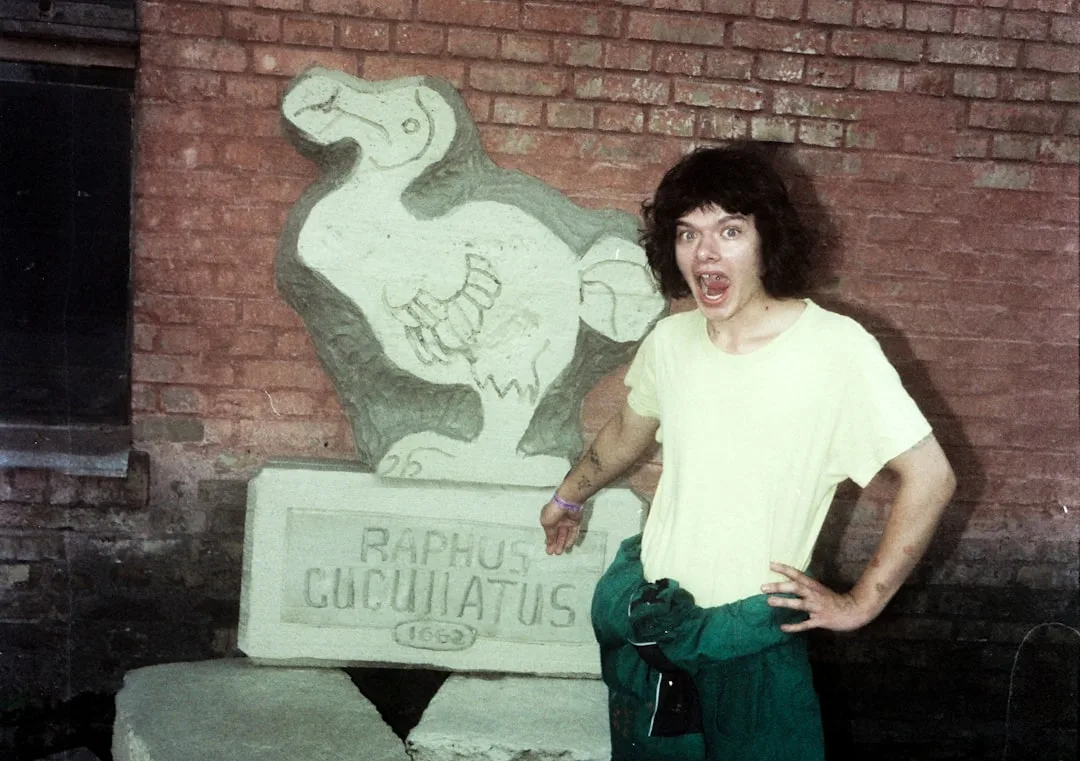
The dodo is the most famous extinct animal in human history. It is also the most misunderstood. Popular culture has turned Raphus cucullatus into a cartoon symbol of failure - a fat, slow, stupid bird too dim to survive. None of that is true. The dodo was a large flightless pigeon perfectly adapted to a tropical island that had no mammalian predators for millions of years.
When Dutch sailors arrived at Mauritius in 1598, the birds walked up to them without fear. Less than a century later, they were gone.
This guide covers every aspect of dodo biology and ecology as we currently understand it: anatomy, size, habitat, diet, reproduction, the exact timeline of extinction, the role of invasive species, the fossil record, and the modern scientific work - including de-extinction projects - that is rewriting the dodo story. It is a reference entry, not a summary, so expect specifics: dates, kilograms, specimen numbers, and verified records.
Etymology and Classification
The origin of the word "dodo" is disputed. The most commonly cited theory traces it to the Portuguese doudo or doido, meaning "fool" or "simpleton", supposedly applied by early Portuguese sailors to a bird that showed no fear of humans. An alternative theory derives it from the Dutch dodaars or dodoor, meaning "fat-bottom" or "sluggard", referring to the bird's appearance.
A third theory suggests onomatopoeia - an imitation of a pigeon-like call. All three theories have supporters and none is conclusive.
The scientific name Raphus cucullatus was coined by Linnaeus in 1758. Raphus comes from a Latinised form of a word for bustard, reflecting early confusion about which family the bird belonged to. Cucullatus means "hooded", referring to the bare skin at the front of the face. For more than two centuries after extinction, the dodo's place in the bird family tree was uncertain.
Scientists variously classified it as a raptor, an ostrich relative, a giant rail, and a peculiar offshoot with no clear relatives.
DNA analysis finally settled the question. Sequencing of preserved dodo tissue, published in 2002 and refined in later studies, placed the dodo firmly inside Columbidae - the pigeon and dove family. Its closest living relative is the Nicobar pigeon (Caloenas nicobarica), a ground-dwelling iridescent pigeon still alive across parts of Southeast Asia, the Nicobar Islands, and the Solomon Islands.
The dodo's nearest extinct relative is the Rodrigues solitaire (Pezophaps solitaria), another giant flightless pigeon that lived on the neighbouring island of Rodrigues and vanished by roughly 1778.
This means every pigeon on every city square in the world is a cousin of the dodo. The dodo itself was effectively a pigeon that gave up flight and grew to the size of a turkey.
Size and Physical Description
Dodo body size has been repeatedly revised. For more than a century, popular accounts described the dodo as a grossly overweight bird weighing 23 kilograms or more. Those estimates came partly from exaggerated seventeenth-century paintings showing force-fed captive specimens, and partly from uncritical interpretation of early weight reports. Modern biomechanical analysis of leg bones, combined with statistical modelling of skeletal proportions, has revised the figures downward.
Revised measurements:
- Height: roughly 1 metre
- Weight: 10 to 17 kilograms in wild condition
- Bill length: up to 23 centimetres
- Wing reduction: small, non-functional for flight
- Plumage: grey-brown overall with lighter breast
- Tail: small tuft of curly feathers
The dodo had sturdy, well-muscled legs designed for walking and running on forest ground. Its feet were large and strong, with four toes equipped for gripping forest litter. Despite popular illustrations, the bird was not waddling or obese - it was a stocky, fast ground forager that could probably run surprisingly quickly when alarmed. Skeletal studies suggest the dodo was capable of considerable agility, comparable to other large ground-dwelling pigeons.
The famous large hooked bill was the dodo's primary tool. Broad at the base and strongly curved at the tip, it could crack hard seeds, extract pulp from fallen fruit, and seize small animals. The bare facial skin extending back from the bill gave the bird its "hooded" appearance, captured in the species name cucullatus.
Habitat and Range
The dodo was endemic to Mauritius, a volcanic island roughly 2,000 kilometres off the southeast coast of Africa in the Indian Ocean. Mauritius covers about 2,040 square kilometres - smaller than Luxembourg - and was uninhabited by humans until the early 1600s. The island's long isolation, combined with its varied lowland ecosystems, produced a unique flora and fauna dominated by birds and reptiles, with no native terrestrial mammals other than bats.
Dodo habitat appears to have been concentrated in the lowland forests of the island's drier coastal zones. Subfossil remains have been recovered from several localities, but the overwhelming majority come from one site: the Mare aux Songes, a swampy former lake bed near the southeast coast. This site yielded tens of thousands of dodo bones, many belonging to birds that likely died in mass drought events thousands of years before human arrival.
Dodos lived alongside a remarkable community of other Mauritian endemics: giant tortoises, Rodrigues night herons, red rails, blue pigeons, Mauritius owls, and reptiles such as skinks and day geckos. Most of these species either went extinct alongside the dodo or survive today only in fragmentary populations.
Diet and Foraging
The dodo was an omnivorous ground forager. Reconstruction of diet relies on three kinds of evidence: contemporary sailor accounts, analysis of the skull and bill, and stones (gastroliths) recovered with skeletal remains.
Primary food items:
- Fallen fruit from Mauritian forest trees
- Hard seeds and nuts, cracked open by the bill
- Roots, tubers, and bulbs dug from forest litter
- Small invertebrates, possibly including crabs
- Shellfish from coastal foraging areas
Foraging methods:
- Ground searching. Dodos walked slowly through forest litter using their sense of smell - unusual for a bird - to locate fruit and seeds beneath leaves.
- Cracking. Hard seeds were broken open using the powerful hooked bill.
- Digging. The bill and feet could extract roots, tubers, and buried invertebrates.
- Opportunistic scavenging. Sailor accounts describe dodos investigating human food remains, consistent with general pigeon behaviour.
Like other pigeons, dodos likely swallowed stones to help grind hard food in the gizzard. Large gastroliths have been found with skeletal material at Mare aux Songes. CT scans of dodo skulls, published in 2016, revealed an enlarged olfactory bulb - the part of the brain that handles smell - suggesting dodos relied heavily on scent to find food on the forest floor. This is unusual and sets them apart from most pigeons, which are primarily visual feeders.
Reproduction and Life History
Reproductive biology is reconstructed from a small number of contemporary accounts, skeletal maturity data, and comparison with living relatives such as the Nicobar pigeon. The picture that emerges is of a slow-reproducing, long-lived island bird - exactly the life history that collapses most quickly under predator pressure.
Reproductive traits:
- Clutch size: one egg per nesting attempt
- Nest: a simple ground nest built from palm leaves
- Incubation: shared by both parents (inferred from pigeon behaviour)
- Fledging period: several weeks on the ground before independence
- Sexual maturity: probably several years
A single egg laid on the forest floor is a catastrophic reproductive strategy once ground predators arrive. Rats, pigs, cats, and macaques introduced to Mauritius could locate dodo nests easily and eat both eggs and hatchlings. Because the bird produced only one offspring per nesting and probably only one clutch per season, the population could not replace losses at the rate predators imposed.
Sailor accounts describe dodos in groups, suggesting at least some social structure. Breeding may have been loosely colonial or pair-based in defensible territories. The exact season is uncertain, but isotope studies of preserved tissue suggest breeding was timed to the austral summer when fruit availability peaked.
Extinction Timeline
The dodo's extinction is one of the best-documented extinction events of the early modern period, because Dutch and later French records span nearly the entire process.
Key dates:
| Year | Event |
|---|---|
| pre-1598 | Dodo population intact, no human presence |
| 1598 | Dutch Admiral Wybrand van Warwijck lands on Mauritius, first contact |
| 1601-1650 | Regular Dutch visits, introduction of rats, pigs, cats, macaques |
| 1638 | Mauritius becomes a Dutch colony, permanent human settlement begins |
| 1662 | Last confirmed sighting: Volkert Evertsz reports dodos on an islet |
| c. 1690 | Last captive dodo in Europe likely dies |
| 1865 | Bones rediscovered at Mare aux Songes swamp |
| 2002 | DNA sequencing confirms dodo as a pigeon (Columbidae) |
| 2007 | Thirioux complete skeleton re-examined in Mauritius |
| 2022 | Colossal Biosciences announces dodo de-extinction programme |
The 1662 date is treated as the statistical extinction year. Shipwrecked sailor Volkert Evertsz described in his journal how he and his crew captured several large flightless birds on a small islet off the main coast of Mauritius. A handful of later claimed sightings lack supporting detail and are generally rejected by researchers.
Statistical methods applied to historical sighting records by David Roberts and Andrew Solow in 2003 suggested the actual extinction probably occurred between 1688 and 1715, though the traditional 1662 date remains the most commonly cited.
Causes of Extinction
The dodo was driven to extinction by a combination of pressures, not a single cause. Modern reconstructions identify three main drivers working simultaneously.
Direct hunting - limited role. Dutch sailors did kill and eat dodos, but multiple contemporary journals describe the meat as tough, stringy, and unpleasant. The name "Walgvogel", meaning "disgusting bird", appears in early Dutch records. Dodos were taken mainly when other food was scarce and never became a staple. Direct hunting alone would not have produced extinction.
Invasive species - primary role. This was the decisive factor. Rats escaping from Dutch ships bred rapidly in the absence of native competitors and predated dodo eggs. Pigs introduced as a meat supply rooted through forests and consumed eggs, chicks, and probably ground-nesting adults. Crab-eating macaques escaped from captivity and developed a taste for bird eggs.
Cats, released or escaped, killed chicks and juveniles. The dodo's single-egg nesting strategy could not withstand this level of nest predation.
Habitat destruction - contributing role. Dutch settlers logged ebony forests and cleared land for sugarcane and other crops. Habitat loss compressed remaining dodo populations into smaller and more fragmented areas, concentrating predator pressure and reducing food availability. By the mid-1600s much of the island's lowland forest was degraded or gone.
The interaction between these pressures is what matters. Hunting alone would not have finished the dodo. Invasive mammals alone might have taken centuries. The combination, acting on a slow-reproducing island bird with no evolutionary defence against any of it, produced collapse within two generations.
The Dodo Tree Myth
For decades, ecology textbooks carried a striking story: the tambalacoque or "dodo tree" (Sideroxylon grandiflorum) of Mauritius had almost stopped reproducing because its seeds could only germinate after passing through the digestive tract of a dodo. With the dodo gone, the tree was doomed to follow. The story was popularised by an influential 1977 paper by Stanley Temple, who claimed that force-feeding seeds to turkeys produced germination.
Later botanical work debunked the myth. Sideroxylon grandiflorum seeds germinate without any bird digestion, and surveys found young tambalacoque trees of varying ages on Mauritius. The declining numbers observed in the 1970s were driven by habitat degradation, seed predation by introduced rats and monkeys, and competition with invasive plants.
The dodo may have dispersed the seeds, but it was not a required partner for germination. The story survives in popular writing because it is too elegant to discard, even though scientists now treat it as incorrect.
The Fossil Record
Despite the dodo's fame, physical remains are surprisingly scarce. There are no mounted specimens preserving complete soft tissue. The known dodo material falls into three categories.
Category 1: Subfossil skeletal material. Tens of thousands of bones have been recovered from the Mare aux Songes swamp site, excavated repeatedly from 1865 onwards. Most museum dodo skeletons are composite reconstructions assembled from multiple individual birds found at this site.
Category 2: The Thirioux specimen. Around 1900, Mauritian amateur naturalist Etienne Thirioux assembled what remains the only known complete skeleton from a single bird. The specimen was re-examined using modern methods in 2007 and has been central to the recent downward revision of body mass estimates. It is held by the Natural History Museum in Port Louis, Mauritius.
Category 3: Preserved soft tissue. The Oxford University Museum of Natural History holds a mummified head and foot known as the Oxford Dodo. This material came from a live dodo transported to Europe in the early 1600s, which died some years later.
Once part of a complete taxidermied specimen, most of the mount was destroyed in a museum fire in 1755; the head and foot were rescued as the only fragments considered scientifically valuable at the time. A second partial foot is held by the Natural History Museum in London. Both soft-tissue specimens have been used as DNA sources.
The scarcity of material is the reason so many old illustrations contradict each other. Artists worked from a handful of live birds in European menageries or from hearsay, and some were clearly painting obese force-fed captives.
Intelligence and Behaviour
The "dumb as a dodo" reputation is largely unfair. The birds' tameness reflected evolutionary history, not cognitive failure. Mauritius had no large ground predators for millions of years, so dodos had no selection pressure to develop predator-avoidance behaviour. When humans arrived, the birds simply did not recognise them as dangerous. A behaviour that had been adaptive for the entire evolutionary history of the species suddenly became fatal in a single generation.
In 2016, a CT scan study by Eugenia Gold and colleagues examined a preserved dodo skull at the Natural History Museum in London. The team used digital reconstruction to map the internal brain cavity and compare proportions with living Columbidae. Their conclusions:
- Brain size was proportional to body mass as expected for a pigeon
- The olfactory bulb was enlarged, suggesting strong scent-based foraging
- Overall cognitive architecture was unremarkable for the family
- No anatomical feature suggested reduced intelligence
Behaviourally, the dodo was almost certainly as intelligent and adaptable as any ground pigeon alive today. The difference lies entirely in context: the dodo evolved in an environment with no mammalian predators and no humans, and it was destroyed by its inability to respond to a threat for which it had no evolutionary template.
Cultural Legacy
The dodo's cultural footprint is wildly out of proportion to how briefly it coexisted with humans. Lewis Carroll's Alice's Adventures in Wonderland (1865) features a dodo based on Carroll himself - his real name, Charles Lutwidge Dodgson, supposedly emerged as "Do-do-dodgson" whenever his stammer surfaced. The John Tenniel illustration of the Wonderland dodo fixed a particular body shape in public imagination that has proven almost impossible to correct.
The dodo has appeared on the Mauritian coat of arms since 1906 and remains the national symbol of the island. It features on stamps, banknotes, and countless commercial logos. The phrase "dead as a dodo" entered English as a synonym for total, irreversible loss - appropriate for a species that left fewer soft-tissue remains than almost any other historical extinction.
In scientific culture, the dodo became the template for a new understanding of how quickly humans can destroy species, particularly island endemics. Every subsequent conservation programme aimed at Pacific or Indian Ocean bird species - kakapos, takahes, mauritius kestrels, echo parakeets - has operated in the dodo's shadow, treating its extinction as the reference case.
De-extinction and Modern Research
The dodo became a flagship de-extinction target in 2022 when biotech company Colossal Biosciences announced a dedicated recovery programme. The plan has several components: sequencing the dodo genome from preserved tissue, identifying the genetic differences between the dodo and the Nicobar pigeon, engineering Nicobar pigeon germ cells to carry dodo-like edits, and raising hybrid offspring through surrogate pigeon parents.
Significant obstacles remain. Birds cannot be cloned using the techniques developed for mammals, because avian egg cells contain a large, fragile yolk that does not tolerate nuclear transfer. Researchers instead plan to edit primordial germ cells - the precursor cells that become sperm and eggs - and introduce them into embryonic pigeons.
Any resulting animal would technically be an edited Nicobar pigeon expressing dodo traits rather than a true resurrected dodo. Ethical questions about habitat, behavioural learning, and ecological reintroduction remain unresolved.
Parallel scientific work continues on existing material. The 2002 DNA sequencing and subsequent refinements using the Oxford Dodo head; the 2007 re-analysis of the Thirioux specimen; the 2016 CT scan and cognitive study; and ongoing palaeoecological work at Mare aux Songes have collectively transformed the scientific picture of the dodo in the past two decades.
The cartoon dodo of the twentieth century is being steadily replaced by a lean, alert, normally intelligent island pigeon whose extinction remains the clearest possible case study of what introduced predators do to an unprepared fauna.
Related Reading
- Extinct Animals: The Species We Lost
- Mauritius: An Island of Lost Birds
- Island Gigantism and Flightlessness
- Colossal Biosciences and the Science of De-extinction
References
Relevant peer-reviewed and institutional sources consulted for this entry include Shapiro et al. (2002) on dodo DNA in Science; Roberts and Solow (2003) on extinction dating in Nature; Hume (2006) on contemporary illustrations; Gold et al. (2016) CT scan analysis in Zoological Journal of the Linnean Society; Claessens et al.
(2015) anatomical analysis of the Thirioux specimen in the Journal of Vertebrate Paleontology; and collection records from the Natural History Museum Port Louis, the Oxford University Museum of Natural History, and the Natural History Museum London.
Frequently Asked Questions
What was a dodo?
The dodo (Raphus cucullatus) was a large flightless bird endemic to the island of Mauritius in the Indian Ocean. It stood roughly one metre tall, weighed between 10 and 17 kilograms, and had grey-brown plumage, small useless wings, a large hooked bill, and a tuft of curly feathers at the rear.
Despite centuries of cartoonish depictions, the dodo was a perfectly adapted island bird - it belonged to the pigeon and dove family (Columbidae) and evolved from flying ancestors that colonised Mauritius millions of years ago. With no ground predators, dodo ancestors gradually lost the ability to fly and grew to giant size, a pattern known as island gigantism.
When did the dodo go extinct?
The last confirmed sighting of a wild dodo was recorded in 1662 by Dutch sailor Volkert Evertsz, who described catching several dodos on an offshore islet after his ship ran aground. Scattered reports continued for another decade or two, but statistical analyses treat 1662 as the extinction date. The last captive dodo taken to Europe is thought to have died around 1690.
The entire extinction unfolded in less than a century - Dutch sailors first described live dodos in 1598, meaning the species vanished roughly 64 years after first European contact.
What caused the dodo to go extinct?
Extinction was driven by a combination of factors, not a single cause. Direct hunting by Dutch sailors played a minor role - multiple journals describe the meat as tough and unpalatable, so dodos were taken only when other provisions ran short. The decisive factor was the introduction of non-native mammals: rats escaping from ships, plus pigs, cats, and crab-eating macaques deliberately released on Mauritius.
These invasive species ate dodo eggs and chicks, which were laid in a single ground nest with no defence. Habitat destruction from logging and agricultural clearance completed the collapse.
What did the dodo eat?
The dodo was an omnivorous ground forager. Its diet is reconstructed from contemporary sailor accounts, gut contents described in early journals, and analysis of the bill and skull. Fruit made up the bulk of the diet, particularly windfall fruit from Mauritian forests. The dodo also ate seeds, nuts, roots, bulbs, and probably small animals such as crabs and shellfish when available.
The hooked bill was powerful enough to crack hard seeds, and stones (gastroliths) found with skeletons suggest gizzard-based processing similar to modern pigeons.
What is the closest living relative of the dodo?
The closest living relative of the dodo is the Nicobar pigeon (Caloenas nicobarica), a colourful ground-dwelling pigeon that lives across the Nicobar Islands, coastal Southeast Asia, and parts of the Solomon Islands and Philippines. Genetic studies published in the early 2000s established that dodos and the extinct Rodrigues solitaire formed a clade nested inside Columbidae (the pigeon and dove family), with Caloenas as the closest surviving branch.
The rock pigeon seen in cities worldwide is a more distant cousin. The finding means that every pigeon you see in a park shares recent ancestry with the dodo.
Was the dodo really stupid?
No. The reputation is based on a misunderstanding of island naivety. Before 1598, Mauritius had no mammalian predators and no humans, so dodo ancestors had no selective pressure to evolve flight response behaviours. When Dutch sailors arrived, the birds simply walked up to them with curiosity - a trait early visitors mistook for slowness or lack of intelligence.
Modern CT scans of dodo skulls, published in 2016, showed a brain size proportional to body mass typical for the pigeon family, with a well-developed olfactory bulb suggesting a strong sense of smell. By pigeon standards, the dodo was a completely normal, probably reasonably clever bird.
Are there any complete dodo skeletons?
Complete dodo skeletons are extremely rare. The single most important specimen is the Thirioux dodo, discovered around 1900 by Mauritian barber and amateur naturalist Etienne Thirioux. It is the only known complete skeleton from a single individual bird and is curated by the Natural History Museum in Port Louis, Mauritius. Most other museum dodos are composites assembled from bones of multiple individuals collected at the Mare aux Songes swamp site.
The Oxford University Museum of Natural History holds the only surviving soft tissue - a mummified head and foot from a bird that arrived alive in Europe in the 17th century.
Can the dodo be brought back?
Serious de-extinction work on the dodo began in the 2020s. In 2022 the biotech company Colossal Biosciences announced a dodo recovery programme using preserved DNA from museum specimens combined with Nicobar pigeon surrogates. The basic plan involves sequencing the dodo genome, identifying genetic differences from the Nicobar pigeon, editing pigeon germ cells to match, and raising hybrid offspring.
Significant scientific and ethical challenges remain - birds cannot be cloned using classical methods because egg cells are difficult to manipulate, and resulting animals would be edited pigeons rather than true dodos. A truly functional revived dodo may be decades away, if achievable at all.