
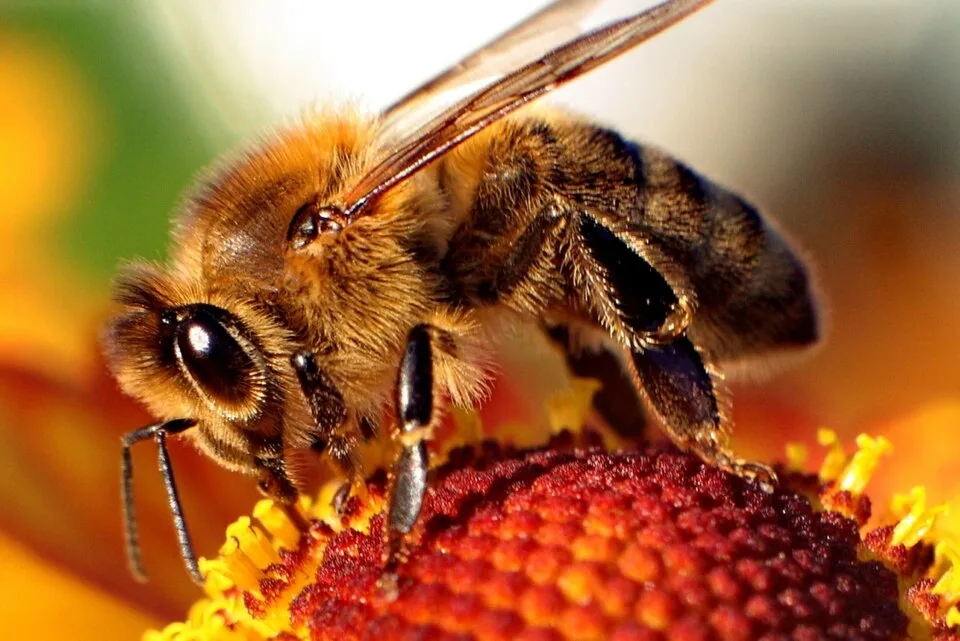
What is colony collapse disorder and what causes it?
Colony collapse disorder (CCD) is a phenomenon first identified in 2006 in which the majority of worker bees in a honeybee colony disappear, leaving behind the queen, immature bees, and food stores. No single cause has been identified. Research points to a convergence of factors including neonicotinoid pesticides that impair bee navigation and immunity, Varroa destructor mites that transmit viruses,.
There is a persistent misquotation attributed to Albert Einstein: "If the bee disappeared from the surface of the Earth, man would have no more than four years to live." Einstein almost certainly never said this - the quote cannot be traced to any of his writings or speeches, and it first appeared decades after his death. Yet the sentiment, however inaccurate in attribution, captures something real.
The ecological and economic infrastructure of human civilization is deeply entangled with the lives of bees and their close relatives, the wasps. Together, these insects pollinate the majority of the world's flowering plants, control agricultural pests, build architecturally sophisticated structures, and maintain ecosystems that have functioned for over 100 million years.
The stakes are not abstract. When honeybee colonies began collapsing at alarming rates in 2006, the agricultural world confronted a crisis that exposed just how dependent modern food production had become on a single group of insects. Understanding bees and wasps - their diversity, behavior, intelligence, and vulnerabilities - is not a niche entomological concern. It is a matter of global food security.
The Staggering Diversity of Bees
When most people think of bees, they picture the western honeybee (Apis mellifera), the domesticated species responsible for most commercial pollination and honey production. This image is misleading. There are more than 20,000 described species of bees worldwide, and the honeybee represents just one of them. Bees belong to the superfamily Apoidea and are classified across seven recognized families: Apidae, Megachilidae, Halictidae, Andrenidae, Colletidae, Melittidae, and Stenotritidae.
The critical fact that upends popular understanding is this: the vast majority of bee species are solitary, not social. Roughly 90 percent of bee species live alone. A female solitary bee builds her own nest - often in underground burrows or hollow plant stems - provisions it with pollen and nectar, lays her eggs, and leaves. She never meets her offspring.
There are no workers, no queens in the honeybee sense, and no colonies. Social behavior, with its elaborate castes and cooperative brood care, evolved independently in only a few lineages and represents the exception rather than the rule.
This diversity matters far beyond taxonomy. Different bee species pollinate different plants, fly at different temperatures, and operate on different schedules. The loss of any single species can break a pollination chain that no other species can replace. A 2016 study published in Science found that wild bee diversity - not just honeybee abundance - was the primary driver of stable crop pollination across 600 fields on five continents [1].
The Waggle Dance: Karl von Frisch and the Language of Bees
Few discoveries in animal behavior have been as revolutionary as the decoding of the honeybee waggle dance. The Austrian ethologist Karl von Frisch spent decades studying honeybee communication, culminating in a body of work that earned him the Nobel Prize in Physiology or Medicine in 1973, shared with Konrad Lorenz and Nikolaas Tinbergen.
"The bee's life is like a magic well: the more you draw from it, the more it fills with water." - Karl von Frisch, Bees: Their Vision, Chemical Senses, and Language (1950)
The waggle dance is a figure-eight movement performed by a returning forager bee on the vertical surface of the comb inside a dark hive. The dance encodes two pieces of information with remarkable precision:
Direction: The angle of the straight "waggle run" portion of the figure-eight, measured relative to vertical, corresponds to the angle between the sun and the food source as seen from the hive. A waggle run pointed straight up means "fly toward the sun." A run angled 60 degrees to the right means "fly 60 degrees to the right of the sun."
Distance: The duration of the waggle phase encodes the distance to the food source. Approximately one second of waggling corresponds to roughly one kilometer of flight distance. Longer waggle runs indicate more distant sources.
The dance also conveys information about the quality and quantity of the food source through its vigor and repetition rate. Other bees in the dark hive follow the dancer by touch, detecting vibrations through their antennae and legs, then fly out and locate the indicated food source with impressive accuracy.
Von Frisch's work was initially met with skepticism. Some researchers argued that bees might simply follow scent trails rather than interpreting the abstract spatial information in the dance. It was not until 2005 that a definitive experiment using harmonic radar tracking, published in Nature, confirmed that bees do indeed use the dance's directional and distance information to navigate to food sources they have never visited [2].
Colony Collapse Disorder: The Crisis That Shook Agriculture
In the autumn of 2006, commercial beekeepers across the United States began reporting something unprecedented. They opened their hives to find them nearly empty. The queen was present. Immature bees remained. Honey and pollen stores were intact. But the adult worker bees - tens of thousands per colony - had simply vanished. They had not died inside the hive. They had flown out and never returned.
The phenomenon was given a name: colony collapse disorder (CCD). In the winter of 2006-2007, American beekeepers lost an estimated 30 to 40 percent of their managed honeybee colonies. Some operations lost 90 percent. The pattern repeated in subsequent years, and similar losses were reported in Europe, Asia, and South America.
The Search for a Cause
The investigation into CCD became one of the most intensive research efforts in modern entomology. No single cause was found. Instead, the evidence pointed to a convergence of multiple interacting stressors:
Neonicotinoid pesticides: These systemic insecticides, introduced in the 1990s, are absorbed by plants and expressed in pollen and nectar. Sub-lethal doses do not kill bees outright but impair their navigation, memory, immune function, and reproductive capacity.
A landmark 2012 study in Science demonstrated that bees exposed to neonicotinoids were significantly less likely to return to their hives - precisely the symptom observed in CCD [3]. The European Union imposed a partial ban on three neonicotinoids in 2013, expanded to a near-total outdoor ban in 2018.
Varroa destructor mites: This parasitic mite, which jumped from the Asian honeybee (Apis cerana) to the western honeybee in the mid-20th century, is arguably the single most destructive threat to honeybee health worldwide.
Varroa mites feed on bee fat bodies (not hemolymph, as was long believed), weakening individual bees and transmitting a cocktail of devastating viruses, including deformed wing virus and acute bee paralysis virus. A colony with an uncontrolled Varroa infestation will typically collapse within one to three years.
Habitat loss and monoculture: The conversion of diverse wildflower meadows to industrial monoculture farmland has reduced the nutritional diversity available to bees. A honeybee colony consuming only one type of pollen - as happens when surrounded by thousands of hectares of a single crop - suffers nutritional deficiencies analogous to a human eating only bread. This weakens immunity and reduces resilience to other stressors.
Pathogens: The microsporidian parasite Nosema ceranae and various viral infections have been found at elevated levels in CCD-affected colonies, though their role as cause versus consequence remains debated.
The scientific consensus is that CCD results from the synergistic interaction of these factors. A bee weakened by poor nutrition is more vulnerable to Varroa. A bee carrying a sub-lethal pesticide load is less able to fight off disease. The crisis is not one problem but many, compounding simultaneously.
Honeybee Hive Architecture: Mathematics in Wax
The interior of a honeybee hive is one of the most precisely engineered structures in the natural world. Worker bees construct the comb from beeswax, secreted from glands on the underside of their abdomens. The wax is manipulated by the bees' mandibles and shaped into the iconic hexagonal cells that have fascinated mathematicians for millennia.
Why Hexagons?
The hexagonal cell shape is not arbitrary. In 36 BC, the Roman scholar Marcus Terentius Varro proposed what became known as the honeycomb conjecture: that a regular hexagonal grid is the most efficient way to partition a surface into equal areas with the least total perimeter. This conjecture was not formally proven until 1999, when mathematician Thomas Hales published a rigorous proof [4]. Bees, through millions of years of natural selection, arrived at the same solution.
The practical advantages are significant. Hexagonal cells use approximately 30 percent less wax than equivalent square or triangular cells to store the same volume of honey. Since producing one kilogram of beeswax requires bees to consume roughly 6 to 7 kilograms of honey, this material efficiency translates directly into energy savings for the colony.
Temperature Regulation
A honeybee hive maintains a remarkably stable internal temperature of approximately 35 degrees Celsius (95 degrees F) in the brood area, regardless of external conditions. In cold weather, worker bees cluster tightly and generate heat by vibrating their flight muscles.
In hot weather, they collect water and spread it in thin films across the comb, then fan their wings to create evaporative cooling - a system functionally identical to air conditioning. The precision of this thermoregulation is extraordinary: the brood area temperature rarely fluctuates by more than one degree.
Democracy in Swarm Decisions
When a honeybee colony reproduces by swarming, the swarm must collectively choose a new nest site. This decision-making process, studied extensively by Thomas Seeley at Cornell University, operates as a decentralized democracy. Scout bees investigate potential sites and return to the swarm to perform waggle dances advertising their finds.
Better sites receive more vigorous dances, which recruit more scouts to inspect them. Through a process of competitive recruitment and independent evaluation, the swarm reaches a consensus - typically choosing the optimal site from dozens of candidates. Seeley has argued that this process is functionally analogous to neural decision-making in primate brains [5].
| Feature | Honeybee Colony | Human-Engineered Building |
|---|---|---|
| Construction material | Beeswax (self-produced) | Concrete, steel, wood (externally sourced) |
| Cell geometry | Hexagonal (mathematically optimal) | Rectangular (conventional, not optimal) |
| Temperature control | 35C +/- 1C (collective thermoregulation) | Variable (requires mechanical HVAC) |
| Decision-making | Decentralized democracy (scout consensus) | Centralized (architect/engineer) |
| Construction workforce | ~20,000 workers (no blueprints) | Variable (requires detailed plans) |
| Structural repair | Continuous, self-healing | Requires external maintenance |
Bumblebees: Cold-Weather Champions
Bumblebees (genus Bombus, approximately 250 species) are the heavyweights of the bee world - large, densely furred, and capable of feats that seem to defy physics. They are among the very few insects that can thermoregulate endothermically, generating body heat by decoupling their flight muscles from their wings and vibrating them rapidly. This allows bumblebees to fly in conditions too cold for virtually any other bee, including temperatures near freezing.
Buzz Pollination
Bumblebees possess a pollination technique unavailable to honeybees: buzz pollination (sonication). Certain plants, including tomatoes, blueberries, cranberries, and eggplants, store their pollen inside tubular anthers that release pollen only when vibrated at specific frequencies.
A bumblebee grasps the flower and vibrates its flight muscles at approximately 400 Hz without beating its wings, shaking the pollen loose like salt from a shaker. Honeybees cannot perform this behavior, which makes bumblebees irreplaceable pollinators for these crops.
High-Altitude Flight
Bumblebees have been documented flying at altitudes exceeding 5,500 meters in the Himalayas, and laboratory experiments have shown that the alpine bumblebee Bombus impetuosus can sustain flight in air pressure equivalent to an altitude of over 9,000 meters - higher than the summit of Mount Everest. They accomplish this not by beating their wings faster but by increasing the arc of each wing stroke, sweeping a larger volume of thin air with each cycle.
A Worldwide Decline
Despite their resilience, bumblebee populations are declining across the Northern Hemisphere. A 2020 study published in Science analyzed over 500,000 records and found that the probability of observing a bumblebee at any given site in North America had dropped by 46 percent compared to a 1974-2000 baseline. In Europe, similar declines have been documented.
Climate change is a primary driver: bumblebees are adapted to cool climates, and warming temperatures are compressing their habitable range from the south without corresponding expansion to the north [6].
Africanized Honeybees: The "Killer Bee" Story
In 1956, the Brazilian geneticist Warwick Estevam Kerr imported African honeybees (Apis mellifera scutellata) to his research station near Sao Paulo, intending to breed a tropical-adapted honeybee with higher honey production. In 1957, 26 swarms escaped quarantine. What followed was one of the most dramatic biological invasions in modern history.
The escaped African bees hybridized with the resident European honeybees, producing the Africanized honeybee - popularly known as the "killer bee." These hybrids inherited the African parent's defensive aggression: they respond to perceived threats in far greater numbers (hundreds to thousands of bees versus dozens for European bees), pursue threats over longer distances (up to 500 meters), and remain agitated for hours after a disturbance.
The Africanized honeybee spread northward at a rate of approximately 300 to 500 kilometers per year, reaching Central America in the 1980s, Texas in 1990, and Arizona and California in the mid-1990s. Their advance was tracked with the intensity of a military campaign.
Predictions of catastrophic casualties proved overblown - fatalities occur but remain relatively rare, typically involving individuals who are unable to flee a mass stinging event - but the bees have permanently altered beekeeping practices across Latin America and the southern United States.
Ironically, Africanized honeybees are in some respects better adapted to modern challenges. They exhibit greater resistance to Varroa mites, higher overall productivity in tropical climates, and more aggressive hygienic behavior that removes diseased brood.
Orchid Bees and Mason Bees: Specialists Extraordinary
Orchid Bees
The orchid bees (tribe Euglossini), found exclusively in the Neotropics, are among the most visually stunning insects on Earth. Their bodies are brilliantly iridescent - metallic green, blue, copper, and gold - a result of structural coloration in their exoskeletons rather than pigment.
Male orchid bees collect aromatic compounds from orchid flowers, fungi, and tree resins, storing them in specialized hollow chambers on their enlarged hind legs. These collected fragrances are used in courtship displays, and each species collects a unique blend.
The relationship between orchid bees and orchids is one of the most intricate pollination mutualisms in nature: many orchid species are pollinated exclusively by a single orchid bee species, and the loss of one partner would doom the other.
Mason Bees
Mason bees (genus Osmia, approximately 500 species) are solitary bees that nest in pre-existing cavities - hollow stems, beetle holes in wood, or artificial "bee houses." They seal their nest cells with mud, hence the name. What makes mason bees remarkable from an agricultural perspective is their extraordinary pollination efficiency.
A single female mason bee can pollinate as many flowers as 300 or more honeybee workers. This is because mason bees carry pollen loosely on their dry, hairy abdomens (a structure called the scopa), losing large quantities of pollen to each flower they visit.
Honeybees, by contrast, moisten their pollen and pack it tightly into "pollen baskets" on their hind legs, making them efficient pollen collectors but relatively inefficient pollinators. For orchard crops such as almonds, apples, and cherries, mason bees are increasingly being deployed as targeted pollinators alongside or instead of honeybees.
Wasps: Predators, Parasites, and Unsung Ecosystem Engineers
Wasps are the evolutionary ancestors of bees - bees are essentially wasps that switched from a predatory diet to a pollen-based one roughly 130 million years ago. While bees have earned public affection as pollinators, wasps remain deeply unpopular. This is unfortunate, because wasps perform ecological services that are arguably as valuable as those of bees.
"If all mankind were to disappear, the world would regenerate back to the rich state of equilibrium that existed ten thousand years ago. If insects were to vanish, the environment would collapse into chaos." - E.O. Wilson, The Diversity of Life (1992)
Parasitoid Wasps: Nature's Pest Control
The parasitoid wasps - a vast group comprising hundreds of thousands of species in families such as Braconidae, Ichneumonidae, and Trichogrammatidae - are among the most effective biological pest control agents on Earth. A parasitoid wasp lays its eggs inside or on the body of a host insect, typically a caterpillar, aphid, or beetle larva. The wasp larva consumes the host from the inside, eventually killing it.
This may sound gruesome, but the ecological impact is profoundly beneficial: parasitoid wasps suppress populations of agricultural pests that would otherwise devastate crops. The global economic value of pest control provided by wasps has been estimated at over $416 billion annually [7].
Paper Wasps and Social Intelligence
Paper wasps (genus Polistes) build open-celled nests from a papery material made by chewing wood fibers mixed with saliva. What distinguishes paper wasps among social insects is their remarkable cognitive ability. Research published in Science in 2002 demonstrated that Polistes fuscatus can recognize individual faces of their nestmates - a capacity previously thought limited to mammals.
They use facial pattern recognition to establish and maintain dominance hierarchies within the nest, remembering which individuals they have defeated or lost to in previous encounters.
Further research has shown that paper wasps can learn transitive inference - the ability to deduce that if A is greater than B, and B is greater than C, then A must be greater than C. This logical reasoning ability places paper wasps among a surprisingly small group of animals, including primates and corvids, known to possess this cognitive skill.
Fig Wasps and the Co-evolution of Figs
The relationship between fig wasps (family Agaonidae) and fig trees (genus Ficus, approximately 750 species) represents one of the most ancient and tightly coupled mutualisms in the natural world, dating back at least 75 million years. Each fig species is typically pollinated by a single wasp species, and each wasp species can reproduce only inside the figs of its partner species.
A female fig wasp enters the fig through a tiny opening called the ostiole, losing her wings and antennae in the process. Inside, she pollinates the flowers, lays her eggs, and dies. Her offspring develop inside the fig, mate within the fig's interior, and the next generation of females emerge carrying pollen to begin the cycle anew.
This relationship is so obligate that the extinction of either partner would doom the other - and because figs are keystone species in tropical ecosystems, providing food for hundreds of vertebrate species, the loss of fig wasps would trigger cascading ecological collapse.
The Economic Value of Pollination
The global economic contribution of animal pollination to agriculture is staggering. A comprehensive assessment by the Intergovernmental Science-Policy Platform on Biodiversity and Ecosystem Services (IPBES) estimated the annual value of pollinator-dependent crop production at $235 to $577 billion USD [8]. Bees are responsible for the majority of this value.
Specific crop dependencies illustrate the scale:
- Almonds: 100 percent dependent on bee pollination. California's almond industry alone requires approximately 2 million honeybee colonies each February - roughly 80 percent of all managed colonies in the United States.
- Blueberries: Require buzz pollination; bumblebees and solitary bees are essential.
- Cocoa: Pollinated by midges, but bees pollinate many companion crops in cocoa-growing regions.
- Coffee: Bee pollination increases yield by 20 to 25 percent.
- Apples: Require cross-pollination between different varieties, almost entirely mediated by bees.
The nutritional dimension is equally critical. Pollinator-dependent crops provide the majority of dietary vitamin A, vitamin C, calcium, folic acid, and lipids in the human diet. A world without bee pollination would not necessarily face caloric famine - wind-pollinated grains like wheat, rice, and corn would persist - but it would face severe micronutrient deficiency on a global scale.
The Path Forward
The challenges facing bees and wasps are severe but not insurmountable. Effective interventions include:
- Reducing pesticide exposure through integrated pest management, targeted application, and restrictions on the most harmful compounds
- Restoring habitat by planting wildflower strips, hedgerows, and cover crops on agricultural land
- Supporting managed and wild pollinator diversity rather than relying exclusively on honeybees
- Funding research into Varroa mite resistance, bee disease, and the effects of climate change on pollinator ranges
- Regulating the movement of managed bee colonies to reduce pathogen transmission to wild populations
The honeybee, for all its cultural prominence, is a single species. The real wealth of pollination lies in the 20,000 other bee species and the countless wasp species that maintain ecological balance through predation and parasitism. Protecting this diversity is not sentimentality. It is infrastructure maintenance for the biosphere.
References
Garibaldi, L.A., et al. (2016). Mutually beneficial pollinator diversity and crop yield outcomes in small and large farms. Science, 351(6271), 388-391.
Riley, J.R., Greggers, U., Smith, A.D., Reynolds, D.R., & Menzel, R. (2005). The flight paths of honeybees recruited by the waggle dance. Nature, 435(7039), 205-207.
Henry, M., Beguin, M., Requier, F., et al. (2012). A common pesticide decreases foraging success and survival in honey bees. Science, 336(6079), 348-350.
Hales, T.C. (2001). The honeycomb conjecture. Discrete and Computational Geometry, 25(1), 1-22.
Seeley, T.D. (2010). Honeybee Democracy. Princeton University Press.
Soroye, P., Newbold, T., & Kerr, J. (2020). Climate change contributes to widespread declines among bumble bees across continents. Science, 367(6478), 685-688.
Brock, R.E., Cini, A., & Sumner, S. (2021). Ecosystem services provided by aculeate wasps. Biological Reviews, 96(4), 1645-1675.
IPBES. (2016). The Assessment Report on Pollinators, Pollination and Food Production. Secretariat of the Intergovernmental Science-Policy Platform on Biodiversity and Ecosystem Services, Bonn, Germany.
Frequently Asked Questions
What is colony collapse disorder and what causes it?
Colony collapse disorder (CCD) is a phenomenon first identified in 2006 in which the majority of worker bees in a honeybee colony disappear, leaving behind the queen, immature bees, and food stores. No single cause has been identified.
Research points to a convergence of factors including neonicotinoid pesticides that impair bee navigation and immunity, Varroa destructor mites that transmit viruses, habitat loss from agricultural intensification, nutritional stress from monoculture farming, and pathogens such as Nosema ceranae. The interaction of these stressors is believed to be more damaging than any single factor alone.
What does the honeybee waggle dance communicate?
The waggle dance is a figure-eight movement performed by forager honeybees to communicate the precise distance and direction of a food source to nestmates. The angle of the straight waggle run relative to vertical on the comb indicates direction relative to the sun, while the duration of the waggle phase encodes distance - approximately one second of waggling corresponds to roughly one kilometer.
This communication system was decoded by Austrian ethologist Karl von Frisch, who received the Nobel Prize in Physiology or Medicine in 1973 for his discovery.
How much of the world's food supply depends on bee pollination?
Approximately 75% of the world’s flowering plants and roughly 35% of global food crop production depend on animal pollinators, with bees being the most important group. The economic value of pollination services provided by bees and other pollinators is estimated at \(235 to \)577 billion USD annually. Crops such as almonds, blueberries, cherries, apples, and avocados are almost entirely dependent on bee pollination.
Without bees, the global food system would face severe disruption in both yield and nutritional diversity.