
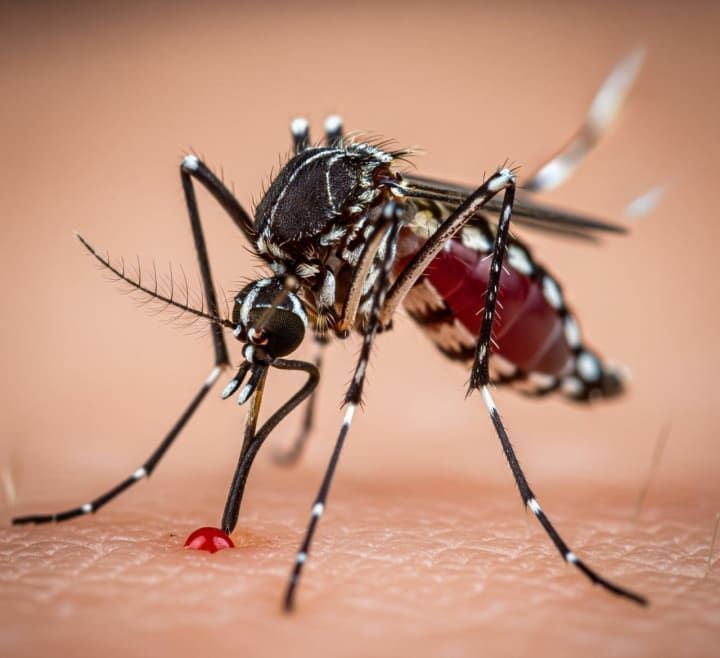
What is the deadliest animal in the world?
Mosquitoes are the deadliest animal in the world, responsible for approximately 725,000 to 1,000,000 human deaths per year through the diseases they transmit. This far exceeds deaths from any other animal. For comparison, sharks kill 6 people per year on average, lions kill 200, hippos kill 500, and snakes kill approximately 100,000.
The Killer in the Room
Ask a crowd what the deadliest animal in the world is, and the answers will come quickly. Sharks. Lions. Snakes. Wolves. Crocodiles. The correct answer is almost never guessed.
A 2.5-milligram insect, small enough to fit on the tip of a pencil, kills more humans every year than every predator on Earth combined. It does so not through aggression, size, or strength, but through a biological accident of evolution that turned it into a living pharmacy of infectious disease. The mosquito is responsible for more human deaths than any other animal in history, and it continues to be the deadliest creature alive today.
The Numbers
Annual human deaths by cause:
| Cause | Deaths per year |
|---|---|
| Mosquitoes | 725,000 - 1,000,000 |
| Snakes | ~100,000 |
| Dogs (rabies transmission) | ~25,000 |
| Tsetse flies | ~10,000 |
| Assassin bugs (Chagas) | ~10,000 |
| Freshwater snails (schistosomiasis) | ~10,000 |
| Scorpions | ~3,300 |
| Crocodiles | ~1,000 |
| Elephants | ~500 |
| Hippopotamuses | ~500 |
| Lions | ~200 |
| Wolves | ~10 |
| Sharks | ~6 |
| Bears | ~10 |
The scale is staggering. Mosquitoes kill approximately 100,000 times more humans per year than sharks do. They kill more people every year than died in the Black Death plague in its deadliest years.
But these numbers fluctuate. In years of major epidemics, mosquito-borne diseases can kill over a million people. The 1918-1921 malaria resurgence in India killed millions. The 1950s-era yellow fever outbreaks devastated coastal African populations. Even in well-controlled years, malaria alone kills over 600,000 people, mostly children under five.
Why Mosquitoes Are So Dangerous
Mosquitoes do not kill through venom, bite force, or physical attack. Their entire deadly contribution to human history comes from what they carry.
When a female mosquito bites a human, she injects saliva containing anticoagulants - substances that keep blood flowing while she feeds. If the mosquito has previously fed on an infected animal or human, that saliva can also contain viruses, protozoan parasites, or bacteria that now enter the new host's bloodstream.
The mosquito itself is unaffected by most of the pathogens she carries. The human, however, may develop:
Malaria. A protozoan parasite that infects red blood cells, causing fevers, chills, anemia, organ failure, and in severe cases death. Kills 600,000+ annually.
Dengue fever. A viral infection causing severe joint pain, fever, and in severe cases hemorrhagic fever. 400 million infections per year, 20,000-40,000 deaths.
Yellow fever. A viral infection causing fever, liver damage, and hemorrhage. 30,000 deaths per year despite an effective vaccine.
Zika virus. Causes mild illness in adults but severe birth defects (microcephaly) when contracted during pregnancy. Low direct mortality but significant disability.
West Nile virus. Causes encephalitis in severe cases. Approximately 2,000 deaths per year globally.
Japanese encephalitis. Inflammation of the brain. 15,000-20,000 deaths per year in Asia.
Chikungunya. Causes severe joint pain that can persist for months. Low direct mortality but significant suffering.
Lymphatic filariasis. A parasitic worm infection causing elephantiasis. Non-fatal but extremely disabling.
A single mosquito bite can transmit any of these diseases. In endemic regions, humans are bitten hundreds or thousands of times per year.
Only Females Bite
Male mosquitoes do not bite humans. They feed exclusively on plant nectar and live short, peaceful lives as pollinators. It is only the females that bite, and they do so for a specific biological reason: blood contains protein, and protein is required to produce eggs.
A female mosquito that cannot find a blood meal cannot reproduce. Many species will die without laying eggs if no host is available, producing no offspring. This is why mosquito control efforts focus so heavily on preventing bites - every successful bite a mosquito takes increases the chances she will survive to produce more mosquitoes, and every egg she lays increases future mosquito populations.
Before laying eggs, a female mosquito must typically take one to three blood meals. Each meal requires finding a host, landing undetected, penetrating skin with a specialized proboscis, and drawing approximately 5 microliters of blood (roughly her own body weight in fluid) before flying off.
Malaria: The Primary Killer
Of all mosquito-borne diseases, malaria is by far the deadliest. It has killed more humans throughout history than any other infectious disease. Current estimates suggest malaria has killed half of all humans who have ever lived.
The disease is caused by protozoan parasites in the genus Plasmodium. Five species infect humans:
- Plasmodium falciparum - the most dangerous, responsible for 99% of malaria deaths
- Plasmodium vivax - widespread but less deadly, can remain dormant in the liver for years
- Plasmodium ovale - similar to P. vivax
- Plasmodium malariae - causes chronic, low-grade infections
- Plasmodium knowlesi - primarily a monkey parasite that occasionally infects humans
The parasite has a complex life cycle that requires both a mosquito and a vertebrate host. Transmission happens when a female Anopheles mosquito bites an infected human, takes up Plasmodium gametocytes in the blood meal, and transports them internally while they develop into infective sporozoites. When the mosquito bites another human, she injects those sporozoites into the new host, where they travel to the liver, multiply, burst into the bloodstream, and invade red blood cells.
Each cycle of red-blood-cell invasion and rupture causes a bout of fever. Severe cases include cerebral malaria (when infected cells clog brain capillaries), severe anemia, organ failure, and death. Children under five are most vulnerable because they lack any prior immunity.
Why Eradication Is So Hard
Humans have tried to eradicate malaria for over a century, with partial but not total success.
The parasite evolves. Plasmodium falciparum has evolved resistance to every antimalarial drug ever deployed: chloroquine (resistant by the 1960s), sulfadoxine-pyrimethamine (resistant by the 1980s), mefloquine (resistant by the 1990s), and increasing resistance to artemisinin-based therapies (the current front-line treatment) in Southeast Asia.
The mosquitoes evolve. Anopheles mosquitoes develop resistance to insecticides within 5 to 10 years of any new chemical's introduction. DDT was effective in the 1950s and 1960s but mosquitoes are now resistant to it in most of the world. Pyrethroids, the modern alternative, are losing effectiveness in Africa.
The ecology is complex. Anopheles mosquitoes breed in an enormous variety of freshwater habitats - rice paddies, irrigation ditches, rain barrels, tree holes, even hoof prints. Eliminating breeding sites is nearly impossible in tropical regions.
The poverty problem. Malaria disproportionately affects the world's poorest populations. Rural sub-Saharan Africa has limited access to bed nets, indoor residual spraying, diagnostic testing, and antimalarial drugs. Every failure in public health infrastructure allows the disease to persist.
Despite all this, progress is real. Malaria deaths have fallen approximately 50 percent since 2000. Insecticide-treated bed nets, better drugs, and the first malaria vaccines (RTS,S, approved in 2021, and R21, approved in 2023) are saving hundreds of thousands of lives per year.
The Gene Drive Question
A newer and more controversial approach is gene drive technology, which uses CRISPR to propagate a genetic modification through wild mosquito populations until the entire species either disappears or becomes incapable of carrying malaria.
Gene drive mosquitoes have already been engineered in laboratories. A gene drive carrying a sterility gene, released into a wild population, would theoretically spread through nearly 100 percent of the population within 10 to 15 generations and eliminate the species entirely.
Field trials are now underway in Burkina Faso, West Africa, under careful oversight. The scientific case for deploying them is compelling: malaria has killed hundreds of millions of humans throughout history, and the Anopheles mosquito genus contains only about 40 species of any epidemiological significance out of 3,500 total mosquito species. Eliminating the disease-carrying species would probably have limited ecological consequences.
The ethical case is more complicated. Deliberately driving a species to extinction crosses a threshold humanity has never deliberately crossed before. The risk of unintended consequences cannot be reduced to zero. And once released, a gene drive is difficult or impossible to recall.
The debate continues. Within the next decade, the world will probably make a decision about whether to eliminate disease-carrying mosquito species through gene drives. That decision will shape human health for centuries to come.
Why Some People Get Bitten More
Not everyone attracts mosquitoes equally. Several factors make some humans more vulnerable:
Blood type. People with type O blood are bitten roughly twice as often as people with type A. Type B falls in between. This is believed to relate to chemical signals secreted through skin pores.
Carbon dioxide. Mosquitoes detect CO2 from up to 30 meters away. Larger bodies, active exercise, and pregnancy all increase CO2 output and attract more mosquitoes.
Body heat. Warmer bodies are more attractive. Exercise increases temperature and attractiveness.
Skin bacteria. Specific bacteria on human skin produce chemical compounds that mosquitoes find attractive. These bacteria are largely determined by genetics.
Pregnancy. Pregnant women are bitten approximately 40 percent more often than non-pregnant individuals, due to higher body temperature and CO2 output.
Dark clothing. Mosquitoes are visual hunters as well as chemical detectors. Dark colors are easier to target.
Beer consumption. A small but measurable increase in attractiveness, possibly due to changes in body temperature or skin bacteria.
Repellents work by masking the chemical cues mosquitoes use to find hosts. DEET, picaridin, and oil of lemon eucalyptus are the most effective. Citronella and essential oil-based repellents provide some protection but wear off quickly.
The Most Dangerous Animal Ever
Across all of human history, more people have died from mosquito-borne diseases than from any other cause that involves another living creature. More than wars. More than all other animals combined. More than plague, cancer, or heart disease were able to cause in equivalent time periods before modern medicine.
The mosquito has killed pharaohs, Roman emperors, medieval kings, and millions of anonymous farmers, soldiers, and children across every continent except Antarctica. It has shaped the outcomes of wars - the Union army lost 650,000 soldiers to malaria and yellow fever during the U.S. Civil War, exceeding battlefield deaths in some years. It has collapsed empires, redrawn maps, and determined which human populations could settle which regions.
It continues to do so today. Every minute, a child dies of malaria somewhere in Africa. Every day, a million humans contract dengue. Every year, the mosquito claims more lives than any war currently being fought on Earth.
Perhaps the most remarkable fact about mosquitoes is not that they kill so many people, but how few people understand the scale of what they have done. We fear sharks, which kill six people a year, and we fear lions, which kill two hundred. The insect killing a million of us annually barely registers in our cultural consciousness.
That may be about to change. The tools to eliminate mosquito-borne disease are finally within reach. The question is whether we will choose to use them.
Global Disease Burden: The Numbers
The annual toll of mosquito-borne diseases is documented in detail by the World Health Organization, the Global Burden of Disease Study, and national epidemiological services. The Kalenux Team compiled the current best estimates.
| Disease | Annual Cases | Annual Deaths | Primary Vector |
|---|---|---|---|
| Malaria | 247 million | 619,000 | Anopheles species |
| Dengue | 390 million infections, 96 million symptomatic | 40,000 | Aedes aegypti, Aedes albopictus |
| Japanese encephalitis | 68,000 | 10,000-15,000 | Culex species |
| Yellow fever | 200,000 | 30,000 | Aedes aegypti, jungle Haemagogus |
| Chikungunya | 500,000+ | Variable (rarely fatal) | Aedes species |
| West Nile virus | ~200,000 | 10,000 | Culex species |
| Lymphatic filariasis | 51 million carriers | Low mortality, high morbidity | Multiple species |
| Zika virus | Variable (major outbreaks) | Low mortality; congenital syndrome | Aedes aegypti |
"Malaria alone is estimated to have killed approximately half of all humans who have ever lived. No other disease, no other predator, no other natural cause comes close. If we measure impact by human deaths, the mosquito is the most consequential animal on Earth, by a very large margin." - Timothy Winegard, The Mosquito: A Human History of Our Deadliest Predator, 2019 [1]
Malaria dominates the mortality numbers and affects mostly sub-Saharan African children under five. Dengue, though less often fatal, affects the largest number of people - an estimated 40 percent of the world's population lives in areas at risk of dengue transmission, and the disease's range is expanding as climate change opens new territories to Aedes aegypti.
Gene Drive Technology: The Potential Endgame
The most controversial and potentially transformative weapon against malaria mosquitoes is gene drive technology - CRISPR-based genetic modifications designed to spread through wild mosquito populations at more than Mendelian rates. A standard gene is inherited by 50 percent of offspring; a gene drive can be inherited by nearly 100 percent, allowing a modified gene to spread through an entire species within a few dozen generations.
"We have engineered laboratory populations of Anopheles gambiae - the main African malaria vector - that carry a gene drive making females infertile. In caged populations, this drive spreads to 100 percent of individuals within 7-11 generations, and the population collapses. Whether to release such modifications into the wild is not a scientific question; the science works. It is a political and ethical question that requires global consultation." - Andrea Crisanti, Imperial College London, Nature Biotechnology, 2018 [2]
The Target Malaria consortium, working in Burkina Faso, Mali, and Uganda, has completed laboratory and small-scale field tests of gene-drive mosquitoes and is moving toward larger-scale trials.
The technology could in principle eliminate the Anopheles gambiae species complex - the main African malaria vector - across large regions, saving hundreds of thousands of lives per year. It could also have unforeseen ecological consequences that cannot be reversed once the modified mosquitoes have spread.
Invasive Mosquito Species and Climate Change
Climate change is expanding mosquito ranges into regions that have never had to deal with them. Aedes aegypti and Aedes albopictus, the primary vectors of dengue, chikungunya, and Zika, are both expanding rapidly northward in the Americas, Europe, and Asia. The Kalenux Team reviewed recent tracking data on their range expansion.
| Invasive Species | Historical Range | Current Range | Trend |
|---|---|---|---|
| Aedes aegypti | Tropical Africa | Pantropical; reaches southern US, southern Europe | Expanding |
| Aedes albopictus | Southeast Asia | Europe, Americas, Africa | Expanding rapidly |
| Aedes japonicus | Japan, Korea | Europe, North America | Expanding |
| Aedes koreicus | Korea, Russia | Europe (since 2011) | Expanding |
| Anopheles stephensi | India, Middle East | Now in East Africa (major concern) | Establishing |
The expansion of Anopheles stephensi into Africa since 2012 is particularly worrying. This species thrives in urban environments and is resistant to many insecticides. Its establishment in African cities could reverse decades of malaria control progress, spreading disease transmission into urban centers that have historically been relatively malaria-free.
References
- Winegard, T. C. (2019). The Mosquito: A Human History of Our Deadliest Predator. Dutton.
- Kyrou, K., Hammond, A. M., Galizi, R., Kranjc, N., Burt, A., Beaghton, A. K., Nolan, T., and Crisanti, A. (2018). "A CRISPR-Cas9 gene drive targeting doublesex causes complete population suppression in caged Anopheles gambiae mosquitoes." Nature Biotechnology, 36(11), 1062-1066.
- World Health Organization. (2023). World Malaria Report 2023. World Health Organization.
- Bhatt, S., et al. (2015). "The effect of malaria control on Plasmodium falciparum in Africa between 2000 and 2015." Nature, 526(7572), 207-211.
- Kraemer, M. U. G., Reiner, R. C., Brady, O. J., Messina, J. P., Gilbert, M., Pigott, D. M., Yi, D., et al. (2019). "Past and future spread of the arbovirus vectors Aedes aegypti and Aedes albopictus." Nature Microbiology, 4(5), 854-863.
Related Articles
- Most Dangerous Insects in the World
- Insect Superpowers: Abilities That Defy Belief
- Most Venomous Snakes Ranked by LD50
Frequently Asked Questions
What is the deadliest animal in the world?
Mosquitoes are the deadliest animal in the world, responsible for approximately 725,000 to 1,000,000 human deaths per year through the diseases they transmit. This far exceeds deaths from any other animal. For comparison, sharks kill 6 people per year on average, lions kill 200, hippos kill 500, and snakes kill approximately 100,000. The primary killer among mosquitoes is the Anopheles genus, which transmits malaria.
Malaria alone kills over 600,000 people annually, mostly children under five in sub-Saharan Africa. Other mosquito-borne diseases including dengue, yellow fever, Zika, West Nile virus, and Japanese encephalitis add hundreds of thousands more deaths and hundreds of millions of infections each year.
Do all mosquitoes carry disease?
No, only a small fraction of the approximately 3,500 mosquito species transmit disease to humans. Of these, about 100 species can carry human pathogens, and only around 40 are significant disease vectors globally. Different species transmit different diseases - Anopheles mosquitoes carry malaria, Aedes aegypti carries dengue, yellow fever, and Zika, Culex species carry West Nile and Japanese encephalitis.
Male mosquitoes do not bite humans at all - they feed exclusively on plant nectar. Only female mosquitoes bite, and they do so because they need the protein in blood to produce eggs. A mosquito must first bite an infected human or animal, survive long enough for the pathogen to multiply inside its body (typically 8 to 14 days), and then bite another human to transmit the disease.
Why is malaria so hard to eradicate?
Malaria has resisted eradication for multiple reasons. The parasite responsible (Plasmodium falciparum and related species) has a complex life cycle that includes both mosquitoes and humans, and it evolves rapidly to resist drugs. The mosquito vectors themselves evolve resistance to insecticides within 5 to 10 years of any new chemical’s introduction. Malaria parasites can remain dormant in the human liver for years before reactivating.
Rural populations in sub-Saharan Africa have limited access to healthcare, bed nets, and indoor spraying. Poverty, climate, and weak public health infrastructure reinforce each other. However, progress is real - malaria deaths have fallen approximately 50 percent since 2000, and the first malaria vaccines (RTS,S and R21) are now being deployed in endemic regions. Gene-drive technology that could eliminate mosquito populations is also in development.
If mosquitoes kill so many people, why not just eliminate them?
Scientists have seriously debated this question. A total eradication of disease-carrying mosquito species (not all 3,500 species, just the ~40 that threaten humans) is now technically possible using CRISPR gene drives that would propagate a sterility gene through wild mosquito populations.
The scientific consensus is that eliminating specific disease-vector species would probably have minimal ecological impact - mosquitoes are not the sole food source for any known predator, and other insects would fill their ecological role. However, deliberately driving any species to extinction raises serious ethical concerns, and the risk of unintended ecological consequences is not zero.
Field trials of gene-drive mosquitoes are currently underway in Burkina Faso, with careful review before broader deployment. The debate continues between those who view mosquito elimination as an unambiguous humanitarian good and those who worry about precedent and unintended effects.
Why do mosquitoes bite some people more than others?
Several factors make some people more attractive to mosquitoes. Blood type matters - people with type O blood are bitten approximately twice as often as people with type A, according to a 2004 study in the Journal of Medical Entomology. Carbon dioxide output is a major factor - larger people, pregnant women, and people who are exercising exhale more CO2 and attract more mosquitoes. Body heat and sweat both increase attractiveness.
Beer consumption slightly increases bite rates. Certain skin bacteria produce compounds that mosquitoes find attractive or repellent, which is largely genetic. Dark clothing is more visible to mosquitoes than light clothing. Pregnancy increases attractiveness by approximately 40 percent due to increased body heat and CO2 output.
None of these factors are strong enough that a ‘less attractive’ person is safe - any human generates enough cues to be found by a host-seeking mosquito.