
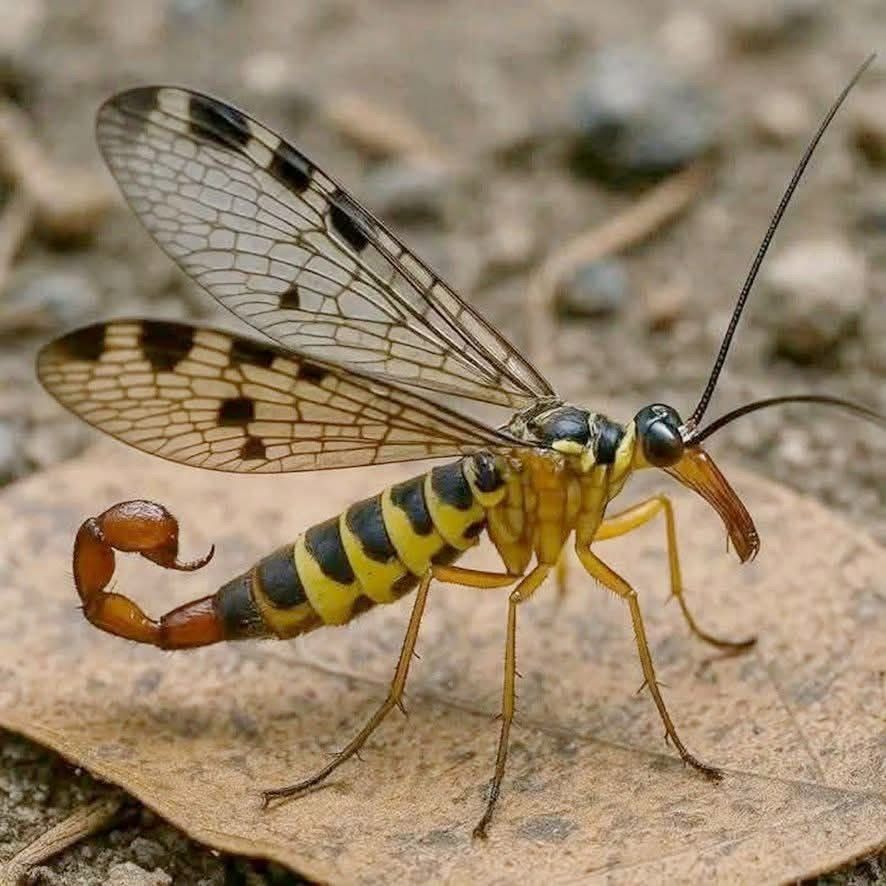
Quick Answer: The common scorpionfly (Panorpa communis) is a distinctive insect found throughout Europe and parts of Asia, recognized for its elongated face and the male’s scorpion-like tail. Belonging to the order Mecoptera, this insect exhibits unique adaptations such as specialized mouthparts for feeding on dead insects and a complex mating ritual involving nuptial gifts. The common scorpionfly plays a vital role in ecosystems as both scavenger and prey, reflecting intricate evolutionary strategies.
The common scorpionfly, Panorpa communis, stands out among European insects due to its unusual appearance and fascinating behaviors. Its elongated rostrum, or “beak,” and the male’s curled genital segment, resembling a scorpion’s stinger, make it instantly recognizable in hedgerows, woodland edges, and gardens. Unlike true scorpions, the scorpionfly’s tail is harmless, used solely for reproduction.
The insect’s mottled wings, typically spanning 25–30 mm, allow it to blend seamlessly into leaf litter and undergrowth, providing both camouflage from predators and an advantage when ambushing prey or scavenging.
Scorpionflies are most active from late spring through early autumn, thriving in moist, shaded habitats. Their presence is often an indicator of healthy, undisturbed environments with abundant organic matter. The insect’s lifecycle, from egg to adult, unfolds over several weeks, with larvae resembling caterpillars and feeding on decaying vegetation and animal matter.
This scavenging behavior not only recycles nutrients but also positions the scorpionfly as a key intermediary in food webs, supporting both decomposition processes and serving as prey for birds, spiders, and amphibians.
Adaptations in the common scorpionfly extend beyond physical traits. The species’ behavioral repertoire includes elaborate courtship rituals, where males offer food gifts, often dead insects or saliva droplets, to entice females. This strategy increases mating success and demonstrates the evolutionary pressures shaping both morphology and behavior.
The scorpionfly’s ecological importance and distinctive adaptations have made it a subject of interest in entomological studies and evolutionary biology, as detailed in Britannica’s overview of Mecoptera and Wikipedia’s entry on Panorpa communis.
Anatomy and Identification of the Common Scorpionfly
The common scorpionfly (Panorpa communis) is easily distinguished by its elongated rostrum, which projects forward from the head and houses specialized mouthparts. This adaptation allows the insect to feed efficiently on soft-bodied prey and decaying organic matter. The wings are typically transparent with dark, mottled markings, held roof-like over the body when at rest. The body length ranges from 18 to 25 mm, with wings extending slightly beyond the abdomen.
A defining characteristic of the male common scorpionfly is the bulbous, upturned genital segment at the end of the abdomen. This structure, which visually mimics a scorpion’s stinger, is used during mating but is entirely harmless. Females lack this feature, displaying a more tapered abdomen. The antennae are long and threadlike, enhancing sensory perception in dense vegetation. The legs are slender, adapted for climbing and grasping rather than running or jumping.
Key Insight: The scorpion-like tail of the male common scorpionfly serves a reproductive function, not a defensive one, and should not be confused with a true stinger.
The coloration of Panorpa communis provides effective camouflage among leaf litter and undergrowth, reducing predation risk. The combination of cryptic coloration, wing patterning, and behavioral stillness enables the insect to avoid detection by birds and larger arthropods. In the field, identification is aided by observing the insect’s slow, deliberate movements and characteristic wing posture.
A comparison of Panorpa communis with similar species in the Mecoptera order reveals subtle differences in wing pattern, body size, and genital morphology. These distinctions are critical for accurate field identification and for understanding the evolutionary relationships within the group. For more on insect identification and evolutionary adaptations, see our and .
| Feature | Male Panorpa communis | Female Panorpa communis | Similar Mecoptera Species |
|---|---|---|---|
| Rostrum | Long, downward-curved | Long, downward-curved | Varies |
| Tail (genitalia) | Bulbous, upturned | Tapered | Varies |
| Wing pattern | Mottled, transparent | Mottled, transparent | Less distinct |
| Body length (mm) | 18–25 | 18–25 | 15–28 |
| Antennae | Long, threadlike | Long, threadlike | Shorter in some species |
Life Cycle and Developmental Stages
The life cycle of the common scorpionfly is a classic example of complete metamorphosis, progressing through egg, larval, pupal, and adult stages. After mating, females lay clusters of eggs in moist soil or leaf litter, ensuring the developing larvae have immediate access to organic material. The eggs hatch within a week, releasing larvae that resemble small, pale caterpillars with distinct head capsules and short legs.
Larvae are voracious scavengers, consuming decaying plant material, dead insects, and other organic debris. This feeding strategy accelerates decomposition and nutrient cycling in forest ecosystems. The larval stage lasts approximately three to four weeks, during which the larvae undergo several molts, increasing in size and accumulating energy reserves for pupation. Once fully grown, the larva constructs a silken cocoon in the soil, entering the pupal stage.
Pupation is a vulnerable period, lasting up to two weeks. During this time, the insect undergoes dramatic transformation, reorganizing tissues and developing adult features such as wings, compound eyes, and reproductive organs. The emergence of the adult scorpionfly is timed with favorable environmental conditions, typically late spring or early summer, maximizing survival and reproductive opportunities.
The complete metamorphosis of Panorpa communis ensures that each developmental stage occupies a distinct ecological niche, minimizing competition for resources within the species.
Adult scorpionflies live for several weeks, during which they feed, mate, and continue the cycle. The separation of larval and adult diets reduces intraspecific competition and enhances the species’ resilience in changing environments. For further reading on insect development and ecological adaptation, consult the Britannica entry on insect metamorphosis or our .
Feeding Behavior and Ecological Role
Feeding behavior in the common scorpionfly is shaped by both anatomical and ecological factors. The elongated rostrum houses specialized mouthparts capable of piercing and sucking, enabling the insect to feed on a variety of soft-bodied prey, including aphids, caterpillars, and dead insects. Scavenging is a primary feeding strategy, with adults often observed consuming carcasses or stealing prey from spider webs. This opportunistic diet positions Panorpa communis as both predator and decomposer.
The ecological role of the scorpionfly is multifaceted. By feeding on dead insects, the species accelerates decomposition and nutrient recycling, supporting soil health and plant growth. As a secondary consumer, the scorpionfly helps regulate populations of small arthropods, contributing to ecosystem stability. The larvae, confined to the soil and leaf litter, further enhance decomposition by breaking down organic debris.
Scorpionflies are integral to food webs, serving as prey for birds, amphibians, and larger insects, while also controlling populations of smaller invertebrates.
The feeding habits of Panorpa communis have been studied as a model for understanding the evolution of scavenging and predatory behaviors in insects. The ability to exploit a wide range of food sources provides resilience in fluctuating environments, allowing the species to persist in both pristine and disturbed habitats. For more on ecological roles and food web dynamics, see Wikipedia’s article on food webs and our .
Mating Strategies and Reproductive Adaptations
Mating in the common scorpionfly is characterized by elaborate courtship rituals and the presentation of nuptial gifts. Males actively seek out females, using visual and chemical cues to locate potential mates. Upon encountering a receptive female, the male offers a food item, typically a dead insect or a droplet of saliva, intended to entice the female into copulation.
This nuptial gift serves as both a nutritional supplement and a mating incentive, increasing the male’s chances of reproductive success.
The presentation of nuptial gifts is a key adaptation in Panorpa communis, reflecting evolutionary pressures for mate choice and sexual selection. Females often assess the quality and size of the gift before accepting the male, leading to competition among males for access to resources suitable for gift production. The male’s scorpion-like tail is used to grasp the female during mating, ensuring sperm transfer and reducing the likelihood of interruption by rival males.
Nuptial gift-giving in scorpionflies exemplifies the complex interplay between behavioral adaptation and reproductive fitness, highlighting the role of sexual selection in shaping insect evolution.
This reproductive strategy has broader implications for understanding mating systems in insects. The investment in nuptial gifts can influence population dynamics, mate competition, and gene flow within and between populations. For a deeper exploration of sexual selection and reproductive strategies, refer to the APA’s overview of evolutionary psychology and our .
Adaptations for Survival and Environmental Pressures
Adaptations in the common scorpionfly extend beyond feeding and reproduction. The insect’s cryptic coloration, slow movements, and preference for shaded microhabitats all contribute to predator avoidance. The mottled wing pattern disrupts the insect’s outline, making it difficult for visual predators to detect. When threatened, scorpionflies may drop to the ground and remain motionless, relying on camouflage to evade capture.
Environmental pressures such as habitat loss, climate variability, and predation have shaped the evolutionary trajectory of Panorpa communis. The species’ ability to exploit a variety of food sources and microhabitats enhances its resilience in fragmented landscapes. The separation of larval and adult niches further reduces vulnerability to environmental change, as each stage can respond independently to resource availability and predation risk.
The resilience of the common scorpionfly in diverse environments underscores the importance of behavioral and physiological flexibility in insect survival.
Adaptations to temperature and humidity are also evident. Scorpionflies are most active in humid, temperate conditions, with activity declining during drought or extreme heat. The timing of life cycle events, such as egg-laying and adult emergence, is closely synchronized with environmental cues, ensuring optimal conditions for development and reproduction. For more on adaptation and survival strategies, see Britannica’s coverage of animal adaptation and our .
The Scorpionfly in Scientific Research and Culture
Panorpa communis has long fascinated entomologists and naturalists, serving as a model organism in studies of mating behavior, adaptation, and ecological interactions. The insect’s unique morphology and behaviors have inspired research into the evolution of nuptial gifts, sexual selection, and predator-prey dynamics. Its role as both scavenger and prey makes it a valuable indicator species for ecosystem health.
In cultural contexts, the scorpionfly’s striking appearance and harmless “stinger” have led to both fascination and misunderstanding. While often mistaken for dangerous insects, scorpionflies pose no threat to humans or animals. Their presence in gardens and woodlands is a sign of biodiversity and ecological balance. Educational programs and field guides frequently highlight Panorpa communis as an example of adaptation and evolutionary innovation.
The common scorpionfly exemplifies how specialized adaptations can yield both ecological significance and scientific insight, bridging the gap between natural history and modern research.
For those interested in further exploration, Wikipedia’s Mecoptera entry provides a comprehensive overview of the order, while our offer insights into the cognitive and behavioral aspects of insect life.
Comparing Scorpionflies with Other Mecopterans
Within the order Mecoptera, the common scorpionfly is one of several species exhibiting elongated rostra and complex mating behaviors. Other genera, such as Bittacus (hangingflies) and Boreus (snow scorpionflies), display distinct ecological and morphological traits. Hangingflies, for example, are predatory and use their legs to capture prey, while snow scorpionflies are adapted to cold environments and lack wings in some species.
A comparison of key features among mecopterans highlights the diversity of adaptation within the order:
| Genus | Habitat | Key Adaptation | Mating Behavior | Wing Structure |
|---|---|---|---|---|
| Panorpa | Woodlands, hedges | Elongated rostrum | Nuptial gifts | Mottled, transparent |
| Bittacus | Meadows, grasslands | Raptorial legs | Prey presentation | Narrow, elongated |
| Boreus | Snowy, cold areas | Reduced/absent wings | Simple courtship | Short, reduced |
These differences reflect evolutionary responses to habitat, predation, and reproductive pressures. The diversity within Mecoptera illustrates how adaptive radiation can generate a wide array of ecological roles from a common ancestral lineage. For more on comparative adaptation, see our .
Human Interactions and Conservation Perspectives
Human encounters with the common scorpionfly are generally benign, as the insect is neither harmful nor a pest. Its role in decomposition and pest control has indirect benefits for agriculture and horticulture. However, habitat loss and environmental degradation pose risks to local populations. The preservation of hedgerows, woodlands, and moist ground cover is essential for maintaining healthy scorpionfly communities.
Conservation efforts targeting broader biodiversity also support scorpionfly populations. Initiatives to reduce pesticide use, restore native vegetation, and protect wetland habitats contribute to the resilience of Panorpa communis and associated species. Public education about the ecological value of insects can help dispel myths and foster appreciation for these often-overlooked creatures.
Protecting the habitats of scorpionflies ensures the continued functioning of vital ecosystem processes, from nutrient cycling to food web stability.
For practical advice on supporting insect biodiversity, our provide actionable tips for gardeners, land managers, and educators.
The Enduring Significance of the Common Scorpionfly
The common scorpionfly, with its distinctive appearance and complex behaviors, remains a testament to the power of adaptation in shaping life’s diversity. Its success as both scavenger and prey highlights the interconnectedness of ecological systems, while its reproductive strategies reveal the subtle interplay between behavior and evolution.
Observing Panorpa communis in the wild offers not just a glimpse into insect life, but a window into the evolutionary processes that govern all living things.
Continued research into the biology and ecology of the scorpionfly enriches our understanding of adaptation, resilience, and the delicate balance of natural communities. For those seeking to deepen their knowledge, exploring related topics such as evolutionary psychology, animal cognition, and ecological intelligence can provide broader context and appreciation for the intricacies of insect life. Take the opportunity to, or to engage more deeply with the natural world.
Frequently Asked Questions
Are common scorpionflies dangerous to humans or pets?
No, common scorpionflies are harmless to humans and pets. The male’s scorpion-like tail is not a stinger and poses no risk.
What do scorpionfly larvae eat?
Scorpionfly larvae feed on decaying plant material, dead insects, and organic debris, playing a role in decomposition.
How can I identify a male common scorpionfly?
Male common scorpionflies have a bulbous, upturned tail segment resembling a scorpion’s stinger, used only for mating.
Where are common scorpionflies most likely to be found?
Common scorpionflies are typically found in moist, shaded habitats such as hedgerows, woodland edges, and gardens.
Why do male scorpionflies give nuptial gifts?
Male scorpionflies present nuptial gifts to females to increase their chances of mating success and reproductive fitness.
Do scorpionflies help control pest populations?
Yes, scorpionflies feed on dead insects and small arthropods, aiding in pest control and nutrient cycling.