
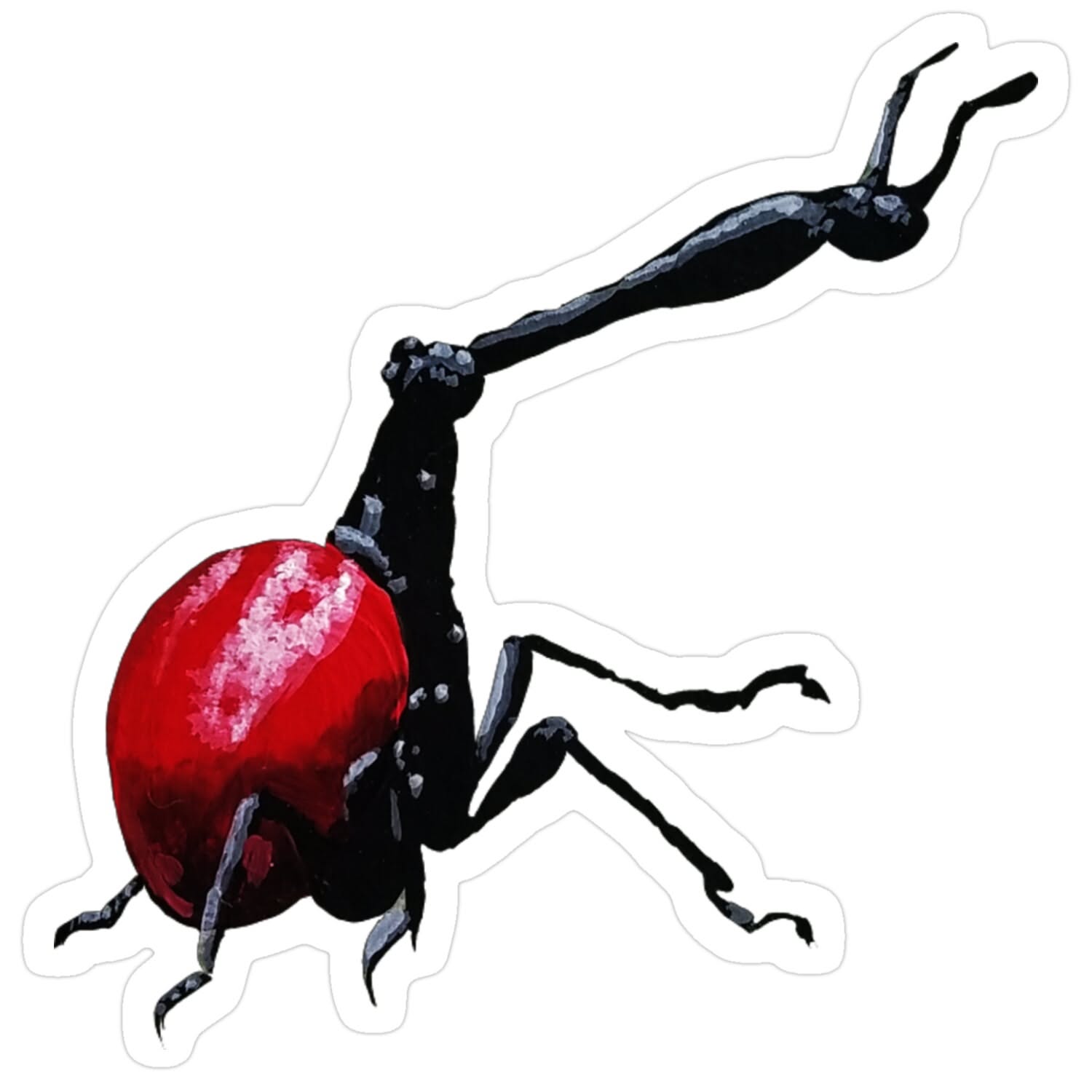
Quick Answer: The giraffe weevil (Trachelophorus giraffa) is a striking beetle native to Madagascar, notable for its exceptionally long neck, especially in males. This unique adaptation aids in nest building and combat during mating rituals. The giraffe weevil’s vivid coloration and specialized behaviors make it a remarkable example of evolutionary adaptation among beetles, drawing interest from both scientists and nature enthusiasts worldwide.
The giraffe weevil, also known as Trachelophorus giraffa, stands out as one of Madagascar’s most visually distinctive insects. Its elongated neck, which can be up to three times the length of its body in males, immediately captures attention. The species’ vibrant red and black coloration, combined with its unusual body proportions, has made it a subject of fascination for biologists and ecotourists alike.
Found exclusively in Madagascar’s forests, the giraffe weevil’s appearance is not just for show; it plays a critical role in its survival and reproductive strategies.
This beetle’s remarkable neck is an evolutionary adaptation that serves multiple purposes. Males use their long necks to compete for mates and to construct elaborate nests for their offspring. The giraffe weevil’s life cycle and behaviors are closely tied to the unique environment of Madagascar, a biodiversity hotspot renowned for its high rate of endemic species.
Conservationists emphasize the importance of preserving these habitats, as the giraffe weevil’s survival depends on the health of Madagascar’s forests. Its story illustrates the intricate connections between form, function, and environment in the natural world.
Anatomy and Distinctive Features
The giraffe weevil is instantly recognizable by its elongated neck, a trait most pronounced in males. This adaptation is not merely cosmetic; it is a specialized structure evolved for specific ecological roles. In males, the neck can reach up to 2.5 centimeters, often three times the length of the female’s neck. This dramatic difference is a prime example of sexual dimorphism, where two sexes of the same species exhibit different characteristics beyond their sexual organs.
Key Insight: The giraffe weevil’s neck is an evolutionary tool, allowing males to build nests and compete for mates, while females retain a shorter, more compact form for efficient egg-laying.
The beetle’s body is typically black with striking red elytra (wing covers), creating a vivid contrast that is both beautiful and functional. The coloration may serve as a warning to predators or as camouflage among the reddish leaves and stems of its native habitat. The legs are long and slender, aiding in maneuverability among branches and leaves. The antennae are also elongated, enhancing the beetle’s ability to sense its environment.
A closer look reveals that the giraffe weevil’s mouthparts are adapted for cutting and rolling leaves, a behavior crucial for nest construction. The exoskeleton is robust, providing protection against predators and environmental hazards. The combination of these features makes the giraffe weevil a marvel of specialized evolution, perfectly suited to its ecological niche in Madagascar’s forests.
Taxonomy, Distribution, and Evolutionary Context
Trachelophorus giraffa belongs to the family Attelabidae, commonly known as leaf-rolling weevils. This group is characterized by their unique nesting behavior, which involves manipulating plant material to create protective structures for their eggs. The giraffe weevil is endemic to Madagascar, meaning it is found nowhere else in the world. Its distribution is limited to the island’s humid forests, particularly in the eastern regions where suitable host plants are abundant.
Madagascar’s long geographic isolation has fostered the evolution of many unique species, with the giraffe weevil serving as a striking example of adaptive radiation. The beetle’s evolutionary history is intertwined with the island’s flora, especially trees in the genus Dichaetanthera, which provide both food and nesting material. The close relationship between the giraffe weevil and its host plants underscores the importance of coevolution in shaping biodiversity.
The giraffe weevil’s restricted range makes it vulnerable to habitat loss, highlighting the need for targeted conservation efforts in Madagascar’s forests.
The evolutionary pressures that led to the giraffe weevil’s long neck are thought to be a combination of sexual selection and ecological necessity. Males with longer necks are more successful in nest-building and mate competition, driving the persistence of this trait across generations. This case illustrates how physical features can evolve rapidly in response to specific environmental and social challenges, a concept widely discussed in evolutionary biology (Britannica: Evolution).
Life Cycle and Reproductive Behavior
The giraffe weevil’s life cycle is closely linked to its host plants. Females use their specialized mouthparts to cut and roll leaves into tight tubes, creating a protective nest for their eggs. This behavior is a hallmark of the Attelabidae family and ensures that the developing larvae have immediate access to food upon hatching. The rolled leaf provides both nourishment and shelter, reducing predation risk and environmental stress.
Mating rituals among giraffe weevils are highly competitive. Males use their elongated necks to fight rivals, pushing and wrestling to gain access to females. The winner earns the opportunity to mate and assist in nest construction. This form of sexual selection favors males with longer, stronger necks, reinforcing the trait across generations. Females, meanwhile, focus on selecting optimal leaves and constructing secure nests, maximizing the survival chances of their offspring.
After eggs are laid, larvae emerge and feed on the leaf material, gradually developing through several stages before pupating. The entire process, from egg to adult, is synchronized with the growth cycles of the host plants. Once mature, adult giraffe weevils emerge to continue the cycle, dispersing to find mates and suitable nesting sites.
The giraffe weevil’s reproductive strategy is a sophisticated example of insect parental care, with both sexes playing active roles in ensuring offspring survival.
Ecological Role and Interactions in Madagascar’s Forests
Within Madagascar’s complex ecosystems, the giraffe weevil occupies a specialized niche. Its interactions with host plants, predators, and other insects contribute to the dynamic balance of the forest environment. By rolling leaves and feeding on specific plant species, giraffe weevils influence plant health and regeneration, indirectly affecting the composition of the forest understory.
The beetle’s presence also supports a web of ecological relationships. Predators such as birds and reptiles rely on giraffe weevils as a food source, integrating the beetle into the broader food chain. Parasitic wasps may target giraffe weevil nests, laying their own eggs inside the rolled leaves and introducing another layer of ecological complexity.
Key Takeaway: The giraffe weevil’s behaviors have ripple effects throughout the forest ecosystem, demonstrating the interconnectedness of species in Madagascar’s unique habitats.
Conservationists monitor these interactions to assess ecosystem health. Changes in giraffe weevil populations can signal shifts in forest dynamics, making the species a valuable indicator for environmental monitoring. The beetle’s reliance on specific host plants further emphasizes the importance of preserving native vegetation to maintain ecological balance.
Conservation Status and Threats
The giraffe weevil is not currently classified as endangered, but its restricted range and specialized habitat requirements make it vulnerable to environmental changes. Deforestation, driven by agriculture, logging, and urban expansion, poses the greatest threat to the species. As Madagascar’s forests shrink, the availability of suitable host plants declines, directly impacting giraffe weevil populations.
Conservation efforts focus on habitat preservation and sustainable land management. Protected areas and reforestation initiatives aim to safeguard the forests that support the giraffe weevil and countless other endemic species. International organizations and local communities collaborate to balance economic development with biodiversity conservation, recognizing the intrinsic and ecological value of species like the giraffe weevil (WWF Madagascar).
Habitat loss remains the most significant challenge for the long-term survival of the giraffe weevil, underscoring the need for continued conservation action.
Public awareness campaigns and ecotourism also play roles in promoting conservation. The giraffe weevil’s striking appearance makes it an effective ambassador for Madagascar’s unique wildlife, helping to generate support for environmental protection.
Adaptations and Evolutionary Significance
The giraffe weevil’s long neck is a textbook example of adaptation through sexual selection. Males with longer necks have a competitive advantage in both mate acquisition and nest construction. This trait is maintained in the population because it directly influences reproductive success, a principle central to evolutionary biology (Wikipedia: Sexual selection).
Beyond its neck, the giraffe weevil exhibits several other adaptations. Its coloration provides camouflage among the reddish foliage of its habitat, while its robust exoskeleton offers protection. The beetle’s ability to manipulate leaves into nests demonstrates behavioral flexibility, allowing it to exploit available resources efficiently.
The giraffe weevil exemplifies how physical and behavioral traits can co-evolve in response to environmental and social pressures.
Comparisons with related species reveal the diversity of adaptations within the Attelabidae family. While many leaf-rolling weevils construct nests, few display the extreme neck elongation seen in Trachelophorus giraffa. This highlights the role of unique ecological circumstances in driving the evolution of specialized traits.
Giraffe Weevil in Scientific Research and Popular Culture
The giraffe weevil has attracted significant attention from scientists studying evolutionary biology, sexual selection, and insect behavior. Its dramatic morphology and specialized nesting habits provide valuable insights into the mechanisms of adaptation and speciation. Research on the giraffe weevil contributes to broader understanding of biodiversity and the processes that generate it (Smithsonian: Biodiversity).
In addition to its scientific importance, the giraffe weevil has become a symbol of Madagascar’s unique wildlife. Documentaries, nature guides, and ecotourism initiatives frequently feature the beetle, highlighting its role as an ambassador for conservation. Its distinctive appearance and behaviors captivate audiences, fostering appreciation for the island’s rich natural heritage.
The giraffe weevil’s prominence in research and media underscores the value of charismatic species in promoting environmental awareness and scientific inquiry.
Common Misconceptions and Clarifications
Despite its popularity, several misconceptions about the giraffe weevil persist. One common myth is that the beetle’s long neck is used for feeding, when in reality, it primarily serves reproductive and nest-building functions. Another misconception is that both sexes have equally long necks; in fact, females possess much shorter necks, reflecting their different ecological roles.
Some sources incorrectly suggest that the giraffe weevil is widespread across Africa. In truth, it is endemic to Madagascar and has not been documented elsewhere. Its specialized habitat requirements limit its distribution, making it particularly sensitive to environmental changes.
Accurate information about the giraffe weevil’s biology and ecology is essential for effective conservation and public understanding.
The Giraffe Weevil’s Place in Madagascar’s Biodiversity
Madagascar is renowned for its high levels of endemism, with over 90% of its wildlife found nowhere else on Earth. The giraffe weevil exemplifies this pattern, representing the island’s capacity for producing unique and specialized species. Its interactions with other organisms, from host plants to predators, contribute to the intricate web of life that defines Madagascar’s ecosystems.
Conservation of the giraffe weevil is closely tied to broader efforts to preserve Madagascar’s biodiversity. Protecting forest habitats ensures the survival of countless species, many of which remain undescribed by science. The giraffe weevil’s story highlights the importance of integrated conservation strategies that address both species-specific and ecosystem-level challenges.
For those interested in exploring related topics, our and provide further insights into the fascinating world of Madagascar’s fauna.
Appreciating the Uniqueness of the Giraffe Weevil
The giraffe weevil stands as a testament to the power of evolution and the complexity of life in Madagascar’s forests. Its extraordinary neck, vibrant coloration, and intricate behaviors make it a subject of enduring fascination for scientists and nature lovers. Observing the giraffe weevil in its natural habitat offers a window into the processes that shape biodiversity and the delicate balance of ecological relationships.
Encounters with the giraffe weevil inspire curiosity and respect for the natural world, reinforcing the importance of conservation and scientific exploration.
Madagascar’s forests are under increasing pressure, but the continued survival of species like the giraffe weevil offers hope for the future. By supporting conservation efforts and fostering appreciation for unique wildlife, individuals can contribute to the preservation of one of the world’s most remarkable ecosystems. For those eager to deepen their understanding, exploring our can provide practical knowledge and further appreciation of these extraordinary insects.
Frequently Asked Questions
Why does the giraffe weevil have such a long neck?
The giraffe weevil’s long neck helps males compete for mates and build nests, giving them a reproductive advantage.
Are giraffe weevils dangerous to humans?
Giraffe weevils are harmless to humans and play a beneficial role in their ecosystem.
Can giraffe weevils be found outside Madagascar?
No, giraffe weevils are endemic to Madagascar and have not been documented in other regions.
What do giraffe weevil larvae eat?
Giraffe weevil larvae feed on the rolled leaves their mothers prepare, which provide both food and protection.
How can I help conserve giraffe weevils?
Supporting habitat preservation and sustainable land use in Madagascar helps protect giraffe weevils and other endemic species.
Do both male and female giraffe weevils have long necks?
No, only male giraffe weevils have long necks; females have much shorter necks suited for egg-laying.