
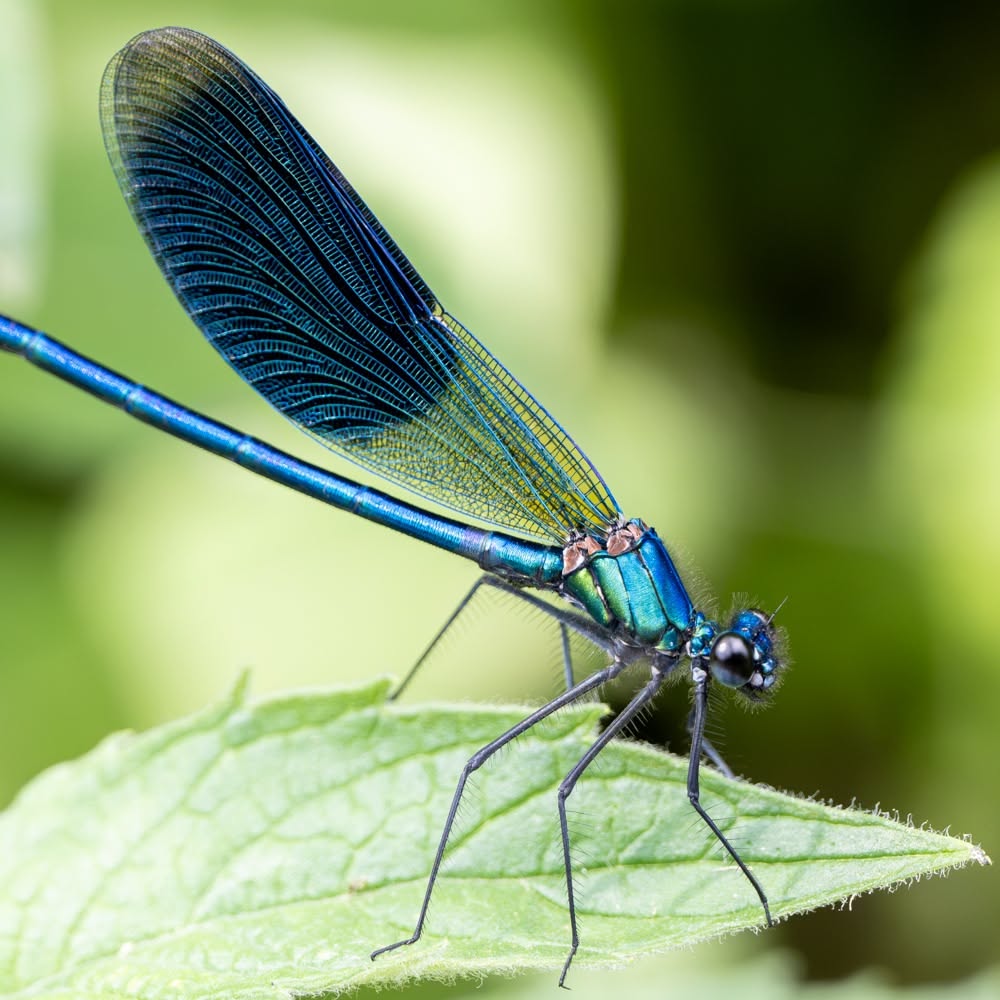
Why do dragonflies have the highest hunting success rate of any predator?
The extraordinary world of dragonflies begins in the air, where they catch prey with a success rate of approximately 95%, making them the most efficient hunters in the animal kingdom. Unlike most predators that chase prey, dragonflies use predictive interception - they calculate where their target will be and fly to that point.
Long before dinosaurs walked the Earth, before the first flowers bloomed, before vertebrates had even fully colonized dry land, dragonflies were already patrolling the skies. The order Odonata - encompassing dragonflies and their close relatives, the damselflies - represents one of the oldest lineages of flying insects, with a fossil record stretching back more than 300 million years into the Carboniferous period.
In that vast span of time, dragonflies have refined a suite of adaptations so effective that modern species remain among the most formidable aerial predators on Earth, capturing prey with a success rate that no hawk, no shark, and no wolf can match.
To watch a dragonfly hunt is to witness a flight system and a visual processing apparatus that evolution has spent hundreds of millions of years perfecting. Their story is one of ancient origins, extraordinary engineering, and a quiet ecological importance that extends far beyond their reputation as darting jewels of summer ponds.
Ancient Origins: Predating Dinosaurs by 100 Million Years
The earliest dragonfly-like insects appear in the fossil record of the late Carboniferous period, approximately 320 to 300 million years ago. These ancient insects belong to the order Protodonata (also called Meganisoptera), the direct predecessors of modern Odonata. To put this in perspective, the first dinosaurs did not appear until the Triassic period, roughly 230 million years ago.
Dragonflies had already been flying for approximately 100 million years before the first dinosaur took its first step [1].
The Carboniferous world in which these early dragonflies evolved was profoundly different from the modern Earth. Vast swamp forests of giant club mosses, horsetails, and tree ferns covered the equatorial landmasses, and the atmosphere contained significantly higher concentrations of oxygen than today - estimates suggest oxygen levels reached 30 to 35 percent, compared to the modern 21 percent.
This oxygen-rich atmosphere is widely believed to have been a critical factor enabling the evolution of giant insects, because insects rely on a passive tracheal system of branching tubes to deliver oxygen directly to their tissues. Higher ambient oxygen concentrations allowed these tracheal systems to support much larger body sizes than would be possible today [2].
Meganeura: The Giant Dragonfly of the Carboniferous
The most famous of these ancient giants is Meganeura monyi, a dragonfly-like predator from the late Carboniferous of France, first described from fossils discovered in the Commentry coal mines in 1885. Meganeura had a wingspan of approximately 70 centimeters (roughly 27.5 inches) - comparable to the wingspan of a modern crow. Its body length exceeded 40 centimeters.
Meganeura was among the largest insects ever to have lived, and it was almost certainly a formidable aerial predator, likely hunting other large insects and possibly small amphibians.
"The giant dragonflies of the Carboniferous were not simply scaled-up versions of modern species. They were apex aerial predators in a world without birds, without bats, without any vertebrate competition in the air. For tens of millions of years, they owned the skies entirely." - Michael Engel, entomologist and paleontologist, Evolution of the Insects (2005)
Despite superficial similarities to modern dragonflies, Meganeura and its relatives differed in several important anatomical details. They lacked the specialized wing-folding node (the nodus) found in true Odonata, and their wing venation patterns were more primitive. Modern dragonflies are not direct descendants of Meganeura but rather share a common ancestor with these Carboniferous giants.
The true Odonata - the order containing all living dragonflies and damselflies - appear in the fossil record beginning in the Permian period, roughly 250 to 270 million years ago, and have survived every mass extinction event since, including the catastrophic end-Permian extinction that wiped out approximately 90% of all marine species [3].
Modern Diversity: Over 7,000 Species of Odonata
Today, the order Odonata contains more than 7,000 described species, distributed across every continent except Antarctica. The order is divided into three suborders: Anisoptera (true dragonflies, approximately 3,000 species), Zygoptera (damselflies, approximately 3,000 species), and Anisozygoptera, a small relict group represented by only a handful of living species in Asia, most notably the genus Epiophlebia, which retains ancestral features shared by both dragonflies and damselflies.
Dragonflies occupy an extraordinary range of habitats, from Arctic tundra ponds to tropical rainforest streams, from high-altitude Himalayan lakes to desert oases. Some species are habitat specialists, restricted to particular types of water bodies - acidic bogs, fast-flowing mountain streams, or brackish coastal marshes. Others are habitat generalists capable of exploiting almost any standing or slow-moving body of fresh water.
The largest living dragonfly is Megaloprepus caerulatus, a Central and South American damselfly (technically in Zygoptera) with a wingspan reaching 19 centimeters. Among the true dragonflies (Anisoptera), the largest is Tetracanthagyna plagiata of Southeast Asia, with a wingspan of approximately 16 centimeters and a body length exceeding 10 centimeters. At the other extreme, the smallest odonates are damselflies of the genus Agriocnemis, some of which have wingspans under 2 centimeters.
The Supreme Hunters: 95% Success Rate
If hunting efficiency is the measure of a predator's prowess, then dragonflies are the most successful predators on the planet. Research conducted by biologists at Harvard University, published in 2012, demonstrated that dragonflies successfully capture their targeted prey in approximately 95% of hunting attempts [4].
For comparison, African lions succeed in roughly 25% of hunts, great white sharks in about 50%, and peregrine falcons - often celebrated as the ultimate aerial predator among vertebrates - in approximately 50 to 60%.
Predictive Interception, Not Pursuit
The key to this extraordinary success lies not in raw speed but in strategy. Dragonflies do not simply chase their prey through the air. Instead, they employ predictive interception - a hunting technique in which the dragonfly calculates the future position of its prey and flies to that point, arriving at precisely the moment the prey does.
This behavior was documented in detail by researchers at the Howard Hughes Medical Institute, who used high-speed cameras to track the flight paths of dragonflies hunting fruit flies in a controlled environment.
The analysis revealed that dragonflies keep the image of their prey fixed on a specific region of their retina - a strategy called constant bearing angle - which automatically generates an interception trajectory. Fighter pilots use an identical mathematical principle when intercepting enemy aircraft.
The dragonfly's nervous system computes these trajectories in real time, adjusting wing movements continuously to maintain the intercept course, all within a reaction time measured in 30 to 50 milliseconds [4].
Once within striking range, the dragonfly sweeps its legs forward to form a basket-like trap. The spiny tibiae and tarsi close around the prey with extraordinary precision. In many cases, the prey is consumed in flight, with the dragonfly's powerful mandibles making short work of soft-bodied insects like mosquitoes, midges, and small moths.
"What we found is that dragonflies are essentially using the same interception strategy as a guided missile. They don't chase; they predict. And they do it with a brain that contains fewer than a million neurons - about 100,000 times fewer than the human brain." - Anthony Leonardo, Howard Hughes Medical Institute, describing dragonfly hunting research (2014)
Flight Mechanics: Engineering Perfection
Dragonflies possess one of the most sophisticated flight systems in the animal kingdom, the product of over 300 million years of aerodynamic refinement. Their capabilities far exceed those of any other insect group and rival those of hummingbirds among vertebrates.
Four Independent Wings
Unlike most flying insects, which mechanically link their forewings and hindwings to beat in unison, dragonflies control each of their four wings independently. Each wing is powered by its own set of direct flight muscles, allowing the dragonfly to vary the angle, speed, and phase of each wing stroke independently of the others. This grants an extraordinary repertoire of aerial maneuvers:
- Hovering in place, maintaining a stationary position for extended periods while scanning for prey or mates
- Backward flight, a capability extremely rare among insects
- Instantaneous directional changes, pivoting up to 180 degrees in a fraction of a second
- Sustained forward flight at speeds of up to 30 miles per hour (48 km/h), with some species recorded at burst speeds approaching 35 mph
- Acceleration forces of up to 9G during sharp turns - forces that would cause a human fighter pilot to lose consciousness without a pressurized flight suit
The wings themselves are marvels of biological engineering. Each wing consists of a thin membrane supported by a complex network of veins that provide both structural rigidity and controlled flexibility.
The leading edge of the wing contains a thickened section called the pterostigma, a pigmented cell near the wing tip that acts as a counterweight to reduce aerodynamic flutter during gliding flight. Studies have shown that removing or altering the pterostigma significantly impairs gliding efficiency [5].
Energetics of Dragonfly Flight
Dragonfly flight is energetically expensive. The thoracic flight muscles, which can constitute up to 25% of total body mass, require substantial fuel. Dragonflies meet this demand through an insect circulatory system that bathes the flight muscles directly in hemolymph (insect blood) carrying nutrients, and a highly efficient tracheal system that delivers oxygen at high rates.
Body temperature regulation is also critical: many dragonfly species engage in wing whirring - rapid vibration of the wings - before takeoff to warm the flight muscles to operating temperature, particularly in cooler conditions.
Some species also use behavioral thermoregulation, perching in sunlit spots and angling their bodies to maximize solar heating, a behavior called obelisking when the abdomen is pointed directly at the sun to minimize heat absorption in hot conditions.
Compound Eyes: Seeing the World in 360 Degrees
The dragonfly visual system is among the most advanced in the entire animal kingdom. Dragonflies are, above all else, visual predators, and their eyes reflect this dependence on sight with an anatomical extravagance that has few parallels.
30,000 Facets Per Eye
Each dragonfly compound eye contains up to 30,000 individual facets, known as ommatidia. Each ommatidium functions as an independent light-gathering unit with its own lens, crystalline cone, and photoreceptor cells. The two compound eyes are so large that they dominate the head, meeting or nearly meeting at the top of the skull in most dragonfly species and providing a visual field that covers nearly 360 degrees, with only a small blind spot directly behind the head.
The upper portion of each eye contains larger ommatidia optimized for detecting motion against the bright sky - critical for spotting prey silhouetted against the heavens. The lower portion contains smaller, more densely packed ommatidia tuned for higher resolution at closer range and for detecting color and detail in the landscape below. This division effectively gives dragonflies two different visual systems within each eye, one for looking up and one for looking down.
A Brain Built for Sight
Approximately 80% of the dragonfly brain is devoted to processing visual information - a proportion that exceeds that of any other insect studied and rivals some of the most visually dependent vertebrates. Dragonflies can detect ultraviolet light, polarized light, and a broader spectrum of color than humans can perceive.
Recent research has revealed that some dragonfly species possess as many as 11 to 30 types of opsin (light-sensitive proteins), compared to the three types that underlie human color vision, suggesting a capacity for color discrimination that we cannot fully comprehend [6].
This visual system enables dragonflies to simultaneously track multiple moving objects - an essential capability when hunting in swarms of midges or gnats where dozens of potential prey items are in motion at once. Laboratory experiments have shown that dragonflies can selectively attend to a single target among many, maintaining focus on their chosen prey even when other insects cross their visual field - a phenomenon that neuroscientists have compared to selective attention in the human brain.
Life Beneath the Surface: Aquatic Larvae
Despite the adult dragonfly's reputation as a creature of the air, the vast majority of every dragonfly's life is spent underwater. Dragonfly larvae, called nymphs, are aquatic predators that inhabit ponds, lakes, streams, rivers, marshes, and even water-filled tree holes, depending on the species.
The Extended Larval Stage
Dragonfly nymphs spend between one and five years in the aquatic environment, depending on species and climate. Tropical species in warm waters may complete larval development in as little as several months, while species in cold, nutrient-poor waters at high latitudes or altitudes may require five years or more. During this time, the nymph undergoes a series of molts - typically 9 to 17 instars - growing progressively larger with each molt.
Nymphs breathe through rectal gills, a unique respiratory system in which the inner lining of the rectum is richly supplied with tracheae. The nymph draws water into the rectal chamber, extracts dissolved oxygen, and expels the water. This system doubles as a jet propulsion mechanism: by forcefully expelling water from the rectum, the nymph can rocket forward in a rapid escape response, achieving surprising speed for an aquatic invertebrate.
The Extensible Labium: A Spring-Loaded Jaw
The dragonfly nymph's most remarkable feature is its labium - a modified lower jaw that functions as a spring-loaded grasping tool. In its resting state, the labium is folded beneath the head like a hinged mask. When prey comes within range, the nymph can extend the labium to full length in approximately 25 milliseconds, seizing the prey with a pair of hooked palps at the labium's tip and drawing it back to the mandibles for consumption.
Dragonfly nymphs are generalist predators that consume mosquito larvae, mayfly nymphs, worms, tadpoles, and even small fish. Large late-instar nymphs of species such as Anax junius (the common green darner) are apex predators in small pond ecosystems, exerting significant top-down control on invertebrate prey populations.
Emergence and Metamorphosis
When the final-instar nymph is ready to transform into an adult, it climbs out of the water onto an emergent stem, rock, or bank - usually at night or in the early morning hours to reduce predation risk. The larval skin splits along the thorax, and the adult dragonfly slowly extracts itself in a process called emergence that takes one to three hours.
The newly emerged adult, called a teneral, is pale, soft-bodied, and unable to fly effectively. It pumps hemolymph into its crumpled wings to expand them, then waits for the exoskeleton to harden before taking its first flight. The adult stage typically lasts only a few weeks to a few months - a brief coda to years of underwater life.
Dragonflies vs. Damselflies: A Comparison
Although dragonflies and damselflies both belong to the order Odonata and share many features, they differ in several important ways:
| Feature | Dragonflies (Anisoptera) | Damselflies (Zygoptera) |
|---|---|---|
| Wing position at rest | Held horizontally, perpendicular to the body | Folded together above or along the body |
| Hindwing shape | Broader at base than forewing | Approximately equal in shape to forewing |
| Eye placement | Eyes large, touching or nearly touching at top of head | Eyes smaller, widely separated on head |
| Body build | Robust, stocky abdomen | Slender, delicate abdomen |
| Flight style | Powerful, fast, agile; strong sustained flight | Fluttering, slower, weaker flight |
| Larval gills | Internal rectal gills | External caudal gill lamellae at tip of abdomen |
| Typical size | Generally larger (4-12 cm wingspan) | Generally smaller (2-7 cm wingspan) |
| Hunting behavior | Active aerial hunters; hawking prey in flight | Gleaning prey from vegetation; less aerial |
Both groups are ecologically important predators, but dragonflies are generally the more powerful fliers and more aggressive hunters, while damselflies tend to occupy more sheltered microhabitats along vegetated shorelines.
The Globe Skimmer Migration: 18,000 Kilometers Across Oceans
Among the most astonishing discoveries in insect biology in recent decades is the revelation that the globe skimmer (Pantala flavescens), a dragonfly found on every continent except Antarctica, undertakes the longest migration of any insect on Earth as measured by total distance.
Research published by biologist Charles Anderson in 2009, drawing on years of field observations across the Indian Ocean region, proposed that globe skimmers migrate in a multigenerational circuit spanning approximately 18,000 kilometers (11,000 miles), following seasonal monsoon rains from India to East Africa and back.
The journey crosses the Indian Ocean - a feat that was initially met with skepticism, as it seemed impossible for a dragonfly weighing less than a gram to cross hundreds of kilometers of open water [7].
Subsequent research using stable isotope analysis of dragonfly wing tissue, published in PLOS ONE in 2016, confirmed that globe skimmers arriving on the Maldives and in East Africa had originated from the Indian subcontinent. The migration is not completed by any single individual.
Instead, it unfolds over four or more generations, with each generation breeding at temporary rain pools along the route before the next generation continues the journey - a pattern strikingly similar to the multigenerational migration of monarch butterflies in North America, though roughly four times the total distance.
Globe skimmers exploit high-altitude wind currents associated with the Intertropical Convergence Zone (ITCZ) to cover vast distances with minimal energy expenditure, gliding at altitudes of up to 1,000 meters or more. Their broad, flat wings and efficient gliding ability are essential adaptations for this oceanic crossing.
This migration connects ecosystems across two continents and an ocean, transferring nutrients and genetic material across a scale that was entirely unsuspected until the 21st century.
Dragonflies as Bioindicators of Water Quality
Ecologists and environmental managers have long recognized dragonflies and their larvae as valuable bioindicators - organisms whose presence, absence, or abundance provides reliable information about the health of an ecosystem. Because dragonfly nymphs spend years in aquatic environments, they integrate water quality conditions over extended periods, making them more informative than single water chemistry samples, which capture only a snapshot in time.
Dragonfly species vary widely in their sensitivity to pollution. Some species, such as those in the family Cordulegastridae (spiketails), require pristine, well-oxygenated streams with minimal sedimentation and are among the first species to disappear when water quality declines.
Others, such as certain species of Sympetrum (darter dragonflies), tolerate moderate levels of nutrient enrichment and can persist in degraded habitats. The composition of an odonate assemblage at a given site - which species are present, which are absent, and in what relative abundances - can therefore serve as a reliable proxy for overall aquatic ecosystem health [8].
Several countries and regions now incorporate odonate surveys into formal water quality monitoring programs. In the United Kingdom, the British Dragonfly Society maintains long-term population monitoring datasets that have been used to track the effects of climate change, habitat restoration, and pollution control on freshwater ecosystems.
In Japan, the presence or absence of specific dragonfly species in rice paddies has been used as an indicator of pesticide levels and overall agricultural ecosystem health.
Climate change is reshaping dragonfly distributions worldwide. Many species are expanding their ranges poleward as temperatures warm, with several Mediterranean species now breeding regularly in southern England and northern European countries where they were previously absent.
While range expansion may benefit some species, others - particularly cold-adapted montane and Arctic species - face habitat loss as warming temperatures alter the hydrology and ecology of their specialized aquatic habitats.
Dragonflies in Japanese Culture: Kachimushi, the Victory Insect
No culture on Earth has embraced the dragonfly more fully than Japan. The Japanese archipelago, with its abundance of freshwater habitats and its position spanning temperate to subtropical climate zones, supports a rich odonate fauna of approximately 200 species, and dragonflies have occupied a prominent place in Japanese art, literature, and symbolism for well over a thousand years.
The Japanese name for dragonfly is tonbo, and the ancient poetic name for Japan itself was Akitsushima - the "Island of the Dragonflies" - a term attributed to the legendary Emperor Jinmu, who is said to have remarked that the shape of Japan resembled a dragonfly drying its wings. This association between the nation and the insect reflects the deep cultural resonance that dragonflies have carried in Japanese civilization.
In the samurai warrior tradition, dragonflies were known as kachimushi - literally "victory insects." This name derived from the dragonfly's habit of flying only forward, never retreating, which the samurai interpreted as a symbol of courage, strength, and unyielding determination. Dragonfly motifs were commonly incorporated into samurai armor, sword guards (tsuba), helmets, and family crests (kamon).
Warriors considered it auspicious to see a dragonfly before battle, and dragonfly imagery was believed to bring success in martial endeavors.
This cultural significance persists in modern Japan, where dragonflies appear frequently in seasonal art, poetry (particularly haiku, where they are a traditional autumn seasonal reference, or kigo), textile patterns, and decorative arts. The Japanese tradition of dragonfly appreciation has also contributed to a remarkably detailed body of natural history observation.
Japanese amateur and professional entomologists have produced some of the most thorough regional odonate surveys in the world, and Japan's dragonfly conservation programs are among the most advanced globally.
Conservation and the Future
Despite their evolutionary resilience and ecological adaptability, dragonflies face growing threats in the modern world. The IUCN Red List assessment of global odonates, completed in 2021, found that approximately 16% of dragonfly and damselfly species are threatened with extinction. The primary drivers are habitat loss - particularly the draining, filling, and pollution of wetlands and freshwater systems - along with climate change, invasive species, and pesticide contamination.
Dragonflies require clean water for reproduction, vegetated shorelines for larval habitat, and connected landscapes that allow dispersal between water bodies. The destruction of wetlands, which has claimed over 50% of the world's wetland area since 1900, represents the single greatest threat to global odonate diversity. Agricultural intensification, urbanization, and water extraction continue to degrade freshwater habitats on every continent.
Yet there are reasons for cautious optimism. Wetland restoration projects consistently demonstrate rapid recolonization by dragonfly populations, often within one to three years of habitat improvement. Dragonflies' strong flight ability and often broad dietary requirements make them resilient colonizers of restored habitats.
In regions where water quality has improved - as in many European rivers and lakes following decades of pollution control legislation - dragonfly species richness has measurably increased.
The dragonfly's 300-million-year tenure on Earth is a testament to the enduring power of its design. Four independent wings, compound eyes of staggering complexity, and a dual-phase life cycle that exploits both aquatic and aerial environments have carried these insects through ice ages, continental collisions, asteroid impacts, and five mass extinction events.
Whether they can navigate the sixth - the one we are causing - depends in large part on whether we choose to protect the freshwater ecosystems on which they, and we, depend.
References:
[1] Grimaldi, D. and Engel, M.S. Evolution of the Insects. Cambridge University Press, 2005.
[2] Harrison, J.F., Kaiser, A., and VandenBrooks, J.M. "Atmospheric oxygen level and the evolution of insect body size." Proceedings of the Royal Society B, vol. 277, no. 1690, 2010, pp. 1937-1946.
[3] Nel, A. et al. "The earliest known holometabolous insects." Nature, vol. 503, 2013, pp. 257-261.
[4] Olberg, R.M. et al. "Prey pursuit and interception in dragonflies." Journal of Comparative Physiology A, vol. 198, 2012, pp. 655-668.
[5] Norberg, R.A. "The pterostigma of insect wings: an inertial regulator of wing pitch." Journal of Comparative Physiology, vol. 81, 1972, pp. 9-22.
[6] Futahashi, R. et al. "Extraordinary diversity of visual opsin genes in dragonflies." Proceedings of the National Academy of Sciences, vol. 112, no. 11, 2015, pp. E1247-E1256.
[7] Anderson, R.C. "Do dragonflies migrate across the western Indian Ocean?" Journal of Tropical Ecology, vol. 25, no. 4, 2009, pp. 347-358.
[8] Clausnitzer, V. et al. "Odonata enter the biodiversity crisis debate: the first global assessment of an insect group." Biological Conservation, vol. 142, no. 8, 2009, pp. 1864-1869.
Frequently Asked Questions
Why do dragonflies have the highest hunting success rate of any predator?
Dragonflies catch their prey in mid-air with a success rate of approximately 95%, making them the most efficient hunters in the animal kingdom. Unlike most predators that chase prey, dragonflies use predictive interception - they calculate where their target will be and fly to that point.
This strategy is supported by nearly 360-degree vision from compound eyes with up to 30,000 facets and the ability to independently control four wings for instant directional changes at speeds up to 30 mph.
How do dragonfly compound eyes work and why are they so effective?
Dragonfly compound eyes contain up to 30,000 individual facets called ommatidia, each functioning as a tiny independent visual unit. The eyes are so large they cover most of the head, providing nearly 360-degree vision with only a small blind spot directly behind. Dragonflies can detect ultraviolet and polarized light, and roughly 80% of their brain is devoted to processing visual information.
This allows them to track multiple moving objects simultaneously and calculate interception trajectories in milliseconds.
How long do dragonflies live and what is their life cycle?
The total dragonfly lifespan ranges from about one to five years, but the vast majority of that time is spent as an aquatic larva (nymph). Dragonfly nymphs live underwater for one to five years depending on the species, breathing through gills and hunting aquatic prey with a specialized extensible lower jaw called a labium.
The winged adult stage typically lasts only a few weeks to a few months, during which dragonflies must find mates and reproduce before dying.