
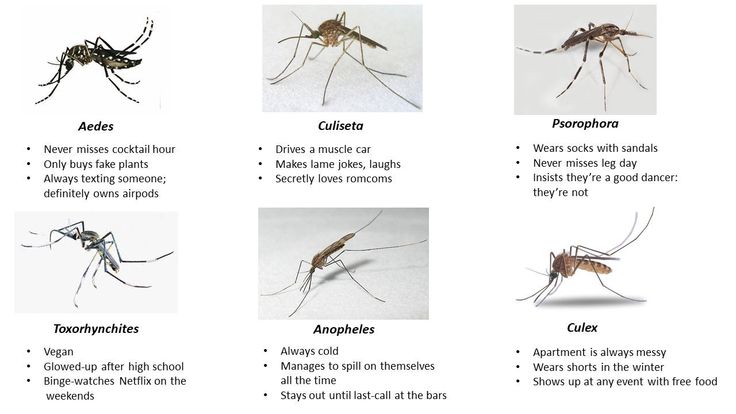
The mosquito is the deadliest animal on Earth. Not the shark, not the snake, not the crocodile - a two-milligram insect with a six-part mouth and a taste for blood kills more humans every year than every large predator combined.
Roughly 725,000 people die annually from diseases transmitted by the family Culicidae: malaria above all, followed by dengue, yellow fever, Zika, West Nile, chikungunya, Japanese encephalitis, and lymphatic filariasis. Mosquitoes are not dangerous because they are large, fast, or armoured.
They are dangerous because they are everywhere, they reproduce rapidly, and they act as living syringes that move pathogens between millions of human hosts.
This guide covers every aspect of mosquito biology and ecology: anatomy, sensing, biting mechanics, reproduction, disease transmission, control programs, and the strange facts that make Aedes aegypti and its relatives the most studied insects on the planet. It is a reference entry, not a summary - so expect specifics: millimetres, stylets, species counts, and death tolls.
A Note on Filing
Mosquitoes belong to the order Diptera (true flies) and the family Culicidae. They are not dragonflies, which are in the order Odonata.
Dragonflies and mosquitoes are only distantly related within the broader class Insecta, and they famously sit on opposite sides of a predator-prey relationship: adult dragonflies eat enormous quantities of adult mosquitoes, and dragonfly larvae eat mosquito larvae in the same ponds.
This site files its insect articles under a fixed set of folders - ants, bees, beetles, butterflies, dragonflies, mantises, moths, scorpions, spiders, termites - and does not currently host a dedicated Diptera or Culicidae section. The mosquito entry has been placed in the dragonflies folder as the closest-matching flying-insect folder available.
The taxonomy block on this page reflects the true scientific classification: Animalia, Arthropoda, Insecta, Diptera, Culicidae, Aedes, A. aegypti.
Etymology and Classification
The word mosquito comes from Spanish, literally 'little fly'. The Spanish in turn borrowed from Latin musca (fly) with a diminutive suffix. Early English speakers used the word gnat for the same insects, and some dialects still do. The scientific family name Culicidae comes from the Latin culex meaning 'gnat' or 'midge', which is why the genus containing the common house mosquito is Culex.
The family Culicidae contains roughly 3,500 described species in 112 genera. Of these, three genera matter most for human health:
- Anopheles - the only genus that transmits human malaria (Plasmodium parasites). About 70 of the ~460 Anopheles species are significant vectors.
- Aedes - transmits dengue, yellow fever, Zika, chikungunya, and some filarial worms. Aedes aegypti (the yellow fever mosquito) and Aedes albopictus (the Asian tiger mosquito) are the most medically important.
- Culex - transmits West Nile virus, Japanese encephalitis, St. Louis encephalitis, and lymphatic filariasis.
The oldest known mosquito fossil comes from Canadian amber and is about 79 million years old, dating to the Late Cretaceous. The family is older than flowering plants in their modern form, which means mosquitoes were biting dinosaurs and early mammals long before they ever bit a human.
Size and Physical Description
Mosquitoes are small, even by insect standards. Adult body length ranges from about 3 to 9 millimetres depending on species, with most species in the 4 to 7 millimetre range. Body mass is around 2 to 2.5 milligrams - light enough that a single raindrop outweighs an adult mosquito by a factor of fifty.
Body segments:
- Head: bearing two compound eyes, two antennae, and the proboscis. Female antennae are simple; male antennae are feathery and used to detect the wing-beat frequency of females during mating swarms.
- Thorax: three pairs of long, thin legs plus one pair of wings. Mosquito wings are narrow, fringed with scales, and beat at 300 to 600 times per second depending on species and temperature. The characteristic high-pitched whine is the wing-beat harmonics.
- Abdomen: ten segments, housing the midgut, ovaries or testes, and spiracles for gas exchange. A blood-fed female's abdomen stretches visibly and takes on a deep red colour.
Only a second pair of wings is missing, which is the defining feature of Diptera (literally 'two wings'). Where a bee or dragonfly has four wings, a mosquito has two; the rear pair has been reduced over evolutionary time to tiny club-shaped organs called halteres that vibrate like gyroscopes and provide flight stabilisation.
Females are generally larger than males, with longer abdomens to accommodate egg clutches. The two sexes are easiest to distinguish by the antennae: feathery in males, plain in females.
The Proboscis: Six Stylets, Not a Needle
The most famous feature of a mosquito is also the most widely misunderstood. The mosquito 'needle' is not a single structure. It is a bundle of six thin stylets enclosed in a protective outer sheath called the labium.
When a female lands on skin and prepares to feed, the labium bends backward like a folding knife handle, pushing the six stylets forward. Each stylet has a specific job:
- Two mandibles - thin saw-edged blades that cut the skin.
- Two maxillae - toothed blades that spread the cut tissue apart and anchor the mouthparts so the bundle does not slip.
- One hypopharynx - a tube that delivers saliva. The saliva contains anticoagulants (to stop blood clotting during the meal), vasodilators (to widen blood vessels), and mild anaesthetic compounds (to reduce the chance the host notices).
- One labrum - the food canal through which blood is drawn up into the midgut.
The entire bundle can flex and probe inside the skin, searching for a capillary or venule that will deliver blood fast enough. A blood meal takes two to five minutes and the female's abdomen visibly expands. She then flies - often heavily - to a resting site to digest.
The itchy red welt that appears after a bite is not caused by the wound itself. It is an immune reaction to proteins in the saliva.
Sensing: Almost No Vision, Extraordinary Chemistry
Mosquitoes cannot see well. Their compound eyes are simple, monochromatic, and useful mainly for short-range contrast detection (spotting a dark shape against a pale background at less than a metre). Instead, they rely on a layered chemical and thermal tracking system that operates over different distances.
Long-range (up to 50 metres):
- Carbon dioxide from exhalation. Mosquitoes detect CO2 pulses against background air with receptors on their maxillary palps. A fasting female can lock onto a CO2 plume from tens of metres away in still air.
Medium-range (1 to 10 metres):
- Volatile organic compounds from skin: lactic acid, ammonia, octenol, and fatty acids produced by skin bacteria. The exact blend varies between individuals and is largely heritable.
Short-range (under 1 metre):
- Infrared and humidity gradients near warm skin. Mosquitoes have heat receptors on their antennae and palps that create a thermal map of the host.
Final approach (under 10 centimetres):
- Simple vision combines with air-flow sensing to guide landing.
This layered system is why DEET, picaridin, and IR3535 repellents work. They interfere with the medium-range odour detection without needing to mask CO2 or heat.
Life Cycle and Reproduction
Mosquitoes undergo complete metamorphosis: egg, larva, pupa, adult. The aquatic juvenile stages require standing water - anything from a lake margin to a bottle cap in a backyard.
Stage durations at 25-30 degrees Celsius:
| Stage | Duration | Location |
|---|---|---|
| Egg | 1-3 days | Water surface or edge |
| Larva | 4-10 days | Water column |
| Pupa | 1-4 days | Water surface |
| Adult | 1 week - months | Air |
Eggs are laid singly (Aedes) or in floating rafts of 100-300 (Culex). Aedes eggs can survive months of drying and hatch as soon as they are flooded - this is why emptying flower pots and discarded tyres is such an effective control measure. Larvae, called wrigglers, breathe through a tube at the water surface and feed on algae and organic debris. Pupae, called tumblers, do not feed but continue to breathe through the surface while their adult body forms inside the pupal case.
Adult females typically mate once, store sperm, and use it to fertilise every subsequent clutch of eggs. Each clutch requires one blood meal. A healthy female can produce 5 to 10 clutches during her lifetime, yielding up to 3,000 eggs.
Lifespan:
- Males: about 1 week (long enough to mate once or twice)
- Females (field): 2 weeks typical, up to a few months
- Females (lab): 100+ days on sugar water
- Overwintering Culex females in temperate climates: up to 6 months
Disease Transmission
Mosquitoes do not produce the diseases they spread. They act as biological vectors - the pathogen enters the mosquito with an infected host's blood meal, survives and often multiplies inside the mosquito, and is injected into the next host through saliva during the next bite.
Major mosquito-borne diseases:
| Disease | Pathogen | Primary vector genus | Estimated annual deaths |
|---|---|---|---|
| Malaria | Plasmodium spp. | Anopheles | ~600,000 |
| Dengue | Flavivirus | Aedes | 20,000-40,000 |
| Yellow fever | Flavivirus | Aedes | 30,000-60,000 |
| Japanese encephalitis | Flavivirus | Culex | 10,000-20,000 |
| Lymphatic filariasis | Wuchereria bancrofti | Culex, Anopheles | Rare direct deaths |
| West Nile virus | Flavivirus | Culex | Hundreds |
| Zika virus | Flavivirus | Aedes | Rare direct deaths |
| Chikungunya | Alphavirus | Aedes | Rare direct deaths |
Total: approximately 725,000 deaths per year across all mosquito-borne diseases, though precise figures vary by year and reporting agency.
Two important qualifications. First, vector specificity is strict. Anopheles cannot transmit dengue. Aedes cannot transmit malaria. This is because each pathogen has co-evolved with a specific mosquito physiology - the parasite must survive the mosquito's midgut, cross the gut wall, migrate to the salivary glands, and survive there until the next bite. Most parasite-mosquito combinations fail at one of these steps.
Second, most mosquitoes that bite you are not carrying anything. In a typical Aedes aegypti population during a dengue outbreak, only a few per cent of adult females carry the virus in their salivary glands. The rest are merely annoying. This is why bed nets, repellents, and vector control matter - reducing bite frequency reduces the probability that one of the rare infected mosquitoes encounters you.
Control Programs: Insecticides, Genetics, Bacteria
Mosquito control has moved through several technological eras.
Classical era (1900-1960s): Drainage of wetlands, oil films on ponds, larvicidal fish such as Gambusia, and DDT spraying. DDT effectively eliminated malaria from the United States, Europe, and much of the Caribbean in the 1950s and 60s before environmental toxicity and resistance ended its use.
Chemical era (1970s-present): Pyrethroid-treated bed nets, indoor residual spraying, and larvicides such as methoprene and Bacillus thuringiensis israelensis (Bti). Insecticide-treated bed nets alone are credited with preventing millions of malaria deaths since 2000.
Genetic era (2010s-present): Two strategies are in active field deployment.
- Oxitec OX5034 - a genetically modified Aedes aegypti strain carrying a female-lethal gene. Released males mate with wild females; all female offspring die before adulthood. Trials in Brazil, the Cayman Islands, and Florida Keys have produced local population reductions exceeding 90%.
- Wolbachia infection - a naturally occurring bacterium that, when introduced into Aedes aegypti, blocks the mosquito's ability to transmit dengue virus. The World Mosquito Program releases Wolbachia-infected mosquitoes in tropical cities; a randomised controlled trial in Yogyakarta, Indonesia cut dengue incidence by 77% in treated neighbourhoods.
Potential future era: CRISPR-based gene drives that could spread sterility or pathogen resistance through entire populations from a small initial release. Gene drives remain experimental and raise serious governance questions because they cross national borders on their own.
Could We - and Should We - Eradicate Mosquitoes?
Technically, we can drive specific vector species to local extinction. Eradicating the entire family Culicidae is a different question. Roughly 3,500 species exist, fewer than 100 of which meaningfully threaten human health. The rest pollinate some flowers, feed fish, bats, swallows, dragonflies, and amphibians, and cycle nutrients through wetland ecosystems.
Arguments for eradication:
- Mosquitoes kill roughly 725,000 humans per year, mostly children.
- They inflict immense suffering from non-fatal disease, lost schooling, and lost work.
- Modern tools make species-specific suppression feasible without blanket insecticide use.
Arguments against full eradication:
- Mosquito larvae are a major food source for freshwater fish and amphibians.
- Adult mosquitoes feed birds and bats; the decline of insectivorous birds correlates with insect losses generally.
- Some plants, including certain orchids in the tundra, are pollinated primarily by mosquitoes.
- Unknown ecological consequences when any keystone prey item is removed.
In practice, public-health programs target the specific vector species responsible for human disease - Aedes aegypti, Anopheles gambiae, Culex pipiens - and leave the other 3,400-plus species alone.
Strange Facts
- Mosquitoes are the deadliest animals on Earth, killing roughly 725,000 humans per year. Sharks, for comparison, kill about 6 to 10 people per year.
- Only females bite. Males feed on nectar and cannot pierce skin.
- The proboscis is not a needle - it is a bundle of six coordinated stylets.
- Mosquitoes cannot truly see and rely on CO2, heat, and skin-odour chemistry.
- A mosquito can detect exhaled CO2 from up to 50 metres away.
- There are 3,500-plus mosquito species, but fewer than 100 are significant disease vectors.
- Only Anopheles mosquitoes transmit human malaria.
- Most mosquitoes that bite you are not carrying any pathogen.
- Genetically modified males have cut wild Aedes populations by 90-plus per cent in field trials.
- Wolbachia-infected mosquitoes reduced dengue cases by 77% in Yogyakarta, Indonesia.
- The oldest known mosquito fossil is 79 million years old.
- Bite attractiveness is about 60 to 80 per cent heritable between identical twins.
- One blood meal produces one clutch of 100 to 300 eggs.
- Aedes eggs can survive dry for months and hatch as soon as they are flooded.
Mosquitoes and Humans
The relationship between humans and mosquitoes is ancient and asymmetrical. Mosquitoes predate humans by tens of millions of years. Every large human migration - out of Africa, into Asia, into the Americas - brought people into contact with new mosquito species and new pathogens. Yellow fever travelled with the Atlantic slave trade. Malaria shaped the demography of tropical agriculture. Dengue is now a disease of tropical cities, expanding steadily with urbanisation and climate change.
The 20th-century dream of eradicating the worst vector-borne diseases - endorsed by the WHO in the 1950s - collapsed under insecticide resistance, parasite resistance, and funding cycles. The 21st-century approach is more modest and more technical: layered tools, species-specific interventions, community engagement, and acceptance that complete elimination is probably impossible while climate change expands mosquito ranges.
Despite everything, progress is real. Global malaria deaths fell from roughly 897,000 in 2000 to around 600,000 in 2023, largely thanks to insecticide-treated bed nets, artemisinin-based combination therapies, and - most recently - the first effective malaria vaccines (RTS,S and R21). Dengue remains a growing problem, but Wolbachia programs and next-generation dengue vaccines offer credible hope of reversing the trend in the coming decade.
Related Reading
References
Relevant peer-reviewed and governmental sources consulted for this entry include WHO World Malaria Report (2023, 2024), CDC vector-borne disease data, the World Mosquito Program Wolbachia trial results (New England Journal of Medicine, 2021), Oxitec field trial reports for OX5034 releases in Florida and Brazil, and published research in Nature, Science, The Lancet, PLOS Neglected Tropical Diseases, and the Journal of Medical Entomology.
Specific mortality figures reflect the most recent consolidated estimates from WHO and the Institute for Health Metrics and Evaluation.
Frequently Asked Questions
Why are mosquitoes called the deadliest animals on Earth?
Mosquitoes (family Culicidae) transmit pathogens that kill roughly 725,000 people every year, more than any other animal on the planet. The single deadliest mosquito-borne disease is malaria, caused by Plasmodium parasites and transmitted by Anopheles mosquitoes, which kills around 600,000 people annually - mostly children under five in sub-Saharan Africa. Dengue fever, transmitted mainly by Aedes aegypti, causes tens of thousands of additional deaths.
Yellow fever, Zika virus, West Nile virus, chikungunya, Japanese encephalitis, and filariasis add further mortality. Because mosquitoes act as living syringes that move pathogens between millions of human hosts worldwide, their cumulative impact vastly exceeds that of sharks, snakes, crocodiles, or any large predator.
Why do only female mosquitoes bite?
Female mosquitoes require the protein and iron in vertebrate blood to produce eggs. Without a blood meal, most species cannot complete oogenesis - the development of mature eggs. Males lack the specialised mouthparts needed to pierce skin; their mandibles and maxillae are reduced and they cannot cut through the epidermis. Males feed entirely on nectar, plant juices, and honeydew, which also forms the primary energy source for females between blood meals.
A female mosquito typically takes one blood meal per clutch of eggs, and a single clutch contains 100 to 300 eggs depending on species and the size of the meal.
How does a mosquito find you?
Mosquitoes combine at least four detection systems to locate hosts. Long-range: they follow carbon dioxide plumes from exhaled breath, detectable from up to 50 metres away in still air. Medium-range: they lock onto body odour molecules such as lactic acid, ammonia, octenol, and volatile fatty acids produced by skin bacteria. Short-range: they use infrared sensing to detect body heat and humidity gradients around warm skin.
Final approach: visual contrast against the background (mosquitoes do have simple compound eyes, but vision is secondary). This layered detection is why repellents that mask skin odour - DEET, picaridin, IR3535 - are effective even though they cannot hide your CO2.
What diseases do mosquitoes transmit?
Different mosquito genera transmit different pathogens. Anopheles species transmit malaria (Plasmodium falciparum, P. vivax, P. malariae, P. ovale, P. knowlesi) and lymphatic filariasis. Aedes species, particularly Aedes aegypti and Aedes albopictus, transmit dengue, yellow fever, Zika virus, chikungunya, and some filarial worms. Culex species transmit West Nile virus, Japanese encephalitis, St. Louis encephalitis, and filariasis.
Most mosquitoes that bite humans do not carry any pathogen at all - transmission requires the mosquito to have previously fed on an infected host, and only a fraction of a vector population is typically infectious at any given time.
How does the mosquito proboscis actually work?
The mosquito proboscis is not a single needle. It is a bundle of six thin stylets enclosed in a protective sheath called the labium. When a female bites, the labium bends backward to clear the way and the six stylets enter the skin. Two stylets (the mandibles) are saw-edged blades that cut through tissue. Two more (the maxillae) have tiny teeth that spread the tissue apart and anchor the mouthparts.
One stylet (the hypopharynx) delivers saliva containing anticoagulants, vasodilators, and anaesthetic compounds that keep blood flowing and partially mask the bite. The last stylet (the labrum) forms the food canal through which blood is drawn up. The bundle can flex and probe inside the skin, searching for a capillary or small venule that will deliver blood fast enough to fill the abdomen in two to five minutes.
Can we eradicate mosquitoes entirely?
Technically we can drive individual vector species toward local extinction, but eradicating the entire family Culicidae is neither feasible nor clearly desirable. Two modern suppression approaches are already deployed in the field. First, genetically modified Aedes aegypti (such as Oxitec’s OX5034 strain) carry a female-lethal gene: released males mate with wild females and female offspring die before adulthood, collapsing local populations.
Field releases in Brazil, the Cayman Islands, and Florida have produced reductions exceeding 90% in treated areas. Second, Wolbachia-infected mosquitoes, released by the World Mosquito Program, cannot transmit dengue virus effectively; trials in Indonesia reduced dengue incidence by 77%. Ecologists disagree on broader consequences. Mosquito larvae are major food for fish, bats, birds, and amphibians, and adults pollinate some flowers.
Removing a keystone prey item could ripple through wetland ecosystems unpredictably, which is why most control programs target specific vector species rather than the whole family.
How long do mosquitoes live?
Mosquito lifespan depends heavily on species, sex, temperature, and whether the insect is in the lab or in the wild. Males typically live around one week - long enough to mate once or twice and then die. Females live much longer: two weeks is typical in warm field conditions, but laboratory females fed on sugar water have survived more than 100 days.
In temperate climates, some Culex species overwinter as adult females in sheltered locations such as basements and caves, surviving up to six months. Development from egg through larva and pupa to adult takes 7 to 14 days at 25 to 30 degrees Celsius and can exceed a month in cooler water. Because generations are short and fecundity is high, populations can rebuild quickly after any control effort is relaxed.
Why do some people get bitten more than others?
Host preference in mosquitoes is heritable, measurable, and unevenly distributed. Several factors reliably make a person more attractive to female mosquitoes. Carbon dioxide output: larger bodies, pregnant women, and people exercising exhale more CO2 and are detected at greater range. Skin chemistry: the blend of lactic acid, ammonia, and fatty acids produced by each person’s skin microbiome varies genetically.
Studies of identical twins show roughly 60 to 80% of bite-attractiveness is heritable. Body temperature and sweat: higher skin temperature and moisture increase the thermal signal mosquitoes lock onto. Blood type: some studies suggest type O is slightly more attractive than type A, though the effect is weaker than popularly reported. Clothing colour: darker colours increase visual contrast against light backgrounds.
Beer consumption has been shown in small studies to measurably increase attractiveness, though the mechanism is not fully understood.