
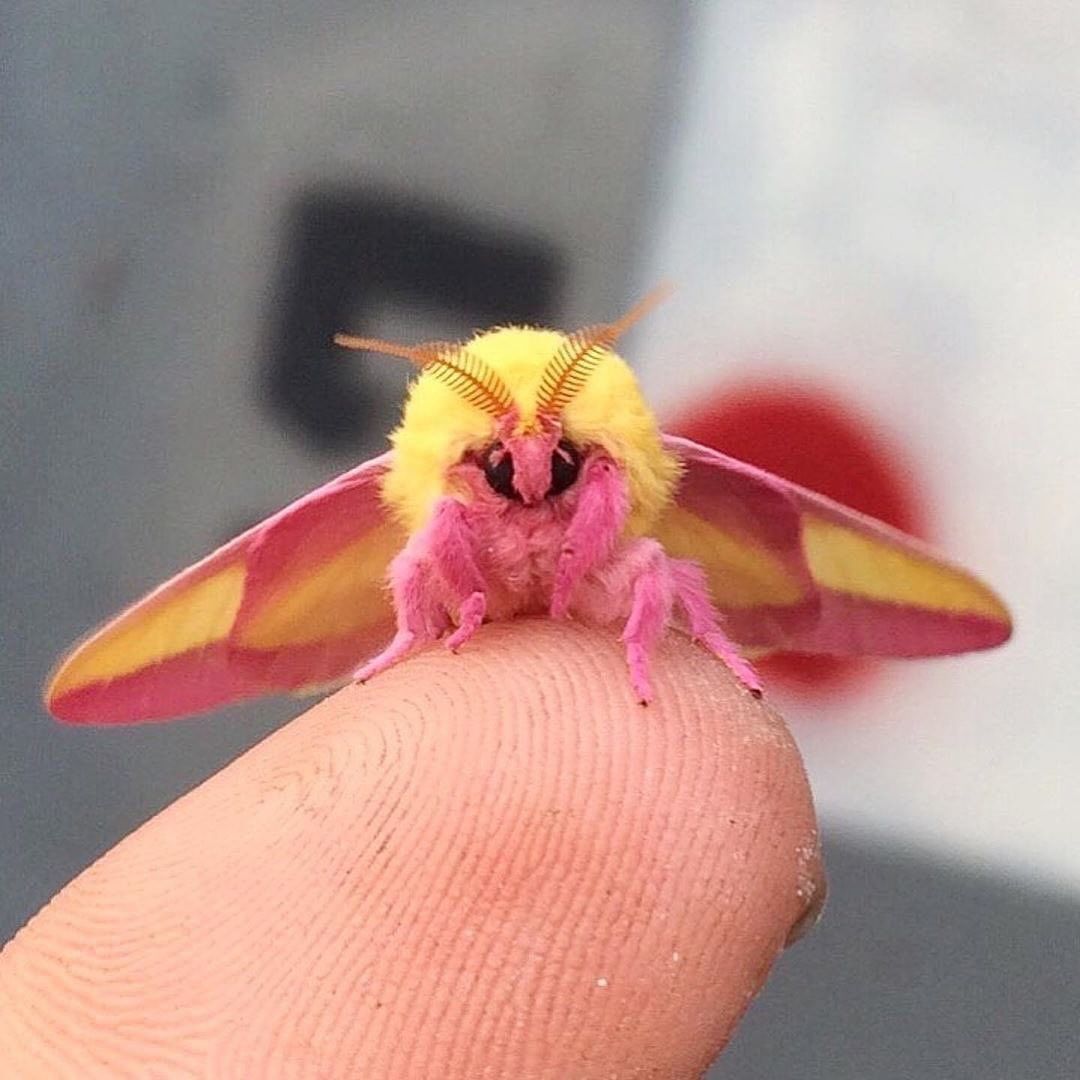
Why are moths attracted to artificial light?
The leading scientific explanation is transverse orientation, a navigational strategy in which moths maintain a fixed angle relative to a distant light source such as the moon. Because the moon is effectively at infinity, maintaining a constant angle produces a straight flight path.
When most people think of the order Lepidoptera, they think of butterflies - monarchs drifting over meadows, swallowtails visiting garden flowers, painted ladies crossing continents. Butterflies are the public face of the scale-winged insects, the ones that appear on postage stamps and conservation posters. But butterflies are a sideshow.
The real story of Lepidoptera is written by moths: a vast, ancient, spectacularly diverse group that outnumbers butterflies ten to one, pollinates more plants, produces one of the most valuable fibers in human history, and has given science its single most famous demonstration of natural selection in action.
Moths are not failed butterflies. They are the main event. And their quiet, largely nocturnal world is collapsing under pressures that most people have never considered.
The Scale of Moth Diversity
The order Lepidoptera contains over 180,000 described species. Of these, roughly 160,000 are moths. Butterflies, for all their cultural prominence, account for only about 17,500 species - less than 10 percent of the order. In evolutionary terms, butterflies are a single relatively recent lineage nested within the far older and more diverse moth radiation. All butterflies are technically moths, but the reverse is not true.
This 10-to-1 ratio understates the actual disparity, because moths are dramatically under-collected and under-studied compared to butterflies. Entomologists estimate that tens of thousands of moth species remain undescribed, particularly in tropical regions. The true number of moth species on Earth may exceed 250,000, which would make moths alone more species-rich than any vertebrate class - more diverse than all mammals, birds, reptiles, amphibians, and fish combined.
Moths occupy every terrestrial habitat on Earth except the Antarctic interior. They range from sea level to above 4,000 meters in the Himalayas. They range in size from the atlas moth, with a wingspan broader than a dinner plate, to micromoths in the family Nepticulidae that are smaller than a grain of rice, with wingspans under 3 millimeters. Some are brilliant mimics of wasps, beetles, or bird droppings.
Some are transparent-winged. Some glow under ultraviolet light in patterns invisible to the human eye. The variety is staggering, and the vast majority of it goes unnoticed because it happens after dark.
Atlas Moth: The Largest Wings in the Insect World
The atlas moth (Attacus atlas) holds the record for the largest total wing surface area of any living insect. Native to the tropical and subtropical forests of Southeast Asia - from India through China and down to the Malay Archipelago - the atlas moth has a wingspan of 25 to 30 centimeters (10 to 12 inches) and a total wing area that can exceed 400 square centimeters.
The curved tips of its forewings are shaped and patterned to resemble the head of a snake, a visual deterrent that may startle potential predators.
But the most remarkable fact about the atlas moth is what it cannot do: eat. Adult atlas moths have no functional mouth. Their mouthparts are vestigial - shrunken, non-functional remnants that cannot take in food or water. From the moment the adult emerges from its large, papery cocoon, it is running on a finite fuel tank: the fat reserves accumulated during months of voracious feeding as a caterpillar.
The adult atlas moth lives only 1 to 2 weeks, during which its sole biological imperative is to locate a mate and reproduce before its energy stores are exhausted.
This strategy - investing everything in the larval stage and treating adulthood as a brief, expendable reproductive sprint - is shared by several moth families but is especially dramatic in the Saturniidae, the giant silk moths, to which the atlas moth belongs.
Luna Moth: Weaponized Beauty
The luna moth (Actias luna) is one of the most visually striking insects in North America. With its pale lime-green wings, delicate eyespots, and long, trailing hindwing tails that can extend 7 to 8 centimeters, the luna moth looks like something designed by an Art Nouveau illustrator rather than shaped by 50 million years of natural selection. It is found across eastern North America, from southern Canada to northern Mexico, and its emergence in late spring has made it an icon of the season.
Like the atlas moth, the luna moth belongs to the family Saturniidae and shares the same stark adult biology: no functional mouth, no ability to feed, and a lifespan of roughly one week. Every moment of its brief adult existence is devoted to reproduction.
But the luna moth's most scientifically interesting feature is its long hindwing tails, and their function was not understood until 2015. Researchers at Boise State University, led by Jesse Barber, demonstrated that the spinning, twisting tails of luna moths deflect echolocation signals from bats [1]. Bats hunt moths by emitting ultrasonic pulses and listening for the echoes.
The luna moth's tails create a spinning acoustic target that draws bat strikes away from the moth's body and toward the expendable tail tissue. In controlled experiments, luna moths with intact tails survived bat attacks at significantly higher rates than moths with tails removed. It was an elegant solution to the problem of nocturnal predation - a living decoy built into the moth's own anatomy.
"The tails of luna moths are not ornamental. They are acoustic decoys, spinning targets that redirect bat sonar away from the body. It is one of the most sophisticated anti-predator defenses we have documented in insects." - Jesse Barber, sensory ecologist, Boise State University (2015)
Deaths-Head Hawkmoth: The Skull That Screams
The deaths-head hawkmoth (Acherontia atropos and its two Asian congeners, A. styx and A. lachesis) is perhaps the most culturally notorious moth in the world. On its thorax sits a pattern of scales that unmistakably resembles a human skull, a marking that has inspired fear and superstition for centuries. In many European folk traditions, the appearance of a deaths-head hawkmoth was considered an omen of death, war, or plague.
The moth's notoriety reached its cultural peak when it was featured prominently on the poster and in the plot of the 1991 film The Silence of the Lambs, where the serial killer Buffalo Bill placed deaths-head hawkmoth pupae in the throats of his victims. The imagery was borrowed directly from the moth's long association with death in European folklore.
But the real biology of the deaths-head hawkmoth is stranger than its mythology. When disturbed, the moth produces a loud squeaking or chirping sound by forcing air through its pharynx - one of the very few Lepidoptera capable of producing sound through a mechanism other than wing or body vibration. The sound is thought to serve as a startle defense against predators.
The deaths-head hawkmoth is also a specialized honey thief. It enters beehives, pierces wax cells with its short, strong proboscis, and feeds on honey. It avoids being attacked by the bees through a combination of thick cuticle that resists stings, chemical mimicry that may match the scent profile of the hive, and the squeaking sound, which may mimic queen bee piping and suppress worker aggression.
It is a moth that screams its way into a fortress of 60,000 stinging insects and walks out unscathed, carrying stolen food.
The Peppered Moth: Natural Selection Made Visible
No moth has contributed more to the history of science than the peppered moth (Biston betularia), whose story remains the most famous and most thoroughly documented example of natural selection observed in real time.
Before the Soot
Before the Industrial Revolution, the peppered moth existed primarily in its pale, speckled typica form - light gray or white wings peppered with dark spots. This coloring provided excellent camouflage against the lichen-covered bark of trees in the English countryside, where the moths rested during the day. A dark, melanic form called carbonaria existed but was exceedingly rare, known from only a handful of museum specimens collected before 1848.
The Rise of the Dark Form
As industrialization accelerated through the mid-1800s, the landscapes of central and northern England transformed. Coal-burning factories poured sulfur dioxide and soot into the atmosphere. Lichens died. Tree trunks turned black with deposited soot.
Against this darkened substrate, the pale typica moths became conspicuous - easy targets for insect-eating birds such as the spotted flycatcher and the redstart. The dark carbonaria form, previously a liability against lichen-covered bark, was now superbly camouflaged.
The result was swift and dramatic. In Manchester, the frequency of the carbonaria form rose from near zero to over 98 percent of the local peppered moth population by 1895 - a span of less than 50 years. Similar shifts occurred in every industrialized region of Britain and, later, in industrial areas of continental Europe and North America. This phenomenon was termed industrial melanism.
Kettlewell's Experiments
The mechanism driving industrial melanism was suspected but not demonstrated until the 1950s, when Oxford geneticist Bernard Kettlewell conducted a series of mark-recapture experiments that became some of the most cited studies in evolutionary biology [2].
Kettlewell released known numbers of both typica and carbonaria moths in two locations: the polluted Cadbury Heath near Birmingham and the unpolluted Deanend Wood in rural Dorset. He then recaptured moths at light traps and mercury vapor lamps to measure survival rates. His results were striking:
| Location | Pale (typica) recaptured | Dark (carbonaria) recaptured |
|---|---|---|
| Birmingham (polluted) | 25.0% | 52.3% |
| Dorset (unpolluted) | 12.5% | 6.3% |
In polluted Birmingham, dark moths survived at more than twice the rate of pale moths. In unpolluted Dorset, the pattern reversed. Kettlewell also filmed birds selectively feeding on the less-camouflaged form in each environment, providing direct observational evidence that differential bird predation was the selective agent.
Critique and Vindication
Kettlewell's work was not without controversy. In the 1990s and 2000s, several criticisms emerged. Some pointed out that peppered moths rarely rest on tree trunks in the wild and are more often found on branches or under canopy. Others questioned the methodology of some of Kettlewell's release experiments. The most prominent critique came from journalist Judith Hooper in her 2002 book Of Moths and Men, which insinuated scientific fraud - a charge that was not substantiated by evidence.
The scientific community responded with decades of follow-up research. Cambridge geneticist Michael Majerus spent seven years conducting the largest and most rigorous peppered moth experiment ever attempted, observing natural resting positions, filming bird predation, and conducting controlled releases.
His data, published posthumously in 2012 in Biology Letters, conclusively confirmed Kettlewell's core finding: birds preferentially predate the less-camouflaged form, and this predation is sufficient to drive the observed frequency changes [3].
"The peppered moth story is not a myth. It is the most thoroughly investigated example of evolution by natural selection in any organism. The evidence is overwhelming, and the critiques, while useful in prompting better experiments, did not overturn the fundamental conclusion." - L.M. Cook, University of Manchester (2003)
Meanwhile, the real-world experiment continued. After Britain's Clean Air Acts of 1956 and 1968 reduced industrial pollution, lichens returned to tree bark, soot deposits declined, and the frequency of the carbonaria form steadily decreased. By the early 2000s, the pale typica form had regained dominance in formerly polluted areas, completing a full cycle of directional natural selection driven by environmental change and reversed by environmental restoration.
In 2016, researchers at the University of Liverpool identified the specific genetic mutation responsible for the carbonaria form: a transposable element inserted into the cortex gene, which controls wing pattern development. The insertion was dated to approximately 1819 - perfectly consistent with the historical timeline of industrial melanism [4].
Hummingbird Hawk-Moth: A Case Study in Convergent Evolution
The hummingbird hawk-moth (Macroglossum stellatarum) is a day-flying moth found across Europe, North Africa, and Asia that is so frequently mistaken for an actual hummingbird that wildlife agencies regularly receive misidentification reports. The resemblance is not superficial.
The hummingbird hawk-moth hovers in front of flowers while feeding, beating its wings at approximately 70 to 80 beats per second, producing an audible hum. It extends a long proboscis into tubular flowers while maintaining a stationary hover - exactly as hummingbirds do.
This is a textbook example of convergent evolution: two unrelated lineages arriving at the same solution to the same ecological problem. Both hummingbirds (class Aves) and hummingbird hawk-moths (order Lepidoptera) evolved hovering flight and long feeding appendages independently, driven by the shared challenge of extracting nectar from deep-tubed flowers.
The aerodynamic principles are nearly identical - both generate lift on both the upstroke and downstroke of the wing, unlike most flying insects and birds, which generate lift primarily on the downstroke.
The hummingbird hawk-moth is also notable for its remarkable visual memory. Studies have shown that individuals return to the same flower beds at the same time of day, demonstrating spatial and temporal learning unusual for an insect.
The Silk Moth: 5,000 Years of Domestication
The domestic silk moth (Bombyx mori) is one of the most economically important insects in human history and one of the few fully domesticated invertebrates. The silk industry - sericulture - began in China approximately 5,000 years ago, and the secrets of silk production were so closely guarded that smuggling silkworm eggs out of China was punishable by death.
The domestication of Bombyx mori has been so complete that the species can no longer survive in the wild. Adults cannot fly - their bodies are too heavy and their wings too small relative to body mass. They cannot feed themselves. They cannot evade predators. They are, in the strictest sense, entirely dependent on human care, making them arguably the most domesticated animal on Earth relative to their wild ancestors (Bombyx mandarina).
A single silkworm cocoon contains a continuous silk filament approximately 900 meters (nearly 3,000 feet) long. The filament is produced by the caterpillar's modified salivary glands, which secrete a protein called fibroin coated in a gummy substance called sericin. Roughly 2,500 cocoons are required to produce one pound of raw silk.
The global silk industry is valued at approximately $16 billion annually and supports millions of livelihoods, primarily in China, India, Uzbekistan, and Thailand. China alone produces roughly 80 percent of the world's raw silk. Despite the development of synthetic alternatives, natural silk remains prized for its luster, strength, breathability, and drape.
Bogong Moths: Mass Migration and Aboriginal Food
The bogong moth (Agrotis infusa) of southeastern Australia undertakes one of the most remarkable insect migrations outside the Lepidoptera megastars.
Each spring, billions of bogong moths migrate from the lowland breeding grounds of southern Queensland and western New South Wales to the Australian Alps, where they aestivate (the summer equivalent of hibernation) in cool granite caves and rock crevices at elevations above 1,400 meters. A single cave may shelter 17,000 moths per square meter, with the moths packing themselves into crevices in overlapping layers.
For thousands of years, bogong moths were a critical food source for Aboriginal peoples of southeastern Australia. Multiple Aboriginal groups, including the Ngunnawal and Djilamatang, gathered at the alpine aestivation sites during summer for ceremonial feasts.
The moths, rich in fat at approximately 60 percent body fat during aestivation, were roasted on hot stones or in sand, producing a food described by early European observers as tasting like roasted nuts. These gatherings were among the largest intertribal meetings in pre-colonial Australia, serving as occasions for trade, ceremony, and the resolution of disputes.
In recent decades, bogong moth populations have suffered dramatic declines linked to drought, changing agricultural practices, and light pollution from expanding cities that disorient migrating moths.
Moth Pollination: The Night Shift
Butterflies receive the bulk of public attention as pollinators, but research increasingly indicates that moths may be more important pollinators than previously recognized, and in some ecosystems they may rival or exceed bees and butterflies in pollination effectiveness.
A 2020 study published in Biology Letters by University College London researchers found that moths visit many of the same plant species as daytime pollinators but also pollinate a distinct set of plants that receive no daytime visits at all - effectively expanding the total pollination network rather than merely duplicating it [5]. Moths were found to carry pollen on their bodies with the same frequency as bees, and they transported pollen over significantly longer distances.
Night-blooming flowers have evolved specifically to attract moth pollinators. These flowers are typically white or pale-colored (visible in low light), heavily scented (moths locate flowers primarily by olfaction), and deep-tubed (matching the long proboscises of hawk-moths and other nectaring species).
Classic examples include evening primrose (Oenothera), moonflower (Ipomoea alba), jasmine, and the famous yucca-yucca moth mutualism, in which yucca plants are pollinated exclusively by yucca moths of the genus Prodoxus and Tegeticula in one of the most specialized obligate mutualisms in the plant kingdom.
The implications for agriculture and conservation are significant. If moths are indeed major pollinators, then factors that reduce moth populations - particularly artificial light at night - may be reducing pollination services in ways that current models do not account for.
Light Pollution: The Invisible Killer
The fatal attraction of moths to artificial light is one of the most commonly observed insect behaviors and one of the least understood. The traditional explanation - transverse orientation, in which moths attempt to maintain a fixed angle to a light source and spiral inward when that source is nearby rather than celestial - has been the standard model for decades. Recent research has refined this picture.
A 2024 study published in Nature Communications using high-speed motion capture showed that flying insects, including moths, tilt their dorsal surface toward artificial lights, causing them to orbit, stall, and become trapped near the source rather than following a simple spiral [6].
Regardless of the precise mechanism, the ecological consequences are severe. Artificial light at night (ALAN) now affects roughly 23 percent of the world's land surface, and that percentage is growing at an estimated 2 percent per year. For moths, the consequences include:
- Direct mortality from exhaustion, overheating, and predation while trapped at lights
- Disrupted navigation that prevents moths from reaching food sources and mates
- Reduced feeding and reproduction as moths waste their brief adult lives orbiting bulbs
- Disrupted pollination as nocturnal pollinators are pulled away from flowers
- Attraction of predators - bats, spiders, and birds learn to hunt at light sources, creating ecological traps
A 2021 study in Science Advances estimated that a single streetlight can pull moths from an area of approximately 23 hectares, effectively creating a "vacuum zone" where moth-dependent ecological processes - pollination, nutrient cycling, predator feeding - are suppressed. Multiply that by the estimated 300 million streetlights worldwide, and the scale of the problem becomes apparent.
Moth Decline: A Crisis in the Dark
The decline of moth populations is one of the most alarming and least publicized ecological crises of the 21st century. Because most moths are nocturnal and cryptic, their declines attract far less attention than the losses of bees, butterflies, or birds - but the data are stark.
In the United Kingdom, the Rothamsted Insect Survey - the longest-running standardized insect monitoring program in the world, operating since 1964 - has documented a decline of approximately 33 percent in total moth abundance over the past 50 years.
For some species, the declines are catastrophic: the garden tiger moth has declined by 92 percent, the V-moth by 99 percent, and the spinach moth by 97 percent. Southern Britain has been hit hardest, with overall moth abundance down by roughly 40 percent.
Across continental Europe, the pattern is similar. Long-term studies in the Netherlands, Germany, and Scandinavia have documented widespread moth declines, often exceeding 50 percent over multi-decade monitoring periods. These declines are correlated with - and almost certainly driven by - a combination of factors:
- Habitat loss: conversion of grasslands, hedgerows, and woodlands to intensive agriculture
- Pesticide use: neonicotinoids and other insecticides kill moths directly and reduce caterpillar food plants
- Light pollution: ALAN disrupts behavior and increases mortality, as discussed above
- Climate change: altered phenology, range shifts, and increased drought stress
The consequences cascade through ecosystems. Moths are a critical food source for bats, nightjars, swifts, cuckoos, and countless other species. A single pair of blue tits requires an estimated 6,000 to 9,000 caterpillars to raise a clutch of chicks - most of those caterpillars are moth larvae. When moth populations crash, the species that depend on them follow.
Moth Diversity and Status: Key Figures
| Metric | Value |
|---|---|
| Total described moth species | ~160,000 |
| Estimated undescribed species | 50,000-100,000+ |
| Ratio of moths to butterflies | ~10:1 |
| UK moth decline (50-year trend) | ~33% |
| Global silk industry value | ~$16 billion annually |
| Silk filament per cocoon | ~900 meters |
| Atlas moth maximum wingspan | ~30 cm |
| Luna moth adult lifespan | ~1 week |
| Bogong moth body fat during aestivation | ~60% |
| Streetlight moth attraction radius | ~23 hectares |
The Overlooked Majority
Moths are not charismatic. They do not have the cultural currency of butterflies, the agricultural urgency of bees, or the emotional appeal of large mammals. They are small, mostly brown, mostly nocturnal, and mostly ignored. But they are the foundation of nocturnal terrestrial ecosystems. They pollinate plants that no daytime pollinator visits.
They feed the birds, bats, and spiders that structure food webs across every continent. They produce one of the most valuable natural fibers in human civilization. And they gave science the single most compelling real-time demonstration that Darwin's theory actually works.
Their decline is not a minor footnote in the biodiversity crisis. It is a structural failure - one that is happening in the dark, where no one is watching. The artificial lights that now blanket nearly a quarter of the planet's land surface are not merely an annoyance for stargazers. They are an ecological weapon aimed at a group of organisms that evolved over 190 million years to navigate by moonlight and starlight.
Turning those lights off, or at minimum converting them to less attractive wavelengths and shielded designs, is one of the simplest and most cost-effective conservation interventions available.
Moths deserve better than the margins. They are the overlooked majority, and their story - of silk and skulls and spinning tails and soot-blackened trees - is one of the great stories in biology.
References
[1] Barber, J.R., et al. (2015). "Moth tails divert bat attack: Evolution of acoustic deflection." Proceedings of the National Academy of Sciences, 112(9), 2812-2816.
[2] Kettlewell, H.B.D. (1955). "Selection experiments on industrial melanism in the Lepidoptera." Heredity, 9, 323-342.
[3] Cook, L.M., Grant, B.S., Saccheri, I.J., & Mallet, J. (2012). "Selective bird predation on the peppered moth: the last experiment of Michael Majerus." Biology Letters, 8(4), 609-612.
[4] Van't Hof, A.E., et al. (2016). "The industrial melanism mutation in British peppered moths is a transposable element." Nature, 534(7605), 102-105.
[5] Walton, R.E., Sayer, C.D., Bennion, H., & Sheridan, H. (2020). "Nocturnal pollinators strongly contribute to pollen transport of wild flowers in an agricultural landscape." Biology Letters, 16(5), 20190877.
[6] Fabian, S.T., et al. (2024). "Why flying insects gather at artificial light." Nature Communications, 15, 689.
Frequently Asked Questions
Why are moths attracted to artificial light?
The leading scientific explanation is transverse orientation, a navigational strategy in which moths maintain a fixed angle relative to a distant light source such as the moon. Because the moon is effectively at infinity, maintaining a constant angle produces a straight flight path. An artificial light, however, is close enough that maintaining a fixed angle causes the moth to spiral inward toward the source in an ever-tightening curve.
Recent research published in Nature Communications in 2024 using high-speed motion capture has added nuance to this model, showing that moths tilt their dorsal side (back) toward the light, which causes them to orbit and stall near artificial sources rather than simply spiraling in. Regardless of the precise mechanism, the result is the same: moths become trapped near lights, wasting energy, becoming easy prey, and failing to feed or reproduce.
How large is the atlas moth and what is its wingspan?
The atlas moth (Attacus atlas) is the largest moth in the world by total wing surface area, with a wingspan of 25 to 30 centimeters (roughly 10 to 12 inches) and a total wing area that can exceed 400 square centimeters. Native to the tropical and subtropical forests of Southeast Asia, the atlas moth is remarkable not only for its size but for the fact that it has no functional mouth.
Adults emerge from their cocoons with vestigial, non-functional mouthparts and cannot eat or drink. They survive entirely on fat reserves accumulated during the caterpillar stage and live only 1 to 2 weeks as adults, during which their sole purpose is to find a mate and reproduce before their energy stores are exhausted.
What is the peppered moth and why is it famous in evolutionary biology?
The peppered moth (Biston betularia) is famous as the most widely cited example of natural selection observed in real time. Before the Industrial Revolution, the typical peppered moth was pale with dark speckles, providing camouflage against lichen-covered tree bark.
During the 1800s, industrial pollution killed lichens and blackened trees with soot in English cities, and a dark (melanic) form called carbonaria rapidly increased from near-zero to over 98 percent of the population in polluted areas because it was better camouflaged against the darkened bark. After the Clean Air Acts of the 1950s and 1960s reduced pollution, the pale form recovered as lichens returned.
Bernard Kettlewell’s mark-recapture experiments in the 1950s provided direct evidence that differential bird predation drove the frequency changes, making it a textbook case of directional natural selection responding to environmental change.