
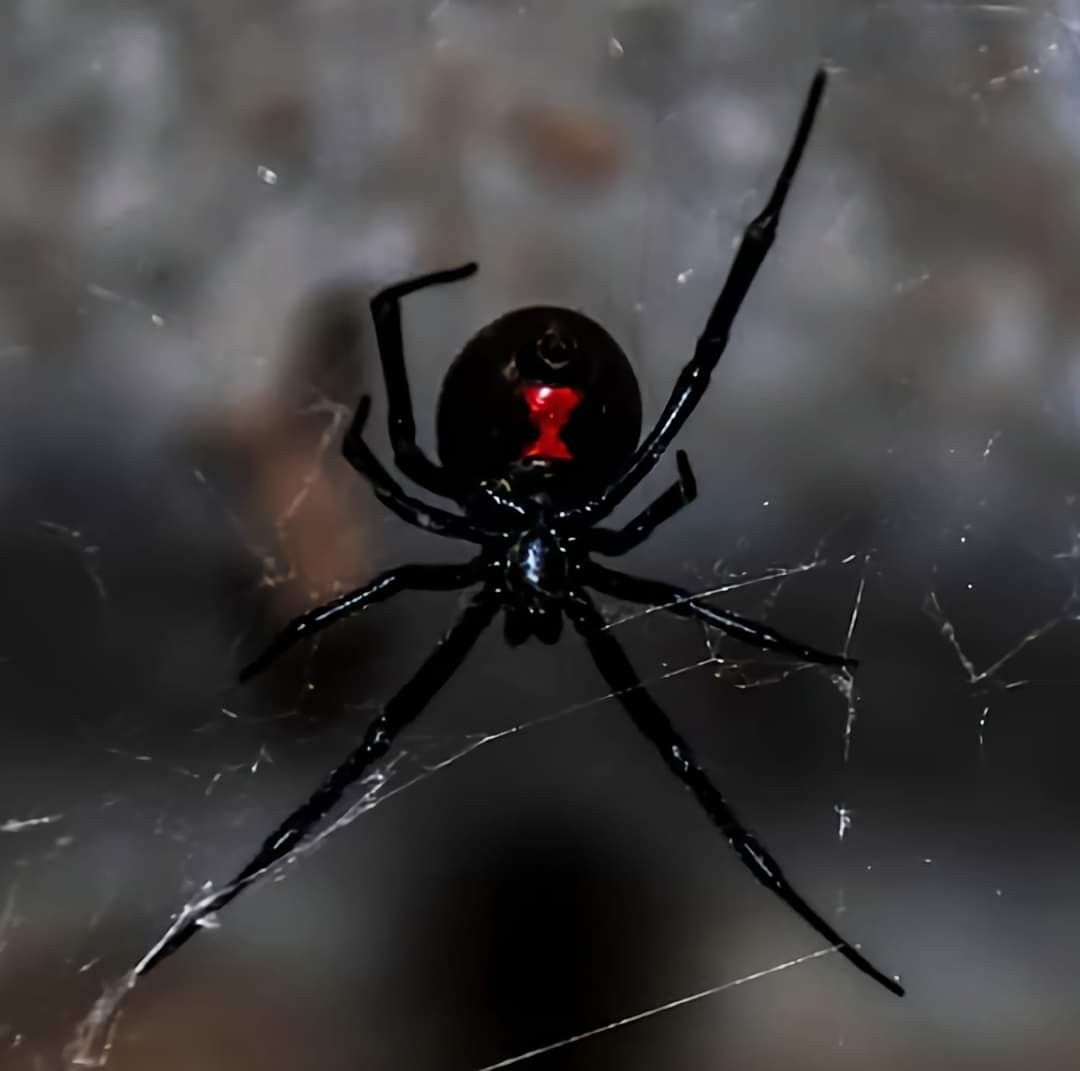
How venomous is a black widow?
Black widow venom (latrotoxin) is 15 times more potent than rattlesnake venom by weight - among the most toxic substances produced by any animal. However, black widows inject only tiny amounts per bite (approximately 0. 03 mg), making actual human fatalities relatively rare.
The Most Famous Spider in America
A gardener in California moves a stack of old firewood. Something catches the edge of her glove, a shiny black spider with a bright red marking on its belly. She knows immediately what it is. She carefully moves away.
Black widows are the spiders most Americans can identify on sight. Their distinctive red hourglass marking against black bodies is etched into popular culture through movies, warning posters, and common knowledge. They live across most of North America, often near human habitation.
Their venom is 15 times more potent than rattlesnake venom by weight. Their bites killed 1 in 20 victims before modern medicine. Today, with antivenom and emergency care, deaths are rare, but the fear remains, often disproportionate to actual risk.
The Species
Black widows belong to the genus Latrodectus, with 31 species worldwide.
North American species:
Southern black widow (Latrodectus mactans):
- Most famous in popular culture
- Clear red hourglass marking
- Southeast and south-central US
Western black widow (L. hesperus):
- Most common in western US
- Similar appearance to southern
- More variable markings
Northern black widow (L. variolus):
- Upper Midwest and Northeast US
- Often has broken hourglass pattern
- Sometimes has spots rather than hourglass
Other notable Latrodectus species:
- Redback spider (L. hasselti): Australian close relative
- European black widow (L. tredecimguttatus): Mediterranean region
- Brown widow (L. geometricus): tropical invasive species
- Red widow (L. bishopi): Florida-endemic species
Identification
The iconic black widow appearance is specifically mature females.
Mature female:
- Body: shiny black (some species brown with age)
- Size: 8-15 mm body length
- Legspan: up to 4 cm
- Key marking: red hourglass on abdominal underside
- Smooth, hairless abdomen
Mature male:
- Much smaller (3-5 mm)
- Brown or tan color
- Lacks prominent hourglass
- Longer legs relative to body
- Different identification challenges
Immature females:
- More variable coloration
- Brown, tan, or gray
- Patterns include spots, stripes
- Develop darker colors as they mature
Easily confused with:
- False widows (Steatoda): similar shape but different pattern
- Some other cobweb spiders
- Brown widows with orange/tan markings
Identification tips:
- Red hourglass on belly is definitive for mature females
- Shiny, hairless abdomen indicates mature female
- Small size (pinky fingernail size) for body
The Venom
Black widow venom is chemically extraordinary.
The toxin:
Latrotoxin, specifically alpha-latrotoxin for mammalian effects. Other latrotoxin variants affect insects, crustaceans, and vertebrates differently.
Potency:
- By weight: 15 times more toxic than rattlesnake venom
- Per bite: approximately 0.03 mg injected (tiny amount)
- Historical mortality: 5% pre-1950s
- Current mortality: near zero with treatment
How it works:
- Binds to nerve endings at nerve-muscle junctions
- Causes massive release of neurotransmitters
- Overstimulates muscles and nerves
- Results in continuous muscle contraction
- Causes widespread symptoms called latrodectism
Symptoms (latrodectism):
- Severe abdominal muscle contractions
- Intense muscle pain and spasms
- Elevated blood pressure
- Sweating and salivation
- Nausea and vomiting
- Headache
- Anxiety and restlessness
- Difficulty breathing in severe cases
Timeline:
- First 30 minutes: localized pain
- 1-3 hours: systemic symptoms develop
- 3-12 hours: peak symptoms
- 12-72 hours: gradual improvement
- 3-7 days: full recovery (untreated)
Treatment
Medical care has dramatically improved outcomes.
Antivenom:
Antilatrodectin was developed in the 1940s. It:
- Binds latrotoxin directly
- Neutralizes ongoing effects
- Rapid action (minutes to hours)
- Most effective if administered early
Supportive care:
- Pain management (often requires strong analgesics)
- Muscle relaxants
- Blood pressure management
- Respiratory support if needed
- Monitoring for 12-24 hours
When to seek care:
Any suspected black widow bite should prompt medical evaluation, particularly for:
- Children under 5
- Elderly people
- Those with cardiac conditions
- Pregnant women
- People with severe reactions
Prevention:
- Wear gloves when working in garages, woodpiles, storage areas
- Inspect clothing and shoes in black widow habitat
- Seal cracks and gaps in buildings
- Remove clutter that provides shelter
- Use pest management if populations are high
The Cannibalism Myth
Female black widows eat males less often than popular culture suggests.
The name origin:
The common name comes from occasional post-mating cannibalism. Early naturalists observed this behavior and gave the species a dramatic name.
Actual frequency:
Research reveals cannibalism is uncommon in most species:
- Southern black widow: 10-15% of matings
- Western black widow: much rarer
- Redback spider: higher rates (Australian relative)
- Many other widow species: rare or never observed
Why sometimes:
When cannibalism occurs, it provides benefits:
- Protein for the female (now producing eggs)
- Elimination of rival males (male won't mate with other females)
- Biological reinforcement of male courtship displays
Male defenses:
Males have evolved strategies to avoid cannibalism:
- Identification signals: specific vibrations showing they're mates, not prey
- Rapid mating: brief courtship and quick escape
- Female preparation: male ensures female is fed before mating
- Species differences: some species show more male-sacrifice behavior than others
Laboratory artifact:
Cannibalism is higher in laboratory studies than wild observations, suggesting:
- Stressed females more likely to cannibalize
- Lack of escape routes in enclosed settings
- Unusual conditions trigger defensive responses
The popular exaggeration:
Popular culture portrays black widow cannibalism as routine and inevitable. Actual biology shows it as occasional behavior with specific triggers. Most black widow males survive their mating encounters.
Habitat and Behavior
Black widows prefer hidden locations.
Preferred habitats:
- Undisturbed corners of garages, sheds, outhouses
- Woodpiles and brush piles
- Basements with minimal traffic
- Crawlspaces
- Hidden areas outdoors (under logs, stones)
- Dense vegetation with protected spaces
- Meter boxes and utility connections
Web structure:
Black widow webs are:
- Irregular and messy-looking
- No organized pattern (unlike spiral webs of garden spiders)
- Sticky throughout
- Structured to catch crawling insects
- Usually in corners or protected locations
Behavior:
Black widows are:
- Nocturnal (mostly active at night)
- Stay close to their webs
- Reluctant to bite unless provoked
- Retreat to hidden areas when disturbed
- Not aggressive unless defending egg sacs
Feeding:
- Primarily insects caught in web
- Occasional small vertebrates (rare)
- Wrap prey in silk
- Inject digestive enzymes
- Consume liquefied tissue
Encounters with Humans
Most black widow bites are accidental.
Typical bite scenarios:
- Putting on clothing or shoes left outside
- Reaching into garage clutter
- Moving firewood
- Working in undisturbed storage areas
- Cleaning porches and outdoor structures
Why bites happen:
Black widows don't actively seek humans. Bites occur when:
- Spider feels trapped or crushed
- Web is disturbed by human movement
- Defensive response to perceived attack
- Accidental contact during routine activities
Not aggressive:
Black widows typically:
- Retreat if given escape route
- Play dead when threatened
- Bite only when cornered
- Give dry bites (no venom) sometimes as warnings
Risk profile:
- Most likely bite victims: gardeners, woodworkers, outdoor workers
- Most likely bite location: hands, forearms (from reaching)
- Most likely time: during routine activities in their habitat
- Most likely age: adults 25-55 (work exposure)
Global Distribution
Black widows and close relatives are widespread.
Continents with native species:
- North America (southern, western, northern black widows)
- Central America
- South America
- Europe (Mediterranean region)
- Africa (widespread)
- Asia (various species)
- Australia (redback spider)
- Pacific islands
Not found:
- Antarctica
- Arctic regions
- Extremely cold climates
Climate change implications:
Black widow ranges are shifting with climate change:
- Northern expansion in North America
- Elevation increases in mountain regions
- Previously unsuitable areas becoming inhabited
Invasive species:
- Brown widow (L. geometricus) spreading globally
- Has invaded US from tropical origins
- Redback spider expanding beyond Australia
Conservation Status
Black widows are not conservation concerns.
Population status:
- Abundant throughout range
- Not threatened
- Populations stable or increasing
Ecological role:
- Control insect populations (pest control benefit)
- Prey for other spiders, wasps, birds
- Part of detritus-zone ecosystems
- Valuable to ecosystem balance
Human attitudes:
Public perception is overwhelmingly negative:
- Fear out of proportion to actual risk
- Often killed on sight
- Target of pest control
- Folklore negative
However:
- They provide pest control benefits
- Rarely attack humans
- Fear is largely cultural rather than evolutionary
Scientific Importance
Black widow research has contributed to multiple fields.
Neuroscience:
Latrotoxin has become a standard research tool:
- Studies of synaptic transmission
- Understanding nerve-muscle junctions
- Neurotransmitter release mechanisms
- Applications in neurology research
Medical applications:
Understanding latrotoxin has:
- Improved treatment of nerve disorders
- Informed drug development
- Provided insights into Parkinson's disease
- Enhanced understanding of muscular disorders
Evolutionary biology:
Black widows demonstrate:
- Extreme venom specialization
- Sexual cannibalism evolution
- Speciation in spiders
- Adaptation to diverse habitats
The Disproportionate Fear
Black widows occupy outsized space in public fear.
Actual danger:
- 0-2 fatalities per year in US
- Bite symptoms unpleasant but rarely severe
- Antivenom highly effective
- Most bites cause no lasting harm
Comparison deaths per year:
- Black widows: 0-2
- Bees and wasps: 50-100
- Dog attacks: 30-50
- Lightning strikes: 30-40
- Vehicle accidents: 42,000+
Yet fear is severe:
- Arachnophobia affects 3-15% of population
- Black widows commonly feared
- Many people kill any spider on sight
- Public knowledge exaggerates danger
Why disproportionate:
- Striking appearance (red hourglass)
- Cultural association with death
- Media amplification
- Evolutionary spider-fear (not species-specific)
- Historical danger before antivenom
A balanced view:
Black widows are:
- Moderately dangerous (warranting caution)
- Not particularly aggressive
- Rare sources of death or serious injury
- Important to local ecosystems
Respect them. Don't handle them. But also don't panic. They are animals doing what spider species do - living, hunting, reproducing - and most humans can coexist with them safely by avoiding contact.
Widow Spider Species Worldwide
The genus Latrodectus - the "true widow" spiders - contains approximately 32 recognized species distributed across every continent except Antarctica. All carry latrotoxin-based venom, and most are capable of medically significant bites to humans. The Kalenux Team compiled the most medically important species.
| Species | Common Name | Range | Notable Feature |
|---|---|---|---|
| L. mactans | Southern black widow | Southeastern USA | Red hourglass; most-famous species |
| L. hesperus | Western black widow | Western USA | Identical venom to L. mactans |
| L. variolus | Northern black widow | Northeastern USA, Canada | Red spots rather than hourglass |
| L. geometricus | Brown widow | Pantropical (invasive) | Spreading worldwide |
| L. hasseltii | Redback | Australia (invasive elsewhere) | Causes most envenomations in Australia |
| L. tredecimguttatus | European black widow | Mediterranean | Classical malmignatte of Italian folklore |
| L. katipo | Katipo | New Zealand | Endangered species |
| L. menavodi | Madagascar widow | Madagascar | Island endemic |
"All widow spiders share essentially the same venom chemistry. The medical consequences of bites differ more based on the patient's health and the amount of venom injected than on the species involved. Redback, black widow, and brown widow antivenoms are often cross-reactive because the latrotoxins are so similar." - Geoffrey Isbister, University of Newcastle Australia, Toxicon, 2004 [1]
Latrodectism: The Medical Syndrome
The distinctive constellation of symptoms caused by widow spider bites has its own name in clinical medicine: latrodectism. The syndrome is named for the genus and was first formally described in the medical literature in the late 19th century, though Mediterranean folklore had recognized it for centuries.
The classical symptoms, which typically appear 30 minutes to 2 hours after the bite, include severe muscle cramping (particularly in the abdomen), intense sweating, hypertension, tachycardia, nausea, and tremors.
"Latrodectism is a diagnostic clue that looks like nothing else in emergency medicine. The patient presents with severe abdominal pain that can mimic a surgical emergency, but the abdomen on examination is rigid from muscle cramping rather than peritonitis. Sweating is profuse, often drenching the bedsheets. Once you have seen it, you do not mistake it for anything else." - Geoffrey Isbister, University of Newcastle Australia, Medical Journal of Australia, 2003 [2]
Before widespread availability of antivenom, the syndrome occasionally killed patients - particularly children, the elderly, and those with preexisting cardiovascular disease. Modern care with supportive treatment and antivenom has reduced fatality rates to near zero in developed countries. Developing nations with less reliable antivenom supplies still see occasional deaths.
Why the Hourglass?
The iconic red hourglass on the black widow's abdomen is one of the most recognizable warning patterns in the animal kingdom. Experimental studies have confirmed it serves as an honest aposematic signal - a visual warning to potential predators that the spider is dangerous to eat. The red coloration is visible to birds and lizards, which are the primary predators capable of eating an adult black widow, and both groups learn to avoid the pattern after a single unpleasant encounter.
A fascinating study by Nicholas Brandley and colleagues at Duke University used bird-vision models to quantify how conspicuous the hourglass actually is to different predators. Red widow coloration is highly visible to birds, which have four-cone color vision, but only moderately visible to humans. The color is tuned to bird visual systems specifically.
We humans find the hourglass striking mainly because our cultural iconography has drawn attention to it - the actual signal is designed for avian eyes, not ours [3].
The Brandley study also found that the spider's black body is highly camouflaged against most natural backgrounds, meaning the hourglass is only visible when the spider is oriented belly-up or hanging in the web.
This positioning makes evolutionary sense: the spider can be cryptic to approaching predators but can expose the warning signal when it chooses, typically by rotating on its web or adopting a defensive posture. The pattern is a "conditional warning" rather than a continuous one, allowing the spider to benefit from both camouflage and aposematism depending on circumstance.
References
- Isbister, G. K., and Gray, M. R. (2003). "Latrodectism: a prospective cohort study of bites by formally identified redback spiders." Medical Journal of Australia, 179(2), 88-91.
- Isbister, G. K. (2004). "Antivenom efficacy or effectiveness: the Australian experience." Toxicology, 181-182, 311-320.
- Brandley, N., Johnson, M., and Johnsen, S. (2016). "Aposematic signals in North American black widows are more conspicuous to predators than to prey." Behavioral Ecology, 27(4), 1104-1112.
- Garb, J. E., and Hayashi, C. Y. (2013). "Molecular evolution of alpha-latrotoxin, the exceptionally potent vertebrate neurotoxin in black widow spider venom." Molecular Biology and Evolution, 30(5), 999-1014.
- Nicholson, G. M., and Graudins, A. (2002). "Spiders of medical importance in the Asia-Pacific: atracotoxin, latrotoxin and related spider neurotoxins." Clinical and Experimental Pharmacology and Physiology, 29(9), 785-794.
Related Articles
- Goliath Birdeater: The World's Largest Spider
- Most Dangerous Spiders in the World
- Spiders: The Master Weavers of the Animal Kingdom
Frequently Asked Questions
How venomous is a black widow?
Black widow venom (latrotoxin) is 15 times more potent than rattlesnake venom by weight - among the most toxic substances produced by any animal. However, black widows inject only tiny amounts per bite (approximately 0.03 mg), making actual human fatalities relatively rare. Before modern medicine, mortality rates from black widow bites were approximately 5%; today, fatalities are extremely rare in regions with medical access.
The venom works by overstimulating nerve endings, causing widespread muscle contractions, severe pain, nausea, sweating, and in severe cases, respiratory or cardiac failure. The distinctive symptom pattern is called ‘latrodectism’ and is recognized by emergency physicians worldwide. Children, elderly people, and those with cardiac conditions face higher risk. Antivenom exists and is highly effective when administered within hours of bite.
Without antivenom, symptoms typically last 3-7 days of severe discomfort. Most bites happen to people who accidentally disturb black widow webs in garages, outhouses, woodpiles, or other secluded locations.
Do female black widows actually eat males?
The cannibalism behavior that gave black widows their name does occur but is less common than popularly believed. Female black widows eat males in only a fraction of mating encounters, varying by species. In Latrodectus hesperus (western black widow), cannibalism is rare. In L. mactans (southern black widow), it’s more common.
Laboratory conditions often show higher cannibalism rates than wild settings, suggesting the behavior may be partly triggered by environmental stress. When cannibalism does occur, it provides nutrition to the female who will then produce eggs - making the male’s sacrifice biologically valuable for reproductive success.
Males have evolved strategies to reduce cannibalism: they produce courtship vibrations that identify them as mates rather than prey, and some species show males mating and quickly escaping before cannibalism occurs. The behavior has been dramatized in popular culture far beyond its actual frequency. In most black widow matings, the male survives - the ‘black widow’ name reflects a dramatic minority of cases, not typical mating.
Where do black widows live?
Black widows in the genus Latrodectus include 31 species found on every continent except Antarctica. North American black widows include the southern black widow (Latrodectus mactans), western black widow (L. hesperus), and northern black widow (L. variolus). They inhabit temperate and warm regions across the US, southern Canada, and Mexico. Old-world species exist across Europe, Africa, Asia, Australia, and the Middle East.
The Australian redback spider (L. hasselti) is a notable close relative. Black widows prefer secluded, dark, protected locations: garages, sheds, outhouses, woodpiles, cluttered basements, dense vegetation, and undisturbed outdoor structures. They build messy, irregular webs with no distinct pattern, usually in corners or protected areas. They rarely enter main living spaces of homes - preferring storage areas and outdoor structures.
Climate change is expanding their range northward in North America as previously unsuitable regions warm. Their preference for hidden locations means most humans never encounter them despite living in black widow territory.
What does a black widow look like?
The iconic black widow appearance is a shiny black spider with a distinctive red hourglass marking on the underside of the abdomen. However, this describes mature females of some species. Actual appearance varies considerably: male black widows are much smaller (1⁄3 the size), often brown or tan rather than black, and typically lack the red hourglass.
Immature female black widows have more varied coloration including brown, tan, or gray with red or orange markings. Juvenile black widows often have complex marbled patterns. The red hourglass symbol is the most reliable identification mark for mature females. Body length: female 8-15 mm, male 3-5 mm. Females have shiny, hairless abdomens; males are more subtle.
The southern black widow has the clearest hourglass; northern and western species may have different markings (spots, dashes, or broken hourglass patterns). Red widow and brown widow relatives have different color schemes - brown widows have brown and tan markings with orange or yellow hourglass, while red widows have red bodies and black legs.
Can you die from a black widow bite?
Death from black widow bites is now extremely rare thanks to modern medicine, but was historically much more common. Pre-1950s mortality rates were approximately 5% of bite victims. Today, fatalities in developed countries are essentially limited to cases where medical care isn’t accessed or patients have severe underlying health conditions. The US averages 0-2 black widow bite fatalities per year among thousands of bites.
In emerging countries with less medical access, mortality remains higher. Risk factors for severe reactions include: young children (under 5), elderly people (over 65), immunocompromised individuals, people with heart conditions, and those with allergies to spider venom. Severe reactions can include hypertensive crisis, cardiac arrhythmias, respiratory failure, and rarely death.
Antivenom (called antilatrodectin) is highly effective when administered within 24 hours of envenomation. Most hospitals in black widow range countries stock it. Treatment also includes pain management, muscle relaxants, and monitoring. Without any treatment, symptoms typically resolve over 3-7 days. Children especially should receive medical evaluation after any suspected black widow bite due to their higher vulnerability.