
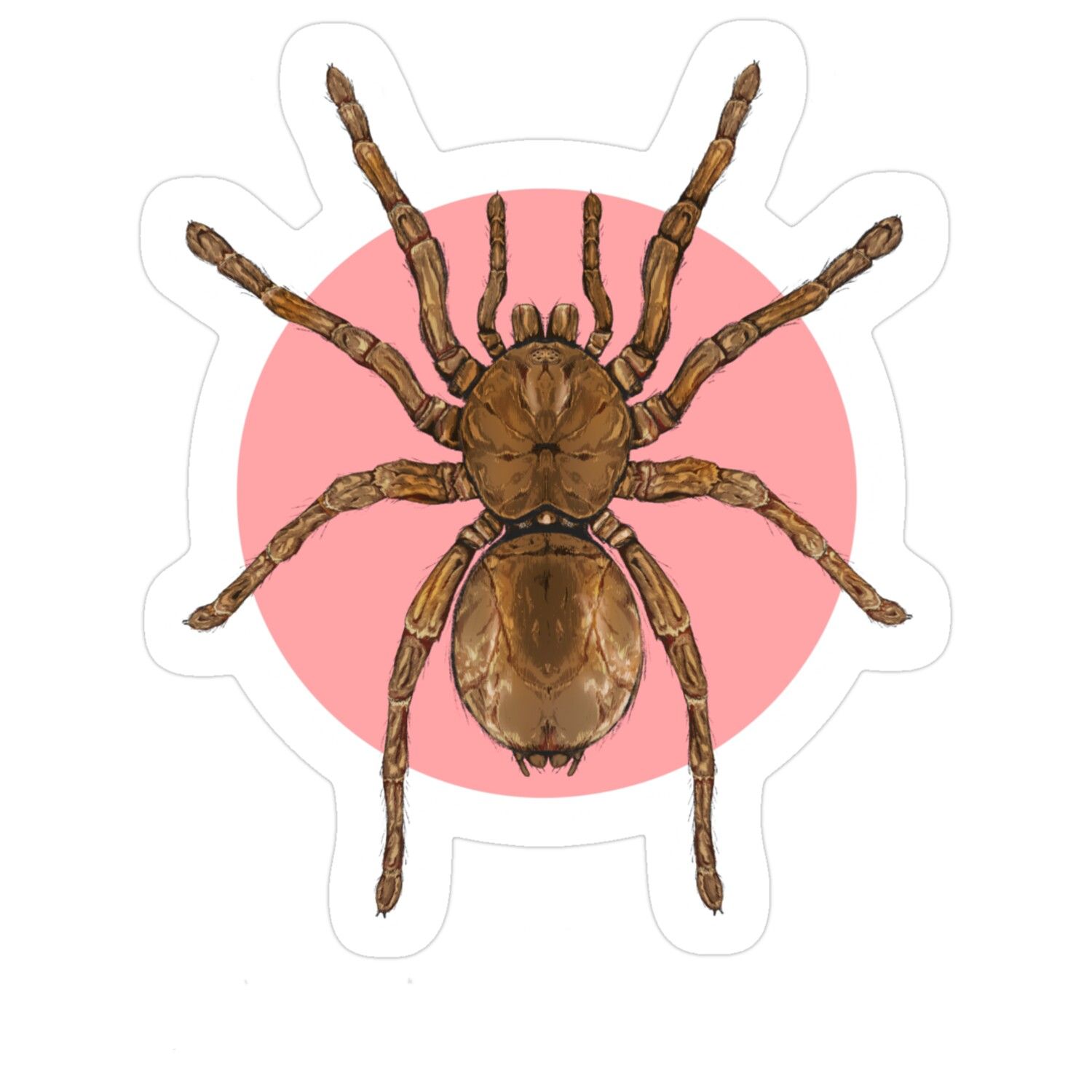
How big is the Goliath birdeater?
The Goliath birdeater (Theraphosa blondi) is the world's largest spider by weight, reaching up to 175 grams (6. 2 oz) with legspans of 28-30 cm (11-12 inches). A full-grown female weighs more than many small mammals - comparable to a young puppy or chihuahua. Their body length is typically 12 cm, with the legs adding most of the overall size.
Bigger Than a Dinner Plate
Hold up a dinner plate. That's the legspan of an adult Goliath birdeater, nature's heaviest spider. At 175 grams and nearly 30 centimeters across, they are larger than most hamsters, rats, or small puppies. Their fangs are two centimeters long, long enough to puncture human skin like hypodermic needles.
Despite the intimidating name and size, Goliath birdeaters rarely eat birds. They are ground-dwelling Amazonian tarantulas that hunt earthworms, frogs, insects, and occasional small mammals. The name came from a single 1705 illustration showing one eating a hummingbird, an unusual event that became the species' permanent identity.
Size Measurements
Goliath birdeaters are impressive by multiple metrics.
Dimensions:
- Body length: up to 12 cm
- Legspan: 28-30 cm (11-12 inches)
- Weight: up to 175 grams (6.2 oz)
- Fang length: approximately 2 cm
Comparison to humans:
- Body length matches an adult male's hand
- Legspan matches a dinner plate
- Weight matches a young puppy or Chihuahua
Among spiders:
Goliath birdeaters are the heaviest spiders in the world. The giant huntsman spider (Heteropoda maxima) has slightly longer legs (up to 30 cm) but much smaller body mass. The Goliath holds the mass record unambiguously.
Growth:
Young Goliaths look like much smaller tarantulas and grow through multiple molts:
- Hatchling: less than 1 cm
- Juvenile (1 year): 3-5 cm
- Sub-adult (2-3 years): 10-15 cm
- Adult (5-6 years): full size
They molt 20+ times during their growth period.
The Misleading Name
"Goliath birdeater" suggests dramatic predation that rarely occurs.
The origin:
In 1705, European naturalist Maria Sibylla Merian published an illustration of a giant tarantula eating a hummingbird in Suriname. The illustration was dramatic and memorable. Natural historians named the species after this single observation.
The reality:
Goliath birdeaters rarely hunt birds. Their diet primarily consists of:
- Earthworms (major food source)
- Insects (crickets, cockroaches, beetles)
- Frogs and toads
- Small snakes
- Occasionally small mammals (mice, young rats)
- Other small invertebrates
Why not birds:
- Goliaths are ground-dwellers
- They cannot climb trees well
- Bird nests are typically inaccessible
- Their hunting method (ambush from burrow) doesn't suit flying prey
- Birds are alert and quick
The exception:
Occasionally, a Goliath will encounter a bird near the ground, perhaps a fallen chick or a bird at water level. In these rare cases, they may kill and eat birds. But this is uncommon enough that it hardly justifies the species name.
A better name:
Biologists have proposed alternative names like "Goliath earthworm-eater" or "Giant ground tarantula," but "birdeater" has persisted for 300+ years and is unlikely to change.
Defense and Dangers
Goliaths defend themselves effectively but aren't lethal to humans.
Urticating hairs:
Like most New World tarantulas, Goliaths have specialized defensive hairs on their abdomens:
- Mechanism: flick hairs with hind legs toward threats
- Effect on skin: cause severe itching and rashes
- Effect on eyes: painful irritation, potential long-term damage
- Effect on breathing passages: serious respiratory issues
- Sensitization: repeated exposure builds severe allergic reactions
Researchers who handle Goliaths regularly often develop severe allergies to their hairs.
Biting:
Goliaths will bite if cornered:
- Fangs: 2 cm long, easily puncture human skin
- Venom: relatively mild for spider size
- Symptoms: pain, swelling, nausea (not life-threatening)
- Comparison: similar to a wasp or bee sting
Dry bites:
Like many spiders, Goliaths can give "dry bites" without injecting venom, a warning bite that uses less energy than envenomation.
Hissing:
When threatened, Goliaths produce loud hissing sounds by rubbing their legs together, warning before attacking.
Size as defense:
Their size alone deters many predators. Even jaguars, which eat some other tarantulas, generally avoid adult Goliaths.
Habitat
Goliaths live in specific rainforest conditions.
Range:
- Northern Brazil
- French Guiana
- Suriname
- Guyana
- Venezuela
Habitat:
- Primary rainforest (untouched)
- Secondary rainforest (regrown)
- Moist lowland forest
- Usually below 1,000 meters elevation
Specific requirements:
- Humidity: 70-90%
- Temperature: 24-30°C year-round
- Soil: moist with suitable burrow material
- Cover: fallen logs, roots, dense vegetation
Burrows:
Goliaths dig elaborate burrows:
- Depth: 30-60 cm
- Chamber: larger area at bottom for resting and digesting
- Entrance: narrow tube up to surface
- Duration: used for years, sometimes generations
Territory:
Individuals may defend small territories but generally tolerate other Goliaths at low densities.
Hunting Strategy
Goliaths are patient ambush predators.
The hunt:
- Wait at burrow entrance during night
- Sense approaching prey through vibrations and scent
- Strike rapidly when prey is close
- Deliver killing bite
- Drag prey into burrow
- Digest (takes days for large prey)
Prey selection:
They will attempt to catch any prey that:
- Approaches their burrow
- Is small enough to handle
- Moves with detectable vibrations
They often miss smaller, faster prey but succeed with slower targets.
Feeding:
- Large prey (frog, small mammal) lasts for days
- Small prey (insects) consumed quickly
- Can eat up to 30% of body weight per meal
Reproduction
Goliath reproduction is slow and dramatic.
Sexual maturity:
- Females: 5-6 years
- Males: 3-5 years
Mating:
- Males wander during breeding season
- Find female burrows by pheromone trails
- Approach cautiously (females may eat males)
- Brief mating, then male retreats rapidly
Post-mating male fate:
Males often die within months of reproduction:
- Natural lifespan end
- Females occasionally eat them
- Many don't survive the wandering required for mating
Egg sac:
- Female produces egg sac containing 100-400 eggs
- Guards it within her burrow
- Incubation: 6-8 weeks
- Spiderlings emerge and disperse
Lifespan
Goliaths are long-lived spiders.
Female lifespan:
- Wild: 15-20 years
- Captivity: up to 25+ years
Females continue molting throughout their lives, maintaining tissue health indefinitely.
Male lifespan:
- Wild: 3-5 years
- Captivity: up to 6-7 years
Males stop molting at sexual maturity, so damaged tissues cannot be repaired. They die shortly after reaching maturity and mating.
Why such a difference:
The sexual difference in longevity is common among tarantulas:
- Females invest in long life for multiple reproductive seasons
- Males invest in rapid maturation and reproduction
- Male strategy: reproduce quickly, die young
Conservation Status
Goliath birdeater populations face various pressures.
IUCN status:
Not formally assessed (Data Deficient)
Threats:
Deforestation:
- Amazon rainforest loss destroys habitat
- Even secondary forest changes reduce populations
- Fragmentation isolates populations
Exotic pet trade:
- Wild-caught specimens enter black market
- CITES partial protection
- Legal captive breeding exists
- Wild-caught demand persists in some markets
Climate change:
- Amazon drying could reduce suitable habitat
- Temperature fluctuations affect eggs
- Changed rainfall patterns
Mining and development:
- Gold mining affects habitat
- Road construction fragments populations
- Agricultural expansion
Local predation:
- Some indigenous Amazonian communities eat them (traditional food)
- Low-level harvesting has occurred for centuries without major impact
Cultural Aspects
Goliaths have cultural significance in their range.
Indigenous uses:
Some Amazonian tribes:
- Eat roasted Goliath birdeaters (considered a delicacy)
- Use silk for various crafts
- Include them in traditional medicine
Western pet trade:
Goliaths are popular in the exotic pet community:
- Legal in most Western countries
- Captive breeding provides most specimens
- Long lifespan makes them long-term commitments
- Require specialized care
Popular culture:
- Frequent in nature documentaries
- Featured in "spider horror" media
- Often cited as examples of "scariest animals"
- Popular subjects for wildlife photography
Why They Matter
Goliath birdeaters represent extreme adaptation within a specific niche.
Ecological role:
- Top predators in their habitat tier
- Control populations of insects, small amphibians
- Part of rainforest food web
- Source of food for specialized predators (wasps, snakes, some mammals)
Scientific value:
Research on Goliaths contributes to:
- Understanding size limits in invertebrates
- Study of tarantula biology
- Venom research (potential medical applications)
- Comparative biomechanics
Symbolic value:
As the largest spider species, Goliaths represent:
- Biological extremes
- Amazon rainforest biodiversity
- Nature's capability for producing "monsters"
- Tropical biology in general
Conservation indicators:
Their dependence on intact rainforest makes them indicators of broader Amazon health. Declining Goliath populations would signal rainforest degradation.
The Real Picture
The Goliath birdeater's reputation exceeds its actual danger and diet.
It is huge. That is real. Its size genuinely impresses observers who encounter one.
It has enormous fangs. Also real. They can puncture human skin.
It produces intimidating defensive displays. True, hissing, rearing up, flicking hairs.
But:
- It rarely eats birds despite the name
- Its venom isn't medically dangerous
- It's not aggressive toward humans
- Most interactions end with the spider retreating
The Goliath birdeater is an impressive animal precisely because it demonstrates how evolution can produce extremes, mass and size that push the limits of spider biology, without requiring corresponding danger. Evolution selected for size because it was advantageous in their niche; it didn't select for human-killing venom because that provided no benefit.
What a Goliath actually is: a huge, slow, moisture-loving, earthworm-eating Amazonian tarantula that lives in deep burrows and occasionally encounters small vertebrates including, very rarely, birds.
What the name suggests it is: a bird-killing monster spider.
The gap between reputation and reality is typical of famous Amazonian animals. Public imagination exaggerates based on limited information. The actual biology is usually more mundane than the stories suggest - even when the actual biology is itself remarkable by any reasonable measure.
Largest Spiders Compared
The Goliath birdeater is the largest spider by mass, but several competing species are close. The Kalenux Team compiled the comparative measurements from published arachnology literature.
| Species | Common Name | Leg Span | Body Mass | Range |
|---|---|---|---|---|
| Theraphosa blondi | Goliath birdeater | 28 cm | 170-175 g | Amazon Basin |
| Theraphosa stirmi | Burgundy goliath | 26-27 cm | 130-150 g | Guyana, Suriname |
| Theraphosa apophysis | Pinkfoot goliath | 25-26 cm | 125 g | Venezuela |
| Heteropoda maxima | Giant huntsman spider | 30 cm | 2-3 g | Laos |
| Lasiodora parahybana | Brazilian salmon pink | 25 cm | 100-120 g | Brazil |
| Acanthoscurria geniculata | Brazilian whiteknee | 22 cm | 80-90 g | Brazil |
| Poecilotheria rajaei | Rajaes's ornamental | 20 cm | 15-20 g | Sri Lanka |
"By leg span, the giant huntsman spider from Laos exceeds the Goliath birdeater. By body mass, nothing comes close to the Goliath. It is the true biological record holder for bulk in the arachnid world." - Peter Jager, Senckenberg Research Institute, Zootaxa, 2008 [1]
The Goliath's massive body has measurable physiological costs. The species is oxygen-limited at the upper end of its size range: spider book lungs are not efficient at delivering oxygen to tissues more than a certain distance from the breathing openings, and Goliath birdeaters are near that theoretical limit.
A spider the size of a chicken could not exist with book-lung respiration; the animal would suffocate. This is why the largest known spiders have all converged on roughly the same upper size limit, regardless of lineage.
The Urticating Hairs: A Defensive Adaptation
One of the most distinctive features of New World tarantulas, including the Goliath birdeater, is the presence of urticating hairs on the abdomen. These are not true hairs but modified bristles with barbed tips. When threatened, the spider rubs its hind legs against its abdomen, launching a cloud of hairs toward the attacker. The hairs embed in skin, mucous membranes, and eyes, causing intense irritation that can last for days.
"Goliath birdeater urticating hairs are among the most potent we have tested. A single exposure to the eyes causes corneal abrasions that persist for weeks without medical treatment. Even light contact with human skin produces welts and itching that last several days. Handling these spiders without protective equipment is not recommended." - Rick West, tarantula researcher, Tarantula World, 2014 [2]
The urticating hair defense has evolved independently in several tarantula lineages. Goliath birdeater hairs are classified as Type III, which are particularly irritating to mammalian mucous membranes. This suggests the primary target of the defense is mammalian predators - particularly small monkeys, opossums, and other Amazonian mammals that might otherwise raid spider burrows. The hairs are less effective against birds and reptiles, which have different skin chemistries.
Captive breeders of Goliath birdeaters often develop respiratory hypersensitivity to the hairs after repeated exposure. Some professional keepers have had to abandon the species because the chronic exposure caused lung inflammation severe enough to require medical treatment. This is a subtle but persistent hazard of working with the world's largest spider.
Ecological Role in the Amazon
Goliath birdeaters are ambush predators that sit at an important position in the Amazon forest floor food web. They feed on earthworms, insects, amphibians, small reptiles, and - occasionally - small mammals and nestling birds, as their name suggests. They are also themselves preyed upon by specialized predators, including some species of tarantula hawk wasp, coatimundis, tegu lizards, and the bird called the yellow-headed caracara.
The Kalenux Team reviewed Amazonian biodiversity literature and found that Goliath birdeaters are one of the few invertebrate species consistently large enough to be preyed upon by larger vertebrates. This makes them a trophic link between the invertebrate and small-vertebrate layers of the rainforest floor - funneling energy from earthworms and small insects upward to the small-carnivore guild of birds, snakes, and mammals that occasionally catch an adult tarantula.
Population densities of Goliath birdeaters in primary rainforest have been estimated at 1-5 adults per hectare, which over the millions of hectares of Amazon lowland forest translates to tens of millions of adult spiders. This is a substantial biomass. As the Amazon's area shrinks through deforestation and fragmentation, Goliath birdeater populations almost certainly decline in parallel, though no systematic monitoring exists for the species at a population scale.
References
- Jager, P. (2008). "Revision of the huntsman spider genus Heteropoda." Zootaxa, 1862(1), 1-49.
- West, R. C. (2014). Tarantulas of the World. Tarantula Press.
- Cooke, J. A. L., Roth, V. D., and Miller, F. H. (1972). "The urticating hairs of theraphosid spiders." American Museum Novitates, 2498, 1-43.
- Bertani, R. (2012). "Revision and cladistic analysis of Theraphosa Thorell 1870 (Araneae, Theraphosidae, Theraphosinae) with description of a new species." Zootaxa, 3253(1), 1-30.
- Gabriel, R., and Longhorn, S. J. (2011). "Revised generic placement of Brachypelma klaasi with a review of the Mexican species of Brachypelma and Brachypelmides." British Tarantula Society Journal, 26(3), 75-103.
Related Articles
- Most Dangerous Spiders in the World
- Spiders: The Master Weavers of the Animal Kingdom
- Deathstalker Scorpion: The Most Venomous Scorpion
Frequently Asked Questions
How big is the Goliath birdeater?
The Goliath birdeater (Theraphosa blondi) is the world’s largest spider by weight, reaching up to 175 grams (6.2 oz) with legspans of 28-30 cm (11-12 inches). A full-grown female weighs more than many small mammals - comparable to a young puppy or chihuahua. Their body length is typically 12 cm, with the legs adding most of the overall size. Males are slightly smaller than females.
While the Goliath has the largest body mass, the giant huntsman spider (Heteropoda maxima) has longer legs - up to 30 cm but with a much smaller body. So ‘largest spider’ depends on the definition: by weight, Goliath birdeaters win; by legspan, it’s close between species. Their fangs are approximately 2 cm long, large enough to puncture skin like needles. Their bodies have distinctive brown coloration with lighter stripes.
Do Goliath birdeaters actually eat birds?
The name is mostly misleading - Goliath birdeaters rarely eat birds despite the name. The species was named by European explorer Maria Sibylla Merian in 1705 based on an illustration of one eating a hummingbird, which is an unusual occurrence. Their actual diet consists primarily of earthworms, insects, frogs, small snakes, and occasionally small mammals like mice. They will eat birds if encountered but don’t actively hunt them.
They cannot climb well enough to reliably reach bird nests. They are primarily ground-dwellers that hunt by ambush from their burrows. Their name has persisted for over 300 years despite being biologically inaccurate. Modern specialists sometimes suggest alternative names like ‘Goliath earthworm-eater’ or ‘Goliath frog-eater’ would be more accurate, but the dramatic name has kept the species famous.
Are Goliath birdeaters dangerous to humans?
Goliath birdeaters can bite and cause painful reactions but are not considered medically dangerous to humans. Their venom is relatively mild for a spider of their size - comparable to a wasp sting, causing pain, localized swelling, and sometimes nausea, but not life-threatening in healthy adults. However, their primary defense mechanism involves tiny barbed hairs called urticating hairs that they flick off their abdomens when threatened.
These hairs penetrate human skin and cause extreme itching, rashes, and irritation. In eyes or breathing passages, they can cause serious medical issues. Some researchers who handle them regularly have developed severe allergies to the hairs. The spiders are also capable of giving dry bites without injecting venom. Their fangs are large enough (2 cm) to cause mechanical injury.
While not deadly, they should not be handled casually - the combination of painful bite potential, urticating hairs, and surprising strength makes them respectable animals to encounter. They can hiss loudly when threatened by rubbing their legs together.
Where do Goliath birdeaters live?
Goliath birdeaters inhabit South American rainforests, primarily in northern Brazil, French Guiana, Suriname, Guyana, and Venezuela. They live in deep burrows in moist soil, usually under roots or fallen logs in tropical rainforest. They are nocturnal, hunting primarily at night and retreating to their burrows during daylight. They require high humidity (70-90%) and warm temperatures (24-30°C), which their rainforest habitat provides year-round.
Their burrows are typically 30-60 cm deep with a chamber at the bottom where they rest and digest prey. Females remain in their burrows for most of their lives, while males wander during breeding season seeking mates. They are not particularly common in any specific area but are widespread across their range. Conservation concerns include deforestation reducing suitable habitat, though they remain relatively adaptable to modified rainforest edges.
They are not currently listed as endangered but are targeted by the exotic pet trade, with wild-caught specimens still appearing in some markets.
How long do Goliath birdeaters live?
Goliath birdeaters are surprisingly long-lived spiders. Females can live 15-25 years in the wild, sometimes longer in captivity. Males have much shorter lifespans of 3-6 years, dying shortly after reaching sexual maturity. This extreme sexual difference in longevity is common in tarantulas. The longer female lifespan is possible because females molt throughout their lives, continually replacing body parts and maintaining health.
Males stop molting at sexual maturity and cannot repair damage. A single female can produce multiple egg sacs over her lifetime, potentially producing 200-300 offspring per sac and thousands of total offspring. Growth is slow - Goliaths don’t reach full size until 5-6 years old, with smaller Goliaths periodically molting as they grow. In captivity with ideal conditions, some females have lived 20+ years.
Their slow reproduction and long development make them vulnerable to habitat destruction - populations cannot quickly recover from significant disturbance. They represent some of the longest-lived spiders on Earth, exceeded only by a few other tarantula species and certain trapdoor spiders.