
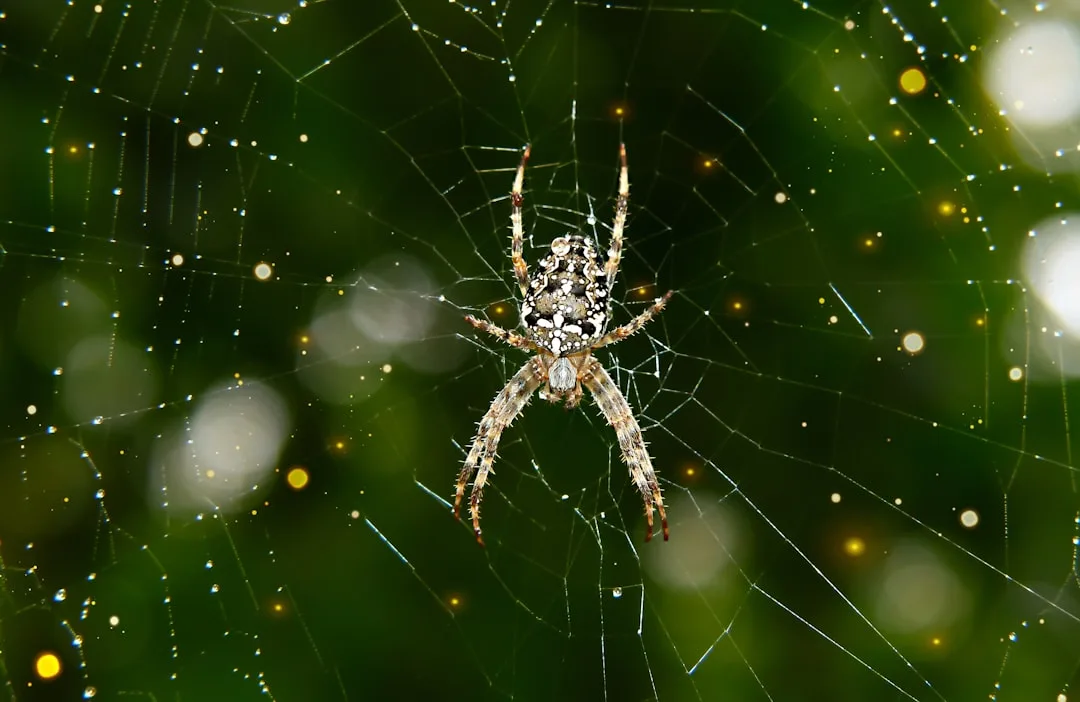
How strong is spider silk compared to steel?
Spider silk is approximately five times stronger than steel of the same diameter by weight. Dragline silk, the structural thread used for web frames and lifelines, has a tensile strength of roughly 1. 3 gigapascals - comparable to high-grade steel alloy - while being far lighter and more elastic.
Spiders are among the most successful predators on Earth. They inhabit every continent except Antarctica, thrive in deserts and rainforests and caves and suburban gardens, and have been refining their craft for over 380 million years - predating the dinosaurs by more than 150 million years. They are architects, chemists, and assassins rolled into eight-legged packages that most people would rather not think about.
That aversion is their misfortune. Spiders are, by almost any objective measure, among the most extraordinary animals alive.
Their silk is stronger than steel by weight. Their venom is being studied as a source of next-generation pharmaceuticals. Their hunting strategies range from brute ambush to cognitive problem-solving that rivals some vertebrates. And their diversity - more than 50,000 described species - means that for nearly every ecological niche on land, there is a spider that has figured out how to exploit it.
This is the story of an order of animals that humanity has feared, reviled, and profoundly underestimated.
Spider Diversity: An Order of Staggering Variety
The order Araneae encompasses more than 50,000 formally described species distributed across 132 families, making spiders the seventh-largest order of all living organisms. Taxonomists describe between 400 and 500 new species every year, and conservative estimates suggest the true total may exceed 100,000 species when undiscovered tropical and subterranean fauna are accounted for [1].
Spiders range in size from the Goliath birdeater (Theraphosa blondi), whose leg span reaches 30 centimeters (nearly a foot across), to the diminutive Patu digua of Colombia, which measures less than 0.4 millimeters in body length - small enough to fit comfortably on the head of a pin. Between these extremes lies a staggering range of body plans, hunting strategies, habitat preferences, and ecological roles.
"There are few groups of animals that have diversified so thoroughly into so many ecological roles while remaining so fundamentally misunderstood by the general public." - Jonathan Coddington, Curator of Arachnids, Smithsonian National Museum of Natural History
All spiders share several defining characteristics:
- Eight legs (distinguishing them from insects, which have six)
- Two main body segments - the cephalothorax (prosoma) and the abdomen (opisthosoma)
- Chelicerae - fang-like mouthparts used to inject venom
- Spinnerets - specialized silk-producing organs at the posterior of the abdomen
- External digestion - spiders liquefy their prey's internal tissues with digestive enzymes before consuming the resulting fluid
Virtually all spiders are predatory, and virtually all possess venom glands. Of the 50,000-plus known species, only two families - Uloboridae (cribellate orb weavers) and Holarchaeidae - lack venom glands entirely. Every other spider on Earth is, technically, venomous.
Spider Silk: The Miracle Fiber
No discussion of spiders can proceed far without confronting the material that defines them. Spider silk is, gram for gram, one of the most remarkable substances in the natural world. It is approximately five times stronger than steel of the same diameter by weight, with a tensile strength of roughly 1.3 gigapascals - comparable to high-grade steel alloy wire. But silk's true superiority lies not in raw strength but in toughness: the total energy a material can absorb before breaking.
Steel is strong but brittle. Kevlar is strong but stiff. Spider silk is both strong and elastic, capable of stretching up to 40 percent beyond its original length before failure. This combination of strength and extensibility gives dragline silk a toughness that exceeds both Kevlar and high-tensile steel wire, making it, pound for pound, one of the toughest materials known to science [2].
Seven Types of Silk
What makes spider silk even more remarkable is that most orb-weaving spiders do not produce one type of silk. They produce up to seven distinct types, each manufactured by different specialized glands and extruded through different spinnerets:
| Silk Type | Gland | Function |
|---|---|---|
| Dragline silk | Major ampullate | Structural frame lines, lifeline (rappelling thread) |
| Minor ampullate silk | Minor ampullate | Temporary scaffolding during web construction |
| Flagelliform silk | Flagelliform | Stretchy capture spiral of orb webs |
| Aggregate silk | Aggregate | Sticky glue droplets coating capture threads |
| Tubuliform silk | Tubuliform | Egg sac construction |
| Aciniform silk | Aciniform | Prey wrapping, sperm webs |
| Piriform silk | Piriform | Attachment discs anchoring threads to surfaces |
Each type has distinct mechanical properties tuned to its function. Dragline silk prioritizes tensile strength. Flagelliform silk prioritizes elasticity (it can stretch to more than twice its resting length). Aggregate silk is not a fiber at all but a viscous glycoprotein adhesive.
The spider controls silk properties not only through gland selection but through the speed at which it draws the fiber. Faster drawing produces stiffer, stronger silk. Slower drawing produces more elastic threads. A single spider can, in effect, manufacture a range of custom materials in real time.
Darwin's Bark Spider: The Greatest Web on Earth
The most spectacular demonstration of silk engineering belongs to Darwin's bark spider (Caerostris darwini), discovered in Madagascar in 2010. This small, unassuming orb weaver produces dragline silk that is more than twice as tough as any other known spider silk and roughly ten times tougher than Kevlar.
Darwin's bark spider uses this extraordinary material to construct webs that span rivers and lakes. Individual bridge lines have been measured at 25 meters (over 80 feet) - the longest web spans ever recorded for any spider.
The spider achieves this by releasing silk threads into the wind from a riverbank, allowing air currents to carry the thread across open water until it catches on vegetation on the opposite shore. The spider then walks across this single bridge line, reinforcing it and building a full orb web suspended above the water surface, perfectly positioned to intercept insects flying over the river [3].
Biomimicry: Engineering Inspired by Silk
The properties of spider silk have attracted intense interest from materials scientists, military researchers, and biomedical engineers. Applications under active development include:
- Bulletproof textiles - silk-based composite fabrics that could be lighter and more flexible than Kevlar
- Biodegradable sutures and surgical meshes - silk is biocompatible and naturally absorbed by the body
- Artificial tendons and ligaments - silk's combination of strength and elasticity closely mimics human connective tissue
- Ultra-thin optical fibers - for next-generation sensor technology
The challenge has always been production. Spiders cannot be farmed like silkworms because they are territorial cannibals. Recent breakthroughs in synthetic biology have enabled researchers to produce recombinant spider silk proteins in genetically modified bacteria, yeast, and even goats (whose milk contains silk proteins that can be spun into fibers). Commercial spider silk products - including jackets and shoes - have already reached the market, though mass production remains expensive.
Web Architecture: Design Masterclasses in Thread
Not all spiders build webs, but those that do have evolved an astonishing variety of architectural strategies, each optimized for a different prey type, habitat, and energy budget.
Orb Webs
The classic orb web - a radial frame with a sticky spiral - is the most recognizable spider web and one of the most studied structures in biology. Orb webs are constructed by families including Araneidae (garden orb weavers) and Tetragnathidae (long-jawed orb weavers). A typical garden spider builds a new web every day, consuming the old silk to recycle the protein.
The entire construction process takes 30 to 60 minutes and follows a stereotyped sequence: frame construction, radial placement, auxiliary spiral (non-sticky scaffolding), capture spiral (sticky), and finally removal of the auxiliary spiral.
Orb webs are engineering marvels. The radial threads bear tensile loads, while the spiral threads capture prey through adhesion. The geometry distributes impact forces efficiently, preventing localized rupture when a flying insect strikes the web at speed. Some orb weavers add stabilimenta - conspicuous zigzag patterns of dense silk - to their webs.
The function of stabilimenta remains debated: hypotheses include prey attraction (by reflecting ultraviolet light), predator deterrence (by making the web visible to birds), and structural reinforcement.
Funnel Webs
Funnel-web spiders (family Agelenidae, not to be confused with the Australian funnel-web spiders of Atracidae) construct flat sheet webs with a tubular retreat at one end. The spider lurks inside the funnel, detects vibrations from prey walking across the sheet, and rushes out to seize the victim. These webs are common in grass, leaf litter, and building corners throughout the temperate world.
Cobwebs
The tangled, three-dimensional webs built by theridiid spiders (family Theridiidae, including black widows) are often dismissed as messy or disorganized. In fact, cobwebs are sophisticated trapping systems. Many feature gumfoot threads - vertical lines anchored to the ground with sticky droplets at their base. When a crawling insect contacts a gumfoot thread, the tension snaps the thread free, catapulting the prey upward into the main tangle where it becomes hopelessly ensnared.
Net-Casting Spiders
Among the most remarkable web strategies belongs to the net-casting spiders (family Deinopidae), particularly the genus Deinopis. These spiders do not wait passively for prey to blunder into a stationary web. Instead, they construct a small, rectangular web of extremely elastic cribellate silk, hold it stretched between their front legs, and actively throw it over passing prey like a gladiator casting a net.
They hunt at night, using enormous posterior median eyes that are among the most light-sensitive in the arthropod world. Laboratory experiments have demonstrated that net-casting spiders can accurately strike both ground-walking and airborne prey in near-total darkness [4].
Venomous Spiders: Separating Danger from Myth
While nearly all spiders possess venom, only a tiny fraction pose any medical risk to humans. Of 50,000-plus species, perhaps 30 to 40 are considered medically significant. The following four genera account for the vast majority of serious envenomations worldwide.
Black Widow (Latrodectus)
Black widows are found on every continent except Antarctica. The venom of Latrodectus species contains alpha-latrotoxin, a potent neurotoxin that triggers massive release of neurotransmitters at nerve-muscle junctions, causing painful muscle spasms, abdominal cramping, elevated blood pressure, and in rare cases, respiratory failure.
Black widow venom is approximately 15 times more potent than rattlesnake venom by volume, but the tiny quantity injected per bite (typically 0.02 to 0.03 milligrams) means fatalities are exceedingly rare - fewer than 1 percent of documented bites result in death, and virtually all fatalities involve very young children, elderly patients, or individuals with pre-existing conditions.
Brown Recluse (Loxosceles reclusa)
The brown recluse is native to the south-central United States and is responsible for more misdiagnosed spider bites than any other species. Its venom contains sphingomyelinase D, an enzyme that destroys cell membranes and can cause dermonecrosis - a slowly expanding lesion of tissue death around the bite site. Severe cases (loxoscelism) may involve systemic symptoms including hemolytic anemia and kidney failure.
However, studies have consistently shown that the brown recluse is far less dangerous than its reputation suggests. The majority of bites heal without medical intervention, and confirmed fatalities are extraordinarily rare.
Sydney Funnel-Web Spider (Atrax robustus)
The Sydney funnel-web is widely regarded as the most dangerous spider on Earth. Found within a 100-kilometer radius of Sydney, Australia, this large, aggressive spider produces venom containing delta-atracotoxin, a compound that disrupts sodium channel function in human nerve cells, causing uncontrolled nerve firing, profuse sweating, muscle fasciculation, and potentially fatal pulmonary edema.
Before the introduction of antivenom in 1981, the Sydney funnel-web was responsible for 13 recorded deaths. Since the antivenom became available, no confirmed fatalities have occurred.
Brazilian Wandering Spider (Phoneutria)
Phoneutria species (from the Greek for "murderess") are large, nocturnal hunting spiders found throughout Central and South America. They are called "wandering" spiders because they do not build webs but roam the forest floor at night. Their venom is a complex cocktail of neurotoxins, and the PhTx3 toxin fraction has been the subject of extensive pharmacological research.
Bites cause intense local pain, inflammation, and in severe cases, respiratory paralysis. One unusual side effect of Phoneutria envenomation in males is prolonged, painful priapism (erection), a property that has attracted interest from researchers studying erectile dysfunction treatments.
Tarantulas: Gentle Giants of the Spider World
Tarantulas (family Theraphosidae) comprise roughly 1,000 described species and include the largest spiders alive. The Goliath birdeater of South America holds the record for body mass (up to 175 grams) and leg span (up to 30 centimeters), while the giant huntsman spider (Heteropoda maxima) of Laos holds the record for absolute leg span at 30 centimeters, though it is not a tarantula.
Despite their fearsome appearance, tarantulas are, by spider standards, remarkably docile. Most species are reluctant to bite, and when they do, the venom of most New World tarantulas is comparable in effect to a bee sting. Their primary defense mechanism is not venom but urticating hairs - specialized barbed bristles on the abdomen that tarantulas kick off with their hind legs when threatened.
These hairs embed in the skin, eyes, and mucous membranes of attackers, causing intense irritation and inflammation. Different tarantula species produce different types of urticating hairs (classified as Types I through VII), with varying degrees of severity.
Tarantulas are also among the longest-lived spiders. Female tarantulas of some species can live 25 to 30 years in captivity, and wild females may approach similar ages. Males, by contrast, typically die within a year or two of reaching sexual maturity - often consumed by the female after mating. This dramatic lifespan asymmetry is one of the starkest in the animal kingdom.
The "gentle giant" characterization, while broadly accurate for most pet-trade species, deserves qualification. Old World tarantulas (those from Africa, Asia, and Australia) tend to be significantly more defensive and possess medically significant venom. The ornamental tarantulas of the genus Poecilotheria, native to India and Sri Lanka, are fast, defensive, and deliver bites that cause severe pain, muscle cramping, and in some documented cases, hospitalization lasting several days.
Jumping Spiders: Eight-Eyed Geniuses
The family Salticidae - jumping spiders - is the largest spider family, with over 6,000 described species. They are also, by a wide margin, the most visually acute spiders on Earth and arguably possess the most sophisticated sensory and cognitive abilities of any arachnid.
Jumping spiders have eight eyes arranged in three rows. The two large, forward-facing anterior median eyes provide extraordinarily sharp central vision with full color perception, including sensitivity to ultraviolet wavelengths invisible to humans.
These principal eyes have a unique tubular retina that can be physically moved within the eye capsule to scan the visual field - functionally similar to the way humans move their eyes within their sockets. The remaining six eyes provide wide-angle peripheral vision, creating a near-360-degree awareness of the spider's surroundings.
This visual system enables hunting strategies that are cognitively remarkable. Jumping spiders are active, diurnal hunters that stalk their prey, assess distance and trajectory, and execute precision leaps of up to 50 times their own body length to land directly on their target.
The Portia Spider: A Mind in Miniature
The most intellectually remarkable spider yet studied is Portia (genus Portia), a jumping spider found in tropical Africa, Asia, and Australia. Portia is an araneophagic specialist - it primarily hunts other spiders, including web-building species much larger than itself.
What makes Portia extraordinary is its capacity for planned, multi-step problem-solving. In laboratory experiments conducted by Robert Jackson and Fiona Cross at the University of Canterbury, Portia spiders were placed on elevated platforms overlooking a target prey spider on a separate platform.
The only route to the prey involved a circuitous detour that required the Portia to first walk away from the prey, navigate a complex maze of walkways, and approach from a direction that temporarily took the target out of visual contact.
Portia consistently solved these detour problems, choosing the correct path on the first attempt at rates far above chance. Crucially, the spiders appeared to plan their route visually before beginning the detour - scanning the available paths from the starting platform before committing to one. When the maze was altered mid-trial to block the chosen route, Portia would return to the starting point and re-evaluate the options rather than persisting with the failed route [5].
"Portia's behavior challenges the assumption that complex cognition requires a large brain. With fewer than 600,000 neurons, this spider performs feats of planning and flexible problem-solving that would be impressive in a mammal." - Robert Jackson, University of Canterbury
Portia also employs aggressive mimicry when invading other spiders' webs. It plucks the web threads in patterns that mimic the vibrations of trapped prey or courting males, luring the resident spider within striking distance. Different Portia species use different vibratory signals tailored to the specific web-building species they are targeting - a behavior that implies a capacity to assess and adapt to novel situations.
Trapdoor Spiders: Patience as a Hunting Strategy
Trapdoor spiders (several families, including Ctenizidae and Idiopidae) represent the opposite end of the hunting spectrum from jumping spiders. These spiders construct silk-lined burrows sealed with a hinged door made of soil, vegetation, and silk. The spider waits motionless inside the burrow, often for hours or days, with its front legs touching silk trip lines radiating outward from the entrance.
When an insect walks across a trip line, the spider detects the vibration, flings open the trapdoor with explosive speed, seizes the prey, and drags it underground - all within a fraction of a second. The entire attack is typically completed in under 100 milliseconds, making it one of the fastest predatory strikes in the animal kingdom.
Some trapdoor spider burrows are engineering feats in their own right. Species of Moggridgea construct burrows up to 30 centimeters deep with multiple chambers and emergency escape tunnels. The trapdoor itself fits so precisely that it is virtually invisible when closed, forming a near-perfect seal against predators and desiccation.
Social Spiders: When Cannibals Cooperate
Spiders are, as a rule, profoundly solitary and cannibalistic. Most species will attack and consume any conspecific they encounter, with the exception of potential mates (and even that exception is frequently revoked after copulation). This makes the existence of social spiders - species that live cooperatively in shared webs - all the more remarkable.
The best-studied social spiders belong to the genus Anelosimus (family Theridiidae). Anelosimus eximius, found in South American rainforests, constructs colonial webs that can span several meters and house hundreds or even thousands of individuals. Colony members cooperate in prey capture (subduing insects far larger than any individual could handle alone), web maintenance, brood care, and defense.
Social spider colonies exhibit a rudimentary division of labor. Some individuals are bolder and more aggressive, serving as the primary attackers when large prey becomes entangled. Others are shyer and tend to focus on web repair and egg-sac tending. Research published in Nature has demonstrated that colonies with a balanced mix of personality types - bold and shy - outperform colonies dominated by either type alone [6].
However, sociality in spiders comes at a steep cost. Social spider colonies are highly inbred, with effective population sizes far smaller than the actual number of individuals. This genetic bottleneck makes colonies vulnerable to disease and environmental change, and most social spider species have restricted geographic ranges compared to their solitary relatives.
Spider Courtship: Dance, Gifts, and Death
Spider mating is a high-stakes affair, particularly for males. In many species, the female is substantially larger than the male and perfectly capable of killing him before, during, or after copulation. Males have evolved an extraordinary range of strategies to survive the encounter long enough to pass on their genes.
Vibration Dancing
Male spiders in many families perform elaborate vibratory courtship displays, drumming their legs and palps on the ground or on the female's web in species-specific rhythmic patterns. In web-building species, the male plucks the web threads in a distinctive pattern that identifies him as a potential mate rather than prey.
Peacock spiders (genus Maratus), a group of Australian jumping spiders, combine vibratory leg-drumming with spectacular visual displays, raising brightly colored abdominal flaps and performing choreographed dances that are among the most complex courtship rituals in the invertebrate world.
Nuptial Gift-Giving
Males of some species offer nuptial gifts to females - typically a freshly caught insect wrapped in silk. In the nursery web spider (Pisaura mirabilis), males that present gifts enjoy significantly longer copulation times (and therefore transfer more sperm) than males that arrive empty-handed.
Some males cheat by wrapping inedible items - empty insect husks, plant debris, or even small stones - in opaque silk. Females that discover the deception terminate copulation early and occasionally attack the male.
Sexual Cannibalism
Sexual cannibalism - the killing and consumption of the male by the female during or after mating - occurs in numerous spider species, though it is less universal than popular culture suggests. In some species, such as the Australian redback spider (Latrodectus hasselti), males actively facilitate their own consumption by somersaulting their bodies into the female's fangs during copulation.
This apparent suicide is an adaptive strategy: males that are consumed copulate for longer, transfer more sperm, and sire a greater proportion of the female's offspring than males that escape.
In other species, cannibalism is simply a consequence of the female's predatory response being insufficiently suppressed by the male's courtship signals. Males of the orb weaver Argiope bruennichi have evolved a dramatic countermeasure: they break off their pedipalps (sperm-transfer organs) inside the female's reproductive tract after a single insertion, plugging the opening to prevent rival males from mating.
The male typically dies from the self-amputation, but even if he survives, he is effectively castrated and has no reproductive future.
Spiders in Medicine: Venom as Pharmacy
Spider venom is a complex cocktail of hundreds of bioactive compounds, including neurotoxins, cytotoxins, and antimicrobial peptides. Historically dismissed as merely dangerous, spider venom is now the focus of intensive pharmaceutical research.
Key areas of medical application include:
Pain management. Spider venom peptides that target specific ion channels (particularly voltage-gated sodium and calcium channels) are being developed as novel analgesics. The venom of the Chinese bird spider (Haplopelma schmidti) contains huwentoxin-IV, a peptide that selectively blocks the Nav1.7 sodium channel - a channel strongly implicated in human pain perception.
Early-stage clinical research suggests that compounds derived from this peptide may provide pain relief without the addiction risk associated with opioids.
Stroke treatment. A peptide called Hi1a, isolated from the venom of the Australian funnel-web spider Hadronyche infensa, has shown remarkable neuroprotective properties in rodent models of stroke. Administered up to eight hours after a stroke event, Hi1a reduced brain damage by approximately 80 percent by blocking acid-sensing ion channels that mediate neuronal death in oxygen-deprived tissue [7].
Cardiac arrhythmia. Peptides from the venom of the Chilean rose tarantula (Grammostola rosea) have been found to modulate mechanosensitive ion channels involved in cardiac rhythm. These compounds are being investigated as potential treatments for atrial fibrillation.
Antimicrobial applications. Spider venom contains numerous antimicrobial peptides that show activity against drug-resistant bacteria, including MRSA. As antibiotic resistance becomes an increasingly critical global health threat, spider venom peptides represent a promising new avenue for antimicrobial drug development.
Erectile dysfunction. The venom of the Brazilian wandering spider contains the peptide PnTx2-6, which causes prolonged erection as a side effect of envenomation. Synthetic derivatives of this peptide are being explored as alternatives to phosphodiesterase inhibitors (such as sildenafil) for treating erectile dysfunction.
Conservation and the Future
Spiders face the same broad threats as most terrestrial invertebrates: habitat destruction, pesticide exposure, climate change, and the cascading effects of declining insect populations (which constitute their primary food source). Because spiders are so numerous and so poorly studied at the species level, it is difficult to assess the conservation status of most species.
Relatively few spiders appear on IUCN Red Lists, not because they are secure but because data is insufficient to evaluate them.
What is clear is that spiders play an indispensable ecological role. Global spider populations consume an estimated 400 to 800 million metric tons of prey annually - more than the total mass of meat consumed by all humans on Earth in a year. Without spiders, insect populations would explode, with cascading effects on agriculture, disease transmission, and ecosystem stability.
The 50,000 species we have named are almost certainly a fraction of the total. Every tropical forest survey, every cave expedition, every deep-leaf-litter sampling effort yields new species. Spiders have been here for 380 million years, and we are still only beginning to catalog what they have become.
What Are the Five Fastest Animals on Earth?
Spiders themselves are not among the fastest animals, but the ranking depends on category. In absolute speed the top five are: peregrine falcon at 389 km/h (verified 2005 stoop), golden eagle at 322 km/h, gyrfalcon at 209 km/h, saker falcon at 200 km/h, and the white-tailed eagle or red-tailed hawk at 193 km/h.
On land: cheetah at 113 km/h, pronghorn at 90 km/h, springbok at 88 km/h, ostrich at 70 km/h, and lion at 80 km/h. The fastest spider attack is the trap-jaw spider's strike, completed in under 1 millisecond - not translational speed, but among the fastest biological movements known.
Spiders belong to the order Araneae with over 50,000 described species across 132 families, and collectively consume 400-800 million metric tons of prey annually.
References
[1] World Spider Catalog. (2024). World Spider Catalog, Version 25.0. Natural History Museum Bern. Available at: https://wsc.nmbe.ch/
[2] Agnarsson, I., Kuntner, M., & Blackledge, T. A. (2010). Bioprospecting finds the toughest biological material: extraordinary silk from a giant riverine orb spider. PLoS ONE, 5(9), e11234.
[3] Agnarsson, I., Kuntner, M., & Blackledge, T. A. (2010). Darwin's bark spider: the largest orb web and its silk. Journal of Arachnology, 38(2), 325-328.
[4] Stafstrom, J. A., & Hebets, E. A. (2016). Nocturnal foraging enhanced with increased eye size in net-casting spiders. Biology Letters, 12(5), 20160152.
[5] Cross, F. R., & Jackson, R. R. (2016). The execution of planned detours by spider-eating predators. Journal of the Experimental Analysis of Behavior, 105(1), 194-210.
[6] Pruitt, J. N., & Riechert, S. E. (2011). How within-group behavioural variation and task efficiency enhance fitness in a social group. Proceedings of the Royal Society B, 278(1709), 1209-1215.
[7] Chassagnon, I. R., et al. (2017). Potent neuroprotection after stroke afforded by a double-knot spider-venom peptide that inhibits acid-sensing ion channel 1a. Proceedings of the National Academy of Sciences, 114(14), 3750-3755.
Frequently Asked Questions
How strong is spider silk compared to steel?
Spider silk is approximately five times stronger than steel of the same diameter by weight. Dragline silk, the structural thread used for web frames and lifelines, has a tensile strength of roughly 1.3 gigapascals - comparable to high-grade steel alloy - while being far lighter and more elastic.
Some species produce silk that can stretch up to 40 percent beyond its original length before breaking, giving it a toughness (energy absorbed before failure) that exceeds Kevlar.
How dangerous is a black widow spider bite to humans?
Black widow venom is roughly 15 times more potent than rattlesnake venom by volume, but the tiny amount injected per bite means fatalities are extremely rare. Fewer than 1 percent of documented black widow bites result in death, and most of those involve very young children, elderly individuals, or people with compromised immune systems. Symptoms typically include intense muscle pain, cramping, nausea, and elevated blood pressure.
Effective antivenoms exist, and most healthy adults recover fully within a few days with proper medical treatment.
How many species of spiders exist in the world?
Scientists have formally described more than 50,000 spider species across 132 families, making spiders one of the most species-rich orders of arachnids. However, arachnologists estimate the true number may exceed 100,000 species, with thousands still awaiting discovery in tropical rainforests, cave systems, and other underexplored habitats. New species are described at a rate of approximately 400 to 500 per year.