
How do termite mounds maintain constant temperature and humidity through their ventilation systems?
Termite mounds function as sophisticated climate-control structures through a network of internal chimneys, air channels, and porous walls that regulate airflow passively. In cathedral mounds built by species such as Macrotermes bellicosus, metabolic heat generated by the colony and its fungus gardens warms air in the central nest chamber, causing it to rise through a system of vertical channels toward.
Termites are among the most misunderstood organisms on Earth. Commonly dismissed as mere household pests, they are in fact sophisticated social insects whose engineering feats, agricultural practices, and ecological contributions rival or surpass those of any other invertebrate.
With more than 3,100 described species distributed across every continent except Antarctica, termites have shaped terrestrial ecosystems for over 150 million years, predating the rise of flowering plants and outlasting the dinosaurs.
Their mound structures represent some of the most complex architecture in the animal kingdom, their digestive systems harbor microbial communities of extraordinary biochemical capability, and their social organization includes queens that can live for half a century.
This article explores the full scope of termite biology, from the ventilation engineering of cathedral mounds to the symbiotic microbes that make wood digestion possible, from fungus-farming species that independently invented agriculture to the magnetic compass navigation that orients mounds along precise geographic axes.
Termite Diversity: 3,100 Species and Counting
The order Isoptera, now reclassified as the infraorder Isoptera within the order Blattodea (making termites effectively social cockroaches), comprises more than 3,100 described species organized into roughly nine families. This taxonomic reclassification, confirmed through molecular phylogenetic studies in the early 2000s, revealed that termites evolved from within the cockroach lineage approximately 150 million years ago during the Jurassic period.
The greatest termite diversity occurs in tropical and subtropical regions, with Africa hosting the highest species richness. The family Termitidae, known as the higher termites, accounts for approximately 75 percent of all termite species and includes the most ecologically significant lineages: the mound-building Macrotermitinae, the soil-feeding Apicotermitinae, and the wood-feeding Nasutitermitinae.
The remaining families, collectively termed lower termites, retain ancestral characteristics including symbiotic gut protozoa that have been lost in the higher termites.
Termite body size ranges from approximately 4 millimeters in some drywood species to over 22 millimeters in the soldiers of certain Macrotermes species. Despite their superficial resemblance to ants, termites are not closely related to them. Ants belong to the order Hymenoptera alongside bees and wasps, while termites share their cockroach ancestry.
This distinction is significant because it means that the complex social behavior seen in termite colonies evolved entirely independently from that of ants, representing one of the most remarkable cases of convergent evolution in biology.
Mound Architecture: Engineering on a Monumental Scale
Cathedral Mounds and Their Construction
The mounds constructed by certain termite species rank among the most impressive structures built by any non-human animal. Cathedral mounds built by Macrotermes bellicosus in sub-Saharan Africa routinely reach heights of 5 to 6 meters, with exceptional specimens recorded at up to 9 meters tall.
Relative to the body size of their builders, these structures are proportionally far taller than any human skyscraper. If humans built at the same scale, the resulting buildings would exceed 1,600 meters in height.
The construction material is a carefully formulated mixture of soil particles, termite saliva, and excrement that workers transport grain by grain from underground excavations. When dried, this composite material achieves a compressive strength comparable to low-grade concrete, capable of withstanding tropical rainstorms and the weight of large mammals.
A single large Macrotermes mound may contain several tons of soil that has been transported, processed, and precisely placed by millions of workers over decades of continuous construction and maintenance.
The visible mound above ground is only part of the structure. Below the surface, the nest extends several meters downward, with tunnels reaching the water table in arid environments to maintain humidity within the colony. Foraging galleries may radiate outward from the mound for distances of 50 meters or more, creating an underground network that connects the colony to its food sources.
Internal Ventilation Systems
The internal architecture of a Macrotermes mound is an exercise in passive climate engineering. The central nest chamber, typically located at or slightly below ground level, houses the royal cell containing the queen and king, the nursery galleries where eggs and young nymphs develop, and the fungus gardens that serve as the colony's food production system.
This central area must be maintained at approximately 30 degrees Celsius with humidity near 90 percent, regardless of external conditions that may range from near freezing at night to over 40 degrees Celsius during the day.
The ventilation mechanism operates through a thermosiphon effect. Metabolic heat generated by the colony's millions of inhabitants and their fungus gardens warms the air in the central nest chamber. This warm, carbon-dioxide-rich air rises through a network of vertical channels toward the upper regions of the mound.
Upon reaching the thinner, more porous walls near the mound's apex and along its flanks, gas exchange occurs through diffusion: carbon dioxide passes outward through the wall material while oxygen passes inward. The now-cooled, oxygenated air sinks back down through a separate set of channels on the mound's periphery, eventually returning to the nest chamber to complete the convection cycle.
Research published by J. Scott Turner of the State University of New York demonstrated that Macrotermes mounds are not static structures but are continuously remodeled by workers in response to changing environmental conditions. When Turner experimentally sealed portions of the mound surface, workers opened new ventilation channels within hours. When he drilled additional holes, workers sealed them within days.
The mound functions, in Turner's words, as "an extension of the organism itself, a built physiology that regulates the colony's internal environment."
"The mound is not a house. It is a built extension of the colony's physiology, an organ of gas exchange much like a lung." - J. Scott Turner, The Extended Organism: The Physiology of Animal-Built Structures (2000)
The Eastgate Centre: Biomimicry in Action
The ventilation principles of termite mounds found their most celebrated human application in the Eastgate Centre, a mid-rise office complex and shopping center in Harare, Zimbabwe. Designed by architect Mick Pearce in collaboration with engineer Arne Hendriks of Arup Associates, the building opened in 1996 and was explicitly modeled on the passive ventilation systems observed in Macrotermes mounds in Zimbabwe.
The Eastgate Centre uses no conventional air conditioning or heating system. Instead, it draws in cool nighttime air through ground-level openings, stores thermal mass in the building's concrete structure, and vents warm daytime air through a series of chimneys and exhaust stacks along the roof. Fans assist the airflow but consume a fraction of the energy that conventional HVAC systems would require.
The building maintains comfortable interior temperatures between 23 and 25 degrees Celsius despite Harare's significant diurnal temperature swings.
The result is a building that uses approximately 10 percent of the energy consumed by comparable conventionally cooled buildings in Harare. Tenants save an estimated 3.5 million dollars annually in energy costs compared to what they would pay in a conventionally air-conditioned building of similar size.
The Eastgate Centre has become one of the most widely cited examples of biomimicry in architecture and has inspired a generation of architects and engineers to look to biological systems for sustainable design solutions.
"I studied termite mounds in Zimbabwe, how they ventilated themselves, how they maintained constant temperature and humidity. I then tried to integrate those principles into a building." - Mick Pearce, architect of the Eastgate Centre
Wood Digestion: A Symbiotic Masterpiece
The Cellulose Challenge
Wood is composed primarily of cellulose, a polymer of glucose molecules linked by beta-1,4-glycosidic bonds. Despite being the most abundant organic compound on Earth, cellulose is extraordinarily difficult to digest because these bonds resist the enzymatic machinery found in most animal digestive systems.
No animal produces all the enzymes necessary to fully degrade cellulose on its own. Termites solve this problem through one of the most sophisticated symbiotic digestive systems known to science.
Gut Protozoa and Bacteria
In lower termites, including the ecologically important subterranean termites of the family Rhinotermitidae, the primary cellulose digesters are flagellate protozoa belonging to the order Hypermastigida. These single-celled organisms, some of the largest and most structurally complex protists known, inhabit an oxygen-free chamber in the termite's enlarged hindgut.
Each protozoan cell engulfs tiny wood particles and ferments the cellulose through anaerobic pathways, producing acetate, hydrogen gas, and carbon dioxide as metabolic byproducts. The acetate is absorbed through the termite's intestinal wall and serves as its primary energy source, providing up to 70 percent of the termite's caloric needs.
The protozoa themselves harbor endosymbiotic bacteria living inside their cells, creating a nested symbiosis: bacteria inside protozoa inside termites. These internal bacteria contribute additional enzymatic capabilities for cellulose degradation and may assist with other metabolic functions.
In higher termites (family Termitidae), which represent the majority of termite species, the ancestral protozoa have been entirely lost. Their cellulose-digesting function has been taken over by a diverse community of bacteria, including species from the phyla Fibrobacteres, Spirochaetes, and Firmicutes.
Higher termites also produce their own endogenous cellulase enzymes in their salivary glands and midgut, working in concert with their bacterial symbionts to achieve efficient cellulose degradation.
Nitrogen Fixing
Wood presents a second nutritional challenge beyond cellulose: it is extremely poor in nitrogen, containing roughly 0.03 to 0.1 percent nitrogen by weight. Termites require far more nitrogen than this for protein synthesis, growth, and reproduction. The solution lies in nitrogen-fixing bacteria within the termite hindgut, particularly species of Treponema (spirochetes) and other diazotrophic organisms that convert atmospheric nitrogen gas (N2) into biologically available ammonia (NH3).
This nitrogen-fixing capability allows termites to thrive on an almost pure cellulose diet that would be nutritionally inadequate for virtually any other animal. The fixed nitrogen is recycled throughout the colony through trophallaxis (mutual feeding between colony members) and through consumption of nestmate fecal material, ensuring that this precious nutrient is not wasted.
The Termite Queen: Record-Breaking Reproduction
Physogastric Transformation
The queen of a mature termite colony undergoes one of the most dramatic physical transformations in the insect world. After her nuptial flight and colony founding, the queen's abdomen begins to expand as her ovaries enlarge to accommodate ever-increasing egg production. In Macrotermes species, this process of physogastry continues throughout the queen's life until her abdomen reaches approximately 100 times the volume of a worker termite's entire body.
A fully physogastric Macrotermes bellicosus queen measures over 10 centimeters in length, with her distended, pale abdomen resembling a pulsating sausage marked by the dark intersegmental membranes stretched between the original abdominal plates. Her head, thorax, and legs remain at their original size, rendering her completely immobile.
She is housed in a specially constructed royal cell with walls too thick for her to pass through, attended constantly by hundreds of workers who feed her, groom her, remove her eggs, and carry away her waste.
Egg Production and Lifespan
At peak production, a Macrotermes queen lays approximately 30,000 eggs per day, or roughly one egg every three seconds, continuously, around the clock. Over her lifetime, a single queen may produce in excess of 200 million offspring. This reproductive output is unmatched by any other insect and is among the highest of any animal on Earth.
Termite queens also hold the record for insect longevity, with documented lifespans of up to 50 years in some Macrotermes species. Even more typical lifespans of 20 to 30 years far exceed those of ant queens (which may live 15 to 20 years) and dramatically exceed the weeks-long lifespans of most individual insects.
The mechanisms underlying this extraordinary longevity are not fully understood but appear to involve enhanced expression of genes related to antioxidant defense, DNA repair, and immune function.
Unlike ant colonies, where the queen mates once during her nuptial flight and stores sperm for life, termite queens are accompanied by a king who remains in the royal cell with her permanently. The king periodically mates with the queen throughout their decades-long partnership, making the termite royal pair one of the longest-lasting monogamous relationships in the animal kingdom.
The Caste System: Division of Labor
Workers
Workers constitute the majority of individuals in a termite colony, typically comprising 80 to 90 percent of the population. They are responsible for all the colony's labor: constructing and maintaining the nest, foraging for food, feeding other castes (including the queen, king, soldiers, and young nymphs), tending the fungus gardens in Macrotermitinae species, and grooming nestmates. Unlike ant workers, which are always female, termite workers include both males and females in most species.
Workers are soft-bodied, pale, and blind, spending their entire lives within the dark confines of the nest and its tunnel systems. Their mouthparts are adapted for chewing wood and soil, and their enlarged hindgut houses the microbial communities necessary for cellulose digestion. Worker termites typically live for one to two years.
Soldiers
Soldiers are specialized defenders that have evolved a remarkable array of weapons. In the most familiar form, soldiers possess enormously enlarged, heavily sclerotized heads with powerful mandibles capable of crushing attackers or blocking tunnel entrances with their armored heads in a behavior called phragmosis.
Among the most remarkable soldier morphologies are the nasute soldiers found in the subfamily Nasutitermitinae. These soldiers have evolved a completely different defensive strategy: their heads have been modified into a pointed, nozzle-like projection called a nasus, through which they spray a sticky, toxic chemical secretion at attackers.
This terpene-based chemical blend can entangle and immobilize ant raiders, effectively gluing them in place while simultaneously irritating their sensory organs. Nasute soldiers have largely lost their mandibles, having fully committed to chemical warfare as their defensive strategy.
Reproductives
The reproductive caste includes the primary queen and king as well as winged alates, the future queens and kings that leave the colony during nuptial flights to establish new colonies. In some species, secondary and tertiary reproductives (neotenics) can develop within the colony to supplement or replace the primary queen's egg production.
Fungus-Farming Termites: Agriculture Before Humans
The Macrotermitinae and Termitomyces
The subfamily Macrotermitinae, comprising approximately 330 species across 11 genera found exclusively in Africa and Asia, has achieved something extraordinary: obligate fungiculture. These termites cultivate gardens of the basidiomycete fungus Termitomyces within their nests, creating a mutualistic relationship that originated approximately 30 million years ago in African rainforests.
The process works as follows: workers forage for dead plant material, which they consume and pass through their gut in a preliminary digestion step. The resulting fecal pellets, still rich in partially degraded cellulose and lignin, are arranged into sponge-like structures called fungus combs within dedicated chambers in the nest.
Termitomyces mycelium colonizes these combs, breaking down the remaining recalcitrant plant polymers that the termites' own gut microbes cannot fully process. The termites then consume the mature portions of the fungus comb, including the fungal mycelium and the now-fully-degraded plant material, obtaining nutrients that would otherwise be inaccessible.
Parallel Evolution with Leafcutter Ants
The fungus-farming behavior of Macrotermitinae represents a striking case of convergent evolution with the leafcutter ants (tribe Attini) of the Americas. Both groups independently evolved obligate fungiculture, both cultivate a single fungal lineage in monoculture gardens, both provision their gardens with harvested plant material, and both have evolved sophisticated mechanisms to control garden pathogens.
However, these two agricultural systems evolved entirely independently on different continents from unrelated insect lineages, with the attine ant system originating approximately 60 million years ago in South America and the Macrotermitinae system originating approximately 30 million years ago in Africa.
The parallels extend to remarkable detail: both systems involve worker castes of different sizes performing specialized agricultural tasks, both include sanitation behaviors to remove contaminated garden material, and both lineages have become so dependent on their fungal partners that neither the insects nor the fungi can survive independently.
Termite Navigation: The Magnetic Compass
One of the more surprising discoveries about termite biology involves their ability to orient their mound structures along precise geographic axes. In Australia, the compass termite (Amitermes meridionalis) constructs tall, blade-shaped mounds that are consistently aligned along a north-south axis, with the broad flat faces oriented east and west.
This orientation ensures that the broad surfaces receive maximum solar warming during the cool morning and evening hours, while the narrow edge faces the intense midday sun, minimizing heat absorption during the hottest part of the day.
Research has demonstrated that termites possess a magnetic compass sense that allows them to detect the Earth's magnetic field and use it for orientation during construction. Experiments in which artificial magnetic fields were applied to developing mounds caused predictable shifts in mound orientation corresponding to the altered magnetic field direction.
The precise biological mechanism underlying this magnetoreception remains under investigation, but it may involve biogenic magnetite crystals similar to those found in magnetotactic bacteria and migratory birds.
Termites vs. Ants: A Comparison
Despite their superficial similarities as small, social, colony-dwelling insects, termites and ants differ in fundamental ways. The following comparison highlights the key distinctions:
| Feature | Termites | Ants |
|---|---|---|
| Taxonomic order | Blattodea (related to cockroaches) | Hymenoptera (related to bees and wasps) |
| Social evolution | Approximately 150 million years ago | Approximately 130 million years ago |
| Worker sex | Both male and female | Female only |
| Metamorphosis | Incomplete (hemimetabolous) | Complete (holometabolous) |
| Body shape | Broad waist, straight antennae | Narrow waist (petiole), elbowed antennae |
| Wing pairs | Equal-sized front and hind wings | Unequal-sized front and hind wings |
| Royal pair | Queen lives with king permanently | Queen lives alone after mating flight |
| Queen lifespan | Up to 50 years | Up to 20-30 years |
| Diet | Primarily cellulose (wood, plant matter) | Varied (omnivorous, predatory, fungal) |
| Nest material | Soil, saliva, and fecal matter | Excavated soil, woven leaves, carton |
| Gut symbionts | Protozoa and/or bacteria for cellulose digestion | Generally absent |
| Global species count | Approximately 3,100 | Approximately 22,000 |
Economic Impact: $40 Billion in Annual Damage
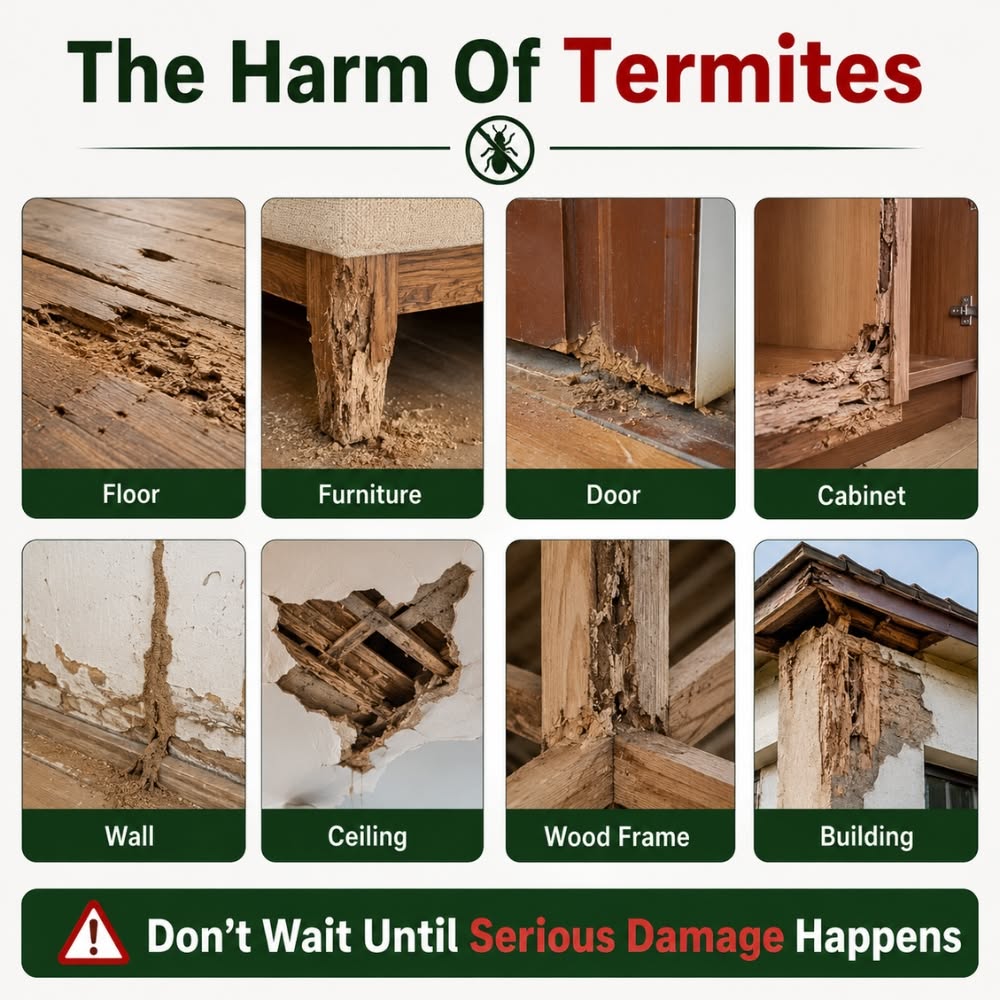
Termites cause an estimated 40 billion dollars in damage to structures and crops worldwide each year, making them the most economically destructive insect order on the planet. In the United States alone, termite damage and control costs exceed 5 billion dollars annually.
The subterranean termite Coptotermes formosanus, originally from southern China but now established across the southern United States, Hawaii, and many tropical regions worldwide, is considered the single most destructive termite species globally.
The economic impact is particularly severe in tropical developing countries where wooden construction is prevalent and access to pest management services is limited. In parts of sub-Saharan Africa and Southeast Asia, termite damage to agricultural crops including maize, sugarcane, and groundnuts can reduce yields by 50 percent or more in affected fields.
Termites also damage infrastructure including wooden utility poles, fence posts, railway sleepers, and even underground telecommunications cables.
Termite Methane Emissions
Termites are significant contributors to global methane emissions, producing an estimated 2 to 3 percent of the total global atmospheric methane through the anaerobic fermentation processes in their hindguts. Methanogenic archaea living within the termite gut (and within the cells of some gut protozoa) generate methane as a byproduct of hydrogen consumption during cellulose fermentation.
Global termite methane emissions are estimated at approximately 20 million tonnes per year. While this is substantially less than emissions from ruminant livestock (approximately 100 million tonnes per year) or wetlands (approximately 150 million tonnes per year), it represents a non-trivial contribution to the global methane budget. Tropical regions with high termite biomass, particularly African and South American savannas, are the primary source areas.
Termites as Food: A Global Tradition
Termites have been consumed by humans for millennia and remain a regular part of the diet in at least 29 countries across Africa, Asia, South America, and Australia. Winged alates, which emerge in massive synchronized swarms during the onset of rainy seasons, are the most commonly harvested form, collected at light traps or directly from emergence holes in mounds.
Nutritionally, termites are an excellent food source. Depending on the species and caste, termites contain 35 to 45 percent protein by dry weight, along with significant quantities of fat (particularly in alates, which may contain 45 percent fat to fuel their nuptial flights), iron, calcium, and essential amino acids. In parts of West Africa, termite alates are collected in such quantities that they constitute a seasonally important protein source comparable to fish or bush meat.
The Macrotermes queen, with her enormous protein-rich abdomen, is considered a particular delicacy in parts of Central Africa, where she is eaten raw or lightly roasted. In northeastern Thailand, termite eggs are harvested from nests and used in a traditional dish called kai mot daeng. Indigenous Australian communities have long consumed termites and used termite mound material for medicinal purposes.
Ecological Importance
Soil Aeration and Structure
Termites are among the most important soil engineers in tropical and subtropical ecosystems. Their tunneling activities aerate compacted soils, increase water infiltration rates, and create macropore networks that improve root penetration for plants. In some African savannas, termite activity increases soil porosity by up to 30 percent and can significantly improve the water-holding capacity of otherwise dry, compacted soils.
Nutrient Cycling
By consuming dead wood and plant litter, termites accelerate the decomposition of organic matter and the recycling of nutrients including carbon, nitrogen, and phosphorus back into the soil. In tropical forests, termites may be responsible for processing up to 20 percent of all dead wood, making them one of the primary drivers of the carbon cycle in these ecosystems.
The nutrient-enriched soil of abandoned termite mounds creates fertile patches that support distinct plant communities and attract grazing animals, creating islands of biological productivity across savanna landscapes.
Dead Wood Decomposition
Without termites and other wood-decomposing organisms, dead trees and fallen branches would accumulate indefinitely in tropical environments, locking up nutrients and creating increasingly impoverished soils. Termites prevent this by efficiently processing dead wood at every stage of decomposition, from freshly fallen timber to heavily decayed material.
Their ability to digest cellulose, enabled by their symbiotic gut microbiota, places them at the center of one of Earth's most important biogeochemical processes.
In many tropical ecosystems, the loss of termite populations would fundamentally alter soil chemistry, water dynamics, plant community composition, and the overall productivity of the landscape. Far from being mere pests, termites are keystone organisms whose ecological contributions underpin the functioning of some of the planet's most biodiverse regions.
References
Turner, J. S. (2000). The Extended Organism: The Physiology of Animal-Built Structures. Harvard University Press.
Pearce, M. (2006). "Eastgate Development, Harare, Zimbabwe." In Biomimicry in Architecture (ed. M. Pawlyn). RIBA Publishing.
Brune, A. (2014). "Symbiotic digestion of lignocellulose in termite guts." Nature Reviews Microbiology, 12(3), 168-180.
Eggleton, P. (2011). "An introduction to termites: biology, taxonomy and functional morphology." In Biology of Termites: A Modern Synthesis (eds. D. E. Bignell, Y. Roisin, and N. Lo), pp. 1-26. Springer.
Bignell, D. E., and Eggleton, P. (2000). "Termites in ecosystems." In Termites: Evolution, Sociality, Symbioses, Ecology (eds. T. Abe, D. E. Bignell, and M. Higashi), pp. 363-387. Kluwer Academic Publishers.
Sanderson, M. G. (1996). "Biomass of termites and their emissions of methane and carbon dioxide: A global database." Global Biogeochemical Cycles, 10(4), 543-557.
Aanen, D. K., Eggleton, P., Rouland-Lefevre, C., Guldberg-Froslev, T., Rosendahl, S., and Boomsma, J. J. (2002). "The evolution of fungus-growing termites and their mutualistic fungal symbionts." Proceedings of the National Academy of Sciences, 99(23), 14887-14892.
Frequently Asked Questions
How do termite mounds maintain constant temperature and humidity through their ventilation systems?
Termite mounds function as sophisticated climate-control structures through a network of internal chimneys, air channels, and porous walls that regulate airflow passively. In cathedral mounds built by species such as Macrotermes bellicosus, metabolic heat generated by the colony and its fungus gardens warms air in the central nest chamber, causing it to rise through a system of vertical channels toward the mound’s upper regions and outer walls.
As this warm, carbon-dioxide-rich air reaches the thinner, more porous walls near the top of the mound, gas exchange occurs: carbon dioxide diffuses outward and fresh oxygen diffuses inward. The cooled, oxygenated air then sinks back down through separate channels to the nest chamber, creating a continuous convection cycle.
This system maintains the internal temperature within approximately 1 degree Celsius of 30 degrees Celsius and humidity near 90 percent, even when external temperatures fluctuate between 2 and 40 degrees Celsius.
The mound walls themselves are constructed from a mixture of soil, saliva, and excrement that hardens into a material with specific thermal and porosity properties, and termites actively remodel the wall thickness and channel geometry in response to changing environmental conditions.
How do termites digest wood if cellulose is so difficult to break down?
Termites cannot digest wood on their own. Instead, they rely on an elaborate symbiotic community of microorganisms housed in their enlarged hindgut. In lower termites (the more ancestral lineages including families such as Rhinotermitidae and Kalotermitidae), the primary digestive symbionts are flagellate protozoa, single-celled organisms that engulf wood particles and ferment cellulose into acetate, hydrogen, and carbon dioxide.
The acetate is then absorbed through the termite’s gut wall and used as its main energy source. In higher termites (family Termitidae, which account for roughly 75 percent of all termite species), the protozoa have been lost entirely and replaced by a diverse community of bacteria that perform the same cellulose-degrading function.
Additionally, nitrogen-fixing bacteria within the termite gut convert atmospheric nitrogen into biologically usable ammonia, solving the critical problem that wood contains extremely little nitrogen relative to the amount needed for protein synthesis.
This entire microbial community is transferred between colony members through a process called proctodeal trophallaxis, in which workers feed hindgut fluids to nestmates, ensuring that every individual maintains the necessary digestive symbionts.
How long can a termite queen live, and how many eggs can she produce?
Termite queens hold the record for the longest-lived insects, with documented lifespans reaching 50 years in some Macrotermes species, though 20 to 30 years is more typical for large mound-building species. During her reproductive peak, a mature queen of Macrotermes bellicosus can lay approximately 30,000 eggs per day, which translates to roughly one egg every three seconds around the clock.
Over a lifetime, a single queen may produce over 200 million offspring. This extraordinary fecundity is made possible by a dramatic physical transformation called physogastry: the queen’s abdomen swells to approximately 100 times the size of a worker termite’s body as her ovaries expand massively while the rest of her body remains relatively unchanged.
A fully physogastric Macrotermes queen can measure over 10 centimeters in length and becomes completely immobile, relying entirely on worker termites to feed, groom, and transport her eggs to nursery chambers. The queen is attended by a king who remains with her for life in the royal chamber, periodically mating to ensure continuous egg fertilization, making termite royal pairs among the longest-lasting monogamous partnerships in the animal kingdom.