
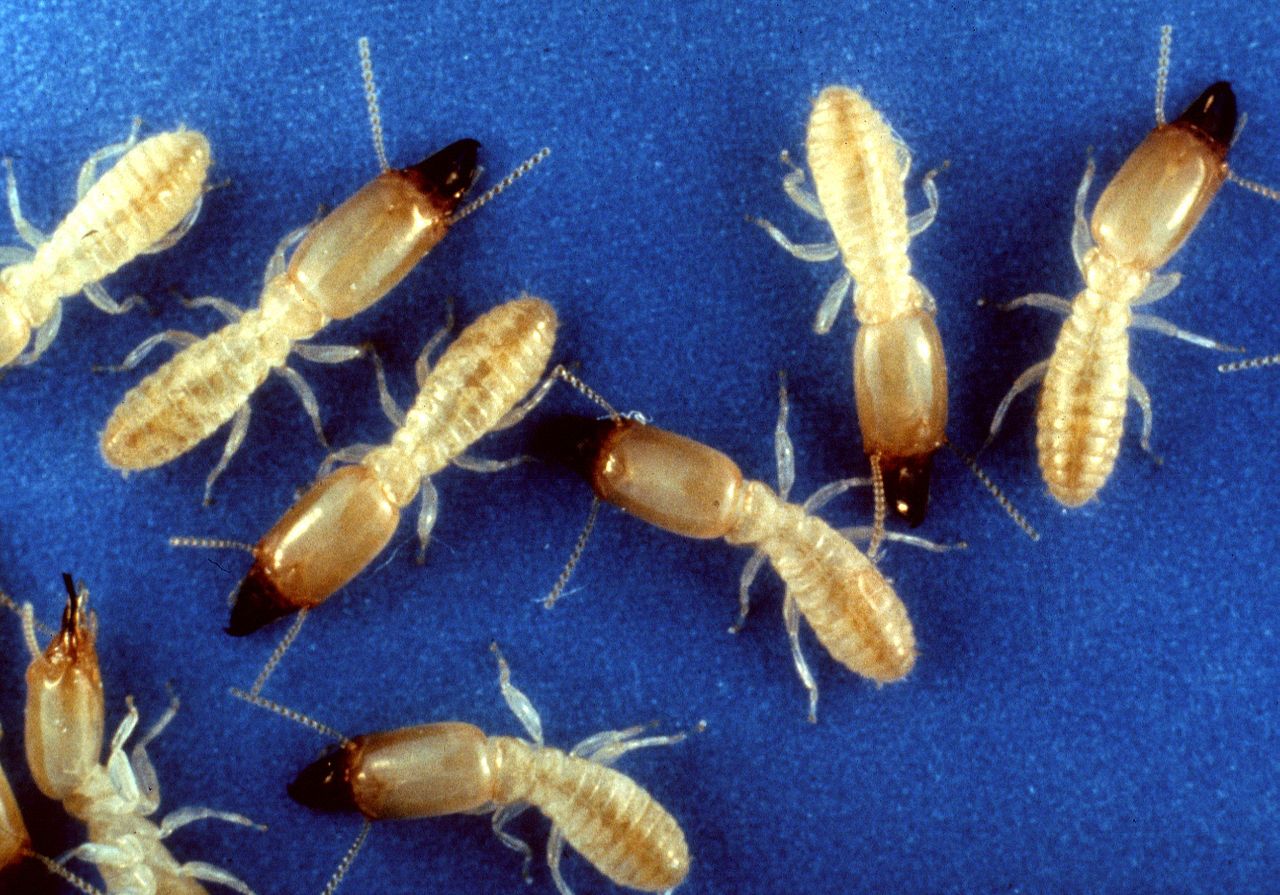
The Eastern subterranean termite is the most widespread termite in North America and the single most economically damaging wood-destroying insect on the continent. Unlike the invasive Formosan termite, Reticulitermes flavipes is a native species whose range across eastern North America has existed for millions of years.
It is responsible for roughly two billion US dollars in structural damage every year in the United States alone, more than hurricanes, fires, and tornadoes combined in many years, and it has shaped an entire industry of inspection, baiting, and pre-construction treatment.
This guide covers every aspect of Eastern subterranean termite biology, ecology, and economic impact: taxonomy, caste structure, colony growth, nest architecture, gut microbiology, swarming, defensive chemistry, invasive history, and the reasons why this species has become the defining pest of the eastern US housing stock. It is a reference entry, not a summary - so expect specifics: millimetres, caste ratios, egg-laying rates, tube geometries, and verified damage figures.
Etymology and Classification
The scientific name Reticulitermes flavipes was coined by Danish entomologist Johan Christian Fabricius in 1793, well before the ecology of subterranean termites was understood. The genus name Reticulitermes comes from the Latin reticulum meaning 'little net', a reference to the reticulate vein pattern of the alate wings, combined with termes, the old Latin name for wood-boring insects.
The species epithet flavipes means 'yellow-footed', describing the pale yellowish legs that stand out against the otherwise uniformly creamy-white body of the worker.
Termites were long classified in their own order (Isoptera) on the assumption that their eusocial biology and soft bodies set them apart from other insects. Modern molecular phylogenetics has settled the question decisively: termites are social cockroaches. They nest inside the order Blattodea as the infraorder Isoptera, sister to the wood-feeding cockroach genus Cryptocercus.
Every termite alive today descends from a cockroach-like ancestor that combined subsocial brood care with an obligate gut microbiome for digesting wood.
Within Rhinotermitidae - the family of subterranean termites - the genus Reticulitermes contains more than a dozen North American species, several of which are difficult to tell apart morphologically and require soldier head measurements or molecular identification. R. flavipes is the most widespread and abundant, but R. virginicus, R. hageni, and R. malletei overlap with it across much of the eastern United States and often co-occur in the same building.
Size and Caste Structure
Termites are eusocial: individuals divide labour into specialised reproductive and non-reproductive castes that cannot survive as solitary insects. A Reticulitermes colony typically contains four castes: workers, soldiers, primary reproductives, and secondary reproductives (neotenics).
Workers:
- Length: 3-4 mm
- Colour: creamy white to pale yellow, soft-bodied, blind
- Role: foraging, tunnelling, brood care, nest construction, feeding all other castes
- Share of colony: roughly 95-97%
Soldiers:
- Length: 4-5 mm
- Colour: pale body with a distinctly darker yellowish-brown elongated rectangular head and curved dark mandibles
- Role: colony defence, especially against ant raids
- Share of colony: 1-3% - strikingly small compared to the 10-15% found in invasive Formosan colonies
Alates (winged reproductives):
- Length: 10-12 mm including wings
- Colour: dark brown to black body, pale translucent grey wings with visible reticulate venation
- Role: dispersal flight, founding of new colonies
Primary queen and king:
- The original pair of alates that founded the colony
- Queen swells (physogastric) with egg-laying capacity, eventually laying up to 10,000 eggs per year
- Queen lifespan 10-20 years; king lives comparably long
Secondary reproductives (neotenics):
- Develop from workers or nymphs within the colony
- Supplement or replace the primary queen and king
- Allow colonies to expand rapidly and to persist even if the founding pair dies
Castes are determined by a combination of genetics, pheromonal signals from existing reproductives, and developmental diet. The queen produces inhibitory pheromones that prevent workers from becoming reproductives as long as she is active and well-fed. When those pheromones fade - usually because the queen has died or the colony has grown so large that the signal is diluted - some workers develop into neotenics within weeks.
Colony Size and Growth
A newly founded Reticulitermes colony grows slowly for the first three to five years as the royal pair produces the first cohorts of workers. Growth then accelerates as workers begin foraging and feeding the reproductives.
Colony size over time (typical estimates):
| Colony age | Approximate worker population |
|---|---|
| 1 year | 50-100 |
| 3 years | 1,000-5,000 |
| 5 years | 20,000-60,000 |
| 8 years | 100,000-500,000 |
| 10+ years | 500,000-2,000,000 |
A mature Eastern subterranean termite colony contains 60,000 to two million individuals and forages across roughly 100 square metres of ground. This is an order of magnitude smaller than the one-to-ten million individuals of a mature Formosan colony, but a single Reticulitermes colony still consumes on the order of half a kilogram of wood per month - more than enough to hollow out structural timbers in three to eight years.
The queen drives colony growth. A physogastric Reticulitermes queen, with her abdomen swollen to many times the length of her thorax and head, lays up to 10,000 eggs per year for 10 to 20 years. Across a single reproductive life she can produce on the order of one hundred thousand offspring directly.
Secondary reproductives (neotenics) multiply that output in older colonies and allow a colony to survive the loss of the primary pair. In large mature colonies dozens of neotenics may lay eggs simultaneously, each producing roughly a tenth of the output of a primary queen.
Nest Architecture and Shelter Tubes
Unlike the Formosan termite, which can build self-contained aerial carton nests inside wall voids, the Eastern subterranean termite is genuinely subterranean. Its central nest is almost always in the soil, typically 10 to 50 centimetres below the surface and close to a persistent source of moisture - a leaking pipe, the wet edge of a foundation, the rotting base of a stump, or the water-retaining roots of a living tree.
Typical nest locations:
- Moist soil beneath and beside concrete foundations
- Under porches, slabs, and crawl space floors
- Beside buried plumbing or sewer lines with small leaks
- Around the base of living trees, stumps, and buried stump roots
- Under wooden landscape features in contact with soil
From the central nest, workers excavate a network of horizontal galleries through the soil and tunnel up into any cellulose source they encounter. Where they must cross a surface they cannot tunnel through - concrete, stone, brick, metal, some plastics - they construct shelter tubes, also known as mud tubes, out of soil particles, saliva, and faecal material.
Shelter tubes are the single most reliable diagnostic sign of an active subterranean termite infestation. A typical tube is the diameter of a pencil - roughly four to eight millimetres - and may run from a few centimetres to several metres in length. Tubes climb up foundation walls from soil level, cross the interior faces of basement walls, run along plumbing penetrations, climb the sides of piers and chimneys, and occasionally dangle freely from wooden beams down toward the soil.
Inspectors break open a tube and return a few days later. A quickly rebuilt tube indicates an active colony still using that foraging route. A tube left broken indicates the colony has abandoned it - which may mean the infestation is gone, or simply that the colony has shifted its foraging elsewhere. This ambiguity is why shelter tubes are treated as a positive sign of risk regardless of rebuild status.
Foraging and Diet
Eastern subterranean termites eat cellulose. In practice this means essentially any plant-derived material.
Typical substrates consumed:
- Structural softwoods (pine, spruce, fir) and hardwoods
- Living tree roots and stumps
- Paper, cardboard, books, documents, files
- Cotton fabric, rope, cellulose insulation, wallpaper backing
- Landscape mulch, wooden fences, railway sleepers, decking
- Fallen logs and forest floor leaf litter
In natural eastern US forests, R. flavipes is a keystone decomposer. The total biomass of subterranean termites in some forests exceeds the biomass of all vertebrate wildlife combined, and the species is responsible for breaking down a substantial fraction of all fallen wood, returning carbon and nutrients to the soil.
This decomposer role is almost entirely positive ecologically - subterranean termites do not damage living tree tissue in healthy conditions, preferring dead wood and fallen material.
The conflict with humans arises because human construction packs enormous quantities of concentrated cellulose - framed houses, fence systems, buried landscape timbers - into the same environment. A termite colony cannot distinguish a fallen log from a house sill plate.
Foraging workers tunnel through soil and wood in galleries the diameter of a pencil lead. A mature colony's foraging territory can extend 30 metres in radius from the central nest, intercepting multiple adjacent buildings, trees, and utility structures on the same lot and sometimes across property lines.
The interior of infested wood is riddled with galleries that follow the soft spring-wood growth rings, leaving the harder summer-wood ridges and a thin outer shell of apparently sound timber. A sill plate can be so thoroughly hollowed that it collapses at a poke with a screwdriver, yet look completely intact from the outside.
Gut Microbiology: Termites Cannot Digest Wood Alone
Workers cannot digest cellulose on their own. Inside their hindgut lives a dense community of mutualistic protozoa and bacteria that produce cellulase enzymes, break wood polymers into short-chain fatty acids, and share the breakdown products with the termite host. This partnership is obligate on both sides - the protozoa cannot survive outside a termite gut, and the termite cannot survive on wood without them.
The specific protozoan species found in the hindgut of R. flavipes include Pyrsonympha vertens, Trichonympha agilis, Dinenympha species, and Spirotrichonympha species, along with dozens of symbiotic bacteria and archaea. Together they form a microbial ecosystem whose total biomass may exceed that of the host termite itself.
The catch is that every time a worker moults its cuticle, it also sheds the chitin-lined hindgut along with its protozoan passengers. A freshly moulted termite is effectively unable to digest wood until it reacquires its gut community. It does this through proctodeal trophallaxis - direct anus-to-mouth feeding from a nestmate, in which a donor worker ejects a droplet of hindgut fluid teeming with protozoa that the recipient swallows.
This dependency has two major consequences. First, a termite that is isolated from its colony for long - even with abundant wood - will starve because it cannot reacquire lost microbes. Second, the entire colony functions as a single digestive super-organism, continually exchanging gut contents through trophallaxis, which is also the mechanism by which modern baiting systems deliver slow-acting insecticides to every member of the colony.
Defence and the Soldier Caste
The soldiers of R. flavipes have enlarged, dark yellowish-brown elongated rectangular heads armed with long curved mandibles. When a colony is breached - most commonly by raiding ants - soldiers rush to the breach, block the gallery with their heads, and snap their mandibles at attackers.
Soldiers also release alarm pheromones and defensive chemicals from the frontal gland opening on the forehead (the fontanelle), but the chemical arsenal in Reticulitermes is more modest than the milky naphthoquinone spray of the Formosan termite.
Soldiers represent only 1-3% of a Reticulitermes colony - a far smaller standing army than the 10-15% of the invasive Formosan termite. This reflects a less aggressive defensive strategy appropriate to a species that lives in dispersed soil galleries where large-scale confrontations with rival colonies are less frequent than in the dense above-ground carton nests of Formosan colonies.
Soldiers themselves cannot feed. Their mandibles are specialised for defence to the point that they cannot chew wood or even self-feed. They depend entirely on workers to regurgitate food to them through stomodeal trophallaxis - mouth-to-mouth feeding.
Every soldier is therefore a permanent net cost to the colony's foraging output, and the relatively small soldier fraction in R. flavipes is an evolutionary efficiency: just enough soldiers to handle typical ant raids without burdening colony productivity.
Reproduction and the Daytime Swarm
Once a colony reaches a size of several tens of thousands of individuals and an age of four to seven years, it begins producing reproductives. Alates develop inside the colony from nymphs over the winter, maturing in time for the spring swarm.
The swarm:
- Timing: February through May in the northern hemisphere, peaking in March-April in the southeastern United States and April-May further north
- Triggers: warm humid days following rain, typically mid-morning through early afternoon
- Flight duration: short, usually no more than 50-100 metres from the parent nest
- Density: hundreds to thousands of alates per colony in a single flight
Unlike most termites - including the Formosan termite - R. flavipes swarms during daylight hours, not at dusk. This diurnal timing is one of the most reliable diagnostic traits for identifying Eastern subterranean termites on the wing. A cloud of winged insects emerging from a crack in a sunlit basement wall on a warm spring morning after rain is almost certainly Reticulitermes flavipes.
Alates are weak flyers and land close to the parent nest. After landing, alates shed their wings (leaving characteristic piles of translucent wings beneath windowsills, lights, and doorways), pair off, and search for a crevice in damp wood or soil. A mated pair excavates a small royal cell and begins laying eggs within days.
Only a tiny fraction of alates survive to found a colony. Birds, ants, spiders, lizards, and other predators attack swarming termites in vast numbers. The thousands-of-alates output of a mature colony is a direct evolutionary response to this filtering - the colony must produce enormous numbers of reproductives to compensate for the staggering mortality of the swarm.
Swarming alates, or piles of discarded wings beside a window or door inside a building in spring, are among the strongest diagnostic signs of an active Reticulitermes infestation or of a structure immediately adjacent to one.
Lifespan
| Caste | Typical lifespan |
|---|---|
| Worker | 1-2 years |
| Soldier | 1-2 years |
| Alate (pre-swarm) | Weeks to months, inside nest |
| Alate (post-swarm, unpaired) | Hours to days |
| Primary queen | 10-20 years |
| Primary king | 10-20 years |
| Secondary reproductive | Variable, often years |
A mature colony is therefore effectively immortal from the perspective of its hosts. Even if the primary queen dies, secondary reproductives continue laying eggs, and a single Reticulitermes colony under an eastern US neighbourhood may have been active for two or three decades before it is detected in a single infested home.
Geographic Range and Introduced Populations
R. flavipes is native to eastern North America. Its range stretches from southern Ontario and Quebec in the north, west to Minnesota and eastern Texas, south to northern Florida, and east to the Atlantic coast. It is the most widely distributed termite species in the United States, present in every state east of the Rocky Mountains and in isolated introduced pockets further west.
Key introduced populations:
- Europe. The species was accidentally introduced to Europe in the 19th century via timber shipments. Established infestations now damage historic buildings in Hamburg, Paris, Vienna, parts of southern France, and coastal Spain. These European populations survive colder winters than originally predicted by spending the cold months deep in soil below the frost line.
- Chile. Introduced via shipping in the 20th century, now established in central Chile including parts of Santiago and Valparaiso.
- Bahamas and other Caribbean locations. Established on several islands where the species competes with native and other introduced termites.
Within a country the spread is driven by short-distance alate flight plus long-distance transport of infested timber. Wooden pallets, landscape timbers, firewood, antique furniture, and railway sleepers have all been implicated in moving colonies between cities and continents.
Economic Impact
The Eastern subterranean termite is the most economically damaging wood-destroying organism in North America.
Estimated annual damage:
| Region | Annual economic impact (USD) |
|---|---|
| United States (total subterranean termites) | ~$2 billion |
| Single severe home infestation | $10,000-50,000+ repair |
| Pre-construction treatment market | Hundreds of millions |
| Annual inspection market | Hundreds of millions |
These figures combine direct structural damage, repair costs, pre-construction soil treatments, perimeter termiticide applications, bait station networks, and annual inspection services. They exclude indirect losses such as reduced property values, failed real estate transactions, and insurance claims denied because termite damage is excluded from standard US homeowner policies.
This economic weight has produced a large and specialised pest-management industry. The termite control industry in the United States employs tens of thousands of licensed inspectors and applicators, generates multi-billion-dollar annual revenue, and has driven extensive research into bait chemistry, non-repellent termiticides, and building practice.
The homeowner inspection market - in which a certified inspector examines a structure before sale and issues a wood-destroying-insect report - is a standard component of eastern US real estate transactions and is often required by mortgage lenders.
The ecological role of R. flavipes is genuinely dual. In natural forests the species is a crucial cellulose decomposer that helps recycle fallen wood and enrich forest soils. In human construction the same biology becomes destructive. Control strategy therefore focuses on excluding termites from buildings rather than eradicating them from the landscape.
Control and Management
Control of established Eastern subterranean termite infestations combines inspection, baiting, and in some cases soil-applied termiticide barriers. Because R. flavipes requires constant soil contact, it is more susceptible to perimeter soil treatments than the aerial-nesting Formosan termite.
Standard approaches:
- Inspection. A qualified inspector checks for shelter tubes on foundations and piers, damaged wood (probed with a screwdriver or sounded by tapping), discarded alate wings, active workers or soldiers in damaged wood, and moisture problems. Moisture meters and acoustic detectors supplement visual inspection in hidden areas such as wall voids and subfloors.
- Soil termiticide treatment. Liquid termiticides (fipronil, imidacloprid, chlorfenapyr) are applied as a continuous treated zone in the soil around the foundation. Non-repellent chemistries are preferred because workers carry lethal doses back into the colony through grooming and trophallaxis before dying. A full perimeter treatment can protect a structure for five to ten years.
- Baiting. In-ground bait stations are installed at intervals around the foundation. Each station contains a cellulose matrix laced with an insect growth regulator (hexaflumuron, noviflumuron, bistrifluron) that disrupts the moult. Workers feed on the bait, return to the colony, and share it through trophallaxis. The bait eliminates the entire colony over weeks to months and is the standard modern first-line approach.
- Direct wood treatment. Localised infestations in accessible timber can be treated with borate solutions or injected foams.
- Moisture management. Repairing plumbing leaks, improving crawl space ventilation, grading soil away from foundations, and keeping wood-based landscape features (mulch, firewood, fence posts) away from structural wood sharply reduces the risk of infestation.
- Construction practice. Physical barriers - stainless steel mesh, graded granite particles, termite-resistant treated timber, concrete slabs without wood-to-soil contact - are built into new construction. Pre-construction soil treatment of the building pad is standard in high-risk regions.
- Annual inspection. Standard practice in the eastern United States, often required by mortgage lenders. A wood-destroying-insect report from a certified inspector is a routine component of residential real estate transactions.
Related Reading
- Formosan Subterranean Termite: The Most Destructive Termite on Earth
- Macrotermes Termite: Architect of Cathedral Mounds
- Termites: The Architects of the Insect World
References
Relevant peer-reviewed and governmental sources consulted for this entry include the USDA Agricultural Research Service subterranean termite programme publications, University of Kentucky Entomology extension bulletins, University of Florida IFAS Featured Creatures, Texas A&M AgriLife extension publications, and peer-reviewed studies in Journal of Economic Entomology, Insectes Sociaux, Sociobiology, Annals of the Entomological Society of America, and Biological Invasions.
Colony-size, damage, and distribution figures reflect the most recent consolidated estimates from the National Pest Management Association and the US Department of Agriculture.
Frequently Asked Questions
How big is an Eastern subterranean termite colony?
A mature Eastern subterranean termite (Reticulitermes flavipes) colony typically contains between 60,000 and two million individuals. This is far smaller than the one-to-ten million range of invasive Formosan termite colonies but still enormous compared to most insect societies. A single colony can forage across roughly 100 square metres of ground, tunnelling through multiple adjacent structures, trees, and wooden landscape features.
The primary queen lays up to 10,000 eggs per year for 10 to 20 years, and secondary reproductives called neotenics expand egg output once the colony matures. Colonies routinely cross property lines, which is why termite control is often most effective when coordinated between neighbours.
How much damage do Eastern subterranean termites cause?
Reticulitermes flavipes is the single most economically damaging wood-destroying organism in North America. Industry estimates place the annual cost of subterranean termite damage and control in the United States at roughly $2 billion, with R. flavipes responsible for the majority because of its enormous geographic range. Typical damage is hidden - workers eat wood from the inside, leaving a thin outer shell of sound timber.
A mature colony consuming roughly half a kilogram of wood per month can hollow out floor joists, sill plates, and wall studs in three to eight years. Damage to a single home can easily exceed $10,000 in repair costs, and in severe cases homes have been condemned. Standard US homeowner insurance does not cover termite damage.
Where do Eastern subterranean termites live?
The Eastern subterranean termite is native to eastern North America and is found from southern Ontario and Quebec in the north, throughout the eastern and midwestern United States, and south into northern Florida and eastern Texas. It is the most widely distributed termite species in the United States.
Through accidental human transport in wooden shipping materials, R. flavipes has established populations in Europe (Hamburg, Paris, Vienna, and parts of southern France), Chile, the Bahamas, and elsewhere. Colonies require soil contact for moisture and typically build their central nest underground, from which workers tunnel up into wood.
Any structure with wooden components and soil contact - including concrete foundations with expansion joints, crawl spaces, porches, decks, and fence posts - can be infested.
What do Eastern subterranean termites eat?
R. flavipes eats cellulose in essentially any plant-derived form: structural softwoods and hardwoods, paper, cardboard, books, cotton fabric, mulch, fallen logs, leaf litter, and the cellulose backing of vinyl wallpaper. They cannot digest cellulose on their own. Inside the hindgut lives a dense community of mutualistic protozoa and bacteria that produce cellulase enzymes and break wood polymers into short-chain fatty acids the termite can absorb.
This microbial partnership is obligate on both sides - the protozoa cannot survive outside a termite gut, and the termite cannot digest wood without them. Workers constantly exchange gut contents through trophallaxis, which is why a termite colony functions as a single digestive super-organism rather than a collection of individual feeders.
What are shelter tubes and why do they matter?
Shelter tubes (also called mud tubes) are hollow tunnels of soil particles, saliva, and faecal material that Eastern subterranean termites construct across surfaces they cannot chew through - concrete foundations, stone walls, brick, metal flashing, and plastic pipes. The tubes are typically the diameter of a pencil and allow workers to travel between their soil nest and an above-ground food source without exposing themselves to dry air or predators.
Shelter tubes are the single most reliable diagnostic sign of an active subterranean termite infestation. Inspectors look for them on foundation walls, inside crawl spaces, along plumbing penetrations, on the interior of basement walls, and climbing up the sides of piers and chimneys. A broken-open tube that is quickly rebuilt indicates an active colony; a dry, empty tube may indicate an abandoned one.
When and how do Eastern subterranean termites swarm?
Unlike most termites, which swarm at dusk, R. flavipes swarms during the daytime. Mature colonies release winged reproductive alates on warm, humid spring days following rain, typically in late morning or early afternoon between February and May depending on latitude. Swarm flights are short - alates are weak flyers and usually land within 100 metres of the parent nest.
Pairs then shed their wings (leaving characteristic piles of translucent wings beneath windowsills, lights, and doorways), find a crack in damp wood or soil, and begin a new colony as king and queen. A finding of discarded wings inside a building in spring is one of the strongest diagnostic signs that a structure is either infested or immediately adjacent to an infested one.
Only a tiny fraction of alates survive the predation gauntlet of birds, ants, and spiders to found a colony.
How is the Eastern subterranean termite different from the Formosan termite?
R. flavipes and Coptotermes formosanus belong to the same family (Rhinotermitidae) but differ sharply in ecology. R. flavipes is native to North America, builds its primary nest underground, swarms during the day, has colonies of 60,000 to two million, and maintains a soldier caste of only 1-3% of the colony.
C. formosanus is an invasive species originally from southern China and Taiwan, often builds above-ground carton nests inside walls and attics, swarms at dusk, has colonies of one to ten million, and maintains a much larger soldier caste of 10-15%. Formosan colonies are faster-growing and more damaging per colony, but R. flavipes causes more total damage in the United States because its range is far larger.
Both species require cellulose and obligate gut protozoa to digest it.
How are Eastern subterranean termite infestations controlled?
Effective control combines inspection, baiting, and in some cases soil-applied termiticide barriers. A qualified inspector checks for shelter tubes, damaged wood, discarded wings, active workers, and moisture problems.
Because R. flavipes requires constant soil contact, soil-applied liquid termiticides (fipronil, imidacloprid, chlorfenapyr) are more effective against this species than against the aerial-nesting Formosan termite - a continuous treated zone between soil and structure blocks foraging workers.
In-ground and above-ground baiting systems using insect growth regulators (hexaflumuron, noviflumuron) are now the standard modern approach - workers carry the slow-acting bait back through trophallaxis and collapse the entire colony over weeks to months. Prevention focuses on eliminating wood-to-soil contact, repairing moisture leaks, improving ventilation in crawl spaces, and keeping mulch and landscape timbers away from foundations.
Annual professional inspection is a standard component of eastern US real estate transactions.