
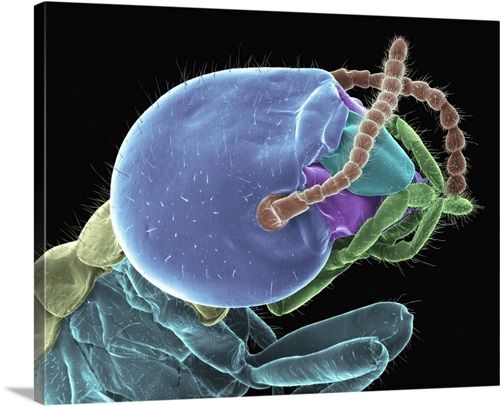
The Formosan subterranean termite is the single most economically destructive termite species on Earth. Native to southern China and Taiwan, Coptotermes formosanus has hitchhiked around the world in shipping pallets and wooden crates and now thrives as an invasive pest in Japan, Hawaii, the southeastern United States, and parts of South Africa.
Colonies reach one to ten million individuals - ten to a hundred times the size of native North American termite colonies - and a mature population can eat a house from the inside out in a few years.
This guide covers every aspect of Formosan termite biology, ecology, and economic impact: taxonomy, caste structure, colony growth, nest architecture, chemical defence, invasive spread, and the reasons why conventional termiticides so often fail against this species. It is a reference entry, not a summary - so expect specifics: milligrams, millimetres, caste ratios, egg-laying rates, and verified damage figures.
Etymology and Classification
The scientific name Coptotermes formosanus was coined by Japanese entomologist Shiraki in 1909 based on specimens collected on the island of Taiwan, known historically to Europeans as Formosa. The epithet formosanus simply means 'of Formosa'. In Taiwanese Hokkien the insect is called pe-hia, and in Japanese iewari shiroari - literally 'house-breaking white ant', a folk name that captures the creature's reputation more accurately than any zoological description.
Termites were long classified in their own order (Isoptera) on the assumption that their eusocial biology and soft bodies set them apart from other insects. Modern molecular phylogenetics has settled the question decisively: termites are social cockroaches. They nest inside the order Blattodea as the infraorder Isoptera, sister to the wood-feeding cockroach genus Cryptocercus.
Every termite alive today descends from a cockroach-like ancestor that combined subsocial brood care with an obligate gut microbiome for digesting wood.
Coptotermes is the most economically important genus of the family Rhinotermitidae, which contains the subterranean termites. Within the genus, three species - C. formosanus, C. gestroi (the Asian subterranean termite), and C. havilandi - account for most of the global invasive termite damage. C. formosanus is the largest-colony, longest-lived, and most widespread of the three.
Size and Caste Structure
Termites are eusocial: individuals divide labour into specialised reproductive and non-reproductive castes that cannot survive as solitary insects. A Formosan colony typically contains four castes: workers, soldiers, primary reproductives, and secondary reproductives (neotenics).
Workers:
- Length: 3-5 mm
- Colour: creamy white, soft-bodied, blind
- Role: foraging, tunnelling, brood care, nest construction, feeding all other castes
- Share of colony: roughly 85-90%
Soldiers:
- Length: 6-7 mm
- Colour: yellowish-brown head, pale body
- Head shape: enlarged, tear-drop or oval with dark curved mandibles and a forehead pore (the fontanelle)
- Role: colony defence, especially against ant raids
- Share of colony: 10-15% - unusually high compared to the ~2% found in most other termite species
Alates (winged reproductives):
- Length: 12-15 mm including wings
- Colour: yellowish-brown body, pale yellowish wings densely pigmented with dark spots
- Role: dispersal flight, founding of new colonies
Primary queen and king:
- The original pair of alates that founded the colony
- Queen swells (physogastric) with egg-laying capacity, eventually laying up to 2,000 eggs per day
- Queen lifespan 15-20 years; king lives comparably long
Secondary reproductives (neotenics):
- Develop from workers or nymphs within the colony
- Supplement or replace the primary queen and king
- Allow colonies to expand rapidly and to persist even if the founding pair dies
Castes are determined by a combination of genetics, pheromonal signals from existing reproductives, and developmental diet. The queen produces inhibitory pheromones that prevent workers from becoming reproductives as long as she is active and well-fed.
Colony Size and Growth
A newly founded Formosan colony grows slowly for the first two to three years as the royal pair produces the first cohort of workers. Growth then accelerates exponentially as workers begin foraging and feeding the reproductives.
Colony size over time (typical estimates):
| Colony age | Approximate worker population |
|---|---|
| 1 year | 50-200 |
| 3 years | 5,000-10,000 |
| 5 years | 100,000-500,000 |
| 8 years | 1-3 million |
| 10+ years | 3-10 million |
Native North American Reticulitermes colonies peak at roughly 250,000 individuals. Formosan colonies reach one to ten million, and the largest recorded colonies in New Orleans and Hawaii have been estimated in the tens of millions. A single colony can consume roughly 400 grams of wood per day - a sustained rate that compounds over years into structural failure of wooden framing, floor joists, and load-bearing beams.
The queen drives this growth. A physogastric Formosan queen, with her abdomen swollen to many times the length of her thorax and head, lays up to 2,000 eggs per day for 15-20 years. Across a single reproductive life she can produce on the order of ten million eggs. Secondary reproductives (neotenics) supplement her output in older colonies and allow a colony to survive the loss of the primary pair.
Nest Architecture: The Carton Nest
Most subterranean termites must maintain constant contact with soil moisture. The Formosan subterranean termite is different. It builds carton nests - cardboard-like structures constructed from chewed wood fibre, soil particles, saliva, and faecal pellets - that retain moisture internally and allow the colony to live and reproduce entirely above ground.
Typical carton nest locations:
- Inside wall voids of infested buildings
- Inside attics, behind insulation
- Inside hollowed cavities of living trees (oak, cypress, pecan)
- Inside wooden boat hulls and utility poles
- Inside railway sleepers, fence posts, and landscape timbers
A carton nest is functionally a self-contained city. It contains the royal cell, brood chambers, worker galleries, food stores, and ventilation channels. The outer walls are dense and waterproofed with faecal material; the interior is a honeycomb of connected chambers. A single colony may maintain multiple carton nests connected by underground tunnels and above-ground shelter tubes that run along joists, wiring, or plumbing.
The operational significance of carton nests is enormous. A soil-applied liquid termiticide - the standard control method for most subterranean termites - creates a barrier between soil and structure. Formosan termites with an established aerial carton nest do not need the soil.
They can live, breed, and expand indefinitely inside a wall cavity as long as there is a source of cellulose and some trapped moisture (a leaking pipe, condensation from an air conditioner, a damp roof penetration). This is why Formosan infestations often persist after a full perimeter soil treatment and why monitoring and baiting have replaced barrier chemistry as best practice.
Foraging and Diet
Formosan termites eat cellulose. In practice this means essentially any plant-derived material.
Typical substrates consumed:
- Structural softwoods (pine, spruce, fir) and hardwoods
- Living tree heartwood - especially oak, cypress, maple, and pecan
- Paper, cardboard, books, files
- Cotton fabric, rope, and wallpaper backing
- Landscape mulch, wooden fences, railway sleepers
- Wooden pallets, crates, and packaging
In addition, workers have been documented chewing through soft non-cellulose materials in pursuit of food or moisture: thin lead and aluminium sheeting, asphalt, plaster, many plastics, and even the lead sheathing on underground electrical cables. These substrates are not digested - they are penetrated en route to something edible.
Foraging workers tunnel through soil and wood in galleries the diameter of a pencil lead. A mature colony's foraging territory can extend 100 metres in radius from the central nest, intercepting multiple adjacent buildings, trees, and utility structures. Shelter tubes - hollow tunnels of soil and carton - are constructed across exposed surfaces to allow workers to cross concrete, stone, or metal without desiccating.
Workers cannot digest cellulose on their own. Inside their hindgut lives a dense community of mutualistic protozoa and bacteria that produce cellulase enzymes and break wood polymers into short-chain fatty acids the termite can absorb. The protozoa in particular are obligate mutualists - they cannot survive outside a termite gut, and the termite cannot survive without them.
When a worker moults its gut lining, it loses its protozoa along with the cuticle. To reacquire them, newly moulted workers practise proctodeal trophallaxis - anus-to-mouth feeding from nestmates. A colony that cannot exchange microbes starves inside wood it cannot digest.
Defence Chemistry and the Fontanelle
The soldiers of Coptotermes formosanus have an unusually elaborate chemical defence system. Their enlarged heads carry a large gland called the frontal gland that opens through a pore on the forehead known as the fontanelle. When a colony is breached - most commonly by raiding ants - soldiers rush to the breach, snap their mandibles, and eject a milky-white defensive secretion from the fontanelle onto the attackers.
Components of the Formosan soldier defensive secretion:
- A sticky protein matrix that physically gums up ant mandibles, legs, and antennae
- Naphthoquinone compounds that act as contact toxins
- Alarm pheromones that recruit additional soldiers to the breach
The defensive fluid is effective enough that Formosan colonies consistently out-compete rival ant species in the same territory. Workers that die in the breach are quickly walled off with carton to prevent further incursion.
Soldiers themselves cannot feed. Their mandibles are specialised for defence to the point that they cannot chew wood or even self-feed. They depend entirely on workers to regurgitate food to them. This is part of the reason the 10-15% soldier fraction in C. formosanus is so striking - each soldier represents a permanent net cost to the colony's foraging output, and yet the species still invests in an army an order of magnitude larger than most of its relatives.
Reproduction and the Swarm
Once a colony reaches a size of several hundred thousand individuals and an age of five to seven years, it begins producing reproductives. Alates develop inside the colony from nymphs over several months, maturing in time for the spring or early summer swarm.
The swarm:
- Timing: April through July in the northern hemisphere, peaking in May-June in the southeastern United States
- Triggers: warm still humid evenings following rain, typically within an hour of sunset
- Flight duration: short, usually no more than 100 metres from the parent nest
- Density: tens of thousands of alates per mature colony in a single evening
Swarming is synchronised across colonies in the same region so that alates from different parent nests mix and outbreed. After landing, alates shed their wings (leaving characteristic piles of discarded wings beneath lights and windowsills), pair off, and search for a crevice in wood or soil. A mated pair excavates a small royal cell and begins laying eggs within days.
Only a tiny fraction of alates survive to found a colony. Birds, ants, spiders, geckos, and other predators attack swarming termites in vast numbers. The 2,000-egg-per-day output of a mature queen is a direct evolutionary response to this filtering - the colony must produce enormous numbers of reproductives to compensate for the staggering mortality of the swarm.
Swarming alates near lights inside a building at night are one of the strongest diagnostic signs of an active Formosan infestation or of a structure immediately adjacent to one.
Lifespan
| Caste | Typical lifespan |
|---|---|
| Worker | 3-5 years |
| Soldier | 3-5 years |
| Alate (pre-swarm) | Weeks, inside nest |
| Alate (post-swarm, unpaired) | Hours to days |
| Primary queen | 15-20 years |
| Primary king | 15-20 years |
| Secondary reproductive | Variable, often years |
A mature colony is therefore effectively immortal from the perspective of its hosts. Even if the primary queen dies, secondary reproductives continue laying eggs, and a single Formosan colony in a southern US city may have been active for two or three decades before it is detected.
Invasive Spread
Coptotermes formosanus is native to the warm subtropical forests of southern China and Taiwan. Its global spread is a human artefact - a textbook case of accidental biological invasion through wooden shipping materials.
Key invasive timeline:
- Late 1800s: early establishment in Hawaii, likely via trade with East Asia
- 1940s: dramatic expansion in Hawaii and Japan after wartime shipping of wooden crates and supplies
- 1950s-1960s: first confirmed US mainland populations in Texas, Louisiana, and South Carolina, likely introduced on military shipments returning from the Pacific theatre
- 1970s-1980s: establishment in Florida, Alabama, Mississippi, Georgia, North Carolina
- 1990s-2000s: range expansion up the Atlantic seaboard and detection in California
- 2000s-2020s: emerging populations in additional Gulf and Atlantic ports and detection in South Africa
The species is now established across a warm arc of the southeastern United States from Texas to the Carolinas, in Hawaii throughout the main islands, in Japan (Kyushu and Shikoku north to southern Honshu), in Taiwan and across much of southern and eastern China, and in coastal South Africa. Climate suitability models suggest further range expansion northward as winters warm, with Washington DC-latitude populations potentially viable within decades.
Within a country, the spread is driven by short-distance alate flight plus long-distance transport of infested timber. Boats with infested hulls have been implicated in several marina-scale outbreaks; wooden pallets, landscape timbers, and railway sleepers move colonies between continents and cities.
Economic Impact
The Formosan subterranean termite is the most economically destructive termite species on Earth.
Estimated annual damage:
| Region | Annual economic impact (USD) |
|---|---|
| United States (total) | ~$1 billion |
| New Orleans (metro) | $300-500 million historical |
| Hawaii | $100 million |
| Japan | Hundreds of millions |
These figures combine direct structural damage, repair costs, and the cost of control treatments. They exclude indirect losses such as reduced property values, insurance exclusions for termite damage, and damage to cultural heritage buildings.
In New Orleans the Formosan termite has damaged historic structures in the French Quarter to the point where entire cypress timbers, centuries old, have required replacement. The city operates one of the longest-running area-wide Formosan termite management programmes in the world.
The species also damages living trees - especially cypress, oak, and pecan - by hollowing out heartwood. Urban street trees weakened by Formosan infestation can fail catastrophically in storms.
Control and Management
Control of established Formosan infestations requires a multi-step integrated approach. No single chemical or technique works reliably in isolation.
Standard approaches:
- Inspection. A qualified inspector checks for shelter tubes, damaged wood, swarmer wings, carton deposits in wall voids, and active workers. Moisture meters and acoustic detectors supplement visual inspection.
- Baiting. In-ground and above-ground bait stations contain cellulose matrices laced with insect growth regulators (hexaflumuron, noviflumuron, bistrifluron). Workers feed on the bait, carry it back to the colony through trophallaxis, and distribute it to nestmates. The bait disrupts moulting and collapses the colony over weeks to months. Baiting is now the standard first-line approach to confirmed Formosan infestations.
- Soil termiticide treatment. Liquid termiticides (fipronil, imidacloprid, chlorfenapyr) are applied as a perimeter barrier. This is more effective for prevention than cure against Formosan colonies with aerial carton nests.
- Direct nest treatment. Where a carton nest is located, it can be treated directly with dusts or foams containing non-repellent insecticides.
- Construction practice. Physical barriers - stainless steel mesh, graded granite particles, termite-resistant treated timber - reduce the risk of new colonies establishing in new construction.
- Area-wide management. Cities with heavy Formosan populations, such as New Orleans, have implemented coordinated inspection, bait station networks, and public education across entire neighbourhoods. Area-wide approaches are more effective than isolated property-level treatment because Formosan colonies routinely span property lines.
Detection in a previously uninfested region triggers regulatory response including quarantine of wooden materials, mandatory treatment, and sometimes destruction of infested timber. Biosecurity inspection of shipping pallets, dunnage, and wooden crates at ports is the main line of defence against further global spread.
Related Reading
References
Relevant peer-reviewed and governmental sources consulted for this entry include the USDA Formosan Subterranean Termite Program reports, Louisiana State University AgCenter Formosan termite research, University of Hawaii Urban Entomology publications, and peer-reviewed studies in Journal of Economic Entomology, Insectes Sociaux, Sociobiology, and Biological Invasions.
Population, damage, and colony-size figures reflect the most recent consolidated estimates from the USDA Agricultural Research Service New Orleans Operation Full Stop programme and equivalent Japanese and Hawaiian monitoring programmes.
Frequently Asked Questions
How big is a Formosan termite colony?
A mature Formosan subterranean termite (Coptotermes formosanus) colony typically contains one to ten million individuals, compared to 60,000-250,000 in a native North American Reticulitermes colony. A single colony may consume roughly 400 grams of wood per day and forage across an area up to 100 metres in radius. Large colonies can simultaneously damage multiple adjacent buildings, trees, and underground utilities.
A single primary queen lays up to 2,000 eggs per day and may be supplemented by dozens of secondary reproductives (neotenics) that help expand the colony rapidly once it is established.
Why is the Formosan termite so destructive?
Four traits combine to make C. formosanus the most economically damaging termite on Earth. First, colony size - ten million workers consume wood far faster than smaller species. Second, aggressive foraging - workers range further and tunnel through more substrates, including living trees and soft metals.
Third, carton nests - the species builds above-ground moisture-retaining nests inside wall voids, so it does not need constant soil contact and is harder to treat with conventional barrier termiticides. Fourth, rapid reproduction - a single queen lays up to 2,000 eggs daily for 15-20 years. Together these traits cost the United States roughly $1 billion per year in damage, repair, and control.
Where did Formosan termites come from and how did they spread?
Formosan subterranean termites are native to southern China and Taiwan (historically Formosa, which gives the species its name). They spread globally through human shipping, particularly during and after the Second World War when infested wooden crates, pallets, and railway ties moved with military supplies across the Pacific.
Established invasive populations now exist in Japan, Hawaii (first recorded in the late 1800s but exploding after 1945), the southeastern United States (Louisiana, Texas, Florida, and up the Gulf and Atlantic coasts since the 1960s), and parts of South Africa. Climate suitability models predict further range expansion as winters warm in subtropical regions.
What do Formosan termites eat?
Formosan termites eat cellulose in essentially any form: structural softwoods and hardwoods, living tree heartwood, paper, cardboard, cotton fabric, books, wooden furniture, flooring, fence posts, railway sleepers, and even the cellulose backing of vinyl wallpaper. They cannot digest cellulose on their own. Instead, a dense community of mutualistic gut protozoa and bacteria breaks wood polymers into sugars that the termite can absorb.
This microbial partnership is why termites groom each other constantly - newly moulted workers must reacquire their gut microbes from nestmates by trophallaxis (anus-to-mouth feeding) or they starve.
What are carton nests and why do they matter?
Carton is a cardboard-like material Formosan termites manufacture from chewed wood, soil, saliva, and faecal pellets. Carton nests are moisture-retaining structures that can be built above ground, inside wall voids, attics, tree cavities, or even boat hulls. This is the key difference from most subterranean termites, which must maintain constant contact with soil moisture.
An established Formosan carton nest lets the colony survive and reproduce without ever touching the ground again, which is why soil-applied liquid termiticides are often only partially effective. Inspectors locate carton by tapping walls for hollow spots, probing soft wood, and looking for mud-like deposits in crawl spaces and attics.
How do Formosan termite soldiers defend the colony?
Soldiers in Coptotermes formosanus have enlarged, tear-drop shaped heads and sharp curved mandibles. When disturbed, they rush to the breach and bite attackers, but their main weapon is chemical. A gland called the fontanelle opens on the forehead and, when threatened, ejects a milky-white defensive fluid onto ants and other invaders.
The secretion contains naphthoquinone compounds and a sticky protein matrix that glues up attacker mouthparts, disables them, and acts as a contact toxin. Soldiers represent 10-15% of the colony population - an unusually large standing army compared to the roughly 2% seen in most other termite species, reflecting how aggressively C. formosanus competes with ants and rival termites.
When and why do Formosan termites swarm?
Reproductive alates (winged termites) leave mature colonies in mass flights called swarms, timed to warm, humid evenings at dusk, typically between April and July depending on latitude. Swarms often begin shortly after sunset on the first calm day following rain and can involve tens of thousands of alates per colony. Alates are weak flyers and usually land within 100 metres of the parent nest.
Pairs then shed their wings, find a crack, and begin a new colony as king and queen. Swarming alates near lights inside a building at night are one of the strongest diagnostic signs that a structure is either infested or immediately adjacent to an infested one.
How are Formosan termite infestations controlled?
Effective control combines inspection, baiting, and targeted treatment. Conventional soil-applied liquid termiticides (fipronil, imidacloprid) create chemical barriers but often fail against Formosan populations with established aerial carton nests, because the nest does not depend on soil contact.
In-ground and above-ground baiting systems using insect growth regulators (hexaflumuron, noviflumuron) are now the standard approach - workers carry the slow-acting bait back to the colony through trophallaxis and collapse the entire population over weeks to months.
In heavily invaded cities such as New Orleans, area-wide integrated pest management programmes combine public inspection, mandatory treatment, and monitored bait stations across entire neighbourhoods.