
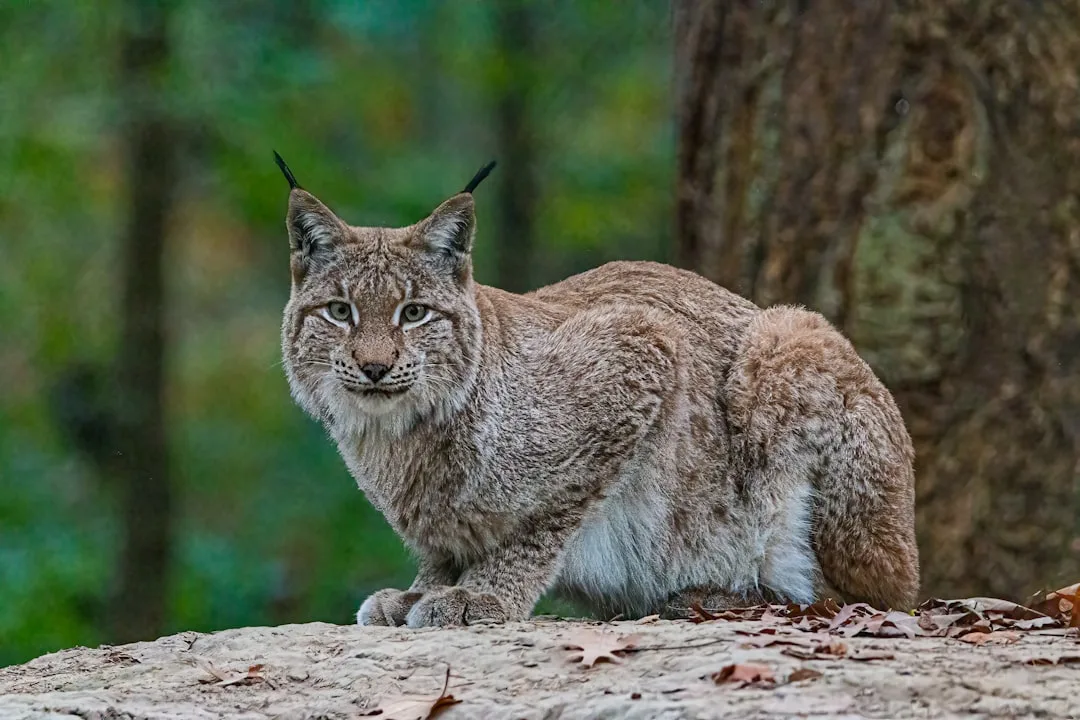
The Iberian lynx is the rarest cat on Earth to have come back from the brink. Twenty years ago Lynx pardinus stood at 94 surviving individuals, confined to two small relict populations in southern Spain, and was widely expected to become the first wild cat species lost to extinction since the sabretooths.
Today it numbers more than two thousand mature adults across Spain and Portugal, its range is expanding into territory it had not occupied for a century, and the IUCN has downlisted it twice in a decade. The Iberian lynx is no longer a cautionary tale. It is the textbook example of what organised, sustained, expensive conservation can achieve when the science is right and the political will holds.
This guide is a reference entry on the species: its biology, its strict rabbit-based ecology, its near-extinction, and the mechanics of its recovery. Expect specifics - kilograms, census numbers, breeding centres, named programmes, dates - rather than generalities.
Etymology and Classification
The scientific name Lynx pardinus was established by the Dutch naturalist Coenraad Jacob Temminck in 1827. The genus Lynx is derived from the Greek word for the same animal; the species epithet pardinus translates roughly as 'spotted like a leopard' and reflects the lynx's densely marked coat.
In Spanish the cat is called lince iberico, in Portuguese lince-iberico, and older English sources occasionally use 'Spanish lynx' or 'pardel lynx', though the current preferred English name is simply Iberian lynx.
The species sits in Felidae, subfamily Felinae, in the small and distinctive genus Lynx alongside three relatives: the Eurasian lynx (L. lynx), the Canada lynx (L. canadensis), and the bobcat (L. rufus).
Molecular phylogenetic studies place the Iberian and Eurasian lynx as sister species that diverged roughly one to two million years ago, with the Iberian peninsula acting as a glacial refugium during Pleistocene ice ages. The Iberian lynx is the smallest, most specialised, and most geographically restricted of the four - three traits that define both its biology and its vulnerability.
Size and Physical Description
Iberian lynx are medium-sized cats, substantially smaller than the Eurasian lynx and roughly matched to a large bobcat. They are built for stalking rabbits through dense Mediterranean scrub rather than running down large prey, and every proportion reflects that specialisation.
Males:
- Head-to-rump length: 85-110 cm
- Tail length: 12-15 cm (short and bobbed)
- Shoulder height: 45-70 cm
- Weight: typically 10-15 kg, occasionally heavier in peak condition
Females:
- Head-to-rump length: roughly 80-100 cm
- Weight: typically 8-10 kg, rarely above 12 kg
- Slightly shorter legs and narrower chest than males
Kittens at birth:
- Length: 20-25 cm
- Weight: 200-250 grams - roughly the mass of a small orange
The coat is the most immediately recognisable feature. Ground colour ranges from tawny yellow through reddish sand to greyish brown, overlaid with bold dark spots whose size, density, and distribution vary geographically. Three loose coat patterns have been described, from densely spotted through rosette-like markings to finely spotted forms, and these can coexist within a single population.
Every lynx has a thick facial ruff of fur along the jaw and cheeks, giving the face a triangular, bearded appearance. Both sexes carry long black ear tufts - up to 5 cm - and a short, black-tipped tail that ends abruptly rather than tapering.
The body is comparatively small but the legs are disproportionately long, and the paws are huge relative to the animal's weight. Hind limbs are noticeably longer than forelimbs, producing the crouched, shoulder-low posture characteristic of all lynx. These are adaptations for powerful ambush lunges from low scrub cover rather than long-distance chase.
The skull is short and broad, with well-developed carnassial teeth and jaw muscles proportionally large for the lynx's size - a hunter built to kill prey up to its own weight in a single bite.
Habitat and Range
Iberian lynx live exclusively on the Iberian peninsula - Spain and Portugal - and are found on no other landmass. Within that peninsula their habitat is strikingly narrow: a Mediterranean mosaic of cork oak and holm oak woodland, dense scrub dominated by rockrose and gorse, open grassland patches, and the traditional agro-pastoral system known as dehesa.
This combination supports high densities of European rabbits, which the lynx depends on absolutely, while providing the broken cover it needs to stalk them.
Core range areas (2024):
- Donana National Park and surrounding Andalusia
- Sierra de Andujar and Sierra Morena (eastern Andalusia)
- Castilla-La Mancha (central Spain)
- Extremadura (western Spain)
- Guadiana Valley and Algarve (southern and eastern Portugal)
Before industrial hunting, habitat fragmentation, and the twentieth century collapse of European rabbit populations, the Iberian lynx ranged across almost the entire peninsula and likely into southern France during colder periods.
Historical records and museum specimens place the species as a widespread predator of rabbit-rich Mediterranean landscapes from Galicia in the northwest to Catalonia in the northeast and down through the full length of Portugal. By the late twentieth century that range had collapsed to two small relict populations totalling under a hundred animals.
Modern conservation planning explicitly treats dehesa and Mediterranean scrub as Iberian lynx habitat. Reintroduction sites are chosen based on rabbit density, habitat connectivity, landowner cooperation, and distance from major roads. Every viable reintroduction nucleus today requires active rabbit management, typically through restocking, disease control, and targeted scrub clearance to create the habitat structure rabbits prefer.
The Rabbit Dependency
No cat species on Earth is more tightly bound to a single prey than the Iberian lynx is to the European rabbit (Oryctolagus cuniculus). Published studies from Donana and Sierra Morena consistently find rabbits making up 80-90% of lynx diet by biomass, with individual populations sometimes running as high as 95%. An adult lynx eats roughly one rabbit per day; annual consumption runs 300-400 rabbits per adult.
This specialisation is the single most important fact about Iberian lynx biology and conservation. When rabbits crash, the lynx crashes with them. Two viral diseases hit European rabbits hard over the twentieth century:
- Myxomatosis, introduced to Europe in 1952 as a (disastrously successful) pest-control measure. Rabbit populations fell by up to 95% in some areas within two years.
- Rabbit haemorrhagic disease (RHD), first detected in Spain in 1988 and driving a second population collapse. A more lethal variant (RHDV2) appeared in 2010 and caused further losses.
Each of these crashes was followed by measurable declines in Iberian lynx numbers and breeding success. The 2002 bottleneck of 94 individuals cannot be explained without reference to rabbit disease. Conservation programmes therefore invest heavily in rabbit population recovery: vaccination trials, habitat management, warren construction, predator-proof restocking enclosures, and disease surveillance. A lynx recovery programme that ignores rabbits does not work.
Secondary prey sometimes appears in Iberian lynx scat analyses - red-legged partridges, ducks, young red deer and fallow deer fawns, occasional rodents, reptiles, and, rarely, small domestic animals - but none of these can sustain the species. Lynx that try to subsist on alternative prey during rabbit crashes show sharp declines in body condition and reproductive output.
Hunting Behaviour
Iberian lynx are ambush predators built for short-distance explosive pursuit. They locate rabbits by a combination of hearing, scent, and systematic searching of known warrens, then approach through cover until within a few metres. The final strike is a short sprint or lunge ending in a killing bite to the nape or throat. Chases rarely exceed twenty or thirty metres - beyond that range, rabbits outrun lynx and reach burrow entrances.
Lynx are most active at dawn, dusk, and through the night, shifting toward more nocturnal behaviour where human disturbance is high. They patrol territories of several square kilometres, marking boundaries with scrapes, urine, and facial scent rubbed onto rocks and branches. Males hold larger territories than females, and a single male territory typically overlaps the territories of one to three females during the breeding season.
Hunting success is higher than for many big cats because rabbits are small, abundant where conditions are right, and not particularly alert. Field studies suggest one kill every day or two per adult under good conditions. During rabbit crashes, success rates drop sharply and lynx expand their home ranges in search of remaining prey - a behavioural change that increases their exposure to roads and illegal traps.
Reproduction and Life Cycle
Iberian lynx reproduction follows a Mediterranean seasonal schedule rather than the ice-locked rhythm of their northern cousins. Mating takes place in midwinter - January and February - and kittens arrive in spring when rabbit numbers and weather are most favourable.
Reproductive timeline:
- January to February: mating season, intense vocalisation and male-male conflict
- March to April: birth of litters after 63-66 days gestation
- May to July: kittens begin emerging from natal dens
- September to December: kittens start hunting independently
- Around month 10-20: dispersal from natal territory
Litters usually contain two or three kittens; singletons and litters of four occur but are less common. Kittens are born blind, with a pale sandy coat that will darken and develop adult spotting over the following months. They open their eyes at around ten days and begin following the mother out of the den at around eight weeks.
Kitten mortality is high - approximately 50% die before reaching independence. The leading cause in the first weeks of life is sibling aggression: Iberian lynx kittens routinely attack each other from about six weeks of age, and one kitten in the litter is frequently killed by its siblings.
This behaviour appears to be a regulation mechanism tied to food availability, with aggression more severe during rabbit-poor years. Other significant causes of kitten mortality include starvation, feline leukaemia and other chronic diseases, and abandonment when the mother's body condition deteriorates.
Females reach sexual maturity at two to three years and produce roughly one litter per year once established. Males begin breeding at about the same age, though access to females depends on territory acquisition. Wild individuals typically breed until age ten or so, with reproductive senescence setting in thereafter.
Movement, Territory, and Dispersal
Iberian lynx are territorial and largely solitary outside the breeding season. Adult territories average five to twenty square kilometres, varying enormously with rabbit density - where rabbits are abundant, territories shrink, and where rabbits are sparse, territories expand dramatically.
Movement data:
| Metric | Value |
|---|---|
| Typical adult territory | 5-20 km^2 |
| Daily active distance | 3-10 km |
| Sprint speed | 60-70 km/h in short bursts |
| Dispersal distance (juveniles) | 10-80 km from natal range |
| Longest recorded dispersal | Over 200 km |
Juvenile dispersal is one of the most demanding phases in an Iberian lynx's life. Young lynx leaving their mothers must navigate unfamiliar habitat, cross roads, avoid snares, locate rabbit-rich patches, and establish territory in the face of resident adults. Mortality during dispersal can exceed 50% in some populations.
Roads are the single most persistent threat to dispersers; highway expansion across Spain and Portugal has repeatedly coincided with measurable increases in Iberian lynx roadkill, especially in Donana where arterial roads cut directly through prime habitat.
Conservation programmes devote considerable effort to wildlife corridors, fenced crossings, eco-ducts, and underpasses to reduce dispersal mortality. Every adult lynx lost to a road is a substantial blow to a population still recovering from extreme bottleneck.
Near Extinction and Recovery
The near-loss of the Iberian lynx was remarkably rapid in historical terms. Reliable population estimates from the mid-twentieth century suggest several thousand lynx still ranged across the Iberian peninsula in the 1960s. By the 1980s the population had fallen to roughly 1,000-1,200.
By 2002 only 94 Iberian lynx remained alive across just two isolated breeding nuclei: Donana in the southwest and the Sierra de Andujar in the east. The IUCN listed the species as Critically Endangered and several authorities openly expected extinction within a human generation.
The decline had three main drivers acting in combination:
- Rabbit collapse from myxomatosis (1952 onwards) and rabbit haemorrhagic disease (1988 onwards).
- Habitat loss and fragmentation from agricultural intensification, eucalyptus plantations, highway networks, and reservoir construction.
- Direct persecution through hunting, snaring for other species, illegal trapping, and poisoning.
The turnaround was neither accidental nor inevitable. It began with a coordinated programme that combined captive breeding, reintroduction, rabbit restoration, habitat management, landowner incentives, and legal protection.
The European Union's LIFE funding instrument became the financial spine of the recovery through a series of projects - most notably LIFE Lince and LIFE Iberlince - that ran from the early 2000s through the late 2010s and involved Spanish, Portuguese, and Andalusian authorities along with NGO and university partners.
Key recovery milestones:
| Year | Event |
|---|---|
| 2002 | Population low of 94 individuals; Critically Endangered |
| 2004 | Acebuche captive breeding centre begins operations |
| 2005 | First captive-born Iberian lynx kitten |
| 2010 | Reintroductions begin into former range |
| 2015 | IUCN downlists from Critically Endangered to Endangered |
| 2020 | Population exceeds 1,000 individuals |
| 2023 | Census reports 2,021 mature individuals |
| 2024 | IUCN downlists from Endangered to Vulnerable |
Captive breeding centres - Acebuche inside Donana, La Olivilla in Jaen, Silves in Portugal, Granadilla in Extremadura, Zarza de Granadilla, and others - formed the backbone of the breeding programme. By the mid-2020s these centres had produced hundreds of kittens and released over three hundred animals into the wild across dozens of carefully chosen reintroduction nuclei in Andalusia, Castilla-La Mancha, Extremadura, and Portugal.
Equally important, and less often publicly credited, was rabbit restoration. Programmes built thousands of artificial warrens, translocated rabbits into depleted areas, managed scrub structure to favour rabbit foraging, vaccinated wild rabbits against RHD where feasible, and monitored outbreaks in real time. Without this parallel rabbit work, captive breeding alone would have released lynx into empty habitat with no prey.
Conservation Status Today
The 2024 IUCN Red List reassessment classifies the Iberian lynx as Vulnerable, down from Endangered in 2015 and Critically Endangered before that. The species is listed on CITES Appendix I (maximum trade protection), protected under Spanish and Portuguese national law, and covered by EU Habitats Directive Annex II and IV.
Current threats:
- Rabbit disease cycles. RHDV2 outbreaks since 2010 have repeatedly set back local rabbit populations, with knock-on effects on lynx.
- Road mortality. Dozens of lynx are killed on roads each year, disproportionately during juvenile dispersal.
- Habitat fragmentation. Gaps between breeding nuclei remain wide, and expanding infrastructure threatens corridor viability.
- Genetic bottleneck. Every living Iberian lynx descends from a population that dipped under 100 animals, and inbreeding depression, chronic disease susceptibility, and reduced fertility in certain lineages are well documented.
- Poaching and illegal snaring. Though substantially reduced since the 1990s, snaring intended for boar, foxes, or rabbit poachers still kills lynx.
- Climate pressure. Long-term Mediterranean aridification threatens the shrubland and dehesa mosaic that supports both rabbits and lynx.
Conservation response continues through successor projects to LIFE Iberlince, ongoing captive breeding, rabbit work, wildlife crossings, and close coordination between Spain and Portugal. The Iberian lynx is not yet secure, but the species is currently on a clearly upward trajectory with multiple self-sustaining reintroduced populations and a genetic management plan that actively mixes lineages to counter inbreeding.
Iberian Lynx and Humans
Human cultures on the Iberian peninsula have lived alongside the lynx for millennia. Roman texts reference the spotted cat of Hispania; medieval heraldry occasionally features the lynx; traditional rural Iberians treated the animal with a mix of respect and suspicion common to mid-sized predators worldwide. Commercial hunting of the species for pelts accelerated during the nineteenth and twentieth centuries and contributed to range contraction.
Modern attitudes have shifted remarkably. The Iberian lynx is widely recognised as a national symbol of conservation success in both Spain and Portugal, used in tourism promotion, featured on currency and postage, and widely supported by rural landowners under the dehesa system. The LIFE Iberlince model of compensation, cooperation, and rural economic engagement has largely replaced earlier antagonism.
Local communities in Andujar and Donana frequently host lynx tourism, field centres, and research stations as a direct economic benefit of recovery.
Iberian lynx pose almost no threat to humans. There are no recorded fatal attacks. Predation on livestock is minor - mostly free-range poultry and very occasional lambs - and compensation schemes address losses without political friction. Where human activity damages lynx populations, the damage runs overwhelmingly from humans to lynx via roads, snares, and habitat loss.
Related Reading
- Eurasian Lynx: The Forest Ghost of Europe
- Canada Lynx: North American Snow Specialist
- Bobcat: The Adaptable North American Cat
- Conservation Success Stories Among Wild Cats
References
Relevant sources consulted for this entry include the IUCN Red List assessment for Lynx pardinus (2024), the LIFE Iberlince technical reports, the Spanish Ministry for the Ecological Transition's Iberian Lynx Action Plan, the Instituto da Conservacao da Natureza e das Florestas (ICNF) monitoring data from Portugal, and published research in Biological Conservation, Animal Conservation, Oryx, and Journal of Zoology.
Specific population figures reflect the 2023 national census coordinated across Spain and Portugal and the subsequent 2024 IUCN reassessment.
Frequently Asked Questions
How big is the Iberian lynx?
Adult Iberian lynx (Lynx pardinus) weigh 9-15 kg, with males averaging 12-13 kg and females 9-10 kg. Body length runs 85-110 cm from nose to the base of the tail, with an additional bobbed tail of 12-30 cm. Shoulder height is 45-70 cm. The species is noticeably smaller than the Eurasian lynx (Lynx lynx), which can exceed 30 kg, and roughly half the mass of a European wildcat’s larger cousins.
Kittens weigh 200-250 grams at birth - smaller than an apple - and reach adult size by their second year.
What do Iberian lynx eat?
The Iberian lynx is one of the most specialised predators in the cat family. European rabbits (Oryctolagus cuniculus) make up 80-90% of the diet across every studied population. An adult lynx needs about one rabbit per day to maintain condition and a breeding female with kittens may take three per day.
Secondary prey includes red-legged partridge, red deer fawns, roe deer fawns, mallard, and small rodents, but these make up a minor fraction of energy intake. Because the species is so dependent on one prey item, collapses in rabbit populations from disease or habitat loss translate almost directly into lynx declines.
Where do Iberian lynx live?
Iberian lynx live only on the Iberian Peninsula - Spain and Portugal - making them one of the most geographically restricted wild cats on Earth. Preferred habitat is Mediterranean scrubland mixed with open grassland, cork oak woodland, and the dehesa - a managed savanna-like landscape of oaks over grazing land.
Core breeding populations sit in Andalusia (Sierra de Andujar, Doñana), Castilla-La Mancha (Montes de Toledo, Sierra Morena Oriental), Extremadura (Matachel Valley), and the Portuguese Guadiana Valley. Reintroductions have also established populations in Murcia and parts of central Spain.
Are Iberian lynx still endangered?
The IUCN currently lists the Iberian lynx as Vulnerable, downgraded from Endangered in 2024 and from Critically Endangered in 2015. The 2023 census counted 2,021 wild individuals, up from a 2002 low of 94. This is a genuine recovery, but the species remains dependent on active management.
Threats include rabbit disease outbreaks, road mortality (roads killed around 30 lynx per year in the late 2010s), illegal trapping, habitat fragmentation, and low genetic diversity caused by the bottleneck of the early 2000s. Continued funding for habitat restoration, road mitigation, and captive breeding is considered essential to keep the trajectory pointing upward.
How long do Iberian lynx live?
Wild Iberian lynx typically live 13 years, with very few individuals exceeding 15. Captive animals in the Acebuche, La Olivilla, and Silves breeding centres regularly live 18-20 years thanks to veterinary care and stable food supply. Kitten mortality is high - roughly half of all kittens die before their first birthday, mainly from disease, sibling aggression around weaning, and dispersal risk once they leave the mother.
Females usually produce their first litter at 3 years old and can continue breeding until about 10.
Why did Iberian lynx almost go extinct?
Three factors combined. First, habitat loss: Mediterranean scrub and dehesa were cleared, planted, or fragmented across the twentieth century. Second, rabbit collapse: myxomatosis arrived in Iberia in the 1950s and rabbit haemorrhagic disease in 1988, cutting wild rabbit populations by up to 90%. A rabbit specialist cannot survive without rabbits.
Third, direct mortality from traps set for rabbits, foxes, and wolves, plus road deaths on expanding motorway networks. By 2002 only 94 individuals survived across two isolated populations, and extinction within a generation looked likely. The LIFE Iberlince programme, the Ex-situ Conservation Programme, and the Portuguese national recovery plan reversed that trajectory.
How is the Iberian lynx bred in captivity?
The Iberian Lynx Ex-situ Conservation Programme operates four main breeding centres: El Acebuche in Doñana, La Olivilla in Jaen, Zarza de Granadilla in Caceres, and Silves in Portugal. Animals are paired using a studbook that minimises inbreeding across the small founder population. The first captive birth occurred at Acebuche in 2005.
Kittens born in captivity are soft-released into the wild using pre-release enclosures where they learn to hunt live rabbits before dispersal. More than 300 captive-bred lynx have been released since the programme began, and a significant share of the current wild population descends directly or indirectly from these releases.
What makes the Iberian lynx different from other lynx species?
There are four lynx species: Eurasian lynx (Lynx lynx), Canada lynx (Lynx canadensis), bobcat (Lynx rufus), and Iberian lynx (Lynx pardinus). The Iberian lynx is the smallest after the bobcat, the most heavily spotted, and by far the most prey-specialised. Eurasian lynx hunt roe deer and hares across a range from France to Siberia. Canada lynx depend on snowshoe hares and track a classic ten-year population cycle.
Bobcats are generalist hunters across North America. Only the Iberian lynx is confined to one peninsula, reliant on one prey species, and has passed through a near-extinction bottleneck in the modern era.