
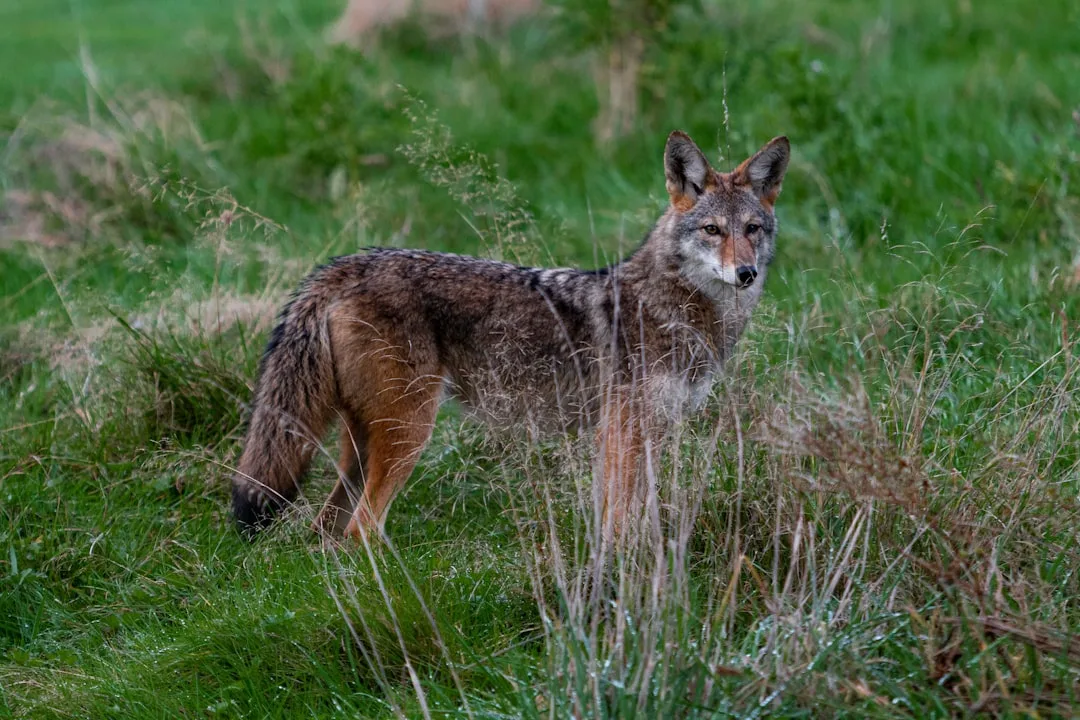
The coyote is the most successful wild carnivore in North America and one of the great evolutionary winners of the last hundred years.
While almost every other large predator on the continent retreated under pressure from human expansion, Canis latrans did the opposite: it expanded its range, colonised new habitats, hybridised opportunistically with wolves and domestic dogs, and ended up walking through Manhattan, downtown Los Angeles, and the centre of Chicago.
Today no US state except Hawaii lies outside coyote territory, and the species ranges from the tundra edge in Alaska to the tropical forests of central Panama.
This guide covers every important aspect of coyote biology and ecology: size and strength, pack and pair structure, hunting and diet, vocal communication, the coywolf phenomenon, urban adaptation, reproduction, conservation status, and the long cultural relationship between coyotes and the human societies of North America. It is a reference entry, not a summary - so expect specifics: kilograms, kilometres, populations, and verified records.
Etymology and Classification
The scientific name Canis latrans was given by the naturalist Thomas Say in 1823, based on specimens collected during the Long expedition to the American West. It translates roughly as 'barking dog', a name Say chose deliberately to capture the animal's unusually varied vocal repertoire - coyotes bark, yip, yelp, whine, and howl in combinations rarely heard from other wild canids.
The common name 'coyote' entered English through Mexican Spanish, which in turn borrowed it from the Nahuatl word coyotl, the name used by the Aztecs and their predecessors long before European contact.
Genetic analysis places the coyote firmly inside the genus Canis, alongside the gray wolf, red wolf, Ethiopian wolf, golden jackal, and domestic dog. Molecular evidence suggests coyotes and gray wolves share a common ancestor about one to two million years ago.
Unlike gray wolves, which radiated across Eurasia and North America, the coyote lineage appears to have evolved primarily in western North America, remaining a medium-sized prairie and desert predator while its larger cousin took over the forests and tundra.
Taxonomists currently recognise around nineteen subspecies of coyote spread across North and Central America, though the exact count depends on which authority one consults.
Notable subspecies include the plains coyote (C. l. latrans) of the Great Plains, the mountain coyote (C. l. lestes) of the Rocky Mountains and Pacific Northwest, the Mexican coyote (C. l. cagottis) of central Mexico, and the eastern coyote - sometimes informally lumped as C. l. thamnos or recognised as a hybrid form - which is genetically distinct from the other subspecies because of 20th-century introgression from wolves and domestic dogs.
The coyote is the North American ecological analogue of the golden jackal in Eurasia and Africa: a mid-sized, adaptable, opportunistic canid that fills the niche between fox and wolf.
Size and Physical Description
Coyotes are medium-sized canids, smaller than gray wolves but noticeably larger than red foxes. The size varies significantly across the range, with a clear gradient: animals in the arid southwestern United States and northern Mexico are the smallest, while eastern populations in New England, the Maritimes, and southern Canada are the largest, approaching the size of a small wolf.
Western coyote (typical):
- Length: 1.0-1.2 metres from nose to tail tip
- Shoulder height: 55-62 centimetres
- Weight: 7-14 kilograms
Eastern coyote (typical):
- Length: 1.2-1.4 metres
- Shoulder height: 60-70 centimetres
- Weight: 14-21 kilograms, with records over 25
Pups at birth:
- Length: roughly 18-20 centimetres
- Weight: 240-275 grams - about the size of a guinea pig pup
Coyotes are built for trotting. Their frame is light and narrow, the legs are relatively long, and the paws are comparatively small. A trotting coyote covers ground with an energy-efficient gait that can sustain 8 to 16 kilometres per hour for hours at a time. When pressed, a coyote can reach 60 to 65 kilometres per hour in short sprints, faster than any gray wolf and comparable to a pronghorn at short distances.
The coat varies with climate and subspecies. Desert coyotes tend to be pale tan, fawn, or buff-grey with lighter underparts, while montane and northern animals are darker, often rich grey-brown with a strong reddish wash along the legs and behind the ears. The tail is bushy with a characteristic black tip. Compared with a wolf, a coyote's muzzle is noticeably narrower and more pointed, the ears are proportionally larger, and the overall impression is sharper and more angular.
At night, coyote eye-shine is a distinctive yellow to yellow-green, produced by a reflective layer behind the retina called the tapetum lucidum. This adaptation doubles the light available to photoreceptors and lets coyotes hunt small rodents under starlight or even on moonless nights.
Sensory and Cognitive Abilities
Coyotes combine strong senses with flexible, problem-solving cognition, and this combination explains much of their ecological success.
Smell. The coyote nose is its dominant sensory organ. Olfactory surface area is several dozen times greater than that of a human, and coyotes routinely locate rodents tunnelling under snow, track prey kilometres after a trail has passed, and recognise individual conspecifics by scent alone. Urine and gland secretions communicate territory boundaries, reproductive state, and individual identity.
Hearing. Coyote ears are large, mobile, and tuned to the high-frequency rustling of small mammals in vegetation. They can detect a rodent moving beneath snow at distances of several metres and pinpoint the exact location within a few centimetres before pouncing. The same sensitivity lets them hear the calls of distant conspecifics and distinguish familiar from unfamiliar voices.
Vision. Coyote vision is less central than scent or hearing but remains excellent, particularly in low light. Their field of view is wide, motion detection is acute, and the tapetum lucidum allows effective night hunting.
Cognition. Coyotes consistently score high on problem-solving tests, both in captivity and in the field. They learn to recognise and avoid specific traps after a single encounter, adjust hunting techniques to local prey, time their movements around human schedules in cities, and cooperate flexibly with relatives to pursue larger prey. Several studies have shown that coyotes assess traffic patterns before crossing roads and adjust timing to reduce risk.
Hunting and Diet
Coyotes are dietary generalists - in ecological terms, true omnivores - and this flexibility is the central reason for their continent-wide success. A coyote population in the Mojave desert and one in downtown Chicago eat almost completely different foods, yet both flourish.
Primary prey categories:
- Small rodents: voles, mice, rats, ground squirrels, pocket gophers
- Lagomorphs: cottontail rabbits, jackrabbits, snowshoe hares
- Ungulates: deer fawns, adult deer (mostly eastern coyotes in packs), pronghorn fawns
- Birds: ground-nesting species, waterfowl, turkeys, chickens from farms
- Reptiles and amphibians: lizards, snakes, frogs
- Invertebrates: grasshoppers, beetles, crickets (especially in summer)
Plant and supplemental foods:
- Fruit: apples, persimmons, prickly pear, juniper berries, blueberries
- Melons: watermelons and cantaloupes are eaten enthusiastically where available
- Grass: consumed year-round, though its nutritional role is unclear
- Carrion: road-killed deer, winter-killed livestock, gutpiles from hunters
- Human-derived foods: garbage, pet food, compost, fallen pet meals
Hunting techniques:
- Pounce hunting. A coyote detects a rodent beneath snow or grass by sound, rears back, and drives forward and down with all four feet bunched, often leaping a metre or more vertically to pin the prey with stiffened forelegs. This is the signature coyote hunting move and is performed thousands of times per year by a healthy adult.
- Coursing. Open-country coyotes run prey over moderate distances, usually targeting rabbits or young pronghorn. Two or more coyotes may tag-team, with one flushing and another cutting off escape.
- Pack hunting on ungulates. Eastern coyotes and some western packs coordinate to take adult deer, particularly during deep snow that disadvantages prey. Success typically requires at least two adult hunters and often three or four.
- Scavenging and cleaning. Coyotes regularly trail other predators - wolves, cougars, bears - and feed on leftover kills. They also consume road-killed animals and livestock carcasses.
- Urban foraging. City coyotes have added dumpsters, unsecured compost, outdoor pet food dishes, and discarded takeaway meals to the traditional hunting repertoire.
Daily food intake ranges from roughly 0.5 to 1.5 kilograms depending on body mass, season, and reproductive status. Caching is common: surplus meat is buried and revisited over days or weeks.
Social Structure and Reproduction
Coyote social structure is more flexible than that of the gray wolf and varies strongly with prey size, habitat type, and human pressure. The underlying unit is the bonded mated pair, which may live alone, raise pups together for a season, or anchor a larger family group.
Pair bonding. Most coyotes are seasonally or serially monogamous, and long-term pair bonds across multiple breeding seasons are well documented. Pairs share a territory, cooperate on hunting, and jointly defend the young. Males actively provision both the female during denning and the pups after birth, behaviour considered unusual among wild carnivores and shared with only a handful of other canids such as the African wild dog.
Group composition. In areas with abundant large prey - eastern hardwood forests, parts of Yellowstone, northern boreal edges - coyote families resemble small wolf packs, with the breeding pair, pups of the year, and one or two 'helper' offspring from previous litters that remain at home to assist with hunting and pup care. In areas dominated by small prey, a mated pair alone is the norm, and even that pair may separate outside breeding season.
Breeding cycle:
- Late January to March: pair bonding and mating
- Gestation: 60-63 days
- April to May: pups born in earth den or abandoned burrow
- Summer: pups weaned at 5-7 weeks, begin accompanying adults
- Autumn: juveniles disperse or remain as family helpers
Litter size typically runs 4 to 7 pups, but can reach 12 in years of high prey abundance. Coyotes are one of the few carnivore species with documented density-dependent reproduction: when coyote numbers are reduced by hunting, trapping, or poisoning, surviving females respond by producing larger litters and breeding at younger ages. This biological rebound effect is the primary reason that a century of coordinated extermination programmes has failed to reduce coyote numbers.
Pups are born blind and helpless, weighing about 250 grams. They open their eyes at 10 to 14 days, begin eating regurgitated meat at 3 weeks, leave the den briefly at 4 to 5 weeks, and are fully weaned by 6 to 8 weeks. Juveniles typically disperse in autumn, though some remain with parents through a second breeding season. Dispersal distances vary from a few kilometres to more than 500 kilometres, with young males tending to move farther than young females.
Communication and Vocalisations
Coyote vocal communication is among the most varied and recognisable of any North American mammal. Biologists have catalogued at least eleven distinct call types, broadly divided into agonistic (threat), greeting, contact, and long-distance categories.
Principal vocalisations:
| Call type | Function |
|---|---|
| Lone howl | Advertise individual presence, seek contact |
| Group howl | Reunite family after separation, territory |
| Group yip-howl | Territorial chorus, social bonding |
| Bark | Alarm, threat warning |
| Bark-howl | High alarm with territorial component |
| Yelp | Submission, subordinate greeting |
| Whine | Juvenile solicitation, friendly greeting |
| Growl | Close-range threat |
| Huff | Visual threat with breath expelled |
The signature group yip-howl is the most familiar coyote sound and one of the most distinctive auditory features of the North American night. What sounds like a chorus of many animals is often produced by only two or three: each coyote modulates pitch rapidly within a single call, and when several animals vocalise together the combined effect mimics a much larger group. Biologists call this the beau geste effect, after the novel in which a small defending force impersonates a larger one.
A single coyote howl carries clearly for roughly one kilometre over open terrain on a still night, and organised choruses are audible for several kilometres. Functional contexts include territorial advertisement, pair and family reassembly, response to other coyote choruses, and - for reasons still debated - reaction to sirens, church bells, and distant thunder.
Scent marking complements vocal communication. Urine posts along territory boundaries, scat left in conspicuous locations on trails, and scratching that deposits scent from paw glands all serve to advertise occupancy and reproductive state.
Range, Expansion, and Urban Adaptation
The coyote's 20th-century expansion is one of the best-documented large mammal range changes in history. Before European colonisation the species was largely confined to the Great Plains, the Southwest, and parts of Mexico. Gray wolves and, to a lesser extent, mountain lions and jaguars occupied the forested East, boreal North, and humid South, and they excluded coyotes from those habitats.
Expansion timeline (approximate):
| Decade | New territory occupied |
|---|---|
| 1900-1920 | Northern Plains into Canadian Prairies |
| 1920-1940 | Upper Midwest and southern Ontario |
| 1940-1960 | New York State, New England |
| 1960-1980 | Southeastern United States, Appalachians |
| 1980-2000 | Maritime provinces, Newfoundland, urban East Coast |
| 2000-2020 | Central Park, Bronx, Chicago Loop, downtown Los Angeles |
Two factors drove the expansion. The first was the near-elimination of gray wolves across the continental United States by the 1930s, which removed the larger carnivore that had previously excluded coyotes from forested habitats. The second was extensive human landscape modification - clearing of eastern forests, creation of agricultural edge, and later suburban development - which produced the brushy, patchy habitat that coyotes exploit more efficiently than wolves.
Urban coyote populations are now established in most major North American cities. Long-term studies in Chicago, documented by the Urban Coyote Research Project since 2000, have confirmed stable populations living almost entirely within city limits, raising pups in railway corridors, cemeteries, golf courses, and forest preserves.
Similar populations exist in Los Angeles, San Francisco, Denver, Vancouver, Toronto, Washington DC, and New York City. Urban coyotes show measurably different behaviour from rural animals: they shift activity strongly toward nocturnal hours, use smaller home ranges, cross roads with assessed timing, and have developed remarkable tolerance for human proximity provided humans remain non-threatening.
The Coywolf Phenomenon
The eastern coyote, sometimes called the coywolf, is one of the most interesting hybrid mammals in modern ecology. When range-expanding coyotes reached the Great Lakes and northeastern United States during the early and mid-20th century, they encountered remnant eastern wolf populations and, in more developed areas, free-ranging domestic dogs. Hybridisation occurred on multiple occasions, and the resulting animals spread eastward as a single hybrid population.
Genetic studies consistently find that northeastern coyotes are a mosaic: roughly 60 per cent coyote ancestry, 30 per cent wolf ancestry (drawn from both eastern wolf and gray wolf sources), and around 10 per cent domestic dog ancestry. The ratio shifts from place to place, with more wolf ancestry in northern populations closer to Algonquin Park and more dog ancestry in some southern Appalachian populations.
Functionally, coywolves differ from western coyotes in several respects:
- Larger body size - up to 50 per cent heavier than a western coyote
- Broader skull and jaw, capable of taking adult deer
- Woodland-adapted hunting behaviour with more frequent group hunting
- Higher tolerance for human-modified landscapes
- Generally bolder temperament in urban settings
Whether the eastern coyote should be recognised as a distinct species, a hybrid swarm, a subspecies, or simply a large phenotype of Canis latrans remains actively debated. For now most authorities retain it within Canis latrans while acknowledging the hybrid origin. The case is an unusually clear example of rapid hybrid speciation in action in a large mammal.
Conservation Status and Human Relationship
The IUCN Red List classifies the coyote as Least Concern with an increasing population trend, a rare status among large carnivores. Coyotes are not protected under the US Endangered Species Act or equivalent Canadian legislation. Hunting and trapping regulations vary by state and province: some allow year-round harvest with no bag limits, while others impose seasons, licensing requirements, or specific method restrictions.
Primary pressures on the species (none currently limiting):
- Vehicle collisions - leading mortality cause in many populations
- Regulated and unregulated hunting and trapping
- Agricultural predator control programmes, including poisoning and aerial shooting
- Disease - canine distemper, parvovirus, mange, heartworm
- Intraspecific aggression during dispersal
An estimated 400,000 to 500,000 coyotes are killed each year in the United States alone through combined hunting, trapping, and federal predator control. Despite this harvest and more than a century of organised extermination, coyote numbers continue to grow. Compensatory reproduction - larger litters and younger first breeding when density drops - combined with immigration from surrounding populations means culling rarely achieves more than short-term local reduction.
Human attitudes toward coyotes have shifted substantially. Nineteenth and early twentieth century livestock interests framed them as vermin to be exterminated at any cost. Mid-twentieth century wildlife management retained that framing.
Since the 1990s, urban wildlife researchers and conservation biologists have reframed the coyote as a native predator providing ecosystem services - rodent control, mesopredator suppression, carrion cleanup - and as a cultural presence with deep roots in Indigenous North American traditions.
Navajo, Crow, Apache, and many other Native American peoples treat the coyote as a trickster figure: clever, chaotic, morally ambiguous, occasionally heroic. This framing contrasts sharply with the European settler image of the coyote as merely a nuisance and is increasingly reflected in modern wildlife policy in cities such as Chicago, Denver, and Vancouver.
Coyotes and Domestic Animals
Coyote interactions with domestic animals are the main source of ongoing human-coyote conflict. The three principal categories are livestock predation, pet predation, and hybridisation with domestic dogs.
Livestock losses are significant but concentrated: sheep and goats suffer the highest rates of coyote predation, with lamb losses on open-range operations in the western US historically running up to 5 per cent in unprotected flocks. Calves are taken less often and usually only as newborns. Effective non-lethal measures include livestock guardian dogs, fladry, electric fencing, and night-time penning.
Field trials consistently show that non-lethal measures reduce losses more reliably than lethal control, partly because killing coyotes disrupts established territorial pairs and invites younger, less experienced animals to move in.
Pet predation is the dominant source of urban conflict. Outdoor cats are the most commonly killed pets across most cities with urban coyotes, followed by small dogs. Coyotes do not generally view dogs as prey, but they will respond aggressively to dogs that enter coyote territory during pup-rearing season, and both small dogs and leashed dogs can be attacked. Best practices include keeping cats indoors, supervising small dogs outdoors, and securing unsecured food sources.
Coydogs - hybrids of coyote and domestic dog - occur occasionally and can be fertile, but are uncommon in the wild because reproductive timing differs sharply between the two: coyotes breed in a narrow late winter window, while dogs are polyoestrus, and male coyotes tend to aggressively exclude male dogs from coyote females. Most coyote-dog hybridisation in eastern populations is historical, dating from early stages of the 20th century range expansion.
Related Reading
- Gray Wolf (Canis lupus)
- Red Fox (Vulpes vulpes)
- African Wild Dog
- How Wolf Packs Actually Work
- Wolf vs Dog: Differences
- Wolves and Wild Canines: Pack Hunters of the Wild
References
Relevant peer-reviewed and governmental sources consulted for this entry include IUCN Canid Specialist Group assessments, the US Department of Agriculture Wildlife Services coyote reports, Urban Coyote Research Project publications (Cook County, Illinois), the Northeast Coyote Project genetic studies at Princeton and the New York State Museum, and published research in Journal of Mammalogy, Molecular Ecology, Biological Conservation, and Ecology and Evolution.
Population figures and range data reflect the most recent consolidated estimates from state wildlife agencies and Canadian provincial ministries as of the 2023 reporting cycle.
See also: Coyote vs Fox
Frequently Asked Questions
How big are coyotes?
Adult coyotes (Canis latrans) weigh between 7 and 21 kilograms depending on region, with eastern coyotes averaging noticeably larger than their western counterparts due to historic hybridisation with wolves. Body length runs about 1.0 to 1.35 metres including a bushy tail of 30 to 40 centimetres, and shoulder height is 60 to 65 centimetres. Males are typically 10 to 20 per cent heavier than females.
A typical western coyote weighs around 11 kilograms - roughly the size of a medium dog such as a springer spaniel. Eastern coyotes commonly reach 18 kilograms and occasionally exceed 20, making them noticeably larger than any standard coyote and smaller than a true gray wolf.
What do coyotes eat?
Coyotes are dietary generalists, which is the main reason they thrive almost everywhere in North America. Small rodents - voles, mice, ground squirrels, pocket gophers - form the core of most populations’ diets and can account for more than half of prey items by frequency. Rabbits and hares are the next most important prey. In regions with deer, coyote packs hunt fawns in spring and adult deer through winter, sometimes in coordinated groups.
They also eat birds, reptiles, insects, fish, carrion, and a surprising amount of plant material: fruit, berries, melons, and grasses. Urban coyotes supplement their diet with garbage, pet food left outdoors, fallen fruit, and occasionally outdoor cats and small dogs.
Where do coyotes live?
Coyotes live across the entire North American continent, from Alaska and northern Canada to central Panama, and in every US state except Hawaii. They occupy almost every terrestrial habitat in that range: short-grass prairie, Sonoran and Chihuahuan desert, boreal forest, eastern hardwood forest, Rocky Mountain alpine zones up to 3,500 metres, coastal chaparral, agricultural land, suburbs, and dense urban cores.
Until roughly 1900 the species was largely restricted to the Great Plains and the arid West. It expanded eastward and northward through the 20th century as gray wolves were eliminated, colonising New England by the 1940s, the southeastern United States by the 1970s, and metropolitan New York City by the early 2000s.
What is a coywolf?
The coywolf, or eastern coyote, is the hybrid population that emerged when range-expanding coyotes interbred with remnant eastern wolves and feral or free-ranging domestic dogs across the Great Lakes region and southern Canada during the 20th century. Genetic studies of northeastern coyotes consistently find an ancestry mix of roughly 60 per cent coyote, 30 per cent wolf, and 10 per cent dog, though ratios vary by population.
Coywolves are larger than western coyotes, can take adult deer, occupy woodland habitats more effectively than pure coyotes, and are tolerant of human presence. Whether they constitute a separate species, a hybrid swarm, or simply a large eastern variant of Canis latrans remains an active scientific debate.
Are coyotes dangerous to humans?
Coyote attacks on humans are extremely rare. Between 1977 and 2015 fewer than 200 attacks were recorded across the entire United States and Canada combined, with only two confirmed fatalities in history - a child in Los Angeles County in 1981 and a young woman in Nova Scotia in 2009. For context, domestic dogs kill roughly 30 to 50 people per year in the same region.
Most coyote-human conflicts involve habituated urban animals that have lost fear of people, often because they have been fed deliberately or indirectly. Small pets, particularly cats and small dogs left outdoors at night, are at real risk.
Wildlife managers recommend hazing habituated coyotes aggressively - shouting, waving arms, throwing objects - to restore their natural wariness rather than killing them, which has been shown to increase reproduction in surrounding populations.
How do coyote howls work?
Coyotes produce at least eleven distinct vocalisation types, but the signature sound is the group yip-howl: a mixed chorus of howls, yips, yelps, and barks often delivered by just two or three animals. Individual coyotes modulate pitch rapidly within a single call, and when two animals howl together the shifting frequencies create the auditory illusion of a much larger group.
Biologists call this the beau geste effect, after a novel whose plot hinges on a similar deception. A single coyote howl is audible roughly one kilometre across open terrain on a calm night, and choruses can carry several kilometres. Functions include territory advertisement, pair bonding, pack reassembly after a hunt, and response to sirens, distant howls, or thunder.
How long do coyotes live?
Wild coyotes typically live 6 to 8 years, though most individuals die younger. The leading causes of death are vehicle collisions, hunting, trapping, disease such as mange and distemper, and intraspecific aggression. A small fraction reach 10 to 14 years in the wild. In captivity, with consistent food, protection from predators, and veterinary care, coyotes routinely live 18 to 20 years and the record exceeds 21 years.
Pup mortality is the highest life-stage risk - roughly half of coyote pups die before their first birthday, with starvation, parasites, and predation by golden eagles, bobcats, cougars, and wolves as major causes.
Are coyotes endangered?
The IUCN lists coyotes as Least Concern with an increasing population trend. The species has expanded its range by an estimated 40 per cent over the past century and is the only large North American carnivore whose numbers and distribution are still growing. Total population in the United States alone is estimated in the millions.
Coyotes receive no federal protection under the Endangered Species Act; hunting and trapping regulations vary by state and province, and many jurisdictions allow year-round harvest with no bag limits. Despite organised extermination programmes that have killed millions of coyotes over the past 150 years, population density has typically rebounded within a year or two in culled areas due to compensatory reproduction and immigration.