
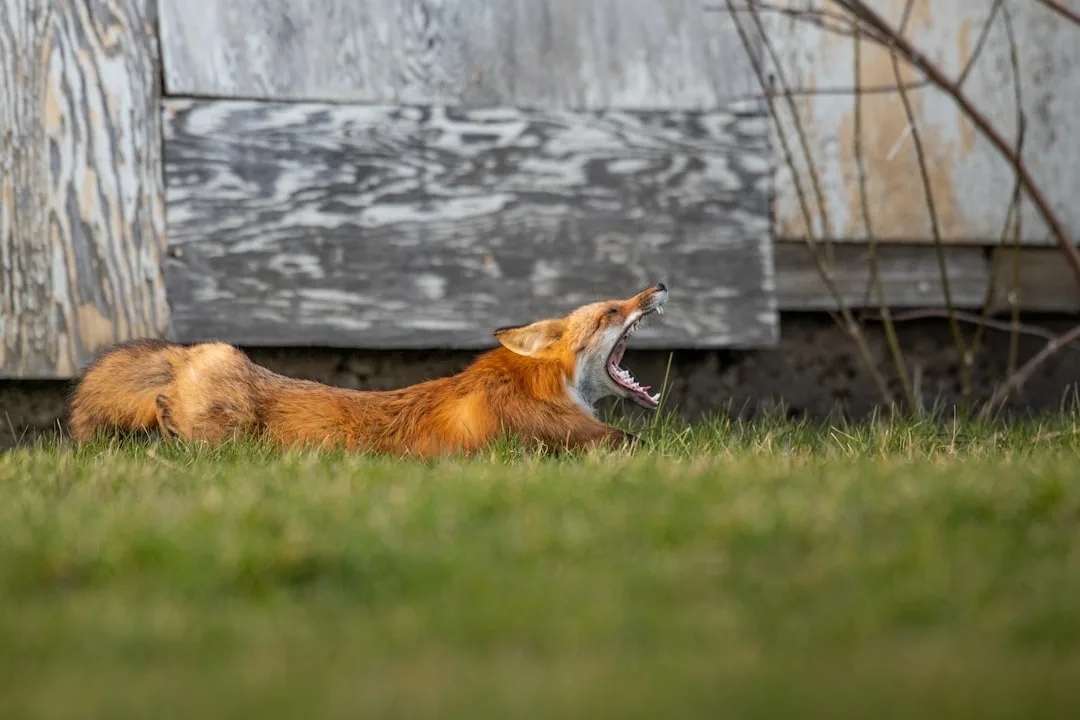
The red fox is the most widely distributed wild terrestrial carnivore on Earth. Across its native range Vulpes vulpes covers almost the entire Northern Hemisphere, and a reckless nineteenth-century introduction to Australia added most of another continent. No other non-human land predator comes close.
A single species holds down Arctic tundra at seventy-six degrees north, North African scrub, Siberian boreal forest, Rocky Mountain foothills, English back gardens, and the Sydney suburbs with equal competence. Along the way it adapted to cities so successfully that London and Bristol now carry higher fox densities than most of the surrounding countryside.
This guide covers every important aspect of red fox biology and ecology: size, anatomy, hunting, diet, reproduction, social life, urban adaptation, the strange magnetic-field-aided pounce, the ongoing Belyaev domestication experiment, and the complicated place the red fox occupies in ecosystems it invaded. It is a reference entry, not a summary - so expect specifics: kilograms, kilometres, chromosome counts, densities, and verified records.
Etymology and Classification
The scientific name Vulpes vulpes is, uniquely among canids, a tautonym - the genus and species name are identical. Vulpes is the classical Latin word for fox. The doubling was assigned by Carl Linnaeus in 1758 in the tenth edition of Systema Naturae, where it appeared as Canis vulpes; it was later moved into its own genus.
The common English name 'red fox' distinguishes it from the Arctic fox (Vulpes lagopus), the fennec fox (Vulpes zerda), the swift fox (Vulpes velox), and the kit fox (Vulpes macrotis). All of these belong to the 'true fox' clade, one of the three major branches of the dog family (Canidae), the other two being the wolf-like canids and the South American canids.
Genetic analysis places Vulpes vulpes firmly at the centre of its genus and reveals that the species as currently defined contains deep regional lineages. Molecular work on mitochondrial DNA suggests red foxes originated in Eurasia around 400,000 years ago and crossed the Bering land bridge into North America in at least two waves during later glaciations.
North American red foxes are therefore genetically distinct from European ones despite looking nearly identical. Taxonomists recognise roughly 45 subspecies worldwide, including the Eurasian red fox (V. v. vulpes), the North American red fox (V. v. fulvus), the mountain-dwelling Tibetan red fox (V. v. montana), and the desert-fringe Egyptian red fox (V. v. aegyptiaca).
One genetic curiosity sets the red fox apart from every other canid. It has only 34 chromosomes, the lowest count in the dog family, compared to 78 in wolves and domestic dogs. This chromosomal incompatibility means red foxes cannot produce viable hybrids with wolves, coyotes, jackals, or domestic dogs, despite living alongside them for millennia.
Size and Physical Description
Red foxes are surprisingly small animals. Popular impressions, shaped by long-legged silhouettes in folklore and lush winter coats in photographs, consistently overestimate fox size. A healthy adult is closer in weight to a medium domestic cat than to a medium dog.
Males:
- Body length: 60-90 cm from nose to base of tail
- Tail length: 35-55 cm
- Shoulder height: 40-50 cm
- Weight: typically 4.5-8.7 kg
Females:
- Body length: 45-80 cm
- Tail length: 30-50 cm
- Shoulder height: 35-45 cm
- Weight: typically 4.1-6.5 kg
Kits at birth:
- Length: roughly 15 cm
- Weight: 50-150 grams - about the size of a hamster
Size varies enormously across the range. Northern European and Alaskan foxes are the largest. Desert subspecies in North Africa and the Middle East run smaller. The tail - called a 'brush' - is almost 40% of total length and is one of the most recognisable features of the species. Foxes use the brush as a balancing rudder when turning at speed, as a warm face-wrap when curled up in snow, and as a visual signalling flag in social interactions.
Coat colour is strongly variable even within a single population. The classic red fox has a reddish-orange back and flanks, white or cream belly and throat, black ear backs, black stockings, and a white tail tip.
However, three naturally occurring colour morphs account for large fractions of wild populations: the 'cross' fox with a dark dorsal stripe and shoulder cross, the 'silver' or 'black' fox with dark guard hairs tipped in white, and rarer piebald or leucistic animals. Fur breeders have selected more than 40 additional colour morphs from the wild forms, including amber, platinum, marble, and pearl phases. All of them are the same species.
The coat has two layers. A dense woolly underfur traps air for insulation and thickens heavily in winter. Longer guard hairs shed water and snow and provide the visible colour. The underfur thickens so effectively that northern foxes can sleep curled on snow at minus forty degrees Celsius without cooling below operational temperatures. In spring the underfur moults in dramatic clumps, which is why summer foxes often look scraggly and thin.
Whiskers - the technical term is vibrissae - sprout not only from the muzzle but also from the back of the forelegs. Leg vibrissae are unusual among carnivores and help the fox navigate dense undergrowth and detect prey movement in the dark at point-blank range. The eyes are amber-yellow in adults with vertically slit pupils, closer to a cat's eye than a dog's. This eye shape maximises light gathering at dawn and dusk, when red foxes are most active.
Built for Pouncing and Sprinting
Red foxes are generalist hunters rather than endurance runners. Their skeleton and musculature favour acceleration, agility, and vertical leaping over long-distance pursuit. They can sprint at around 50 kilometres per hour in short bursts, clear more than 5 metres horizontally from a standing start, and leap over 2 metres vertically to pounce through deep snow or over walls. That last trick is the source of many urban fox legends - a two-metre garden fence is not a serious obstacle.
The legs are proportionally long relative to body mass, giving the fox a light-footed stride that can cover 10-15 kilometres a night on patrol without obvious fatigue. The feet carry retractile claws on the forepaws, unusual for a canid, which helps with climbing, digging, and gripping live prey. Pad fur grows thick enough in northern subspecies to walk silently on snow and to insulate against frozen ground.
Foxes are also comfortable in water. They swim readily, though they prefer not to, and routinely cross streams, rivers, and drainage ditches on foot when pursuing prey or dispersing. Unlike wolves they do not travel in organised packs and rarely hunt cooperatively. A red fox is almost always hunting alone or, at most, with a mated partner or grown kit.
Hunting and Diet
Red foxes are opportunistic omnivores with one of the broadest diets of any carnivore. Stomach-content studies from Europe, North America, and Australia consistently show small mammals as the numerical backbone of the diet, but fruit, insects, eggs, and carrion dominate during seasonal windows.
Core prey:
- Voles and field mice - often 50-75% of rural diet by bite count
- Rabbits and hares - especially juveniles
- Rats and ground squirrels
- Ground-nesting birds and their eggs
- Amphibians and reptiles in warmer seasons
Secondary and seasonal foods:
- Earthworms - harvested on damp lawns after rain
- Insects, especially grasshoppers and beetles
- Wild berries, fruits, and seeds
- Windfall apples, cherries, and grapes
- Fish in shallow streams and intertidal zones
- Carrion - road-killed ungulates, winter die-offs, whale strandings in coastal populations
- Waterfowl and seabirds in wetland and coastal habitats
Urban additions:
- Discarded takeaway food
- Pet food left outside
- Rubbish bin contents
- Compost piles
- Deliberate feeding by householders
An adult red fox needs roughly 500 grams of food per day. It obtains this through a repertoire of hunting techniques dominated by the 'mouse pounce': the fox locates prey by sound or scent, freezes, crouches, and leaps upward and forward in a tight arc, pinning the prey with its forepaws as it lands.
The pounce is effective even when prey is hidden under snow or dense grass, because the fox uses acoustic cues to triangulate position and the compressed forepaw landing smashes through the insulating layer.
A 2011 study by Burda and colleagues, published in Biology Letters, added a strange twist to this behaviour. Analysing nearly 600 wild pouncing attacks in the Czech Republic, the team found that foxes aiming on a north-northeast bearing succeeded in about 73% of attacks, compared with roughly 18% on other headings.
The current best explanation is that the fox uses a fixed magnetic compass sense as a rangefinder, pouncing when its head and the prey sit at the right angle relative to the magnetic field. This makes the red fox the first and so far only mammal with strong behavioural evidence for magnetic hunting.
Surplus prey is cached. The fox digs a shallow hole, deposits the food, closes the hole with soil or snow, and often urinates nearby as a scent marker. Caches are retrieved days or weeks later using spatial memory and scent. Caching behaviour is most pronounced in northern populations during winter, when prey is patchy and periods of plenty alternate with long lean days.
Social Life and Reproduction
Red foxes are socially monogamous. A breeding pair bonds in late winter, often for multiple seasons and sometimes for life. The pair defends a joint territory year-round, though the male ranges more widely than the female, especially during the mating season.
Territories vary dramatically with habitat. In good rural habitat a pair holds 300-2,000 hectares. In intensive farmland the figure drops to around 100 hectares. In high-density urban habitat such as inner Bristol or London a territory can compress to 25-50 hectares, reflecting the enormous calorie density of anthropogenic food. Territory edges are marked with urine, scat, and scent-gland secretions and are frequently contested by neighbours.
Gestation runs 49-58 days. Kits - typically 4-6, occasionally as few as one or as many as thirteen - are born in an underground den called an 'earth'. Earths are often expanded badger setts, rabbit warrens, or human-made voids under sheds and decks. Females sometimes dig their own earths in soft soil or sand. Dens are used repeatedly across generations and can carry centuries of modification.
For the first two weeks the kits are blind, deaf, and fully dependent. The vixen stays underground almost continuously while the dog fox hunts and brings food to the den entrance. Kits emerge above ground at 4-5 weeks, start taking solid food at 6-8 weeks, and follow adults on short hunting excursions by 12 weeks.
One of the most distinctive features of red fox social life is the helper system. Grown daughters from previous litters often stay on the natal territory for a year or more rather than dispersing, assisting their mother with hunting and provisioning the new kits. Helpers do not breed themselves. The system resembles the cooperative breeding of African wild dogs or mongooses and is rare among solitary canids.
It allows the breeding pair to raise larger litters during good years and provides apprenticeship for the helpers before they disperse to claim territories of their own.
Dispersal typically begins in autumn of the kit's first year. Males travel further than females, sometimes covering 100 kilometres or more to find an unoccupied territory. Mortality during dispersal is high, driven by vehicles, other foxes, and starvation in unfamiliar ground.
Communication
Red foxes use a rich vocal repertoire, at least 20 distinct calls having been documented. The most famous is the 'vixen scream', a drawn-out, almost human-sounding shriek delivered on winter nights during the mating season. Contrary to folklore it is produced by both sexes and is used for long-range mate attraction and territory declaration, not pain.
Other calls include:
- 'Wow-wow' contact barks between mated pairs
- Short staccato barks during territorial disputes
- Whines and gekkering - high-pitched stuttering sounds exchanged during close social encounters
- Puppy-like yelps from kits begging food
- Low growls during aggressive confrontations
Scent marking is arguably more important than vocalisation. Red foxes produce a musky, skunky odour from supracaudal ('violet') glands on the tail, from interdigital glands on the feet, and from anal glands. Urine marks are deposited at regular intervals along territorial boundaries and at cache sites. The characteristic fox smell familiar to anyone who has walked a suburban park at dawn is largely the product of scent marking, not of the animal itself.
Body language - ear angle, tail position, posture, gaze - communicates finer mood and status at close range. A confident fox holds the tail horizontal; a nervous fox tucks it low; an aggressive fox raises it. Ears swivel independently to track sound, and the tail tip flashes white during signalling.
Range, Habitat, and Urban Adaptation
The red fox's native range covers almost the entire Northern Hemisphere above 20 degrees latitude. It reaches as far north as 76 degrees in the Canadian High Arctic and ranges south to the Mediterranean coast, the Egyptian Nile Delta, the northern Indian subcontinent, and Central America through naturalisation.
In the 1850s British settlers released red foxes in Victoria, Australia, for recreational hunting, and within roughly a century the species colonised the entire continent except the tropical north. Red foxes are absent only from continental Antarctica, most oceanic islands, sub-Saharan Africa, and the deepest tropical rainforests.
Habitat range:
| Habitat type | Status |
|---|---|
| Boreal and taiga forest | Core native habitat, high densities |
| Temperate woodland | Core native habitat, high densities |
| Farmland and hedgerow | Favourable, densities often rise |
| Steppe and grassland | Common across Central Asia and North America |
| Tundra | Present, competes with Arctic fox |
| Desert margin | Desert-adapted subspecies |
| Mountain | Up to 4,500 m in Tibet and the Caucasus |
| Suburb and city | Booming populations since mid-20th century |
Urban colonisation is one of the defining ecological stories of the twentieth century. Red foxes began breeding in British suburbs in the 1930s, spread widely after the Second World War, and were joined by urban populations in Germany, Switzerland, the Nordic countries, and parts of North America by the 1980s. Modern surveys record more than 30 foxes per square kilometre in parts of Bristol and London.
Typical urban fox differences:
| Trait | Rural fox | Urban fox |
|---|---|---|
| Territory size | 300-2,000 ha | 25-50 ha |
| Kits per litter | 4-5 | 5-6, sometimes higher |
| Fear of humans | High | Low, sometimes nearly absent |
| Night-time range | 10-15 km | 2-5 km |
| Diet composition | Mostly hunted prey | 30-50% human-derived food |
| Main cause of death | Predation, disease, hunting | Vehicles, mange |
Some researchers argue urban foxes now show subtle skull and dentition shifts relative to rural kin, suggesting early-stage selection for a city-adapted phenotype. If confirmed, the red fox may be undergoing a natural experiment that runs in parallel to the deliberate Belyaev experiment on silver foxes.
The Belyaev Silver Fox Experiment
In 1959 the Soviet geneticist Dmitri Belyaev began a long-term experiment at the Institute of Cytology and Genetics in Novosibirsk. Working with silver foxes - a colour morph of the red fox farmed for fur - Belyaev selected each generation purely for one trait: tolerance of human contact. Kits were tested as juveniles for their response to a gloved human hand. The tamest individuals became the next generation's breeders.
Within about 10 generations a subset of foxes no longer flinched from humans and actively sought contact. By 30-40 generations the tame line displayed a suite of physical and behavioural traits nobody had selected for directly: floppy ears, piebald coats, curled tails, shortened muzzles, smaller skulls, reduced adrenal response, year-round rather than seasonal breeding, and dog-like barking and tail-wagging.
The same linked set of changes appears whenever a mammal is bred for tameness and is now known as the 'domestication syndrome'.
Belyaev's experiment continues today under his successors, including Lyudmila Trut, and has become the single clearest real-time demonstration of how domestication works. It also shaped modern understanding of neural crest development: the theory now widely accepted is that selection for tame behaviour reduces neural crest cell migration during embryonic development, pulling along changes in pigmentation, cartilage, skull shape, and adrenal tissue as a side-effect of behavioural selection.
Conservation, Invasion, and Relationship with Humans
Globally the red fox is classified as Least Concern by the IUCN with a stable or increasing population. Across Europe, North America, and Asia the species has not only held on through centuries of hunting, trapping, and habitat change but has often expanded into new habitats. Regional fluctuations - driven by rabies outbreaks, sarcoptic mange, and fur-market cycles - rarely dent the overall trajectory.
Australia is the major exception. Red foxes released for recreational hunting in the 1850s became one of the most destructive invasive predators on Earth. They are currently implicated in the extinction of at least ten native marsupial species and the severe decline of many more. Conservation biologists estimate that foxes kill around 300 million native Australian animals per year.
Landscape-scale poison baiting with 1080 (sodium monofluoroacetate) is the main control tool; it exploits an evolutionary quirk in which native Australian plants naturally produce the compound and native animals are far more tolerant of it than introduced predators. Even so, the invasion is effectively permanent.
Red foxes carry rabies across parts of Europe, Asia, and North America, though aggressive oral-bait vaccination campaigns since the 1990s have eliminated fox-borne rabies from most of Western and Central Europe. They are also significant carriers of sarcoptic mange and the tapeworm Echinococcus multilocularis, which can infect humans.
Human attitudes to the red fox are famously mixed. In much of Western Europe foxes appear in folklore as tricksters, admired for their cleverness. In Japan they feature as shapeshifters (kitsune) with ambiguous intentions. British rural culture built traditional mounted hunting around them; the sport was banned in England and Wales in 2005 but continues in modified forms.
In cities, public opinion swings between affection and complaint - the same householder often enjoys watching kits play on a lawn and loathes the vixen scream at three in the morning.
Related Reading
- Gray Wolf: North American and Eurasian Predator
- Wolves and Wild Canines: Pack Hunters of the Wild
- Wolf vs Dog: Key Differences
- How Wolf Packs Actually Work
References
Relevant peer-reviewed and governmental sources consulted for this entry include the IUCN Red List assessment for Vulpes vulpes (2016 update), the landmark magnetic-alignment study by Cerveny, Begall, Koubek, Novakova and Burda published in Biology Letters (2011), Lyudmila Trut's publications on the Novosibirsk farm-fox experiment in American Scientist (1999) and Current Biology (2009), Stephen Harris's long-running urban fox studies at the University of Bristol, and the Australian Department of Climate Change, Energy, the Environment and Water's threat abatement plan for predation by the European red fox.
See also: Coyote vs Fox
Frequently Asked Questions
How big are red foxes?
Adult red foxes (Vulpes vulpes) are smaller than most people expect. Body length runs 45-90 cm from nose to base of tail, with an additional 30-55 cm of bushy tail. Shoulder height is typically 35-50 cm. Weight varies from 4.1 to 8.7 kg, with males slightly larger than females. Northern subspecies such as the Eurasian red fox tend toward the upper end of the range; fennec-adjacent desert forms and Middle Eastern subspecies can be as small as 3 kg.
The bushy tail and long legs exaggerate apparent size - a red fox standing in long grass looks much bigger than a cat but typically weighs less than one. Kits are born at 50-150 grams, roughly the size of a hamster.
What do red foxes eat?
Red foxes are opportunistic omnivores with one of the broadest diets of any carnivore. The core of their diet is small mammals - voles, mice, rats, rabbits, and ground squirrels make up 50-75% of intake in most rural populations. They also take birds, eggs, frogs, lizards, fish, insects, earthworms, and carrion. Plant matter is a major component: fruits, berries, seeds, and grasses can exceed 30% of the summer diet.
Urban foxes add discarded human food, pet food, compost, and rubbish bin contents. An adult fox needs about 500 grams of food per day. Surplus prey is cached by burying it and retrieved later using spatial memory and scent.
Where do red foxes live?
Red foxes have the largest natural range of any wild terrestrial carnivore on Earth, covering the entire Northern Hemisphere above 20 degrees latitude. Native range spans Europe, most of Asia (except Southeast Asia and the Arabian interior), North Africa along the Mediterranean coast, and North America from Alaska and Canada south to the Rio Grande.
They were introduced to Australia in the 1850s for recreational hunting and now occupy almost the entire continent. They tolerate an extraordinary range of habitats: boreal forest, temperate woodland, grassland, steppe, tundra, desert margin, farmland, suburbs, and dense urban cores. Their only hard limits are tropical rainforest, high-Arctic sea ice, and continuous snowfields above 4,500 metres.
Are red foxes endangered?
No. The IUCN classifies the red fox as Least Concern with a stable or increasing global population. Exact numbers are impossible to pin down but estimates run into the millions. The species benefits from human land-use changes that would harm larger carnivores - farmland edges, hedgerows, suburbs, rubbish tips, and cities all favour foxes.
Regional control campaigns, fur trapping, sarcoptic mange outbreaks, and road mortality take significant numbers each year without denting the overall population. In Australia, where the fox is invasive, the concern runs the other way: national and state governments spend tens of millions of dollars per year on fox baiting to protect native marsupials and ground-nesting birds.
Do foxes really use magnetic fields to hunt?
Yes. A 2011 study published in Biology Letters by Hynek Burda and colleagues analysed nearly 600 mousing attacks by wild red foxes in the Czech Republic. The researchers found that when a fox could not see its prey - for instance when voles were tunnelling under snow - success rates jumped sharply when the fox aimed on a north-northeast bearing, around 20 degrees clockwise from magnetic north.
The foxes’ success rate hit 73% on that heading, compared to 18% in other directions. The current hypothesis is that foxes use a fixed magnetic compass sense to judge distance to prey they can hear but not see, effectively overlaying a magnetic rangefinder on their hunting geometry. Red foxes remain the only mammal with strong behavioural evidence for magnetic hunting.
What was Belyaev's silver fox experiment?
In 1959 the Soviet geneticist Dmitri Belyaev began an experiment at the Institute of Cytology and Genetics in Novosibirsk that aimed to replay the domestication of the dog using silver foxes - a colour morph of the red fox farmed for fur. Belyaev selected each generation purely for one trait: tolerance of humans. Within about 10 generations a subset of foxes actively sought human contact.
By 40 generations most of the line showed a suite of traits never selected for directly: floppy ears, piebald coats, curled tails, shorter legs, smaller skulls, barking vocalisations, and year-round breeding. The experiment continues today and is the clearest real-time demonstration of the ‘domestication syndrome’, a linked set of physical and behavioural changes that appear whenever a mammal is bred for tameness.
The experiment also shaped modern understanding of neural crest development and how behavioural selection pulls morphology along with it.
How have red foxes adapted to cities?
Red foxes were first documented breeding in British suburbs in the 1930s and have since colonised cities from London and Bristol to Berlin, Zurich, Melbourne, and parts of North America.
Urban foxes differ measurably from rural kin: they travel shorter distances (territories as small as 30 hectares versus 500-2,000 hectares in the countryside), raise more kits per litter, eat a higher fraction of human-derived food, and show reduced fear of humans and vehicles. Bristol and parts of London carry densities exceeding 30 foxes per square kilometre - higher than almost any rural habitat.
Downsides include higher road-kill rates and periodic sarcoptic mange epidemics that can wipe out local populations. A growing body of research even points to measurable skull and dentition changes in urban foxes compared to their rural counterparts, suggesting early-stage selection for a city-adapted phenotype.
How long do red foxes live?
Wild red foxes rarely live past 3-6 years. Most kits die in their first year from predation, disease, starvation, or vehicles. Adults that survive their first winter still face high annual mortality from cars, hunting, mange, canine distemper, and territorial conflict. The oldest documented wild red fox was 14 years old.
Captive foxes in zoos and sanctuaries routinely reach 15 years and occasionally exceed 20, because they avoid the two biggest wild killers - vehicles and disease - and receive consistent food. In both settings, females generally outlive males thanks to lower dispersal distances and slightly lower parasite loads.