
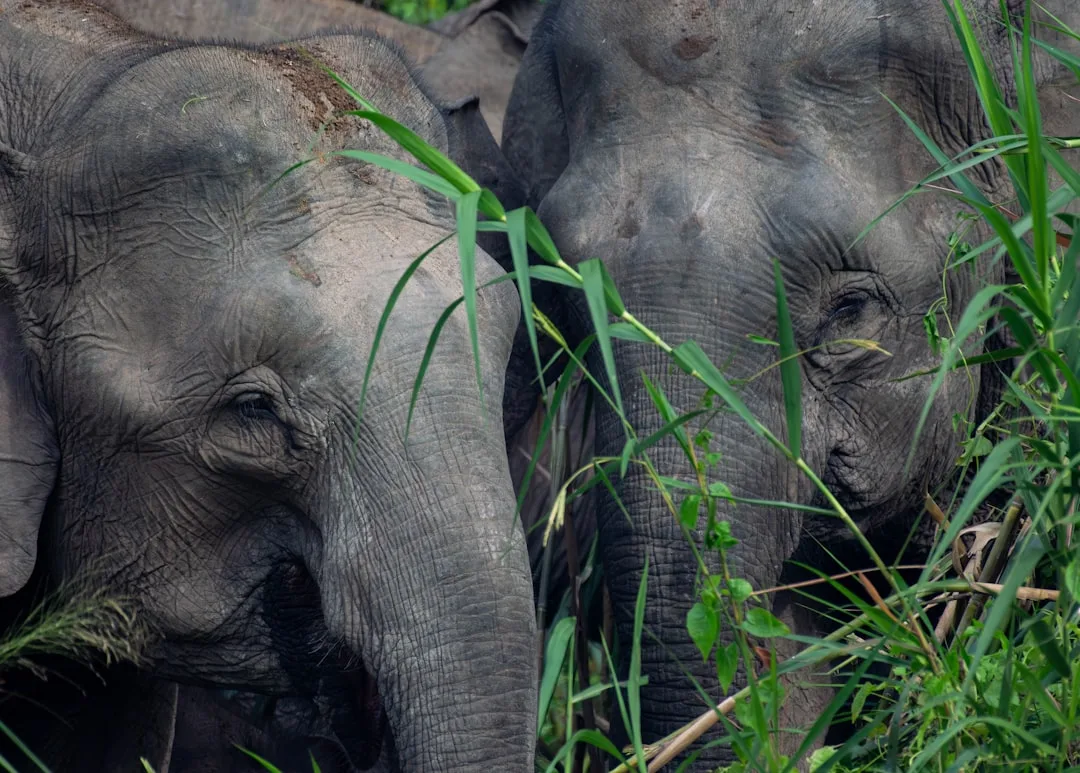
The Bornean pygmy elephant is the smallest, rarest, and arguably the gentlest elephant in Asia. It is a distinct subspecies of the Asian elephant, Elephas maximus, confined almost entirely to the forests of northeastern Borneo - mostly within the Malaysian state of Sabah. With roughly 1,500 individuals remaining on Earth, the Bornean pygmy elephant is one of the smallest viable elephant populations in the wild.
Its small size, oversized ears, baby-faced head, and long dragging tail give it an appearance so unusual that for most of the 20th century zoologists argued about whether it was even a real subspecies or just a stunted mainland herd with a good origin story.
This guide covers every major aspect of Bornean pygmy elephant biology and conservation: size and anatomy, the contested history of their arrival in Borneo, the landmark 2003 genetic study that settled much of the debate, diet, social structure, the Kinabatangan River corridor that carries the remaining population, and the oil palm conflict that shapes the species' daily survival.
It is a reference entry, not a summary - expect specifics, kilograms, kilometres, dates, and the conservation numbers that matter.
Etymology and Classification
The scientific name Elephas maximus borneensis was formally adopted after the 2003 genetic study by WWF and Columbia University's Fernando et al. confirmed that Borneo's elephants were a distinct evolutionary lineage. Prior to that date the Borneo population was often grouped with the Sumatran subspecies (E. m. sumatranus) or lumped within E. m. indicus, depending on the authority.
The name borneensis simply means 'of Borneo' and reflects the subspecies' almost complete geographic restriction to the northern third of the island.
The common name 'pygmy elephant' is older and more disputed than the scientific one. Colonial-era naturalists in the 19th and early 20th centuries noticed that elephants shot or sighted in Borneo were visibly smaller than elephants from India, Sri Lanka, or mainland Southeast Asia.
The 'pygmy' label stuck in popular writing but was rejected by several influential zoologists who argued the size difference was environmental - a function of poor tropical soils, dense forest, or small founder numbers - rather than genetic. This debate lasted almost a century and was not formally resolved until modern DNA analysis intervened.
In Malay the animal is called gajah Borneo or gajah kerdil ('dwarf elephant'). Local Dusun, Kadazan, and Orang Sungai communities along the Kinabatangan River have their own names and a long tradition of ecological knowledge about elephant movements.
The Royal Gift Origin Theory
For decades the dominant popular explanation for how elephants came to Borneo was a piece of 17th-century history. According to oral tradition and some surviving trade records, the ruler of Java gifted a captive herd of Asian elephants to the Sultan of Sulu sometime in the 17th century. The Sultan's domain straddled what is now the southern Philippines and northeastern Borneo.
When the gift herd ceased to serve a useful purpose - because the Sultan's court moved, because the elephants proved difficult to maintain, or because of simple neglect - the animals were allegedly released into the forests of what is now Sabah and became the founder population of today's pygmy elephants.
The royal gift theory was compelling for several reasons. There are no confirmed elephant fossils in Borneo, which looked consistent with a recent introduction. The population was restricted to the northeastern corner of the island, where a Sulu release would have occurred. The genetic base appeared narrow, consistent with a small founder event. And the animals' small size could be explained as island dwarfism over a few centuries of selection under Borneo's nutrient-poor conditions.
The 2003 genetic study destroyed much of this narrative. Mitochondrial DNA analysis indicated that Borneo's elephants diverged from mainland Asian elephant lineages somewhere between 18,000 and 300,000 years ago, with most estimates pointing toward the deeper end of that range. That is far, far older than any 17th-century gift.
The genetic distance between Bornean pygmy elephants and any candidate source population - Sumatran, Javan (now extinct), peninsular Malaysian - is larger than can be explained by a few centuries of isolation. Most biologists now accept that elephants reached Borneo during Pleistocene sea-level lowstands, when land bridges connected the Sunda shelf, and were subsequently isolated when sea levels rose.
The royal gift theory is not entirely dead. Some historians and a minority of biologists note that the genetic distance could reflect a bottleneck from a very small founder group and that the Sultan's gift might still explain where the founders came from - just not when they arrived. The mainstream view is that Borneo's elephants have been there for hundreds of thousands of years and the Sultan's gift, if it existed at all, was a footnote rather than a founding event.
Size and Physical Description
Bornean pygmy elephants are the smallest elephants in Asia. Adult size ranges significantly, and the difference from mainland Asian elephants, while real, is smaller than popular writing sometimes suggests - but it is visible at a glance once you know what to look for.
Adult males:
- Shoulder height: 2.2-2.6 metres
- Weight: 2,500-3,000 kg
- Tusk length: rarely over 1.5 metres, often much shorter
- Ear length: proportionally larger than other Asian elephants
Adult females:
- Shoulder height: 1.7-2.2 metres
- Weight: 2,000-2,500 kg
- Often carry small tusks called tushes rather than full tusks
Calves at birth:
- Height: about 80 cm at the shoulder
- Weight: 60-100 kg
For comparison, a mainland Asian bull elephant typically stands 2.7-3.0 metres at the shoulder and weighs 3,500-5,000 kg. The size difference is substantial but not extreme - a Bornean bull is perhaps 20-25 per cent lighter than a mainland Indian bull of equivalent age.
Beyond raw size, several anatomical features distinguish the subspecies. The ears are proportionally larger, sometimes comically so in photographs, giving adults a juvenile appearance. The tail is long enough that it often drags the ground as the elephant walks - a feature almost never seen in mainland Asian elephants. The back is straighter and the rump rounder, producing a shorter, stockier silhouette.
The skull is more rounded, which combines with the oversized ears and chubby cheeks to produce what mahouts and researchers consistently describe as a 'baby-faced' look that persists into adulthood.
Tusks are generally smaller and straighter than in mainland elephants. Full, curving tusks longer than 1.5 metres are rare even in mature bulls. Females often carry short tushes that rarely emerge past the lip line. This reduced tusk development may reflect either genuine subspecies difference or the selective pressure of historical ivory hunting, or both.
Temperament - The Gentle Elephants
Field researchers, mahouts, and rangers who have worked with multiple Asian elephant populations consistently describe Bornean pygmy elephants as the gentlest elephants in Asia. This is not a formal scientific classification - temperament is notoriously hard to quantify across species - but it is a remarkably consistent observation across independent observers.
The reports describe calmer reactions to human presence, more curiosity and less defensive aggression, fewer mock charges, greater tolerance of approach, and behaviour that researchers sometimes label 'playful' even in adult animals. Mahouts who have handled both Indian and Bornean elephants report that Bornean animals are easier to habituate and less prone to musth-related aggression in captive settings, though ethical concerns about captive elephants apply regardless.
Why might this be? Several hypotheses exist:
- Predator-poor evolution. Borneo has no tigers, no leopards, no lions, and no hyenas. The only natural predator capable of threatening an adult elephant is the reticulated python, which might occasionally take a very small calf. Hundreds of thousands of years without serious predator pressure may have reduced selection for aggressive defensive behaviour.
- Low historical human-elephant conflict. Mainland Asian elephants have coexisted with dense human agricultural populations, war elephants, timber-logging work, and capture-for-taming for 3,000-4,000 years. Borneo's population, restricted to an area of lower historical human density, faced much less of that selective pressure.
- Small population genetic drift. In a founder population, particular temperament traits can fix through chance alone regardless of selection.
The gentleness claim is important beyond curiosity - it matters for conservation. Bornean pygmy elephants are more tolerant of humans than mainland populations but that tolerance also makes them more vulnerable, because herds that would run from armed plantation workers elsewhere in Asia will sometimes linger in Borneo and be poisoned or shot.
Habitat and Range
The Bornean pygmy elephant is almost entirely restricted to the northeastern third of Borneo. The core range sits within the Malaysian state of Sabah, with a small and poorly surveyed population extending into northern Kalimantan in Indonesia. Key habitats include:
| Landscape | Role for elephants |
|---|---|
| Kinabatangan floodplain | Primary migration corridor; most important single landscape |
| Danum Valley | Core breeding habitat, primary forest |
| Tabin Wildlife Reserve | Protected population stronghold |
| Ulu Segama | Connected logging-recovery forest, corridor role |
| Northern Kalimantan | Small, poorly monitored population |
Preferred habitat is lowland dipterocarp forest and secondary regrowth below 300 metres elevation, with easy access to rivers and floodplain grass. Swampy peat forest is used where available. The subspecies does not occur in the montane forests of Mount Kinabalu or the other highlands of central Borneo, though herds occasionally climb into hill forest during seasonal moves.
The Kinabatangan River corridor deserves special mention. It is a 10-20 kilometre-wide ribbon of protected and partially protected forest following the Kinabatangan River for roughly 560 kilometres to the coast, surrounded on almost every side by oil palm plantation. Most of Sabah's remaining pygmy elephants depend on this corridor for seasonal movement, water, and connection between the larger forest blocks.
The corridor is narrow enough in places that a single plantation expansion can sever an elephant migration route for decades.
Diet and Feeding Ecology
Bornean pygmy elephants are generalist herbivores with an enormous daily appetite. An adult consumes up to 150 kilograms of vegetation per day. The diet is highly varied and reflects whatever forest produces at a given season.
Primary food categories:
- Wild figs, bananas, and rainforest fruits
- Palm hearts and young palm fronds
- Bamboo shoots and mature culms
- Riverine grasses and sedges
- Bark and twigs from dipterocarp trees and fig species
- Water hyacinth and other aquatic vegetation
- Cultivated oil palm where accessible
Feeding occupies 16-18 hours of the typical daily cycle. Elephants break branches, strip bark, pull up grasses with the trunk, and occasionally push down small trees to access crown foliage. They drink 100-200 litres of water per day and visit rivers daily when possible.
The growing proportion of cultivated oil palm in the diet is the single biggest driver of conflict. Young oil palm contains a soft, nutritious heart that elephants consume readily. A herd can destroy a hectare of young plantation overnight by trampling saplings to access the palm hearts. For smallholder farmers this represents a catastrophic loss - sometimes an entire year of investment - and the economic pressure drives the retaliation killings that continue to erode the population.
Social Structure and Reproduction
Like all Asian elephants, Bornean pygmy elephants live in matriarchal family groups. A typical herd is 6-20 individuals centred on an older matriarch, her adult daughters, and their calves. Adult males leave the family around age 10-15 and spend most of their lives solitary or in loose bull groups, joining herds temporarily for mating.
Reproductive parameters:
| Metric | Value |
|---|---|
| Sexual maturity | 10-15 years (females), 14-17 (males) |
| Gestation | 19-22 months |
| Calves per birth | 1 (twins extremely rare) |
| Interbirth interval | 4-6 years |
| Calf weight at birth | 60-100 kg |
| Nursing duration | 2-3 years |
Reproduction is slow enough that any significant loss of breeding-age females represents a demographic disaster for a population this small. A single herd wiped out in a poisoning event can knock multiple years of future recruitment out of the regional population.
Matriarchs in Borneo appear to lead herds across large, learned migration routes along the Kinabatangan. When a matriarch dies, particularly in conflict-related incidents, the loss of her ecological knowledge can disrupt herd movement patterns for years and push herds into new conflict zones they would otherwise have avoided.
Conservation Status and Threats
The IUCN lists the Asian elephant as Endangered, with the Bornean subspecies recognised as among the most vulnerable regional populations. The most recent consolidated estimate places the Bornean pygmy elephant population at roughly 1,500 individuals, overwhelmingly concentrated in Sabah. This is one of the smallest elephant populations on Earth.
Primary threats:
- Habitat loss from oil palm. Sabah has converted large areas of lowland dipterocarp forest - the elephants' prime habitat - to oil palm plantation since the 1980s. Much of the remaining elephant range consists of narrow forest strips bordered by plantations on multiple sides.
- Human-elephant conflict. Poisoning, retaliation shooting, and snaring kill an estimated 10-20 pygmy elephants per year in Sabah. In a population of 1,500, that is a 0.7-1.3 per cent annual loss from conflict alone, well above sustainable levels without compensation from births.
- Habitat fragmentation. Forest corridors that once connected larger habitat blocks have been severed by plantation, roads, and settlement. Isolated sub-populations face elevated risk of genetic bottleneck and local extinction.
- Small-population genetic risk. A total effective population of a few hundred breeding individuals is small enough that inbreeding depression and loss of genetic diversity are measurable concerns over the next several generations.
- Poaching for ivory. Less severe than in African elephants because tusks are small and few, but some poaching does occur.
- Climate change. Shifts in monsoon patterns and an increase in catastrophic flooding along the Kinabatangan have the potential to stress populations and alter migration patterns.
Conservation responses:
Sabah has pioneered a number of pygmy-elephant-specific conservation programmes. The Kinabatangan Wildlife Sanctuary was gazetted specifically to preserve the river corridor. WWF and the Sabah Wildlife Department operate managed translocation programmes that relocate problem elephants from plantation-conflict areas to larger protected blocks.
Community coexistence programmes pay smallholders for damage, train them in non-lethal deterrents, and provide electric fencing. A national Action Plan for Bornean Elephant Conservation coordinates across federal, state, and NGO stakeholders.
None of these programmes has stabilised the decline, but all of them slow it, and without them the population would likely already have collapsed below viable levels.
Bornean Pygmy Elephants and People
Local communities along the Kinabatangan have coexisted with pygmy elephants for generations. Dusun, Kadazan, and Orang Sungai traditions include specific elephant knowledge - migration timing, preferred feeding areas, how to defend crops without killing the animals - that researchers have incorporated into modern conflict-mitigation programmes.
The relationship has always included both reverence and frustration, because elephants in a village garden are a genuine economic threat no matter how much cultural goodwill exists toward them.
Modern wildlife tourism along the Kinabatangan has created economic incentive for conservation. Boat tours from Sukau and Bilit carry visitors past herds feeding on riverbanks, and elephant sightings are one of the region's main draws. Well-managed tourism provides income that offsets the lost opportunity cost of not converting corridor land to plantation. Poorly managed tourism habituates herds to human presence in ways that can eventually increase conflict.
The Bornean pygmy elephant sits at the intersection of several of the biggest environmental questions of the 21st century: tropical forest loss, the global palm oil supply chain, the ethics of introduced versus native species, and the conservation of small evolutionary lineages.
Its survival or loss will be determined by decisions made in Sabah's Ministry of Tourism, Culture and Environment, in palm oil corporate boardrooms, and in the consumer markets that buy the palm oil that drives the plantations.
Related Reading
- Asian Elephant
- African Bush Elephant
- Forest Elephant
- Elephant Memory and Intelligence
- Elephants: Memory, Intelligence, and the Fight for Survival
References
Relevant peer-reviewed and governmental sources consulted for this entry include the 2003 Fernando et al. genetic study in PLOS Biology confirming the Bornean pygmy elephant as a distinct subspecies, IUCN Asian Elephant Specialist Group assessments, the Sabah Wildlife Department Bornean Elephant Action Plan, WWF-Malaysia Kinabatangan corridor monitoring reports, and published research in Biological Conservation, Oryx, and Journal of Mammalogy.
Population figures reflect the most recent consolidated estimates for the Sabah population supplemented by limited survey data from northern Kalimantan.
Frequently Asked Questions
How big are Bornean pygmy elephants?
Adult Bornean pygmy elephants (Elephas maximus borneensis) stand 1.7 to 2.6 metres at the shoulder and weigh 2,000 to 3,000 kilograms. They are roughly 30 centimetres shorter and 1,000 kilograms lighter than typical mainland Asian elephants. Calves weigh 60-100 kilograms at birth and stand about 80 centimetres tall.
Beyond raw size, the subspecies has proportionally larger ears, a rounder rump, a straighter back, and tails long enough to drag on the ground - a combination that gives adults a baby-faced appearance unique among elephants.
Where do Bornean pygmy elephants live?
Bornean pygmy elephants inhabit the northeastern corner of Borneo, almost entirely within the Malaysian state of Sabah, with a small population extending into northern Kalimantan in Indonesia. Their range is concentrated along the Kinabatangan River floodplain, the Danum Valley, the Tabin Wildlife Reserve, and the forest corridors connecting these areas.
They prefer lowland dipterocarp forest, riverine floodplain, and secondary growth below 300 metres elevation. The Kinabatangan River wildlife corridor - a ribbon of protected forest surrounded by oil palm plantations - is the single most important landscape for the subspecies and carries most of the remaining population through seasonal migrations.
Why are they called pygmy elephants?
The name refers to their notably smaller size compared to other Asian elephant populations. Early 20th-century naturalists noticed the Borneo animals looked different - shorter, rounder, gentler, with oversized ears - and the label ‘pygmy’ stuck in colonial wildlife literature. The distinctness was contested for decades because no one could agree whether the size difference was genetic or just due to poor nutrition in Borneo’s soils.
In 2003 a joint genetic study by WWF and Columbia University analysed mitochondrial DNA and microsatellite markers and confirmed that Bornean elephants are a genuinely distinct evolutionary lineage separated from mainland Asian elephants for at least 300,000 years. The ‘pygmy’ label, long disputed, is now scientifically supported.
Did pygmy elephants really descend from a 17th-century royal gift?
A long-standing hypothesis holds that Borneo had no native elephants and that the entire current population descends from a herd gifted by the ruler of Java to the Sultan of Sulu in the 17th century, which was later released or escaped into the Sabah forests. Historical trade records and the lack of elephant fossils in Borneo supported the idea for years.
However, the 2003 genetic study delivered a strong counter-argument: mitochondrial DNA showed a divergence from mainland Asian elephants of roughly 300,000 years, far older than any historical gift. Most biologists now favour the ancient isolation model - the royal gift theory persists in popular writing, but modern genetics suggest the elephants were already on Borneo long before any sultan.
Are Bornean pygmy elephants endangered?
Yes. The IUCN lists the Asian elephant as a whole as Endangered, and the Bornean subspecies is among the most threatened populations. Current estimates place the total population at roughly 1,500 individuals, down from historically much larger numbers. The main threats are habitat loss from oil palm plantation expansion, fragmentation of forest corridors, direct human-elephant conflict (poisoning, shooting, and snaring), and small-population genetic risks.
Sabah’s government has invested in wildlife corridors, managed elephant translocations, and community mitigation programmes, but the population continues to lose 10-20 elephants per year to conflict and the habitat base continues to shrink.
What do Bornean pygmy elephants eat?
They are generalist herbivores that consume up to 150 kilograms of plant matter per day. The diet includes wild bananas, figs, and other rainforest fruits; palm hearts and young palm fronds; bamboo shoots and mature culms; grasses on floodplains; bark and twigs from dipterocarp and fig trees; and a growing proportion of cultivated oil palm where forests border plantations.
Their fondness for young oil palm is the single biggest driver of human-elephant conflict in Sabah: a herd can destroy a hectare of young palm in a single night by trampling and feeding on the palm hearts.
Why are Bornean pygmy elephants considered the gentlest elephants?
Field researchers, mahouts, and rangers who have worked with multiple Asian elephant populations consistently describe Bornean pygmy elephants as calmer, more curious, and less aggressive than mainland populations. Anecdotal reports note that they tolerate human presence at closer range, show less defensive mock-charging, and appear playful even as adults. The reasons are debated.
Some researchers point to the long isolation on a predator-poor island (no tigers, no leopards) which may have reduced selection pressure for aggression. Others note that Borneo’s elephants have not been subject to the same long history of capture, conflict, and war that shaped mainland Asian elephants over millennia. It is not formally established science, but the gentleness is a consistent observation across independent observers.
How do oil palm plantations threaten pygmy elephants?
Oil palm expansion is the single biggest driver of pygmy elephant decline. Since the 1980s, Sabah has converted millions of hectares of lowland forest - exactly the elephants’ preferred habitat - into monoculture plantation. This has three compounding effects. First, habitat loss shrinks the forest base that can support elephant herds.
Second, fragmentation cuts herds off from seasonal migration routes, forcing them to cross plantations to reach water or alternative forest. Third, direct conflict follows: elephants eat young palms, plantation companies and smallholders respond with poisoning, shooting, snares, and retaliation killings.
Sabah has pioneered wildlife corridor schemes, plantation coexistence programmes, and electric fencing, but the economic pressure behind palm oil expansion continues to shape the landscape faster than conservation can respond.