
Why do giraffes have such long necks?
The evolution of the giraffe's neck remains debated among scientists. The traditional explanation is the 'competing browsers' hypothesis - that longer necks allowed access to food sources beyond the reach of other herbivores. However, the 'sexual selection' hypothesis proposes that long necks evolved because males use them as weapons in 'necking' combat for mating rights, with longer-necked males winning more.
They carry the weight of grasslands on their backs. They carved migration routes older than human memory across continents, fed civilizations, bore armies into battle, and - through the simple evolutionary innovation of the hoof - became the most ecologically dominant group of large land mammals on Earth. Ungulates, the hoofed mammals, are so deeply woven into human history and planetary ecology that it is nearly impossible to imagine either without them.
From the towering giraffe browsing acacia canopies in the Serengeti to the critically endangered rhinoceros fighting extinction at the hands of poachers, ungulates encompass an extraordinary range of body plans, behaviors, and survival strategies. There are grazers and browsers, sprinters and endurance runners, solitary territorial bulls and herds numbering in the millions.
They have shaped the vegetation structure of every continent except Antarctica, and they have shaped human civilization itself - arguably more than any other group of wild animals.
Understanding ungulates is understanding the engine that drives terrestrial ecosystems.
What Are Ungulates? Odd-Toed vs. Even-Toed
The term "ungulate" derives from the Latin ungula, meaning "hoof." In modern taxonomy, ungulates are divided into two primary orders based on a seemingly simple anatomical distinction: how many toes bear their weight.
Perissodactyla (odd-toed ungulates) bear their weight primarily on the third (middle) toe, which is enlarged and encased in a single hoof. This order includes horses, zebras, donkeys, rhinoceroses, and tapirs. There are only 17 living species of odd-toed ungulates, making them a relatively small group, though their ecological and cultural significance is disproportionately enormous.
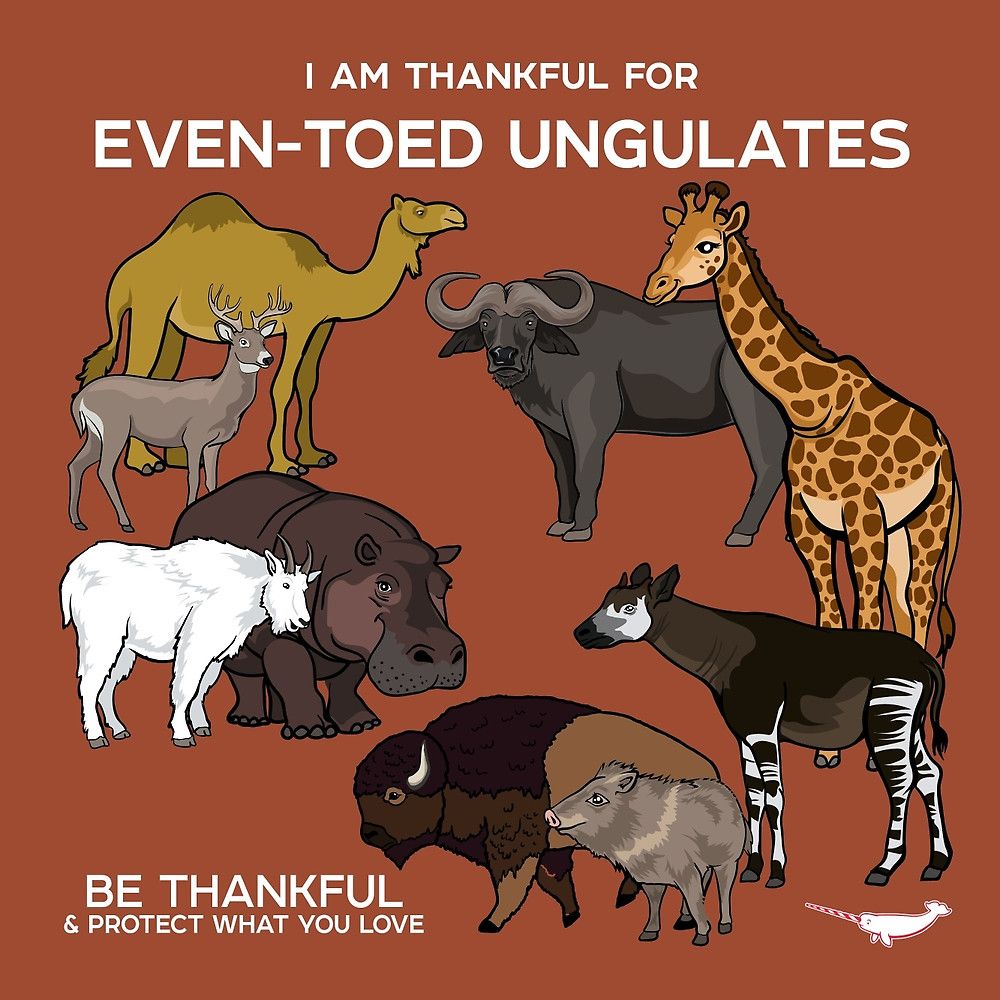
Artiodactyla (even-toed ungulates) distribute their weight across the third and fourth toes, which are typically encased in a two-part "cloven" hoof. This is the far larger group, comprising over 220 species including cattle, deer, antelope, giraffes, hippos, pigs, camels, and sheep.
Recent molecular phylogenetics has expanded this order to include whales and dolphins (forming the superorder Cetartiodactyla), since cetaceans descended from even-toed ungulate ancestors roughly 50 million years ago - but for the purposes of this discussion, the focus remains on the terrestrial hoofed members.
The divergence between odd-toed and even-toed ungulates occurred during the early Eocene epoch, approximately 55 million years ago, when both groups radiated rapidly across the warming landscapes of the Paleocene-Eocene boundary. Odd-toed ungulates dominated the Eocene and Oligocene but declined in diversity through the Miocene as even-toed ungulates, with their more efficient digestive systems (particularly ruminant digestion), gained the upper hand [1].
| Feature | Odd-Toed (Perissodactyla) | Even-Toed (Artiodactyla) |
|---|---|---|
| Weight-bearing toes | One (third toe) | Two (third and fourth toes) |
| Living species | ~17 | ~220+ |
| Digestion | Hindgut fermentation | Foregut (ruminant) or omnivorous |
| Examples | Horses, rhinos, tapirs | Cattle, deer, giraffes, hippos |
| Hoof structure | Single solid hoof | Cloven (split) hoof |
| Peak diversity | Eocene-Oligocene | Miocene to present |
Giraffes: Engineering at Extreme Height
The giraffe (Giraffa camelopardalis) is the tallest living terrestrial animal, with adult males reaching heights of 5.5 to 5.8 meters (18-19 feet) and weighing up to 1,930 kg (4,250 lbs). Even newborn calves stand approximately 1.8 meters tall - taller than most adult humans - and must survive a 1.5-meter drop to the ground at birth.
The Neck Evolution Debate
The giraffe's neck, containing the same seven cervical vertebrae as nearly all other mammals, achieves its extraordinary length through the elongation of each individual vertebra, which can measure over 25 cm (10 inches) in length. How this neck evolved has been debated for over a century.
Charles Darwin proposed the "competing browsers" hypothesis - that longer necks provided a feeding advantage by allowing access to foliage beyond the reach of shorter herbivores. This remains the most widely cited explanation and is supported by observations that giraffes do feed preferentially at heights inaccessible to other browsers, particularly during dry seasons when lower foliage is depleted.
However, in 1996, zoologists Robert Simmons and Lue Scheepers proposed the "sexual selection" hypothesis, arguing that the neck evolved primarily as a weapon in male-male combat. Male giraffes engage in violent "necking" contests - swinging their heavy, ossicone-topped heads at opponents with enough force to shatter bone and occasionally kill.
Males with longer, heavier necks win more contests, secure more matings, and thus pass on genes for neck length. This hypothesis is supported by the observation that males have proportionally longer and heavier necks than females, a pattern consistent with sexual selection [2].
"The giraffe is not merely a tall animal. It is a cardiovascular miracle walking on stilts." - Anne Innis Dagg, Giraffe: Biology, Behaviour, and Conservation (2014)
Cardiovascular Adaptations
The giraffe's height creates a severe physiological challenge: its brain sits roughly 2 meters above its heart. To pump blood against gravity to the brain, the giraffe evolved the most powerful heart of any land animal - weighing approximately 11 kg (25 lbs) and generating blood pressure roughly twice that of humans (approximately 280/180 mmHg).
Specialized valves in the jugular veins prevent blood from rushing back to the brain when the giraffe lowers its head to drink, and a network of elastic blood vessels at the base of the brain (the rete mirabile) acts as a pressure-dampening system.
The giraffe's tongue, measuring approximately 45 to 50 cm (18-20 inches) in length, is prehensile and darkly pigmented - likely to prevent sunburn during the many hours spent feeding among thorny acacia branches. The tongue's toughened surface allows it to strip leaves from even the most heavily thorned branches without injury.
Rhinoceroses: Keratin, Not Ivory
Five species of rhinoceros survive today, distributed across Africa and Asia. All are threatened, and three are critically endangered.
- White rhinoceros (Ceratotherium simum) - Southern and eastern Africa (~18,000 individuals)
- Black rhinoceros (Diceros bicornis) - Eastern and southern Africa (~6,400 individuals)
- Indian rhinoceros (Rhinoceros unicornis) - Nepal and northeastern India (~4,000 individuals)
- Sumatran rhinoceros (Dicerorhinus sumatrensis) - Sumatra and Borneo (~80 individuals)
- Javan rhinoceros (Rhinoceros sondaicus) - Western Java only (~76 individuals)
Horn Composition and the Poaching Crisis
The single most important fact about rhinoceros horn - and the one most widely misunderstood - is that it is composed entirely of keratin, the same protein that forms human fingernails and hair. Unlike elephant tusks, which are true ivory (modified teeth containing dentine), rhino horn contains no bone core, no calcium, and no medicinal compounds of any kind.
Scientific analyses have consistently confirmed that ingesting rhino horn offers no therapeutic benefit beyond what one would receive from chewing fingernail clippings.
Despite this, the illegal trade in rhino horn has driven poaching to catastrophic levels. In South Africa alone, poaching surged from 13 rhinos killed in 2007 to 1,028 in 2017, driven primarily by demand in Vietnam and China where horn is used in traditional medicine preparations and as a status symbol. The trade price has reached $60,000 or more per kilogram on the black market, exceeding the price of gold [3].
The Northern White Rhino: A Subspecies on the Edge
The most devastating illustration of the poaching crisis is the northern white rhinoceros (Ceratotherium simum cottoni). Once numbering in the thousands across Central and East Africa, relentless poaching reduced the population to single digits by the early 2000s. The last male, Sudan, died at Ol Pejeta Conservancy in Kenya on March 19, 2018, at the age of 45.
Today, only two northern white rhinos remain alive on Earth - Najin and her daughter Fatu, both females, both living under 24-hour armed guard at Ol Pejeta. Scientists are attempting to save the subspecies through in vitro fertilization using preserved sperm from deceased males and southern white rhino surrogates.
Several embryos have been successfully created, but as of the mid-2020s, no pregnancy has been carried to term. The northern white rhino stands as one of the most emotionally devastating conservation failures in modern history.
Hippos: The Most Dangerous Herbivore
The common hippopotamus (Hippopotamus amphibius) is widely regarded as the most dangerous large land animal in Africa, responsible for an estimated 500 or more human deaths per year - more than lions, leopards, elephants, or buffalo. This figure, while inherently difficult to verify given the remote and under-reported nature of many encounters, is consistently cited by wildlife authorities across sub-Saharan Africa.
Anatomy of Aggression
Hippos are massively built, with adult males weighing 1,500 to 1,800 kg (3,300-4,000 lbs) and occasionally exceeding 2,000 kg. Their jaws can open to approximately 150 degrees, exposing canine teeth that can reach 50 cm (20 inches) in length and are self-sharpening through constant grinding against each other. Bite force measurements have recorded pressures exceeding 1,800 psi (pounds per square inch) - sufficient to puncture the hull of a small boat or snap a crocodile in half.
Despite their bulk, hippos are deceptively fast. On land, they can reach speeds of 30 km/h (19 mph) over short distances. In water, they do not truly swim but rather run along the riverbed, using their density (slightly greater than water) to maintain contact with the bottom. They can hold their breath for up to five minutes and will aggressively charge boats, canoes, and any humans who inadvertently enter their territory.
"The hippo does not bluff. When it opens its mouth, it is not yawning. It is showing you the weapons it fully intends to use." - Mark Owens, The Eye of the Elephant (1992)
Most fatal encounters occur in two scenarios: fishermen and riverside communities encountering hippos during dawn or dusk foraging movements on land, and boats entering waterways occupied by territorial bulls. Hippos are particularly dangerous because they are simultaneously territorial, unpredictable, and far faster than they appear.
Horses: The Animal That Changed Civilization
No single species of ungulate has had a greater impact on human history than the horse (Equus caballus). The domestication of the horse, which occurred approximately 5,500 years ago on the Pontic-Caspian steppe (in what is now modern Ukraine and western Kazakhstan), transformed human civilization more profoundly than any other animal domestication event.
Before the horse, human civilizations were geographically constrained. Armies marched at walking speed. Trade moved by foot or by water. Communication between distant settlements took weeks or months. The horse changed all of this virtually overnight in evolutionary terms. Mounted cavalry became the dominant military force across Eurasia for over three millennia.
The Mongol Empire - the largest contiguous land empire in history - was built entirely on the mobility provided by the horse. Trade routes like the Silk Road functioned because of horse and camel transport.
The colonization of the Americas was made possible, in large part, by horses that had been absent from the continent for over 10,000 years following the extinction of North American wild horses during the Pleistocene.
Przewalski's Horse: The Last Truly Wild Horse
The Przewalski's horse (Equus ferus przewalskii) is the only surviving subspecies of truly wild horse - meaning it has never been domesticated. Native to the Central Asian steppe, the Przewalski's horse was declared extinct in the wild in 1969, surviving only in captive breeding programs.
A remarkable reintroduction effort, centered on Mongolia's Hustai National Park, has restored a wild population of approximately 2,000 individuals as of the mid-2020s. Genetic studies have confirmed that Przewalski's horse is genetically distinct from domestic horses, possessing 66 chromosomes compared to the domestic horse's 64 [4].
Deer: The Fastest-Growing Tissue on Earth
The family Cervidae - deer - comprises over 50 species distributed across every continent except Antarctica and Australia (where they have been introduced). Deer range in size from the southern pudu of South America, standing just 32 cm (13 inches) at the shoulder, to the moose (Alces alces), which can exceed 2.1 meters at the shoulder and weigh over 700 kg.
Antler Growth: A Biological Marvel
The most extraordinary feature of deer biology is the antler. Unlike horns (which are permanent, keratin-covered bone structures found in cattle, sheep, and antelope), antlers are grown and shed annually. They are composed of solid bone and represent the fastest-growing tissue in the animal kingdom. A bull moose can grow antlers at a rate of 2.5 cm (1 inch) per day, producing a rack weighing up to 35 kg (77 lbs) in a single growing season of roughly four months.
During growth, antlers are covered in "velvet" - a thin layer of highly vascularized skin that supplies oxygen and nutrients to the rapidly developing bone. When growth is complete, rising testosterone levels trigger the blood supply to shut off, and the velvet dries, cracks, and is shed - often stripped off by the deer rubbing its antlers against trees.
The exposed bone serves as a weapon during the autumn rut, when males clash antlers in contests for mating rights. After the breeding season, declining hormone levels trigger the antler to separate from the pedicle (the permanent bony base on the skull), and the cycle begins again.
The metabolic cost of antler growth is enormous. A bull elk allocates roughly 20% of its total energy budget to antler production during the growing season, drawing heavily on calcium and phosphorus reserves from its own skeleton - temporarily weakening its own bones in the process.
Zebras: The Stripe Debate
Three species of zebra survive in Africa: the plains zebra (Equus quagga), the mountain zebra (Equus zebra), and the Grevy's zebra (Equus grevyi). All are unmistakable, yet the purpose of their iconic black-and-white stripes has generated one of the longest-running debates in evolutionary biology.
At least four major hypotheses have been proposed:
1. Fly deterrence. The leading hypothesis, supported by a growing body of experimental evidence, proposes that stripes disrupt the visual targeting system of biting flies - particularly tsetse flies and horseflies. Laboratory and field experiments have demonstrated that striped surfaces attract significantly fewer flies than solid-colored surfaces.
A landmark 2019 study published in PLOS ONE found that flies approaching zebras failed to decelerate properly for landing, instead veering off or crash-landing, suggesting the stripes interfere with the flies' optic flow patterns [5].
2. Thermoregulation. Black and white stripes absorb and reflect solar radiation differently, potentially creating micro-air currents across the zebra's body surface that enhance cooling. Thermal imaging studies have shown measurable temperature differences between black and white stripe regions, though whether this difference is sufficient to provide meaningful thermoregulatory benefit remains contested.
3. Predator confusion (motion dazzle). The traditional explanation holds that when a herd of zebras runs together, the overlapping stripe patterns make it difficult for a pursuing predator to visually isolate and target a single individual. This "motion dazzle" effect is well documented in military camouflage but has proven difficult to demonstrate convincingly in wild predator-prey interactions.
4. Social recognition. Each zebra's stripe pattern is unique, functioning like a fingerprint. It has been proposed that stripes aid in individual recognition within herds, facilitating social bonding between mares and foals.
The current scientific consensus leans toward fly deterrence as the primary selective pressure, with thermoregulation and social recognition potentially serving as secondary benefits.
The Great Wildebeest Migration
Every year, approximately 1.5 million wildebeest (Connochaetes taurinus), along with hundreds of thousands of zebras and gazelles, undertake a circular migration across the Serengeti-Mara ecosystem spanning Tanzania and Kenya. It is the largest terrestrial mammal migration on Earth and one of the most spectacular wildlife events on the planet.
The migration follows the rains. Beginning in the southern Serengeti around January and February, where over 500,000 calves are born in a synchronized two-to-three-week window (an anti-predator strategy that overwhelms predators with sheer numbers), the herds gradually move northwest through the western corridor of the Serengeti, arriving at the Mara River crossings by July and August.
The Mara River crossings are among the most dramatic events in nature. Thousands of wildebeest plunge into the crocodile-infested waters, scrambling up steep, muddy banks on the far side. Drownings, trampling, and crocodile predation claim an estimated 6,000 to 10,000 wildebeest during the crossing season. The carcasses provide a massive nutrient pulse to the river ecosystem, feeding fish, crocodiles, vultures, and microbial communities downstream.
The entire migration circuit covers approximately 2,900 km (1,800 miles) annually. It has continued for at least a million years and is driven not by learned behavior but by an innate response to rainfall patterns and grass growth - making it one of the most ancient and resilient animal behaviors on Earth.
Tapirs: Living Fossils of the Forest
Tapirs (family Tapiridae) are among the most ancient and least changed of all ungulate lineages. The fossil record shows recognizable tapirs dating back approximately 50 million years to the Eocene epoch, and modern tapirs bear a striking resemblance to their ancient ancestors. They are, in the truest sense of the term, living fossils.
Four species survive today:
- Brazilian tapir (Tapirus terrestris) - South America
- Mountain tapir (Tapirus pinchaque) - Andes of Colombia, Ecuador, Peru
- Baird's tapir (Tapirus bairdii) - Central America and northern South America
- Malayan tapir (Tapirus indicus) - Southeast Asia
Tapirs are odd-toed ungulates, closely related to rhinoceroses and horses despite their superficial resemblance to pigs. They possess a distinctive prehensile proboscis - a short, flexible trunk formed from the upper lip and nose - used for grasping vegetation and as a snorkel while swimming. Tapirs are excellent swimmers and divers, often submerging completely in rivers and lakes to feed on aquatic vegetation and to escape predators.
All four tapir species are classified as Endangered or Vulnerable by the IUCN, threatened primarily by habitat loss and hunting. Their slow reproductive rate - females produce a single calf after a 13-month gestation, one of the longest among ungulates - makes population recovery extremely slow.
The Broader Conservation Picture
Ungulates as a group face a paradox. The domesticated ungulates - cattle, sheep, goats, pigs - are among the most abundant large animals on Earth, numbering collectively in the billions. Yet their wild counterparts are in steep decline. Over 60% of large herbivore species (those weighing over 100 kg) are classified as threatened with extinction, and habitat loss, poaching, and competition with livestock are the primary drivers [6].
The stakes are not abstract. Ungulates are keystone herbivores whose grazing and browsing behavior maintains grassland and savanna ecosystems, disperses seeds, recycles nutrients, and sustains predator populations. When ungulates disappear, ecosystems unravel.
The near-extinction of the American bison in the 19th century - from an estimated 30 to 60 million animals to fewer than 1,000 - triggered cascading ecological changes across the Great Plains that are still being studied and reversed today.
The survival of wild ungulates depends on the same set of interventions required across all of wildlife conservation: habitat protection, anti-poaching enforcement, community engagement, and, increasingly, the sophisticated genetic rescue techniques being pioneered for species like the northern white rhino. The hoofed animals shaped the world. Whether they continue to do so depends entirely on whether humans choose to make room for them.
References
Janis, C.M. (2007). The horse series. In Evolution: Education and Outreach, Springer. Overview of ungulate evolutionary radiation during the Cenozoic.
Simmons, R.E., & Scheepers, L. (1996). Winning by a neck: Sexual selection in the evolution of the giraffe. The American Naturalist, 148(5), 771-786.
Emslie, R.H., Milliken, T., & Talukdar, B. (2019). African and Asian Rhinoceroses - Status, Conservation and Trade. TRAFFIC/IUCN SSC African and Asian Rhino Specialist Groups.
Der Sarkissian, C., Vilstrup, J.T., Schubert, M., et al. (2015). Mitochondrial genomes reveal the extinct Hippidion as an outgroup to all living equids. Biology Letters, 11(3), 20141058.
Caro, T., Argueta, Y., Briolat, E.S., et al. (2019). Benefits of zebra stripes: Behaviour of tabanid flies around zebras and horses. PLOS ONE, 14(2), e0210831.
Ripple, W.J., Newsome, T.M., Wolf, C., et al. (2015). Collapse of the world's largest herbivores. Science Advances, 1(4), e1400103.
Frequently Asked Questions
Why do giraffes have such long necks?
The evolution of the giraffe’s neck remains debated among scientists. The traditional explanation is the ‘competing browsers’ hypothesis - that longer necks allowed access to food sources beyond the reach of other herbivores. However, the ‘sexual selection’ hypothesis proposes that long necks evolved because males use them as weapons in ‘necking’ combat for mating rights, with longer-necked males winning more contests and siring more offspring.
Current evidence suggests both forces likely played a role, with feeding advantage and sexual selection reinforcing each other over millions of years.
Is a rhinoceros horn made of ivory?
No. Rhinoceros horn is composed entirely of keratin - the same structural protein found in human fingernails and hair. Unlike elephant tusks, which are modified teeth containing dentine and enamel (true ivory), rhino horn has no bone core and no ivory content whatsoever. Despite this, rhino horn is traded illegally at prices exceeding $60,000 per kilogram in parts of Asia, driven by unfounded beliefs in its medicinal properties.
Scientifically, chewing rhino horn offers no more health benefit than chewing your own fingernails.
Are hippos really the most dangerous animal in Africa?
Hippos are widely regarded as the most dangerous large land animal in Africa, responsible for an estimated 500 or more human deaths per year. They are fiercely territorial in water, capable of running at speeds up to 30 km/h (19 mph) on land, and possess massive jaws that can open to 150 degrees with a bite force exceeding 1,800 psi.
Most fatal encounters occur when humans inadvertently come between a hippo and water, or when boats enter hippo-occupied waterways.