
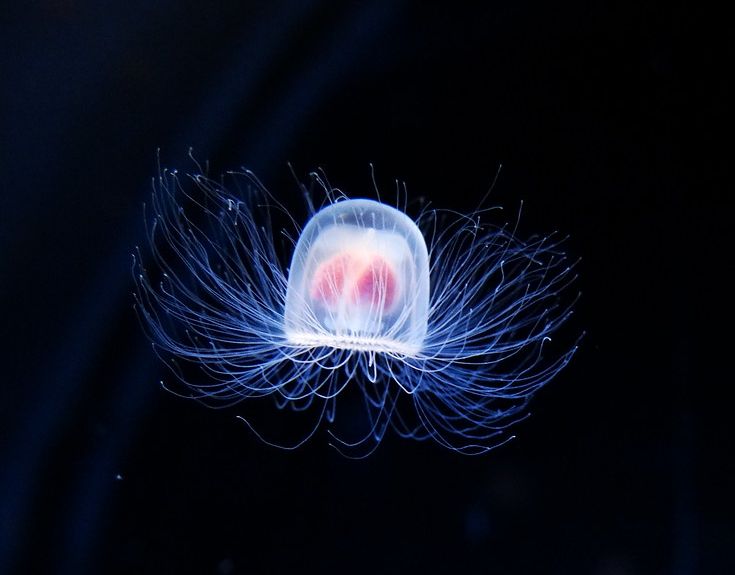
Is there really an immortal jellyfish?
Yes, Turritopsis dohrnii - commonly called the immortal jellyfish - is the only animal known to science with the ability to reverse its aging process and theoretically live forever. When faced with stress, injury, or starvation, a mature T. dohrnii medusa (adult form) can revert to its juvenile polyp stage and then grow back into an adult.
The Only Animal That Does Not Die of Old Age
Somewhere in the warm waters of the Mediterranean Sea, in coastal harbors of Japan, and now in ports around the world, lives an animal the size of a pinhead that has figured out how to cheat death. It is not fiction, not science fiction, not pseudoscience. It is Turritopsis dohrnii, a tiny jellyfish that can reverse its aging, regrow itself from scratch, and theoretically live forever.
The immortal jellyfish is not famous for being big, dangerous, or beautiful. It is famous because it is the only known animal on Earth that does not die of old age. Understanding how it pulls off this trick is one of the most active areas of marine biology, and the answers may eventually inform human medicine in ways that sound like science fiction.
What Is the Immortal Jellyfish?
Turritopsis dohrnii is a small hydrozoan jellyfish species that measures only about 4.5 millimeters (0.18 inches) across - roughly the size of a grain of rice, or the head of a pin. Most people would never notice one swimming past.
It belongs to the phylum Cnidaria (jellyfish, corals, sea anemones, hydroids). Like most jellyfish, it has a two-stage life cycle:
- Polyp stage. A small anchored colony of cells that grows on rocks, pilings, or other hard surfaces.
- Medusa stage. The free-swimming jellyfish form, which eventually reproduces and then normally dies.
For most jellyfish species, once the medusa reproduces, the life cycle ends. The adult dies. The species continues through the offspring.
Turritopsis dohrnii does not play by these rules.
How Transdifferentiation Works
The immortal jellyfish's signature trick is called transdifferentiation. It is the process by which a mature, specialized cell of one type transforms directly into a mature, specialized cell of another type.
In most animals, this does not happen. A muscle cell remains a muscle cell. A nerve cell remains a nerve cell. Cellular identities are fixed once established during embryonic development. Humans can repair tissues to a limited degree, but we cannot transform a liver cell into a heart cell or vice versa.
T. dohrnii can. And it uses this ability to reverse its entire life cycle.
The Reversal Process
When an adult T. dohrnii faces severe stress - injury, starvation, adverse environmental conditions, or simply old age - it can trigger a developmental reversal:
Step 1: Collapse. The adult medusa stops swimming, contracts into a small lump, and sinks to the seafloor. Its cells begin reorganizing.
Step 2: Cellular transformation. Muscle cells transform into embryonic cells. Nerve cells transform. Digestive cells transform. The entire body essentially "dedifferentiates" - becoming simpler, more generic cells again.
Step 3: Polyp formation. The transformed lump attaches to a solid surface and develops into a polyp colony. This is the juvenile form of the jellyfish, genetically identical to the original adult but physically younger.
Step 4: New medusae. The polyp colony eventually buds new medusae (adult jellyfish) that are genetically identical to the original organism.
The entire process takes approximately 36-72 hours. The result is a new generation of adult jellyfish derived from the original adult, without passing through normal reproduction.
This is not reproduction. It is rejuvenation. The same individual jellyfish - carrying the same DNA, the same cellular heritage - has effectively restarted its life cycle at age zero.
Under laboratory conditions, researchers have documented individual T. dohrnii repeating this cycle many times. Theoretically, if conditions are favorable, the process could continue indefinitely. A single individual could live for thousands of years, reverting to youth each time aging or stress threatens its survival.
Why Small Size Matters
The immortal jellyfish's tiny body - just 4.5 mm across - is not incidental to its biology. It is essential.
Transdifferentiation requires coordinated cellular transformation. Every cell in the body must dedifferentiate in roughly the right sequence and then redifferentiate correctly to form a polyp. This coordination depends on diffusing signals that reach every cell in the body within the necessary time window.
In a small organism with fewer cells, the signals can reach every cell quickly. In a larger organism, the distances are too great, the signals degrade, and cellular coordination breaks down. The transformation process would fail partway through, killing the organism rather than rejuvenating it.
This is why no large animal shares this ability. Even if a whale, an elephant, or a human evolved the cellular machinery for transdifferentiation, our body size would prevent it from working. The trick requires being smaller than a grain of rice.
Larger related jellyfish species cannot perform transdifferentiation. The moon jellyfish (Aurelia aurita), the lion's mane jellyfish (Cyanea capillata), and other familiar jellyfish species all age and die normally. Immortality is the exclusive province of the tiny.
What the Genome Reveals
In 2022, researchers at the Oregon Health & Science University, led by Dr. Maria Pascual-Torner, sequenced the full genome of Turritopsis dohrnii and compared it with related non-immortal species.
The comparison revealed approximately 1,000 genes that showed clear signs of positive selection for longevity-related functions. Key categories:
DNA repair genes. T. dohrnii has enhanced copies of genes involved in repairing DNA damage, particularly double-strand break repair. Accumulated DNA damage is one of the primary causes of aging in most animals, and T. dohrnii appears to repair damage at rates significantly above its non-immortal relatives.
Telomere maintenance. Telomeres are the protective caps on chromosome ends. They shorten with each cell division, eventually triggering cellular senescence and aging. T. dohrnii carries enhanced versions of genes that maintain telomere length, including telomerase regulators.
Mitochondrial DNA repair. Mitochondria - the cellular power plants - accumulate DNA damage as they produce energy. T. dohrnii has unusually efficient mitochondrial DNA repair mechanisms.
Pluripotency factors. The genes that allow cells to become "stem-cell-like" and capable of transformation are more actively regulated in T. dohrnii than in related species.
This genetic signature suggests immortality in T. dohrnii evolved through enhancements to systems that exist in all animals, not through entirely new biological pathways. The implications for studying aging in other species, including humans, are significant.
Is It Actually Immortal?
The word "immortal" has been applied loosely in popular coverage of T. dohrnii. A more precise description is biologically immortal or negligibly senescent - meaning the species does not age in the normal sense.
What "biologically immortal" means:
- No cellular senescence. Cells do not accumulate damage that causes them to stop functioning.
- No telomere shortening to critical levels. Telomeres are maintained.
- No hormonal aging. The species does not have the endocrine decline that drives aging in mammals.
- Reproductive capacity is maintained throughout life.
What biological immortality does not mean:
- Immune to disease. T. dohrnii can be killed by pathogens.
- Immune to predation. Many fish and invertebrates eat T. dohrnii.
- Immune to environmental damage. Pollution, temperature extremes, and starvation still kill the species.
- Immune to physical destruction.
A T. dohrnii in the ocean faces countless threats that kill individuals continuously. The average lifespan of any specific individual may be quite short because of these external dangers. What the species lacks is the intrinsic aging process that makes death inevitable in other animals.
In controlled laboratory conditions, where predators, diseases, and environmental stresses are minimized, the species appears to live indefinitely.
The Longest-Living Captive Specimen
Since 2011, Japanese researcher Shin Kubota of Kyoto University's Seto Marine Biological Laboratory has maintained what may be the oldest living Turritopsis dohrnii in captivity. The specimen has undergone at least 10 documented life cycle reversals.
Kubota has studied the species for over 30 years and is credited with confirming the reversibility of the life cycle through meticulous laboratory observations in the 1990s and early 2000s. His research involved daily monitoring of individual jellyfish, documenting each transition between adult and polyp stages.
The Kubota specimens are technically the same jellyfish that began the experiments, having passed through multiple rejuvenation cycles without ever truly dying. They are over a decade old in captivity and counting.
How Immortal Jellyfish Spread Globally
T. dohrnii was originally endemic to the Mediterranean Sea and the waters around Japan. Over the past 50 years, it has spread to ports and coastal waters on every continent except Antarctica.
The vector is ballast water - the seawater that large ships take on for stability when running light and release when loading cargo. A jellyfish or polyp attached to a hull surface, sucked into a ballast tank in one port, and released in another port half a world away is how the species travels.
T. dohrnii's immortality is a major factor in its colonization success. A non-immortal jellyfish introduced to a new environment must reach reproductive age before dying, which requires surviving unfamiliar predators, parasites, and environmental conditions. T. dohrnii can simply revert to polyp form when stressed, wait out bad conditions, and emerge when circumstances improve. This makes them extraordinarily successful at establishing in new environments.
The species now thrives in ports from Panama to Hong Kong, and it has been documented in waters around North America, Europe, Africa, South America, Asia, and Australia. It has become one of the most widely distributed marine invertebrates, entirely by accident of human shipping.
Can Humans Learn From Immortal Jellyfish?
Research on T. dohrnii has generated genuine biological insights into aging, but applying those insights to humans faces fundamental limits.
The scale problem. T. dohrnii has roughly 1,000 cells. Humans have approximately 37 trillion. The cellular coordination required to transdifferentiate a human body is orders of magnitude beyond what jellyfish accomplish.
The complexity problem. Human tissues have far more specialization than jellyfish tissues. A human brain contains hundreds of distinct cell types arranged in specific architectures that took decades to develop. No conceivable dedifferentiation process could preserve memory, personality, or accumulated experience during a full-body rejuvenation.
The realistic targets. Rather than total rejuvenation, aging research informed by T. dohrnii focuses on specific pathways: telomere maintenance, DNA repair, mitochondrial health, cellular senescence. Several pharmaceutical research programs are investigating compounds that activate these pathways in human cells.
Current human-relevant research:
Senolytic drugs. Compounds that clear senescent cells (cells that have stopped dividing but not died, contributing to aging). Drug candidates including dasatinib, quercetin, and fisetin are in clinical trials for age-related conditions.
Telomerase activators. Compounds that extend telomeres, with products like TA-65 on the market (though efficacy remains debated).
mTOR inhibitors. Rapamycin and related compounds that modulate cellular growth and stress-response pathways. These are in clinical testing for life extension.
Cellular reprogramming. Research pioneered by Shinya Yamanaka uses gene expression factors to reprogram adult cells back to stem-cell-like states - a partial analog of what happens naturally in T. dohrnii.
None of these approaches will produce jellyfish-style immortality in humans. But each represents a potential intervention in the aging process that would extend healthy lifespan.
The Evolutionary Puzzle
Why did only this one tiny jellyfish species evolve biological immortality? The evolutionary logic is counterintuitive.
In most ecological niches, immortality would be counterproductive. Genetic diversity requires reproduction. Evolution requires turnover. A species where every individual lived forever would quickly run out of resources and fail to adapt to environmental changes.
But T. dohrnii lives in an ecological niche where its population is constantly being culled by predation. Fish, crustaceans, and other invertebrates eat jellyfish in enormous quantities. The actual lifespan of a typical T. dohrnii in the wild is likely short, even though it is theoretically immortal.
Immortality evolved as an insurance policy against extinction in environments where reproduction is unreliable. A T. dohrnii that survives to reproductive maturity can produce new medusae through both sexual reproduction and transdifferentiation. The species has two independent pathways to continue existing - normal reproduction to create new offspring, and transdifferentiation to preserve individuals.
The evolutionary trade-off: immortality comes at the cost of small body size. A larger T. dohrnii could not perform transdifferentiation. A smaller predator is more vulnerable to predation. The species accepts extreme vulnerability in exchange for effectively unlimited lifespan, and this trade-off works only in specific marine environments where predation is the dominant threat.
What the Immortal Jellyfish Means
Turritopsis dohrnii exists at the intersection of biology, philosophy, and the limits of what living things can accomplish. It is proof that death from aging is not inevitable - that evolution has, at least once, produced an organism that escapes this fundamental biological constraint.
That single example matters. For most of human history, death from aging was considered an absolute law of biology. The immortal jellyfish demonstrates that it is not. Aging is a biological process, and biological processes can be modified by evolution.
Whether human aging can ever be modified by engineering rather than evolution is a question for future biotechnology. The immortal jellyfish does not provide the answer. But it does provide the proof of concept that the answer, in principle, is not "never."
For now, somewhere in the Mediterranean, somewhere in a port in Japan, somewhere in the ballast water of ships traveling the world's oceans, millions of pinhead-sized jellyfish are living lives that could, in theory, have begun thousands of years ago. They are the only animals on Earth that may be older than the human civilizations that have so recently noticed them.
Documented Long-Lived Species for Comparison
While Turritopsis dohrnii holds the theoretical record for biological immortality, several other species approach extraordinary lifespans through different biological strategies. Our research team has compiled a comparison of verified or estimated maximum lifespans across diverse animal lineages.
| Species | Maximum Lifespan | Aging Pattern | Evidence |
|---|---|---|---|
| Turritopsis dohrnii | Theoretically unlimited | Transdifferentiation | Laboratory observation |
| Immortal hydra (Hydra vulgaris) | Theoretically unlimited | Continuous cell renewal | Laboratory, 4+ years no senescence |
| Ocean quahog (Arctica islandica) | 507 years | Negligible senescence | Shell ring count, Ming specimen |
| Greenland shark (Somniosus microcephalus) | 392 years | Extreme slow aging | Eye-lens radiocarbon dating |
| Bowhead whale (Balaena mysticetus) | 211 years | Delayed senescence | Stone harpoon fragments in tissue |
| Galapagos tortoise (Chelonoidis niger) | 175+ years | Gradual senescence | Life history records |
| Naked mole-rat (Heterocephalus glaber) | 37 years | Negligible senescence | Colony records |
| Black coral (Leiopathes) | 4,265 years | Colonial modular growth | Carbon-14 dating |
The black corals of the genus Leiopathes have been documented from samples collected off Hawaii to exceed 4,000 years in age, making them among the oldest living organisms on Earth by continuous biological identity. These are colonial animals, however, distinguishing them biologically from the individual-level biological immortality of T. dohrnii.
Transdifferentiation at the Cellular Level
The cellular mechanism enabling Turritopsis dohrnii's reverse development has been partially characterized through research at the Stazione Zoologica Anton Dohrn in Naples and at Kyoto University. When triggered by environmental stress, injury, or starvation, the medusa's striated muscle cells, tentacle cells, and nerve cells undergo a process in which they lose their specialized identities and reorganize into undifferentiated cyst-forming tissue.
A 2022 genomic analysis published in Proceedings of the National Academy of Sciences compared the T. dohrnii genome to that of its non-immortal congener Turritopsis rubra, identifying 28 genes expanded in copy number in the immortal species. Many of these relate to DNA repair, telomere maintenance, and mitochondrial function [1].
"Turritopsis dohrnii has essentially duplicated large portions of its cellular maintenance machinery. The functional consequence is that it can repair damage and reset cellular identity at a pace and fidelity that other cnidarians, and certainly most animals, cannot match. This is the genomic architecture of biological immortality." - Dr. Maria Pascual-Torner, lead author and researcher at Oviedo University [1]
The T. dohrnii genome also shows elevated expression of polycomb repressive complex 2 components, which silence developmental gene programs, and factors homologous to mammalian Yamanaka factors - the same proteins human biomedical researchers use to reprogram adult human cells into stem cells in the laboratory.
Human Reprogramming and Biomedical Implications
The parallels between Turritopsis dohrnii transdifferentiation and Shinya Yamanaka's 2006 discovery of induced pluripotent stem cell factors are striking. Yamanaka demonstrated that four transcription factors (Oct4, Sox2, Klf4, c-Myc) can reprogram adult somatic cells to a pluripotent state. T. dohrnii appears to accomplish analogous cellular reprogramming naturally using homologous gene families.
"The immortal jellyfish is not a blueprint for human immortality, but it is a reference organism showing us that cellular rejuvenation is possible in metazoans. The practical medical applications lie in understanding how T. dohrnii achieves such tightly controlled reprogramming without cancer, which is the primary failure mode when we attempt the same in mammalian systems." - Dr. David Sinclair, Harvard Medical School [2]
Current research is investigating whether principles from T. dohrnii biology can inform therapies for tissue damage, heart disease, and age-related degeneration. None of these will produce immortality, but they may extend the healthy lifespan of human tissues that cannot naturally regenerate, such as cardiac muscle and spinal cord neurons.
References
- Pascual-Torner, M., Carrero, D., Perez-Silva, J. G., et al. (2022). Comparative genomics of mortal and immortal cnidarians unveils novel keys behind rejuvenation. Proceedings of the National Academy of Sciences, 119(36), e2118763119. DOI: 10.1073/pnas.2118763119
- Sinclair, D. A., & LaPlante, M. D. (2019). Lifespan: Why We Age - and Why We Don't Have To. Atria Books, New York. ISBN: 978-1501191978
- Piraino, S., Boero, F., Aeschbach, B., & Schmid, V. (1996). Reversing the life cycle: medusae transforming into polyps and cell transdifferentiation in Turritopsis nutricula (Cnidaria, Hydrozoa). The Biological Bulletin, 190(3), 302-312. DOI: 10.2307/1543022
- Matsumoto, Y., Piraino, S., & Miglietta, M. P. (2019). Transcriptome characterization of reverse development in Turritopsis dohrnii (Hydrozoa, Cnidaria). G3: Genes, Genomes, Genetics, 9(12), 4127-4138. DOI: 10.1534/g3.119.400487
Related Articles
- Jellyfish: Brainless Drifters That Rule the Ocean
- Octopus: Three Hearts, Nine Brains, Blue Blood
- Deep Sea Creatures: Life in the Eternal Darkness
Frequently Asked Questions
Is there really an immortal jellyfish?
Yes, Turritopsis dohrnii - commonly called the immortal jellyfish - is the only animal known to science with the ability to reverse its aging process and theoretically live forever. When faced with stress, injury, or starvation, a mature T. dohrnii medusa (adult form) can revert to its juvenile polyp stage and then grow back into an adult. This process, called transdifferentiation, allows the same organism to effectively restart its life cycle.
In laboratory conditions, individual T. dohrnii have been observed reversing their development multiple times, functionally becoming biologically immortal. The species still dies from predation, disease, and environmental catastrophes, but it does not die from aging. No other known animal has this capability.
How does the immortal jellyfish reverse its aging?
Turritopsis dohrnii reverses aging through a process called transdifferentiation, in which adult cells transform directly into different types of cells without first becoming stem cells. When the jellyfish enters this reversal, its specialized adult cells (muscle, nerve, digestive) transform back into the simpler cells of a juvenile polyp.
The entire adult body collapses into a small lump of tissue, which then develops attachment to a surface and becomes a new polyp colony. The process takes approximately 36-72 hours. The polyp then produces new medusae (adult jellyfish) genetically identical to the original.
Researchers at the Oregon Health & Science University sequenced the species’ genome in 2022 and identified specific genes involved in DNA repair and telomere maintenance that appear to be enhanced compared to related non-immortal jellyfish species.
How big is the immortal jellyfish?
Turritopsis dohrnii is extraordinarily small - adults measure only 4.5 mm (0.18 inches) in diameter, about the size of a pinhead. Despite its fame, most people could not see one without a magnifying glass. The tiny size is directly related to its biology - small body mass requires fewer cells to transform during the aging reversal process.
Larger jellyfish species cannot perform this reversal because the cellular coordination required would be impossible at greater scale. The species lives primarily in the Mediterranean Sea and the waters around Japan, but ballast water from ocean-going ships has spread it to ports around the world. Its small size and ability to attach to hull surfaces has made it one of the most widely distributed marine invertebrates.
Can humans learn to reverse aging from the immortal jellyfish?
Research on T. dohrnii has already produced insights into cellular aging, but direct application to humans is unlikely for fundamental biological reasons. The jellyfish works at a cellular scale of roughly 1,000 cells; a human has approximately 37 trillion cells. The coordination required to transdifferentiate a human body would be vastly more complex than anything T. dohrnii manages.
However, specific pathways involved in jellyfish rejuvenation - particularly genes related to DNA repair, telomere maintenance, and cellular reprogramming - overlap with genes studied in human aging research. The 2022 genome sequencing study identified approximately 1,000 genes showing signs of positive selection for longevity in T. dohrnii.
Several pharmaceutical companies are investigating whether compounds that activate these pathways in human cells could slow aging, though commercial anti-aging treatments based on jellyfish biology remain distant.
What is the oldest jellyfish ever recorded?
Because Turritopsis dohrnii can theoretically live indefinitely, ‘oldest’ is difficult to define. Individual jellyfish cannot be tagged and tracked across multiple transdifferentiation cycles in the wild. The longest-lived captive T. dohrnii known is a Japanese specimen maintained by researcher Shin Kubota since 2011, which has undergone at least 10 documented life cycle reversals.
Among non-immortal jellyfish, the longest-lived species is the lion’s mane jellyfish (Cyanea capillata), which can live up to 5 years. The moon jellyfish (Aurelia aurita) lives 1-2 years typically. Most jellyfish species live less than 1 year and die after reproducing. T. dohrnii’s immortality stands in dramatic contrast to its relatives - the same evolutionary lineage produces both the shortest-lived and longest-lived jellyfish species on Earth.