
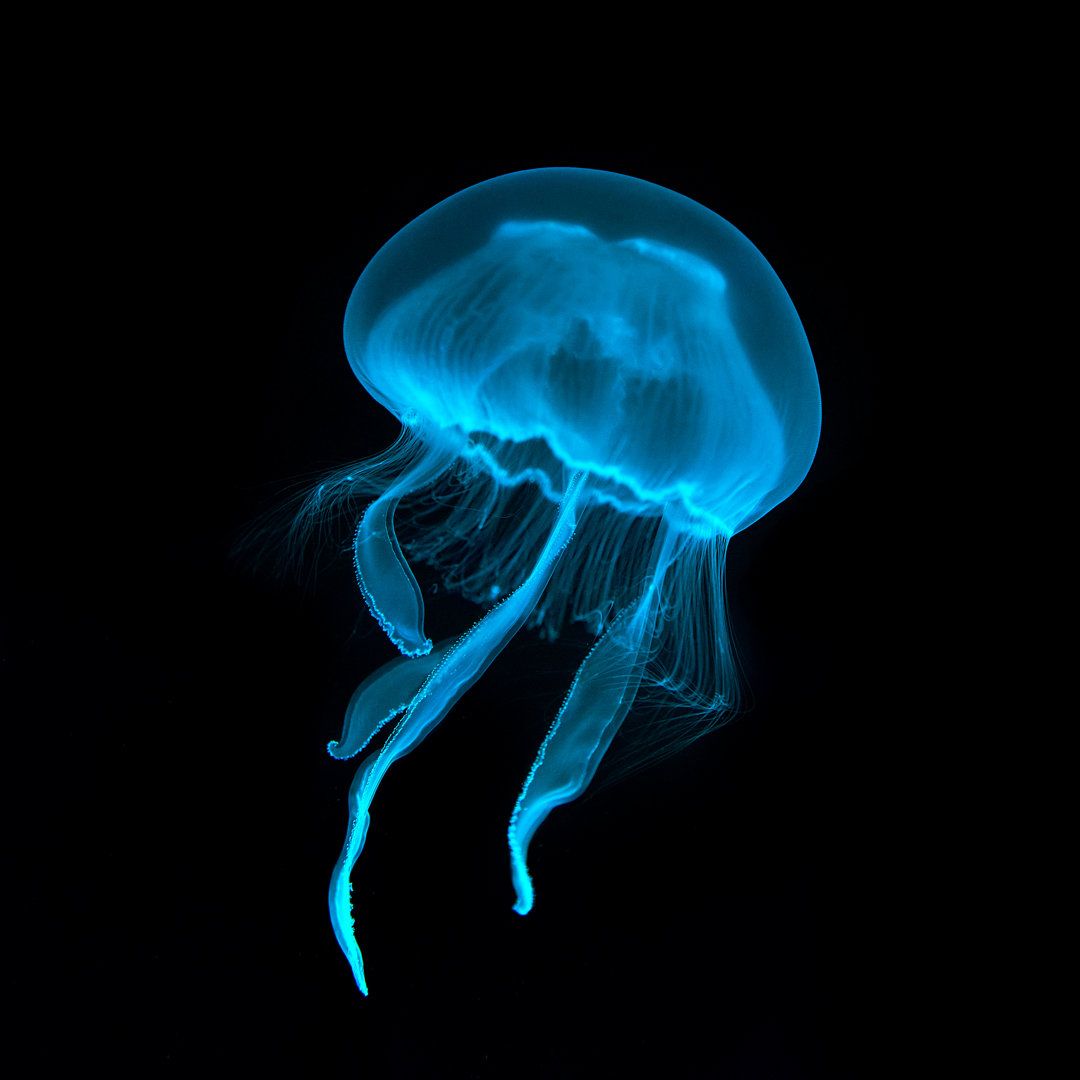
Is the immortal jellyfish truly immortal, and how does it reverse aging?
Turritopsis dohrnii, commonly called the immortal jellyfish, is biologically immortal in the sense that it can repeatedly reverse its life cycle. When stressed, injured, or aging, the adult medusa (bell-shaped form) reabsorbs its tentacles and sinks to the seafloor, where it reverts to a polyp - its juvenile colonial stage.
They have no brain. No heart. No blood. No bones. They are roughly 95 percent water. By every conventional measure of biological complexity, jellyfish should be footnotes in the story of life on Earth - fragile, primitive organisms long surpassed by the explosion of sophisticated body plans that followed them. Instead, they have outlasted every mass extinction event in the planet's history.
They have persisted for over 500 million years, predating dinosaurs by more than 250 million years and fish by at least 100 million. Today, as human activity reshapes the oceans, jellyfish are not merely surviving. They are thriving, blooming in staggering numbers that clog power plant intakes, collapse fisheries, and shut down beaches from the Mediterranean to the Sea of Japan.
Jellyfish are a masterclass in the power of simplicity. Their anatomy is stripped to the barest essentials of multicellular life, yet it produces organisms capable of bioluminescence, lethal venom, and - in one extraordinary species - biological immortality. Understanding jellyfish means confronting a fundamental truth about evolution: complexity is not the only path to success. Sometimes, being simple is the most sophisticated strategy of all.
Anatomy of Nothing: How Jellyfish Work Without Organs
The body plan of a jellyfish is so minimal that it challenges the very definition of an animal. A jellyfish has no centralized brain, no heart, no lungs, no liver, no kidneys, and no blood. What it does have is a bell-shaped body composed of two thin layers of cells - an outer epidermis (ectoderm) and an inner gastrodermis (endoderm) - separated by a thick, transparent, gel-like substance called mesoglea.
This mesoglea, which constitutes the bulk of the animal's mass, is mostly water with a sparse scattering of collagen fibers and wandering cells.
The Nerve Net: Decentralized Intelligence
Instead of a brain, jellyfish possess a nerve net - a diffuse, web-like network of interconnected neurons distributed throughout the body. This nerve net has no central processing hub, no command center, and no capacity for what neuroscientists would recognize as thought.
Yet it coordinates rhythmic bell contractions for swimming, processes sensory information from light-sensitive ocelli and chemical receptors, and triggers tentacle responses to prey contact. Some species, including box jellyfish, have evolved concentrations of neurons called rhopalia that function as rudimentary sensory organs, complete with statocysts for balance and surprisingly complex eyes.
Feeding and Digestion
Jellyfish are carnivores. They capture prey - typically zooplankton, small fish, crustaceans, and other jellyfish - using tentacles armed with specialized stinging cells called cnidocytes.
Each cnidocyte contains a nematocyst, a microscopic harpoon-like structure coiled under extreme pressure (up to 2,000 pounds per square inch) that fires on contact in one of the fastest mechanical processes in all of biology, discharging in roughly 700 nanoseconds.
Captured prey is transferred to the oral arms and into the gastrovascular cavity, a single chamber that serves as both stomach and intestine. Nutrients are distributed through the body by simple diffusion - no circulatory system required.
Reproduction: Two Lives in One
Most jellyfish alternate between two distinct body forms across their life cycle. The familiar bell-shaped, free-swimming form is the medusa stage. Medusae reproduce sexually, releasing sperm and eggs into the water column. Fertilized eggs develop into tiny larvae called planulae, which settle on hard surfaces and grow into polyps - small, sessile, anemone-like organisms attached to rocks or shells.
The polyps reproduce asexually through a process called strobilation, budding off stacks of disc-shaped juvenile medusae called ephyrae, which detach and grow into adult jellyfish. This alternation of generations is a remarkably effective reproductive strategy, allowing a single species to exploit both benthic (bottom-dwelling) and pelagic (open-water) environments.
Turritopsis dohrnii: The Jellyfish That Cheats Death
In the waters of the Mediterranean and, increasingly, in oceans worldwide, drifts a jellyfish roughly 4.5 millimeters in diameter - smaller than a human fingernail - that has accomplished something no other known animal can replicate. Turritopsis dohrnii, commonly called the immortal jellyfish, can reverse its own aging.
Transdifferentiation: Rewriting Cellular Identity
When Turritopsis dohrnii faces stress, injury, disease, or the natural deterioration of age, it does not simply die. Instead, the adult medusa reabsorbs its tentacles, its bell collapses, and it sinks to the ocean floor, where it attaches to a surface and reverts to the polyp stage - its juvenile form. This is not regeneration in the conventional sense.
It is transdifferentiation: the transformation of mature, specialized cells into entirely different cell types without passing through a pluripotent stem cell intermediate. Muscle cells become nerve cells. Nerve cells become epithelial cells. The entire organism essentially disassembles and reassembles itself as a younger version.
The polyp then buds and produces new, genetically identical medusae, and the cycle begins again. No natural limit to this process has been identified. As long as a specimen avoids predation, disease, or environmental catastrophe, it can theoretically repeat this cycle indefinitely.
"Turritopsis dohrnii is the only known case of a metazoan capable of reverting completely to a sexually immature, colonial stage after having reached sexual maturity. It is, in a biological sense, immortal." - Stefano Piraino, University of Salento, who first described this phenomenon in a 1996 paper published in Biological Bulletin
Shin Kubota, a marine biologist at Kyoto University's Seto Marine Biological Laboratory, spent over 15 years maintaining a colony of Turritopsis dohrnii in his laboratory, meticulously documenting repeated reversions. His work demonstrated that individual specimens could undergo the rejuvenation cycle multiple times, though the process required specific environmental conditions and careful husbandry.
Why It Matters Beyond the Ocean
The medical research community has taken keen interest in Turritopsis dohrnii because transdifferentiation has direct implications for regenerative medicine, cancer research, and aging. Understanding the genetic switches that allow this jellyfish to reprogram its cells could eventually inform therapies for degenerative diseases and tissue repair in humans. The relevant genes appear to be related to those found in other animals, including humans - they are simply regulated differently.
Box Jellyfish: The Ocean's Most Lethal Predator
The class Cubozoa - box jellyfish - contains roughly 50 known species, but one stands above all others as the most venomous marine animal ever documented: Chironex fleckeri, the Australian box jellyfish.
Anatomy of a Killer
Chironex fleckeri is a substantial animal. Its cube-shaped bell can reach 30 centimeters (roughly one foot) across, and it trails up to 60 tentacles, each extending up to 3 meters (nearly 10 feet) in length. Each tentacle is packed with billions of nematocysts, each one a microscopic venom-delivery device. A single adult Chironex fleckeri carries enough venom to kill more than 60 adult humans.
The venom is a complex cocktail of proteins and peptides that attacks three systems simultaneously: it destroys skin cells (dermatonecrotic toxins), attacks the heart (cardiotoxins that cause arrhythmia and cardiac arrest), and disrupts the nervous system (neurotoxins). In severe envenomations, cardiac arrest can occur within 2 to 5 minutes of contact. Victims have been known to die before reaching shore.
Since official records began in 1883, at least 80 deaths have been attributed to Chironex fleckeri in Australia alone. The actual global toll, particularly across Southeast Asia and the Indo-Pacific where reporting is inconsistent, is believed to be substantially higher.
24 Eyes, No Brain
Perhaps the most astonishing feature of Chironex fleckeri is its visual system. Despite having no brain, the box jellyfish possesses 24 eyes arranged in clusters of six on each of its four rhopalia (sensory structures). These include two sophisticated camera-type eyes with corneas, lenses, and retinas - structurally similar to vertebrate eyes.
Research published in Current Biology by Dan-Eric Nilsson and colleagues at Lund University demonstrated that box jellyfish can form images, navigate around obstacles, and respond to specific visual stimuli. They actively swim toward light sources and maneuver through mangrove prop roots, behaviors that are difficult to reconcile with the absence of any centralized information processing.
"Box jellyfish have more eyes than almost any other animal on the planet, and some of those eyes are surprisingly sophisticated. The question of how they process all that visual information without a brain remains one of the great puzzles in neurobiology." - Dan-Eric Nilsson, Lund University
Irukandji: Small, Invisible, Devastating
The Irukandji jellyfish (Carukia barnesi and related species) are box jellyfish the size of a human thumbnail - roughly one cubic centimeter - with tentacles as long as one meter.
Despite their minuscule size, they cause Irukandji syndrome: a constellation of symptoms including severe lower back pain, muscle cramps, nausea, vomiting, profuse sweating, anxiety, and a distinctive "sense of impending doom." In severe cases, the syndrome can cause brain hemorrhage, heart failure, and death.
Their near-invisibility in the water makes them exceptionally dangerous to swimmers in tropical Australian and Indo-Pacific waters.
Moon Jellyfish: The Familiar Drifter
If there is a jellyfish that most people have seen, it is Aurelia aurita - the moon jellyfish. Found in every ocean on Earth, from the Arctic to the tropics, Aurelia aurita is the most common and widely distributed jellyfish species. Its translucent bell, typically 25 to 40 centimeters in diameter, is marked by four horseshoe-shaped gonads visible through the body, giving it a distinctive four-leaf-clover pattern.
Moon jellyfish are mild stingers - most humans feel only a slight prickling or no sensation at all from contact. They feed primarily on plankton, fish eggs, and small crustaceans, using a layer of mucus on the bell surface to trap food particles, which are then swept to the oral arms by cilia.
Bioluminescence
Many jellyfish species, including some moon jellyfish populations, are bioluminescent - capable of producing their own light through chemical reactions. When disturbed, they emit an eerie blue-green glow produced by the interaction of the protein aequorin with calcium ions.
This bioluminescence is thought to serve as a startle response, disorienting predators and potentially attracting larger predators that might prey on whatever is attacking the jellyfish. The study of jellyfish bioluminescence would ultimately lead to one of the most important discoveries in modern biology, a story described in detail later in this article.
Lion's Mane Jellyfish: The Ocean's Giant
Cyanea capillata, the lion's mane jellyfish, holds the record as the largest known jellyfish species - and one of the longest animals on Earth. The largest documented specimen, found washed ashore in Massachusetts Bay in 1870, had a bell diameter of 2.1 meters (roughly 7 feet) and tentacles trailing an estimated 36.6 meters (120 feet), making it longer than a blue whale.
The lion's mane is a cold-water species, reaching its greatest size in the boreal and subarctic waters of the North Atlantic and North Pacific. Specimens in warmer waters tend to be significantly smaller. Its bell is divided into eight lobes, each bearing clusters of tentacles that can number in the hundreds, creating the dense, flowing mass that gives the species its common name.
The sting is painful to humans but rarely life-threatening, producing burning sensations, redness, and temporary muscle cramps.
Lion's mane jellyfish play an underappreciated ecological role. Their enormous trailing tentacle curtains create a mobile habitat: juvenile fish, including commercially important species such as pollock and whiting, shelter among the tentacles, gaining protection from predators while feeding on parasites and organic matter trapped in the tentacle mass.
Portuguese Man-of-War: The Imposter
The Portuguese man-of-war (Physalia physalis) is not a jellyfish. Despite its superficial resemblance and its frequent misidentification as one, the man-of-war is a siphonophore - a colonial organism composed of four types of specialized, genetically identical polyps called zooids, each performing a distinct function. No individual zooid can survive alone. Together, they form what appears to be a single animal but is, in fact, a cooperative colony.
The pneumatophore - the gas-filled, iridescent blue-purple float that sits above the waterline - acts as a sail, catching wind to propel the colony across the ocean surface. Beneath the float hang dactylozooids (defensive tentacles reaching up to 50 meters in some specimens), gastrozooids (feeding polyps), and gonozooids (reproductive polyps). The tentacles deliver a powerful sting using nematocysts that can cause intense pain, welts, and, in rare cases, cardiac distress and anaphylaxis.
The man-of-war is found in tropical and subtropical oceans worldwide. It cannot swim and is entirely at the mercy of winds and currents, sometimes washing ashore in mass strandings numbering thousands of individuals on Atlantic beaches.
Nomura's Jellyfish: The Colossus That Crippled a Fishery
Nemopilema nomurai, Nomura's jellyfish, is one of the largest jellyfish in the world, with a bell diameter reaching up to 2 meters (approximately 6.5 feet) and a weight exceeding 200 kilograms (440 pounds). Its home range spans the waters between China, Korea, and Japan.
In 2005 and again in 2009, Nomura's jellyfish bloomed in numbers that staggered fisheries scientists. Swarms numbering in the hundreds of millions invaded the Sea of Japan, clogging fishing nets so thoroughly that vessels capsized under the weight. One 10-ton fishing trawler capsized in 2009 when its crew attempted to haul in a net packed with dozens of giant jellyfish.
The economic damage to Japanese fisheries ran into the hundreds of millions of dollars. Fishermen reported catches that were entirely jellyfish with no marketable fish at all.
The blooms were linked to a combination of factors: warming waters in the Yellow Sea and East China Sea, coastal eutrophication from agricultural runoff in China providing nutrients for the plankton that feed jellyfish polyps, and overfishing of the jellyfish's natural competitors and predators, including sea turtles and ocean sunfish.
Jellyfish Blooms: When the Drifters Take Over
Jellyfish blooms - sudden, massive aggregations of jellyfish - are not new phenomena. They are a natural part of marine ecosystems. What is new is their apparent increase in frequency, intensity, and geographic range. While scientists debate whether a true global increase has been conclusively established (long-term data remain patchy for most ocean basins), the evidence for regional escalation in specific areas is strong, and the consequences are severe.
Causes of Increasing Blooms
| Factor | Mechanism | Evidence |
|---|---|---|
| Overfishing | Removes jellyfish predators (sea turtles, ocean sunfish, leatherback turtles) and competitors (forage fish that eat the same plankton) | Mediterranean, East Asian seas, Black Sea |
| Ocean warming | Expands suitable habitat for warm-water species; accelerates reproduction and extends bloom seasons | Global, particularly pronounced in temperate seas |
| Eutrophication | Nutrient runoff creates plankton-rich conditions that feed polyps and ephyrae; low-oxygen dead zones kill fish but not jellyfish | Baltic Sea, Gulf of Mexico, East China Sea |
| Coastal development | Provides hard surfaces (docks, piers, artificial reefs, seawalls) for polyp settlement | Harbors and ports worldwide |
| Ballast water transport | Introduces non-native jellyfish species to new ecosystems | Mnemiopsis leidyi in Black Sea, Phyllorhiza punctata in Gulf of Mexico |
The Black Sea Catastrophe
The most dramatic documented case of jellyfish ecological disruption occurred in the Black Sea in the 1980s and 1990s. The comb jelly Mnemiopsis leidyi - technically a ctenophore, not a true jellyfish, but functionally similar - was introduced to the Black Sea via ballast water from ships arriving from the western Atlantic.
With no natural predators and abundant plankton to consume, Mnemiopsis populations exploded to an estimated biomass exceeding one billion tonnes by 1989. The comb jellies consumed the zooplankton that anchovy larvae depended on, contributing to the collapse of the Black Sea anchovy fishery, which had been worth over 300 million dollars annually.
The crisis only eased after the accidental introduction of Beroe ovata, another ctenophore that preys specifically on Mnemiopsis.
Infrastructure Impacts
Modern jellyfish blooms have caused serious infrastructure disruptions worldwide. In 2013, a bloom of moon jellyfish clogged the seawater intake pipes of the Oskarshamn nuclear power plant in Sweden, forcing operators to shut down one of the plant's three reactors. Similar incidents have occurred at power plants in Scotland, the Philippines, Israel, and Japan.
Jellyfish have blocked desalination plants, disrupted naval operations, and caused millions of dollars in losses to salmon farming operations in Ireland and Scotland by killing penned fish through mass stinging events.
Jellyfish in Space: NASA's Gravity Experiments
In 1991, NASA launched over 2,400 moon jellyfish polyps into orbit aboard the Space Shuttle Columbia as part of a study on how microgravity affects development. The polyps reproduced normally in space, budding and producing thousands of ephyrae in orbit. However, when the space-born jellyfish were returned to Earth, they exhibited significant problems with gravity sensing.
Their statocysts - the calcium sulfate crystals that function as gravity sensors - developed abnormally in microgravity, and the jellyfish pulsed and oriented themselves erratically in normal gravity, unable to distinguish up from down.
The experiment provided valuable data on how gravity shapes the development of sensory systems in organisms that rely on graviception. It also raised questions about the broader effects of space development on biological organisms, with implications for long-duration human spaceflight and the development of vestibular systems in zero gravity.
Green Fluorescent Protein: From Jellyfish to Nobel Prize
The most impactful scientific contribution of jellyfish to human knowledge came not from their ecology or venom but from a single protein isolated from the crystal jellyfish Aequorea victoria, a small, nearly transparent species found in the cold waters of the Pacific Northwest.
Discovery and Isolation
In the early 1960s, Osamu Shimomura, a Japanese organic chemist working at Princeton University and the Marine Biological Laboratory in Woods Hole, Massachusetts, set out to understand the bioluminescence of Aequorea victoria.
Over the course of years, collecting tens of thousands of jellyfish by hand from the docks of Friday Harbor in Washington State, Shimomura isolated two proteins: aequorin, which produces blue light in the presence of calcium, and a companion protein that absorbs the blue light and re-emits it as green. He named it green fluorescent protein - GFP.
The Revolution
GFP sat in relative obscurity for decades until Martin Chalfie, a biologist at Columbia University, recognized its transformative potential. In 1994, Chalfie demonstrated that the gene for GFP could be inserted into other organisms - first the bacterium E. coli, then the nematode worm C. elegans - where it would produce green fluorescence without requiring any additional cofactors or enzymes from jellyfish.
The GFP gene functioned as a biological marker: attach it to any gene of interest, and you could literally watch that gene's protein product being made and transported inside a living cell in real time under ultraviolet light.
Roger Tsien, a biochemist at the University of California, San Diego, then engineered variants of GFP that fluoresced in different colors - blue, cyan, yellow - creating a palette of biological highlighters that allowed researchers to track multiple processes simultaneously in the same cell.
The Nobel Prize
In 2008, the Nobel Prize in Chemistry was awarded jointly to Osamu Shimomura, Martin Chalfie, and Roger Tsien "for the discovery and development of the green fluorescent protein, GFP." The Nobel Committee described GFP as having become "one of the most important tools used in contemporary bioscience," enabling breakthroughs in cell biology, neuroscience, developmental biology, cancer research, and gene therapy.
Today, virtually every molecular biology and biomedical research laboratory in the world uses GFP or its engineered variants. All of it traces back to a translucent jellyfish drifting in the waters off Washington State.
Jellyfish as Food: A Growing Global Industry
To Western palates, the idea of eating jellyfish may seem exotic. In East and Southeast Asia, it is unremarkable. China, Japan, Korea, Thailand, Malaysia, and Indonesia have consumed jellyfish for over 1,700 years. The Chinese classic Bencao Gangmu (Comperta Materia Medica), compiled in the 16th century, describes jellyfish as a food and a medicinal ingredient.
Preparation and Cuisine
Edible jellyfish - primarily species of the order Rhizostomeae, including Rhopilema esculentum and Stomolophus meleagris (the cannonball jellyfish) - are processed by salting and drying with a mixture of salt and alum, which reduces the water content and produces a firm, slightly crunchy texture.
Prepared jellyfish is typically sliced into thin strips and served as a cold appetizer, dressed with sesame oil, soy sauce, vinegar, and chili. It has a neutral flavor and is valued primarily for its texture - a satisfying crunch that absorbs the flavors of accompanying sauces and seasonings.
Nutrition and Sustainability
Jellyfish are low in calories (roughly 36 calories per 100 grams of prepared product) and fat, while providing collagen, protein, and minerals including selenium and choline. Proponents of jellyfish consumption argue that harvesting blooming jellyfish populations is a rare example of a fishery that actively reduces an ecological problem rather than contributing to one.
If jellyfish blooms are increasing due to human activity, the logic runs, then harvesting those blooms converts a nuisance into a resource.
The global jellyfish harvest is estimated at approximately 750,000 to 900,000 tonnes annually, with the vast majority processed in China. Research groups in Europe, including teams at the University of Southern Denmark and the EU-funded GoJelly project, have investigated expanding jellyfish harvesting in European waters, exploring applications not only as food but also as fertilizer, animal feed, and as a source of collagen for biomedical applications.
Jellyfish Species Comparison
| Species | Bell Size | Tentacle Length | Range | Notable Feature |
|---|---|---|---|---|
| Turritopsis dohrnii (Immortal jellyfish) | 4.5 mm | ~1 cm | Mediterranean, now global | Biological immortality via transdifferentiation |
| Chironex fleckeri (Australian box jellyfish) | Up to 30 cm | Up to 3 m (60 tentacles) | Northern Australia, Indo-Pacific | Most venomous marine animal; 24 eyes |
| Aurelia aurita (Moon jellyfish) | 25-40 cm | Short fringe | All oceans, worldwide | Most common and widely distributed species |
| Cyanea capillata (Lion's mane jellyfish) | Up to 2.1 m | Up to 36.6 m (120 ft) | North Atlantic, North Pacific | Largest jellyfish; longest tentacles of any known animal |
| Physalia physalis (Portuguese man-of-war) | 15-30 cm float | Up to 50 m | Tropical/subtropical Atlantic, Pacific, Indian | Not a jellyfish; colonial siphonophore |
| Nemopilema nomurai (Nomura's jellyfish) | Up to 2 m | Short, thick | Yellow Sea, East China Sea, Sea of Japan | Weight exceeding 200 kg; caused fishery collapses |
| Aequorea victoria (Crystal jellyfish) | 7-10 cm | Up to 150+ | Northeast Pacific | Source of GFP; Nobel Prize research |
The Future of Jellyfish
Jellyfish are not newcomers benefiting from a temporary ecological disturbance. They are ancient organisms that have survived every catastrophe the Earth has produced - the Permian-Triassic extinction that killed 96 percent of marine species, the asteroid impact that ended the Cretaceous, and every climatic upheaval in between. Their simplicity is their resilience.
They require so little - no complex organs to maintain, no specialized diets to source, no stable oxygen levels to depend on - that they can persist in conditions that eliminate their competitors.
The trends currently reshaping the oceans - warming, acidification, deoxygenation, overfishing, and eutrophication - disproportionately harm complex organisms while leaving jellyfish largely unaffected or actively benefited.
Whether the coming decades see a true global rise in jellyfish dominance or a more nuanced regional pattern, the direction is clear: jellyfish are organisms built for a stressed ocean. They were here long before us, and current trajectories suggest they will be here long after.
References
Piraino, S., Boero, F., Aeschbach, B., and Schmid, V. (1996). "Reversing the Life Cycle: Medusae Transforming into Polyps and Cell Transdifferentiation in Turritopsis nutricula." Biological Bulletin, 190(3), 302-312.
Shimomura, O. (2005). "The Discovery of Aequorin and Green Fluorescent Protein." Journal of Microscopy, 217(1), 3-15.
Nilsson, D.-E., Gislen, L., Coates, M. M., Skogh, C., and Garm, A. (2005). "Advanced Optics in a Jellyfish Eye." Nature, 435(7039), 201-205.
Purcell, J. E., Uye, S., and Lo, W. (2007). "Anthropogenic Causes of Jellyfish Blooms and Their Direct Consequences for Humans: A Review." Marine Ecology Progress Series, 350, 153-174.
Chalfie, M., Tu, Y., Euskirchen, G., Ward, W. W., and Prasher, D. C. (1994). "Green Fluorescent Protein as a Marker for Gene Expression." Science, 263(5148), 802-805.
Condon, R. H., et al. (2012). "Questioning the Rise of Gelatinous Zooplankton in the World's Oceans." BioScience, 62(2), 160-169.
Kubota, S. (2011). "Repeating Rejuvenation in Turritopsis, an Immortal Hydrozoan." Biogeography, 13, 101-103.
Frequently Asked Questions
Is the immortal jellyfish truly immortal, and how does it reverse aging?
Turritopsis dohrnii, commonly called the immortal jellyfish, is biologically immortal in the sense that it can repeatedly reverse its life cycle. When stressed, injured, or aging, the adult medusa (bell-shaped form) reabsorbs its tentacles and sinks to the seafloor, where it reverts to a polyp - its juvenile colonial stage.
This process, called transdifferentiation, involves mature specialized cells transforming into entirely different cell types without passing through a stem cell intermediate. The polyp then buds and produces genetically identical medusae, effectively restarting the clock. While individual specimens can still die from predation, disease, or environmental catastrophe, no natural limit to this regenerative cycle has been observed.
Researchers including Shin Kubota at Kyoto University have maintained colonies through repeated reversions in laboratory settings.
How lethal is the box jellyfish, and why is it considered the most venomous marine animal?
The Australian box jellyfish (Chironex fleckeri) is widely regarded as the most venomous marine animal on Earth. A single adult specimen carries enough venom to kill over 60 adult humans. Its up to 60 tentacles, each reaching 3 meters in length, contain billions of nematocysts that inject a cocktail of toxins attacking the heart, nervous system, and skin cells simultaneously.
In severe envenomations, cardiac arrest can occur within 2 to 5 minutes of contact - faster than virtually any other venomous animal. Since 1883, box jellyfish have been responsible for at least 80 confirmed deaths in Australia alone, though the actual toll across Southeast Asia and the Indo-Pacific is believed to be significantly higher.
Remarkably, Chironex fleckeri possesses 24 eyes arranged in clusters of six on each side of its cube-shaped bell, giving it surprisingly advanced vision for a brainless organism.
How do jellyfish function without a brain, heart, or blood?
Jellyfish are among the most anatomically simple multicellular animals on Earth, yet they have thrived for over 500 million years. Instead of a centralized brain, jellyfish possess a diffuse nerve net - a decentralized network of neurons spread throughout their body tissues that coordinates swimming pulses, detects light, senses chemicals, and responds to touch.
Instead of a heart and circulatory system, jellyfish rely on diffusion: their bodies are roughly 95 percent water with only two thin cell layers (ectoderm and endoderm) separated by a gel-like mesoglea, so oxygen and nutrients pass directly through tissues without needing to be pumped. They have no blood, no respiratory organs, and no excretory system. Their gastrovascular cavity serves double duty for both digestion and nutrient distribution.
This radical simplicity is not a disadvantage - it makes jellyfish extraordinarily energy-efficient, allowing them to survive in oxygen-depleted waters where most fish cannot.