
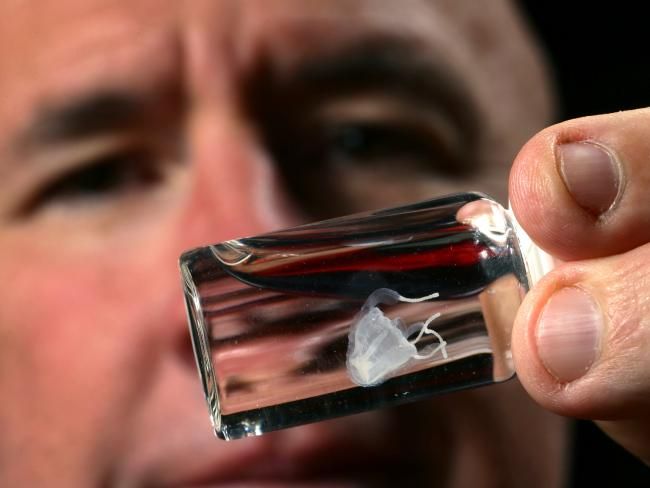
What is an Irukandji jellyfish?
Irukandji jellyfish (Carukia barnesi and related species) are tiny box jellyfish barely 2-2. 5 cm across (about the size of a thumbnail). Despite their minimal size, they produce venom that causes one of the most frightening medical conditions in marine envenomation - Irukandji syndrome.
Thumbnail-Sized Terror
A 2.5-centimeter jellyfish, barely larger than a thumbnail, drifts in Queensland waters. A swimmer passes through the area. The tiny creature makes contact. The swimmer doesn't notice. No immediate pain. No visible wound. Nothing.
Thirty minutes later, the swimmer experiences excruciating back pain. Then crushing anxiety accompanied by a terrifying "feeling of impending doom." Then severe cramps. Then cardiovascular distress. Without treatment, death within 30 hours is possible.
This is Irukandji syndrome, caused by the tiny Irukandji jellyfish (Carukia barnesi and relatives), among the most frightening marine envenomations known.
The Tiny Killer
Irukandji are among the smallest jellyfish known to harm humans.
Physical features:
- Body size: 2-2.5 cm (thumbnail size)
- Tentacles: 4 per individual
- Tentacle length: extending beyond body
- Color: nearly transparent
- Visibility: essentially invisible in water
- Structure: box-shaped (hence family)
Taxonomic position:
- Family: Carukiidae
- Order: Carybdeida
- Class: Cubozoa (box jellyfish)
- Multiple species: ~12 recognized
Compared to other jellyfish:
Irukandji are:
- 10-100x smaller than typical jellyfish
- Much smaller than box jellyfish (Chironex)
- Similar size to some other Cubozoa
- Distinctive tiny size
Irukandji Syndrome
The unique medical condition.
Symptom timeline:
5-120 minutes after sting:
- Onset of symptoms (varies)
- Often no initial pain
- Delayed progression
Early symptoms:
- Severe lower back pain
- Abdominal pain
- Headache
- Nausea
Progressive symptoms:
- Excruciating back pain
- Severe muscle cramps (whole body)
- Anxiety and 'impending doom'
- Intense pain
Cardiovascular:
- Rapid heart rate
- High blood pressure
- Chest pain
- Severe cardiac symptoms
Respiratory:
- Difficulty breathing
- Pulmonary edema possible
- Airway complications
- Severe breathing issues
Psychological:
- Feeling of impending death
- Overwhelming anxiety
- Panic attacks
- Distinctive fear sensation
Severity:
- Most cases severe but recoverable
- Hospitalization typical
- Full recovery common
- Death rare with treatment
Mortality:
- Treated cases: very rare deaths
- Untreated severe: up to 30% mortality
- Major risk: cardiac events
- Recovery time: 1-3 days with treatment
The Venom
Irukandji venom is unique.
Chemical composition:
Complex mixture including:
- Catecholamine-like compounds: cardiovascular effects
- Stress hormone mimics: anxiety, panic feelings
- Neurotoxins: specific nervous system effects
- Muscle contractors: widespread cramping
- Pain enhancers: severe pain perception
Why delayed:
- Different binding mechanisms
- Slow circulation through body
- Gradual hormone release
- Progressive effects
Unique aspects:
Unlike typical jellyfish venoms:
- Delayed onset (minutes to hours)
- Systemic rather than local
- Distinctive psychological effects
- 'Impending doom' sensation
Why this feeling:
Research suggests:
- Catecholamine release triggers body's danger response
- Similar to severe panic
- Stress hormone overproduction
- Real physiological basis
Where They Live
Irukandji inhabit tropical Indo-Pacific waters.
Primary range:
Australia:
- Queensland (most affected)
- Northern Territory
- Western Australia tropical coast
- Coastal regions
International:
- Papua New Guinea: waters
- Southeast Asia: similar species
- Tropical Pacific: some regions
- Indian Ocean: certain areas
Habitat preferences:
- Warm tropical waters (24-30°C)
- Coastal shallow regions
- Near reef areas
- Sandy bottoms
- Shallow seas
Seasonal distribution:
- Peak season: November-May (southern hemisphere summer)
- Rare: colder months
- Climate-sensitive: shifting patterns
- Weather-dependent: storm patterns
Range expansion:
Climate change concerns:
- Southward range extension
- Earlier seasonal appearances
- New coastal areas affected
- Ongoing monitoring
Why So Hard to Avoid
Their size makes prevention difficult.
Detection challenges:
- Transparent body: essentially invisible
- Tiny size: easily missed
- Water visibility: limited underwater
- Floating behavior: random in water column
Location variability:
- Cannot predict precisely
- Wide spatial distribution
- Concentration zones
- Weather-affected locations
Timing unpredictability:
- Season window (months)
- Daily variations
- Tidal effects
- Storm patterns
Prevention difficulty:
Unlike box jellyfish:
- Can pass through stinger nets
- Smaller mesh required
- Different protection needed
- Specific swimwear essential
Stinger Suits and Prevention
Specialized protection exists.
Lycra stinger suits:
- Tight-fitting body suits
- Cover all exposed skin
- Nematocysts can't penetrate
- Essential in high-risk areas
Types:
- Full body suits: maximum protection
- Shorty styles: legs/arms covered
- Rash vests: torso protection
- Various designs: for different activities
Beach protection:
- Stinger nets: some effective against box jellies
- Warning systems: public notification
- Designated swim areas: monitored zones
- Seasonal restrictions: temporary closures
In danger areas:
Professional organizations:
- Rescue services
- First aid training
- Medical support
- Monitoring programs
Treatment
Medical treatment for Irukandji syndrome.
Prehospital care:
- Remove tentacles carefully (if visible)
- Rinse with warm seawater (not freshwater)
- Apply heat (40°C for 20 minutes)
- Position victim comfortably
- Monitor closely
Medical treatment:
Hospital care includes:
- Pain management (often intense analgesia)
- Blood pressure control
- Cardiac monitoring
- Respiratory support
- Supportive care
Drug therapy:
- Morphine for pain
- Magnesium sulfate (shows some benefit)
- Anti-hypertensives if needed
- Anxiety management
Monitoring:
- 24-48 hours hospitalization typical
- Continuous cardiac monitoring
- Regular assessments
- Recovery tracking
Outcomes:
- Full recovery typical
- Rare lasting effects
- Psychological impact sometimes lingers
- Most patients recovered within 1-3 days
Multiple Species
About 12 species cause Irukandji syndrome.
Known species:
- Carukia barnesi (original species)
- Malo maxima
- Malo kingi
- Alatina mordens
- Morbakka fenneri
- Others (still being classified)
Differences:
- Slightly different venoms
- Some more severe
- Geographic variations
- Varying habitat preferences
Discovery:
- Many recently identified
- Research ongoing
- Taxonomic refinement
- New species possible
Medical implications:
Different species cause:
- Slightly different symptoms
- Varying severity
- Different treatment responses
- Species-specific considerations
Climate Change Impact
Climate change affects Irukandji populations.
Observed changes:
Range expansion:
- Southward movement
- New coastal regions
- Earlier seasonal appearances
- Extended high-risk periods
Population trends:
- Increasing in some areas
- Climate-correlated changes
- Ocean warming factors
- Global trend uncertain
Concerns:
- More human encounters
- Spread to new tourist areas
- Unexpected exposure
- Medical preparedness challenges
Research focus:
- Population monitoring
- Range mapping
- Climate correlation studies
- Adaptation planning
Research and Discovery
Irukandji research continues to expand.
Discovery history:
- 1952: Irukandji syndrome first described
- 1964: Jack Barnes identifies Carukia barnesi
- 1970s-1980s: additional species recognized
- 2000s: genetic analysis refines species
- Present: continuing new species discoveries
Dr. Jack Barnes:
The original researcher:
- Australian toxicologist
- Deliberately self-stung (with son and assistant)
- Documented Irukandji syndrome
- Identified specific jellyfish responsible
Modern research:
Current focus:
- Species identification and distribution
- Venom characterization
- Treatment improvement
- Population monitoring
- Climate change effects
Research challenges:
- Tiny size makes capture difficult
- Species taxonomy complex
- Venom delivery difficulties
- Specialized equipment needed
Irukandji vs Box Jellyfish
Related but distinct.
Similar:
- Both box jellyfish (Cubozoa)
- Both extremely venomous
- Both Australian primarily
- Both dangerous to humans
Different:
Size:
- Box jellyfish: 1-2 meter tentacles
- Irukandji: thumbnail-sized body
Sting:
- Box jellyfish: immediate severe pain
- Irukandji: delayed symptoms
Symptoms:
- Box jellyfish: rapid cardiac arrest possible
- Irukandji: systemic syndrome
Death rate:
- Box jellyfish: 80+ deaths Australia
- Irukandji: 2 confirmed deaths
Both dangerous:
- Different types of danger
- Both require medical attention
- Both warrant beach precautions
- Both target humans
Cultural Significance
Irukandji have become cultural touchstone.
Australian cultural awareness:
- Widely known to Queenslanders
- Summer safety concern
- Cultural icon of tropical danger
- Tourism education focus
Naming:
- After Irukandji people (Aboriginal)
- Cultural acknowledgment
- Traditional inhabitants of region
- Respectful designation
Media portrayal:
- Documentary subjects
- Scientific popular writing
- Travel warnings
- Medical case studies
Public awareness:
- High in Australia
- Growing internationally
- Tourist education important
- Continuing awareness efforts
Conservation
Irukandji are not conservation concerns.
Population status:
- Generally stable
- Some population increases
- Not threatened
- Abundant in range
Research needs:
- Better understanding
- Population monitoring
- Distribution mapping
- Ecological role
Human relationship:
- Pest species from tourism perspective
- Research subjects
- Medical concern
- Generally negative public view
Medical Research Applications
Irukandji venom research has potential.
Therapeutic potential:
Research into:
- Pain management applications
- Cardiovascular medications
- Stress hormone studies
- Specific toxic mechanisms
Current investigations:
- Detailed venom analysis
- Individual compound effects
- Therapeutic applications
- Safety and dosage
Possible treatments:
Ongoing research for:
- Non-opioid pain relief
- Cardiovascular medications
- Anxiety treatments
- Specific medical applications
Future potential:
- New drug developments possible
- Unique compound mechanisms
- Safety validation essential
- Long-term research required
Why They Matter
Irukandji represent important biology.
Medical significance:
- Unique venom characteristics
- Distinctive syndrome
- Research value
- Therapeutic potential
Scientific interest:
- Size-to-power ratio unique
- Venom evolution
- Species diversity
- Ecological niche
Public safety:
- Major medical concern
- Beach safety driver
- Education importance
- Protection measures
Cultural impact:
- Australian identity component
- Tourism consideration
- Research focus
- Traditional respect
The Tiny Terror
Every Irukandji jellyfish swimming in tropical Australian waters represents a remarkable combination of extreme danger in minimal packaging.
They're essentially invisible. Their venom is complex and unusual. Their sting produces a distinctive syndrome different from any other marine envenomation. Their tiny size defeats most protection methods.
Medical science has developed effective treatments. Protective suits prevent most stings. Beach safety networks warn tourists. Specialized knowledge guides response. Full recovery is typical with proper care.
But vigilance must continue. Climate change may expand their range. New species may be discovered. Tourism brings more people to their habitats. Research continues to understand their biology.
Every summer in tropical Australia, swimmers remember that these invisible creatures patrol coastal waters. They represent nature's demonstration that size doesn't determine danger - sometimes the smallest threats cause the most distinctive medical emergencies.
In the waters where Irukandji people have lived for tens of thousands of years, the tiny jellyfish that bears their name continues its mysterious biology - small enough to ignore, powerful enough to hospitalize dozens of unwary swimmers each year, and scientifically fascinating enough to drive continuing research into one of nature's most peculiar venom delivery systems.
Irukandji Species and Their Geographic Distribution
The Irukandji syndrome is caused by at least a dozen species of small box jellyfish in the order Cubozoa. Research teams at James Cook University and the Australian Institute of Marine Science have progressively catalogued these species, with new additions to the known Irukandji-producing taxa being described approximately every five years.
| Species | Bell Size | Primary Range | Syndrome Severity | Year Described |
|---|---|---|---|---|
| Carukia barnesi | 12-30 mm | Tropical Queensland | Classic Irukandji | 1967 |
| Malo kingi | 30 mm | North Queensland | Fatal cases documented | 2007 |
| Malo maxima | 50 mm | Broome, Western Australia | Moderate-severe | 2005 |
| Malo filipina | 15-20 mm | Philippines | Severe, fatality linked | 2015 |
| Alatina alata | 20-50 mm | Hawaii, Caribbean | Classic Irukandji | 2013 |
| Morbakka fenneri | 70-80 mm | East Australia | Pain-dominant | 2009 |
| Keesingia gigas | 300 mm | Shark Bay, W. Australia | Recently described | 2014 |
| Gerongia rifkinae | 150 mm | Darwin, N. Territory | Severe | 2006 |
The discovery of Keesingia gigas in 2014, published by Lisa-ann Gershwin, revealed an Irukandji-syndrome-producing jellyfish with a 50-centimeter bell - disrupting the assumption that these dangerous species must be tiny. The specimen reported was the size of a human head, demonstrating that Irukandji biology is determined by venom composition rather than body size.
Venom Biochemistry and the Catecholamine Storm
Irukandji syndrome is mediated by a venom mechanism unique among marine envenomations. The venom contains neuropeptide mimics that cause massive, uncontrolled release of the body's own stress hormones - adrenaline, noradrenaline, and dopamine. This "catecholamine storm" produces the hypertension, anxiety, chest pain, and sense of impending doom that define the syndrome.
"The distinctive feature of Irukandji venom is that it does not kill by pore formation or direct tissue destruction, which are common mechanisms in other cnidarian venoms. Instead, it manipulates the victim's own stress response machinery to produce a catastrophic self-generated adrenaline flood. In cardiovascular terms, the venom makes your body poison itself." - Dr. Jamie Seymour, Australian Institute of Tropical Health and Medicine, James Cook University [1]
A 2005 study by Dr. Ken Winkel at the University of Melbourne Venom Research Unit identified magnesium sulfate intravenous infusion as an effective treatment for severe Irukandji syndrome, working by suppressing the catecholamine-induced calcium cascade in cardiac tissue. The treatment has become standard of care in Queensland emergency departments during the Irukandji season.
The Self-Experimentation of Jack Barnes
Jack Barnes's 1964 discovery of Carukia barnesi stands as one of the most famous acts of self-experimentation in Australian medical history. Barnes, a Cairns-based physician, suspected that a tiny, essentially invisible jellyfish was causing the syndrome then plaguing north Queensland swimmers. He spent weeks diving in affected waters before capturing a candidate specimen.
To confirm causation, Barnes deliberately stung himself, his nine-year-old son, and his volunteer lifeguard assistant with the suspect jellyfish. All three developed the classic syndrome within 30 minutes and were hospitalized. The self-experiment, published in the Medical Journal of Australia in 1964, established the causative organism and launched modern Irukandji research.
"The ethical climate that permitted Jack Barnes's self-experimentation belongs to a different era of medicine, but the scientific outcome was indispensable. Without his willingness to establish causation in vivo, the identification of the Irukandji organism might have taken another decade, during which many more patients would have suffered without an understood cause." - Dr. Bart Currie, Royal Darwin Hospital and Menzies School of Health Research [2]
References
- Seymour, J., Carrette, T., Cullen, P., et al. (2002). The use of pressure immobilization bandages in the first aid management of cubozoan envenomings. Toxicon, 40(10), 1503-1505. DOI: 10.1016/S0041-0101(02)00156-7
- Winkel, K. D., Tibballs, J., Molenaar, P., et al. (2005). Cardiovascular actions of the venom from the Irukandji (Carukia barnesi) jellyfish. Clinical and Experimental Pharmacology and Physiology, 32(9), 777-788. DOI: 10.1111/j.1440-1681.2005.04258.x
- Gershwin, L. A., & Alderslade, P. (2005). A new genus and species of box jellyfish (Cubozoa: Carybdeidae) from tropical Australian waters. The Beagle: Records of the Museums and Art Galleries of the Northern Territory, 21, 27-36.
- Barnes, J. H. (1964). Cause and effect in Irukandji stingings. Medical Journal of Australia, 1(24), 897-904.
- Little, M., Pereira, P., Mulcahy, R., et al. (2003). Severe cardiac failure associated with presumed jellyfish sting: Irukandji syndrome? Anaesthesia and Intensive Care, 31(6), 642-647. DOI: 10.1177/0310057X0303100607
- Gershwin, L. A., De Nardi, M., Winkel, K. D., & Fenner, P. J. (2010). Marine stingers: review of an under-recognized global coastal management issue. Coastal Management, 38(1), 22-41. DOI: 10.1080/08920750903345031
Related Articles
- Box Jellyfish: The Most Venomous Sea Creature
- Lion's Mane Jellyfish: The Longest Animal on Earth
- Portuguese Man o' War: The Floating Colony
Frequently Asked Questions
What is an Irukandji jellyfish?
Irukandji jellyfish (Carukia barnesi and related species) are tiny box jellyfish barely 2-2.5 cm across (about the size of a thumbnail). Despite their minimal size, they produce venom that causes one of the most frightening medical conditions in marine envenomation - Irukandji syndrome. They were named after the Irukandji people who traditionally inhabited coastal Australian regions where these jellyfish are most common.
Their tiny size makes them extraordinarily difficult to see or avoid in water. They have four tentacles extending from the bell, each armed with thousands of stinging cells. A single Irukandji can cause systemic poisoning requiring hospitalization. Their venom works unlike other jellyfish - it doesn’t cause immediate severe pain at the sting site.
Instead, systemic symptoms develop 5-120 minutes later, often described as ‘impending doom’ combined with severe pain. Only recently (2004) have researchers fully identified all Irukandji species - approximately 12 distinct species exist in Australian waters, with different symptoms and severity.
What is Irukandji syndrome?
Irukandji syndrome is a specific medical condition caused by stings from Irukandji jellyfish.
Symptoms develop 5-120 minutes after the sting and include: severe back pain (often the first noticeable symptom), excruciating lower back pain, severe abdominal pain, nausea and vomiting, anxiety and ‘impending doom’ feeling (distinctively reported), severe muscle cramps (entire body), rapid heart rate, high blood pressure, difficulty breathing, and in severe cases pulmonary edema (fluid in lungs) and cardiac complications.
The ‘impending doom’ feeling is psychologically overwhelming - victims become convinced they’re dying even if physically they may recover. Untreated, severe cases can cause death from cardiac arrest within 30 hours. Treatment is supportive - no antivenom exists. Medical management includes: intravenous pain medication, blood pressure control, respiratory support if needed, careful monitoring 24-48 hours, and hospitalization standard.
Most victims recover completely within 1-2 days with proper treatment. The condition is distinctive enough that medical professionals in Australia recognize it immediately. Approximately 50-100 cases annually in northern Australia.
Where do Irukandji jellyfish live?
Irukandji jellyfish primarily inhabit warm waters of northern Australia, with smaller populations in Southeast Asian waters, Papua New Guinea, and adjacent regions. Their range includes: northeastern Queensland (major distribution area), tropical Northern Territory, Western Australian tropical coast, occasional southern appearances during warm years, Papua New Guinea waters, and adjacent Southeast Asian tropical waters.
Climate change has potentially expanded their range southward - some populations now reach areas that previously didn’t have them. They prefer: warm tropical waters (24-30°C), coastal regions, nearshore and reef areas, and shallow waters typically less than 20 meters deep. They are most abundant during warmer months (November-May in southern hemisphere). They tend to aggregate near reef areas and sandy bottoms.
Their small size makes population estimation extremely difficult - they’re essentially invisible to casual observation. Research in Queensland monitors them through specialized trawl nets and chemical markers. Climate change is affecting their seasonal patterns and geographic distribution, with concerning southward expansion trends.
Why is Irukandji venom different?
Irukandji venom has unusual characteristics that distinguish it from other jellyfish venoms. Initial sting is often mild or imperceptible - victims may not realize they’ve been stung until symptoms develop 5-120 minutes later. This delayed onset is unique among jellyfish stings.
The venom primarily affects: cardiovascular system (high blood pressure, heart rate changes), muscular system (causing severe cramping), nervous system (anxiety, pain perception), respiratory system (breathing difficulties), and overall body systems. Unlike box jellyfish venom (which causes immediate extreme pain), Irukandji venom produces: delayed systemic symptoms, progressive worsening over hours, severe but often not fatal, and recovery within days.
Research has identified multiple toxic compounds: catecholamines that cause cardiovascular effects, specific neurotoxins affecting sensation, muscle-contracting compounds, and stress hormone mimics. The combination produces the distinctive ‘impending doom’ feeling. Each Irukandji species has slightly different venom profiles. Understanding these differences has helped medical treatment.
The venom’s unique properties make it a subject of medical research for potential therapeutic applications.
How do you avoid Irukandji stings?
Avoiding Irukandji stings requires specific precautions given their tiny, difficult-to-detect size.
Prevention strategies include: wearing lycra stinger suits in Australian tropical waters (essential protection), checking marine hazard warnings (regularly updated in Queensland), avoiding swimming during peak Irukandji season (November-May in Queensland), staying in designated stinger-net protected areas, wearing appropriate swimwear covering skin, keeping swimming within monitored zones, and learning to recognize symptoms for early response.
Stinger nets protect some Queensland beaches - these are sometimes effective against box jellyfish but Irukandji are small enough to pass through. Hot water treatment (40°C) applied quickly can help deactivate nematocysts on skin. Vinegar application is controversial - Irukandji may actually be stimulated by vinegar, so freshwater rinse may be preferred.
If stung: leave water immediately, check for visible tentacles, apply warm water, monitor for symptoms, and seek medical attention if symptoms develop. In areas without stinger protection, avoid swimming during high-risk months. Commercial dive operations in stinger areas provide full body suits as standard equipment. The combination of prevention methods reduces but cannot eliminate risk.