
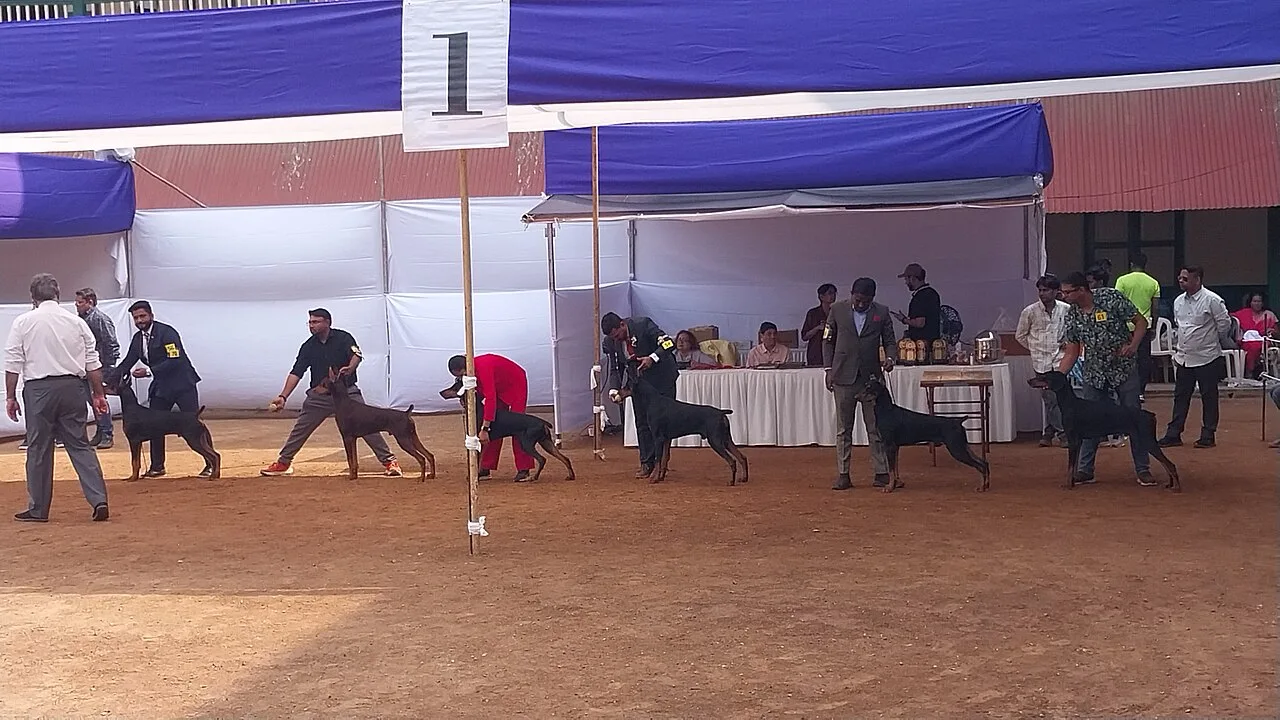
The Doberman Pinscher is the only dog breed created by a single named individual with a documented purpose.
In the 1890s in Apolda, Thuringia, a German tax collector named Karl Friedrich Louis Dobermann needed a dog that could accompany him on his rounds, which required entering some of the more dangerous neighbourhoods of the region, and that would provide both genuine protection and sufficient intimidating presence to deter trouble before it started.
Dobermann, who also ran the town's dog pound and had access to a wide range of breeds, set about creating exactly the dog he needed. The result, within a generation or two of selective breeding, was an animal that has since become one of the most recognisable, most capable, and most misunderstood dogs in the world.
The Doberman stands at the intersection of elegance and power. It is a large, lean, muscular dog with an athletic capacity matched by few breeds and an intelligence ranking that places it fifth overall in Stanley Coren's obedience and working intelligence assessment.
It is also a breed with a serious documented health burden, particularly dilated cardiomyopathy (DCM), which affects an estimated 58 percent of European Dobermans by late middle age, that places demands on owners willing to maintain a dog of this quality throughout its life.
This guide covers the Doberman completely: origins, conformation, temperament, health data, the European versus American distinction, training, exercise, grooming, and feeding.
Origins and History
Karl Friedrich Louis Dobermann served as a tax collector, night watchman, and dog catcher in Apolda, Germany in the 1870s and 1880s. The specifics of his breeding program are not documented with the precision of some other breed histories, Dobermann kept no published stud books that survived, and the foundational breeds remain partly speculative.
The consensus among breed historians and geneticists is that the Doberman Pinscher emerged from crosses involving the Rottweiler (for body mass and tracking ability), the German Pinscher (for alertness and structure), an extinct breed called the Black and Tan Terrier (for tenacity and dark colouration), and likely the Greyhound (for speed and lean musculature) and the Weimaraner (for scenting and trainability).
Karl Dobermann died in 1894, before his breed was formally standardised. The Doberman Pinscher Club of Germany (Verein für Deutsche Dobermannhunde) was founded in 1899, and early breed development was continued by Otto Goeller, who is credited with refining the breed type. The first German breed standard was published in 1900.
The breed's capabilities quickly attracted the attention of police forces and military organisations. German police departments adopted Dobermans as working dogs in the early 20th century, and the breed served in both World War I and World War II as messenger dogs, guard dogs, and scouts.
The United States Marine Corps used Dobermans extensively in the Pacific theatre of World War II, particularly in Guam, where 25 Dobermans died in service. A bronze sculpture of a Doberman called "Always Faithful" stands at the National War Dog Cemetery on Guam as a memorial.
The American Kennel Club recognised the Doberman Pinscher in 1908. The breed's American development diverged from the European standard over the 20th century, producing the two distinct population types recognised today.
Physical Characteristics
The Doberman Pinscher is a large working dog with a lean, athletic build that emphasises both power and speed. The breed standard describes a dog that is neither too heavy (which would compromise speed) nor too light (which would compromise protection capability).
| Measurement | Male | Female |
|---|---|---|
| Height at withers | 66-72 cm (26-28 in) | 61-68 cm (24-26.5 in) |
| Weight | 40-45 kg (88-99 lb) | 32-35 kg (71-77 lb) |
| Build | Square, length equal to height | Slightly more elongated |
The head is long and narrow, forming a blunt wedge when viewed from both top and side. The eyes are almond-shaped and medium-sized, dark in colour (brown in dogs with the standard black-and-rust coat, lighter in blue and fawn colour variants). The neck is long and lean, held erect, giving the breed its characteristic alert, aristocratic bearing.
The Doberman's four recognised AKC colours are black and rust (the standard), red and rust, blue and rust (dilute black), and fawn (Isabella) and rust. The dilute colours (blue and fawn) are produced by a recessive dilution gene and are associated with colour dilution alopecia, a progressive hair loss and skin condition, in a proportion of affected individuals. Colour dilution alopecia does not affect black and rust or red and rust Dobermans.
The traditionally cropped ears and docked tail are cosmetic modifications that have been standard in North American Dobermans for decades but are increasingly restricted or prohibited in Europe and elsewhere by animal welfare legislation. Natural-eared and natural-tailed Dobermans are now common in countries where these modifications are prohibited.
European and American Doberman Distinctions
The divergence between European (working line) and American (show line) Dobermans is significant enough to be a meaningful consideration for prospective owners, though both are the same breed registered under the same AKC/FCI recognition.
American Doberman: Bred primarily for the conformation show ring over the past several decades. Typically leaner, lighter, more refined in build. Temperament tends toward a more relaxed energy level with less working drive. The American show standard allows a slightly different physical profile than the FCI (Federation Cynologique Internationale) standard used in Europe. American Dobermans are generally described as more suitable for first-time large breed owners in terms of energy management.
European Doberman: Bred to the FCI standard with working drive maintained. Heavier-boned, more muscular, higher energy. Required to pass working dog certification (IPO/IGP, Internationale Prüfungs-Ordnung, now renamed IGP) alongside conformation evaluation in many European countries.
European Dobermans are used in working dog sports including Schutzhund/IGP (a three-phase sport involving tracking, obedience, and protection work), and their training requirements reflect that drive. They are not generally recommended as first working breeds for novice owners.
Both populations share the same serious health concerns, particularly DCM.
Temperament
The Doberman is one of the most loyal and handler-bonded of all breeds. The relationship between a Doberman and its owner or handler is intense, characterised by attentiveness, physical proximity, and an almost continuous awareness of the handler's state and location. Dobermans are called "velcro dogs" by their admirers: they follow their owners from room to room, position themselves in doorways to monitor activity, and are most content when their people are present.
The breed is alert, confident, and observant. Its protective instinct is genuine and selective; it does not bark at everything indiscriminately, but it does assess its environment continuously and responds with controlled alertness to genuine anomalies. A well-trained, well-socialised Doberman is a reliable protector that distinguishes between social visitors and genuine threats. A poorly socialised or fear-based Doberman is a liability.
"The Doberman Pinscher is not a breed for owners seeking a passive companion. It requires mental engagement, structured training, and genuine leadership. Given these, it repays the investment with a depth of loyalty and attentiveness that few other breeds match." Doberman Pinscher Club of America, Breed Standard and Character Notes, 2021.
The Doberman's intelligence, ranked fifth by Stanley Coren in The Intelligence of Dogs (1994), based on obedience and working trials survey data, means it learns rapidly and requires consistent mental engagement. A Doberman with insufficient stimulation and leadership is at significant risk of developing anxiety-based behaviours: destructive chewing, excessive pacing, or reactive behaviour in public.
The breed's protective drive means early, thorough, positive socialisation during the critical window (3 to 16 weeks) is essential. Dobermans exposed broadly to different people, environments, sounds, and animals during puppyhood develop the confident, stable assessment ability the breed is known for. Dobermans deprived of this socialisation can develop fear-based reactivity.
Health: DCM and Key Conditions
The most important health issue in the Doberman Pinscher is dilated cardiomyopathy (DCM), and the statistics demand clear presentation.
A landmark study by Wess et al. published in the Journal of Veterinary Internal Medicine in 2010 followed a large population of European Dobermans with serial Holter monitoring (24-hour ECG) and echocardiography over several years.
The study found that by age 8, approximately 58 percent of European Dobermans had developed DCM, either preclinical (detected by echocardiogram changes without clinical symptoms) or clinical (showing signs of heart failure). The cumulative lifetime prevalence in the study population exceeded 65 percent.
These figures are not current in all Doberman populations, some studies show different rates in North American populations, and early detection and management have improved, but they establish DCM as the defining health challenge of the breed.
| Health Condition | Prevalence | Source |
|---|---|---|
| Dilated cardiomyopathy (DCM) | ~58% of European Dobermans by age 8 | Wess et al., 2010, JVIM |
| Wobbler syndrome (cervical spondylomyelopathy) | Breed predisposed | Veterinary neurology literature |
| Von Willebrand disease type I (vWD) | Present in the breed, DNA test available | DPCA health resources |
| Hip dysplasia | ~6% of evaluated dogs | OFA statistics |
| Chronic active hepatitis | Breed-specific liver disease | Veterinary internal medicine literature |
| Hypothyroidism | Elevated breed prevalence | Michigan State University survey |
"Dilated cardiomyopathy in the Doberman is a serious, progressive disease that begins with subtle arrhythmias detectable only by Holter monitoring before clinical signs appear. The preclinical phase can last years. This is why annual Holter monitoring and echocardiography are the current recommendation for Doberman owners, not to detect disease that is already symptomatic, but to identify it in its early, treatable phase." Wess, G., Schulze, A., Butz, V., et al. (2010). Prevalence of dilated cardiomyopathy in Doberman Pinschers in various age groups. Journal of Veterinary Internal Medicine, 24(3), 533-538. https://doi.org/10.1111/j.1939-1676.2010.0479.x
DCM in Dobermans presents in two phases. The occult (preclinical) phase is detectable only by cardiac testing, echocardiogram showing reduced contractility, or Holter monitor showing ventricular premature contractions (VPCs). The clinical phase involves overt heart failure symptoms, exercise intolerance, coughing, abdominal distension (fluid accumulation), and potentially sudden cardiac death from arrhythmia. The transition from occult to clinical can occur over months to years.
Annual cardiac screening is strongly recommended for all Dobermans from age 2 onward, involving both 24-hour Holter monitoring and echocardiography. This is not an optional recommendation; it is the responsible standard of care for this breed.
Von Willebrand disease type I in Dobermans is a bleeding disorder caused by reduced levels of von Willebrand factor, a protein essential for normal blood clotting. Most affected Dobermans have mild VWD that does not cause spontaneous bleeding under normal conditions, but it creates elevated risk during surgery or trauma. A DNA test is commercially available and should be performed on all breeding dogs.
See Doberman Pinscher Health Problems for the complete health reference.
Training
The Doberman's intelligence, drive, and handler-orientation make it one of the most trainable breeds in existence. It learns new commands rapidly, retains learned behaviours reliably, and is highly motivated by both food and social approval. This combination makes the Doberman an outstanding performance dog when trained by a knowledgeable handler and a well-behaved companion when given appropriate structure.
Training approach for Dobermans:
Positive reinforcement is most effective: Despite the breed's protective heritage and physical capability, punitive training methods produce worse outcomes than positive reinforcement in the Doberman. The breed is sensitive; it reads handler emotional states with precision and responds to unfair or inconsistent treatment with anxiety or shutting down. Positive reinforcement, clarity, and consistency produce the confident, responsive Doberman that the breed is known for.
Begin structured training at 8 weeks: Dobermans benefit from early formal training that establishes communication patterns from the earliest age. Puppy classes with positive reinforcement instruction are strongly recommended.
Socialisation is non-negotiable: The breed's protective instinct requires that the dog be exposed to an extraordinarily wide range of people, environments, and situations during puppyhood to develop appropriate discrimination between social situations and actual threats.
Advanced training is genuinely appropriate: The Doberman's intelligence means it benefits from work beyond basic obedience. Dog sports (IGP/Schutzhund, agility, nosework, rally obedience), therapy dog work, and service dog training all provide outlets appropriate to the breed's capacity.
See Doberman Pinscher Training Guide and How Smart Are Dogs for further context on canine intelligence assessment.
Exercise
Dobermans have high exercise requirements. They are athletic, high-drive dogs that maintain their energy and drive well into adulthood. An adult Doberman needs a minimum of 60 to 90 minutes of vigorous exercise daily.
Exercise forms appropriate for Dobermans:
- Running or jogging with the owner (excellent for conditioned adults over 18 months)
- Off-lead running in securely fenced areas
- Fetch and retrieve games
- Structured dog sport training: IGP, agility, and nosework all provide physical and mental engagement
- Hiking over varied terrain
Mental exercise is equally important. A Doberman that is physically exercised but mentally under-stimulated will channel its intelligence into finding its own amusement, which typically involves activities the owner does not want. Daily training sessions, puzzle feeders, and enrichment activities complement physical exercise.
See Exercise Needs by Dog Breed for comparative requirements. See Dog Vaccination Schedule Explained for timing of puppy outdoor exercise access.
Grooming
The Doberman's short, tight coat is among the lowest-maintenance coats in the dog world. Shedding is moderate and year-round, with no dramatic seasonal moult.
Brushing: Weekly brushing with a rubber curry brush or hound glove removes loose hair and stimulates coat oils. This is also an opportunity to examine the skin for the contact and environmental allergies to which some Dobermans are prone.
Bathing: Every 4 to 6 weeks. The short coat dries quickly and does not accumulate odour between baths.
Nail trimming: Every 3 to 4 weeks. An active Doberman on hard surfaces will wear nails faster than a sedentary dog but still requires regular trimming.
Dental care: Daily brushing is the standard. The Doberman's relatively large mouth means dental disease accumulates at a lower rate than in small breeds, but dental hygiene remains important for overall systemic health.
Ear care: For natural-eared Dobermans, weekly inspection and cleaning. For cropped-eared dogs (where legally performed and healed), routine inspection.
The fawn (Isabella) and blue colour variants carry risk of colour dilution alopecia, a progressive thinning of hair associated with the dilution gene. Affected dogs may show patchy hair loss and dry, flaky skin, particularly along the back. Specific gentle shampoos and diet adjustments can slow progression; there is no cure. Purchasing a fawn or blue Doberman should involve discussion of this risk with the breeder.
References
Wess, G., Schulze, A., Butz, V., et al. (2010). Prevalence of dilated cardiomyopathy in Doberman Pinschers in various age groups. Journal of Veterinary Internal Medicine, 24(3), 533-538. https://doi.org/10.1111/j.1939-1676.2010.0479.x
Coren, S. (1994). The Intelligence of Dogs: A Guide to the Thoughts, Emotions, and Inner Lives of Our Canine Companions. New York: Free Press.
Doberman Pinscher Club of America. (2022). Health and Genetics Committee: VWD, DCM, and Wobbler Syndrome Resources. Retrieved from https://www.dpca.org/health/
Orthopedic Foundation for Animals. (2023). Doberman Pinscher Hip Dysplasia Statistics. Retrieved from https://ofa.org
Meurs, K. M., Fox, P. R., Norgard, M., et al. (2007). A prospective genetic evaluation of familial dilated cardiomyopathy in the Doberman Pinscher. Journal of Veterinary Internal Medicine, 21(5), 1016-1020. https://doi.org/10.1892/06-215.1
Jaggy, A., & Gaillard, C. (2002). Polymyopathy and polyneuropathy associated with hypothyroidism in a Sampled Doberman population, metabolic disease context. Veterinary Quarterly, 24(4), 187-194.
Frequently Asked Questions
Are Dobermans dangerous?
The Doberman Pinscher has a protective instinct and the physical capability to cause injury, both of which are intentional design features created for its original role as a personal protection dog. However, a well-bred, well-socialised, and well-trained Doberman is a controlled, discriminating dog that distinguishes between social situations and genuine threats.
The breed’s reputation for danger is largely based on its appearance and its working capabilities, not on statistically elevated rates of aggression in well-managed individuals. The risk of a poorly socialised or fear-based Doberman is real and should be acknowledged, which is why thorough puppyhood socialisation and structured positive reinforcement training are non-negotiable requirements for this breed.
What is DCM in Dobermans?
Dilated cardiomyopathy (DCM) is a condition in which the heart muscle weakens and the heart chambers enlarge, reducing pumping efficiency and leading to heart failure or fatal arrhythmia. DCM is the most prevalent serious health issue in the Doberman Pinscher. A landmark study by Wess et al. (2010) found that approximately 58 percent of European Dobermans developed DCM by age 8.
The disease progresses through an occult (preclinical) phase detectable only by cardiac testing, before advancing to the clinical phase with visible symptoms. Annual cardiac screening, including 24-hour Holter monitoring and echocardiography, from age 2 onward is the current recommended standard of care for Dobermans.
What is the difference between European and American Dobermans?
European Dobermans are bred to the FCI (Federation Cynologique Internationale) standard with working drive maintained; they are heavier-boned, more muscular, and higher-energy, and in many European countries must pass working dog certification (IGP/Schutzhund) alongside conformation evaluation.
American Dobermans have been bred primarily for the AKC conformation show ring over the past several decades; they are typically leaner, lighter, and have lower working drive, making them somewhat more suitable for owners without experience managing high-drive working dogs. Both populations share the same serious health concerns, particularly DCM. Neither type is superior to the other; they suit different owners and purposes.
Do Dobermans get along with families?
Dobermans can be outstanding family dogs when properly socialised and trained. Their intense loyalty and handler-orientation extends to all members of their established family group, including children. The breed’s attentiveness and protective instinct mean it often positions itself as a guardian of children in the household.
The management requirements are proportional to the dog’s capabilities: a 45-kilogram, high-drive dog needs consistent training and clear structure. Families with young children should invest in formal training early and ensure that all family members, including children old enough to participate, understand how to interact appropriately with the dog.
How smart are Dobermans?
The Doberman Pinscher is ranked fifth overall in Stanley Coren’s obedience and working intelligence assessment from The Intelligence of Dogs (1994), which was based on surveys of obedience judges and involved 138 breeds. Breeds in this tier learn new commands in fewer than 5 repetitions and obey known commands on the first attempt at least 95 percent of the time.
This ranking reflects the breed’s working capabilities and trainability under formal assessment conditions. In practice, owners consistently report that their Dobermans are remarkably observant, learn household routines quickly, and apply what they have learned selectively, including in ways that are not always what the owner intended.
What health tests should a Doberman have?
The recommended health testing program for Dobermans addresses their most significant hereditary conditions. Cardiac: annual echocardiogram and 24-hour Holter monitoring from age 2, performed by a board-certified cardiologist. Von Willebrand disease: DNA test, type I VWD is present in the breed, with mild to moderate bleeding disorder risk. Hips: OFA or PennHIP radiograph evaluation.
Thyroid: annual thyroid panel recommended given elevated hypothyroidism prevalence. Eyes: CAER examination. Responsible breeders provide documentation of cardiac clearances, VWD status, and hip evaluations for both parents. The VWD DNA test result is particularly important before any surgical procedure.