
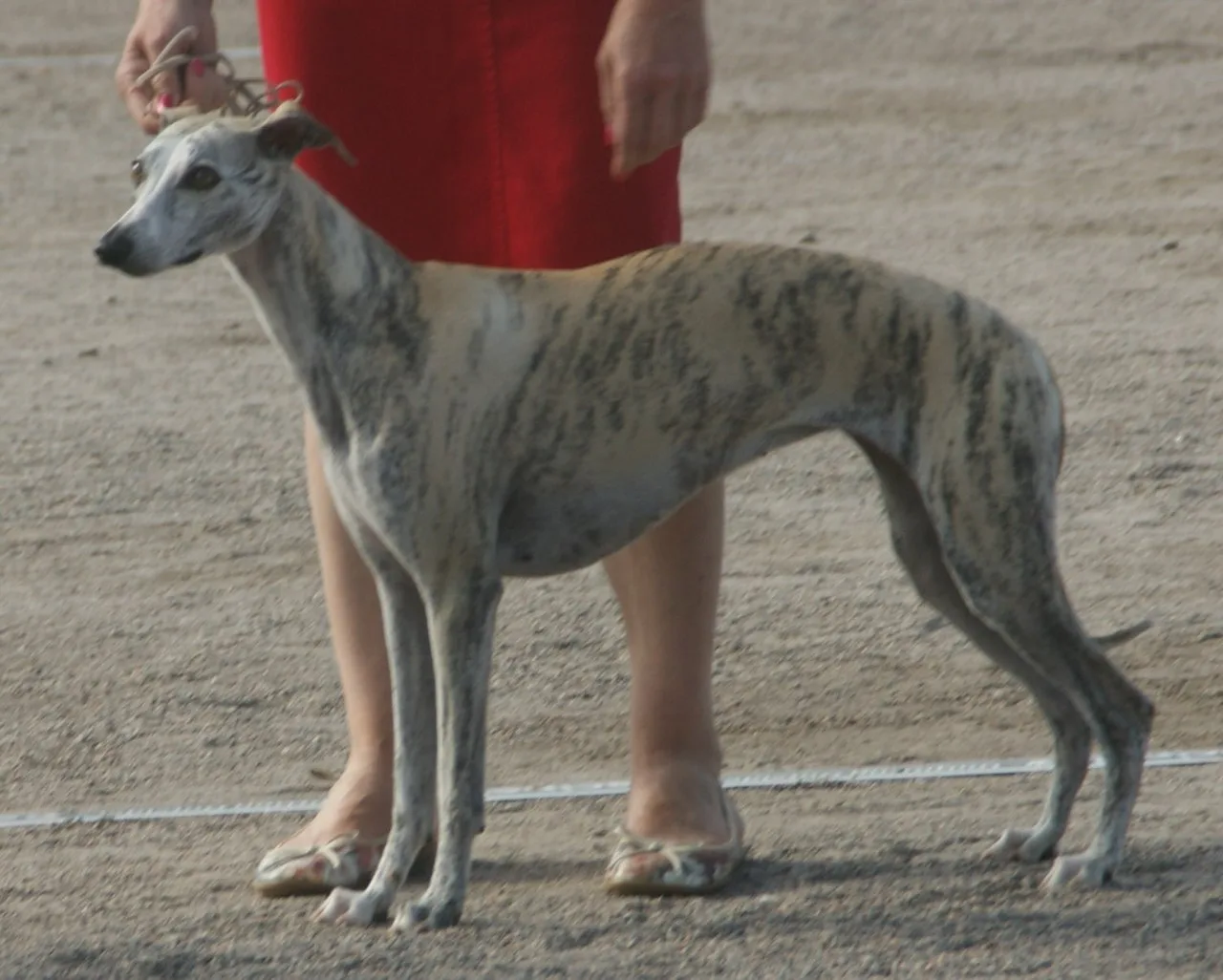
The Whippet occupies a unique position in the canine world: a medium-sized sighthound built for explosive speed (up to 56 km/h), bred specifically for working-class industrial England in the 19th century, and possessing one of the most dual-natured temperaments of any dog breed. Outdoors, a Whippet is a focused, fast, driven athlete. Indoors, it is a gentle, quiet, affectionate companion that has been described, with complete accuracy, as the ideal urban dog.
The Whippet was born from the crossing of Greyhounds with terrier-type dogs in the coalfields and working towns of northern England. Where the Greyhound was historically the province of the aristocracy, coursing by sight on the great estates, the Whippet was the sporting dog of the working class, developed for rabbit coursing and rag racing (racing toward a waved cloth held by the owner at the finish line).
The breed's informal origins gave it a different character from the more refined Greyhound: a little more rugged, a little more terrier-spirited, and notably more adaptable to the varied conditions of working-class life.
Origins and History
The Whippet's development as a distinct breed occurred primarily between 1860 and 1890 in the industrial towns of County Durham, Yorkshire, and Lancashire in northern England. The working-class miners and factory workers of these regions bred dogs for two specific purposes: coursing rabbits for the pot, and racing for sport and wagering.
The Greyhound, the foundation of the Whippet, was too large and expensive for working-class ownership. By crossing smaller Greyhounds with terrier-type dogs, the specific terrier ancestry is debated, with whippet experts suggesting contributions from Manchester Terrier lines, breeders produced a dog that combined sighthound speed with a more compact, economical package. The resulting dog was light enough to carry home from work, cheap enough to feed, and fast enough to win racing purses.
The name Whippet derives from an old English word meaning to move quickly or nimbly. Early breed names included "snap dog" a reference to the dog's ability to snap up rabbits during coursing.
The Kennel Club (UK) recognised the Whippet in 1891. The American Kennel Club followed in 1888, unusually, the American recognition preceded the formal British recognition, reflecting the breed's early popularity among British immigrant communities in the northeastern United States.
Physical Characteristics
The Whippet is the physical embodiment of elegant efficiency: every anatomical feature serves the dual functions of speed and energy conservation. The deep chest houses a proportionally large heart and lungs. The flexible, arched back contributes to stride length in the double suspension gallop. The lean, muscular body carries minimal fat.
| Characteristic | Measurement |
|---|---|
| Height (males) | 48-56 cm (19-22 in) |
| Height (females) | 46-53 cm (18-21 in) |
| Weight | 10-20 kg (25-40 lb) |
| Top speed | Approximately 56 km/h (35 mph) |
| Lifespan | 12-15 years |
| AKC Group | Hound |
The Whippet's coat is short, fine, and single-layered; there is no insulating undercoat. This is functionally significant: the fine coat offers minimal protection against cold, rain, or abrasion. A Whippet in cold weather needs a coat. A Whippet in prolonged rain will be genuinely wet and cold. This coat characteristic is not a minor consideration; it substantially shapes how Whippets must be managed in temperate and cold climates.
The skin is thin and the blood vessels are close to the surface, giving the dog an elegant, somewhat fragile appearance that belies its genuine athletic capability. The rose ears (folded back at rest, rising partially when alert) are characteristic of the sighthound family and give the breed an alert, expressive appearance.
Coat colours include virtually the entire canine colour palette: all shades of fawn, brindle, black, blue, cream, white, and parti-colours. There is no colour preference in the breed standard for conformation.
Temperament
The Whippet's temperament is one of the breed's most appealing characteristics. The combination of athletic sighthound speed and a terrier-influenced people-orientation produces a dog that is gentle, sensitive, and deeply connected to its family. Whippets are affectionate without being demanding, calm without being dull, and playful without the manic energy of working breeds.
The breed is notably good with children, patient, tolerant, and gentle. It is typically non-aggressive with other dogs and, unlike the Greyhound, many Whippets coexist peacefully with cats if introduced early, though prey drive varies and introductions should always be managed carefully.
"The Whippet represents a particularly successful compromise between working ability and domestic adaptability. The terrier influence in the breed's ancestry added a people-orientation and a degree of biddability that is less characteristic of the purebred sighthound lines, making the Whippet a more tractable companion than the Greyhound while preserving the essential sighthound character." Hancock, D. (2012). The Heritage of the Dog. Nimrod Press.
The sensitivity that makes Whippets gentle companions also makes them respond poorly to harsh training methods. Raised voices, physical correction, or punitive training approaches produce anxiety and shutdown in Whippets. Positive reinforcement is both more effective and more appropriate for this breed.
Separation anxiety is a tendency in the breed. Whippets form strong attachments to their families and can become anxious or destructive when left alone for extended periods. Gradual departure training from puppyhood, combined with a companion dog in multi-dog households, addresses this tendency.
Health Conditions
The Whippet is generally a healthy breed, with fewer significant hereditary health problems than many pedigree breeds. The absence of extreme conformation, the breed's athletic selection history, and its moderate size all contribute to relatively good health. Nonetheless, specific conditions require attention.
| Health Condition | Prevalence / Notes |
|---|---|
| Cardiac arrhythmias | Reported in the breed; regular cardiac auscultation recommended at annual exams |
| Mitral valve disease | Present; not as prevalent as in Cavalier King Charles Spaniels but warrants monitoring |
| Hypothyroidism | Present in the breed |
| Eye conditions | Prominent eyes are more exposed to environmental trauma; regular ophthalmic checks recommended |
| Anesthesia sensitivity | Same mechanism as Greyhound, low body fat affects drug metabolism; inform veterinarian before any procedure |
The anesthesia sensitivity shared with the Greyhound applies to all sighthound breeds, including the Whippet. The breed's low body fat affects the pharmacokinetics of lipid-soluble anesthetic agents in the same way as in the Greyhound, though the effect is somewhat less extreme given the Whippet's slightly higher body fat percentage. Veterinarians should be informed of the breed and should use sighthound-appropriate protocols.
"Cardiac assessment in sighthound breeds should be interpreted against breed-specific reference ranges. The enlarged heart mass typical of Greyhounds and Whippets, combined with the physiological cardiac adaptations to sprint exercise, produces electrocardiographic and echocardiographic findings that may appear abnormal against standard canine reference ranges but are within normal limits for the breed." Bavegems, V., et al. (2007). Vertebral heart size ranges specific to Whippets. Veterinary Radiology and Ultrasound, 48(4), 332-335. https://doi.org/10.1111/j.1740-8261.2007.00252.x
Cold sensitivity is not a health condition per se, but it is a genuine welfare consideration that affects the Whippet year-round in cool climates. The thin single-layer coat and low body fat mean that Whippets lose body heat rapidly in cold or wet conditions. A well-fitted dog coat for outdoor exercise below 10 degrees Celsius, and a warm, elevated sleeping area away from draughts, are not optional luxuries for this breed; they are welfare necessities.
Training
Whippets are more trainable than the sighthound reputation suggests. The terrier influence in the breed's background added a degree of biddability and engagement with humans that makes Whippets responsive to positive training methods. They are not as single-mindedly independent as the Greyhound, and many Whippets develop reliable recall, though this always requires consistent training and should never be fully trusted near moving traffic or in unfenced areas.
The training approach that works best with Whippets is short, positive, engaging sessions that feel more like play than formal drilling. The breed has a good attention span by sighthound standards but is easily disengaged by repetitive or punitive methods. High-value food rewards and the occasional use of a tug toy as a training reward are effective.
Loose-lead walking is the training priority that most Whippet owners identify as the primary challenge. The breed's forward drive, particularly when a small moving creature is sighted, can make leash manners difficult to establish. Early consistent training, starting from puppyhood, using reward-based methods is the most effective approach.
See also Best Dogs for Apartments for detailed apartment suitability assessment, Greyhound for the larger sighthound companion, and Italian Greyhound for the smallest sighthound.
Exercise
The Whippet needs regular daily exercise but is not a high-maintenance breed in terms of exercise volume. An adult Whippet typically needs 45 to 60 minutes of activity daily. The critical component is periodic off-lead running in a securely fenced area. Like the Greyhound, the Whippet is a sprinter that needs the occasional opportunity for full-speed movement for physical and psychological wellbeing.
Daily walks combined with 2 to 3 off-lead sprint sessions per week in a secure environment meets the breed's exercise requirements. Lure coursing is an excellent sport for Whippets, the breed competes at a high level in this discipline and finds it deeply satisfying. Flyball, agility, and other canine sports are also suitable for the breed.
After vigorous exercise in cool weather, a Whippet needs protection from cold and wet until body temperature normalises. The thin coat provides inadequate insulation during the cool-down period. A post-exercise dog coat or warm indoor access is important.
See How Fast Can Dogs Run for comparative speed information across breeds.
Feeding
Whippets are lean dogs by nature, and the lean appearance can alarm owners unfamiliar with the breed. A healthy Whippet in proper condition has visible spine, ribs slightly visible or easily palpable with light pressure, and pronounced hip bones. This is correct weight for the breed, not underfeeding.
Adult Whippets (12-18 kg) at moderate activity require approximately 500 to 700 kcal daily. Two meals daily is the standard recommendation. The breed is not typically prone to obesity, the sighthound metabolism and naturally active disposition work against weight gain, but sedentary Whippets in highly caloric-dense diets can accumulate excess weight, which worsens the cold-sensitivity problem.
References
Bavegems, V., Van Caelenberg, A., Nijs, G., Duchateau, L., van Ham, L., & De Rick, A. (2007). Vertebral heart size ranges specific to Whippets. Veterinary Radiology and Ultrasound, 48(4), 332-335. https://doi.org/10.1111/j.1740-8261.2007.00252.x
Grennan, A. (2010). History of the Whippet. British Whippet Racing Association. Retrieved from https://www.bwra.co.uk
Orthopedic Foundation for Animals. (2023). Breed Health Statistics: Whippet. Retrieved from https://ofa.org
Robinson, E. P. (1983). Anesthesia of sighthound breeds. Journal of the American Veterinary Medical Association, 183(8), 857-860.
The Kennel Club (UK). (2022). Whippet Breed Health Survey. Retrieved from https://www.thekennelclub.org.uk
Meyers-Wallen, V. N. (1997). Genetics of hearing loss in dogs. Veterinary Medicine, 92(12), 1016-1025.
Frequently Asked Questions
Are Whippets good apartment dogs?
Whippets are among the best breeds for apartment living. Despite their speed and athletic ability, they are calm, quiet, and low-energy indoors for the majority of each day. The breed does not bark excessively, is clean and unobtrusive in the home, and adapts well to the routine of apartment life provided exercise needs are met.
The key requirements for an apartment-dwelling Whippet are: 45 to 60 minutes of daily exercise including periodic off-lead running in a secure area; a warm sleeping space and dog coat for cold or wet weather; and consistent company, as the breed can develop separation anxiety if left alone for extended periods.
Why does my Whippet need a coat?
The Whippet’s short, fine, single-layer coat provides very little insulation against cold or wet. The breed also has minimal body fat, which means it loses body heat rapidly in cool conditions. In temperatures below approximately 10 degrees Celsius, a Whippet should wear a well-fitted dog coat during outdoor exercise.
This is not an affectation; it is a practical welfare requirement for a dog whose thermal regulation is genuinely limited by its coat and body composition. Post-exercise cold sensitivity is also important: bring the dog inside promptly after vigorous outdoor activity in cool weather and allow body temperature to normalise before removing any coat.
How do Whippets compare to Greyhounds?
Whippets are smaller than Greyhounds (10-20 kg versus 25-40 kg) and slightly slower (56 km/h versus 68-72 km/h), but share the essential sighthound character: calm indoors, fast and driven outdoors, with a prey drive that requires secure fencing for off-lead exercise.
The Whippet’s terrier ancestry makes it somewhat more people-oriented and biddable than the pure Greyhound, and many Whippets develop more reliable recall and are somewhat more cat-compatible. The Whippet’s smaller size makes it more suitable for apartment living. Both breeds share anesthesia sensitivity and cold sensitivity due to low body fat and thin coats.
Can Whippets live with cats?
Some Whippets coexist successfully with cats; others do not. The key variables are: whether the Whippet was raised alongside cats from puppyhood (much more likely to result in peaceful cohabitation); the individual dog’s prey drive intensity (which varies within the breed); and the cat’s behaviour (a cat that runs unpredictably triggers the chase reflex more reliably than a confident cat that holds its ground).
Introductions should always be carefully managed, keep the Whippet on lead, allow the cat to investigate at its own pace, and do not allow unsupervised access until the relationship is well-established. Some Whippets with high prey drive cannot safely coexist with cats regardless of introduction management.
Are Whippets easy to train?
Whippets are more trainable than the general sighthound reputation suggests. The breed’s terrier ancestry added a people-orientation that makes Whippets engaged and responsive to positive reinforcement. They are not as stubborn or independent as Greyhounds and many achieve reliable basic obedience. The training approach must be positive, short, engaging sessions with high-value rewards, never raised voices or physical correction.
The greatest challenge is loose-lead walking and recall near small moving animals. Both can be achieved with consistent positive training from puppyhood but should never be fully trusted near moving traffic in unfenced areas.
How long do Whippets live?
Whippets typically live 12 to 15 years, which is longer than most breeds of comparable size and reflects the breed’s generally good health. The breed benefits from the absence of extreme conformation, the athletic selection pressure that maintained physical soundness, and a relatively low prevalence of severe hereditary disease.
Factors that support longevity at the upper end of the range include: weight management (a lean, athletic build throughout life); regular cardiac monitoring; appropriate dental care; and cold management to prevent the cumulative effects of chronic thermal stress. Many Whippets remain active and healthy well into their early teens.