
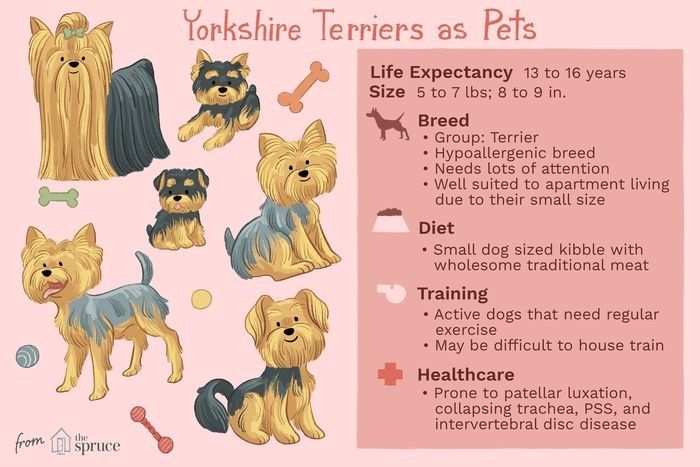
The Yorkshire Terrier is one of the smallest dog breeds in the world and one of the most consequential in terms of popularity. Consistently ranking among the top ten most registered breeds with the American Kennel Club, the Yorkie packs the temperament of a bold terrier into a body that typically weighs less than 3.2 kilograms.
Its silky, continuously-growing coat, curious personality, and long lifespan make it a distinctive presence in apartments, city homes, and suburban households across the world. Behind the fashionable exterior lies a genuine working dog lineage, and understanding that history explains much about the Yorkie's persistent drive, vocal tendencies, and fearless attitude toward dogs many times its size.
This guide covers the Yorkshire Terrier's origins, physical characteristics, temperament, health conditions with documented statistics, grooming requirements, training approach, exercise needs, feeding guidelines, and practical advice for prospective owners. All health statistics are sourced to named studies or veterinary organisations.
Origins and History
The Yorkshire Terrier was developed in the industrial north of England during the mid-nineteenth century, specifically in the county of Yorkshire and adjacent Lancashire.
The breed's origins are working class in the most literal sense: weavers and mill workers, many of them Scottish immigrants who had relocated to Yorkshire seeking employment in the expanding textile industry, wanted a small, hardy dog capable of catching and killing the rats that infested the textile mills and coal mines of the region.
The foundation breeding stock is believed to have included the now-extinct Clydesdale Terrier (also called the Paisley Terrier), the Waterside Terrier, the Black and Tan Manchester Terrier, and possibly the Skye Terrier. The Broken-Haired Scotch Terrier brought south by Scottish weavers is generally considered the primary ancestor. Specific breeder records from this era are incomplete, which is typical for working-class dog development of the period.
The breed was first exhibited at a dog show in 1861 under the name "Broken-Haired Scotch or Yorkshire Terrier." The name was formally standardised to Yorkshire Terrier by 1870. A dog named Huddersfield Ben, born in 1865 and owned by Mary Foster of Huddersfield, is widely credited as the foundation sire of the modern Yorkshire Terrier. Huddersfield Ben was a champion show dog and a remarkably successful stud, and his offspring defined the breed type that persists to the present day.
The breed's transition from mill rat-catcher to fashionable Victorian lap dog occurred with notable speed. By the 1880s and 1890s, the Yorkie had become popular with upper-class women and was appearing at prestigious dog shows. The small size that made it effective in tight spaces also made it portable, and a breed associated with working-class Yorkshire mills was, within two generations, being carried in the handbags of English aristocrats.
The American Kennel Club formally recognised the Yorkshire Terrier in 1885. The breed's AKC popularity climbed steadily through the twentieth century, peaking with a brief period as the second most popular breed in the United States in the mid-2000s.
Physical Characteristics
The Yorkshire Terrier is a toy breed with a compact, well-proportioned body. Despite its small size, the build should be square, the length of body from shoulder to base of tail roughly equal to height at withers, suggesting a sturdy, athletic foundation beneath the coat.
| Measurement | Standard |
|---|---|
| Height at withers | 18-23 cm (7-9 in) |
| Weight | 2-3.2 kg (4-7 lb) |
| Body | Compact, square, level topline |
| Head | Small, flat on top, not prominent |
| Eyes | Medium, dark, sparkling |
| Ears | Small, V-shaped, erect |
| Tail | Docked (traditionally) or natural |
The coat is the breed's most distinctive feature. Unlike the double coats of most dog breeds, the Yorkshire Terrier has a single-layer coat composed of fine, silky hair with a texture closer to human hair than to typical dog fur. This coat grows continuously without a shedding cycle, meaning it does not moult in the way that double-coated breeds do. The trade-off is that the coat requires regular trimming or it will grow to floor length, as seen on show dogs maintained in full coat.
Colour in Yorkshire Terriers follows a specific genetic pattern recognised by breed standards. Puppies are born black and tan, with the black portions of the coat gradually transitioning to a steel blue (a dark bluish-grey) over the first two years of life.
The AKC standard specifies that the body colour should be a dark steel blue from the back of the skull to the tail, with tan on the head (particularly a rich golden tan on the face and ears), and tan on the legs below the elbows and stifles. The tan should not extend onto the body.
The Biewer Terrier, sometimes marketed as a Biewer Yorkshire or Yorkie variation, is now recognised by the AKC as a separate breed. It was developed from Yorkshire Terriers carrying a piebald gene, resulting in a white, black, and gold tricolour coat pattern.
Temperament
The Yorkshire Terrier's temperament is the product of its terrier heritage, and that heritage is working, prey-driven, and confident. The term most commonly used is "big dog in a small body," and it is accurate. Yorkies are bold, curious, and assertive. They do not naturally defer to other dogs based on size differential, which creates both charm and management challenges when a 2.5-kilogram dog decides to challenge a much larger dog.
Yorkies are affectionate and deeply attached to their immediate family, though they can be reserved with strangers. They are alert and vocal, making them effective watchdogs; they will bark to announce visitors, unusual sounds, and perceived territorial intrusions with conviction disproportionate to their size. This vocal tendency requires management in apartment buildings or any context where noise is a concern.
The breed's intelligence is genuine. Yorkies learn quickly and can master complex tasks. The challenge in training is motivational: as terriers, they have a self-directed streak and are less automatically people-pleasing than retrieving or herding breeds. A Yorkie that understands the rules and has been trained consistently will follow them. A Yorkie that has been permitted to set its own agenda through inconsistent enforcement is difficult to redirect.
"Toy breeds that develop behavioural problems almost invariably have owners who have conflated small size with reduced training requirements. The Yorkshire Terrier is a terrier. It requires the same structure, limits, and consistent reinforcement as any working breed." Dr. Ian Dunbar, veterinary behaviourist, founder of the Association of Pet Dog Trainers, 2008.
Small dog syndrome, the constellation of behaviours including excessive barking, snapping, and refusal to obey, is not an inevitable consequence of Yorkshire Terrier ownership. It is a consequence of training neglect. Yorkies raised with consistent positive reinforcement, clear limits, and regular socialisation are typically well-mannered, sociable, and engaging companions.
Yorkies generally do well with older children who can be taught to interact gently. Very young children who may inadvertently drop, step on, or handle the dog roughly present real injury risk to a dog this small. Multi-pet households work well when the Yorkie has been socialised appropriately with other species.
Health: Key Conditions and Statistics
The Yorkshire Terrier's small size and specific genetics create a distinctive health profile. Some conditions are typical of toy breeds generally; others are specific to the Yorkie. Lifespan averages 13 to 16 years, which is among the longest of any purebred dog, but that longevity requires attentive preventive care, particularly dental care, throughout the dog's life.
| Health Condition | Prevalence / Notes | Source |
|---|---|---|
| Patellar luxation | Very common in toy breeds; affects an estimated 20-75% of small breeds | OFA / multiple veterinary surveys |
| Dental disease | Extremely common, tooth crowding in small jaw accelerates calculus and periodontal disease | American Veterinary Dental College |
| Tracheal collapse | Significant concern in toy breeds, including Yorkies | AVMA small breed literature |
| Legg-Calve-Perthes disease | Spontaneous degeneration of femoral head; Yorkies are a predisposed breed | OFA / veterinary orthopaedic literature |
| Hypoglycemia (puppies) | Dangerous in very small puppies; requires managed feeding schedules | Veterinary clinical practice |
| Portosystemic shunt | Liver shunt condition more common in Yorkies than most breeds | University of Minnesota Veterinary School |
Patellar luxation, the slipping of the kneecap out of its groove, is the most common orthopaedic condition in the breed. Grade I and II luxation may cause intermittent lameness; Grade III and IV cause chronic lameness and typically require surgical correction. Reputable breeders screen breeding stock with OFA patellar evaluations, and prospective buyers should request documentation of patellar clearance for both parents.
Dental disease deserves specific emphasis in the Yorkshire Terrier. The jaw is small enough that adult teeth are crowded together, creating sites for tartar accumulation, periodontal disease, and premature tooth loss. Dental disease is not cosmetic: established periodontal infection introduces bacteria into the bloodstream with documented effects on cardiac, hepatic, and renal tissue over time.
The Yorkshire Terrier Club of America identifies dental care as the single most important routine health maintenance practice for the breed. Daily tooth brushing with a veterinarian-approved enzymatic toothpaste, combined with professional dental cleanings under anaesthesia every one to two years, is the recommended standard.
Tracheal collapse is a condition in which the rings of cartilage supporting the trachea lose rigidity, causing the airway to partially or fully flatten during breathing. Affected dogs produce a characteristic "goose honk" cough. Harness use instead of neck collar and weight management are the primary non-surgical management strategies.
"Patellar luxation in toy breeds is an underappreciated welfare concern because mildly affected dogs compensate well and owners may not recognise intermittent lameness as a medical condition. Grade III and IV luxation causes chronic discomfort that significantly affects quality of life." Dr. Gert ter Haar, Royal Veterinary College, London, Veterinary Clinics of North America: Small Animal Practice, 2017.
Legg-Calve-Perthes disease affects young dogs, typically presenting between 4 and 12 months of age. The blood supply to the femoral head becomes disrupted, leading to bone necrosis and subsequent arthritis. Yorkies are among the small breeds with elevated predisposition. Surgical removal of the affected femoral head (femoral head and neck ostectomy) typically results in functional recovery.
Portosystemic shunts (liver shunts) occur more frequently in Yorkshire Terriers than in the general canine population. In this condition, blood bypasses the liver through an abnormal vessel, leading to accumulation of hepatic toxins including ammonia. Affected puppies typically show small stature, neurological signs, and post-meal disorientation. Surgical correction is possible but complex.
Grooming
The Yorkshire Terrier's coat is the breed's most management-intensive feature. Because the coat does not shed in the conventional sense, it requires either regular trimming (the "puppy cut," which maintains the coat at a short, manageable length across the body) or sustained daily grooming (for dogs kept in the traditional long coat).
For pet owners, the puppy cut is the practical standard. The coat is trimmed to 3 to 5 centimetres across the body, with slightly longer hair on the face and tail depending on preference. A puppy cut requires professional grooming every 6 to 8 weeks to maintain. Between grooms, a light daily brushing with a soft slicker brush prevents the fine coat from tangling.
Show dogs are maintained in full coat, which can reach floor length on an adult dog. This requires daily thorough brushing with a pin brush and metal comb, the application of coat conditioner to prevent breakage, and wrapping of the coat in paper or tissue between grooming sessions to prevent floor contact and mechanical damage. Full-coat maintenance is a dedicated daily commitment of 20 to 30 minutes minimum.
Key grooming tasks regardless of coat length:
Bathing: Every 2 to 4 weeks is typical. The fine coat benefits from a conditioning shampoo to maintain silkiness and reduce static. Complete drying is important, the fine coat, though single-layer, can harbour moisture against the skin.
Ear care: Yorkie ear canals are prone to hair growth within the canal, which can trap debris and moisture. Regular plucking of this hair by a groomer or veterinarian is recommended by many practitioners, though the practice is debated. Weekly inspection for odour, discharge, or redness is important.
Nail trimming: Every 3 to 4 weeks. Small dog nails grow quickly and can curl under the paw if neglected.
Dental care: Daily brushing is essential given the breed's extreme predisposition to dental disease. See Dog Dental Care Complete Guide for detailed protocol.
Eye area: The face should be cleaned daily around the eyes, as Yorkies are prone to tear staining. A damp cloth or specific eye wipe removes accumulated discharge.
See also: Yorkshire Terrier Grooming Guide for detailed technique by coat type.
Training
Yorkshire Terriers are intelligent and trainable, but they require an owner who understands terrier psychology. The Yorkie is not a Golden Retriever: it is not intrinsically motivated to please, and it will test limits with consistent ingenuity. Positive reinforcement with high-value food rewards is effective. Punishment-based training damages the relationship and produces anxiety-driven behaviour in a breed already prone to hypervigilance.
Key training priorities for Yorkshire Terriers:
Recall: The breed's terrier prey drive means a Yorkie off-lead in an unenclosed area is a genuine safety risk. Solid recall must be trained before any off-lead access, and even reliably trained Yorkies should be considered at risk in high-stimulation environments (parks, streets with traffic, areas with cats or squirrels).
Barking management: Alert barking is natural for the breed, but demand barking, barking to get attention, food, or access, should never be reinforced. Ignoring demand barking and rewarding quiet behaviour consistently from puppyhood prevents the worst bark-triggered problems.
Leash manners: Harness use is strongly recommended over neck collars to protect the trachea. Loose-leash walking training begins in puppyhood and should involve short, frequent sessions.
Housetraining: Toy breeds have smaller bladders and metabolic rates that require more frequent elimination. A consistent schedule, outside every 2 to 3 hours for puppies, every 4 to 6 hours for adults, combined with positive reinforcement for outdoor elimination achieves reliable housetraining. Fully reliable housetraining in small breeds typically takes longer than in large breeds, 6 to 12 months is realistic.
Yorkies excel in agility and rally obedience when given the opportunity. Their athletic ability and quick thinking translate well to the precision and speed of dog sports at appropriate scale.
Exercise
Yorkshire Terriers have moderate exercise needs relative to their size. A common misconception is that toy breeds require no meaningful exercise. Yorkies are active, curious dogs that benefit from daily physical activity and mental stimulation.
The practical exercise prescription for an adult Yorkshire Terrier is 30 to 45 minutes of active exercise daily, divided across two or more sessions. This typically means two walks of 15 to 20 minutes each, supplemented with indoor play. Walks should be structured, on a harness, with appropriate leash manners, rather than a stroll at the dog's pace.
Indoor play is genuinely valuable for this breed, particularly in cold or wet weather. Fetch in a hallway, puzzle feeders, and short training sessions provide both physical and mental stimulation. The Yorkie's terrier heritage means it will investigate, dig, and pursue anything that moves, and channelling this energy into structured activities prevents the development of problem behaviours.
Because of the small body size, Yorkies can be injured easily. Jumping from furniture, sofas, beds, chairs, is a common cause of patellar luxation exacerbation and Legg-Calve-Perthes injury. Dog ramps or steps that allow the Yorkie to ascend and descend furniture without jumping are a practical safety measure.
See also: Best Dogs for Apartments for a comparison of toy breed activity requirements.
Feeding
Yorkshire Terriers require a diet matched to their energy density and small body size. Kibble formulated for small breeds is typically designed with a smaller piece size (to fit the small jaw), higher caloric density per gram, and adjusted calcium-phosphorus ratios appropriate to toy breed physiology.
Caloric requirements for Yorkshire Terriers:
| Life Stage | Approximate Daily Calories |
|---|---|
| Puppy (8-16 weeks) | 200-300 kcal/day in 4 meals |
| Adult (maintained weight, moderate activity) | 150-200 kcal/day |
| Adult (high activity) | 200-250 kcal/day |
| Senior (8+ years, reduced activity) | 130-170 kcal/day |
These figures are approximate baselines. Individual metabolic rates vary, and body condition scoring, feeling for rib coverage without pressing firmly, is the practical guide to adjusting portions.
Puppy hypoglycemia is a genuine risk in very small Yorkshire Terrier puppies, particularly those under 1 kilogram. Low blood sugar can develop rapidly if feeding intervals are too long, in response to stress, illness, or low environmental temperature.
Puppies showing signs of hypoglycemia (lethargy, weakness, trembling, uncoordination) should receive a small amount of high-sugar food (honey, corn syrup rubbed on the gums) immediately, followed by a veterinary assessment. Feeding small Yorkshire Terrier puppies every 4 hours, including a late meal before bed, prevents most hypoglycemia events.
Senior Yorkies often show decreased appetite and reduced caloric needs, but they maintain a relatively high protein requirement to preserve muscle mass. See Senior Dog Nutrition Guide for detailed guidance on adjusting the diet in the geriatric stage.
Is the Yorkshire Terrier Right for You?
The Yorkshire Terrier is suited to a specific type of owner more than most breeds. Understanding the mismatch points is as important as understanding the appeal.
Well suited to: owners who want an alert, engaged, long-lived companion in a small package; apartment dwellers who can provide two daily walks and consistent training; owners willing to commit to regular grooming maintenance; single-person or couple households where the dog will be a central presence rather than an afterthought; experienced small-dog owners who understand terrier temperament.
Poor fit for: households with very young children who cannot be consistently supervised around a fragile small dog; owners who want a low-maintenance dog; anyone who will not engage seriously with dental care; owners who expect terrier energy without terrier training requirements.
Financial reality: A Yorkshire Terrier from a responsible breeder with health clearances costs USD 1,200 to 3,500 in North America. Health costs that should be budgeted include professional dental cleanings under anaesthesia (USD 400 to 900 per procedure, typically needed every 1 to 2 years), routine grooming (USD 50 to 80 per session every 6 to 8 weeks), and potential orthopaedic surgery if patellar luxation progresses.
See also: Yorkshire Terrier Health Problems and Best Dogs for Apartments.
References
Yorkshire Terrier Club of America. (2023). Breed Health Survey and Recommendations. Retrieved from https://www.ytca.org/health
Orthopedic Foundation for Animals. (2023). Patellar Luxation Statistics by Breed. Retrieved from https://ofa.org/diseases/patellar-luxation/statistics/
Dukes-McEwan, J., Borgarelli, M., Tidholm, A., Vollmar, A. C., & Haggstrom, J. (2003). Proposed guidelines for the diagnosis of canine idiopathic dilated cardiomyopathy. Journal of Veterinary Cardiology, 5(2), 7-19. https://doi.org/10.1016/S1760-2734(06)70046-0
American Veterinary Dental College. (2020). Periodontal Disease in Dogs and Cats. Retrieved from https://avdc.org/periodontal-disease/
ter Haar, G. (2017). Inherited conditions of the outer ear. Veterinary Clinics of North America: Small Animal Practice, 47(6), 1409-1422. https://doi.org/10.1016/j.cvsm.2017.08.005
Tobias, K. M., & Johnston, S. A. (2012). Veterinary Surgery: Small Animal. St. Louis: Elsevier Saunders. [Portosystemic shunts, Chapter 67]
Coren, S. (1994). The Intelligence of Dogs. New York: Free Press.
Frequently Asked Questions
Do Yorkshire Terriers shed?
Yorkshire Terriers have a single-layer coat composed of fine, silky hair similar in texture to human hair. Unlike double-coated breeds, Yorkies do not have a seasonal moult and shed very little. The trade-off is that the coat grows continuously and requires regular trimming or daily grooming to prevent matting and excessive length.
Most pet owners maintain a ‘puppy cut’, the coat trimmed to 3 to 5 centimetres, which requires professional grooming every 6 to 8 weeks and minimal daily brushing between sessions.
How long do Yorkshire Terriers live?
Yorkshire Terriers typically live 13 to 16 years, which is among the longest lifespans of any purebred dog. Longevity in the breed is strongly influenced by dental care: Yorkies are extremely predisposed to periodontal disease due to tooth crowding in their small jaws, and untreated dental disease is associated with systemic health consequences over time.
Regular professional dental cleanings and daily home tooth brushing significantly extend quality of life and probable lifespan. Other longevity factors include weight management, avoiding jumping injuries that aggravate patellar luxation, and early management of tracheal collapse if present.
Are Yorkshire Terriers good apartment dogs?
Yorkshire Terriers adapt very well to apartment living. Their small size, moderate exercise needs (30 to 45 minutes of active exercise daily), and deep attachment to their owners make them well-suited to smaller living spaces. The primary apartment-living challenge with Yorkies is vocal behaviour: the breed is alert and will bark at sounds in hallways, neighbouring units, and outside, which requires active management with training.
A Yorkie raised with consistent training around barking is manageable in a flat; one raised without those limits can be challenging for close-quarters living.
What health problems do Yorkshire Terriers have?
The most common health problems in Yorkshire Terriers are dental disease (tooth crowding in the small jaw creates extreme susceptibility to periodontal disease), patellar luxation (kneecap slipping, very common in toy breeds), tracheal collapse (cartilage rings of the airway lose rigidity), and Legg-Calve-Perthes disease (spontaneous femoral head degeneration, typically in young dogs).
Portosystemic shunts (liver shunts) occur at higher rates in Yorkies than in most breeds. Hypoglycemia is a risk in very small puppies. Responsible breeders screen for patellar luxation and eye conditions. Daily dental care is the single most important preventive health practice for this breed.
Should I use a collar or harness on a Yorkshire Terrier?
A harness is strongly recommended over a neck collar for Yorkshire Terriers. The breed has a significant predisposition to tracheal collapse, a condition in which the cartilage rings supporting the airway lose rigidity. Pressure from a neck collar during leash-pulling or sudden forward movement can worsen tracheal collapse or contribute to its development.
A well-fitted, back-clip harness distributes leash pressure across the chest rather than the throat, eliminating this risk while providing effective leash control for a small dog.
Are Yorkshire Terriers good with children?
Yorkshire Terriers can live harmoniously with children, but the combination requires careful management. The dog’s small size, typically 2 to 3.2 kilograms, makes it vulnerable to injury from rough handling, accidental drops, or being stepped on by young children. The breed also has a terrier’s intolerance for sustained rough treatment and may snap if hurt or frightened.
Yorkies generally do best with children aged 7 or older who can be reliably taught to handle the dog gently. Households with toddlers require constant supervision. The dog’s bold personality means it will assert itself rather than retreat, which is an additional management consideration.