
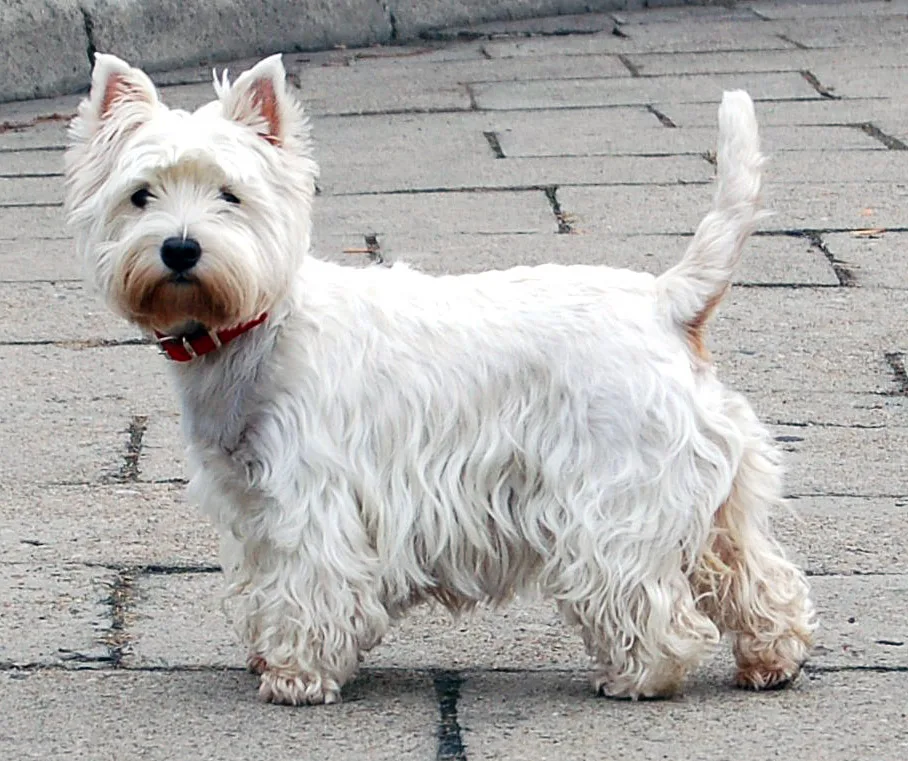
The West Highland White Terrier, universally known as the Westie, is one of Scotland's most beloved contributions to the world of dogs: compact, bold, and possessed of a thoroughly Scottish directness of character that makes it simultaneously engaging and occasionally exasperating.
The breed's white coat, bright dark eyes, and perky expression give it an irresistible appearance, but the Westie is fundamentally a working terrier with a hunting heritage, and its character reflects that origin even after a century of development as a companion breed.
The white coat that defines the Westie was not a stylistic choice; it was a practical one with a specifically documented origin. The Malcolm family of Poltalloch in Argyllshire, Scotland, who developed the breed in the late 19th century, selected specifically for white-coated dogs following an accident in which a reddish-coated terrier was mistaken for a fox and shot by a hunting party.
The white coat, visible in all light conditions and clearly distinguishable from game, was thereafter a requirement in the Malcolm dogs. This origin story is consistent across breed histories and gives the Westie's characteristic appearance a functional rationale that is both practical and poignant.
Origins and History
The West Highland White Terrier belongs to a group of Scottish terrier breeds that share a common ancestry: working terriers bred in the Scottish Highlands and Islands for hunting vermin, foxes, otters, badgers, and rats, in the rocky, rough terrain of the Scottish west coast. The other members of this loose group include the Cairn Terrier (the closest relative, from which the Westie is directly descended), the Scottish Terrier, the Dandie Dinmont Terrier, and the Skye Terrier.
The Malcolm family of Poltalloch estate, particularly Colonel Edward Donald Malcolm, are credited with developing and stabilising the West Highland White Terrier as a distinct white breed from the existing variously coloured working terriers of Argyllshire. The breed was shown in the late 19th century under several names before the designation West Highland White Terrier was standardised around 1904.
The Kennel Club (UK) recognised the breed in 1907. The American Kennel Club followed in 1908, placing the breed in the Terrier Group where it has remained.
The Westie's appeal as a companion breed grew steadily through the 20th century, and the breed's image has been used extensively in advertising, most famously as the Cesar dog food brand mascot in the United Kingdom, making the Westie's profile one of the most recognised of any terrier breed internationally.
Physical Characteristics
The Westie is a compact, sturdy terrier, built more robustly than its small size might suggest. The breed is muscular, deep-chested, and well-boned, with the physical substance of a working dog rather than a toy companion.
| Characteristic | Measurement |
|---|---|
| Height | 25-28 cm (10-11 in) |
| Weight | 7-10 kg (15-22 lb) |
| Lifespan | 12-16 years |
| AKC Group | Terrier |
| Coat colour | White (the only acceptable colour) |
| Coat type | Double coat, harsh, straight outer coat; soft, dense undercoat |
The double coat consists of a harsh, straight, weather-resistant outer coat and a soft, dense undercoat. The coat is approximately 5 cm in length on the body. The harsh outer coat provides excellent protection from the elements and from the abrasion of working in rough terrain, and it repels water and dirt to a significant degree.
Coat maintenance involves brushing 2 to 3 times weekly to prevent matting in the longer coat on the head and legs. The outer coat should be hand-stripped rather than clipped to maintain the correct harsh texture, clipping softens the coat and changes its texture and colour (clipped Westies' coats often take on a creamy or yellowish tinge rather than crisp white).
Professional grooming every 8 to 12 weeks is typical for show or well-maintained Westies; pet owners often use clipping for simplicity at the cost of coat texture.
The head is distinctive: a large, rounded skull, a relatively short muzzle, dark, wide-set eyes with a piercing expression, and forward-pointing ears that add to the breed's characteristic alert and slightly cheeky expression.
Temperament
The Westie's temperament is a textbook expression of the working Scottish terrier character: bold, curious, tenacious, independent, and significantly self-confident for a small dog. Westies are not meek; they are dogs that investigate first and consider later, that approach new situations with interest rather than caution, and that meet the world with an air of cheerful certainty about their own importance and capability.
The breed is excellent with children who interact respectfully, generally good with other dogs when well-socialised, and sufficiently independent to be somewhat less prone to separation anxiety than more people-bonded breeds like the Vizsla. However, the Westie is not a submissive or passive companion. It has opinions, it expresses them, and it requires a consistent, patient owner who appreciates terrier character rather than fighting it.
The prey drive is genuine and consistent: small animals, birds, and moving objects activate the terrier's chase instinct. Small pets should not be trusted with an unsupervised Westie. Gardens will be investigated and may be improved (from the Westie's perspective) with excavation.
"The West Highland White Terrier typifies what might be called the 'working companion' paradox of terrier breeds: a dog whose physical and behavioural characteristics were ruthlessly selected for a demanding working function, which then transitions to companion life carrying those characteristics intact. The Westie's boldness, independence, and prey drive are not problems to be trained out; they are the breed's authentic character, shaped by centuries of functional selection." The Kennel Club (UK). (2022). Breed Health and Conservation Plan: West Highland White Terrier. Retrieved from https://www.thekennelclub.org.uk
Health Conditions
The West Highland White Terrier has several significant health conditions that prospective owners must be fully informed about. The breed has a somewhat more complex health profile than many terrier breeds, with multiple conditions that require ongoing management.
| Health Condition | Prevalence / Notes |
|---|---|
| Atopic dermatitis (skin allergies) | Very common, "Westie itch"; one of the most prevalent conditions in the breed |
| Westie lung disease (pulmonary fibrosis) | Idiopathic pulmonary fibrosis (IPF), highest prevalence of any breed; progressive and life-limiting |
| Craniomandibular osteopathy (CMO) | Excessive jaw bone growth in young dogs (2-10 months); painful; DNA test available |
| Patellar luxation | Present in the breed |
| Addison's disease | Adrenal insufficiency; elevated breed prevalence |
Atopic dermatitis is the most prevalent health issue in the Westie, affecting a large proportion of the breed population to varying degrees. The condition manifests as chronic or recurrent skin irritation, itching, redness, hair loss, skin thickening, and secondary bacterial or yeast infections on the feet, face, armpits, groin, and ears.
In Westies, the skin allergy is so characteristic and so common that it is sometimes referred to as "Westie itch" or the Westie Skin Syndrome.
Management involves identifying and avoiding triggers (environmental allergens, food allergens), controlling symptoms with appropriate medications (antihistamines, corticosteroids, or newer targeted therapies such as oclacitinib or dupilumab-equivalent veterinary biologics), and managing secondary infections. The condition is rarely curable but can be managed to a quality of life compatible with normal activity. See also Common Dog Illnesses Explained.
Westie lung disease, idiopathic pulmonary fibrosis (IPF), is the most serious breed-specific condition in Westies. It is a progressive disease in which healthy lung tissue is replaced by fibrous scar tissue, reducing lung capacity and oxygen exchange. Clinical signs include progressive exercise intolerance, breathlessness, and dry cough.
The condition typically presents in middle to older age (8 to 12 years) and is uniformly progressive. There is no cure, and management is supportive. The West Highland White Terrier has a higher prevalence of this condition than any other breed, and the pathological mechanism closely parallels human idiopathic pulmonary fibrosis, making Westies subjects of research interest for the human condition.
"Canine idiopathic pulmonary fibrosis in the West Highland White Terrier is a spontaneous, naturally occurring model of human IPF, sharing clinical presentation, radiographic appearance, and histopathological features. The WHWT's elevated prevalence makes it the most important large animal model for IPF research currently available." Clercx, C., & Peeters, D. (2007). Canine idiopathic pulmonary fibrosis. Veterinary Clinics of North America: Small Animal Practice, 37(5), 1035-1047. https://doi.org/10.1016/j.cvsm.2007.05.001
Craniomandibular osteopathy (CMO) is a painful condition of young Westies in which excessive bone growth affects the jaw bones and sometimes the skull. Affected puppies show difficulty eating, drooling, pain when the mouth is opened, and fever. The condition is worst between 4 and 8 months of age and typically stabilises and partially resolves by 12 months. A DNA test for the mutation responsible for CMO in Westies (and other terrier breeds) is available.
Training
Westies are intelligent, curious dogs that learn quickly, but the terrier's independence and strong opinions mean training requires positive, reward-based methods and acceptance that compliance is not automatic. The breed responds very well to high-value food rewards and brief, engaging training sessions.
Early socialisation is important, the Westie's boldness can develop into territorial or reactive behaviour toward strangers and other dogs if the social expectations of the adult dog are not shaped in puppyhood. A well-socialised Westie is sociable and adaptable; an under-socialised one can be snappy and reactive.
Housetraining is typically straightforward for Westies, which are clean dogs with a natural aversion to soiling their sleeping areas. Consistent scheduling and positive reinforcement for outdoor elimination produce reliable housetraining in most individuals.
See also West Highland White Terrier Health Problems, Scottish Terrier, Jack Russell Terrier, and Dog Dental Care Complete Guide.
Exercise
Westies are moderately active dogs with exercise needs appropriate to their size and terrier temperament. An adult Westie needs 45 to 60 minutes of daily exercise. The breed enjoys exploring, investigating scents, and the kind of varied, stimulating walking that engages the nose as much as the legs. Off-lead access in securely fenced areas is appropriate, the Westie's recall reliability is moderate at best when a scent or moving creature competes with the owner's call.
References
Clercx, C., & Peeters, D. (2007). Canine idiopathic pulmonary fibrosis. Veterinary Clinics of North America: Small Animal Practice, 37(5), 1035-1047. https://doi.org/10.1016/j.cvsm.2007.05.001
Orthopedic Foundation for Animals. (2023). Breed Health Statistics: West Highland White Terrier. Retrieved from https://ofa.org
West Highland White Terrier Club of America. (2023). Health Committee: Conditions in Westies. Retrieved from https://www.westieclubamerica.com/health
Hytonen, M. K., et al. (2016). Identification of a missense mutation in the SLC37A2 gene in Westies with craniomandibular osteopathy. BMC Veterinary Research, 12, 163. https://doi.org/10.1186/s12917-016-0794-9
The Kennel Club (UK). (2022). Breed Health and Conservation Plan: West Highland White Terrier. Retrieved from https://www.thekennelclub.org.uk
American Kennel Club. (2023). West Highland White Terrier Breed Standard. Retrieved from https://www.akc.org/dog-breeds/west-highland-white-terrier/
Frequently Asked Questions
Why are West Highland White Terriers always white?
The Westie’s exclusively white coat has a documented practical origin. The Malcolm family of Poltalloch, who developed the breed, selected specifically for white-coated dogs following an incident in which a reddish-coated terrier was shot by a hunting party that mistook it for a fox in the field. White dogs are easily distinguishable from quarry in all light conditions, including dawn, dusk, and in heavy cover.
From that point, the Malcolm breeding programme selected exclusively for white coats, and the breed standard has required white as the only permissible colour ever since. The function has become irrelevant for companion dogs, but the coat colour remains definitionally inseparable from the breed.
What is Westie lung disease?
Westie lung disease is a common name for idiopathic pulmonary fibrosis (IPF), a progressive disease in which healthy lung tissue is replaced by fibrous scar tissue, reducing the lungs’ capacity to exchange oxygen. The condition primarily affects older Westies (typically 8 to 12 years) and presents with progressive breathlessness, reduced exercise tolerance, and a dry, harsh cough. There is no cure.
Management is supportive, focused on maintaining quality of life and managing secondary complications. The West Highland White Terrier has the highest prevalence of IPF of any dog breed, and the condition is clinically and pathologically very similar to human IPF, making Westies important research models.
What is craniomandibular osteopathy (CMO) in Westies?
Craniomandibular osteopathy (CMO) is a condition of young Westies (typically presenting between 4 and 10 months of age) in which excessive, abnormal bone growth affects the lower jaw bones and sometimes the skull. Affected puppies experience pain when the mouth is opened or when eating, may drool excessively, and often have fever.
The condition is worst between 4 and 8 months and typically stabilises and partially regresses by 12 months as the bone remodelling process slows. Most affected dogs can be managed through the worst phase with pain relief and soft food. A DNA test for the causative mutation (SLC37A2) is commercially available and should be used in breeding programmes.
Do Westies have lots of skin problems?
Yes. Atopic dermatitis (skin allergies) is one of the most common health conditions in West Highland White Terriers, affecting a significant proportion of the breed population. Signs include itching (particularly of the feet, face, ears, and belly), redness, recurrent skin infections, and in chronic cases, thickened, discoloured skin. The condition is often called ‘Westie itch’ by owners and breeders.
Management involves identifying allergen triggers where possible, controlling symptoms with appropriate medications, and managing secondary bacterial or yeast infections. The condition requires lifelong management in most affected dogs but can be controlled to allow a comfortable quality of life.
Are Westies good family dogs?
Westies are excellent family dogs in the right household. The breed is energetic, playful, and generally good with children who interact respectfully. The bold terrier character means Westies are not typically timid or easily intimidated, making them sturdy companions for active family life. They are well-suited to moderate-activity families that enjoy regular outdoor time. The prey drive means small pets should not be left unsupervised with a Westie.
The breed is generally independent enough not to suffer severe separation anxiety. Westies are not an ideal choice for families seeking a soft, passive companion; they are opinionated, energetic, and thoroughly terrier in character.
How do I groom a West Highland White Terrier?
Westie grooming involves two main approaches: hand-stripping or clipping. Hand-stripping, removing the dead outer coat by rolling it out with the fingers or a stripping knife, maintains the correct harsh outer coat texture and bright white colour. It is the traditional method and is required for show dogs.
Clipping is easier and more common for pet Westies, but produces a softer coat texture and often a creamy or yellowish colour over time due to the different growth phase of the coat that clipping exposes. Regardless of method, Westies need brushing 2 to 3 times weekly, professional grooming every 8 to 12 weeks, and regular cleaning of the face and beard to remove food and moisture that can cause staining.