
The best dogs for cold weather are breeds that evolved in arctic or subarctic environments, with thick double coats, cold-weather metabolic adaptations, and high physical endurance. Siberian Huskies, Alaskan Malamutes, Bernese Mountain Dogs, and similar breeds are physiologically built for cold. Conversely, thin-coated, small, or short-nosed breeds struggle significantly in cold temperatures and require special management in winter climates.
How Dogs Tolerate Cold Temperatures
Dogs regulate body temperature primarily through:
- Coat insulation (double coats trap warm air against the skin)
- Vasoconstriction (reducing blood flow to extremities to preserve core temperature)
- Shivering (metabolic heat generation)
- Behavioral responses (curling up, seeking shelter)
The coat is the primary cold-tolerance factor. A proper arctic double coat, dense, insulating undercoat plus weather-resistant guard hair outer coat, is highly effective thermal insulation. The undercoat traps warm air and prevents cold penetration. The guard hairs shed rain and snow without absorbing it.
Secondary factors include body mass-to-surface-area ratio (larger dogs retain heat more efficiently than small dogs), subcutaneous fat (a cold-weather insulator), and metabolic rate (some arctic breeds have measurably elevated resting metabolic rates that increase heat generation).
"The Siberian Husky's physiological cold adaptation includes not just the coat but arteriovenous anastomoses in the paws that allow warm blood to circulate through the feet at temperatures that would cause frostbite in humans or non-adapted dog breeds. These are genuine evolutionary cold-weather specializations, not just coat differences." Dr. Terrie Williams, University of California Santa Cruz
Best Breeds for Cold Climates
Siberian Husky
The quintessential cold-weather breed. Developed by the Chukchi people of northeastern Siberia for sled transport across arctic terrain. Dense double coat, compact paw structure, efficient cardiovascular system, and specific paw circulation anatomy make Huskies capable of operating in temperatures well below freezing for extended periods. They need substantial exercise year-round. Huskies thrive in cold climates but suffer in heat.
Alaskan Malamute
Larger and heavier than the Husky, the Malamute was bred for hauling heavy loads across arctic terrain, a power and endurance specialist rather than speed specialist. Thick double coat with dense undercoat. Exceptionally cold-tolerant. High exercise and mental stimulation needs.
Bernese Mountain Dog
A Swiss working breed from the Alps, used for herding and draft work in mountainous cold-weather terrain. Thick tricolor double coat, large body mass, and calm temperament. Bernese are genuinely cold-weather adapted and tolerate Alpine winters with ease. Shorter lifespan (7 to 9 years) and higher rates of certain cancers and joint issues require attention.
Saint Bernard
The iconic Alpine rescue breed. Massive body mass provides exceptional cold insulation. Dense double coat. Saint Bernards were specifically developed for rescue operations in the cold, snowy passes of the Alps. Their large size is their primary cold-weather advantage: thermal mass retains heat efficiently.
Newfoundland
Developed on the Canadian Atlantic coast for water rescue and fishing work. Thick, oily, water-resistant double coat that repels cold water and snow. Large body mass. Newfoundlands are famously cold and water-tolerant. Their gentle temperament makes them excellent family dogs despite their large size.
Great Pyrenees
An ancient flock-guarding breed from the Pyrenean mountains between France and Spain. Thick white double coat, the outer coat is coarse and weather-resistant. Great Pyrenees were bred to live outdoors in mountain terrain year-round, guarding flocks independently. They have very high cold tolerance and require substantial space and fencing.
Akita
A Japanese spitz-type breed from the mountainous northern Japanese island of Honshu. Dense double coat, large size, and low body surface-to-mass ratio. Cold-tolerant and independent. Requires experienced handling due to strong guarding instincts and potential dog-aggression.
Norwegian Elkhound
An ancient Scandinavian breed developed for hunting large game (including elk, bear, and wolves) in Nordic terrain. Dense, insulating gray double coat. Moderate size but very high cold tolerance. Active and energetic.
| Breed | Origin | Cold Tolerance | Exercise Needs | Size |
|---|---|---|---|---|
| Siberian Husky | Siberia (Chukchi people) | Exceptional | Very high | Medium |
| Alaskan Malamute | Alaska (Mahlemut Inuit) | Exceptional | Very high | Large |
| Bernese Mountain Dog | Swiss Alps | Very high | Moderate | Large |
| Saint Bernard | Swiss Alps | Very high | Moderate | Giant |
| Newfoundland | Canadian Atlantic coast | Very high | Moderate | Giant |
| Great Pyrenees | Pyrenean Mountains | Very high | Moderate-high | Giant |
| Akita | Northern Japan | High | Moderate | Large |
| Norwegian Elkhound | Scandinavia | High | High | Medium |
| Samoyed | Siberia (Samoyede people) | Very high | High | Medium-large |
| Tibetan Mastiff | Himalayan plateau | Very high | Moderate | Giant |
Dogs That Struggle in Cold Weather
The opposite end of the spectrum, breeds that require special winter management:
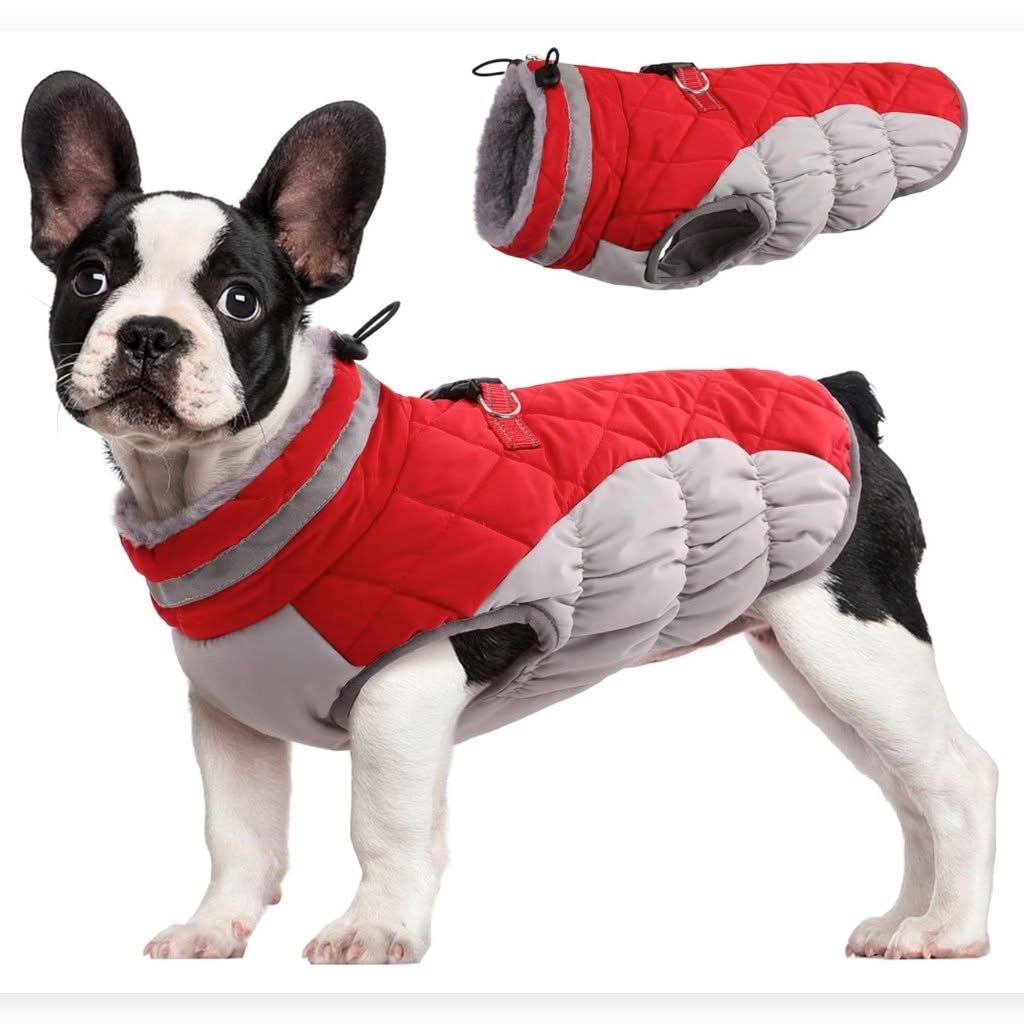
Short-coated, small breeds: Greyhounds, Whippets, Italian Greyhounds, Chihuahuas, and similar thin-coated small dogs have minimal coat insulation and small body mass. They lose body heat rapidly in cold weather and require winter coats and limited outdoor exposure in freezing temperatures.
Brachycephalic breeds: French Bulldogs, English Bulldogs, and Pugs already have compromised respiratory systems. Cold air can trigger bronchoconstriction and breathing difficulty.
Very young puppies and elderly dogs: Both have reduced thermoregulatory capacity regardless of breed. Cold-weather outdoor time should be limited and monitored in puppies under 4 months and senior dogs.
Winter Care for All Dogs
Even arctic breeds have cold-weather management needs:
- Paw care: Ice and de-icing salts (sodium chloride, calcium chloride) cause paw pad cracking and chemical burns. Rinse paws after walks on salted surfaces. Dog booties are highly effective if the dog will tolerate them.
- Wind chill: A dog's coat handles cold temperature more effectively than wind chill. Windy conditions dramatically reduce effective insulation and increase frostbite risk.
- Wet coats: A saturated double coat loses much of its insulating value. Dry double-coated breeds after rain or snow exposure.
- Hydration: Dogs exercising in cold weather still require fresh unfrozen water. Outdoor water bowls freeze rapidly in cold weather.
For more on dog breeds and care, see Best Dogs for Hot Climates, How Fast Can Dogs Run?, Exercise Needs by Dog Breed, Signs of a Healthy Dog, and Best Dogs for Apartments.
References
Williams, T. M., Fuiman, L. A., Kendall, T., Berry, P., Richter, B., Noren, S. R., Thometz, N., Shattock, M. J., Farrell, E., Stamper, A. M., & Davis, R. W. (2014). Exercise at depth alters bradycardia and incidence of cardiac anomalies in deep-diving marine mammals. Nature Communications, 6, 6055. https://doi.org/10.1038/ncomms7055
American Kennel Club (AKC). (2024). Cold-Weather Dog Breeds. Retrieved from https://www.akc.org/expert-advice/lifestyle/cold-weather-dog-breeds/
McGreevy, P. D., Grassi, T. D., & Harman, A. M. (2004). A strong correlation exists between the distribution of retinal ganglion cells and nose length in the dog. Brain, Behavior and Evolution, 63(1), 13-22. https://doi.org/10.1159/000073756
Serpell, J. (Ed.). (2017). The Domestic Dog: Its Evolution, Behaviour and Interactions with People (2nd ed.). Cambridge University Press.
American Veterinary Medical Association (AVMA). (2024). Cold weather pet safety. Retrieved from https://www.avma.org/resources-tools/pet-owners/petcare/cold-weather-pet-safety
Frequently Asked Questions
What are the best dogs for cold weather?
Siberian Huskies, Alaskan Malamutes, Bernese Mountain Dogs, Saint Bernards, Newfoundlands, Great Pyrenees, Samoyeds, and Akitas are all highly cold-tolerant breeds developed in cold-climate environments. They have thick double coats and cold-weather physiological adaptations.
What makes a dog cold-tolerant?
The primary factor is a thick double coat with dense insulating undercoat and weather-resistant outer coat. Secondary factors include large body mass (which retains heat), subcutaneous fat, and in some breeds, specialized physiological adaptations like paw circulation structures that prevent frostbite.
What dogs struggle in cold weather?
Thin-coated small breeds (Greyhounds, Whippets, Chihuahuas, Italian Greyhounds), brachycephalic breeds (Bulldogs, French Bulldogs), and very young puppies or elderly dogs struggle in cold. They need winter coats and limited outdoor exposure in freezing temperatures.
Can Siberian Huskies live outside in winter?
Siberian Huskies have exceptional cold tolerance and can tolerate very cold temperatures. However, all domestic dogs benefit from shelter from wind and precipitation, and prolonged wet-coat exposure reduces insulation. Appropriate shelter is still required even for highly cold-tolerant breeds.
How do I protect my dog's paws in winter?
Rinse paws after walks on salted pavement to prevent chemical burns and cracking. Dog booties provide the most complete protection. For dogs that won’t tolerate booties, paw wax creates some barrier protection. Check between the toes for ice ball formation during cold outdoor sessions.
Do double-coated dogs need coats in winter?
No, double-coated arctic breeds are insulated by their own coats and do not benefit from additional clothing. Dog coats are appropriate for thin-coated, small, or elderly dogs. Putting a coat on a Husky or Malamute actually traps moisture and can reduce the effectiveness of their natural insulation.