
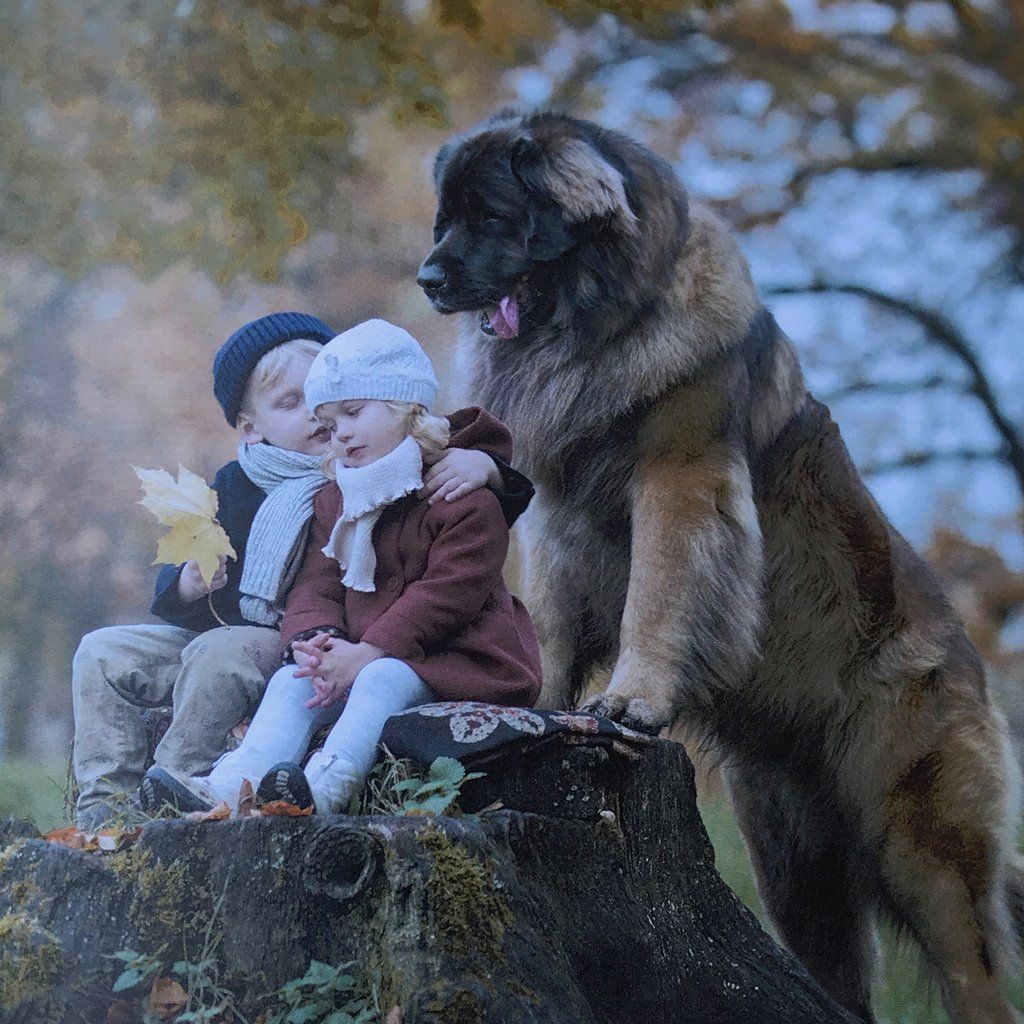
The best family dogs combine patient temperament, tolerance of unpredictable child behavior, appropriate size and energy match for the family's lifestyle, and trainability. No breed is universally safe or guaranteed, individual dog temperament, training quality, and the quality of adult supervision all matter more than breed alone. That said, certain breeds are consistently selected for family environments due to their documented behavioral characteristics.
What Makes a Dog Good with Children
Several specific traits predict how well a dog will integrate with children:
Tolerance threshold: Dogs with high bite thresholds, meaning they tolerate significant provocation before escalating to a bite, are safer with children who may inadvertently do things that a dog finds uncomfortable (hugging, reaching over the head, disturbing sleep, approaching food). Breeds selected for tolerance of human handling have generally higher thresholds.
Energy match: A very high-energy dog paired with very young children creates mutual over-arousal and injury risk (a large dog knocking over a toddler is a size-irrelevant problem). Conversely, a very sedentary dog paired with active older children produces frustration on both sides. Matching energy levels is important.
Predictability: Breeds with consistent, well-documented temperament profiles reduce the uncertainty of family placement. Highly variable or mercurial breeds are less suitable for family environments with children.
Trainability: Trainable dogs can learn rules around children more readily. A dog that has been taught not to jump, mouths gently, comes when called, and sits for greetings is substantially safer in a family environment regardless of breed.
"Dog bites to children are almost always preceded by warning signals that adults either do not recognize or ignore. The single most effective bite prevention measure is teaching children to read canine communication signals and understand what dogs find uncomfortable." American Veterinary Medical Association (AVMA), Dog Bite Prevention
The combination of a child who understands dog body language and an adult who supervises interactions is more effective than any breed selection.
Top Family Dog Breeds
Golden Retriever
Consistently rated the top family dog breed by surveys and veterinary behaviorists. Golden Retrievers have high tolerance thresholds, gentle mouths, playful energy appropriate for children, strong trainability, and an exceptional temperament for family life. Their popularity means that well-bred individuals are widely available, though it also means many poorly bred individuals exist, source carefully.
Labrador Retriever
Similar profile to the Golden Retriever. Labradors are slightly more energetic and come in three coat colors with largely equivalent temperament. The world's most popular dog breed for decades. Excellent with children of all ages. High trainability makes behavior management straightforward. Weight and joint health require monitoring as adults.
Beagle
Medium-sized, gentle, pack-oriented, and child-tolerant. Beagles are sturdy enough to withstand rough child handling while small enough to avoid knocking children over. Howling tendency and strong scent-following instinct (requires secure fencing) are the main management considerations.
Boxer
Playful, energetic, and famously patient with children. Boxers are protective of family members while maintaining a generally non-aggressive baseline. Their high energy makes them excellent for active families with older children. Brachycephalic anatomy means heat and exercise limitations.
Cavalier King Charles Spaniel
Gentle, patient, and exceptionally child-tolerant. Cavaliers are excellent with young children due to their tolerance for handling and gentle disposition. Their smaller size means they are more vulnerable to rough handling from very young children, so supervision for toddler age groups is important. Significant breed health concerns (mitral valve disease, syringomyelia).
Newfoundland
Calm, gentle, patient, and famously tolerant of children, sometimes called "nanny dogs." The main practical consideration is their very large size and substantial grooming needs. Newfoundlands are relatively low-energy for their size and are gentle with small children despite their bulk.
Bernese Mountain Dog
Calm, gentle, moderately energetic, and excellent with children. Shorter lifespan than average (7 to 9 years for the breed) due to health issues common in large breeds. Strong bonds with family members and excellent child tolerance.
| Breed | Size | Energy Level | Child Tolerance | Trainability | Family Rating |
|---|---|---|---|---|---|
| Golden Retriever | Large | Moderate-high | Very high | Very high | Outstanding |
| Labrador Retriever | Large | High | Very high | Very high | Outstanding |
| Beagle | Medium | Moderate | High | Moderate | Very good |
| Boxer | Large | High | High | Moderate-high | Very good |
| Cavalier King Charles | Small-medium | Low-moderate | Very high | High | Very good |
| Newfoundland | Giant | Low-moderate | Very high | High | Very good |
| Bernese Mountain Dog | Large | Moderate | Very high | High | Very good |
| Poodle (Standard) | Large | Moderate-high | High | Very high | Very good |
| Irish Setter | Large | High | High | Moderate | Good (active families) |
| Border Collie | Medium | Very high | Moderate | Very high | Moderate (active only) |
Dogs That Are More Challenging for Families
Some breeds are not recommended for family environments with young children, either due to lower tolerance thresholds, strong guarding behaviors, or characteristics that produce challenging interactions:
Very small, delicate breeds (Chihuahua, Yorkshire Terrier, Miniature Pinscher): Smaller dogs are more easily injured by children and respond to perceived threat with defensiveness. Not because they are inherently bad-tempered, but because the power differential between small dog and child is reversed from the large-dog situation.
Strong-guarding breeds with low tolerance (Chow Chow, Akita, Shar Pei): These breeds have lower tolerance thresholds and strong guarding instincts. They can be excellent family dogs with appropriate socialization and management but are more challenging to place safely with children in unsupervised contexts.
High-prey-drive breeds (some terrier breeds, certain working breeds): Very high prey drive can create problematic responses to running, squealing children.
Supervision Rules That Apply to All Breeds
No dog should ever be left unsupervised with a child under 10 years old. This is a universal rule that applies regardless of breed, history, or temperament. Children under 10 lack the cognitive capacity to consistently read dog communication signals or to modify their behavior based on what they observe.
Direct adult supervision means an adult who can intervene within 1 to 2 seconds is present and attending. It does not mean an adult in the next room.
All dogs should have access to a retreat space, a place (crate, bed in another room, under a table) where they can go and will not be followed by children. Dogs that have no escape option from unwanted interaction have no option but to escalate communication to biting.
For more on dogs and family life, see Best Dogs for First-Time Owners, How to Socialize a Dog, How Do Dogs Communicate?, How to Train a Puppy, and Dog Vaccination Schedule Explained.
References
American Veterinary Medical Association (AVMA). (2024). Dog Bite Prevention. Retrieved from https://www.avma.org/resources-tools/pet-owners/petcare/dog-bite-prevention
Reisner, I. R., Shofer, F. S., & Nance, M. L. (2007). Behavioral assessment of child-directed canine aggression. Injury Prevention, 13(5), 348-351. https://doi.org/10.1136/ip.2007.015396
Gilchrist, J., Sacks, J. J., White, D., & Kresnow, M. J. (2008). Dog bites: Still a problem? Injury Prevention, 14(5), 296-301. https://doi.org/10.1136/ip.2007.016220
Duffy, D. L., Hsu, Y., & Serpell, J. A. (2008). Breed differences in canine aggression. Applied Animal Behaviour Science, 114(3-4), 441-460. https://doi.org/10.1016/j.applanim.2008.04.006
American Kennel Club (AKC). (2024). Best Dog Breeds for Families. Retrieved from https://www.akc.org/expert-advice/lifestyle/best-family-dogs/
Overall, K. L. (2013). Manual of Clinical Behavioral Medicine for Dogs and Cats. Elsevier Mosby.
For cold-climate families, our best dogs for cold weather guide covers the top breeds.
Frequently Asked Questions
What are the best dog breeds for families with kids?
Golden Retrievers, Labrador Retrievers, Beagles, Boxers, Cavalier King Charles Spaniels, Newfoundlands, and Bernese Mountain Dogs consistently rank highest for family suitability due to their high child tolerance, appropriate energy, and trainability.
Are small dogs safer for young children?
No, small dogs are often more vulnerable to injury from young children, which increases defensive behavior and bite risk. Small dogs have lower bite thresholds than many larger family breeds. Golden Retrievers and Labradors are generally safer with toddlers than Chihuahuas or Yorkshire Terriers.
What dog should I avoid with young children?
Very small delicate breeds, strong-guarding breeds with lower tolerance (Chow Chow, Akita, Shar Pei), and very high-prey-drive breeds are more challenging with young children. No breed is categorically unsafe with proper socialization and supervision, but these require more careful management.
Should children be left alone with dogs?
No. No dog should be left unsupervised with children under 10 years old, regardless of breed or history. Direct adult supervision means an adult who can intervene within 1-2 seconds, not someone in the adjacent room.
Is a Labrador or Golden Retriever better for a family?
Both are excellent choices. Golden Retrievers are slightly gentler and more people-focused. Labradors are slightly more energetic and come in three colors with equivalent temperament. The individual dog’s temperament, health, and early training matter more than the difference between these two breeds.
Do family dogs need special training?
Yes. All family dogs benefit from basic obedience training including not jumping, gentle mouth behavior, coming when called, and sitting for greetings. A dog that has been trained is substantially safer around children than an untrained dog of the same breed.