
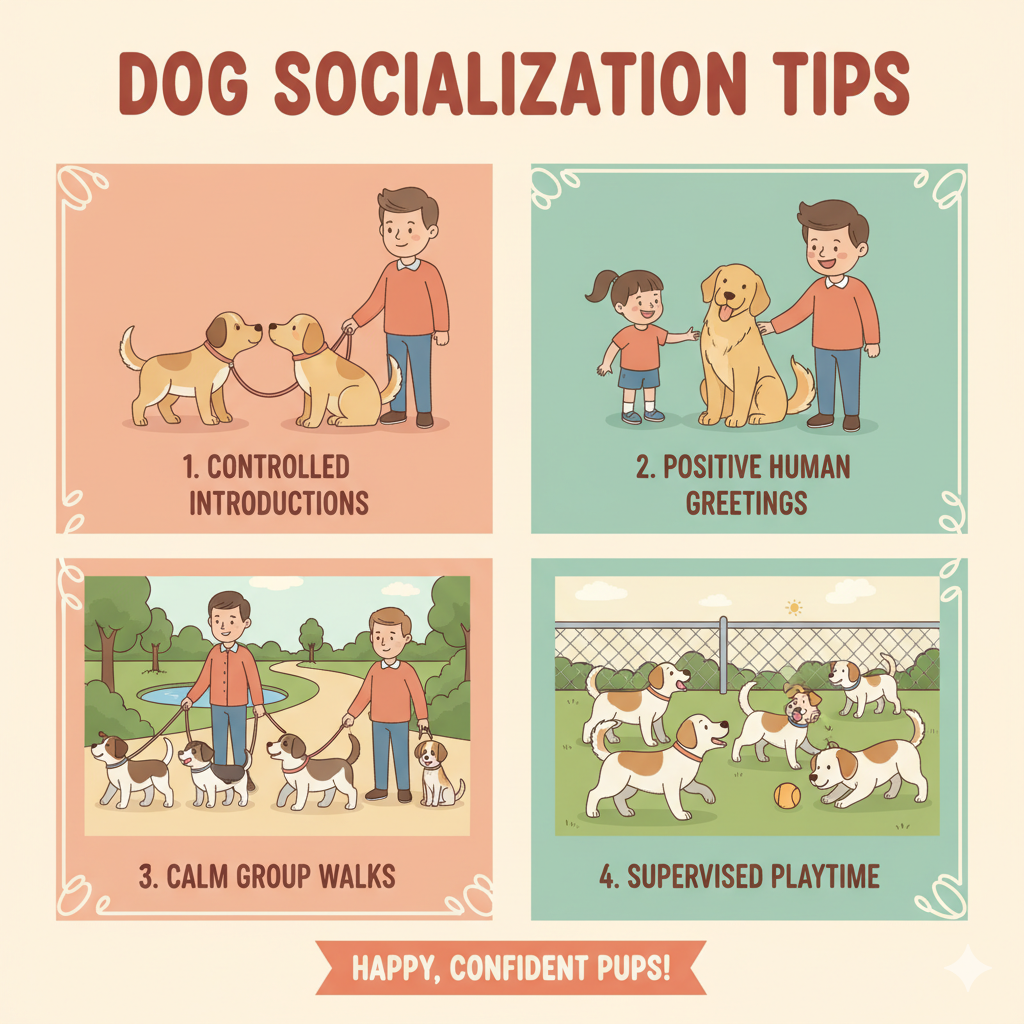
Socializing dogs means systematically exposing them to a wide variety of people, animals, environments, sounds, and experiences in ways that build positive or neutral associations. The most critical socialization period is between 3 and 14 weeks of age, when the brain is specifically primed to form associations with novel stimuli.
Positive experiences during this window build a foundation of confidence and adaptability that persists throughout the dog's life. Insufficient socialization during this period is the leading behavioral risk factor for fear, aggression, and anxiety in adult dogs.
The Sensitive Socialization Period: Why Timing Matters
Between 3 and 14 weeks of age, the canine brain has a specific neurological characteristic that does not exist at other life stages: novel stimuli are processed with substantially reduced fear response, and associations formed during this period have disproportionate and lasting influence on the dog's emotional responses throughout its life.
This is not merely theoretical, the research evidence is extensive. Studies dating from Scott and Fuller's foundational work in the 1960s through modern neuroscience consistently show that dogs inadequately socialized during this window show elevated fearfulness, reduced adaptive behavior, and higher rates of anxiety and aggression as adults.
The behavioral consequences of poor early socialization are among the most difficult behavioral problems to treat and frequently cannot be fully remediated.
"The socialization window in dogs represents a unique period of neural plasticity during which the nervous system is literally building the reference library of 'normal' and 'safe.' What a dog encounters as normal during those 14 weeks will be processed as normal for life. What it does not encounter may be processed as threatening." Dr. Ian Dunbar, veterinary behaviorist
The practical challenge is that this critical window overlaps with the period when most puppies are not yet fully vaccinated.
Veterinary guidance on this conflict has evolved significantly, the American Veterinary Society of Animal Behavior's position states that the risks of inadequate socialization far outweigh the risks of disease exposure in appropriately managed settings (puppy classes, vaccinated-dog environments, controlled exposure).
The old practice of waiting until 16 weeks (full vaccination) before socializing is now understood to cause significant behavioral harm.
What Socialization Actually Means
Socialization is commonly misunderstood as simply "meeting lots of things." Effective socialization requires that the experiences be positive or neutral, exposure to frightening experiences does not socialize; it sensitizes and creates fear responses. The goal is not the maximum number of exposures but exposures that the puppy experiences as safe, interesting, or rewarding.
The socialization checklist has several categories, all of which should be covered systematically:
People: Men, women, children, infants, elderly people, people in hats, glasses, uniforms, high-visibility vests, people using canes or walkers, people with beards, people of different ethnicities, people moving in unusual ways (limping, waving arms). Puppies raised only in a limited demographic environment frequently show fear responses to people who look different from those they encountered during socialization.
Animals: Other dogs (vaccinated), cats, small animals (in controlled contexts), livestock if applicable. Dog-dog socialization is particularly critical for producing appropriate social behavior with other dogs in adulthood.
Environments: Urban streets, rural areas, shops, cars, public transport, veterinary offices, grooming environments, bodies of water, grass, gravel, smooth floors, carpets, stairs.
Sounds: Traffic, sirens, thunder, fireworks, household appliances (vacuum, blender), power tools, music, crowds, children playing.
Handling: Ear examination, mouth examination, foot handling, nail trimming, restraint, collar/harness putting-on, bathing.
| Socialization Category | Examples | Priority Level |
|---|---|---|
| People types | Men, children, hats, uniforms, different appearances | Critical |
| Dog interactions | Vaccinated adult dogs, puppies, dogs of various sizes | Critical |
| Environments | Cars, shops, urban streets, veterinary office | Critical |
| Sounds | Sirens, fireworks, household appliances, crowds | High |
| Surfaces | Gravel, metal grates, slippery floors, stairs | High |
| Handling | Ears, paws, mouth, restraint, grooming procedures | Critical |
| Other animals | Cats, livestock, small animals | Moderate-high |
| Equipment | Crate, harness, muzzle (positive introduction), bags | High |
How to Socialize Safely Before Full Vaccination
The resolution to the socialization-vaccination timing conflict involves risk management:
Puppy classes: Well-run puppy socialization classes that require vaccination documentation and maintain clean environments represent one of the lowest-risk, highest-benefit socialization opportunities available. The AVMA and ASPCA both recommend puppy classes beginning at 7 to 8 weeks (first vaccination + one week).
Vaccinated private dogs: Meeting known, vaccinated, healthy dogs at their owners' homes or in private yards represents very low disease risk.
Carry the puppy: A puppy carried in arms or a carrier can experience urban environments (traffic sounds, crowds, shop interiors) with minimal ground contact and minimal disease exposure. The olfactory and visual experience is fully active, the puppy is being socialized to these environments without disease risk.
Avoid high-risk locations: Dog parks, pet store entrances, shelters, and areas where many unvaccinated dogs congregate are higher risk and should be avoided until the vaccination series is complete.
Socializing Adolescent and Adult Dogs
The critical socialization window closes around 14 weeks, but socialization should continue throughout a dog's life; it is not a one-time project. Adolescent and adult dogs benefit from continued positive novel experiences, and dogs that are not maintained with regular social exposure can develop fear responses to things they encountered positively as puppies (sensitization from lack of continued exposure).
For adult dogs that show fear or reactive behavior toward specific stimuli due to insufficient early socialization, systematic desensitization and counter-conditioning can improve, but rarely eliminate, the behavioral consequences of inadequate early socialization. This process is slower, requires more work, and typically produces a dog that manages its fear more effectively rather than a dog that is as genuinely confident as a well-socialized puppy would be.
The process:
- Identify the specific triggers that produce fear or reactivity
- Determine the distance at which the dog can see/encounter the trigger without entering a fear state (threshold)
- Present the trigger at or just above threshold distance
- Pair trigger appearance with high-value rewards (classical counter-conditioning)
- Gradually decrease distance as the dog's comfort level builds
- Do not expose the dog to the trigger below threshold during training, every frightening experience reinforces the fear
Signs of Under-Socialization
An under-socialized dog commonly shows:
- Fear responses to unfamiliar people (growling, hiding, snapping at strangers)
- Fear of novel environments (freezing, refusing to walk, trying to flee)
- Extreme reactivity to sounds (fireworks, thunder, traffic)
- Inability to cope with handling (grooming, veterinary examination)
- Aggression in contexts that typically provoke no response in well-socialized dogs
- Generalized anxiety that manifests across many contexts
These behaviors are not "stubbornness" or "dominance" they are fear responses from a nervous system that was not given the reference experiences needed to process those stimuli as safe.
Socialization and Dog Classes
Puppy socialization classes serve both socialization and early training purposes. Characteristics of a quality puppy class:
- Requires vaccination documentation
- Separates puppies into size-appropriate groups for play
- Manages interactions to ensure positive experiences (no bullying, shy puppies given safe space)
- Uses positive reinforcement training methods exclusively
- Has a trainer with credentials (CPDT-KA, KPA CTP, or equivalent)
- Includes handling exercises and exposure to novel stimuli, not just free play
"A well-run puppy class may be the single most cost-effective investment an owner can make in their dog's lifelong behavioral health. The socialization, handling exposure, early training, and owner education all occur in parallel in a controlled positive environment." American Veterinary Society of Animal Behavior, Socialization Position Statement (2008)
For more on dog training and behavior, see How to Train a Puppy, How to House Train a Dog, How to Leash Train a Dog, How Do Dogs Communicate?, and Do Dogs Understand Human Emotions?.
References
Scott, J. P., & Fuller, J. L. (1965). Genetics and the Social Behavior of the Dog. University of Chicago Press.
American Veterinary Society of Animal Behavior (AVSAB). (2008). AVSAB Position Statement on Puppy Socialization. Retrieved from https://avsab.org/resources/position-statements/
Serpell, J., Duffy, D. L., & Jagoe, J. A. (2017). Becoming a dog: Early experience and the development of behavior. In J. Serpell (Ed.), The Domestic Dog: Its Evolution, Behavior and Interactions with People (2nd ed., pp. 93-117). Cambridge University Press.
Duxbury, M. M., Jackson, J. A., Line, S. W., & Anderson, R. K. (2003). Evaluation of association between retention in the home and attendance at puppy socialization classes. Journal of the American Veterinary Medical Association, 223(1), 61-66. https://doi.org/10.2460/javma.2003.223.61
Freedman, D. G., King, J. A., & Elliot, O. (1961). Critical period in the social development of dogs. Science, 133(3457), 1016-1017. https://doi.org/10.1126/science.133.3457.1016
Howell, T. J., King, T., & Bennett, P. C. (2015). Puppy parties and beyond: The role of early age socialization practices on adult dog behavior. Veterinary Medicine: Research and Reports, 6, 143-153. https://doi.org/10.2147/VMRR.S62081
Frequently Asked Questions
When should I start socializing my puppy?
Start immediately, the critical window is 3 to 14 weeks. AVSAB recommends beginning puppy socialization classes at 7 to 8 weeks (one week after first vaccination), as the behavioral risk of under-socialization significantly outweighs disease risk in managed settings.
What should I socialize my dog to?
Systematically expose the puppy to: diverse people (men, children, hats, uniforms), other vaccinated animals, varied environments (urban, rural, shops, cars), household and outdoor sounds, different surfaces, and handling procedures (ears, paws, mouth, grooming).
How do I socialize a puppy before it is fully vaccinated?
Attend well-run puppy classes (require vaccination documentation), meet known vaccinated dogs in private homes, and carry the puppy in arms or a carrier for urban exposure. Avoid high-risk areas (dog parks, shelter areas, pet store entrances) until vaccination is complete.
Can you socialize an adult dog?
Adult dogs benefit from continued socialization, but behavioral changes from insufficient early socialization are harder to achieve. Systematic desensitization and counter-conditioning can reduce fear responses but typically produce management rather than elimination of the behavioral effect.
What are signs my dog was not properly socialized?
Fear of strangers or unfamiliar people types, inability to cope with novel environments, extreme sound reactivity, intolerance of handling, reactivity or aggression toward other dogs, and generalized anxiety across many contexts all indicate under-socialization.
Are puppy classes worth it?
Yes. Well-run puppy classes provide socialization with people and dogs, positive handling exposure, early training, and owner education simultaneously. Studies show dogs that attend puppy classes have lower behavioral problem rates and higher household retention rates in adulthood.