
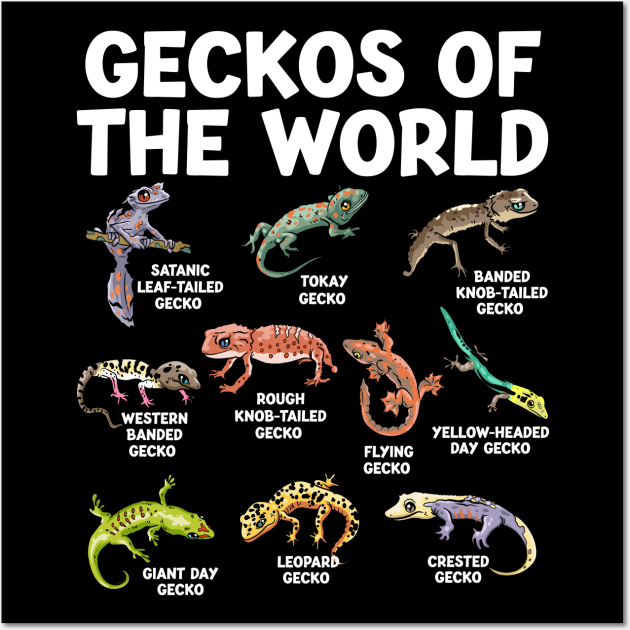
How do geckos stick to walls and ceilings without any adhesive?
Geckos adhere to surfaces through van der Waals forces, which are weak intermolecular attractions that operate at extremely close range. Each gecko toe pad is covered in millions of microscopic hair-like structures called setae, and each seta branches into hundreds of even tinier tips called spatulae, measuring roughly 200 nanometers wide.
There is a moment, familiar to anyone who has lived in the tropics, when a small lizard appears on the ceiling directly above your head and simply stays there, defying every intuition about gravity. It moves with casual confidence across the smooth plaster, pauses upside down to survey the room, and then vanishes behind a light fixture without ever acknowledging the physical impossibility of what it has just done.
That lizard is almost certainly a gecko, and the mechanism that holds it to the ceiling is not suction, not glue, not tiny claws gripping imperfections - it is something far stranger and far more elegant, something that operates at the molecular level and has inspired some of the most ambitious biomimicry projects in modern engineering.
Geckos are among the most species-rich, geographically widespread, and behaviorally remarkable lizard families on Earth. With more than 1,500 described species distributed across every continent except Antarctica, they have colonized habitats ranging from scorching deserts to tropical rainforests, from high-altitude mountain slopes to the interior walls of urban apartments.
They are the only lizards that routinely vocalize, the only reptiles whose feet have inspired NASA research, and the keepers of an adhesion system so sophisticated that human technology has only recently begun to approximate it.
A Family of Extraordinary Diversity
The infraorder Gekkota encompasses seven families and over 1,500 species, making geckos one of the most diverse lizard groups alive today. New species are described almost every year - between 2000 and 2020, herpetologists identified more than 150 previously unknown gecko species, many from remote islands and poorly surveyed mountain ranges in Southeast Asia, Madagascar, and the Caribbean [1].
Geckos range in size from the Jaragua dwarf gecko (Sphaerodactylus ariasae), which measures a mere 16 millimeters from snout to vent and ranks among the smallest known reptiles, to the New Caledonian giant gecko (Rhacodactylus leachianus), which can exceed 36 centimeters in total length and weigh over 300 grams.
This thousandfold range in body mass is accompanied by an equally staggering range of ecological strategies. Some geckos are strict insectivores; others eat fruit, nectar, or smaller lizards. Some are nocturnal ambush predators that spend the day wedged into rock crevices; others are diurnal canopy dwellers that bask openly in tropical sunlight.
What unites this extraordinary diversity is a suite of shared adaptations that have made geckos uniquely successful: adhesive toe pads (in most but not all species), vocal communication, spectacle-covered eyes in place of movable eyelids, and a remarkable capacity for tail autotomy and regeneration.
The Science of Adhesion: Van der Waals Forces and the Gecko Foot
No discussion of geckos can avoid the question that has fascinated scientists since Aristotle first noted their climbing ability in Historia Animalium over 2,300 years ago: how do they stick?
Setae, Spatulae, and Molecular Attraction
The answer, definitively established by Kellar Autumn and colleagues at Lewis & Clark College in a landmark 2000 paper published in Nature, lies in van der Waals forces - the weak intermolecular attractions that arise between any two surfaces brought into sufficiently close contact [2]. The key to the gecko's system is not chemistry but geometry: an architecture of hierarchical structures so fine that they achieve molecular-level intimacy with virtually any surface.
Each toe of a climbing gecko species is covered in a series of plate-like structures called lamellae. Under magnification, each lamella is revealed to be carpeted with millions of microscopic hair-like projections called setae, each roughly 100 micrometers long - about the diameter of a human hair. But the real engineering marvel occurs at the next level down.
Each seta branches at its tip into hundreds to thousands of even finer structures called spatulae, each approximately 200 nanometers wide - so small that they can only be resolved with an electron microscope.
A single gecko foot contains roughly 500,000 setae, and each seta bears between 100 and 1,000 spatulae, yielding an estimated billions of spatulae per foot. When these spatulae are pressed against a surface, they conform to its microscopic topography at the molecular scale, bringing enough of the spatulae's surface area within the sub-nanometer range where van der Waals forces become significant.
The cumulative effect of billions of these individually tiny attractions produces an adhesive force that is, collectively, enormous.
Autumn's team measured the adhesive force of a single gecko seta at approximately 200 micronewtons - seemingly trivial, but multiplied across millions of setae, a tokay gecko's four feet can theoretically generate an adhesive force sufficient to support approximately 133 kilograms, more than 40 times the animal's own body weight [2].
"What we found was that geckos use one of the most fundamental forces in nature. Van der Waals forces require no chemical adhesive, no moisture, no suction. It is dry adhesion at its most elegant - a solution that evolution arrived at long before we even understood the physics." - Dr. Kellar Autumn, Professor of Biology, Lewis & Clark College, on the 2000 Nature publication
Attachment and Detachment in Milliseconds
Equally remarkable is how geckos release their grip. If billions of spatulae are generating powerful adhesive forces, how does the animal peel its foot away effortlessly to take its next step? The answer is angular dependence. Van der Waals adhesion in the gecko system is strongest when the setae are loaded in shear - pulled parallel to the surface.
By curling their toes upward and peeling them away at a steep angle, geckos change the loading geometry and reduce the adhesive force to near zero. This attach-detach cycle takes approximately 15 milliseconds per step, allowing geckos to run across ceilings at speeds exceeding 1 meter per second without any perceptible pause.
Self-Cleaning Feet: The Lotus Effect
Gecko feet remain adhesive even after walking through dust, dirt, and debris - a property that initially baffled researchers. If the spatulae rely on intimate surface contact, contamination should degrade performance rapidly.
Studies by Wendy Hansen and Kellar Autumn demonstrated that gecko setae are self-cleaning: particles adhering to the spatulae are transferred to the walking surface within only a few steps, because the particles bond more strongly to the ground than to the setae [3].
This self-cleaning mechanism parallels the lotus effect observed in certain plant leaves and represents a form of passive maintenance that requires no energy expenditure from the animal.
Tokay Geckos: The Loudest Lizards in the Room
The tokay gecko (Gekko gecko) is the second-largest gecko species, reaching lengths of 35 centimeters and weighing up to 300 grams. Native to South and Southeast Asia, it is immediately recognizable by its striking blue-grey body covered in bold orange and red spots, and even more recognizable by its voice.
The tokay gecko's call is a loud, barking repetition of its own name - "to-KAY, to-KAY" - delivered with a forcefulness that can be heard from 30 meters or more. Males call from elevated perches to defend territory and attract mates, sometimes producing dozens of repetitions in a single bout. This call is the origin of the common name "gecko" itself, which derives from the Malay-Javanese onomatopoeic imitation of the sound.
Tokay geckos are also notorious for their powerful bite. Their jaws are disproportionately strong for their size, and they grip with a bulldog-like tenacity, often refusing to release for several minutes. In Southeast Asian cultures, the tokay gecko holds a complex place: it is simultaneously welcomed in homes as an effective insect predator (a single adult can consume dozens of cockroaches per night) and feared for its painful bite and aggressive temperament when cornered.
The Traditional Medicine Crisis
Tokay geckos face a severe conservation threat from the traditional medicine trade. Across parts of China, Indonesia, Malaysia, and the Philippines, dried tokay geckos are sold as purported treatments for asthma, diabetes, HIV, and cancer - claims with no scientific basis.
An estimated 20 million tokay geckos are harvested annually for this trade, with large specimens commanding prices of up to $2,000 in black markets. Despite CITES monitoring, enforcement remains inconsistent, and wild populations in some regions have declined dramatically [4].
Leopard Geckos: The World's Most Popular Pet Reptile
The leopard gecko (Eublepharis macularius) holds the distinction of being the most widely kept pet reptile species globally, with millions bred in captivity each year. Native to the rocky deserts and grasslands of Pakistan, Afghanistan, and northwestern India, this species has a suite of characteristics that make it uniquely suited to captivity: manageable size (20 to 25 centimeters), docile temperament, simple dietary requirements, and a tolerance for handling that is unusual among reptiles.
The Eyelid Exception
Among the most distinctive features of leopard geckos is one that seems unremarkable until you consider the broader context: they have movable eyelids. The vast majority of gecko species lack eyelids entirely, instead possessing a transparent scale called a spectacle or brille that covers and protects the eye, much like a built-in contact lens.
Geckos with spectacles clean their eyes by licking them with their tongue - a behavior that contributes to their characteristically alert, wide-eyed appearance.
Leopard geckos belong to the family Eublepharidae (the name literally means "true eyelids"), a basal group that diverged early in gecko evolution and retained the movable eyelids that other gecko lineages subsequently lost. They also lack adhesive toe pads, possessing instead small claws suited to gripping rough rock surfaces rather than smooth walls.
These traits mark the eublepharids as a window into the ancestral gecko condition, before the evolution of the spectacle eye covering and the sophisticated lamellae system.
| Feature | Leopard Gecko | Tokay Gecko | Crested Gecko | Leaf-tailed Gecko | Day Gecko |
|---|---|---|---|---|---|
| Size (total length) | 20-25 cm | 30-35 cm | 20-25 cm | 10-30 cm | 15-30 cm |
| Activity pattern | Nocturnal | Nocturnal | Crepuscular | Nocturnal | Diurnal |
| Eyelids | Movable | Spectacle | Spectacle | Spectacle | Spectacle |
| Adhesive toe pads | No (claws) | Yes | Yes (with claw) | Yes | Yes |
| Tail regeneration | Yes | Yes | No | Yes | Yes |
| Vocalization | Clicks, chirps | Loud barking call | Soft squeaks | Hissing | Clicks |
| Native range | S. Asia deserts | SE Asia | New Caledonia | Madagascar | Madagascar, Indian Ocean |
| Diet | Insects | Insects, small vertebrates | Insects, fruit, nectar | Insects | Insects, nectar, fruit |
Crested Geckos: Back from the Dead
Few stories in modern herpetology are as dramatic as the rediscovery of the crested gecko (Correlophus ciliatus). First described scientifically by the French zoologist Alphone Guichenot in 1866 from specimens collected in New Caledonia - a French territory in the South Pacific, roughly 1,200 kilometers east of Australia - the species was subsequently never seen alive again.
For over a century, it was known only from preserved museum specimens, and by the late 20th century, most herpetologists assumed it was extinct.
Then, in 1994, a tropical storm struck the southern portion of New Caledonia's main island, Grande Terre. In the storm's aftermath, a field expedition led by Robert Seipp discovered living crested geckos clinging to damaged vegetation on the Isle of Pines and in the forests of the southern province [5]. The species had survived in small, isolated populations in native forest patches that had escaped extensive surveying.
The rediscovery ignited immediate interest in the pet trade, and captive breeding programs proliferated rapidly. Within two decades, the crested gecko went from presumed extinct to one of the most commonly bred reptiles in the world. Today, millions exist in captivity, available in dozens of selectively bred color morphs. The wild population, however, remains fragile.
Habitat loss from nickel mining and the introduction of the little fire ant (Wasmannia auropunctata), an invasive species that preys on gecko eggs and hatchlings, threaten the species in its extremely limited native range.
The Tail That Never Returns
Crested geckos share the gecko family's capacity for tail autotomy - the voluntary shedding of the tail as a predator distraction - but with a critical difference. While most geckos regenerate a replacement tail within weeks, crested geckos cannot regrow their tails. Once dropped, the tail is gone permanently, and the gecko lives with a small healed stump.
In wild populations, the majority of adult crested geckos are tailless, suggesting that predation pressure is intense enough that most individuals deploy this defense at least once during their lifetime.
Leaf-Tailed Geckos: Camouflage Beyond Belief
Madagascar's leaf-tailed geckos (genus Uroplatus) represent perhaps the most extreme camouflage adaptations in any reptile. With 14 described species found nowhere else on Earth, these geckos have evolved body shapes, skin textures, and color patterns that render them virtually invisible against tree bark, dead leaves, and lichen-covered branches.
The satanic leaf-tailed gecko (Uroplatus phantasticus) - so named for the horn-like projections above its eyes - possesses a broad, flat tail with irregular edges and notches that perfectly mimics a decaying leaf, complete with apparent veins and insect damage holes.
When resting on a branch during the day, the gecko presses its body flat against the bark and deploys a dermal fringe - a thin flap of skin along the jaw and body margins - that eliminates any shadow that might betray its outline. The result is an animal so perfectly concealed that experienced field herpetologists can stare directly at one and fail to see it.
The mossy leaf-tailed gecko (Uroplatus sikorae) takes a different approach, its skin covered in tubercles, fringes, and mottled green-brown coloration that precisely replicates lichen and moss. Laboratory studies have confirmed that these geckos can adjust their skin shade to better match their resting substrate, though the mechanism is slower and less dramatic than the rapid color change seen in chameleons.
Day Geckos: The Diurnal Exception
While the overwhelming majority of gecko species are nocturnal, the day geckos (genus Phelsuma) of Madagascar and the Indian Ocean islands are a vivid exception. These diurnal, arboreal geckos are among the most brilliantly colored reptiles on the planet, displaying electric greens, blues, and reds that serve both as species-recognition signals and as warnings.
The Madagascar giant day gecko (Phelsuma grandis), reaching 30 centimeters in length, is the largest member of the genus. Its neon-green body with crimson dorsal markings is so visually striking that it became the inspiration for the insurance mascot that introduced millions of non-herpetologists to the word "gecko."
Day geckos feed on a mixed diet of insects, fruit, nectar, and pollen, and they play an important role as pollinators for several tropical plant species - a ecological function unusual among reptiles. Their diurnal lifestyle is accompanied by adaptations for bright-light vision, including round pupils (most nocturnal geckos have vertical slit pupils that can open extremely wide in darkness) and retinas dominated by cone photoreceptors rather than rods.
Gecko Vocalization: Reptiles That Speak
Geckos stand nearly alone among reptiles in their capacity for true vocalization - the production of complex, species-specific sounds used for communication. While many reptiles can hiss by expelling air, and some produce incidental sounds through body movements, geckos generate deliberate, structured calls using specialized laryngeal mechanisms.
The repertoire varies by species but typically includes territorial advertisement calls (used by males to claim and defend territory), mating calls (directed at potential female partners), distress calls (sharp, loud sounds produced when seized by a predator, which may function to startle the attacker into releasing its grip), and social interaction calls (softer chirps and clicks used during encounters between conspecifics).
"Among lizards, geckos are the great communicators. Their vocal abilities are a remarkable convergence with the acoustic signaling we associate with frogs, birds, and mammals - yet they evolved this capacity entirely independently, in a lineage where the rest of the group communicates almost exclusively through visual displays." - Dr. Aaron M. Bauer, Gerald M. Lemole Professor of Integrative Biology, Villanova University
The tokay gecko produces the loudest call of any gecko, measured at up to 100 decibels at close range - comparable to a power lawn mower. At the other end of the spectrum, many small gecko species produce ultrasonic clicks that are inaudible to the human ear and whose function remains poorly understood.
Tail Autotomy and Regeneration
The ability to shed and regrow a tail is widespread among lizards, but geckos have refined this defense mechanism to an unusual degree. Gecko tails contain pre-formed fracture planes - zones of weakness within the vertebrae where the bone and surrounding tissues can separate cleanly with minimal bleeding. When a predator seizes the tail, voluntary muscle contractions along the fracture plane cause the tail to detach.
The severed tail continues to thrash vigorously for several minutes, driven by residual electrical activity in the tail's musculature. This distraction is often sufficient to redirect the predator's attention while the gecko escapes. The tail also serves as a fat storage organ in many species, particularly desert-dwelling leopard geckos, making its loss a significant metabolic cost that the animal must recover from over subsequent weeks.
Regeneration of the tail is a complex process involving the activation of stem cells at the wound site.
The replacement tail, however, is structurally different from the original: it is supported by a rod of cartilage rather than articulated vertebrae, it lacks the pre-formed fracture planes of the original (meaning it cannot be autotomized a second time at the same point), and it often differs in color, pattern, and scale arrangement.
Research into gecko tail regeneration has attracted significant attention from biomedical scientists interested in understanding why some vertebrates can regenerate complex tissues while mammals generally cannot.
Biomimicry: From Gecko Feet to Human Technology
The gecko adhesion system has become one of the most intensively studied models in biomimicry - the design discipline that seeks to solve human engineering problems by emulating solutions found in nature.
Geckskin
In 2012, researchers at the University of Massachusetts Amherst, led by polymer scientist Alfred Crosby and biologist Duncan Irschick, unveiled Geckskin - a synthetic adhesive inspired by gecko toe pad architecture.
A piece of Geckskin roughly the size of an index card could support approximately 315 kilograms (700 pounds) on a smooth glass surface and could be removed and reattached repeatedly without losing adhesive strength. Unlike conventional adhesives, Geckskin leaves no residue, works through dry adhesion, and can be manufactured at low cost. The technology has applications in manufacturing, construction, and consumer products [6].
NASA and Space Applications
NASA has invested in gecko-inspired adhesion for use in space, where traditional adhesives and mechanical fasteners face unique challenges.
In microgravity environments, a gecko-like gripper could allow robots to crawl along the exterior of spacecraft, capture tumbling debris, or secure objects to surfaces without the need for magnetic attachment (which only works on ferromagnetic materials) or suction (which requires atmospheric pressure).
NASA's Jet Propulsion Laboratory developed gecko grippers that were tested aboard the International Space Station in 2016, successfully demonstrating the ability to grapple and manipulate objects in microgravity using synthetic setae arrays.
Surgical Adhesives
The medical field has recognized the potential of gecko-inspired adhesion for surgical applications. Conventional surgical adhesives (such as cyanoacrylate-based tissue glues) bond strongly but are rigid and can cause inflammation.
Gecko-inspired surgical tapes, developed by researchers at MIT and Brigham and Women's Hospital, use micro-patterned surfaces that grip tissue mechanically without chemical bonding, allowing for strong yet reversible adhesion in wet biological environments. Early applications include wound closure, hernia mesh attachment, and sealing surgical incisions without sutures [7].
Climbing Robots
Multiple engineering teams worldwide have built gecko-inspired climbing robots capable of ascending vertical glass surfaces. Stanford University's Stickybot, developed by Mark Cutkosky's Biomimetics and Dexterous Manipulation Lab, uses synthetic directional adhesives that mimic the anisotropic attachment and detachment mechanics of gecko setae.
These robots have potential applications in building inspection, search and rescue, and maintenance of structures where human access is dangerous or impractical.
Conservation and the Future of Geckos
Despite their abundance and diversity, many gecko species face serious conservation threats. Habitat destruction, particularly deforestation in tropical regions, eliminates the microhabitats on which many specialist species depend. The pet trade, while largely supplied by captive-bred animals for popular species, continues to drive collection of rare and newly described species from the wild.
Invasive species - particularly rats, cats, and fire ants - devastate gecko populations on islands where these lizards evolved without mammalian predators.
Madagascar's leaf-tailed geckos are classified as Vulnerable to Endangered by the IUCN, threatened by ongoing deforestation that has reduced the island's original forest cover by approximately 90 percent. New Caledonia's endemic geckos, including the crested gecko and the giant gecko, face pressure from mining operations and invasive predators.
Even the common tokay gecko, once abundant across its range, has experienced population declines of 50 percent or more in parts of Southeast Asia due to the traditional medicine harvest.
The future of gecko conservation depends on the same factors that determine the fate of biodiversity globally: habitat preservation, enforcement of wildlife trade regulations, control of invasive species, and continued scientific research to identify and protect species before they vanish.
For a group of animals that has survived for at least 100 million years - gecko fossils preserved in amber from the Cretaceous period confirm their deep evolutionary antiquity - it would be a profound loss to let human activity extinguish what natural selection so painstakingly refined.
References
[1] Uetz, P., Freed, P., and Hosek, J. (eds.). The Reptile Database. Available at reptile-database.org. Accessed 2024. Species counts and taxonomic updates for Gekkota.
[2] Autumn, K., Liang, Y.A., Hsieh, S.T., et al. "Adhesive Force of a Single Gecko Foot-Hair." Nature, vol. 405, 2000, pp. 681-685.
[3] Hansen, W.R. and Autumn, K. "Evidence for Self-Cleaning in Gecko Setae." Proceedings of the National Academy of Sciences, vol. 102, no. 2, 2005, pp. 385-389.
[4] Caillabet, O.S. "The Trade in Tokay Geckos (Gekko gecko) in South-East Asia." TRAFFIC Southeast Asia, Petaling Jaya, Malaysia, 2013.
[5] Seipp, R. and Henkel, F.W. Rhacodactylus: Biology, Natural History, and Husbandry. Edition Chimaira, Frankfurt, 2000. Includes account of the 1994 rediscovery expedition.
[6] Bartlett, M.D., Croll, A.B., King, D.R., et al. "Looking Beyond Fibrillar Features to Scale Gecko-Like Adhesion." Advanced Materials, vol. 24, no. 8, 2012, pp. 1078-1083.
[7] Mahdavi, A., Ferreira, L., Sundback, C., et al. "A Biodegradable and Biocompatible Gecko-Inspired Tissue Adhesive." Proceedings of the National Academy of Sciences, vol. 105, no. 7, 2008, pp. 2307-2312.
Frequently Asked Questions
How do geckos stick to walls and ceilings without any adhesive?
Geckos adhere to surfaces through van der Waals forces, which are weak intermolecular attractions that operate at extremely close range. Each gecko toe pad is covered in millions of microscopic hair-like structures called setae, and each seta branches into hundreds of even tinier tips called spatulae, measuring roughly 200 nanometers wide.
When billions of spatulae make intimate contact with a surface, the cumulative van der Waals attraction generates enough force to support the gecko’s body weight many times over. A tokay gecko’s feet can theoretically produce enough adhesive force to support approximately 133 kilograms. The system is entirely dry, leaves no residue, works on virtually any surface, and can be engaged or released in milliseconds by changing the angle of the toes.
Why do geckos vocalize, and what sounds do they make?
Geckos are among the very few reptile groups capable of true vocalization, a trait that sets them apart from nearly all other lizards. They produce chirps, clicks, barks, and in the case of the tokay gecko, a loud two-syllable call that sounds like ‘to-kay’ and can be heard from over 30 meters away. Geckos vocalize primarily for territorial defense and mating communication.
Males use calls to advertise territory ownership and attract females, while distress calls may serve to startle predators. The name ‘gecko’ itself is onomatopoeic, derived from the Malay-Javanese word that imitates their characteristic call.
Can crested geckos regrow their tails after dropping them?
Unlike most gecko species, crested geckos cannot regenerate their tails once dropped. When a crested gecko sheds its tail through autotomy - a defensive mechanism in which the tail detaches along a predetermined fracture plane to distract a predator - the tail is lost permanently.
The wound heals into a small rounded stump, and the gecko lives out its life tail-less, a condition so common in wild populations that tailless adults significantly outnumber tailed ones. Most other gecko species, such as leopard geckos and tokay geckos, can fully regenerate a replacement tail, though the regrown tail is supported by cartilage rather than true vertebrae and often differs in color and texture from the original.