
How many people have been killed by Komodo dragons?
The largest of the monitor lizards, the Komodo dragon, has killed at least five people since 1974, with the most recent confirmed fatality occurring in 2009 when an 8-year-old boy was attacked on Komodo Island. Non-fatal attacks are more common, with several dozen documented incidents involving local villagers and park rangers.
Monitor lizards are, by any reasonable measure, the most remarkable group of reptiles alive today. Belonging exclusively to the genus Varanus within the family Varanidae, these predators span an extraordinary range of sizes and habitats - from the diminutive Dampier Peninsula monitor of Australia, barely 20 centimeters long, to the Komodo dragon, a three-meter ambush predator capable of killing water buffalo.
With more than 80 described species distributed across Africa, Asia, and Australasia, monitors occupy ecological roles ranging from arboreal insectivore to apex terrestrial predator to semi-aquatic generalist.
What truly sets monitors apart from other lizards is their intelligence. These are not passive, instinct-driven animals. Monitors solve problems, recognize individual humans, engage in play, and have been documented cooperating during hunts.
Their metabolic and cardiovascular systems are more advanced than those of any other lizard group, featuring a functionally four-chambered heart that allows sustained aerobic activity. In almost every measurable dimension - cognitive, physiological, ecological - monitors represent the pinnacle of lizard evolution.
"Monitor lizards are the intellectuals of the reptile world. Their problem-solving abilities, capacity for learning, and behavioral flexibility place them closer to birds and mammals than to other reptiles in terms of cognitive performance." - Daniel Bennett, Monitor Lizards: Natural History, Biology and Husbandry (1998)
Diversity of the Genus Varanus
The genus Varanus is the sole living genus in the family Varanidae, yet it encompasses an astonishing breadth of ecological specialization across its 80-plus species. Monitor lizards are found throughout sub-Saharan Africa, across southern and Southeast Asia, and throughout Australia and its surrounding islands. They are notably absent from the Americas, Europe, and Madagascar.
The diversity within this single genus is staggering. Consider the range:
| Species | Region | Typical Length | Weight | Notable Trait |
|---|---|---|---|---|
| Komodo dragon (V. komodoensis) | Indonesia | 2.5-3.0 m | 70-90 kg | Largest living lizard, venomous |
| Crocodile monitor (V. salvadorii) | New Guinea | 2.5-3.5 m | 15-20 kg | Longest monitor, arboreal |
| Asian water monitor (V. salvator) | South/SE Asia | 1.5-2.7 m | 15-50 kg | Most widespread monitor |
| Nile monitor (V. niloticus) | Sub-Saharan Africa | 1.2-2.1 m | 5-15 kg | Highest documented reptile intelligence |
| Perentie (V. giganteus) | Australia | 1.5-2.5 m | 15-20 kg | Australia's largest lizard |
| Emerald tree monitor (V. prasinus) | New Guinea | 75-100 cm | 150-250 g | Arboreal specialist, prehensile tail |
| Dampier Peninsula monitor (V. sparnus) | Australia | 16-23 cm | 16 g | One of the smallest monitors |
| Bengal monitor (V. bengalensis) | South Asia | 1.0-1.75 m | 7-18 kg | Culturally significant across India |
This table captures only a fraction of the variation. Monitors have independently evolved aquatic, arboreal, terrestrial, and saxicolous (rock-dwelling) lifestyles multiple times within the genus. Molecular phylogenetic studies published in the 2010s by Vidal, Ast, and others have revealed that the genus originated in Asia during the late Cretaceous period, approximately 65 million years ago, and radiated into Africa and Australia through subsequent dispersal events [1].
Komodo Dragons: The Largest Living Lizards
The Komodo dragon (Varanus komodoensis) commands attention as the undisputed heavyweight of the lizard world. Adult males routinely reach 2.5 to 3 meters in total length and weigh between 70 and 90 kg, though the largest verified specimen on record tipped the scales at 166 kg. These formidable predators are confined to a handful of islands in southeastern Indonesia - Komodo, Rinca, Flores, and Gili Motang - where roughly 3,000 individuals survive in the wild.
The Venom Discovery of 2009
For most of the twentieth century, the prevailing explanation for Komodo dragon lethality centered on bacteria. The hypothesis, widely taught in biology courses and repeated in nature documentaries, held that the Komodo's mouth harbored virulent strains of Pasteurella multocida and other pathogens from decaying meat. A single bite, the theory went, introduced these bacteria into prey's bloodstream, causing fatal septicemia over the course of days or weeks.
In 2009, Bryan Fry and an international team of researchers from the University of Melbourne demolished this paradigm. Using magnetic resonance imaging and careful dissection of preserved Komodo specimens, Fry's team identified venom glands located between the teeth of the lower jaw.
These glands produced a complex cocktail of toxic proteins, including anticoagulants that prevent blood clotting, vasodilators that cause catastrophic drops in blood pressure, and compounds that induce shock and loss of consciousness [2].
The study, published in Proceedings of the National Academy of Sciences, demonstrated conclusively that the Komodo dragon is one of the largest venomous animals on Earth. The bacterial infection hypothesis was further undermined by subsequent research showing that Komodo dragon mouths are no more bacterially laden than those of other carnivorous reptiles.
Hunting Strategies
Komodo dragons are patient and strategic hunters. Their primary technique is the ambush - they position themselves beside game trails frequented by Timor deer (Rusa timorensis) and wild pigs, lying motionless for hours before exploding into a burst of speed reaching 20 km/h.
Their serrated, laterally compressed teeth - structurally similar to those of extinct theropod dinosaurs - deliver deep slashing wounds. The combination of physical trauma, rapid blood loss, and envenomation overwhelms prey remarkably quickly.
When hunting larger prey such as water buffalo, Komodos sometimes employ a patience strategy. They inflict a deep bite and then follow the weakening animal over subsequent hours or days, using their acute chemosensory abilities to track the injured prey across distances of several kilometers. Multiple dragons frequently converge on the same weakened animal, leading to competitive but loosely cooperative feeding events where dominant individuals eat first while subordinates wait nearby.
Young Komodo dragons face a different predatory landscape. For the first two to four years of life, juveniles are predominantly arboreal, spending most of their time in trees where they feed on insects, geckos, and bird eggs. This behavior is driven by a grim necessity: adult Komodo dragons are aggressively cannibalistic, and juveniles that spend too much time on the ground risk being eaten by larger adults.
Young dragons have been observed rolling in fecal matter, possibly to make themselves less palatable to cannibalistic adults.
Tourist Encounters on Komodo Island
Komodo National Park, established in 1980 and designated a UNESCO World Heritage Site in 1991, receives approximately 200,000 visitors annually. Tourism is carefully managed: all visitors must be accompanied by trained park rangers who carry long forked sticks used to deflect curious or aggressive dragons. Despite these precautions, encounters can be unpredictable. In 2017, a Singaporean tourist was bitten on the leg after wandering from his group, requiring emergency evacuation for treatment.
The park generates significant revenue for local communities, but conservation managers face ongoing tension between tourism access and habitat protection. In 2019, Indonesian authorities briefly considered closing Komodo Island entirely to tourists after reports of dragon smuggling, though this plan was ultimately scaled back to a premium pricing model designed to reduce visitor numbers while maintaining revenue.
Water Monitors: Urban Survivors
The Asian water monitor (Varanus salvator) is the most widespread monitor lizard on Earth, ranging from Sri Lanka and coastal India across all of mainland Southeast Asia, through the Indonesian archipelago, and into the southern Philippines. It is also the second-longest lizard species in the world after the crocodile monitor, with large males regularly exceeding 2 meters and exceptional individuals reaching 2.7 meters or more.
Water monitors are ecological generalists of the highest order. They are strong swimmers, capable climbers, and persistent foragers that consume fish, crabs, birds, eggs, rodents, carrion, and human refuse with equal enthusiasm. This dietary flexibility has made them one of the few large reptiles that actually thrive in human-modified environments.
Bangkok and Singapore: Cities of Monitors
In Bangkok, water monitors are a common sight in Lumpini Park, the city's largest public green space, where a population estimated at several hundred individuals patrols the lake shores and canal banks. These monitors have become accustomed to human presence and will forage openly within meters of joggers and picnickers. Bangkok's canal system, known as the khlongs, provides an extensive network of habitat corridors that allow monitors to move throughout the metropolitan area.
Singapore hosts an equally robust urban population. Water monitors inhabit the island nation's reservoirs, parks, and drainage canals, and are regularly photographed crossing roads, entering parking garages, and swimming through marina areas. The Singapore government has generally adopted a coexistence approach, educating the public about monitor behavior rather than attempting removal.
These urban populations provide valuable data on reptilian behavioral plasticity. Researchers have documented urban water monitors displaying reduced flight distances (the distance at which an animal flees from an approaching human), altered foraging schedules to avoid peak human activity, and dietary shifts toward anthropogenic food sources - behavioral modifications that parallel those seen in urban-adapted mammals like raccoons and coyotes.
Nile Monitors: The Einstein of Reptiles
The Nile monitor (Varanus niloticus) ranges across virtually all of sub-Saharan Africa and into parts of the Nile Valley, making it Africa's largest and most widespread lizard. Adults typically measure 1.2 to 2.1 meters in length and weigh 5 to 15 kg, though exceptional individuals can exceed these figures. They are powerful swimmers and accomplished climbers, equally at home in rivers, swamps, savannas, and forest edges.
But it is the Nile monitor's cognitive abilities that have attracted the most scientific attention and earned it a reputation as perhaps the most intelligent reptile alive.
Counting to Six
In a series of landmark experiments conducted by John Leal and Gordon Burghardt at the University of Tennessee, Nile monitors demonstrated an ability to count up to six - a capacity previously thought to be restricted to birds and mammals among egg-laying vertebrates. The experimental design presented monitors with varying numbers of snails placed into a container.
The monitors were able to consistently distinguish between different quantities, tracking how many snails they had consumed and searching persistently when the number consumed was fewer than the number they had observed being placed [3].
This numerical competence suggests a level of working memory and cognitive processing that places monitors well above other reptile groups and into territory typically associated with corvids, parrots, and primates.
Problem Solving and Learning
Nile monitors in captivity have demonstrated impressive problem-solving abilities. They learn to open simple latches, navigate mazes with increasing efficiency over repeated trials, and respond differentially to individual human caretakers - approaching those who have fed them while avoiding those who have handled them roughly.
In zoological facilities, keepers routinely report that monitors are the most challenging reptiles to keep securely contained, as they quickly learn the mechanisms of enclosure doors and latches.
"I have worked with hundreds of reptile species over forty years, and nothing comes close to a monitor lizard for sheer problem-solving ability and apparent awareness. They watch you. They learn your routine. They test boundaries." - Robert Sprackland, herpetologist, Giant Lizards (2009)
The Perentie: Australia's Largest Lizard
The perentie (Varanus giganteus) is Australia's largest lizard and the fourth-largest living lizard species in the world. Adults reach 1.5 to 2.5 meters in total length, with unverified reports of individuals exceeding 2.6 meters. They inhabit the arid interior of Australia - the red desert country of central Western Australia, South Australia, the Northern Territory, and western Queensland.
Perenties are shy and elusive despite their size. They are remarkably fast runners, capable of short bipedal sprints on their hind legs at speeds estimated at 25 km/h or more. When threatened, they prefer flight to confrontation, often disappearing into rock crevices, burrows, or hollow logs. Their diet consists primarily of other reptiles, small mammals, birds, and large insects.
Aboriginal Australians have a deep cultural relationship with the perentie. In many Indigenous traditions, the perentie features in Dreamtime stories as a figure of cunning and speed. The animal was historically hunted for food, and its fat was used in traditional medicine. Today, the perentie is fully protected throughout its range under Australian wildlife legislation.
Crocodile Monitors: The Longest of All
The crocodile monitor (Varanus salvadorii) of New Guinea holds the title of the longest monitor lizard species, with reliable measurements of up to 3.5 meters in total length - though approximately two-thirds of this is tail. Despite their length, they are far lighter than Komodo dragons, typically weighing only 15 to 20 kg, reflecting their arboreal lifestyle.
Crocodile monitors are named for their blunt, bulbous snout and the serrated, fang-like teeth that set them apart from other monitors. They are primarily arboreal, spending most of their lives in the forest canopy of New Guinea's tropical rainforests. Their long, prehensile tail acts as a fifth limb, wrapping around branches for stability as they hunt birds, bats, and eggs among the treetops.
These monitors have a fearsome reputation among the indigenous peoples of Papua New Guinea, who consider them more dangerous than crocodiles in certain contexts. Their long, curved teeth can inflict deep lacerations, and they are known to be aggressive and unpredictable when cornered. Very little field research has been conducted on wild crocodile monitors due to the remoteness and inaccessibility of their habitat.
Monitor Intelligence: Unmatched Among Reptiles
The cognitive abilities of monitor lizards are not merely anecdotal. A growing body of peer-reviewed research places monitors at the top of all measured reptile intelligence, with capabilities that overlap substantially with those of birds and small mammals.
Play Behavior
One of the most striking demonstrations of monitor intelligence is play behavior - activity that is spontaneous, repeated, and serves no immediate survival function. Gordon Burghardt, a leading authority on animal play, has documented play in several monitor species.
At the Smithsonian's National Zoological Park, a Komodo dragon named Kraken was observed repeatedly pushing a shovel around her enclosure, tossing it and retrieving it in a pattern consistent with object play. Other monitors have been observed interacting with shoes, buckets, and balls in ways that researchers classify as genuine play rather than predatory or exploratory behavior [4].
Play is significant because it implies a level of behavioral flexibility and internal motivation that goes beyond simple stimulus-response patterns. Among reptiles, confirmed play behavior has been documented almost exclusively in monitors.
Cooperative Hunting
Perhaps the most remarkable behavioral observation in monitors is cooperative hunting, documented in both Komodo dragons and crocodile monitors. In Komodo dragons, researchers have observed what appears to be coordinated ambush behavior, where one individual drives prey toward a concealed partner. While the degree of intentional coordination remains debated, the pattern has been observed with sufficient frequency to suggest it is not merely coincidental.
Cooperative behavior requires an ability to predict the actions of other individuals and adjust one's own behavior accordingly - cognitive skills associated with theory of mind, which was once considered uniquely mammalian.
The Forked Tongue and Vomeronasal Organ
Monitors, like snakes, possess a deeply forked tongue that functions as a sophisticated chemical sampling device. When a monitor flicks its tongue, the two tips collect airborne chemical particles from slightly different positions in space. These samples are delivered to the vomeronasal organ (also called Jacobson's organ) located in the roof of the mouth, where they are analyzed with extraordinary sensitivity.
The spatial separation of the two tongue tips allows monitors to perform stereo olfaction - essentially "smelling in stereo" - which enables them to determine both the identity and the direction of chemical sources. This system is so sensitive that a Komodo dragon can detect carrion from distances of up to 9.5 kilometers under favorable wind conditions. Monitors use this system not only for locating food but for tracking mates, identifying territorial rivals, and navigating their home ranges.
Monitor Venom: A Broader Story Than Komodo Dragons
The discovery of venom in Komodo dragons was dramatic, but the implications extend far beyond a single species. In a landmark 2006 paper, Bryan Fry and colleagues proposed that venom production may be ancestral to all monitor lizards - and potentially to a much larger group of squamate reptiles [5].
Fry's research, which he termed the "Toxicofera hypothesis," suggested that venom glands and toxic secretions evolved once in the common ancestor of monitors, snakes, and several other lizard families, and were subsequently lost or reduced in many lineages. Under this model, all monitor lizards may be mildly venomous, even species whose bites have not traditionally been considered medically significant.
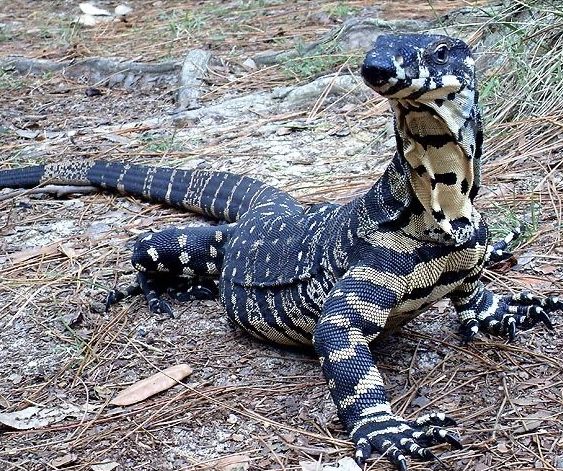
Subsequent research has confirmed the presence of venom-like compounds in the oral secretions of multiple monitor species, including lace monitors, water monitors, and Bengal monitors. While the venom of most monitors appears to cause only localized pain, swelling, and prolonged bleeding in humans - far less dangerous than that of Komodo dragons - the evolutionary implications are profound. Venom, once considered a rare specialization, now appears to be a fundamental feature of monitor biology.
Monitor Lizards in Culture
The English word "monitor" derives from the Latin monere, meaning "to warn." Several etymological explanations have been proposed for why these lizards received this name.
The most widely cited suggests that Nile monitors were observed standing on their hind legs to survey their surroundings in a posture that seemed to "warn" of approaching crocodiles - though this explanation may be apocryphal. Others point to the monitors' habit of hissing loudly when disturbed, interpreted as a warning behavior.
Across their range, monitors occupy significant cultural positions. In many parts of Southeast Asia, water monitors are simultaneously feared and tolerated as urban cohabitants. In Bengal, the monitor (goshaap) features in folk remedies and superstitions. The Malay word biawak and the Indonesian word bayawak refer to monitors and appear frequently in local proverbs and folk tales, often associating the animals with cunning, persistence, or greed.
In Aboriginal Australian cultures, monitors - particularly goannas (a corruption of "iguana," applied to Australian monitors) - are central figures in Dreamtime mythology and remain an important traditional food source in some communities.
Conservation: Threats and Challenges
Despite their adaptability, monitor lizards face serious conservation threats across much of their range. The primary pressures are habitat loss, the international skin trade, and the live pet trade.
The Skin Trade
Monitor lizard skins have been traded internationally for over a century, primarily for use in watchbands, shoes, belts, and handbags. Water monitors and Bengal monitors have been the most heavily exploited species. During the 1980s and 1990s, millions of monitor skins were exported annually from Indonesia and India, making monitors among the most commercially traded reptiles in the world.
While international trade regulations under CITES (the Convention on International Trade in Endangered Species) have imposed quotas and monitoring requirements, enforcement remains inconsistent, and illegal trade persists.
The Pet Trade
The exotic pet trade represents a growing threat, particularly to rare and visually striking species such as the emerald tree monitor, the blue tree monitor (V. macraei), and the crocodile monitor. Wild-caught animals suffer high mortality during capture and transport, and captive breeding programs, while improving, cannot yet meet market demand for many species.
The black market trade in rare monitor species has driven some populations to critically low numbers, particularly on small islands where total population sizes are already limited.
Habitat Loss
Deforestation, agricultural expansion, and urbanization threaten monitor habitat throughout tropical Asia and Africa. Species with restricted ranges - such as the Gray's monitor (V. olivaceus) of the Philippines and the Komodo dragon itself - are particularly vulnerable.
The Komodo dragon was reclassified from Vulnerable to Endangered on the IUCN Red List in 2021, primarily due to projected habitat loss from rising sea levels associated with climate change, which is expected to reduce the species' available habitat by at least 30 percent over the next 45 years.
Conservation Successes
Not all the news is grim. Komodo National Park remains a functioning protected area, and Indonesia has invested significantly in anti-poaching enforcement and community engagement programs. In Australia, monitors benefit from the continent's extensive protected area network, and no Australian monitor species is currently considered threatened at the national level.
Community-based conservation programs in parts of Africa and Southeast Asia have begun integrating monitor lizard protection into broader wildlife management plans, recognizing that monitors serve as important indicators of ecosystem health.
References
[1] Vidal, N., & Hedges, S. B. (2009). "The molecular evolutionary tree of lizards, snakes, and amphisbaenians." Comptes Rendus Biologies, 332(2-3), 129-139.
[2] Fry, B. G., et al. (2009). "A central role for venom in predation by Varanus komodoensis (Komodo Dragon) and the extinct giant Varanus (Megalania) priscus." Proceedings of the National Academy of Sciences, 106(22), 8969-8974.
[3] Leal, M., & Burghardt, G. M. (2007). "Signaling and counting in monitors: Cognitive abilities in a reptile." Animal Cognition, 10, 185-196.
[4] Burghardt, G. M., Ward, B., & Rosscoe, R. (2006). "Problem of reptile play: Environmental enrichment and play behavior in a captive Nile soft-shelled turtle, Trionyx triunguis." Zoo Biology, 15(3), 223-238. (See also Burghardt's broader work on monitor play in The Genesis of Animal Play, 2005.)
[5] Fry, B. G., et al. (2006). "Early evolution of the venom system in lizards and snakes." Nature, 439(7076), 584-588.
Frequently Asked Questions
How many people have been killed by Komodo dragons?
Komodo dragons have killed at least five people since 1974, with the most recent confirmed fatality occurring in 2009 when an 8-year-old boy was attacked on Komodo Island. Non-fatal attacks are more common, with several dozen documented incidents involving local villagers and park rangers.
Despite their fearsome reputation, fatal attacks remain rare partly because the Indonesian government established Komodo National Park in 1980 and maintains ranger patrols and visitor protocols. Tourists visiting Komodo and Rinca islands are required to be accompanied by armed park rangers at all times.
How intelligent are monitor lizards compared to other reptiles?
Monitor lizards demonstrate the highest measured intelligence among all reptiles. Nile monitors have been documented counting up to six in laboratory experiments conducted by John Leal and Gordon Burghardt, distinguishing between different quantities of prey items with consistent accuracy.
Monitors also exhibit behaviors rarely seen in reptiles, including cooperative hunting among multiple individuals, play behavior with objects that serve no survival purpose, and the ability to solve novel problems such as opening latched enclosures. Their cognitive abilities are often compared more favorably to birds and small mammals than to other reptile groups.
How big do water monitors get?
Asian water monitors (Varanus salvator) are the second-longest lizard species in the world after the crocodile monitor, regularly reaching 1.5 to 2 meters in total length and weighing 15 to 25 kg. Exceptional individuals can exceed 2.7 meters and weigh over 50 kg, with unverified historical reports claiming lengths approaching 3 meters.
They are the most widespread of all monitor species, found from Sri Lanka across Southeast Asia to the Philippines and Indonesia. Their adaptability has allowed them to thrive in urban environments, with large populations living in Bangkok’s Lumpini Park and Singapore’s canal systems.