
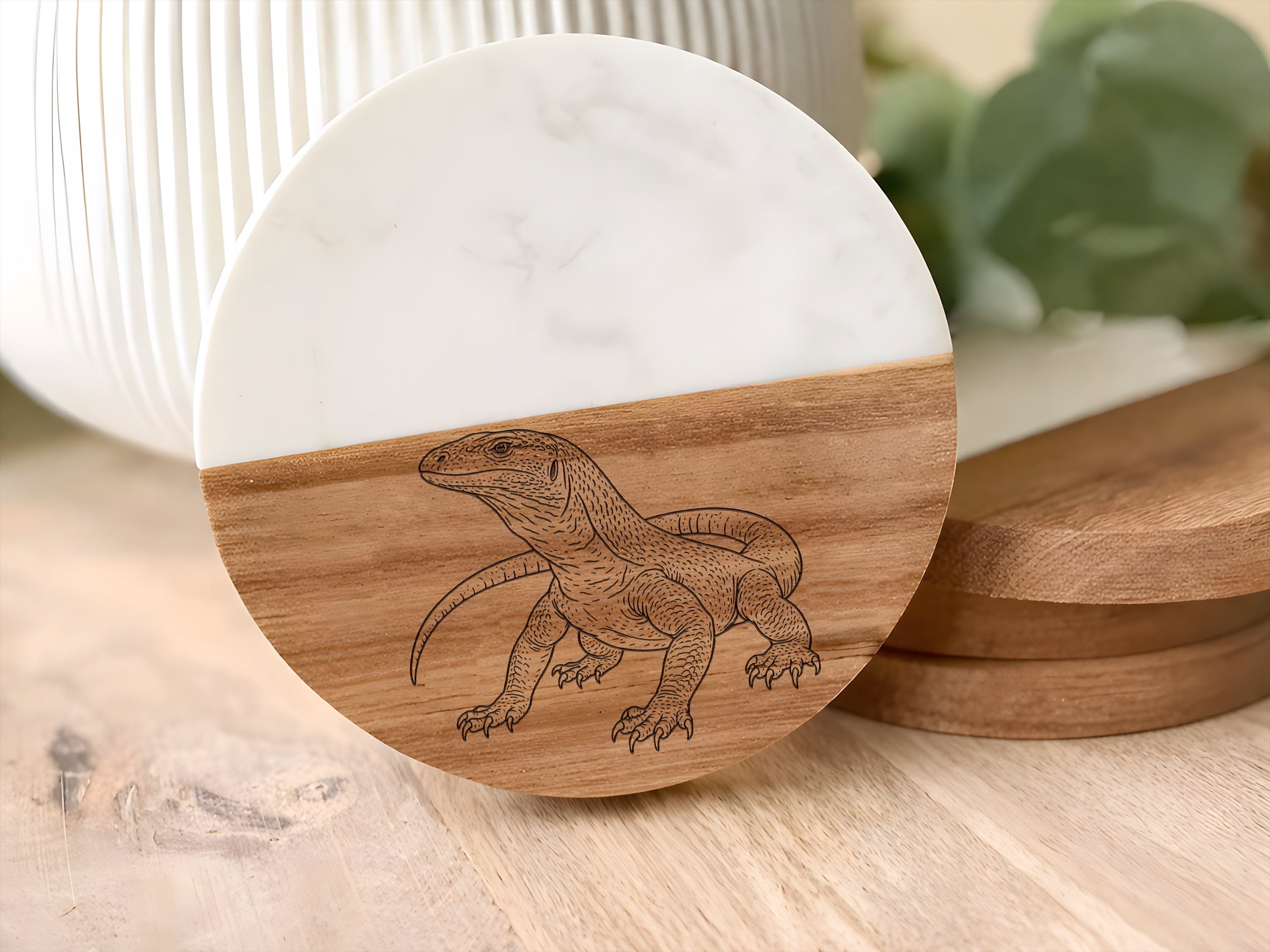
The Nile monitor is the largest lizard in Africa and one of the most widely distributed reptiles on the continent. Reaching lengths of more than two metres, swimming like a crocodile, climbing like a goanna, and fighting upright on its hind legs, Varanus niloticus is a predator that does not fit neatly into any single ecological box. It hunts in water, digs on land, raids nests in trees, and - most famously - places its own eggs inside living termite mounds and walks away.
This guide covers every major aspect of Nile monitor biology and behaviour: size and anatomy, habitat and range, diet and hunting, reproduction, intelligence, defence, the species' invasive populations in Florida and Cape Verde, and the long relationship between Nile monitors and the humans who have lived alongside them from Ancient Egypt to the modern Everglades. Expect specifics: kilograms, clutch sizes, dive times, and verified records.
Etymology and Classification
The scientific name Varanus niloticus was formally assigned by Linnaeus in 1766. The genus name Varanus derives from the Arabic waran or waral, meaning monitor or warning, a reference to the old belief that these lizards warn of approaching crocodiles. The species name niloticus means simply of the Nile, acknowledging the river where European naturalists first documented the species in detail.
Nile monitors sit inside the family Varanidae, which contains around 80 living species of monitor lizards distributed across Africa, Asia, and Australia. Their closest African relatives include the West African Nile monitor Varanus stellatus, which was separated from V. niloticus in 2016 based on genetic and morphological evidence, and the savannah monitor Varanus exanthematicus.
Within the global monitor radiation, Nile monitors belong to the African subclade rather than to the Asian dragons or Australian goannas.
Modern taxonomic work suggests the species complex is more diverse than once thought. Populations in West Africa differ genetically and morphologically from those in East and southern Africa, and the taxonomy continues to be revised as new molecular data accumulates.
Size and Physical Description
Nile monitors are the largest lizards in Africa. A mature adult dwarfs almost every other reptile on the continent apart from crocodilians.
Adult dimensions:
- Total length: 120-220 centimetres (tip of snout to tip of tail)
- Snout-to-vent length: 50-90 centimetres
- Tail length: roughly 1.3-1.5 times the body length
- Weight: typically 5-20 kilograms, exceptional individuals heavier
- Maximum recorded length: over 240 centimetres
Hatchlings:
- Length at hatching: 20-30 centimetres
- Weight at hatching: 30-50 grams
The body is long, muscular, and low-slung. The head is narrow and strongly pointed, with a deeply forked tongue used to sample the air for scent cues in the manner of a snake. The tail is laterally compressed - flattened side to side - which makes it an effective sculling organ for swimming and, in adults, a weapon powerful enough to knock a grown dog off its feet.
Nile monitors are typically olive to blackish brown on top, patterned with bands of yellow or cream spots that form rings around the tail. The belly is pale yellow or whitish, sometimes with dusky markings. Juveniles are more vividly marked than adults, with bright yellow spots and crisper banding that fade gradually with age.
Hatchlings are often mistaken for young Nile crocodiles because of similar size, colour, and riverbank habitat - a confusion that occasionally leads tourists to photograph what they think is a baby crocodile on the bank.
Claws are long, sharp, and curved, suited to climbing, digging, and grasping prey. The teeth are curved and blade-like in the front of the mouth and more crushing in the rear, an arrangement that handles everything from eggshell to fish vertebrae to small-mammal bones.
Habitat and Range
The native range of the Nile monitor covers almost all of sub-Saharan Africa. Populations extend from Senegal and Mauritania in the west to Somalia and Ethiopia in the east, and south through central Africa all the way to the eastern Cape in South Africa. They are absent only from the heart of the Sahara, the deepest parts of the Congo Basin rainforest, and the highest Ethiopian and Rwandan highlands.
Nile monitors are strongly water-associated. Preferred habitats include:
- Large river systems and their tributaries
- Lake shores and lagoons
- Swamps, marshes, and floodplains
- Mangrove forests and estuaries
- Coastal plains and beaches
- Irrigation canals, reservoirs, and fishponds
They tolerate brackish and even saline water better than most large reptiles, which is one reason they have been able to colonise islands and coastal ecosystems beyond their native range. They are also unusually tolerant of human-modified habitat, thriving around rice paddies, drainage canals, and suburban ponds as long as a water source and basking substrate are present.
Two invasive populations exist outside Africa:
- Cape Verde islands. Nile monitors have been present here for centuries, likely introduced by humans - possibly Portuguese sailors - during the historical trade era. The population is established and self-sustaining.
- Southern Florida, USA. A breeding population established around Cape Coral in the 1990s after pet-trade releases. It has since spread along canals and waterways and is regarded as an ecological threat to native wildlife.
Diet and Hunting
Nile monitors are opportunistic hypercarnivores. Their diet is broader than that of most reptile specialists and shifts substantially with body size, habitat, and season.
Typical prey items include:
- Fish of many species, from tilapia to catfish
- Frogs, toads, tadpoles
- Freshwater crabs and shrimp
- Insects and arachnids (especially in juveniles)
- Snakes, including venomous species
- Turtle eggs and hatchlings
- Bird eggs and nestlings
- Small mammals up to the size of hares
- Crocodile eggs - a signature food source
- Carrion and fisheries bycatch
Hunting techniques:
- Aquatic ambush. The monitor swims slowly along the bottom or hangs in submerged vegetation, then lunges at fish or ducklings from below. Dives of several minutes allow long stalks.
- Shoreline foraging. The lizard patrols banks, using its forked tongue to scent-track amphibians, nests, and carrion.
- Nest raiding. Nile monitors are notorious nest raiders. They target the nests of crocodiles, turtles, ground-nesting birds, and colonial waterbirds. Crocodile egg raids are particularly famous - the monitor digs into the clutch while the mother is distracted or absent.
- Scavenging. Large carrion is readily exploited. Nile monitors are often seen at fish-drying racks and behind slaughterhouses in rural Africa.
- Cooperative deception. Observers have documented paired raids on crocodile nests, with one lizard drawing the mother's attention while another steals eggs. Whether this represents true cooperation or opportunistic kleptoparasitism is still debated.
A medium-sized adult may eat the equivalent of ten to fifteen per cent of its body weight in a single meal, then fast for a week or more. In captivity they are prone to obesity precisely because they treat every feeding as if it could be their last for days.
Swimming, Diving, and Climbing
Nile monitors are among the most versatile locomotors in the reptile world. They swim with their legs folded against the body and propulsion generated by side-to-side sculling of the laterally compressed tail - essentially the same technique used by crocodiles. In water they are faster and more manoeuvrable than any mammal of similar size.
Typical locomotion data:
| Metric | Value |
|---|---|
| Land running speed | Up to 30 km/h |
| Typical swimming speed | Relaxed cruise, fast burst strikes |
| Dive time | Several minutes submerged |
| Climbing ability | Excellent; juveniles fully arboreal |
| Home range | 1-25 hectares |
Juveniles spend much of their time in trees and bushes, where they hunt insects, tree frogs, and bird nests and escape terrestrial predators. Adults are less arboreal but still climb readily - there are many accounts of Nile monitors raiding village chicken coops by climbing walls and roofs.
Their tolerance for salt water, combined with strong swimming, means that Nile monitors can disperse between islands, up and down coastlines, and across estuaries. This ecological flexibility is part of why the species has been so successful in establishing invasive populations.
Reproduction and the Termite Mound
Nile monitor reproduction is one of the strangest in the entire vertebrate world.
Annual cycle:
- Courtship and mating: late wet season, varying by region
- Egg laying: mid wet season, when termite mounds are softest
- Incubation: 6-9 months, inside the termite mound
- Emergence: timed to the following wet season
After mating, a gravid female searches for a suitable nest site. In most of the species' range the chosen site is an active termite mound - typically one of the tall, cement-hard mounds built by Macrotermes termites. These mounds can stand two metres or more above ground, penetrate a similar depth below, and maintain near-constant temperature and humidity year-round thanks to the termites' ventilation architecture.
The female excavates a hole into the side of the mound using her claws, sometimes taking hours of work to breach the wall. Inside she deposits a clutch of 20 to 60 leathery-shelled eggs, then departs. The termites respond to the breach by doing what termites always do: they seal it. Within days the hole is closed with fresh mud, saliva, and masticated wood fibre. The eggs now sit inside a biologically maintained incubator, protected from predators, desiccation, and temperature swings.
Incubation lasts between six and nine months - one of the longest incubation periods of any lizard - and is timed so that hatchlings emerge during the next wet season, when water, invertebrate prey, and soft ground make dispersal feasible. When hatchlings are ready, they face a final obstacle: the mound wall. Some hatchlings dig themselves out. Others wait until heavy rains soften the mud.
In some populations females return to the mound around hatching time and help excavate, though the reliability of this behaviour varies.
The strategy is evolutionarily brilliant. The termite mound provides climate control, physical protection, and even some chemical defence - the termite-built matrix is unappealing to many mammalian egg predators. The tradeoff is the long development time and the risk of hatchlings being unable to escape.
Intelligence and Behaviour
Nile monitors are among the most intelligent lizards ever studied. Work on the Varanidae generally - including Nile monitors, Komodo dragons, lace monitors, and rock monitors - has shown cognitive abilities that rival or exceed those of most birds for some tasks.
Documented cognitive and behavioural skills include:
- Numerical discrimination up to approximately six items in laboratory tests
- Individual recognition of human keepers by face and voice in captive-care studies
- Rapid learning of novel latches, doors, and container-based puzzles
- Use of scent trails and tongue-flicking patterns consistent with mental mapping of territory
- Behavioural flexibility when prey responses change
- Apparent cooperation, or at least tolerated co-raiding, during crocodile nest predation
- Play-like behaviour in captive juveniles, including manipulation of objects with no clear feeding function
Wild behaviour includes strong site fidelity, established basking spots, and defended burrows. Adults dig extensive burrow systems that they may use for years and repair after flooding. These burrows also serve as refuges for other animals - monitor burrows are part of the ecosystem architecture of many African floodplains.
Defence and Fighting
When cornered, a Nile monitor is a formidable opponent. Its defensive toolkit is one of the most varied among lizards.
Primary defences:
- Tail whip. The laterally compressed tail is driven by powerful caudal muscles and can deliver a blow hard enough to break a small dog's leg, raise welts on human skin, and keep predators at range. Large adults can generate strikes that snap branches.
- Bite. The jaws are fast and strong. Teeth are curved and slicing. Saliva contains anticoagulant-like compounds that cause bite wounds to bleed heavily and resist clotting, which means that even a glancing bite can produce serious injury. Nile monitors are not classically venomous but share the primitive venom-system ancestry now recognised across varanids.
- Claws. Long and sharp. Used for climbing, digging, and - when grappling - for raking opponents' flanks.
- Threat display. Hissing, gaping, inflation of the throat, and lateral body flattening to appear larger.
- Escape into water. The preferred response to any vertebrate threat. A Nile monitor can vanish into turbid water within seconds and surface many metres away.
During male-male fights, Nile monitors perform one of the most theatrical displays in the reptile world. Two opponents rear up on their hind legs into a fully bipedal wrestling posture, using the tail as a tripod, and grapple chest-to-chest with their front legs. Fights can last more than an hour and include biting, clawing, and attempts to topple the opponent backwards. Similar upright combat occurs in several other large monitor species but is particularly well-documented in V. niloticus.
Invasive Populations
Two established invasive populations of Nile monitors exist beyond the native African range.
Florida, USA
In the 1980s and 1990s the United States imported Nile monitors in large numbers for the pet trade. Many were released by owners who underestimated the species' adult size, appetite, and temperament. By the late 1990s a breeding population was established around Cape Coral on the Gulf Coast of Florida, and the monitors have since spread into surrounding canal systems and conservation lands.
Ecological impacts include:
- Predation on burrowing owls (a state-designated Threatened species)
- Predation on gopher tortoise eggs and hatchlings
- Raiding of American crocodile nests in the southern range
- Competition with native reptiles for shelter and prey
- Colonisation of storm-drain and canal systems that connect large areas of urban and wild habitat
Florida classifies Nile monitors as a prohibited nonnative species. Agencies run trapping, euthanasia, public reporting, and control research programmes. Complete eradication is generally considered impossible given the extent of the canal network, but local suppression can benefit vulnerable native species.
Cape Verde
The Cape Verde islands, off the coast of West Africa, host a population of Nile monitors with an uncertain but clearly historical origin. Possible introduction routes include deliberate release by Portuguese sailors in the sixteenth century, incidental arrival as cargo stowaways, or natural rafting. The population is established, though less ecologically disruptive than the Florida one because of a different island fauna.
Conservation Status
The IUCN Red List currently classifies the Nile monitor as Least Concern. The species is abundant, ecologically flexible, and occupies a vast native range across sub-Saharan Africa. That said, it faces several pressures that vary by region.
Threats across the native range:
- Skin trade. Nile monitor hides are sold as exotic leather. Millions of skins have been exported over the past century, mostly for small leather goods. Trade is regulated under CITES Appendix II and national laws, but illegal harvest continues.
- Habitat drainage. Loss of wetlands, river modification, and dam construction reduce prime habitat.
- Persecution. Farmers and fishers often kill Nile monitors on sight due to perceived threats to livestock, poultry, and fish stocks. In many communities monitors are also eaten as bushmeat.
- Pollution. Aquatic pollution from pesticides, industrial effluent, and plastic accumulation affects prey availability and lizard health.
- Roadkill. Major roads through wetland habitat cause significant local mortality.
Despite these pressures the species remains widespread and common. Its reproductive output - large clutches, long-lived adults, flexible diet - supports persistence even under moderate harvest.
Nile Monitors and Humans
The Nile monitor has shared landscapes with human civilisations for more than five thousand years. In Ancient Egypt the lizards were a familiar sight on the Nile and appear in tomb paintings and hunting scenes. Some mummified specimens have been recovered from the animal cemeteries of places like Saqqara, where Nile monitors were preserved alongside ibises, crocodiles, and cats.
Egyptian symbolism associated them variously with Set, with water deities, and with the general category of dangerous reptiles of the river.
In modern Africa the Nile monitor occupies a mixed niche in human culture. It is hunted for meat and skin, persecuted as a poultry raider, feared as a bite hazard, tolerated as a rat and snake control, and - in a growing number of ecotourism destinations - appreciated as a charismatic river animal. Some communities keep immature monitors as semi-tame home guardians.
In the global pet trade Nile monitors have had a troubled history. Their large adult size, rapid growth, defensive aggression, and specialised care requirements make them unsuitable for most casual keepers. Releases of unwanted pets are the direct cause of the Florida invasion. Responsible reptile-keeping organisations now discourage first-time keepers from acquiring any large monitor, and several jurisdictions restrict or ban ownership.
Related Reading
References
Relevant peer-reviewed and governmental sources consulted for this entry include IUCN SSC Monitor Lizard Specialist Group assessments, the Florida Fish and Wildlife Conservation Commission nonnative species reports, CITES Appendix II trade summaries for Varanidae, and published research in Herpetological Monographs, Journal of Herpetology, Copeia, and African Journal of Herpetology.
Specific behavioural and cognitive findings reflect field and captive studies on Varanus niloticus and closely related varanid species through the early 2020s.
Frequently Asked Questions
How big do Nile monitors get?
Adult Nile monitors (Varanus niloticus) typically reach 120 to 220 centimetres from snout to tail tip and weigh 5 to 20 kilograms. Exceptional individuals have been recorded at over 240 centimetres. This makes the Nile monitor the largest lizard in Africa and the second-largest lizard in the Old World after the Komodo dragon. The tail is roughly one and a half times the length of the body and is laterally flattened for swimming.
Hatchlings emerge from the egg at about 20 to 30 centimetres long and grow rapidly in their first two years, fuelled by an almost constant feeding schedule.
What do Nile monitors eat?
Nile monitors are opportunistic carnivores. Their diet shifts with age and habitat but reliably includes fish, frogs, toads, freshwater crabs, insects, bird eggs, nestlings, small mammals, snakes, turtles, carrion, and - notoriously - the eggs of Nile crocodiles. They are one of the few animals routinely bold enough to raid active crocodile nests. In coastal and mangrove zones they dig up sea turtle eggs.
On invasive ranges in Florida they prey heavily on burrowing owl chicks, gopher tortoise eggs, and ground-nesting birds. Adults swallow smaller prey whole and tear apart anything larger using sharp curved teeth and powerful neck muscles.
Where do Nile monitors live?
The native range of the Nile monitor covers almost all of sub-Saharan Africa, from Senegal east to Somalia and south to the Cape. They are strongly associated with water - rivers, lakes, swamps, reservoirs, mangroves, and coastal plains. They are absent only from true deserts and the deepest rainforest interiors.
Outside Africa, two invasive populations are established: one on the Cape Verde islands, possibly introduced centuries ago, and one in southern Florida, centred on Cape Coral, which dates to pet-trade releases in the 1990s. They tolerate brackish water, saltwater estuaries, and human-modified canals better than most large reptiles.
Are Nile monitors dangerous to humans?
Nile monitors can injure humans but rarely kill them. They defend themselves with a powerful tail whip, strong claws, and a bite that drives deeply and bleeds heavily thanks to anticoagulant compounds in their saliva. Large adults weighing 10 kilograms or more can seriously wound an adult human, and bites routinely become infected if not cleaned properly. In the wild, Nile monitors usually flee into water when approached.
Most injuries to humans involve handling captive animals, invasive-population control in Florida, or accidental encounters when a monitor feels cornered near its burrow or nest.
How do Nile monitors reproduce?
Nile monitor reproduction is one of the strangest in the reptile world. After mating in the wet season, a gravid female locates an active termite mound - usually the tall hardened mounds built by Macrotermes termites. She digs into the side, lays a clutch of 20 to 60 eggs inside the mound, and leaves.
The termites, responding to the breach, seal the hole with fresh mud and saliva, and the eggs are trapped inside a climate-controlled chamber with steady humidity and temperature. Incubation lasts 6 to 9 months. When hatchlings emerge, they must dig themselves out or wait for rain-softened mound walls. Females sometimes return to assist, though this is not guaranteed.
How intelligent are Nile monitors?
Nile monitors are among the most intelligent reptiles. Laboratory and zoo studies have documented individual recognition of human keepers, numerical discrimination up to about six items, problem-solving with novel latches and puzzles, and rapid associative learning.
They modify hunting strategies based on prey response and have been observed coordinating with conspecifics to raid crocodile nests, with one animal drawing the mother’s attention while another seizes eggs. They are also curious, exploratory, and capable of learning from single-trial experiences - qualities more often associated with birds and mammals than with lizards.
Why are Nile monitors invasive in Florida?
Nile monitors were imported into the United States in large numbers during the 1980s and 1990s as pets. Many owners underestimated their adult size, appetite, and aggression and released unwanted animals into canals and wetlands in south Florida. A breeding population became established around Cape Coral by the late 1990s and has since spread.
The Florida population threatens native species including burrowing owls, gopher tortoises, and American crocodile nests. State and federal wildlife agencies classify the species as a prohibited nonnative and run active trapping, euthanasia, and public reporting programmes to contain it.
How long do Nile monitors live?
Wild Nile monitors live 15 to 20 years under good conditions, though predation, disease, and human persecution reduce average lifespan in most populations. In well-managed captive care they commonly reach 20 years and a few documented individuals have exceeded 25. Juvenile mortality is extremely high - most hatchlings are eaten by snakes, raptors, crocodiles, larger monitors, and carnivorous fish during their first year.
Lizards that survive to sexual maturity at around 3 to 4 years have a much better chance of reaching old age, and large adults have few natural predators other than crocodiles and big cats.