
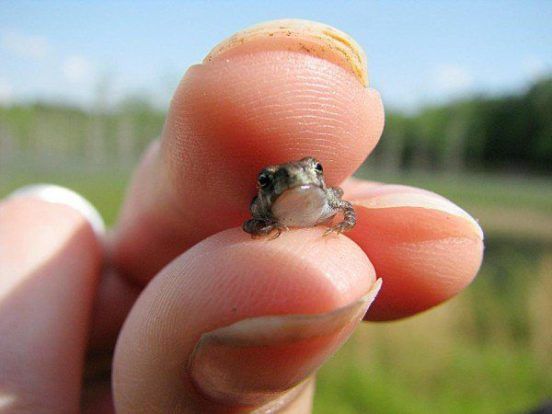
Quick Answer: Paedophryne amauensis is the smallest known frog and currently holds the record as the world’s smallest vertebrate. Discovered in Papua New Guinea, adult individuals average just 7.7 millimeters in length. This tiny amphibian’s unique adaptations allow it to thrive in leaf litter environments, and its discovery has provided significant insights into vertebrate miniaturization and biodiversity in tropical rainforests.
Paedophryne amauensis astonished the scientific world when it was formally described, instantly becoming a symbol of biological extremes. Found in the dense, moist leaf litter of Papua New Guinea’s forests, this minuscule frog challenges our understanding of vertebrate size limitations.
Its discovery not only expanded the known range of amphibian body sizes but also highlighted the rich, often overlooked biodiversity of tropical microhabitats. The frog’s minute size means it is easily missed by casual observers, yet it plays a vital ecological role within its ecosystem.
The frog’s size is so extraordinary that it rivals some of the smallest invertebrates, making it a subject of fascination for evolutionary biologists and herpetologists alike. Its discovery was the result of dedicated fieldwork using acoustic surveys, as Paedophryne amauensis produces a high-pitched call that is difficult for humans to detect.
This breakthrough underscored the importance of specialized research techniques in uncovering cryptic species. The frog’s existence raises questions about the physiological and ecological constraints that govern vertebrate miniaturization, and it continues to inspire further exploration of the world’s most biodiverse regions.
Discovery and Taxonomy of Paedophryne amauensis
The story of Paedophryne amauensis begins in the lush rainforests of Papua New Guinea, where researchers conducting biodiversity surveys encountered an unfamiliar, high-pitched call emanating from the leaf litter. After meticulous searching and careful extraction, they uncovered a frog so small that it could comfortably sit atop a dime. This species was formally described in 2012, instantly capturing global attention.
Paedophryne amauensis is a member of the family Microhylidae, a diverse group of frogs known for their small size and adaptation to microhabitats. The genus Paedophryne itself is remarkable for containing several of the world’s tiniest frog species, but amauensis stands out as the smallest. The name “amauensis” refers to the village of Amau, near the location where the species was first found.
Taxonomically, this frog is distinguished by its extremely reduced body size, specific skeletal features, and unique vocalizations.
The process of identifying and classifying Paedophryne amauensis involved a combination of morphological analysis and genetic sequencing. Researchers compared its anatomy to related species, noting differences in skull structure, limb proportions, and reproductive organs. Genetic data confirmed its distinctiveness, placing it firmly within the Paedophryne genus but as a unique species.
The discovery was published in a peer-reviewed journal, and the species was quickly recognized by the global scientific community. For more on amphibian taxonomy, see the Britannica entry on frogs.
Key Insight: The discovery of Paedophryne amauensis highlights the importance of targeted fieldwork and the use of acoustic monitoring in uncovering cryptic species within biodiverse regions.
Physical Characteristics and Adaptations
The defining feature of Paedophryne amauensis is its extremely small adult body size, which averages just 7.7 millimeters in length. This makes it not only the smallest frog but also the smallest known vertebrate, surpassing previous records held by tiny fish species. The frog’s body is slender and streamlined, with relatively short limbs and a rounded snout. Its coloration is typically a mottled brown, providing excellent camouflage among decaying leaves and forest debris.
Miniaturization in vertebrates brings unique anatomical challenges. Paedophryne amauensis has adapted by reducing the number of bones in its skull and limbs, simplifying its internal organs, and streamlining its musculature. These adaptations allow it to function efficiently at a scale where many vertebrate structures become impractical.
For instance, the frog’s tiny size limits the development of complex lung structures, so it relies heavily on cutaneous respiration (breathing through the skin), a trait common among small amphibians.
The frog’s reproductive strategy is also shaped by its size. Unlike many frogs that lay eggs in water, Paedophryne amauensis lays its eggs in moist leaf litter. The eggs bypass the tadpole stage entirely, developing directly into miniature versions of the adult frog. This adaptation, known as direct development, is crucial for survival in terrestrial microhabitats where standing water is scarce. For more on amphibian reproductive strategies, see Wikipedia’s article on frog reproduction.
A table summarizing key physical traits:
| Trait | Description | Significance |
|---|---|---|
| Adult size | 7.7 mm (average) | Smallest vertebrate |
| Coloration | Mottled brown | Camouflage in leaf litter |
| Limb structure | Short, reduced bones | Efficient movement, miniaturized |
| Respiratory adaptation | Cutaneous respiration | Compensates for small lungs |
| Developmental strategy | Direct development | No aquatic larval stage |
Takeaway: The anatomical and physiological adaptations of Paedophryne amauensis enable it to thrive at a scale where most vertebrates cannot survive.
Ecological Role and Habitat
Paedophryne amauensis occupies a very specific ecological niche within the tropical rainforests of Papua New Guinea. It is found exclusively in moist leaf litter on the forest floor, where its tiny size and cryptic coloration make it nearly invisible to predators and researchers alike. The frog’s habitat is characterized by high humidity, abundant decaying plant matter, and a stable microclimate, conditions essential for its survival.
Ecological niche refers to the role a species plays within its environment, including its interactions with other organisms and its use of resources. Paedophryne amauensis is an insectivore, feeding primarily on small invertebrates such as mites, springtails, and tiny ants. Its presence helps regulate populations of these microarthropods, contributing to the balance of the leaf litter ecosystem.
The frog itself serves as prey for larger invertebrates and small vertebrates, forming an integral part of the forest food web.
The frog’s reliance on leaf litter makes it highly sensitive to environmental changes, particularly those that affect moisture levels and habitat structure. Deforestation, climate change, and land conversion pose significant threats to its continued survival.
Conservation efforts in Papua New Guinea’s rainforests are therefore critical for protecting not only Paedophryne amauensis but also the myriad other species that share its habitat. For more on rainforest ecology, visit the Rainforest Alliance.
Key Point: The survival of Paedophryne amauensis is closely tied to the health of its rainforest habitat, making it an important indicator species for ecosystem integrity.
Evolutionary Significance and Miniaturization
The evolutionary journey of Paedophryne amauensis provides a window into the limits of vertebrate miniaturization. Miniaturization is a process where evolutionary pressures favor smaller body sizes, often to exploit unique ecological niches or avoid competition. In the case of Paedophryne amauensis, miniaturization has enabled the species to occupy a microhabitat largely inaccessible to larger organisms.
Miniaturization in amphibians is associated with several evolutionary trade-offs. As body size decreases, certain anatomical structures must be simplified or lost altogether. For example, the number of digits on the limbs may be reduced, and the complexity of the skull is often diminished. These changes can limit some functions but also allow for greater specialization.
In Paedophryne amauensis, miniaturization has resulted in direct development, a reproductive strategy that eliminates the need for an aquatic larval stage and reduces vulnerability to aquatic predators.
Key Takeaway: Miniaturization in Paedophryne amauensis demonstrates how evolutionary pressures can drive extreme adaptations, resulting in the loss or simplification of structures that are otherwise common in larger vertebrates.
Comparative studies with other tiny vertebrates, such as the fish species Paedocypris progenetica, reveal convergent trends in anatomical reduction and ecological specialization. These parallels suggest that similar selective pressures can produce analogous outcomes across distant evolutionary lineages. For further reading on evolutionary miniaturization, see Britannica’s entry on vertebrate evolution.
Methods of Discovery: Acoustic Surveys and Field Techniques
Uncovering a species as small and elusive as Paedophryne amauensis required innovative research methods. Traditional visual surveys are often ineffective for detecting such cryptic organisms, especially in dense rainforest environments. Instead, researchers relied on acoustic surveys, using sensitive microphones to detect the frog’s distinctive, high-frequency call.
The call of Paedophryne amauensis is a series of rapid, insect-like chirps that are barely audible to the human ear. By triangulating the source of these calls, scientists were able to pinpoint the frog’s location within the leaf litter. Once a call was located, careful sifting and examination of the ground revealed the tiny amphibian. This process required patience, precision, and a keen understanding of the frog’s natural history.
Acoustic monitoring has become an invaluable tool in modern herpetology, allowing researchers to detect and study species that would otherwise remain hidden. This approach has led to the discovery of several other microhylid frogs in Papua New Guinea and beyond. For more on acoustic survey techniques, see the Encyclopedia of Life’s entry on frog calls.
Fieldwork Insight: The use of acoustic surveys in biodiversity research has revolutionized the discovery of cryptic and miniature species in challenging environments.
Paedophryne amauensis in the Context of Vertebrate Size Records
Paedophryne amauensis holds a unique place in the record books as the smallest known vertebrate. Prior to its discovery, the title was held by species such as Paedocypris progenetica, a tiny fish from Southeast Asia. The frog’s diminutive size has prompted comparisons with other miniature vertebrates across the animal kingdom.
The following table compares Paedophryne amauensis with other contenders for the smallest vertebrate title:
| Species | Type | Average Adult Size | Location |
|---|---|---|---|
| Paedophryne amauensis | Frog | 7.7 mm | Papua New Guinea |
| Paedocypris progenetica | Fish | 7.9 mm | Southeast Asia |
| Stout Floater (Schindleria) | Fish | 8.4 mm | Pacific Ocean |
| Brachycephalus didactylus | Frog | 9.6 mm | Brazil |
Comparison Note: While several vertebrates approach similar sizes, Paedophryne amauensis currently holds the record for the smallest adult vertebrate by average length.
The frog’s record-setting status has made it a focal point for discussions about the physiological and ecological constraints of vertebrate life. Its discovery has spurred renewed interest in the study of body size evolution, particularly in isolated and biodiverse regions like Papua New Guinea. For more on vertebrate diversity, see Wikipedia’s article on vertebrates.
Conservation Status and Threats
Paedophryne amauensis, like many rainforest-dwelling amphibians, faces a range of threats linked to habitat loss and environmental change. The frog’s reliance on undisturbed leaf litter makes it particularly vulnerable to deforestation, logging, and land conversion for agriculture. While its conservation status has not been formally assessed by the IUCN, the species is likely at risk due to its restricted range and specialized habitat requirements.
Amphibians globally are experiencing declines at an unprecedented rate, driven by factors such as habitat destruction, climate change, pollution, and disease. The loss of rainforest habitat in Papua New Guinea poses a direct threat to Paedophryne amauensis and countless other endemic species. Conservation efforts focused on preserving intact forest ecosystems are essential for safeguarding this unique frog and maintaining overall biodiversity.
Conservation Insight: Protecting the habitat of Paedophryne amauensis serves as a broader strategy for conserving the rich biodiversity of Papua New Guinea’s rainforests.
The Broader Impact: Scientific and Educational Value
The discovery of Paedophryne amauensis has had a profound impact on both scientific research and public education. For biologists, the frog represents a living example of extreme miniaturization and adaptation, providing a model for studying evolutionary processes at the limits of vertebrate biology. Its existence challenges assumptions about the minimum viable size for vertebrates and prompts new questions about physiological constraints.
From an educational perspective, Paedophryne amauensis serves as an engaging entry point for discussions about biodiversity, conservation, and the importance of tropical rainforests. The frog’s story is often used in classrooms and science outreach programs to illustrate the wonders of the natural world and the value of scientific exploration. For more on the educational value of biodiversity, see Britannica’s biodiversity article.
For those interested in exploring the diversity of life and the methods used to study it, you can to assess your knowledge of biological concepts, or try a for a rapid overview. Practice your skills with our to deepen your understanding of evolutionary biology and ecology.
Looking Ahead: The Future of Microfauna Research
The discovery of Paedophryne amauensis has opened new avenues for research into microfauna, organisms that are often overlooked due to their small size and cryptic habits. Advances in field techniques, such as acoustic monitoring and environmental DNA sampling, are enabling scientists to detect and study species that were previously inaccessible. These methods are likely to yield further discoveries in the coming years, particularly in biodiverse regions like Papua New Guinea.
Research Outlook: Continued exploration of tropical microhabitats promises to reveal new species and deepen our understanding of evolutionary adaptation at the smallest scales.
The study of microfauna has important implications for conservation, as these organisms often play outsized roles in ecosystem functioning despite their small size. Protecting their habitats ensures the stability of complex ecological networks and preserves the full spectrum of biodiversity. For more on the importance of microfauna, see Wikipedia’s article on microfauna.
Appreciating the Wonders of the Smallest Vertebrate
Paedophryne amauensis stands as a testament to the remarkable diversity and adaptability of life on Earth. Its discovery has reshaped our understanding of vertebrate biology, evolutionary limits, and the intricate web of interactions within tropical ecosystems. The frog’s existence underscores the importance of preserving even the smallest and most inconspicuous forms of life, as they contribute in essential ways to the health and resilience of their environments.
Exploring the world of Paedophryne amauensis invites us to look closer at the hidden corners of nature, where extraordinary discoveries await those with curiosity and patience. Whether you are a student, researcher, or nature enthusiast, the story of the world’s smallest frog offers inspiration and a deeper appreciation for the complexity of life. To further expand your knowledge, consider engaging with our, or on related topics in biology and ecology.
Frequently Asked Questions
How does Paedophryne amauensis reproduce without a tadpole stage?
Paedophryne amauensis uses direct development, meaning its eggs hatch directly into miniature frogs, skipping the aquatic tadpole stage entirely.
Why is Paedophryne amauensis considered an indicator species?
Paedophryne amauensis is highly sensitive to habitat changes, so its presence signals a healthy, undisturbed rainforest ecosystem.
What makes Paedophryne amauensis different from other small frogs?
It is the smallest known vertebrate, with unique adaptations like reduced bones and direct development, setting it apart from other tiny frog species.
Can Paedophryne amauensis be found outside Papua New Guinea?
No, Paedophryne amauensis is endemic to Papua New Guinea and has not been found in other regions.
How was Paedophryne amauensis discovered?
Researchers detected its high-pitched call using acoustic surveys, then located and identified the tiny frog within the leaf litter.
What threats does Paedophryne amauensis face?
Habitat loss from deforestation and land conversion are the main threats to Paedophryne amauensis, given its reliance on intact rainforest leaf litter.