
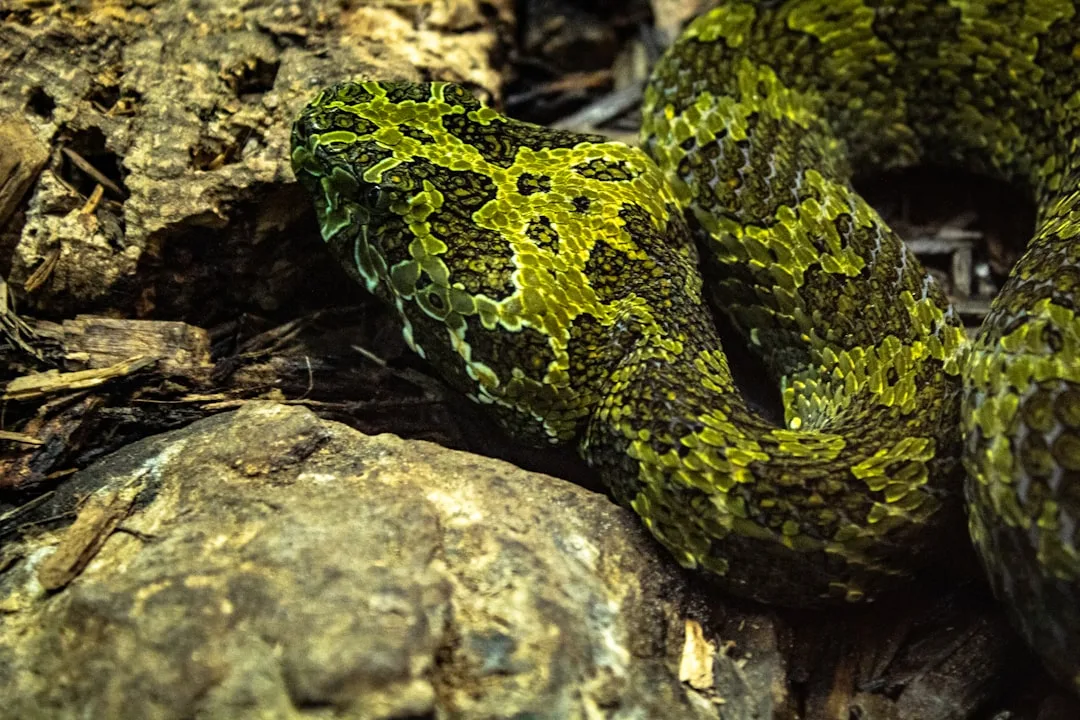
What is the difference between venom and poison?
For venomous reptiles the fundamental distinction is the method of delivery. Venom is actively injected into another organism through a specialized structure such as fangs, stingers, or spines - it must enter the bloodstream or tissues to take effect. Poison, by contrast, is passively delivered through ingestion, inhalation, or skin contact.
Few biological weapons are as elegant, as precisely engineered, or as terrifyingly effective as reptile venom.
A cocktail of proteins, peptides, and enzymes refined over tens of millions of years, venom represents one of evolution's most remarkable innovations - a chemical arsenal that can paralyze a nervous system in seconds, dissolve tissue from the inside out, or prevent blood from clotting until a victim bleeds internally to death.
Yet venom is also one of evolution's greatest gifts to modern medicine, yielding drugs that treat heart disease, diabetes, and chronic pain. Understanding how venom works, why it evolved, and which reptiles wield it most effectively is essential to appreciating both the danger and the promise these animals represent.
Venom vs. Poison: A Critical Distinction
The terms "venomous" and "poisonous" are used interchangeably in everyday language, but in biology they describe fundamentally different systems. The distinction is not about the toxin itself but about how it is delivered.
Venom is actively injected into another organism through a specialized anatomical structure - fangs, stingers, spines, or harpoon-like nematocysts. It must enter the bloodstream or underlying tissues to exert its effects. A venomous animal delivers its toxin by biting or stinging.
Poison is passively transferred. A poisonous organism harms you when you ingest it, inhale its secretions, or absorb its toxins through your skin. A poisonous animal does not need to do anything active - you harm yourself by interacting with it.
The practical test is simple: if it bites you and you get sick, it is venomous. If you bite it and you get sick, it is poisonous. A king cobra is venomous. A poison dart frog is poisonous. A handful of rare species, such as certain Asian keelback snakes (Rhabdophis spp.), are both - they inject venom through fangs and also sequester toxins from the toads they eat, making their neck glands poisonous to predators.
One counterintuitive consequence of this distinction: most snake venoms can, in theory, be swallowed without harm, provided there are no open wounds in the mouth or gastrointestinal tract. The complex proteins that make venom lethal when injected are simply broken down by digestive enzymes and stomach acid before they can reach the bloodstream. This is not a recommended experiment, but it illustrates the fundamental principle that delivery method defines the danger.
How Venom Evolved: From Saliva to Sophisticated Arsenal
Venom did not appear suddenly. It evolved incrementally, through a process that transformed ordinary physiological secretions into extraordinarily complex biochemical weapons.
The Salivary Origin
The prevailing scientific consensus holds that reptile venom originated from modifications of salivary glands. All vertebrate saliva contains proteins with mild biological activity - enzymes that begin digesting food, antimicrobial compounds that prevent infection, and proteins that help lubricate prey for swallowing.
In ancestral reptiles, natural selection gradually favored individuals whose salivary secretions had more pronounced biological effects on prey. A lizard whose saliva caused slightly more tissue damage at the bite site would subdue prey fractionally faster, gaining a survival and reproductive advantage.
Over millions of years, these mildly bioactive salivary proteins were duplicated, mutated, and refined into the potent toxins found in modern venom glands. The gene duplication events were critical - when a gene is duplicated, one copy can continue performing its original function while the other is free to accumulate mutations.
If those mutations produce a protein that is more toxic, more fast-acting, or more effective against a particular prey type, natural selection preserves and amplifies the change.
Convergent Evolution
One of the most striking features of venom evolution is its convergent nature. Venom has evolved independently in multiple reptile lineages - at least 20 separate times across the animal kingdom and multiple times within reptiles alone. Snakes, lizards, and even some monitor species have arrived at remarkably similar biochemical solutions through entirely separate evolutionary paths.
The "Toxicofera" hypothesis, proposed by Bryan Grieg Fry and colleagues in 2006, suggested that venom originated once in the common ancestor of snakes, anguimorph lizards (monitors, Gila monsters), and iguanians, and was subsequently lost or reduced in many lineages.
While this hypothesis remains debated, the underlying genetic evidence is compelling: many supposedly "non-venomous" lizards and snakes possess genes encoding toxin-like proteins, suggesting a broader ancestral venom system than previously recognized.
"Venom is not something that appeared out of nowhere. It is ordinary physiology pushed to extraordinary extremes by natural selection. Every component of venom can be traced back to a mundane body protein that was co-opted, duplicated, and weaponized over evolutionary time." - Bryan Grieg Fry, Professor of Toxicology, University of Queensland, interview in Nature (2006)
Venom Gene Recruitment
The molecular mechanism behind venom evolution involves a process called gene recruitment or toxin recruitment. Genes that originally encoded harmless body proteins - phospholipases involved in cell membrane maintenance, serine proteases used in digestion, metalloproteinases involved in tissue remodeling - were duplicated and expressed in venom glands, where they underwent accelerated evolution.
The rate of molecular evolution in venom genes is among the highest documented for any protein-coding genes in vertebrates, reflecting the intense selective pressure of the predator-prey arms race.
This process explains why venom compositions vary so dramatically between species and even between populations of the same species. Venom evolves in direct response to local prey availability. A population feeding primarily on mammals develops different toxin profiles than a population feeding on lizards or frogs. This rapid, prey-driven evolution makes venom one of the most dynamic biological systems known.
Types of Venom: A Biochemical Classification
Reptile venoms are complex mixtures containing dozens to hundreds of individual components, but they can be broadly classified by their primary mode of action. Most venoms contain elements of multiple categories, but one type typically dominates.
Comparison of Major Venom Types
| Venom Type | Primary Target | Mechanism | Onset Speed | Example Species |
|---|---|---|---|---|
| Neurotoxic | Nervous system | Blocks neuromuscular transmission, causes paralysis | Fast (minutes) | Inland taipan, king cobra, sea snakes, coral snakes |
| Hemotoxic | Blood and cardiovascular system | Destroys red blood cells, disrupts clotting, damages blood vessels | Moderate (hours) | Saw-scaled viper, Russell's viper, many rattlesnakes |
| Cytotoxic | Cells and tissues | Causes cell death, tissue necrosis, and destruction at bite site | Variable (hours to days) | Puff adder, spitting cobras, brown recluse (arachnid) |
Neurotoxic Venom
Neurotoxic venoms target the nervous system, specifically the junctions between nerves and muscles. The most common mechanism involves alpha-neurotoxins that bind to acetylcholine receptors at the neuromuscular junction, blocking the transmission of nerve signals to muscles.
The result is progressive, descending paralysis - eyelids droop first, followed by difficulty swallowing and speaking, then paralysis of the intercostal muscles and diaphragm, leading to respiratory failure and death if untreated.
The inland taipan (Oxyuranus microlepidotus) exemplifies neurotoxic efficiency. Its venom contains a unique component called paradoxin, which acts as a presynaptic neurotoxin, destroying the nerve terminal itself rather than simply blocking the receptor. This makes the paralysis effectively irreversible without antivenom - the nerve endings must physically regenerate, a process that takes weeks.
The inland taipan's venom also contains potent procoagulants, making it a dual-action neurotoxic-hemotoxic cocktail of extraordinary lethality.
Coral snakes (family Elapidae, genera Micrurus and Micruroides) in the Americas produce almost purely neurotoxic venom. Because their fangs are small and fixed, envenomation often requires the snake to chew rather than strike, leading many victims to underestimate the severity of the bite. Symptoms may be delayed for hours, then progress rapidly to life-threatening paralysis.
Hemotoxic Venom
Hemotoxic venoms attack the blood and cardiovascular system through multiple pathways. Some components are procoagulants that trigger massive, uncontrolled blood clotting, consuming clotting factors until the blood can no longer coagulate at all - a condition called venom-induced consumptive coagulopathy (VICC). Others are hemorrhagins - metalloproteinases that destroy the walls of blood vessels, causing widespread internal bleeding.
The Russell's viper (Daboia russelii) produces one of the most medically significant hemotoxic venoms. Its bite causes severe coagulopathy, renal failure, and widespread hemorrhage. In South Asia, Russell's viper envenomation is a leading cause of acute kidney injury, with some victims requiring lifelong dialysis.
The venom contains a component called Russell's viper venom factor V activator, which is so precisely effective at triggering coagulation that it is used as a laboratory reagent (dilute Russell's viper venom time, or dRVVT) to diagnose clotting disorders in humans.
Many rattlesnake species (Crotalus spp.) in North America produce hemotoxic venoms that cause dramatic local tissue damage, swelling, and systemic coagulopathy. The timber rattlesnake (Crotalus horridus) and eastern diamondback (Crotalus adamanteus) are notable examples, with bites producing massive edema that can threaten limb viability.
Cytotoxic Venom
Cytotoxic venoms cause direct destruction of cells and tissues at and around the bite site. They contain phospholipases, proteases, and other enzymes that break down cell membranes, degrade connective tissue, and trigger widespread necrosis. The result is often horrific tissue destruction - large areas of skin, muscle, and sometimes bone are destroyed, requiring extensive surgical debridement or amputation.
The puff adder (Bitis arietans), responsible for more snakebite fatalities in Africa than any other species, produces a predominantly cytotoxic venom. Its bite causes extreme local pain, massive swelling, and progressive tissue necrosis that can take weeks to fully manifest. Even with prompt medical treatment, significant tissue loss and permanent disfigurement are common outcomes.
Spitting cobras (Naja spp.) possess venom that is both neurotoxic and cytotoxic, optimized for two delivery methods. When injected through a bite, the venom causes systemic neurotoxic effects. When sprayed into the eyes of a threat (these species can accurately project venom up to 2.5 meters), the cytotoxic components cause intense pain, corneal damage, and potential permanent blindness if not immediately washed out.
Venom Delivery Systems: The Engineering of Fangs
The evolution of venom required not only the toxins themselves but also effective delivery systems. In snakes, this took the form of increasingly specialized fang architectures.
Opisthoglyphous (Rear-Fanged)
Rear-fanged snakes possess enlarged, grooved teeth at the back of the upper jaw. Venom flows down the groove via capillary action during a sustained bite. This system is considered the most primitive venom delivery mechanism and is relatively inefficient - the snake must chew to work its fangs into the prey and deliver adequate venom.
Most rear-fanged snakes are considered harmless to humans because the fangs are difficult to bring into play during a defensive bite. However, the boomslang (Dispholidus typus) of sub-Saharan Africa is a notable exception, producing a potent hemotoxic venom that has caused human fatalities, including the well-documented 1957 death of herpetologist Karl Patterson Schmidt.
Proteroglyphous (Fixed Front Fangs)
Elapid snakes - cobras, mambas, taipans, coral snakes, and sea snakes - possess short, fixed fangs at the front of the upper jaw. These fangs are hollow, functioning like hypodermic needles that inject venom under pressure from muscles surrounding the venom gland. Because the fangs are fixed (they do not fold), they must remain relatively short to fit inside the closed mouth.
King cobra fangs, among the longest in this category, reach approximately 1.25 centimeters. The tradeoff is efficiency: fixed front fangs deliver venom with the first strike, without requiring the sustained chewing that rear-fanged species need.
Solenoglyphous (Hinged Front Fangs)
The most advanced venom delivery system belongs to the vipers (family Viperidae) - rattlesnakes, pit vipers, puff adders, and true vipers. Solenoglyphous fangs are mounted on a rotating maxillary bone that allows them to fold flat against the roof of the mouth when not in use and swing forward into striking position in milliseconds.
This hinged mechanism permits fangs of extraordinary length - the Gaboon viper (Bitis gabonica) holds the record at 5 centimeters (nearly 2 inches), long enough to penetrate through a leather boot.
The folding mechanism also allows vipers to control their bite with remarkable precision. They can deliver a full envenomation, a partial dose, or no venom at all, depending on the context - a capability directly relevant to the phenomenon of dry bites.
The World's Most Venomous Reptiles
Measuring "most venomous" requires a specific metric. The standard is the median lethal dose (LD50) - the amount of venom required to kill 50% of a test population of mice, measured in milligrams of venom per kilogram of body weight. A lower LD50 indicates more potent venom.
The inland taipan (Oxyuranus microlepidotus) dominates this ranking with an LD50 of 0.025 mg/kg (subcutaneous injection in mice). For comparison, the Indian cobra (Naja naja) has an LD50 of approximately 0.80 mg/kg - more than 30 times less potent. A single inland taipan bite delivers an average of 44 mg of venom, theoretically enough to kill 100 adult humans.
Yet the inland taipan is responsible for virtually zero human deaths, owing to its remote habitat in the arid interior of Australia and its extremely shy temperament.
The most dangerous snake in terms of actual human mortality is likely the saw-scaled viper (Echis carinatus), which kills more people annually than any other snake species - estimated at 5,000 or more deaths per year across South Asia and the Middle East. Its venom is far less potent than the inland taipan's, but its aggressive temperament, excellent camouflage, and proximity to dense agricultural populations in India and Pakistan create a lethal combination.
Among marine reptiles, several sea snake species rival or exceed the inland taipan's venom potency. The Dubois' sea snake (Aipysurus duboisii) has an LD50 of approximately 0.044 mg/kg, making it one of the most venomous reptiles in the ocean. However, sea snakes are generally docile and possess small fangs, making significant envenomation of humans rare.
Gila Monsters, Beaded Lizards, and the Expanding World of Venomous Lizards
For over a century, textbooks recognized only two venomous lizard species: the Gila monster (Heloderma suspectum) of the southwestern United States and northwestern Mexico, and the closely related Mexican beaded lizard (Heloderma horridum). These heavyset, slow-moving reptiles deliver venom through grooved teeth in the lower jaw - a fundamentally different system from snake fangs.
Rather than injecting venom under pressure, helodermatid lizards must chew to work venom into the wound through capillary action along the tooth grooves. This makes their bites extraordinarily painful but rarely lethal to humans; no confirmed Gila monster fatality has been recorded in decades, though historical accounts exist.
Gila monster venom is a complex mixture that includes hyaluronidase (which breaks down connective tissue, facilitating venom spread), serotonin (which contributes to the extreme pain), phospholipase A2, and a peptide called exendin-4 that would later revolutionize diabetes treatment.
The traditional two-species model of venomous lizards was overturned in the early 2000s. Research led by Bryan Grieg Fry demonstrated that several species of monitor lizards (family Varanidae), including the Komodo dragon (Varanus komodoensis), possess venom-secreting glands in the lower jaw.
The Komodo dragon's venom contains anticoagulant compounds and vasodilators that promote shock and blood loss in bitten prey. This discovery challenged the long-held belief that Komodo dragons killed primarily through bacterial infection from their filthy mouths - a myth that has proven difficult to dislodge from popular culture despite mounting evidence for the venom hypothesis.
Antivenom: Production, Cost, and Crisis
Antivenom remains the only specific treatment for systemic envenomation, and its production has changed remarkably little since Albert Calmette developed the first anti-snake venom serum in 1895 at the Pasteur Institute in Saigon (now Ho Chi Minh City).
The Immunization Process
The modern process begins with venom extraction ("milking"), in which trained handlers encourage captive snakes to bite through a membrane stretched over a collection vessel, or apply gentle pressure to the venom glands. The collected venom is lyophilized (freeze-dried) for storage and later reconstituted for immunization.
Small, gradually increasing doses of venom are injected into a large animal - most commonly a horse, though sheep and camels are used by some manufacturers. Over 8 to 12 months, the animal's immune system produces immunoglobulin G (IgG) antibodies specific to the venom proteins. Blood is periodically drawn, plasma is separated, and the antibodies are purified through enzymatic digestion and chromatographic techniques to produce the final antivenom product.
Monovalent vs. Polyvalent Antivenoms
Monovalent antivenoms are produced against the venom of a single species and offer the highest efficacy for that species. Polyvalent antivenoms are produced by immunizing the animal against venoms from multiple species, creating a broader-spectrum product that is useful in regions where the biting species may be difficult to identify. The tradeoff is that polyvalent antivenoms contain lower concentrations of antibodies against any individual species and typically require higher doses.
The Cost Crisis
Antivenom production is expensive, slow, and economically unattractive to pharmaceutical companies. A single course of treatment can cost anywhere from $1,500 to over $150,000 in the United States (where CroFab, the primary rattlesnake antivenom, carries a list price of approximately $3,200 per vial, with 4 to 6 vials typically required).
In sub-Saharan Africa, where the need is greatest, the cost crisis has reached catastrophic proportions. In 2014, Sanofi Pasteur ceased production of Fav-Afrique, the most effective polyvalent antivenom for sub-Saharan Africa, citing economic unviability. Existing stocks expired in 2016, leaving millions of people without access to effective treatment.
"We are watching a slow-motion public health disaster. The people who need antivenom the most are the people who can least afford it, and the pharmaceutical industry has no economic incentive to solve the problem." - Dr. Jean-Philippe Chippaux, toxicologist, French National Institute for Health and Medical Research (IRD), Toxicon (2015)
Venom in Medicine: From Deadly Bite to Life-Saving Drug
Some of the most important pharmaceutical discoveries of the past half-century originated in venom research. The same molecular precision that makes venom lethal also makes its components extraordinarily valuable as drug leads.
Captopril: The Pit Viper's Gift to Cardiology
The story of captopril begins in the 1960s with Brazilian pharmacologist Sergio Henrique Ferreira, who was studying the venom of the jararaca pit viper (Bothrops jararaca). Ferreira discovered that the venom contained a peptide - bradykinin-potentiating factor (BPF) - that dramatically lowered blood pressure by inhibiting angiotensin-converting enzyme (ACE).
ACE is a critical regulator of blood pressure; by blocking it, the venom peptide caused blood vessels to relax and blood pressure to drop precipitously.
Ferreira's discovery caught the attention of researchers at the Squibb Institute (now Bristol-Myers Squibb), who synthesized an orally active analog of the venom peptide. The result was captopril, approved by the FDA in 1981, which became the first ACE inhibitor and launched an entire class of drugs that today treat hypertension and heart failure in tens of millions of patients worldwide.
ACE inhibitors generate over $10 billion in annual global revenue - all derived from the venom of a South American pit viper.
Exenatide: The Gila Monster and Diabetes
The saliva of the Gila monster contains a hormone-like peptide called exendin-4 that mimics the human hormone glucagon-like peptide-1 (GLP-1). GLP-1 stimulates insulin secretion, suppresses glucagon release, and slows gastric emptying - all desirable effects for managing type 2 diabetes.
The synthetic version, exenatide (marketed as Byetta), was approved by the FDA in 2005 and became the first in a new class of diabetes drugs called GLP-1 receptor agonists. This drug class, which now includes liraglutide and semaglutide, represents one of the most significant advances in diabetes treatment in decades.
Ziconotide: Cone Snail Venom and Chronic Pain
While cone snails are not reptiles, their venom research illustrates the broader principle. Ziconotide (Prialt), derived from the omega-conotoxin of the marine cone snail Conus magus, is a non-opioid painkiller approximately 1,000 times more potent than morphine that works by blocking N-type calcium channels in the spinal cord. Approved in 2004, it is used for severe chronic pain in patients who do not respond to conventional analgesics.
Researchers estimate that fewer than 1% of known animal venoms have been thoroughly characterized for pharmaceutical potential, suggesting that an enormous reservoir of future drugs remains untapped.
Snakebite as a Neglected Tropical Disease
In June 2017, the World Health Organization officially classified snakebite envenomation as a neglected tropical disease (NTD) - a recognition that was decades overdue. The global burden of snakebite is staggering: the WHO estimates that 5.4 million people are bitten by snakes each year, resulting in 1.8 to 2.7 million clinical envenomations, 81,000 to 138,000 deaths, and approximately 400,000 permanent disabilities including amputations, chronic kidney disease, and psychological trauma.
The burden falls overwhelmingly on the world's poorest populations. South Asia accounts for the largest share of snakebite mortality, with India alone reporting an estimated 46,000 snakebite deaths annually - a figure that many experts believe is a significant undercount due to deaths occurring in rural areas without medical facilities. Sub-Saharan Africa, Southeast Asia, and Latin America bear the remaining burden.
Snakebite disproportionately affects agricultural workers, children, and women in rural tropical regions - populations with the least access to healthcare and the least political influence to demand solutions. Victims often face catastrophic healthcare costs; in India, the average cost of snakebite treatment can exceed several months' income for a farming family, pushing survivors into debt traps that persist for years.
The WHO's 2019 strategy, "Snakebite Envenoming: A Strategy for Prevention and Control," set a target of halving snakebite deaths and disabilities by 2030 through improved antivenom access, community education, and investment in next-generation treatments.
Dry Bites: When Venom Is Withheld
Not every bite from a venomous snake results in envenomation. Dry bites - defensive bites in which the snake strikes but injects little or no venom - are surprisingly common, accounting for an estimated 20% to 50% of all bites by venomous snakes, depending on the species.
Venom is metabolically expensive to produce. A snake that has just deployed a full dose of venom in subduing prey may require days to weeks to replenish its glands fully. From an evolutionary perspective, wasting this precious resource on a defensive encounter with an animal too large to eat (such as a human) provides no benefit.
Many species have therefore evolved the ability to modulate their venom output with remarkable precision, delivering calibrated doses based on the perceived threat level.
Studies on rattlesnakes have demonstrated that defensive strikes typically deliver significantly less venom than predatory strikes. Some researchers hypothesize that the initial strike in a defensive encounter is often a "warning" - a dry or low-venom bite intended to deter without depleting reserves. If the threat persists, subsequent bites tend to deliver larger doses.
This phenomenon has important medical implications. A victim who has been bitten by a confirmed venomous species but shows no symptoms after several hours of observation may have received a dry bite. However, because some venoms (particularly those of elapids like coral snakes) can have delayed onset, extended observation periods of 12 to 24 hours are standard medical protocol, and dry bites can only be confirmed retrospectively.
The Future of Venom Research
The study of venom is entering a new era driven by advances in proteomics, genomics, and synthetic biology. High-throughput sequencing has revealed that individual venoms contain far more components than previously recognized - some species produce venoms with over 100 distinct protein and peptide components, each with unique biological activity.
Researchers are now cataloging the world's venoms in systematic "venomics" studies, building comprehensive databases of toxin structures and activities. The goal is ambitious: to map the complete molecular diversity of animal venoms and screen every component for potential pharmaceutical, agricultural, or biotechnological applications.
Synthetic biology offers the possibility of producing venom components - and therefore antivenoms - without maintaining colonies of dangerous animals. Recombinant antivenom technology, using antibodies produced by engineered cells rather than immunized horses, promises to be cheaper, more consistent, and more accessible than traditional methods.
Several research groups, including teams at the Technical University of Denmark and the Liverpool School of Tropical Medicine, are actively developing next-generation recombinant antivenoms that could transform snakebite treatment in the developing world.
Venom, the product of millions of years of evolutionary refinement, remains one of biology's most powerful and least understood systems. Every species that disappears before its venom has been characterized represents a potential drug, a potential antivenom breakthrough, or a potential key to understanding fundamental biological processes - lost forever. The study of venomous reptiles is not merely academic curiosity. It is a race against extinction, with human lives hanging in the balance.
References
Fry, B.G., et al. "Early evolution of the venom system in lizards and snakes." Nature, vol. 439, no. 7076, 2006, pp. 584-588.
Casewell, N.R., et al. "Complex cocktails: the evolutionary novelty of venoms." Trends in Ecology & Evolution, vol. 28, no. 4, 2013, pp. 219-229.
Ferreira, S.H. "A bradykinin-potentiating factor (BPF) present in the venom of Bothrops jararaca." British Journal of Pharmacology and Chemotherapy, vol. 24, no. 1, 1965, pp. 163-169.
World Health Organization. "Snakebite Envenoming: A Strategy for Prevention and Control." WHO, Geneva, 2019.
Chippaux, J.-P. "Snakebite envenomation turns again into a neglected tropical disease!" Journal of Venomous Animals and Toxins including Tropical Diseases, vol. 23, 2017, article 38.
Eng, J., et al. "Isolation and characterization of exendin-4, an exendin-3 analogue, from Heloderma suspectum venom." Journal of Biological Chemistry, vol. 267, no. 11, 1992, pp. 7402-7405.
Gutiérrez, J.M., et al. "Snakebite envenoming." Nature Reviews Disease Primers, vol. 3, 2017, article 17063.
Frequently Asked Questions
What is the difference between venom and poison?
The fundamental distinction is the method of delivery. Venom is actively injected into another organism through a specialized structure such as fangs, stingers, or spines - it must enter the bloodstream or tissues to take effect. Poison, by contrast, is passively delivered through ingestion, inhalation, or skin contact. A venomous animal bites or stings you; a poisonous animal harms you when you bite or touch it.
A rattlesnake is venomous because it injects toxins through hollow fangs. A poison dart frog is poisonous because its skin secretions are toxic when touched or consumed. In practical terms, you could theoretically drink most snake venoms without harm (assuming no open wounds in the mouth or digestive tract), because venom proteins are broken down by stomach acids before they can reach the bloodstream.
What is the most venomous reptile in the world?
The inland taipan (Oxyuranus microlepidotus) of central Australia is the most venomous land reptile, possessing venom with a median lethal dose (LD50) of just 0.025 mg/kg in mice - making it roughly 50 times more toxic than the Indian cobra and 10 times more potent than the Mojave rattlesnake.
A single bite delivers an average of 44 mg of venom, with a maximum recorded yield of 110 mg, theoretically enough to kill over 100 adult humans or approximately 250,000 mice. Despite this extraordinary toxicity, the inland taipan is extremely reclusive and inhabits sparsely populated arid regions, resulting in very few documented human envenomations. Effective antivenom exists and no confirmed human deaths have been recorded in modern medical history.
How is antivenom produced and why is it so expensive?
Antivenom production relies on a hyperimmunization process developed in the 1890s. Venom is extracted from captive snakes through a process called milking, then injected in gradually increasing doses into large animals - typically horses, though sheep and goats are also used. Over several months, the animal’s immune system produces antibodies against the venom proteins.
Blood is then drawn, and the antibody-rich plasma is separated, purified, and processed into antivenom. The cost is driven by several factors: maintaining venomous snake colonies, the lengthy immunization schedule (8 to 12 months per production cycle), low yields of purified antibodies, cold-chain storage requirements, and limited market demand in the impoverished rural regions where snakebite is most common.
A single course of antivenom treatment can cost between \(1,500 and \)150,000 depending on the species and healthcare system.