
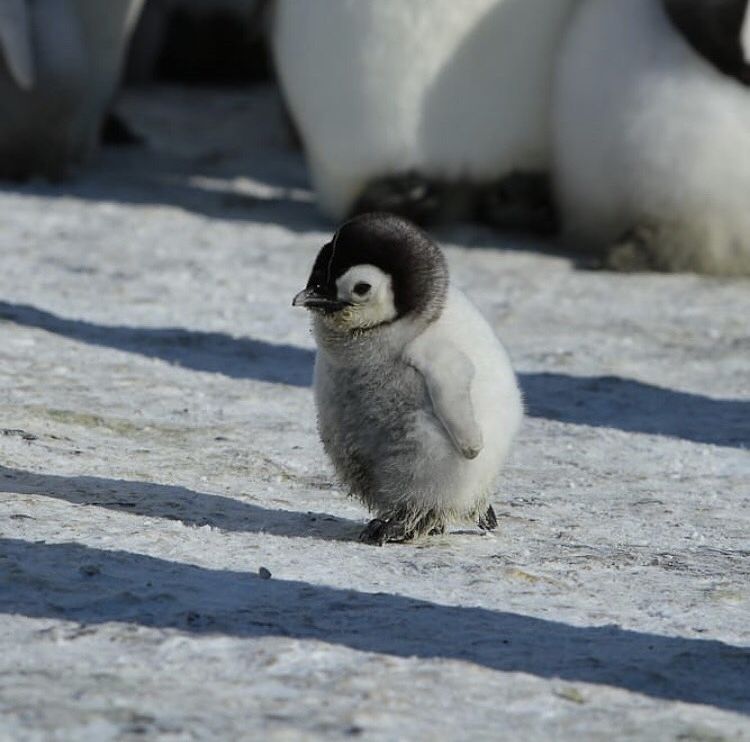
The little penguin is the smallest penguin species alive - an adult stands barely higher than a standard house brick and weighs about the same as a well-fed domestic cat.
Across its southern Australian and New Zealand range the species is known by half a dozen different names: little penguin and little blue penguin in ornithological literature, fairy penguin in Australian tourism marketing, korora in Maori, and historically blue penguin or southern blue penguin in older field guides.
The names all point at the same bird, a compact burrow-nesting seabird with slate-blue plumage, nocturnal habits on land, and a foraging range so short that most birds spend their entire adult life within a few kilometres of where they hatched.
This guide covers every major aspect of little penguin biology and ecology: size and identification, the unusual blue plumage, burrow nesting, shallow diving and short-range foraging, the nightly beach parade at Phillip Island, the Maremma sheepdog guardians of Middle Island, the contested 2016 species split between Australian and New Zealand populations, conservation pressures in urban environments, lifespan differences between wild and captive birds, and the relationship between little penguins and the people who share their coastline.
It is a full reference entry, not a summary - so expect specifics: centimetres, grams, metres per dive, populations, and verified records.
Etymology and Classification
The scientific name Eudyptula minor was first applied by Johann Reinhold Forster in 1781 based on specimens collected during Captain James Cook's second voyage to New Zealand.
The genus name Eudyptula is a Greek-rooted diminutive meaning "good little diver", and the species epithet minor simply means "smaller" - a direct acknowledgement that early naturalists could already tell this was the runt of the penguin family.
For most of the twentieth century, six subspecies were recognised across Australia and New Zealand on the basis of slight variations in plumage tone and skull measurements, but molecular work in the 1990s collapsed most of those divisions.
A 2016 study using mitochondrial and nuclear DNA went further and proposed splitting the species entirely.
Under the new treatment, Australian little penguins and a small pocket on the Otago coast of New Zealand's South Island - which the study found to be a recent westward colonisation - remain Eudyptula minor, while the bulk of the New Zealand and Chatham Islands population is elevated to Eudyptula novaehollandiae. The split has been accepted by some authorities and is pending at others.
The IUCN still lists all populations under a single species. For the purposes of this entry, the single species treatment is used throughout unless otherwise noted.
In New Zealand the bird is almost universally called the korora in Maori and the little blue penguin in English. In Australia little penguin is the preferred formal name, while fairy penguin survives in tourism and older popular usage. The tourism name is charming and sells tickets, but wildlife agencies in both countries increasingly prefer "little penguin" for consistency with conservation literature.
Size and Physical Description
Little penguins are tiny. They are the smallest of all 18 penguin species by any measure - height, mass, bill length, flipper length.
Adults:
- Height: 30-33 cm standing upright
- Weight: 1.0-1.5 kg (peaks just before the annual moult)
- Bill length: roughly 35 mm, slender and slightly hooked
- Flipper length: roughly 11-12 cm, stiff and paddle-like
Chicks at hatching:
- Weight: 35-45 grams - about the weight of a chicken egg
- Covered in sparse grey-brown down, pink skin visible
Chicks at fledging:
- Weight: 800-1100 grams
- Juvenile plumage: paler blue, slightly smaller bill, eye a lighter grey
The plumage is the feature that gives the species its popular names. The back, crown, and outer surfaces of the flippers are a distinctive slate-blue to indigo, ranging from pale silver-blue in worn plumage to a deep blue-black in fresh feathers just after the moult. The underside and the inner flippers are clean white.
There are no head stripes, eye-rings, or facial markings - no chinstrap, no white forehead, no yellow crest, no orange bill. In a family of birds famous for dramatic ornamentation, the little penguin is the plainest. That plainness, combined with the small size, is exactly why the name "fairy" took hold.
In the water the slate-blue and white pattern functions as countershading camouflage, the same as in every other penguin species. Seen from above against dim temperate water, the blue back blends into shadow. Seen from below against surface light, the white belly disappears against sky glare. The colour is unique only on land; in the ocean it is functionally equivalent to the black and white pattern of the Antarctic penguins.
Body plan is the classic deep-diving penguin, scaled down. The feet are placed far back on the body, which forces the upright stance and the famous waddle on land. The bones are dense, which reduces buoyancy and makes diving cheaper. The flippers are stiff paddles driven by huge pectoral muscles that make up a disproportionate share of body mass. The tail feathers are short and stubby compared to the brush-tailed Adelie and gentoo.
Nocturnal on Land, Crepuscular at Sea
The little penguin is almost entirely nocturnal on land. Adults spend the daylight hours at sea foraging or, during incubation, resting inside the burrow. They come ashore only after dark, swimming or body-surfing in through the shore break and then waddling up the beach to their burrows under the cover of night.
The reason is predation pressure. Temperate southern coasts carry dense populations of raptors, gulls, and introduced carnivores. A little penguin weighing a kilogram is a plausible meal for a wedge-tailed eagle, a sea-eagle, a large Pacific gull, a fox, or a dog. By landing only after dark and spending daylight hours in the relative safety of the burrow or offshore water, little penguins reduce their exposure to aerial predators dramatically.
This schedule is why the famous Phillip Island parade happens at dusk and not in daylight, and why most visitors to a little penguin colony at noon see essentially nothing except empty burrows and white guano splatters on the beach rocks.
The Phillip Island Penguin Parade
Phillip Island sits about 140 kilometres southeast of Melbourne on the Victorian coast. Summerland Beach, on the island's southwest tip, hosts one of the world's most reliable wildlife spectacles. Every evening, year-round, hundreds of little penguins return from a day of fishing in Bass Strait, gather in small groups in the shallows, and then waddle together up the beach to their burrows in the dunes behind.
The birds cluster in the shallows for several minutes before making the run - biologists interpret the clustering as a predator-avoidance tactic, the same "counter-sharking" principle that Antarctic penguins use at the ice edge. Once the first few birds commit to the beach, the rest follow in waves over roughly an hour.
Phillip Island Nature Parks, the not-for-profit that manages the site, has built tiered viewing platforms, underground viewing galleries, and an elevated boardwalk system that let visitors watch from close range without physically crossing the penguin path. Lighting is filtered to wavelengths the birds do not respond to strongly. Photography and flash are strictly banned.
The entire former holiday housing estate around the parade area was progressively bought back and demolished between the 1980s and 2010s to restore burrow habitat.
The parade attracts more than 700,000 visitors a year in a normal (non-pandemic) season and generates revenue that funds ongoing research, fox control across the island, invasive plant removal, and a permanent ranger presence. It is one of the clearest examples anywhere of wildlife tourism functioning as a net positive for the species being watched.
The Maremma Dogs of Middle Island
Middle Island is a tiny tidal island off Warrnambool, about 260 kilometres west of Melbourne. In the 1990s it supported a healthy breeding colony of around 600 little penguins. In the early 2000s foxes discovered that at low tide they could walk across a sandbar to the island. Within a handful of years the colony collapsed to fewer than ten birds. Extinction of the local population looked certain.
A local free-range chicken farmer named Allan "Swampy" Marsh suggested what sounded at first like a joke - put a Maremma on the island. Maremmas are an ancient Italian livestock guardian breed that bond with a flock or a territory and aggressively drive off predators including wolves, bears, and feral dogs. Marsh's Maremmas had been protecting his chickens from foxes for years.
The trial began in 2006. Two trained Maremmas, Eudy and Tula (named after Eudyptula), were rotated onto Middle Island during the penguin breeding season, living on the island full-time with ranger support. They did not need to be trained to recognise penguins specifically. They simply treated the island as their territory, and foxes stopped coming. The colony rebounded. By the mid-2010s it was back above 180 birds. Predation by foxes on the island dropped effectively to zero.
The program, now managed by Warrnambool City Council, has run continuously ever since and became the basis of the 2015 Australian feature film Oddball. The same principle has been trialled at other vulnerable Australian seabird colonies. The Maremma approach works because it relies on an ancient inter-species relationship - predator-deterrent dog protecting a territory - rather than any penguin-specific training.
Diet, Foraging, and Short-Range Diving
Little penguins are visual pursuit predators specialising on small schooling baitfish and squid. Exact diet composition varies by region, colony, and year, but the core prey is remarkably consistent.
Primary prey:
- Pilchard / sardine (Sardinops sagax)
- Anchovy (Engraulis australis)
- Australian sprat, barracouta juveniles, redbait
- Small squid (Nototodarus spp., Sepioteuthis spp.)
Secondary prey:
- Krill and pelagic amphipods during cold-water years
- Small reef fish near rocky colonies
- Juvenile mackerel when pilchards are scarce
Foraging range is the statistic that most cleanly separates the little penguin from every other penguin species. Most feeding trips stay within 2 kilometres of the colony. During the guard stage of chick rearing, when an adult must return to the burrow every day to deliver food, trips may be as short as a few hundred metres of offshore swimming.
Compare that to king penguins, which forage 300-500 kilometres from the colony, or emperor penguins, which can travel further still. The little penguin is the shortest-range forager in the entire family.
Diving profile:
| Metric | Value |
|---|---|
| Typical dive depth | 10-30 m |
| Maximum recorded dive | approximately 70 m |
| Dive duration | 20-40 seconds (max ~90 s) |
| Dives per foraging trip | 200-1,000 |
| Typical foraging trip length | a few hours to one day |
| Maximum foraging trip | 2-3 days during pre-moult |
Little penguins can also vocalise underwater, a behaviour confirmed by underwater acoustic recorders only in the 2020s. The calls are short clicks and moans, and are thought to help coordinate group hunting as a school of baitfish is driven to the surface.
Burrow Nesting and Breeding
Almost every other penguin species nests in the open - on bare gravel, on stones, or, in the case of emperors, on the ice itself. Little penguins are almost uniquely burrow-nesters. They dig their own burrows in sandy or loamy soil behind the beach, appropriate burrows from shearwaters, or tuck into rock crevices, sea caves, and human infrastructure. Colonies under beach houses, piers, rock groynes, and golf course gorse hedges are well documented on both sides of the Tasman Sea.
Breeding timeline:
- Late winter (July-August): pairs re-occupy burrows and courtship begins
- Early spring (September-October): 2 eggs laid, 2-4 days apart
- 33-37 days: both parents share incubation in alternating shifts
- First 2-3 weeks post-hatch: one parent guards while the other fishes
- 4-8 weeks: both parents forage, chicks wait in burrow
- 8-9 weeks: chicks fledge directly from the burrow to sea
Pairs are typically monogamous across multiple seasons, often returning to the same burrow year after year. A well-fed pair on a productive coast can raise two chicks to fledging in a single season and attempt a second clutch if the first fledges early enough - little penguins are the only penguin species that regularly double-brood.
After fledging, both adults enter the annual catastrophic moult on land, during which they cannot enter the water and lose all their feathers over a few weeks while subsisting on fat reserves.
"The little penguin is the only penguin species you can reliably find living under a suburban back deck." - Phillip Island Nature Parks, visitor centre exhibit interpretation.
Lifespan: A Brutal Wild, a Long Captivity
Wild little penguins have an average lifespan of just 6-7 years, one of the shortest of any penguin species. Annual adult mortality is high because the birds face constant terrestrial and near-shore threats - introduced foxes, cats, and dogs on mainland colonies; vehicle strikes on coastal roads; entanglement in recreational fishing line; oil spills; near-shore predation by fur seals, sharks, and large fish. Only about 10-20% of fledged chicks survive their first year at sea.
Captive little penguins tell a very different story. With consistent food, veterinary care, and no predators, captive birds routinely live into their late teens and occasionally past 25. A long-lived individual at Taronga Zoo in Sydney is reported to have reached over 25 years.
The gap between wild and captive lifespan - roughly four-fold - is among the largest documented in any penguin species, which says less about the species' biological capacity and more about how lethal the modern temperate coast is for a bird this small.
Range and Population
Little penguins breed along the temperate southern coasts of Australia and New Zealand.
Key range areas:
| Region | Status / Notable colonies |
|---|---|
| Southeastern Australia | Phillip Island (largest mainland colony in Australia) |
| Tasmania and Bass Strait islands | Dense burrow colonies, core Australian population |
| South Australia | Kangaroo Island, Granite Island |
| Western Australia | Penguin Island off Rockingham |
| New South Wales | Manly colony in Sydney Harbour, Montague Island |
| New Zealand North Island | Marlborough Sounds, Banks Peninsula, Oamaru |
| New Zealand South Island | Otago Peninsula, Fiordland coast |
| Chatham Islands | Isolated populations, proposed separate species |
Total population across the entire range is roughly estimated at 350,000-600,000 mature individuals, though population monitoring is patchy and colony-level trends diverge sharply. Some mainland colonies have collapsed to near zero while offshore island populations remain healthy. The IUCN assesses the species globally as Least Concern, but several national and state authorities list specific subpopulations as Vulnerable or Endangered.
Conservation Status and Threats
The little penguin is unusual among penguins in that the dominant conservation threats are not ice loss, krill fisheries, or Southern Ocean fisheries interactions. They are terrestrial, urban, and near-shore.
Primary threats:
- Introduced terrestrial predators. Red foxes, feral and domestic cats, and unrestrained domestic dogs kill adult penguins and chicks at mainland colonies. Dogs off-leash on beaches are a leading cause of adult mortality in several Victorian and Tasmanian colonies.
- Vehicle strikes. Coastal roads that cross between sea and burrow habitat kill birds walking to and from the beach, especially after dark.
- Fishing gear entanglement. Recreational gillnets, discarded fishing line, and lost recreational crab pots trap and drown foraging birds close to shore.
- Marine heatwaves. Little penguins depend on small schooling baitfish - pilchards, anchovies - that crash sharply during marine heatwave events. Because the birds forage within 2 kilometres of the colony, they cannot easily shift hunting grounds when local prey collapses.
- Habitat loss. Coastal housing development removes burrow-ready soil. Sea walls and armoured coastlines eliminate beach approaches.
- Oil pollution. Even small chronic oiling from shipping traffic kills waterproofing and can cause mass mortality near shipping lanes.
Conservation measures in place:
- Fox, cat, and dog exclusion fencing around mainland colonies.
- Maremma guardian dog programs at Middle Island and pilot sites elsewhere.
- Dog-off-leash bans on key penguin beaches, enforced by council rangers.
- Speed limits and penguin-crossing signage on coastal roads near colonies.
- Full legal protection under Australian state wildlife acts and the New Zealand Wildlife Act 1953.
- Restoration of burrow habitat at Phillip Island through removal of former housing estates.
- Captive rehabilitation hospitals that oil-clean, feed, and release rescued birds.
Little Penguins and Humans
Little penguins share the coastline with some of the most densely populated regions of the Australian and New Zealand south coasts. The Manly colony in Sydney Harbour sits within a metropolitan area of more than five million people. The St Kilda breakwater colony in Melbourne is a short tram ride from the city centre.
The Oamaru Blue Penguin Colony on New Zealand's east coast sits at the edge of a working quarry and a small town. No other penguin species routinely breeds this close to major human populations.
The species has responded with a remarkable tolerance of human proximity. Little penguins regularly nest under beach houses, inside rock groynes, beneath boardwalks, and in purpose-built concrete artificial burrows installed by conservation groups. At Phillip Island and Oamaru, the tourism economy built around watching penguins come ashore now funds the ecological management of the habitat.
At Manly and St Kilda, volunteer community groups patrol the colonies nightly during the breeding season, running dog-awareness campaigns and rescuing injured birds.
The relationship is not frictionless. Urban colonies lose birds every season to dogs, cars, and careless development. But the little penguin's ability to live at the edge of human settlement, when given even a small chance, is one of the reasons the species as a whole remains Least Concern while several of its deep-ocean relatives face shrinking futures.
Related Reading
- Penguins: Flightless Birds That Conquered the Cold
- Emperor Penguin: Antarctica's Ultimate Survivor
- King Penguin
- Adelie Penguin
- Gentoo Penguin
References
Relevant peer-reviewed and governmental sources consulted for this entry include the IUCN Red List assessment for Eudyptula minor, the Australian Department of Climate Change, Energy, the Environment and Water species profile, Phillip Island Nature Parks research reports, the New Zealand Department of Conservation korora species page, Warrnambool City Council Middle Island Maremma Project reports, and peer-reviewed work in Emu - Austral Ornithology, Marine Ornithology, and PLoS ONE.
The 2016 proposed species split is discussed in Grosser, S., Burridge, C.P., Peucker, A.J., and Waters, J.M. (2015-2016) "Coalescent modelling suggests recent secondary-contact of cryptic penguin species" published in PLoS ONE. Population estimates reflect the most recent consolidated figures available at time of writing.
Frequently Asked Questions
How big are little penguins?
Adult little penguins (Eudyptula minor) stand 30-33 cm tall and weigh 1.0-1.5 kg, making them by a clear margin the smallest of all 18 penguin species - less than one-tenth the mass of an emperor penguin and roughly a quarter the size of an Adelie. Males are on average slightly heavier and have a slightly stouter bill, but the sexes look essentially identical in the field.
Chicks hatch at just 35-45 grams - about the weight of a chicken egg - and fledge at 800-1100 grams after 8-9 weeks in the burrow. The species is so compact that adults comfortably fit in a shoebox, which is part of why little penguins are among the easiest penguins to rehabilitate in wildlife hospitals after oil spills or injuries.
Why are they called fairy penguins if they are blue?
The name ‘fairy penguin’ comes from their small size and the fact that early European settlers in Australia found them enchanting rather than from any mythology. In New Zealand and among modern ornithologists the preferred common name is ‘little penguin’ or ‘little blue penguin’, reflecting both the size and the distinctive slate-blue plumage on the back, head, and flippers. The Maori name ‘korora’ is widely used in New Zealand.
The underside is clean white, so at a distance little penguins can still look like a typical two-tone penguin, but at close range - and especially in good light - the blue colouring is unmistakable and unique within the family Spheniscidae. The tourism industry in Australia still frequently uses ‘fairy penguin’ as a marketing term, though wildlife agencies increasingly prefer the name ‘little penguin’ for consistency with conservation literature.
Where do little penguins live?
Little penguins breed along the temperate southern coasts of Australia and New Zealand, including Tasmania, the Bass Strait islands, the New South Wales coast as far north as Sydney Harbour, the South Australian coast, the King George Sound region of Western Australia, both main islands of New Zealand, Stewart Island, and the Chatham Islands.
They prefer rocky shores, sandy beaches backed by burrow-ready soil, and small offshore islands with low terrestrial predator pressure. Unlike almost every other penguin species, little penguins tolerate relatively warm conditions - many colonies sit in sheltered bays where summer sea temperatures exceed 20 degrees Celsius. There is a small breeding population under the boardwalks and rock groynes of Manly, right at the edge of metropolitan Sydney.
What is the Phillip Island penguin parade?
The Phillip Island Penguin Parade is a nightly wildlife tourism event held at Summerland Beach on Phillip Island, about 140 kilometres southeast of Melbourne. Every evening, year-round, hundreds of little penguins return from a day of fishing at sea and waddle together up the beach to their burrows in the dunes, usually within about an hour of sunset.
Purpose-built tiered viewing platforms, underground viewing galleries, and strict lighting and photography rules let tens of thousands of visitors a year watch the spectacle without disturbing the birds. The parade is managed by Phillip Island Nature Parks, a non-profit whose visitor revenue funds ongoing penguin research, habitat restoration, and predator control.
The parade regularly draws more than 700,000 visitors a year and is among the most-watched wildlife spectacles on Earth.
Why do sheepdogs guard a little penguin colony?
On Middle Island, a small tidal island off Warrnambool in southwestern Victoria, little penguins suffered catastrophic fox predation in the early 2000s as foxes walked out to the island at low tide and killed entire cohorts of breeding adults.
In 2006 a local chicken farmer named Swampy Marsh suggested using Maremma sheepdogs - an ancient Italian livestock guardian breed - to protect the colony the same way they protect sheep and goats from wolves in Europe. Maremmas are placed on the island during the breeding season; they bond with the landscape and treat it as territory, which deters foxes without any training to recognise penguins specifically.
The program is widely credited with saving the Middle Island colony from local extinction, the guardian dogs are full-time conservation workers, and the story became the basis of the 2015 Australian feature film ‘Oddball’. The approach has since been trialled at other vulnerable colonies.
Are New Zealand little penguins a different species?
Possibly. A 2016 study using mitochondrial and nuclear DNA argued that the little penguins of mainland New Zealand and the Chatham Islands are genetically distinct enough from Australian little penguins to warrant treatment as a separate species, Eudyptula novaehollandiae, with Eudyptula minor restricted to Australia and New Zealand’s Otago coast, where Australian lineages apparently colonised from the west within the last few hundred years.
Some taxonomic authorities and some field guides now recognise the split; others are waiting for more evidence. The practical effect is that regional populations may need separate conservation assessments in future. For now the IUCN still lists all Eudyptula populations as Least Concern under a single species, and most popular literature continues to refer to them all as ‘little penguins’.
How long do little penguins live?
Wild little penguins have an average lifespan of just 6-7 years, one of the shortest of any penguin species. Annual adult mortality is high because the birds face constant threats - introduced foxes, cats, and dogs on mainland colonies; vehicle strikes on coastal roads; entanglement in fishing nets; oil spills; and predation at sea by seals and sharks. Only about 10-20% of fledged chicks survive their first year at sea.
Individuals that do reach adulthood and find a stable burrow in a low-predator colony can live considerably longer; banded wild birds of 20 years have been recorded, and a captive little penguin at Taronga Zoo in Sydney reportedly reached over 25 years of age. First breeding occurs at 2-3 years old, and pairs are typically monogamous across multiple seasons, often returning to the same burrow year after year.
Are little penguins endangered?
The IUCN lists the little penguin as Least Concern, with a global population roughly estimated at 350,000-600,000 mature individuals across Australia and New Zealand. Overall the species is not globally threatened, but many local colonies are in severe decline.
Threats are predominantly terrestrial and urban: introduced foxes, feral cats, unrestrained domestic dogs, vehicle strikes on coastal roads, habitat loss from coastal development, entanglement in recreational fishing gear, and marine heatwaves that crash the small schooling fish on which the birds depend.
Several iconic Australian colonies - Manly in Sydney Harbour, Middle Island in Victoria, and St Kilda breakwater in Melbourne - are protected by dedicated volunteer groups, fencing, dog-ban signage, and in some cases Maremma dog guardians. Climate change and marine heatwaves are an increasing concern because little penguins are short-range foragers and cannot easily shift colony locations when local prey collapses.