
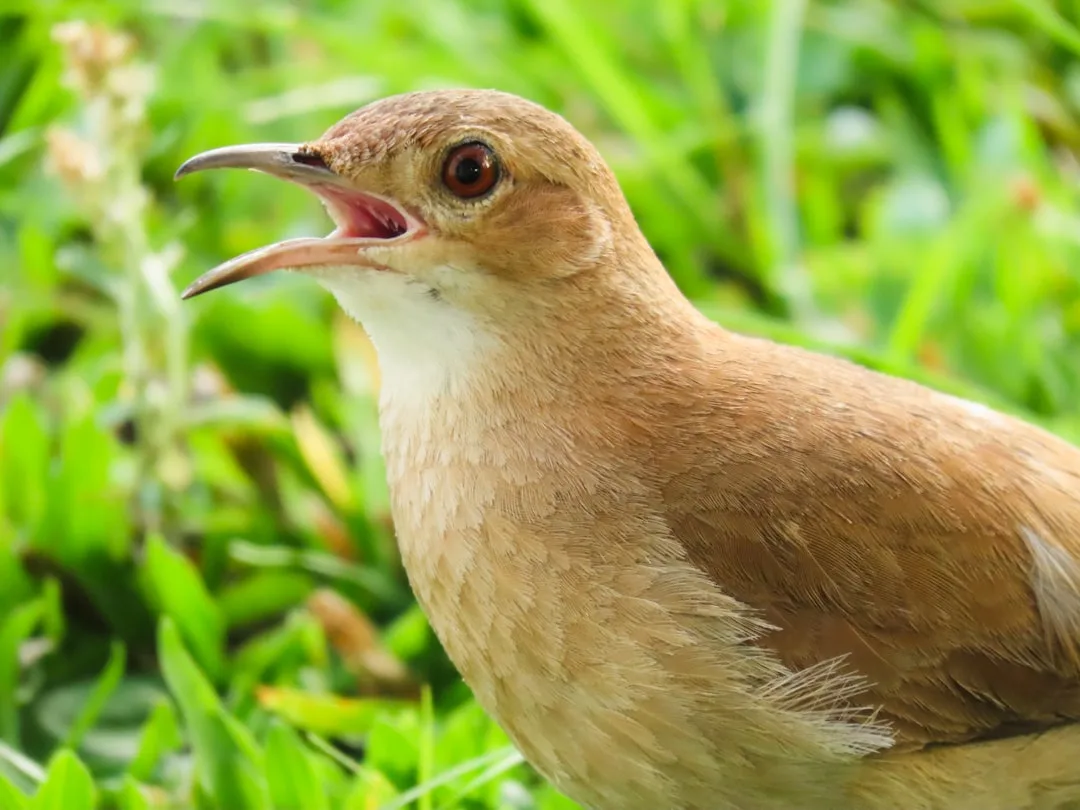
The common nightingale is, by most accounts, the most celebrated singer in the bird world. A small brown songbird no larger than a European robin, Luscinia megarhynchos has inspired Greek myth, Persian love poetry, Hans Christian Andersen, John Keats, and the name of modern nursing itself.
Yet the bird is paradoxically ordinary to look at - drab, secretive, almost impossible to spot inside the dense thickets where it lives. Everything interesting about the species is concentrated in its voice, in its astonishing long-distance migration, and in a behavioural ecology that remains actively debated by scientists.
This guide is a reference entry on the common nightingale: taxonomy, appearance, the mechanics and meaning of its song, territory, migration, diet, breeding, decline in certain regions, and cultural significance. It is not a summary - expect specific numbers: grams, centimetres, kilometres, decibels, song-phrase counts, population trends.
Etymology and Classification
The scientific name Luscinia megarhynchos combines the Latin luscinia, meaning "nightingale", with the Greek mega ("large") and rhunkhos ("bill"). The name highlights the bird's slightly longer and more slender bill compared to its northern cousin the thrush nightingale (Luscinia luscinia), the only other member of the genus with which it overlaps. The species was formally described by the German naturalist Christian Ludwig Brehm in 1831.
In English the word "nightingale" is derived from Old English nihtegale, literally "night singer". Many European languages preserve the same idea: Dutch nachtegaal, German Nachtigall, French rossignol (from late Latin lusciniolus, "little nightingale"), and so on. In Persian and across much of the Islamic world the bird is known as bulbul, a name of imitative origin that entered Turkish, Urdu, and other languages through centuries of poetic exchange.
The common nightingale belongs to the Old World flycatcher family, Muscicapidae, alongside chats, redstarts, wheatears, and the European robin. It was formerly placed with the thrushes (Turdidae), reflecting an older classification now superseded by molecular evidence. Three subspecies are usually recognised: the nominate L. m. megarhynchos across western and southern Europe, L. m. africana breeding from the Caucasus through central Asia, and L. m. golzii in the far east of the range.
Size and Physical Description
The common nightingale is a small, unobtrusive passerine whose appearance is famously unimpressive for a bird with such a celebrated voice.
Adults:
- Length: 15-16.5 cm from bill tip to tail tip
- Wingspan: 23-26 cm
- Weight: 16-22 g (heavier immediately before autumn migration)
- Lifespan: 2-3 years typical, up to about 8 years maximum
Juveniles:
- Similar length at fledging
- Plumage: mottled brown with pale spotting, no rufous tail flash
- Moult to adult-type plumage in the first autumn
Upperparts are warm brown with a faintly olive tinge. The underparts are pale buff fading to off-white on the belly and undertail coverts. The tail is the one feature that reliably catches the eye: it is a slightly rufous or chestnut colour, noticeably warmer than the rest of the back, and the bird flicks it sharply upward when alarmed, exposing the colour as a brief flash. The eye is ringed by a pale, narrow eye-ring that lends a surprised expression to birds seen at close range.
Males and females are virtually identical in plumage, size, and weight. Juveniles are distinguishable for only the first couple of months after fledging, with visible pale spotting on the underparts and a scalier look to the upperparts.
The bill is slender, slightly longer than that of the thrush nightingale, and well suited to picking small invertebrates out of leaf litter, mossy roots, and bark crevices. The legs are pinkish-brown and relatively long, reflecting the bird's preference for feeding on the ground inside dense cover rather than foraging in the canopy.
The Song
The song is what the nightingale is known for, and it deserves a section to itself. Few biological sounds have received as much scientific and literary attention.
Basic song parameters:
- Repertoire: typically 180-260 distinct phrase types, some birds exceed 300
- Phrases per performance: more than 200 in a single extended bout
- Range under still night conditions: audible up to ~4 km
- Sound pressure at 1 m in urban birds: can exceed 95 dB
- Peak frequency range: roughly 2-5 kHz, with trills extending higher
A single nightingale performance unfolds as a long, structured sequence of whistles, trills, clicks, buzzes, and explosive crescendos. Individual phrases range in duration from a fraction of a second to several seconds, and each is separated by a brief silence - a feature unusual among songbirds, most of which sing in continuous stanzas. The silences matter.
They allow the listener to hear any reply from a neighbouring male, and they give each phrase room to be assessed for precision, volume, and timing. Female nightingales are believed to use both the raw size of the repertoire and the quality of the silences between phrases to evaluate a singer.
Why Sing at Night?
The most obvious question - why does a nightingale sing at night? - has two defensible answers, and both appear to be partly true.
The first is acoustic. After dusk, most other birds fall silent, insects reduce their chorus, and wind drops. The background noise floor in a typical European wood drops by 10 to 20 decibels between late afternoon and midnight.
A singing male broadcasting into that silence is audible far further than he could be during the day, and subtle features of his song - precise trill rates, clean transitions between phrases - are preserved rather than masked.
Long-range audibility matters because female nightingales arrive on the breeding grounds after males, migrating north at night, and a male broadcasting into a quiet sky can be detected by passing females tens of kilometres away.
The second answer is competitive. Where artificial light pollution or heavy urban noise disrupts the acoustic silence of night, males are forced to raise their output.
A landmark study of nightingales in Berlin parks recorded night-time song approximately 14 decibels louder in birds holding territories near busy roads than in birds in quiet woodland sites - a textbook example of the Lombard effect, the reflex increase in vocal amplitude in response to background noise.
The same work showed that urban males shifted their song timing to the quietest parts of the night, suggesting they are actively managing acoustic competition rather than simply singing whenever hormones dictate.
Several researchers have argued that night song also functions as a territorial defence signal, signalling occupancy to any male arriving after dark. This interpretation remains contested. The mate-attraction hypothesis has more direct experimental support: males stop singing at night within a day or two of pairing, while continuing to sing during the day to defend the territory and ward off rivals.
Rain, Wind, and Song Suppression
Nightingales are acoustically cautious. In sustained rain, with droplets hammering on leaves, the species routinely stops singing, or drops to very short, soft phrases. The same is true in strong wind. Both conditions flood the soundscape with broadband noise that no amount of Lombard adjustment can overcome, and singing into that noise is simply wasted energy.
This behaviour gives birders and sound recordists an informal rule of thumb: listen in the calm, between showers, at dusk or before dawn, and avoid windy nights entirely.
Light Pollution and Night Singing
Long-term studies across Europe indicate that night singing is declining fastest in areas of increasing artificial light at night.
Several mechanisms are suspected: illuminated nights extend the daytime acoustic environment so that other species continue to call after sunset, raising background levels; males may also shift singing into daylight hours where light already favours visual rivals; and disruption of circadian hormone patterns by artificial light may itself reduce the peak nocturnal singing drive.
The practical effect is that the classic experience of a nightingale under a moonlit hedge is becoming rarer across large parts of the species' lowland range.
Territory and Pair Formation
Males arrive on the breeding grounds one to two weeks before females. On arrival a male establishes a small territory centred on a patch of dense low scrub with suitable song perches - usually a mid-height branch within the thicket, not the canopy above it. Territory size varies from roughly 0.3 to 1 hectare depending on habitat quality and population density.
Pair formation typically follows an extended period of song competition. Females arriving at night appear to sample song from multiple males over the course of days or weeks before settling. A loose rule of thumb from long-term field studies is that pair bonds form after roughly two to three weeks of continued male song, though individual cases vary widely.
Once paired, the male's song pattern changes immediately: nocturnal song collapses, and daytime song becomes shorter, softer, and more directed at nearby rivals rather than broadcast at range.
Territorial combat in nightingales is less conspicuous than in robins but can still be fierce. Males engage in song duels along shared boundaries, in which each answers the other's phrases with matching or contrasting phrase types. Physical fights occur and occasionally end in injury, but the dense brush environment makes observation difficult.
Diet and Foraging
Nightingales are primarily insectivorous, with a diet dominated by ground-dwelling and low-vegetation invertebrates.
Primary prey:
- Beetles (Coleoptera)
- Ants (Formicidae)
- Caterpillars and other larval Lepidoptera
- Spiders
- Flies and their larvae
- Small earthworms
Seasonal supplements:
- Berries and soft fruit (late summer, pre-migration fattening)
- Small snails
- Occasional seeds
The foraging strategy is classic understorey: the bird hops or runs on the ground inside dense cover, flips leaves, and probes into moss and loose soil, picking up small invertebrates with precise jabs of the slender bill. Short flights take the bird from one patch of cover to another, but long exposed flights are rare.
Autumn brings a clear shift toward carbohydrate-rich fruit as pre-migration fat reserves are laid down. A nightingale may increase its body mass by 40 per cent or more in the weeks before leaving for Africa.
Migration
The common nightingale is a long-distance migrant, and this migration is one of the most impressive feats in the songbird world for a bird of its size.
| Metric | Value |
|---|---|
| Typical one-way distance | 3,500-4,500 km |
| Wintering region | Sub-Saharan Africa (Sahel belt to Kenya) |
| Travel mode | Nocturnal flight, solo or in loose association |
| Flight altitude | A few hundred to ~2,000 m |
| Autumn departure | Late July to early September |
| Spring arrival | Mid-April to mid-May |
European breeders cross the Mediterranean and then the Sahara - one of the most hostile migration barriers in the world - typically in a series of long night flights punctuated by daytime rests at oasis stopovers. Central Asian breeders take a parallel route via the eastern Mediterranean, Sinai, and the Horn of Africa.
Recent geolocator and stable-isotope studies have shown that individual nightingales are remarkably faithful to their wintering sites, returning to within a few hundred metres of the same African thicket year after year.
Spring return migration is timed to insect availability on European breeding grounds. Males arrive earlier than females, claim territory, and begin singing as soon as conditions allow. Changes in Sahel rainfall, Mediterranean conditions, and European spring phenology all combine to affect arrival dates, body condition, and subsequent breeding success.
Breeding and Life Cycle
Once paired, the female selects a nest site at or very near the ground inside dense cover. The nest itself is a bulky cup of dead leaves, grass, and plant stems, lined with fine rootlets and occasionally hair. Typical clutch size is 4 to 5 pale olive eggs with fine speckling. Incubation lasts roughly 13 days, performed almost entirely by the female. Chicks fledge at about 11 to 12 days but remain dependent on the parents for a further two weeks as they learn to forage and avoid predators.
Most pairs raise a single brood per year. In good seasons with early arrival and warm weather, occasional second broods occur in the southern part of the range. Chick mortality is high; nest predators include small mustelids, corvids, snakes, and domestic cats in settled landscapes. Pre-migration juveniles must reach adequate body condition to survive the Sahara crossing, which means food availability in late summer is a major determinant of first-year survival.
First-year survival overall is low; many juveniles die on their first southbound migration or in wintering habitats. Surviving adults return to breed at one year old and can be productive for several years, with the oldest ringed individuals reaching roughly 7 to 8 years.
Conservation Status and Decline
Globally the common nightingale is listed as Least Concern by the IUCN, with a global population estimated at roughly 13 to 27 million mature individuals. At that scale the species is secure. Regionally, however, the picture is far more troubling.
Regional trends:
- United Kingdom. Breeding population has fallen by around 70 per cent since 1970. The species is now red-listed as a UK Bird of Conservation Concern.
- Germany, Netherlands, Belgium. Modest declines in the second half of the twentieth century, partially stabilised in the last two decades where scrub habitat has been restored.
- Southern Europe. Populations remain generally stable or only mildly declining, reflecting larger areas of suitable dense scrub.
- Central Asia. Trends poorly monitored; localised declines likely where thickets have been cleared.
Principal threats:
- Habitat loss. Conversion of scrub and coppice woodland to high forest, farmland, or development removes the dense low-cover nightingales require.
- Deer browsing. Overabundant deer in parts of western Europe, especially the UK, eliminate the woodland understorey layer young males need for territory and nest sites.
- African wintering conditions. Drought, habitat change, and pesticide use across the Sahel and sub-Saharan wintering belt reduce over-winter survival.
- Artificial light at night. Suppresses classical night song, may affect mate attraction, and disrupts migratory departure timing.
- Climate shift. Changes in spring phenology and insect emergence affect breeding success and the timing of fat reserves needed for return migration.
Conservation responses include the active restoration of scrub mosaics, reinstatement of coppice-with-standards woodland management, targeted deer population control in key woodlands, and international monitoring of migration routes and wintering grounds.
Cultural History
No bird in the Western tradition has attracted more literary attention than the nightingale. In ancient Greek myth the princess Philomela is transformed into a nightingale after violence and tragedy, and the bird's song is heard thereafter as a lament. Roman poets carried the motif forward.
In medieval European lyric the nightingale becomes the bird of courtly love, singing to the rose, to the sleepless lover, to the dawn. The motif passes into early modern poetry and survives through Shakespeare and beyond.
John Keats's "Ode to a Nightingale" (1819) is the single most famous English-language treatment. Written after Keats heard a nightingale in the garden of his house in Hampstead, London, the poem uses the bird's voice as an emblem of beauty, mortality, and the longing for escape from human suffering. A plum tree in that garden, reconstructed as Keats House, is still a place of pilgrimage for readers.
Hans Christian Andersen's "The Nightingale" (1843) tells the story of a Chinese emperor who keeps a real nightingale until he is distracted by a jewelled mechanical bird given as a gift. When the emperor falls ill the mechanical bird breaks, and the real nightingale returns to sing him back to life. The story is read as a parable of authenticity in art against decorative artifice.
In Persian, Ottoman, and Urdu poetry the nightingale - bulbul - is half of one of the central metaphors of classical lyric: the nightingale and the rose. The devoted nightingale sings endlessly to the rose, which receives the song in silence. The figure gives its name to the ghazal, a verse form whose couplets return again and again to the theme of longing love. Hafiz, Rumi, and centuries of poets built on this single metaphor.
Florence Nightingale, the founder of modern nursing, was named after the Italian city where she was born in 1820, but the family surname itself traces to a medieval English occupational or descriptive nickname meaning "night-singer". The bird's cultural weight is part of why the name has the resonance it does.
Related Reading
References
Relevant peer-reviewed and governmental sources consulted for this entry include the IUCN Red List assessment for Luscinia megarhynchos (most recent status review), the British Trust for Ornithology's Breeding Bird Survey reports on UK nightingale trends, RSPB conservation status briefings, and published research on nightingale song in Animal Behaviour, Behavioral Ecology, Journal of Avian Biology, and Biology Letters, including the Berlin urban-song studies on the Lombard effect in L. megarhynchos.
Population figures reflect the most recent consolidated estimates at the time of writing.
Frequently Asked Questions
Why do nightingales sing at night?
Male common nightingales (Luscinia megarhynchos) sing at night mainly because the nocturnal soundscape is nearly silent. Insects, wind, traffic, and other songbirds all drop out after dark, so a singing male can be heard clearly over much greater distances - up to about four kilometres under still conditions.
Researchers have shown that night song is aimed mostly at attracting migrating females as they arrive from Africa, rather than at rival males, and that nightingales concentrate night song in the period before a female has settled on their territory. Once paired, the same male sings much more during the day and far less at night.
Artificial light pollution has begun to erode this strategy, because illuminated nights raise background acoustic competition from other species and reduce the advantage of singing in darkness.
How big is a common nightingale?
Common nightingales are small, unobtrusive songbirds measuring 15 to 16.5 centimetres from beak tip to tail tip, with a wingspan of 23 to 26 centimetres. Adults weigh just 16 to 22 grams - roughly the same as a European robin or four British one-pound coins. Their plumage is deliberately plain: warm brown above, pale buff below, with a slightly rufous tail that flicks upward when the bird is alert.
Males and females look almost identical, and juveniles are mottled brown with light spotting. The contrast between the bird’s dull appearance and its extraordinary voice is one reason the species has fascinated poets and biologists alike for centuries.
How far does a nightingale migrate?
Common nightingales are long-distance migrants. European breeding birds travel up to roughly 4,500 kilometres one way to wintering grounds in sub-Saharan Africa, mainly in the humid savanna and forest-edge belt stretching from Senegal through to Kenya. Spring return flights follow broadly the same route in reverse.
Migration is carried out at night, with birds climbing to altitudes of a few hundred to a few thousand metres and navigating by stars, the Earth’s magnetic field, and visual landmarks. Small geolocator studies published in recent years have revealed that many individuals return to within a few hundred metres of the same wintering site year after year, and to the same breeding thicket in Europe.
Where do nightingales live?
Common nightingales breed across Europe and western and central Asia, from the Iberian Peninsula and southern England east through the Caucasus and into parts of Kazakhstan and western China. Their preferred habitat is dense, low scrub and young deciduous woodland with thick understorey - coppiced woodland, overgrown hedgerows, thorny thickets, and dense early-successional growth after logging or abandonment of farmland.
Open woodland or mature forest without a brushy ground layer almost never holds nightingales, because both the male’s low song perches and the hidden nest sites depend on dense cover at or near ground level. After breeding, the species migrates south to winter in sub-Saharan Africa.
Are nightingales endangered?
Globally the common nightingale is listed as Least Concern by the IUCN, with a global population estimated at roughly 13 to 27 million mature individuals. Regionally, however, the species is in sharp decline in parts of its range. The United Kingdom has lost around 70 per cent of its breeding nightingales since 1970 and the bird is now red-listed as a UK bird of conservation concern.
The main drivers are loss of dense scrub habitat, excessive deer browsing which destroys the understorey layer young males need, conversion of coppice woodland to high forest, and pressures on the African wintering grounds including drought and habitat change in the Sahel. Conservation responses focus on restoring scrub mosaics, reintroducing coppice cycles, and deer management in key woodlands.
How many songs does a nightingale know?
A mature male common nightingale typically commands a repertoire of 180 to 260 distinct song phrases, with some individuals exceeding 300 types. A single night’s performance will cycle through more than 200 of these phrases, delivered in a sequence that mixes whistles, trills, clicks, and rapid crescendos.
Young males acquire their repertoire primarily in the first year of life by listening to older neighbours, and song structure is therefore subtly regional, like a dialect. Females appear to use both the size of the repertoire and its delivery rate as cues to a male’s age, condition, and experience, which may help explain why mate choice often follows two or more weeks of continued song before a pair bond forms.
How long do nightingales live?
Most wild common nightingales live only 2 to 3 years. First-year survival is low because long-distance migration is an extremely demanding journey, and the risks include desert crossings, storms, exhaustion, and predation by falcons and other migrating raptors.
Once a nightingale has survived its first round trip to Africa and back, its annual survival climbs significantly, and some individuals reach the upper wild limit of around 7 to 8 years documented by ringing studies. Captive records are essentially unavailable because the species does not thrive in aviary conditions.
Why is the nightingale so important in poetry and culture?
Few animals have shaped Western and Middle Eastern literature as deeply as the nightingale. In ancient Greek myth the bird is linked to Philomela, transformed into a nightingale after a tragedy, and the motif of the singing bird as a voice of suffering and longing survived into Roman and medieval European poetry.
John Keats’s 1819 ‘Ode to a Nightingale’ is the most celebrated English-language treatment and makes the bird an emblem of beauty, mortality, and escape. Hans Christian Andersen’s 1843 fairy tale ‘The Nightingale’ contrasts a living bird with a jewelled mechanical one to argue for authentic art. In Persian and later Ottoman poetry the nightingale - bulbul - and the rose are the central metaphor of the ghazal, standing for the devoted lover and the beloved.
Florence Nightingale, born in Florence in 1820, carried the family name forward into modern nursing history. All of this cultural weight rests on a twenty-gram brown bird that is almost never seen.