
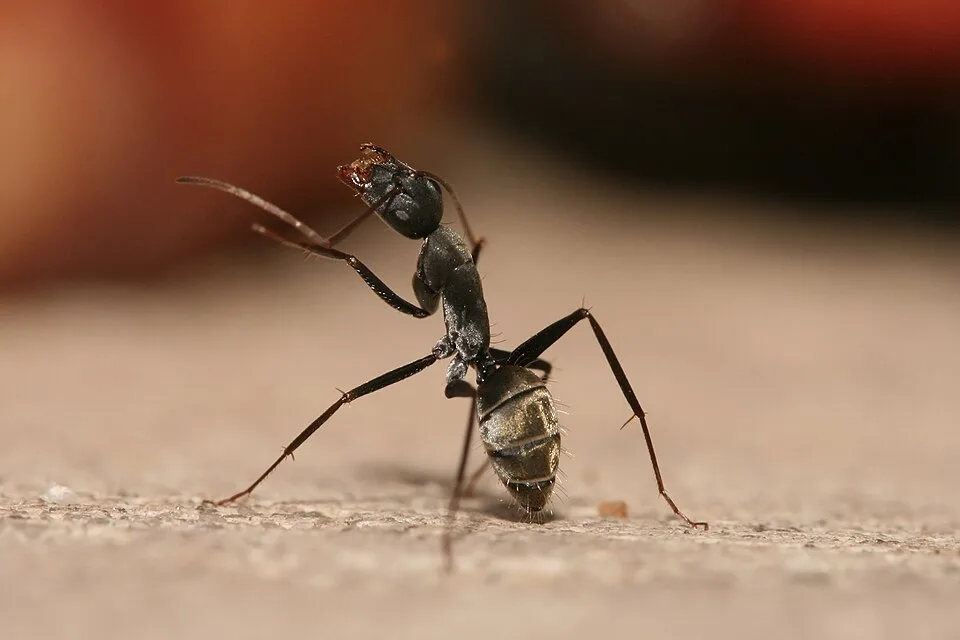
How large can an ant colony get, and what is the biggest ant colony ever discovered?
Ant colony size varies enormously by species, ranging from a few dozen individuals in some specialized species to tens of millions in army ant colonies. However, the largest ant colony ever documented is the Argentine ant supercolony stretching approximately 6,000 kilometers along the Mediterranean coast of Europe, from northern Italy through southern France to the Atlantic coast of Spain.
Somewhere beneath your feet, right now, a civilization is operating. It has no central government, no written language, no individual leaders making strategic decisions - and yet it runs with an efficiency that would humble the most sophisticated human logistics network. Its workers carry loads that would be equivalent to a human hauling a cement truck. Its farmers have been cultivating crops for 60 million years.
Its armies wage wars involving millions of combatants across battlefields stretching for kilometers. Its architects build climate-controlled cities housing populations larger than most human metropolises.
This civilization belongs to the ants. And by almost every measurable standard, they have conquered this planet far more thoroughly than we have.
"Ants are the most warlike of all animals, with colony pitted against colony... restless, territorial, and aggressive, they are the most predatory of all arthropods." - E.O. Wilson, The Ants (1990)
A Planet Ruled by Six-Legged Empires
The numbers alone are staggering. There are more than 22,000 known species of ants, with entomologists estimating that thousands more remain undescribed in tropical forests. They inhabit every continent except Antarctica, occupying ecological niches from the canopy of Amazonian rainforests to the floors of Saharan deserts, from sea-level mangrove swamps to Himalayan meadows at elevations above 4,000 meters.
But it is the sheer number of individual ants that defies comprehension. A 2022 study published in the Proceedings of the National Academy of Sciences by researchers at the University of Hong Kong and the University of Wurzburg estimated the global ant population at approximately 20 quadrillion individuals - that is 20,000,000,000,000,000 ants. To put this in perspective, there are roughly 2.5 million ants for every human being on Earth.
The combined biomass of these 20 quadrillion ants is estimated at approximately 80 million metric tons of dry carbon, which exceeds the combined biomass of all wild birds and wild mammals on the planet. By weight, ants outweigh the entire human population.
They account for an estimated 15 to 20 percent of all terrestrial animal biomass - a dominance achieved not by a single massive species, but by thousands of species that have independently evolved solutions to nearly every ecological challenge the land environment presents.
"Karl Marx was right, socialism works, it is just that he had the wrong species." - E.O. Wilson, lecture at Harvard University
The Argentine Ant Supercolony: One Colony, Three Continents
Perhaps nothing illustrates the scope of ant dominance more dramatically than the story of the Argentine ant (Linepthema humile). In its native range along the Parana River basin in South America, the Argentine ant is an unremarkable species - small, brown, and perpetually at war with neighboring colonies. But when human commerce inadvertently transported Argentine ants to new continents beginning in the late 19th century, something extraordinary happened.
Freed from the genetic diversity and territorial competition of their homeland, the transplanted ants lost the ability to distinguish nestmates from foreigners. Instead of fighting, ants from different nests recognized each other as kin and cooperated. The result was the formation of supercolonies - interconnected networks of nests spanning vast distances, with no territorial boundaries and no inter-colony aggression.
The largest of these is the European supercolony, which stretches approximately 6,000 kilometers along the Mediterranean coast from northern Italy through the entirety of southern France to the Atlantic coast of Spain and into Portugal. This single supercolony contains billions of queens and trillions of workers, all functioning as a single cooperative unit. An ant taken from a nest in Barcelona and placed in a nest in Genoa will be accepted as a nestmate.
A separate supercolony in California extends over 900 kilometers from San Francisco to the Mexican border. A third spans much of Japan.
In 2009, researchers led by Eiriki Sunamura demonstrated that ants from the European, Californian, and Japanese supercolonies did not display aggression toward one another, suggesting that these geographically separated populations may constitute a single global megacolony - the largest animal society ever documented, spanning three continents and potentially comprising over a trillion individuals.
The ecological consequences have been severe. In their invaded ranges, Argentine ants have displaced nearly all native ant species, disrupted pollination networks, and undermined seed dispersal systems that native plants depend upon. In California, the collapse of native ant populations following Argentine ant invasion has been linked to declines in the coast horned lizard, which depends on harvester ants as its primary food source.
Leafcutter Ants: The World's First Farmers
Deep in the tropical forests of Central and South America, leafcutter ants of the genera Atta and Acromyrmex practice a form of agriculture so sophisticated that it did not appear in any other lineage on Earth until Homo sapiens began cultivating crops approximately 10,000 years ago. The ants have been doing it for 60 million years.
The Fungal Garden
Leafcutter ants do not eat leaves. This is the fundamental misconception about these animals. Instead, they harvest leaf fragments, flower petals, and other plant material, carry it to their underground nests - often covering distances of over 200 meters, equivalent to a human carrying a load for 10 kilometers - and use it as a substrate to grow a specific species of basidiomycete fungus in the family Lepiotaceae.
Inside the nest, a specialized caste of small workers called minims chew the leaf fragments into a fine pulp, inoculate it with fungal hyphae, and carefully tend the resulting fungal garden. The fungus breaks down the cellulose in the plant material - which the ants themselves cannot digest - and produces nutrient-rich structures called gongylidia that serve as the colony's primary food source.
The relationship is obligate mutualism: the fungus cannot survive without the ants' cultivation, and the ants cannot survive without the fungus.
Antibiotic Agriculture
The sophistication does not end there. Leafcutter fungal gardens are vulnerable to a parasitic mold called Escovopsis, which can destroy an entire garden if left unchecked. To combat this threat, leafcutter ants carry symbiotic actinomycete bacteria of the genus Pseudonocardia on specialized structures on their exoskeletons called crypts. These bacteria produce antimicrobial compounds that selectively suppress Escovopsis while leaving the cultivated fungus unharmed.
This makes leafcutter ants the first known organisms besides humans to use antibiotics in agriculture - and they have been doing so for tens of millions of years without generating the resistance crises that have plagued human antibiotic use in mere decades.
Research by Cameron Currie at the University of Wisconsin-Madison has demonstrated that this three-way symbiosis between ant, fungus, and bacterium has coevolved with remarkable stability, suggesting that the ants' agricultural system contains lessons that human medicine has yet to learn.
Colony Scale
A mature Atta leafcutter colony is an engineering marvel. The nest may contain over 8 million individual ants divided into a rigid caste system with workers ranging in size from 1-millimeter minims to 16-millimeter soldiers.
The underground nest structure can extend 8 meters deep and encompass over 30 cubic meters of excavated soil, with hundreds of interconnected chambers for fungal gardens, waste disposal, and brood rearing. The total amount of soil moved during nest construction can exceed 40 metric tons - roughly equivalent to a human colony building a structure the size of a small mountain.
Army Ants: The Nomadic Predators
If leafcutter ants represent the agricultural tradition of ant civilization, army ants represent the military tradition taken to its absolute extreme. Found primarily in tropical regions of the Americas (genus Eciton) and Africa (genus Dorylus), army ants are nomadic predators that do not build permanent nests, do not cultivate food, and instead sustain their massive colonies through constant movement and relentless predation.
The Bivouac
The most iconic army ant species, Eciton burchellii of Central and South America, forms colonies of approximately 700,000 individuals. When the colony halts its march - typically for a period of roughly 20 days while the queen produces a new batch of eggs - the workers construct a temporary shelter called a bivouac. This structure is not built from soil or plant material. It is built from the bodies of the ants themselves.
Workers link their legs and mandibles together, forming a living architecture of interlocking bodies that can be a meter across and half a meter high. The interior of this living nest maintains a stable temperature and humidity, protecting the queen, brood, and food stores. When the colony resumes its march, the bivouac simply disassembles as each ant releases its grip and joins the column.
Swarm Raids
During the nomadic phase, army ant colonies conduct daily swarm raids that can involve 200,000 or more workers fanning out across a front 20 meters wide. The swarm advances at a rate of approximately 20 meters per hour, and everything in its path that cannot flee is overwhelmed and consumed - insects, spiders, scorpions, small lizards, nestling birds, and occasionally snakes. The sheer biomass consumed by a single colony in a single day can exceed 30,000 individual arthropods.
African driver ants of the genus Dorylus form even larger colonies, with estimates ranging from 10 to 20 million workers. Their raids are sufficiently powerful that they have been documented overwhelming and killing tethered livestock.
Local communities in parts of West Africa have historically evacuated homes temporarily when a Dorylus column passed through, using the ants' thoroughness as a form of pest control - the ants strip the dwelling of every insect, spider, and rodent before moving on.
Fire Ants: Invasion and Resilience
The red imported fire ant (Solenopsis invicta), native to the floodplains of Brazil and Argentina, has become one of the most destructive invasive species on Earth since its accidental introduction to the United States via the port of Mobile, Alabama, in the 1930s. Fire ants now occupy over 130 million hectares across the southern United States and have established invasive populations in Australia, China, Taiwan, and several Caribbean nations.
Living Rafts
The most remarkable adaptation of fire ants is their response to flooding - an event that is routine in their native floodplain habitat. When water levels rise, a fire ant colony does not drown. Instead, the workers assemble into a living raft by linking their bodies together, trapping air bubbles between their interlocked exoskeletons to create a buoyant, waterproof structure. The queen and brood are positioned at the center of the raft, protected by layers of workers.
These living rafts can float for weeks, drifting with the current until they contact dry land. Research by David Hu at the Georgia Institute of Technology demonstrated that the raft structure is self-healing - if a section is pushed underwater, the ants reorganize within seconds to restore buoyancy.
The ants on the bottom layer of the raft, submerged in water, rotate positions with surface ants, ensuring that no individual is submerged long enough to drown. The entire structure behaves as both a solid and a liquid, a property Hu described as a "self-assembled hydrophobic material."
Ecological and Economic Impact
Fire ants inflict an estimated $6 billion per year in economic damage in the United States alone, through agricultural losses, infrastructure damage (they are attracted to electrical equipment and frequently short-circuit junction boxes, air conditioning units, and traffic signal controllers), medical costs from their venomous stings, and suppression of native wildlife.
In invaded habitats, fire ant colonies reach densities five to ten times greater than in their native range, overwhelming native ant species, ground-nesting birds, reptiles, and small mammals.
Weaver Ants: Living Architecture
The weaver ants of the genus Oecophylla, found across tropical Africa, Asia, and Australia, are master builders that construct elaborate arboreal nests from living leaves - bound together not with any external material, but with silk produced by their own larvae.
The Construction Process
When weaver ant workers identify a suitable nesting site in the tree canopy, they must pull living leaves together and fasten them into a sealed chamber. A single ant cannot bridge the gap between two leaves, so the workers form living chains - each ant gripping the petiole of the ant in front of it with its mandibles - to pull leaf edges into contact. These chains may involve dozens of individual ants spanning gaps of 10 centimeters or more.
Once the leaf edges are held in position, a separate group of workers arrives carrying final-instar larvae in their mandibles. The workers gently tap the larvae, stimulating them to extrude silk from their labial glands. The workers then use the larvae as living shuttle looms, passing them back and forth between the leaf edges to lay down sheets of silk that bond the leaves together.
The larvae sacrifice their own pupation silk for the colony - they will never spin cocoons for themselves and instead pupate naked.
The resulting nests are remarkably durable, weather-resistant, and can house over 500,000 workers distributed across dozens of leaf nests in a single tree or spanning multiple adjacent trees. Weaver ant colonies are fiercely territorial, and in parts of Southeast Asia and Australia, they have been used as biological pest control agents in fruit orchards for over 1,000 years - one of the oldest known examples of biological pest management.
Bullet Ants and the Schmidt Pain Index
The bullet ant (Paraponera clavata) of Central and South American lowland rainforests delivers what is widely described as the most painful insect sting on Earth. The species earns its common name from victims' descriptions that the pain resembles being shot by a bullet.
The Schmidt Sting Pain Index
Entomologist Justin O. Schmidt of the Southwestern Biological Institute systematically cataloged the pain of insect stings by allowing himself to be stung by dozens of species, rating each on a scale of 1 to 4.
The bullet ant received the maximum rating of 4+, with Schmidt describing the pain as "pure, intense, brilliant pain, like walking over flaming charcoal with a three-inch nail embedded in your heel." The pain from a single sting lasts 12 to 24 hours, with waves of throbbing, all-consuming agony that resist conventional painkillers.
The Satere-Mawe Initiation
The Satere-Mawe people of the Brazilian Amazon incorporate bullet ant stings into a male initiation ritual that ranks among the most physically demanding rites of passage documented by anthropologists. Hundreds of bullet ants are sedated with a natural chloroform-like compound and woven into gloves made from palm leaves, with the stingers pointing inward.
The initiate must wear the gloves for 10 full minutes while the ants sting repeatedly. The resulting pain, swelling, and temporary paralysis of the hands can last for days. A young man must endure this ritual 20 separate times over the course of months or years before he is considered a full adult warrior.
Trap-Jaw Ants: The Fastest Strike in the Animal Kingdom
The trap-jaw ants of the genus Odontomachus possess mandibles that close faster than any other predatory appendage in the animal kingdom. High-speed camera analysis has measured the mandible strike of Odontomachus bauri at velocities of 35 to 64 meters per second (approximately 126 to 230 kilometers per hour, or about 145 mph at the upper range), with the entire strike completed in as little as 130 microseconds - roughly 2,300 times faster than the blink of a human eye.
Mechanism
The strike is powered by a latch-spring mechanism. The ant cocks its mandibles open to approximately 180 degrees and locks them in place with a specialized latch structure. Large adductor muscles contract slowly, storing elastic energy in the mandible joint. When a trigger hair on the inner surface of the mandible contacts prey, the latch releases and the stored energy is discharged instantaneously, snapping the mandibles shut with an acceleration exceeding 100,000 times the force of gravity.
The force generated is so extreme that trap-jaw ants use their mandibles not only for prey capture but also for defensive escape. When threatened, they strike their mandibles against the ground, launching themselves into the air in a backward somersault that can carry them 8 to 40 centimeters - a distance equivalent to a human jumping over a four-story building.
Research by Sheila Patek at Duke University documented that colonies of Odontomachus positioned near the edges of antlion pits used mandible-powered jumps to escape from the pit traps, a behavior not observed in ant species without trap-jaw mandibles.
Communication: The Chemical Language of Colonies
Ants operate in a world dominated not by sight or sound but by chemistry. The primary communication system of nearly all ant species is based on pheromones - chemical compounds produced by specialized glands and detected by the extraordinarily sensitive chemoreceptors on the ant's antennae. A single ant may produce and respond to 10 to 20 different pheromones, each carrying a distinct message.
Pheromone Trails
When a foraging ant discovers a food source, it returns to the nest laying a trail pheromone from its sternal gland or poison gland. Nestmates that encounter this trail follow it to the food source and reinforce the trail with their own pheromone on the return trip.
The strength of the pheromone signal is proportional to the quality and quantity of the food source - better resources attract more reinforcement, creating a positive feedback loop that directs the colony's foraging effort toward the most productive sites.
This decentralized system produces behavior that is remarkably efficient. Research on Argentine ant trail networks has demonstrated that the ants consistently find the shortest path between nest and food source, a result that has inspired computer algorithms for solving complex optimization problems. The Ant Colony Optimization algorithm, developed by Marco Dorigo in 1992, has been successfully applied to telecommunications routing, vehicle scheduling, and protein folding problems.
Tandem Running and Teaching
Some ant species display a behavior called tandem running, in which an experienced forager leads a naive nestmate to a food source or new nest site by maintaining physical contact. The follower taps the leader's legs and abdomen with its antennae; if contact is lost, the leader pauses and waits for the follower to catch up.
Research by Nigel Franks at the University of Bristol on the ant species Temnothorax albipennis demonstrated that tandem running meets the formal definition of teaching behavior - the leader modifies its behavior at a cost to itself (moving more slowly) in a way that facilitates learning by the follower. This was the first documented example of teaching in a non-human animal that satisfied all the criteria of the accepted scientific definition.
Ants and Agriculture: Beyond Leafcutters
Leafcutter ants are not the only ant farmers. Across the ant family tree, agricultural behavior has evolved independently multiple times, representing one of the most remarkable examples of convergent evolution in the natural world.
Aphid Farming
Many ant species, particularly in the subfamilies Formicinae and Dolichoderinae, maintain populations of aphids in much the same way that humans tend livestock. The ants protect aphid colonies from predators, move them to productive feeding sites on plant stems, and even construct small shelters over aphid aggregations.
In return, the ants harvest honeydew - a sugar-rich excretion produced by the aphids as they feed on plant sap. Ants stimulate honeydew production by stroking the aphids with their antennae, a behavior referred to as "milking."
Some ant species take this relationship further. Lasius flavus, the yellow meadow ant of Europe, maintains underground aphid herds on plant roots within its nest, farming them in total darkness. Research has shown that certain ant species will clip the wings of aphids to prevent them from flying away, and will even secrete chemicals that suppress aphid wing development - a form of domestication that parallels human livestock management.
Seed Dispersal
An estimated 30 to 40 percent of herbaceous plant species in temperate forests depend on ants for seed dispersal, a process called myrmecochory. These plants produce seeds bearing a lipid-rich appendage called an elaiosome, which ants find irresistible.
Foraging ants carry the seeds back to their nests, consume the elaiosome, and discard the intact seed in their underground refuse chambers - nutrient-rich microhabitats that provide ideal germination conditions. Wildflowers including violets, trilliums, bloodroot, and many species of Acacia depend entirely on this ant-mediated dispersal.
Ant Wars: Supercolony Battlefields
The territorial battles between ant supercolonies produce casualties on a scale that dwarfs any conflict in human history relative to population size.
Along the boundary zones where Argentine ant supercolonies meet - the European supercolony and the smaller Catalonian supercolony, for instance - a permanent state of warfare exists. Researchers studying a boundary zone near Cala Bona in northeastern Spain documented that ants from opposing supercolonies engage in continuous combat along a front stretching for kilometers.
An estimated 30 million ants die per year along this single boundary zone alone, locked in mandible-to-mandible combat that never ceases and never resolves.
| Feature | Argentine Ant Supercolony (Europe) | Army Ant Colony (Eciton burchellii) | Leafcutter Colony (Atta) | Fire Ant Colony (Solenopsis invicta) |
|---|---|---|---|---|
| Colony Size | Billions (trillions estimated) | ~700,000 | ~8 million | 200,000-500,000 |
| Territory | 6,000 km coastline | Nomadic, ~1 km daily | Underground, 30+ m^3 | Fixed mound, ~50 m^2 |
| Queen(s) | Millions of queens | 1 queen | 1 queen | 1-multiple queens |
| Warfare | Supercolony border wars | Swarm raids on prey | Territorial defense | Aggressive invasion |
| Special Adaptation | Chemical uniformity | Living bivouac nests | Fungal agriculture | Living flood rafts |
| Aggression Level | Extreme at borders | Extreme during raids | Moderate, defensive | Very high, venomous |
Similar warfare occurs between competing fire ant colonies in the American South, between wood ant (Formica) supercolonies in Scandinavian forests, and between the meat ant (Iridomyrmex purpureus) and Argentine ant in southeastern Australia, where the native meat ant represents one of the few species capable of resisting Argentine ant invasion.
Bert Holldobler on the Superorganism
The concept of the ant colony as a superorganism - a collection of individuals that functions as a single biological entity - was most fully articulated by German biologist Bert Holldobler in collaboration with E.O. Wilson.
"The colony is the unit of selection. The individual ant is no more an independent organism than a single neuron is an independent brain. The colony thinks, the colony decides, the colony acts - and the individual ant is the instrument of that collective will." - Bert Holldobler, The Superorganism: The Beauty, Elegance, and Strangeness of Insect Societies (2009)
This perspective has transformed how biologists think about social insects. A single ant is, by itself, nearly helpless - it cannot reproduce, cannot thermoregulate, and will typically die within days if separated from its colony.
But the colony, with its division of labor, its communication networks, its ability to regulate temperature and humidity, its immune defenses, and its coordinated response to threats, behaves as a single organism with a lifespan measured in decades rather than months. Queen ants of some species live for over 25 years, and the colonies they found can persist even longer.
The superorganism framework explains why ants have been so spectacularly successful. Natural selection does not operate primarily on the individual ant but on the colony as a whole. Colonies that forage more efficiently, defend territory more effectively, and allocate resources more wisely outcompete neighboring colonies and propagate their genes.
The result, after 100 million years of this colony-level selection, is a group of organisms that has achieved a level of ecological dominance that no individual animal - not even Homo sapiens - can claim to match.
The ants were here long before us. They will almost certainly be here long after. And in the intervening time, they continue to do what they have always done: build, farm, fight, communicate, cooperate, and conquer - one pheromone trail at a time.
What Are the Biggest Animals Ever?
Individual ants are tiny - typically 1-15 mm - but collectively they represent one of the largest biological entities on Earth. The Argentine ant (Linepithema humile) European supercolony stretches approximately 6,000 kilometers from northern Italy through France to Portugal, containing trillions of workers and billions of queens.
Combined with matching supercolonies in California (900 km) and Japan, this may be a global megacolony of over a trillion cooperating individuals. In single-animal size, the blue whale at 199 tonnes and 33.6 meters is the largest ever documented, exceeding all dinosaurs including Patagotitan mayorum (37 m, 70 tonnes).
The combined biomass of all 20 quadrillion ants is roughly 80 million metric tons of dry carbon - more than all wild birds and wild mammals combined, constituting 15-20 percent of terrestrial animal biomass.
What Is the Biggest Animals Ever?
The blue whale (Balaenoptera musculus) remains the single largest animal ever documented at 199 tonnes and 33.6 meters, exceeding any dinosaur in mass. But if "biggest" means extent rather than individual size, the Argentine ant European supercolony spans 6,000 kilometers and contains trillions of workers functioning as a single cooperative unit - arguably the largest animal society ever formed.
Global ant populations total about 20 quadrillion individuals, with combined biomass around 80 million metric tons of dry carbon, more than all wild mammals and birds combined. On land, Patagotitan mayorum (37 m, 70 tonnes) was the largest dinosaur, while Argentinosaurus reached 35 m at 80-100 tonnes. The largest flying animal ever was the pterosaur Quetzalcoatlus northropi, with a wingspan over 10 meters.
References
Schultz, T. R., & Brady, S. G. (2008). "Major evolutionary transitions in ant agriculture." Proceedings of the National Academy of Sciences, 105(14), 5435-5440.
Holldobler, B., & Wilson, E. O. (2009). The Superorganism: The Beauty, Elegance, and Strangeness of Insect Societies. W.W. Norton & Company.
Schultheiss, P., Nooten, S. S., Wang, R., et al. (2022). "The abundance, biomass, and distribution of ants on Earth." Proceedings of the National Academy of Sciences, 119(40), e2201550119.
Sunamura, E., Espadaler, X., Sakamoto, H., Suzuki, S., Terayama, M., & Tatsuki, S. (2009). "Intercontinental union of Argentine ants: behavioral relationships among introduced populations in Europe, North America, and Asia." Insectes Sociaux, 56(2), 143-147.
Currie, C. R., Scott, J. A., Summerbell, R. C., & Malloch, D. (1999). "Fungus-growing ants use antibiotic-producing bacteria to control garden parasites." Nature, 398(6729), 701-704.
Patek, S. N., Baio, J. E., Fisher, B. L., & Suarez, A. V. (2006). "Multifunctionality and mechanical origins: ballistic jaw propulsion in trap-jaw ants." Proceedings of the National Academy of Sciences, 103(34), 12787-12792.
Franks, N. R., & Richardson, T. (2006). "Teaching in tandem-running ants." Nature, 439(7073), 153.
Hu, D. L., Chan, B., & Bush, J. W. M. (2005). "The hydrodynamics of water strider locomotion." Nature, 424(6949), 663-666. / Mlot, N. J., Tovey, C. A., & Hu, D. L. (2011). "Fire ants self-assemble into waterproof rafts to survive floods." Proceedings of the National Academy of Sciences, 108(19), 7669-7673.
For an overview of insect sociality across species, see our insect social behaviour guide.
Frequently Asked Questions
How large can an ant colony get, and what is the biggest ant colony ever discovered?
Ant colony size varies enormously by species, ranging from a few dozen individuals in some specialized species to tens of millions in army ant colonies. However, the largest ant colony ever documented is the Argentine ant supercolony stretching approximately 6,000 kilometers along the Mediterranean coast of Europe, from northern Italy through southern France to the Atlantic coast of Spain.
This single interconnected colony contains billions of individual ants that all recognize each other as nestmates through shared chemical signatures. A related Argentine ant supercolony in California spans over 900 kilometers.
Researchers confirmed the intercontinental connection by introducing ants from the European and Californian supercolonies to each other, finding that they did not display aggression, suggesting they are part of a single global megacolony.
How much can an ant lift relative to its body weight, and why are ants so strong?
Most ant species can carry objects weighing 10 to 50 times their own body weight, with some species capable of carrying loads exceeding 100 times their body mass. Leafcutter ants, for instance, routinely carry leaf fragments that weigh 50 times their body weight over distances equivalent to a human carrying 4,500 kilograms for 10 kilometers.
The reason for this remarkable strength lies in the physics of scaling: as an organism gets smaller, its muscle cross-sectional area decreases more slowly than its body volume, meaning that relative to their mass, small animals have proportionally much more muscle power. Additionally, the exoskeleton of ants provides strong anchor points for muscles, and their body geometry is optimized for load-bearing.
Asian weaver ants (Oecophylla smaragdina) have been measured supporting over 100 times their own body weight while hanging upside down.
Do leafcutter ants really farm fungus, and how long have they been doing it?
Yes, leafcutter ants are genuine agricultural organisms. They do not eat the leaves they harvest. Instead, they carry leaf fragments back to their underground nests, chew the material into a pulp, and use it as a substrate to cultivate a specific species of fungus (family Lepiotaceae) that serves as their primary food source.
This fungal agriculture has been practiced by the attine ant lineage for approximately 60 million years, predating human agriculture by roughly 59.99 million years. The relationship is obligate: the fungus cannot survive without the ants, and the ants cannot survive without the fungus.
Remarkably, leafcutter ants also carry symbiotic bacteria (genus Pseudonocardia) on their exoskeletons that produce antibiotic compounds to protect their fungal gardens from parasitic mold infections, making them the first known organisms besides humans to use antibiotics in agriculture.