
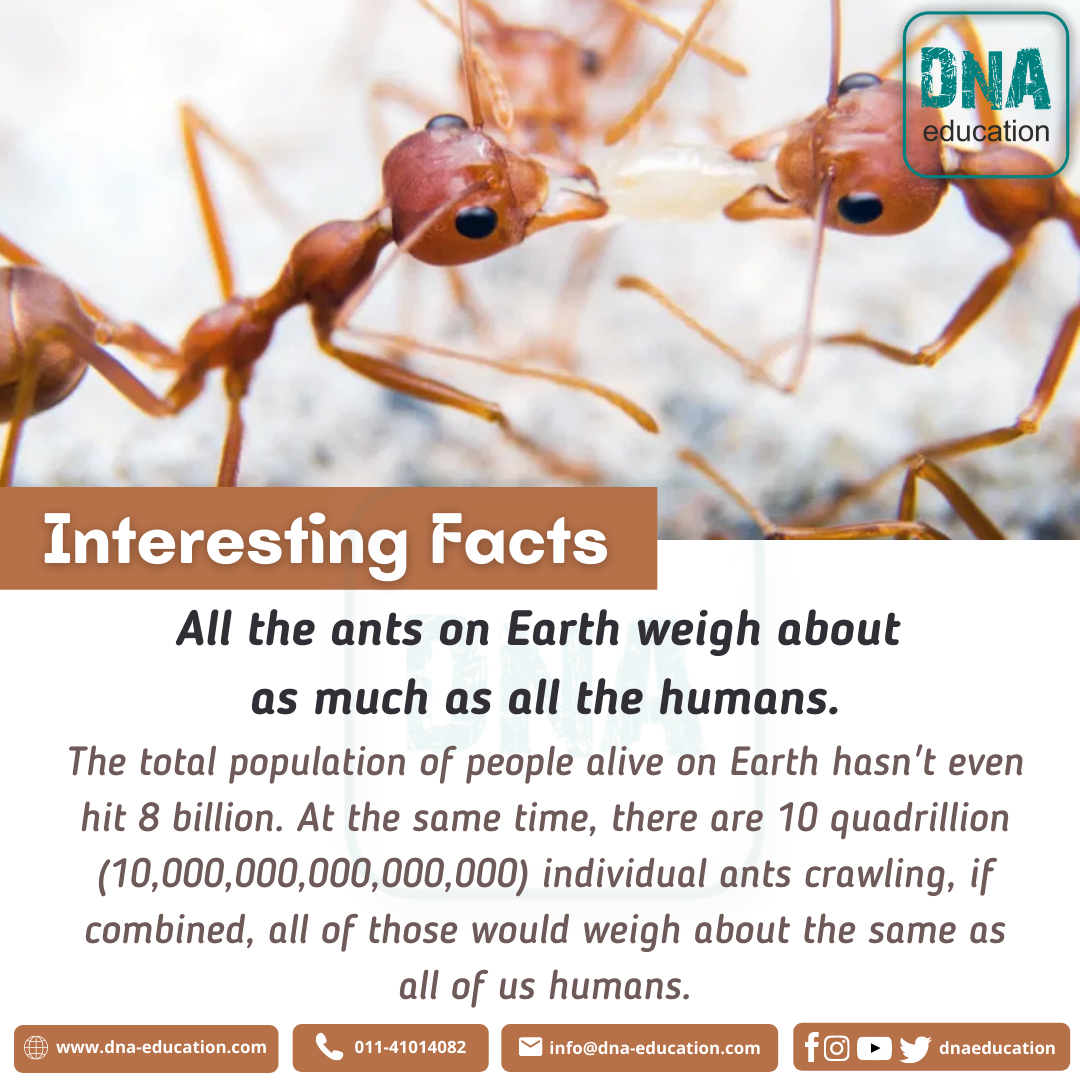
How many ants are there on Earth?
Approximately 20 quadrillion ants (20,000,000,000,000,000) exist on Earth according to a 2022 study by researchers at the University of Hong Kong and Germany's University of Würzburg. This is the most rigorous estimate ever calculated, based on 489 studies measuring ant density in ecosystems across every continent. The figure represents about 2. 5 million ants per person currently alive.
The Numbers Are Staggering
Twenty quadrillion ants. That is twenty thousand trillion - 20,000,000,000,000,000. If you counted one ant per second, it would take you 634 million years to count them all.
This is the most carefully calculated estimate of how many ants exist on Earth at any given time, published in 2022 by researchers at the University of Hong Kong and University of Würzburg. It represents one of the most surprising figures in biology: the combined biomass of all ants on Earth is comparable to or greater than that of all humans, depending on how you measure.
Ants, those small creatures we barely notice on sidewalks and picnic blankets, are one of the most ecologically dominant groups of animals on the planet - quietly, collectively, enormously.
20 Quadrillion Ants
The 2022 biomass study that produced this estimate was the most rigorous attempt ever made to count global ant populations. Researchers analyzed 489 separate studies of ant density from every continent, compiling data from tropical rainforests, savannas, deserts, temperate forests, and urban environments.
The final calculation:
- Approximately 20 quadrillion ants alive at any given time
- Approximately 12 megatons of dry biomass (12 million tonnes)
- Approximately 2.5 million ants per person currently alive
- If distributed evenly across Earth's land surface, about 125 ants per square meter
Geographic distribution:
Ants are heavily concentrated in warm environments. Tropical rainforests have the highest ant densities - some sites in the Amazon and Southeast Asia have documented densities exceeding 800 ants per square meter. Temperate forests average 50-100 ants per square meter. Arctic regions have almost no ants because most species cannot survive prolonged freezing.
The single largest ant concentrations are in:
- Amazon rainforest
- Central African rainforest
- Southeast Asian tropical forests
- Australian tropical savanna
- Southern Brazilian grasslands
By species richness:
Approximately 13,800 ant species have been formally described, with total diversity estimated at 22,000+ species (many remain undiscovered in tropical regions). Some species are abundant locally but occupy small ranges. Others are widespread but individually uncommon.
The Biomass Comparison
Ants vs humans:
On dry biomass (removing water content from calculations, which is the standard for ecological comparisons):
- Total human dry biomass: ~60 megatons
- Total ant dry biomass: ~12 megatons
So by dry biomass, humans outweigh ants about 5-to-1. But this comparison misses something important.
Ants vs wild mammals:
All wild mammals (both terrestrial and marine, including whales) combined:
- Total wild mammal dry biomass: ~7-10 megatons
Ants weigh as much as all wild mammals combined. The 20 quadrillion ants of Earth have more total biomass than all the wolves, deer, tigers, elephants, whales, dolphins, rodents, bats, and every other non-human mammal species.
Putting this in perspective:
- Livestock (cattle, sheep, pigs, etc.) biomass: ~100 megatons
- Humans: ~60 megatons
- Ants: ~12 megatons
- All wild mammals: ~7-10 megatons
- All wild birds: ~1-2 megatons
Livestock outweigh everything else. Humans outweigh ants by a factor of 5. But ants outweigh every other natural animal group on Earth. This is a remarkable fact about the modern biosphere.
Why So Many Ants?
Ants have evolved one of the most efficient reproductive and social systems in animal life. Several factors contribute to their extraordinary populations.
The Superorganism Strategy
An ant colony functions as a single superorganism. Individual ants are essentially specialized cells of this larger organism. Workers forage, nurses tend young, soldiers defend territory, and the queen produces eggs.
This division of labor is ruthlessly efficient. A human-raised human child requires decades of individual investment. A colony of a million ants can produce thousands of new offspring per day because different individuals specialize in different tasks.
Reproductive Output
A single ant queen can lay thousands of eggs per day. Some species' queens lay over 30,000 eggs daily during peak season. A queen may live 10-30 years, producing millions of offspring in her lifetime.
For comparison, a human female typically produces 1-4 children in her lifetime. An elephant produces 3-5 offspring across a 70-year life. An ant queen produces more offspring in a single day than most mammals produce in their entire existence.
Colony Replication
Colonies produce new queens periodically. These queens fly to mating flights, then land and found new colonies. A successful colony produces dozens or hundreds of new queens per year, most of whom will die but a few of whom will establish thriving new colonies.
This means each successful colony can produce multiple successor colonies within a few years. Ant populations grow exponentially when environmental conditions are favorable.
Predation Resistance
Ants have multiple defensive systems that reduce their vulnerability to predators:
Chemical defenses. Formic acid, alkaloid toxins, and sticky secretions protect ants from attacks. Many ant species taste terrible and are avoided by birds and mammals.
Group defense. Even predators that could kill individual ants face retaliation from hundreds or thousands of colony members. Most predators learn to avoid ant nests.
Cryptic nesting. Ant nests are often underground, in trees, or in other concealed locations. Predators cannot easily reach the colony.
Rapid reproduction. Even if a predator does consume large numbers of ants, the colony replaces them quickly.
Ants As Ecosystem Engineers
Ants are not just abundant - they are critical to ecosystem function. Their roles in the natural world are extensive and often underappreciated.
Soil Aeration
Ant tunnels create pathways for air, water, and nutrients to penetrate soil. Research has shown that ant colonies can turn over as much soil as earthworms in many ecosystems. The tunneling improves soil drainage, aeration, and fertility.
In the absence of ants, soil becomes compacted and less hospitable for plant roots. Agricultural soils without healthy ant populations require more irrigation, more fertilization, and more mechanical tilling to achieve equivalent productivity.
Seed Dispersal
Approximately 11,000 plant species depend on ants for seed dispersal - a process called myrmecochory. The seeds of these plants have specialized structures called elaiosomes (fat-rich appendages) that attract ants. Ants carry the seeds to their nests, eat the elaiosome, and discard the seed inside the nest - effectively planting it.
Without ants, these plant species cannot disperse effectively. Many would go extinct within a few generations.
Common plants dependent on ant dispersal include:
- Trilliums
- Bloodroots
- Violets
- Many Australian acacias
- Large numbers of South African fynbos plants
Decomposition
Ants consume enormous quantities of dead organic material. Fallen insects, small dead vertebrates, rotting fruit, and leaf litter are all processed by ants. This decomposition returns nutrients to the soil and prevents accumulation of organic debris.
In some tropical rainforests, ants consume approximately 50 percent of all dead organic matter - more than all bacteria and fungi combined in those specific systems.
Predation Control
Ants are voracious predators of other insects. A single large colony can consume hundreds of thousands of insect prey per day. This predation pressure controls insect populations at the ecosystem level.
Without ants, many insect species would explode in population with cascading ecological consequences. Crop pests, disease vectors, and nuisance species would all increase dramatically.
Mutualism with Plants
Many plant species have evolved defensive mutualisms with ants. The plant provides food and shelter; the ants attack herbivores attempting to eat the plant.
Classic examples include:
- Acacia trees and acacia ants. The tree provides hollow thorns (nesting sites) and nectar glands. The ants attack any herbivore that touches the tree, often driving off giraffes, elephants, and even humans.
- Cecropia trees and Azteca ants. The tree provides internal chambers for nesting; the ants kill vines and epiphytes that try to grow on the tree.
- Fungus-growing ants. Leafcutter ants actually farm fungi in their nests, providing a perfect example of agricultural mutualism. These ant colonies can harvest more vegetation than any other non-human agricultural system.
The E.O. Wilson Perspective
Edward O. Wilson, the pioneering ant biologist and one of the most important ecologists of the 20th century, spent his career studying ants and advocating for their importance.
Wilson's famous quote summarizes the ecological picture: "If humans disappeared, most other species would flourish. If ants disappeared, tens of thousands of species would go extinct."
This is not hyperbole. Human disappearance would, catastrophically for us, benefit most of the biosphere within a few decades. Forests would regrow, ocean fish populations would recover, countless species would expand into previously suppressed territories.
Ant disappearance, by contrast, would be immediately devastating for most natural ecosystems:
- Plant species dependent on ant seed dispersal would die out
- Soil quality would decline
- Decomposition would slow
- Insect populations would explode
- Many mutualistic relationships would collapse
- Whole food webs would unravel
The contrast is striking. Humans are enormously impactful but largely not ecologically necessary. Ants are foundational to ecosystems we take for granted.
Wilson's point was not that humans are bad or ants are good, but that our sense of biological importance is deeply distorted. We focus on large, charismatic animals - tigers, whales, eagles - while overlooking the small animals that actually make ecosystems function.
Ant Cognitive Achievements
Despite individual ant brains being tiny (approximately 250,000 neurons compared to 86 billion in humans), ant colonies exhibit complex behavior that emerges from the interactions of thousands of individuals.
Path optimization. Ant colonies discover the shortest routes between food sources and their nests through a chemical communication system. The algorithm they use (laying pheromone trails that evaporate over time) is so effective that computer scientists have adapted it for optimization problems in routing, logistics, and network design.
Problem solving. Ant colonies can solve navigation problems that defeat individual animals with much larger brains. They find optimal paths around obstacles, adjust to changing environments, and coordinate activities across distances far exceeding any single ant's perception.
Agriculture. Leafcutter ants cultivate fungi in underground chambers, carefully tending the fungal gardens with specific humidity, temperature, and nutrient conditions. The relationship has been evolving for approximately 60 million years.
Warfare. Some ant species engage in coordinated warfare with other colonies, including tactical maneuvers that appear to involve planning beyond simple reaction to immediate stimuli.
Social learning. Certain ant species teach each other, with experienced foragers leading novice ants to food sources and slowing their movement to allow learners to keep up.
This emergent intelligence from simple individual behavior is one of the most studied examples of "swarm intelligence" in biology. Computer scientists and roboticists have drawn extensive inspiration from ant colonies for distributed computing and multi-agent systems.
Invasive Ants and Climate Change
Ants are responding dramatically to human-caused environmental changes.
Invasive ant species are spreading globally through shipping and trade. Some of the most ecologically damaging include:
Argentine ant (Linepithema humile). Native to South America, now invasive on every continent except Antarctica. Forms massive supercolonies that display dramatic behaviors - a single Argentine ant supercolony in Europe extends 6,000 km from Portugal to Italy, the largest known supercolony of any species.
Red imported fire ant (Solenopsis invicta). Originally from South America, now widespread in the southern U.S., Australia, and parts of Asia. Aggressive, painful to humans, and ecologically damaging.
Crazy ant (Anoplolepis gracilipes). Asian origin. Devastating to ecosystems on Christmas Island, where it has caused the decline or extinction of multiple native species.
Ghost ant (Tapinoma melanocephalum). Tropical origin, spreading through warm-climate human settlements globally.
These invasive species displace native ants, disrupt ecosystems, and sometimes cause significant economic damage. The Argentine ant alone is estimated to cause $1 billion annually in economic damage through crop loss and control costs.
Climate change is shifting ant ranges. Species are moving polewards as temperatures warm. This reshuffling of ant communities has cascading effects on the ecosystems they previously supported or are now colonizing.
The Scale Problem
Understanding ants requires accepting scale differences that are difficult to intuit.
A typical ant weighs 5 milligrams. An elephant weighs 6 tonnes. The elephant is 1.2 billion times heavier than the ant. Yet all ants combined outweigh all elephants combined by a factor of approximately 100.
Individual ants operate on spatial and temporal scales completely different from large mammals. An ant experiences surface tension on water as a formidable barrier. Wind at speeds imperceptible to humans can blow ants away. The ground we walk across is, to an ant, an enormously complex landscape of microhabitats we cannot perceive.
When we consider 20 quadrillion ants, we are counting individuals in a way that has no parallel in our daily experience. The human brain is not built to understand populations at this scale. Yet these numbers are real, and the ecological consequences are proportional.
The Forgotten Majority
Popular biology focuses on large, charismatic animals. We have nature documentaries about lions, elephants, and whales. We have conservation campaigns for pandas, rhinos, and tigers.
We have almost nothing for ants.
Yet ants outweigh every wild mammal species combined. They make ecosystems function. They have survived every mass extinction in the last 140 million years, including the one that killed most dinosaurs. They are probably the most successful group of animals in the last 60 million years.
The 20 quadrillion ants alive right now are doing work that holds the biosphere together. When you walk across any patch of ground on Earth outside the polar regions, you are almost certainly within a few meters of hundreds or thousands of ants actively engaged in ecosystem maintenance we benefit from but rarely notice.
Ants are the forgotten majority of animal life on Earth. Understanding them better would correct one of the larger blind spots in how we think about biology and what we owe to the natural world.
The Quantitative Picture in Numbers
The 2022 landmark study by Schultheiss, Nooten, Wang, and colleagues in Proceedings of the National Academy of Sciences provided the first comprehensive global ant population estimate using rigorous field-sampling data from every biome on Earth. The Kalenux Team summarized their findings below, which form the current quantitative baseline for ant biomass research.
| Global Ant Metric | Estimate | Comparison |
|---|---|---|
| Total ant population | 20 quadrillion (2 x 10^16) | 2.5 million per living human |
| Total ant biomass (dry weight) | 12 megatonnes of carbon | Exceeds all wild birds and mammals combined |
| Biomass (fresh weight) | ~60 megatonnes | Equivalent to ~200 million humans |
| Individuals per square meter (average) | ~300 | Varies from zero in polar deserts to >3,000 in tropics |
| Share living in tropical forests | ~40% | Dominant tropical forest invertebrates |
| Share in tropical savannas | ~20% | Grassland ecosystem engineers |
| Known species | 15,700 described; 40,000+ estimated | One of the most diverse insect groups |
"We found that ants together carry around 12 megatonnes of biomass - more than all wild mammals combined, and about 20 percent as much as all humans. If you want to understand the terrestrial biosphere, you have to understand ants." - Patrick Schultheiss, University of Wurzburg, PNAS, 2022 [1]
Schultheiss and colleagues pointed out that the figure of 20 quadrillion is probably an undercount. Their methodology relied on leaf-litter and pitfall sampling, which captures only ground-active ants. Canopy species, deep-subterranean species, and nomadic swarm-raiders may add substantially to the total.
Ants and the Carbon Cycle
Ants are significant participants in the global carbon cycle, not because individual ants carry much carbon but because collective ant activity moves soil and organic matter at enormous scales. Studies by John Johnson at Arizona State University have measured that ants in a single temperate forest turn over approximately 1,000 kilograms of soil per hectare per year through nest construction and maintenance - comparable to earthworm bioturbation rates in the same ecosystems.
"Ants are keystone soil engineers. Their nests mix surface and deep soil, their digging releases sequestered nutrients, and their foraging redistributes organic matter across the forest floor. Remove ants from a forest ecosystem and the soil chemistry changes within a few years." - John M. C. Peterson, Arizona State University, Ecological Applications, 2016 [2]
Leafcutter ants alone, through their fungal agriculture, process an estimated 15 percent of all new leaf biomass in a tropical forest. The amount of carbon they move through their subterranean fungal gardens each year rivals the carbon storage of the aboveground vegetation they consume. Removing leafcutter colonies from a forest ecosystem would have measurable effects on soil carbon storage, nutrient cycling, and plant community composition within a decade.
The Oldest Ant Fossils
Ants appear in the fossil record approximately 140 million years ago, in Cretaceous amber. The oldest unambiguous ant, Sphecomyrma freyi, was described by Edward O. Wilson and colleagues from a 92-million-year-old amber specimen in 1967 - a find that confirmed ants had evolved from wasp-like ancestors and had already specialized into a recognizable ant morphology by the middle Cretaceous.
Since then, molecular clock analyses have pushed the lineage's origin back to the Early Cretaceous, roughly 140-168 million years ago.
This means ants are older than the flowering plants (angiosperms) that now dominate most terrestrial ecosystems. Ants and flowering plants co-evolved through the Late Cretaceous and Cenozoic, with ants becoming increasingly important as seed dispersers, pollinators, and herbivore regulators as angiosperms spread globally.
Modern ant diversity and abundance is therefore tied directly to the flowering plant revolution, without which ants might still be a minor component of ecosystems rather than the dominant invertebrate force they have become.
References
- Schultheiss, P., Nooten, S. S., Wang, R., Wong, M. K. L., Brassard, F., and Guenard, B. (2022). "The abundance, biomass, and distribution of ants on Earth." Proceedings of the National Academy of Sciences, 119(40), e2201550119.
- Peterson, J. M. C., et al. (2016). "The ecological effects of ants on ecosystem function." Ecological Applications, 26(4), 1097-1112.
- Hoelldobler, B., and Wilson, E. O. (1990). The Ants. Harvard University Press.
- Wilson, E. O., Carpenter, F. M., and Brown, W. L. (1967). "The first Mesozoic ants." Science, 157(3792), 1038-1040.
- Moreau, C. S., Bell, C. D., Vila, R., Archibald, S. B., and Pierce, N. E. (2006). "Phylogeny of the ants: diversification in the age of angiosperms." Science, 312(5770), 101-104.
Related Articles
- Ants: The Superorganisms That Conquered the Planet
- Ant Colonies: Complex Societies Explained
- Insect Superpowers: Abilities That Defy Belief
Frequently Asked Questions
How many ants are there on Earth?
Approximately 20 quadrillion ants (20,000,000,000,000,000) exist on Earth according to a 2022 study by researchers at the University of Hong Kong and Germany’s University of Würzburg. This is the most rigorous estimate ever calculated, based on 489 studies measuring ant density in ecosystems across every continent. The figure represents about 2.5 million ants per person currently alive.
Ant populations are concentrated in tropical and subtropical ecosystems, with the greatest densities found in tropical rainforests, savannas, and warm grasslands. Temperate ecosystems have fewer ants, and arctic regions have almost none. If all 20 quadrillion ants were divided equally across Earth’s land surface, you would have approximately 125 ants per square meter of land.
Do ants weigh more than humans?
The combined weight of all ants on Earth is approximately 12 megatons (12 million tonnes) of dry biomass, while the combined weight of all humans is approximately 60 megatons of living biomass. When compared using the same biomass measurement (dry biomass, excluding water content), ants actually outweigh humans collectively. If you compare living body weight, humans outweigh ants approximately 5-to-1.
The widely-shared claim that ‘ants weigh more than humans’ is partially true but depends on how you measure. More remarkably, all ants combined weigh as much as all wild mammals (both terrestrial and marine) combined and approximately 20 percent as much as all humans. Humans have become, in the last century, the single largest biomass of any animal species on Earth.
Why are there so many ants?
Ants have evolved a reproductive and social strategy that maximizes population growth. A single queen ant lays 1,000-30,000 eggs per day for years or decades. Ant colonies can contain millions of workers, all sisters of the queen. The colony functions as a superorganism - individual ants are essentially cells of a larger organism, each specialized for different roles. This scales efficiently.
One successful colony can produce hundreds of queens who each found new colonies. Within a few generations, a single founding queen can produce billions of descendants spread across large areas. Ants also have relatively few effective predators - their chemical defenses, group size, and nest protection make them difficult prey for most animals.
The combination of high reproductive output, efficient social structure, and low predation produces the extraordinary populations we observe.
How long have ants been on Earth?
Ants evolved approximately 140-168 million years ago during the mid-Cretaceous period, when dinosaurs still dominated Earth. The oldest confirmed ant fossils are approximately 99 million years old, preserved in amber from Myanmar. These ancient ants already had the basic features of modern ants - colonial living, division of labor, chemical communication.
Ants survived the K-Pg extinction event (the asteroid impact that killed the non-avian dinosaurs 66 million years ago) better than most animal groups, probably because their underground nests provided shelter from the initial impact effects. Since then, ants have diversified into approximately 13,800 described species with total diversity estimated at 22,000+ species.
They have colonized every continent except Antarctica and every habitat type except the deepest ocean and permanent ice.
What would happen if all ants disappeared?
If ants disappeared, ecosystems worldwide would collapse catastrophically within years. Ants are crucial for soil aeration - their tunnels distribute oxygen throughout soil, and their waste enriches soil nutrition. Seed dispersal for thousands of plant species depends on ants (a process called myrmecochory). Ants are also primary decomposers, consuming dead animals, fallen fruit, and organic debris that would otherwise accumulate.
Many plant species have evolved mutualistic relationships with ants - they depend on each other for survival. Predation control would fail in many systems; ants eat enormous quantities of other insects that would then explode in population. Edward O.
Wilson, one of the greatest ant biologists, estimated that ‘if humans disappeared, most other species would flourish; if ants disappeared, tens of thousands of species would go extinct.’ Ants are foundational ecosystem engineers, more critical to ecological function than any single vertebrate group.